SSC CGL 26 September 2025 · Shift 1 · Quantitative Aptitude — questions with answers · ShikshaSphere
Chapter 171 of 192
26 September 2025 · Shift 1
Quantitative Aptitude
25 questions ~25 min readFree
25 questions
A
51
If the radius of a cylinder is doubled, what happens to its volume (assuming the height remains constant)?
A.Volume is halved
B.Volume is doubled
C.Volume becomes four times
D.Volume remains the same
Solution
Volume and radius
Volume of a cylinder = πr²h.
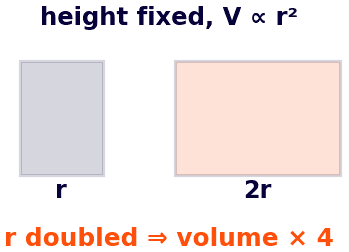
With h fixed, the volume varies as r².
Doubling r multiplies the volume by 2² = 4.
Four times — option (c).
52
What is the least square number that is divisible by 6, 9 and 15?
A.1800
B.900
C.400
D.1600
Solution
Least square multiple
LCM(6, 9, 15) = 90 = 2 × 3² × 5.
For a perfect square every prime must appear an even number of times, so 2 and 5 each need one more.
90 × 2 × 5 = 900.
= 900, which is 30² — option (b).
53
If the amount is ₹700 and the principal is ₹500, compounded yearly for 1 year, calculate the rate of interest.
A.40%
B.35%
C.33.33%
D.25%
Solution
Rate from amount
For one year, compound and simple interest are the same.
Interest = 700 − 500 = ₹200.
Rate = × 100.
= 40% — option (a).
54
If P = ₹2,500, R = 11.5% and T = 2.5 years, find the simple interest.
A person crosses a 600 m long street in 8 minutes. What is his speed in km per hour?
A.7.3 km/h
B.4.5 km/h
C.6 km/h
D.5.4 km/h
Solution
Speed conversion
600 m = 0.6 km and 8 minutes = hour.
Speed = .
= 0.6 × .
= 4.5 km/h — option (b).
56
A hollow rectangular parallelepiped has external dimensions 8 cm × 6 cm × 5 cm and a thickness of 0.5 cm. Find the volume of the material in it.
A.100 cm³
B.120 cm³
C.160 cm³
D.240 cm³
Solution
Hollow box
The thickness cuts 0.5 cm from each of the two opposite faces, so every dimension loses 1 cm.
Internal dimensions = 7 × 5 × 4 = 140 cm³.
External volume = 8 × 6 × 5 = 240 cm³.
Material = 240 − 140 = 100 cm³ — option (a).
57
A sector of radius 7 cm has an area of 38.5 cm². Find the angle of the sector.
A.90°
B.60°
C.30°
D.75°
Solution
Sector angle
Area of a sector = × πr².
πr² = × 49 = 154 cm².
× 154 = 38.5 ⇒ = .
θ = 90° — option (a).
58
The difference between 30% of a number and 15% of the same number is 90. What is the number?
A.600
B.800
C.1000
D.1200
Solution
Difference of percentages
The difference is 30% − 15% = 15% of the number.
15% of the number = 90.
Number = .
= 600 — option (a).
59
The average age of 5 students in a class increases by 2 years when a 40-year-old teacher joins them. What was the original average age of the students?
A.24
B.26
C.28
D.30
Solution
Average with a new member
Let the original average be x, so the five students total 5x.
With the teacher: = x + 2.
5x + 40 = 6x + 12 ⇒ x = 28.
= 28 years — option (c).
60
A buyer gets two successive discounts of 20% and 10% on a ₹800 item. What is the price paid?
A.₹500
B.₹420
C.₹540
D.₹576
Solution
Successive discounts
After the first discount: 800 × = ₹640.
The second discount applies to ₹640.
640 × .
= ₹576 — option (d).
61
A container has 100 litres of a mixture of acid and water in the ratio 3 : 2. 10% of the mixture is taken out and replaced with water. This operation is repeated once more. What is the final percentage of acid in the mixture?
A.54.8%
B.41.2%
C.43.7%
D.48.6%
Solution
Repeated replacement
Acid at the start = × 100 = 60 litres.
Each replacement leaves of the acid behind, and the total stays 100 litres.
After two operations: 60 × 0.9 × 0.9 = 48.6 litres.
Acid% = 48.6% — option (d).
62
The efficiencies of Ashish, Navin and Harish are in the ratio 2 : 3 : 5. Ashish alone can complete the work in 40 days. All three worked together for 5 days and then Harish left. In how many days can Ashish and Navin together complete the remaining work?
A.4 days
B.12 days
C.8 days
D.6 days
Solution
Work by efficiency
Ashish does 2 units a day and finishes in 40 days, so the whole work = 2 × 40 = 80 units.
All three together do 2 + 3 + 5 = 10 units a day; in 5 days they finish 50 units, leaving 30.
Ashish and Navin together do 2 + 3 = 5 units a day.
= 6 days — option (d).
63
A triangular prism has base side lengths 3 cm, 4 cm and 5 cm and height 8 cm. What is its lateral surface area?
A.84 cm²
B.90 cm²
C.96 cm²
D.100 cm²
Solution
Lateral surface of a prism
Lateral surface area of a prism = perimeter of base × height.
Perimeter = 3 + 4 + 5 = 12 cm.
12 × 8.
= 96 cm² — option (c).
64
A cone of radius 6 cm and height 9 cm is cut into two parts by a plane parallel to its base, at a height of 6 cm from the vertex. Find the volume of the frustum formed.
A.43π cm³
B.76π cm³
C.68π cm³
D.72π cm³
Solution
Frustum of a cone
The small cone is similar to the whole: its radius = 6 × = 4 cm, height 6 cm.
Whole cone = π(6²)(9) = 108π cm³.
Small cone = π(4²)(6) = 32π cm³.
Frustum = 108π − 32π = 76π cm³ — option (b).
65
If 4 tanA = 3, then find the value of (3 sinA − 4 cosA).
A.−
B.−
C.
D.
Solution
From tanA
tanA = , which gives the (3, 4, 5) triplet.
So sinA = and cosA = .
3() − 4() = − .
= − — option (a).
If sin 2x = cos(3x − 20°), what is the value of x?
A.35°
B.37.5°
C.22°
D.25.8°
Solution
sin = cos
sinA = cosB holds when the two angles are complementary.
2x + (3x − 20°) = 90°.
5x = 110°.
x = 22° — option (c).
68
In a right triangle, one of the acute angles is 60°. What is the measure of the exterior angle at the right-angled vertex?
A.45°
B.30°
C.60°
D.90°
Solution
Exterior angle
An exterior angle and its interior angle add up to 180°.
The interior angle at that vertex is the right angle, 90°.
180° − 90°.
= 90° — option (d).
69
A triangle has one angle measuring 105°. Its orthocentre is located where?
A.Inside the triangle
B.Outside the triangle
C.On one of the sides of the triangle
D.On one of the vertices of the triangle
Solution
Orthocentre of an obtuse triangle
An angle of 105° makes the triangle OBTUSE.
In an obtuse triangle two of the altitudes fall outside, so they meet outside the figure.
The orthocentre lies inside only for an acute triangle and at the vertex for a right triangle.
Outside — option (b).

 Volume of a cylinder = πr²h.
With h fixed, the volume varies as r².
Doubling r multiplies the volume by 2² = 4.
Four times — option (c).
Volume of a cylinder = πr²h.
With h fixed, the volume varies as r².
Doubling r multiplies the volume by 2² = 4.
Four times — option (c).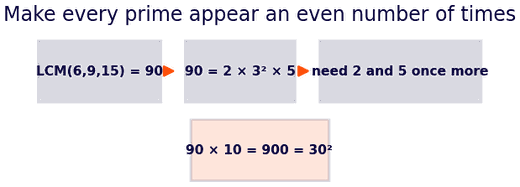 LCM(6, 9, 15) = 90 = 2 × 3² × 5.
For a perfect square every prime must appear an even number of times, so 2 and 5 each need one more.
90 × 2 × 5 = 900.
= 900, which is 30² — option (b).
LCM(6, 9, 15) = 90 = 2 × 3² × 5.
For a perfect square every prime must appear an even number of times, so 2 and 5 each need one more.
90 × 2 × 5 = 900.
= 900, which is 30² — option (b). For one year, compound and simple interest are the same.
Interest = 700 − 500 = ₹200.
Rate = × 100.
= 40% — option (a).
For one year, compound and simple interest are the same.
Interest = 700 − 500 = ₹200.
Rate = × 100.
= 40% — option (a). 600 m = 0.6 km and 8 minutes = hour.
Speed = .
= 0.6 × .
= 4.5 km/h — option (b).
600 m = 0.6 km and 8 minutes = hour.
Speed = .
= 0.6 × .
= 4.5 km/h — option (b).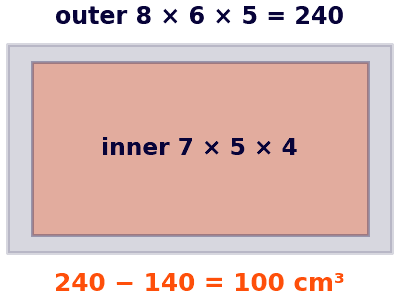 The thickness cuts 0.5 cm from each of the two opposite faces, so every dimension loses 1 cm.
Internal dimensions = 7 × 5 × 4 = 140 cm³.
External volume = 8 × 6 × 5 = 240 cm³.
Material = 240 − 140 = 100 cm³ — option (a).
The thickness cuts 0.5 cm from each of the two opposite faces, so every dimension loses 1 cm.
Internal dimensions = 7 × 5 × 4 = 140 cm³.
External volume = 8 × 6 × 5 = 240 cm³.
Material = 240 − 140 = 100 cm³ — option (a).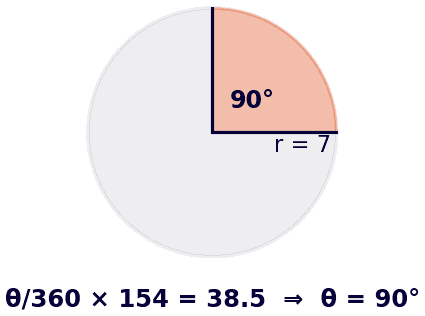 Area of a sector = × πr².
πr² = × 49 = 154 cm².
× 154 = 38.5 ⇒ = .
θ = 90° — option (a).
Area of a sector = × πr².
πr² = × 49 = 154 cm².
× 154 = 38.5 ⇒ = .
θ = 90° — option (a). The difference is 30% − 15% = 15% of the number.
15% of the number = 90.
Number = .
= 600 — option (a).
The difference is 30% − 15% = 15% of the number.
15% of the number = 90.
Number = .
= 600 — option (a). Let the original average be x, so the five students total 5x.
With the teacher: = x + 2.
5x + 40 = 6x + 12 ⇒ x = 28.
= 28 years — option (c).
Let the original average be x, so the five students total 5x.
With the teacher: = x + 2.
5x + 40 = 6x + 12 ⇒ x = 28.
= 28 years — option (c).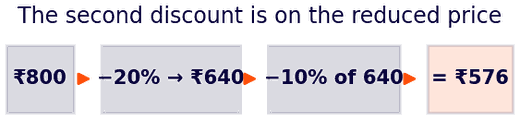 After the first discount: 800 × = ₹640.
The second discount applies to ₹640.
640 × .
= ₹576 — option (d).
After the first discount: 800 × = ₹640.
The second discount applies to ₹640.
640 × .
= ₹576 — option (d).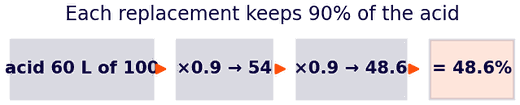 Acid at the start = × 100 = 60 litres.
Each replacement leaves of the acid behind, and the total stays 100 litres.
After two operations: 60 × 0.9 × 0.9 = 48.6 litres.
Acid% = 48.6% — option (d).
Acid at the start = × 100 = 60 litres.
Each replacement leaves of the acid behind, and the total stays 100 litres.
After two operations: 60 × 0.9 × 0.9 = 48.6 litres.
Acid% = 48.6% — option (d).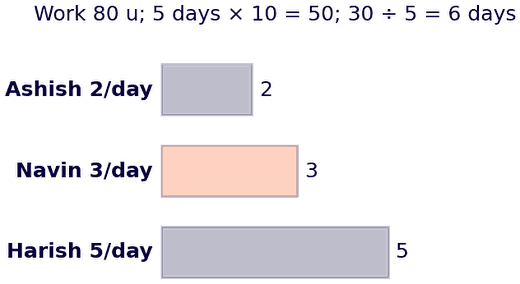 Ashish does 2 units a day and finishes in 40 days, so the whole work = 2 × 40 = 80 units.
All three together do 2 + 3 + 5 = 10 units a day; in 5 days they finish 50 units, leaving 30.
Ashish and Navin together do 2 + 3 = 5 units a day.
= 6 days — option (d).
Ashish does 2 units a day and finishes in 40 days, so the whole work = 2 × 40 = 80 units.
All three together do 2 + 3 + 5 = 10 units a day; in 5 days they finish 50 units, leaving 30.
Ashish and Navin together do 2 + 3 = 5 units a day.
= 6 days — option (d).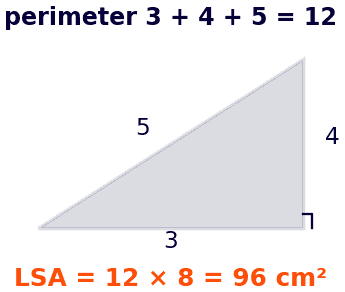 Lateral surface area of a prism = perimeter of base × height.
Perimeter = 3 + 4 + 5 = 12 cm.
12 × 8.
= 96 cm² — option (c).
Lateral surface area of a prism = perimeter of base × height.
Perimeter = 3 + 4 + 5 = 12 cm.
12 × 8.
= 96 cm² — option (c).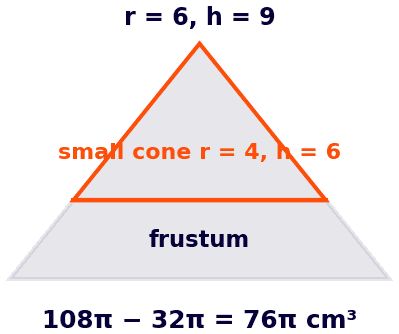 The small cone is similar to the whole: its radius = 6 × = 4 cm, height 6 cm.
Whole cone = π(6²)(9) = 108π cm³.
Small cone = π(4²)(6) = 32π cm³.
Frustum = 108π − 32π = 76π cm³ — option (b).
The small cone is similar to the whole: its radius = 6 × = 4 cm, height 6 cm.
Whole cone = π(6²)(9) = 108π cm³.
Small cone = π(4²)(6) = 32π cm³.
Frustum = 108π − 32π = 76π cm³ — option (b).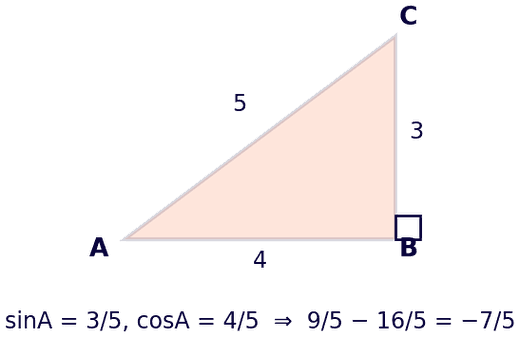 tanA = , which gives the (3, 4, 5) triplet.
So sinA = and cosA = .
3() − 4() = − .
= − — option (a).
tanA = , which gives the (3, 4, 5) triplet.
So sinA = and cosA = .
3() − 4() = − .
= − — option (a).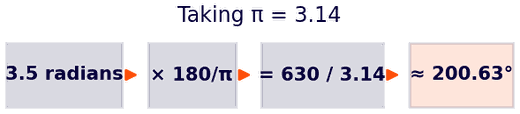 Degrees = radians × .
= 3.5 × .
= .
≈ 200.63° — option (c).
Degrees = radians × .
= 3.5 × .
= .
≈ 200.63° — option (c).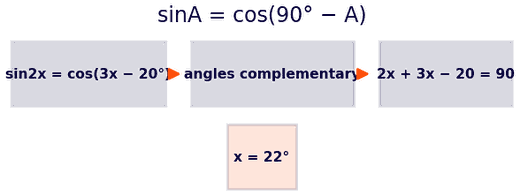 sinA = cosB holds when the two angles are complementary.
2x + (3x − 20°) = 90°.
5x = 110°.
x = 22° — option (c).
sinA = cosB holds when the two angles are complementary.
2x + (3x − 20°) = 90°.
5x = 110°.
x = 22° — option (c).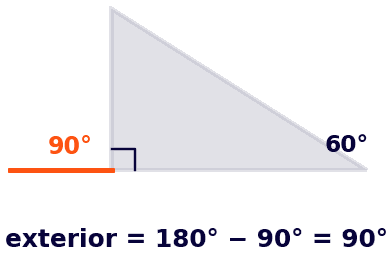 An exterior angle and its interior angle add up to 180°.
The interior angle at that vertex is the right angle, 90°.
180° − 90°.
= 90° — option (d).
An exterior angle and its interior angle add up to 180°.
The interior angle at that vertex is the right angle, 90°.
180° − 90°.
= 90° — option (d).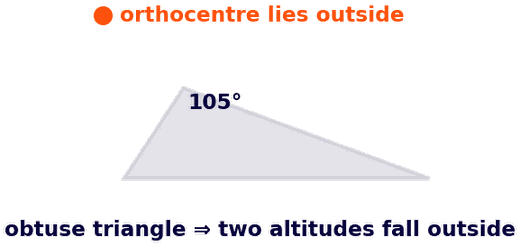 An angle of 105° makes the triangle OBTUSE.
In an obtuse triangle two of the altitudes fall outside, so they meet outside the figure.
The orthocentre lies inside only for an acute triangle and at the vertex for a right triangle.
Outside — option (b).
An angle of 105° makes the triangle OBTUSE.
In an obtuse triangle two of the altitudes fall outside, so they meet outside the figure.
The orthocentre lies inside only for an acute triangle and at the vertex for a right triangle.
Outside — option (b).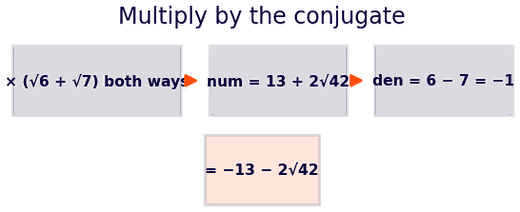 Multiply numerator and denominator by ( + ).
Numerator = ( + )² = 6 + 7 + 2 = 13 + 2.
Denominator = 6 − 7 = −1.
= −13 − 2 — option (b).
Multiply numerator and denominator by ( + ).
Numerator = ( + )² = 6 + 7 + 2 = 13 + 2.
Denominator = 6 − 7 = −1.
= −13 − 2 — option (b).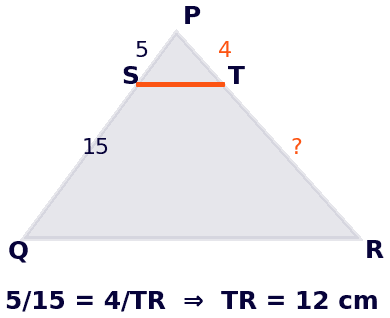 By the basic proportionality (Thales) theorem, = .
= .
TR = 4 × 3.
= 12 cm — option (d).
By the basic proportionality (Thales) theorem, = .
= .
TR = 4 × 3.
= 12 cm — option (d).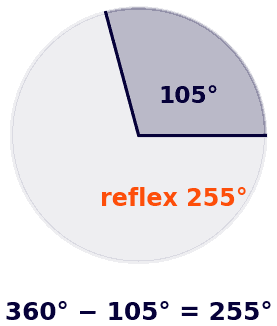 A complete turn about the centre is 360°.
The reflex angle is what remains after the given angle.
360° − 105°.
= 255° — option (a).
A complete turn about the centre is 360°.
The reflex angle is what remains after the given angle.
360° − 105°.
= 255° — option (a).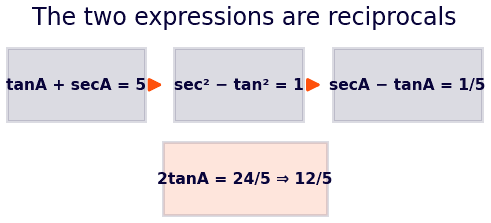 From sec²A − tan²A = 1, (secA + tanA)(secA − tanA) = 1.
So secA − tanA = .
Subtracting the two equations: 2 tanA = 5 − = .
tanA = — option (c).
From sec²A − tan²A = 1, (secA + tanA)(secA − tanA) = 1.
So secA − tanA = .
Subtracting the two equations: 2 tanA = 5 − = .
tanA = — option (c). One day’s work: R = − − .
Taking LCM 36: .
= .
R alone takes 36 days — option (d).
One day’s work: R = − − .
Taking LCM 36: .
= .
R alone takes 36 days — option (d).