SSC CHSL 13 November 2025 · Shift 1 · English Language — questions with answers · ShikshaSphere
Chapter 12 of 200
13 November 2025 · Shift 1
English Language
25 questions ~25 min readFree
25 questions
A
1
Identify the part of the sentence that contains a grammatical error.
A. The meal, B. which she cooked, C. was tasty and D. a nicely treat.
A.The meal,
B.which she cooked,
C.was tasty and
D.a nicely treat.
Solution
Adjective vs adverb
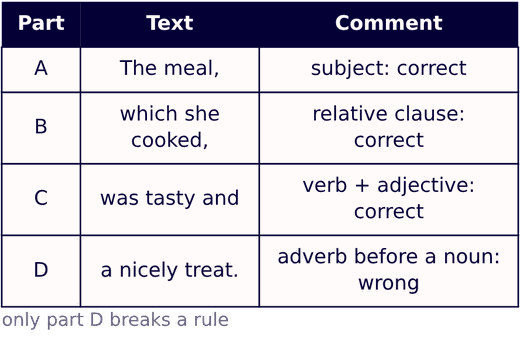
A noun is described by an adjective, never by an adverb.
In part D the noun 'treat' is preceded by 'nicely', which is an adverb (nice + -ly) and can qualify only a verb, an adjective or another adverb.
The correct phrase is 'a nice treat', so part D carries the error.
Parts A, B and C are sound: 'The meal' is the subject, 'which she cooked' is a relative clause describing it, and 'was tasty and' is a linking verb followed by an adjective.
2
Fill in the blank with the most appropriate conjunction:
She neither accepted the job signed the contract last week.
A.but also
B.or
C.nor
D.and
Solution
Correlative conjunctions
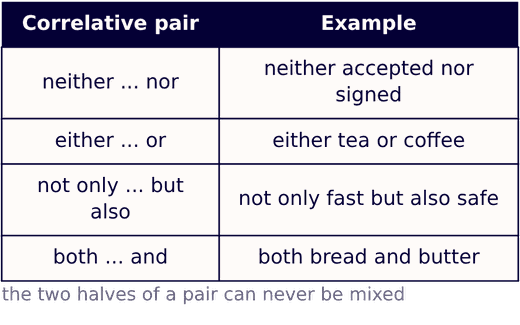
'Neither' is one half of a fixed correlative pair, and its partner is always 'nor'.
The sentence therefore reads: She neither accepted the job nor signed the contract last week.
'or' belongs with 'either', 'but also' belongs with 'not only', and 'and' cannot follow a negative correlative, so every other option breaks the pair.
3
Select the most appropriate synonym of the word: Peculiarity
A.Idiosyncrasy
B.Regularity
C.Ordinariness
D.Uniformity
Solution
Synonym
Peculiarity means a distinctive, odd or unusual feature of a person or a thing.
Idiosyncrasy means a habit or trait that is unique to one individual, which carries exactly the same idea of oddness.
Regularity (consistency), Ordinariness (being common) and Uniformity (sameness) all deny anything unusual, so they are opposites of the given word, not synonyms.
4
Fill in the blank with the most appropriate idiom:
The spokesperson's speech was filled with vague promises, but in the end, it amounted to nothing more than .
A.cutting corners
B.a wild goose chase
C.smoke and mirrors
D.the cold shoulder
Solution
Idiom in context
The blank needs an expression for something that only looks impressive but has no substance behind it.
'Smoke and mirrors' means a deceptive display put up to hide the truth, which fits a speech of vague promises that amounted to nothing.
Hence option (c) completes the sentence correctly.
5
Which of the following sentences uses the word "wave" with the same meaning as in the following sentence?
The massive wave crashed against the rocky shoreline.
A.She gave a friendly wave as the bus drove away.
B.The surfer paddled hard to catch the perfect wave.
C.He watched the crowd perform a stadium wave together.
D.Light travels through the vacuum of space as a wave.
Solution
Word meaning in context
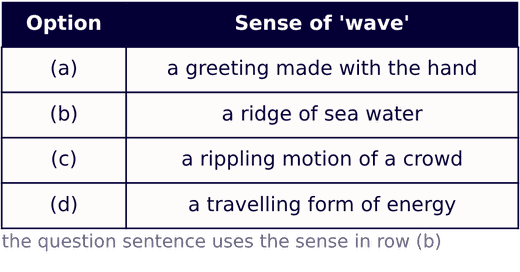
In the given sentence a 'wave' is a moving ridge of sea water that breaks on the shore.
Only option (b), where a surfer paddles hard to catch the perfect wave, uses the word in that sense of a ridge of water.
In (a) it is a movement of the hand, in (c) a rippling motion made by a crowd, and in (d) the form in which energy travels, so none of them matches.
6
Directions (Qs. 6-10): Read the following passage carefully and answer the questions that follow.
In addition to the industrial expansion that often overlooked ecological impacts, environmental conservation has evolved into a fundamental aspect of modern development. Establishing a lifestyle that is responsible and sustainable begins with accepting that planetary health is connected to human survival. Increasing education helps mitigate issues like global warming, waste accumulation, and biodiversity loss by urging citizens to take action without feeling helpless or dismissive of the science. It promotes sustainable practices, which are critical
ecological stability. Additionally, heightening public understanding of environmental protection empowers the society to extend care and stewardship to nature by instructing them on reduction, reuse, and renewable alternatives. Ultimately, a nation that devotes significant attention to environmental conservation is one that invests in its citizens' future quality of life.
What is one major benefit of increasing environmental education?
A.It makes people feel helpless about the planet
B.It urges citizens to take action without feeling dismissive
C.It encourages people to ignore scientific facts
D.It stops people from adopting greener habits
Solution
Reading comprehension
The passage says that increasing education helps mitigate global warming, waste accumulation and biodiversity loss 'by urging citizens to take action without feeling helpless or dismissive of the science'.
Option (b) restates that benefit in the question's own words.
Options (a), (c) and (d) describe helplessness, ignoring science and abandoning green habits, which are the very attitudes the passage says education removes.
7
Directions (Qs. 6-10): Read the following passage carefully and answer the questions that follow.
In addition to the industrial expansion that often overlooked ecological impacts, environmental conservation has evolved into a fundamental aspect of modern development. Establishing a lifestyle that is responsible and sustainable begins with accepting that planetary health is connected to human survival. Increasing education helps mitigate issues like global warming, waste accumulation, and biodiversity loss by urging citizens to take action without feeling helpless or dismissive of the science. It promotes sustainable practices, which are critical
ecological stability. Additionally, heightening public understanding of environmental protection empowers the society to extend care and stewardship to nature by instructing them on reduction, reuse, and renewable alternatives. Ultimately, a nation that devotes significant attention to environmental conservation is one that invests in its citizens' future quality of life.
How does environmental understanding help mitigate issues?
A.By promoting a culture of indifference toward nature
B.By encouraging citizens to increase waste accumulation
C.By increasing education and urging citizens to take action
D.By discouraging the use of renewable alternatives
Solution
Reading comprehension
The same sentence of the passage answers this question: mitigation happens because education increases and citizens are urged to take action.
Option (c) joins both halves of that statement, so it is the required answer.
Indifference to nature, more waste accumulation and less use of renewable alternatives are all things the passage argues against, so (a), (b) and (d) are ruled out.
8
Directions (Qs. 6-10): Read the following passage carefully and answer the questions that follow.
In addition to the industrial expansion that often overlooked ecological impacts, environmental conservation has evolved into a fundamental aspect of modern development. Establishing a lifestyle that is responsible and sustainable begins with accepting that planetary health is connected to human survival. Increasing education helps mitigate issues like global warming, waste accumulation, and biodiversity loss by urging citizens to take action without feeling helpless or dismissive of the science. It promotes sustainable practices, which are critical
ecological stability. Additionally, heightening public understanding of environmental protection empowers the society to extend care and stewardship to nature by instructing them on reduction, reuse, and renewable alternatives. Ultimately, a nation that devotes significant attention to environmental conservation is one that invests in its citizens' future quality of life.
Why are sustainable practices important, according to the text?
A.They prevent people from caring about nature
B.They are critical for preserving resources and ensuring stability
C.They make environmental conditions much worse
D.They eliminate the need for renewable energy
Solution
Reading comprehension
The passage states that education promotes sustainable practices, which are critical for preserving resources and ensuring ecological stability.
Option (b) reproduces that reason, so it is why sustainable practices matter.
The passage never says such practices worsen conditions, block care for nature or remove the need for renewable energy, so (a), (c) and (d) contradict the text.
9
Directions (Qs. 6-10): Read the following passage carefully and answer the questions that follow.
In addition to the industrial expansion that often overlooked ecological impacts, environmental conservation has evolved into a fundamental aspect of modern development. Establishing a lifestyle that is responsible and sustainable begins with accepting that planetary health is connected to human survival. Increasing education helps mitigate issues like global warming, waste accumulation, and biodiversity loss by urging citizens to take action without feeling helpless or dismissive of the science. It promotes sustainable practices, which are critical
ecological stability. Additionally, heightening public understanding of environmental protection empowers the society to extend care and stewardship to nature by instructing them on reduction, reuse, and renewable alternatives. Ultimately, a nation that devotes significant attention to environmental conservation is one that invests in its citizens' future quality of life.
How does heightening public understanding of environmental protection benefit society?
A.By discouraging individuals from reducing waste
B.By empowering society to extend care and stewardship to nature
C.By making it harder to find renewable alternatives
D.By ignoring the threats of global warming and loss
Solution
Reading comprehension
The passage says that heightening public understanding of environmental protection 'empowers the society to extend care and stewardship to nature' by instructing people in reduction, reuse and renewable alternatives.
Option (b) is that line put in the question's words.
Each of the other options reverses the claim, since the passage links greater understanding with less waste, easier use of renewables and more attention to global warming.
10
Directions (Qs. 6-10): Read the following passage carefully and answer the questions that follow.
In addition to the industrial expansion that often overlooked ecological impacts, environmental conservation has evolved into a fundamental aspect of modern development. Establishing a lifestyle that is responsible and sustainable begins with accepting that planetary health is connected to human survival. Increasing education helps mitigate issues like global warming, waste accumulation, and biodiversity loss by urging citizens to take action without feeling helpless or dismissive of the science. It promotes sustainable practices, which are critical
ecological stability. Additionally, heightening public understanding of environmental protection empowers the society to extend care and stewardship to nature by instructing them on reduction, reuse, and renewable alternatives. Ultimately, a nation that devotes significant attention to environmental conservation is one that invests in its citizens' future quality of life.
What does the text suggest about a nation that values environmental conservation?
A.It only cares about industrial expansion
B.It creates an environment where people ignore ecology
C.It invests in its citizens' future quality of life
D.It overlooks the importance of planetary health
Solution
Reading comprehension
The closing sentence says a nation that devotes significant attention to environmental conservation is one that invests in its citizens' future quality of life.
Option (c) is exactly that conclusion, so it is what the text suggests.
The passage credits such a nation with foresight, not with caring only for industry, ignoring ecology or overlooking planetary health, so (a), (b) and (d) fail.
11
Choose the incorrectly spelt word:
A.Emergence
B.Emulcifisation
C.Amplification
D.Energetic
Solution
Spelling
The word intended in option (b) is 'emulsification', the process of forming an emulsion.
It is built on the noun 'emulsion', so it keeps the 's' of the root and takes the regular ending '-fication', never '-cifisation'.
Emergence, Amplification and Energetic are all spelt correctly, so the incorrectly spelt word is option (b).
12
Choose the incorrectly spelt word:
A.Personal
B.Person
C.Personell
D.Pearson
Solution
Spelling
'Personnel', meaning the body of people employed in an organisation, is spelt with a double 'n' and a single 'l'.
Option (c) writes it the other way round, with a single 'n' and a double 'l', so 'Personell' is the incorrectly spelt word.
'Personal' (belonging to a person), 'Person' and the proper name 'Pearson' are all written correctly, which leaves (c) as the answer.
13
Choose the correct meaning of the highlighted idiom.
Buy the expensive shoes if you want; whatever floats your boat, it's your money.
A.Do whatever makes you happy or suits your preference
B.To take a risky decision without thinking
C.To travel by water for enjoyment
D.To face difficulties calmly
Solution
Idiom meaning
'Whatever floats your boat' is a set phrase used to tell someone to go ahead and do whatever pleases them.
In the sentence the speaker raises no objection to the expensive shoes: it is the listener's money and the listener's taste that decide.
So option (a), do whatever makes you happy or suits your preference, gives the meaning.
The idiom has nothing to do with taking risks, boating for pleasure or staying calm in trouble, so the other options are only literal traps.
14
Choose the correct one-word substitute for:
An official who is responsible for collecting money.
A.Numerologist
B.Collector
C.Philatelist
D.Bookworm
Solution
One-word substitution
An official whose duty is to collect money, such as revenue, taxes or dues, is called a Collector.
A Numerologist studies the supposed influence of numbers, a Philatelist collects and studies postage stamps, and a Bookworm is a person devoted to reading.
Only 'Collector' names an official post connected with the collection of money, so option (b) is correct.
15
Select the most appropriate antonym of the word: Chaotic
A.Serene
B.Frank
C.Honest
D.Open
Solution
Antonym
Chaotic means completely disordered and confused.
Its opposite must suggest calm and order, and 'Serene' means peaceful, untroubled and undisturbed.
Frank, Honest and Open all describe truthfulness or openness of manner, which has nothing to do with order or disorder, so none of them opposes 'chaotic'.
16
Select the most appropriate antonym of the word: Foolish
A.Sagacious
B.Imbecile
C.Obtuse
D.Stupid
Solution
Antonym
Foolish means lacking sense or sound judgement.
'Sagacious' means wise, shrewd and showing sound judgement, so it stands exactly opposite to 'foolish'.
Imbecile, Obtuse and Stupid all mean dull or lacking intelligence, that is, they are synonyms of the given word.
When three of the four options are near-synonyms of each other, the odd word out is the antonym asked for, which confirms option (a).
17
Choose the correct one-word substitute for:
A belief that the Sun is the centre of the universe
A.Theocentrism
B.Polycentrism
C.Heliocentrism
D.Geocentrism
Solution
One-word substitution
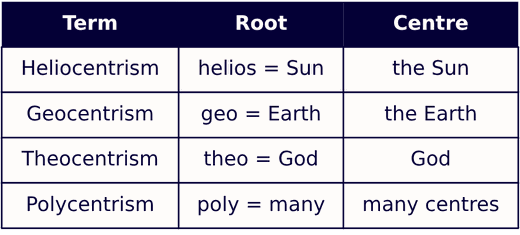
The Greek root 'helios' means the Sun, so heliocentrism is the belief that the Sun lies at the centre of the universe, the model put forward by Copernicus.
The roots geo- (Earth), theo- (God) and poly- (many) give the other three beliefs, and none of them places the Sun at the centre, so option (c) is correct.
18
Change the following sentence into the Active form.
Let the report be sent to the director of the board by Monday morning.
A.You should send the report to the director of the board by Monday morning.
B.Send the report to the director of the board by Monday morning.
C.The report will be sent to the director of the board by Monday morning.
D.Let the director of the board send the report by Monday morning.
Solution
Active and passive voice
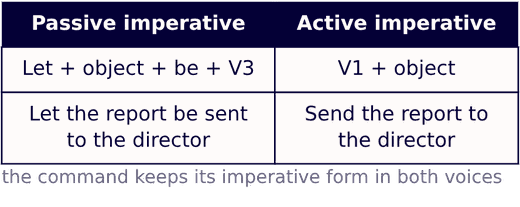
'Let + object + be + V3' is the passive pattern of an imperative sentence, which is why the given sentence has no visible subject.
To make it active, drop 'let' and 'be' and begin with the bare form of the verb, followed by the object.
The active form is therefore 'Send the report to the director of the board by Monday morning.'
Options (a) and (c) turn the order into a statement of advice or of future time, and (d) makes the director the doer, so none of them is the true active of the given sentence.
19
Select the option that expresses the given sentence in indirect voice.
be ignoring these symptoms, because your health has been deteriorating for some weeks.'
A.The doctor told the man that he should not be ignoring those symptoms, because his health had been deteriorating for some weeks.
B.The doctor told the man that he should not have been ignoring those symptoms, because his health has been deteriorating for some weeks.
C.The doctor told the man that he would not be ignoring those symptoms, because his health had been deteriorating for some weeks.
D.The doctor told the man that he should not be ignoring those symptoms, because his health has been deteriorating for some weeks.
Solution
Direct and indirect speech
The reporting verb 'told' is in the past tense, so the reported clause moves one tense back and the pronouns shift to the third person.
'Your health has been deteriorating' therefore becomes 'his health had been deteriorating', and the near demonstrative 'these symptoms' becomes 'those symptoms'.
The modal 'should' already carries a past form and does not change, so 'should not be ignoring' is carried over unchanged rather than becoming 'would' or 'should have been'.
Only option (a) makes all of these changes together, so it is the correct indirect form.
20
Choose the most suitable option to replace the highlighted part of the sentence:
That is the most tallest building that I have ever seen.
A.the most tall building
B.the tallest building
C.the most tallest building
D.is tallest building
Solution
Degrees of comparison
'Tall' is a one-syllable adjective, so it forms its degrees with the endings -er and -est: tall, taller, tallest.
'Most' is used to build the superlative only of longer adjectives, and joining it to a form that already ends in -est makes a double superlative, which is always wrong.
The highlighted part must therefore be replaced by 'the tallest building', so option (b) is correct.
21
Choose the most suitable option to replace the highlighted part of the sentence:
The crash comes at a time when the local tech sector is facing a slump on its way of low market sales and poor export growth.
A.because manner of
B.since ways are
C.by way of
D.in the way of
Solution
Idiomatic phrase
The phrase after 'is facing a slump' must introduce the areas in which that slump shows itself.
The idiom 'in the way of' means 'in terms of, with respect to', which is exactly the sense needed here.
The sentence then reads: The crash comes at a time when the local tech sector is facing a slump in the way of low market sales and poor export growth.
'By way of' means 'via' or 'as a form of', which would wrongly turn the sales figures into a route or a purpose; 'because manner of' is not an English phrase, and 'since ways are' leaves the words that follow with no verb to hang on.
Hence option (d) is correct.
22
Choose the correct passive voice transformation of the sentence:
We had not solved the case.
A.The case has not been solved by us.
B.The case was not solved by us.
C.The case had not been solved by us.
D.The case is not solved by us.
Solution
Passive voice
The active sentence is 'We had not solved the case.' — subject 'We', verb 'had not solved' (past perfect negative), object 'the case'.
The passive of the past perfect is formed as: object + had (not) been + V3 + by + agent.
Substituting: 'the case' becomes the subject, 'solved' stays as the third form, and 'We' becomes 'by us'.
So the sentence becomes 'The case had not been solved by us.'
Option (a) shifts to the present perfect 'has not been', (b) to the simple past 'was not' and (d) to the simple present 'is not'; each changes the tense of the original, so only (c) is correct.
23
Select the option that expresses the given sentence in direct voice.
She said that if she were to win the lottery, she would travel the world with her friends.
A.She said, "If I won the lottery, I would travel the world with my friends."
B.She said, "If I were to win the lottery, I would travel the world with my friends."
C.She said, 'If I win the lottery, I will travel the world with my friends."
D.She said, "If I had won the lottery, I would have traveled the world with my friends."
Solution
Direct speech
To turn indirect speech into direct speech, keep the reporting verb, drop 'that', put a comma and double quotation marks, and undo the changes made while reporting.
The reported clause uses the subjunctive 'if she were to win', which is already a hypothetical form; it is not a backshifted tense, so it stays as 'if I were to win'.
Only the pronouns move back to the speaker: she → I and her → my.
This gives: She said, "If I were to win the lottery, I would travel the world with my friends."
Option (a) replaces 'were to win' by 'won', changing the structure the speaker used; (c) turns it into an open condition 'if I win ... I will travel'; and (d) uses 'had won / would have travelled', a third conditional about the past.
24
Rearrange the following sentence parts to form a meaningful and grammatically correct paragraph:
P. He started applying the final varnish, coating each part in a clear, gloss seal.
Q. He made sure that every joint was fitted tight when he assembled the chair with glue and clamps.
R. He prepared the timber by cutting wood and sanding the surface's roughness.
S. He took a seat down and tested the fine furniture, a sturdy chair that was made to last.
A.S, Q, P, R
B.R, Q, P, S
C.Q, R, P, S
D.P, Q, R, S
Solution
Sentence rearrangement
The four parts describe one process — making a chair — so the order must follow the order of the work.
R is the opening part: cutting the wood and sanding it is the first stage, and it is the only part that introduces the timber the other parts then act on.
Q comes next, because the prepared pieces are what get assembled with glue and clamps.
P follows Q, since the final varnish can only be applied after the chair has been put together.
S closes the paragraph: the chair is now 'fine furniture … made to last', a verdict that makes sense only at the end.
The correct order is R, Q, P, S, which is option (b).
Options (a) and (d) begin with the finished chair being tested or varnished, and (c) starts with the assembly before the wood has been cut.
25
Rearrange the following sentence parts to form a meaningful and grammatically correct paragraph:
P. This innovation transformed communication across the globe.
Q. Alexander Graham Bell invented the telephone in the late 19th century.
R. It allowed people to speak to each other over long distances instantly.
S. The invention marked a major milestone in technological history.
A.Q, R, P, S
B.R, Q, P, S
C.Q, P, R, S
D.P, Q, R, S
Solution
Sentence rearrangement
Look first for the opening part: only Q names the subject in full — Alexander Graham Bell and the telephone — so the paragraph must begin with Q.
R starts with the pronoun 'It', which needs a noun before it; that noun is 'the telephone' in Q, so R comes straight after Q.
P starts with 'This innovation', a phrase that sums up what R has just described, so P follows R.
S is a closing verdict — 'marked a major milestone in technological history' — so it ends the paragraph.
The correct order is Q, R, P, S, which is option (a).
Finished reading? Now test yourself.
The same 25 questions, but with a timer and the answers hidden — 15 minutes.

 Parts A, B and C are sound: 'The meal' is the subject, 'which she cooked' is a relative clause describing it, and 'was tasty and' is a linking verb followed by an adjective.
 The sentence therefore reads: She neither accepted the job nor signed the contract last week.
'or' belongs with 'either', 'but also' belongs with 'not only', and 'and' cannot follow a negative correlative, so every other option breaks the pair.
The sentence therefore reads: She neither accepted the job nor signed the contract last week.
'or' belongs with 'either', 'but also' belongs with 'not only', and 'and' cannot follow a negative correlative, so every other option breaks the pair.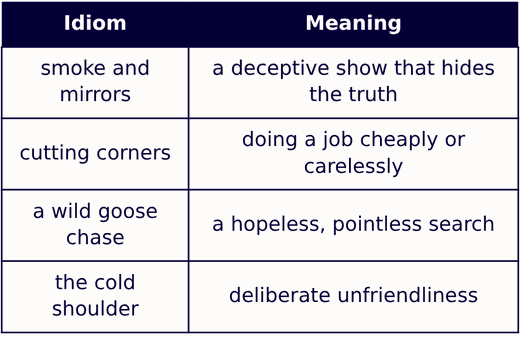 Hence option (c) completes the sentence correctly.
 Only option (b), where a surfer paddles hard to catch the perfect wave, uses the word in that sense of a ridge of water.
In (a) it is a movement of the hand, in (c) a rippling motion made by a crowd, and in (d) the form in which energy travels, so none of them matches.
Only option (b), where a surfer paddles hard to catch the perfect wave, uses the word in that sense of a ridge of water.
In (a) it is a movement of the hand, in (c) a rippling motion made by a crowd, and in (d) the form in which energy travels, so none of them matches.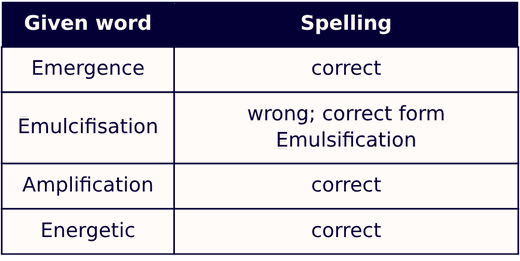 Emergence, Amplification and Energetic are all spelt correctly, so the incorrectly spelt word is option (b).
 The roots geo- (Earth), theo- (God) and poly- (many) give the other three beliefs, and none of them places the Sun at the centre, so option (c) is correct.
 The active form is therefore 'Send the report to the director of the board by Monday morning.'
Options (a) and (c) turn the order into a statement of advice or of future time, and (d) makes the director the doer, so none of them is the true active of the given sentence.
The active form is therefore 'Send the report to the director of the board by Monday morning.'
Options (a) and (c) turn the order into a statement of advice or of future time, and (d) makes the director the doer, so none of them is the true active of the given sentence.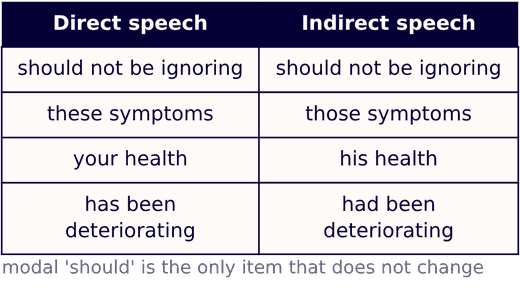 'Your health has been deteriorating' therefore becomes 'his health had been deteriorating', and the near demonstrative 'these symptoms' becomes 'those symptoms'.
The modal 'should' already carries a past form and does not change, so 'should not be ignoring' is carried over unchanged rather than becoming 'would' or 'should have been'.
Only option (a) makes all of these changes together, so it is the correct indirect form.
'Your health has been deteriorating' therefore becomes 'his health had been deteriorating', and the near demonstrative 'these symptoms' becomes 'those symptoms'.
The modal 'should' already carries a past form and does not change, so 'should not be ignoring' is carried over unchanged rather than becoming 'would' or 'should have been'.
Only option (a) makes all of these changes together, so it is the correct indirect form.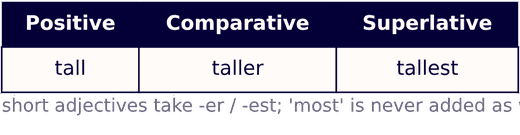 'Most' is used to build the superlative only of longer adjectives, and joining it to a form that already ends in -est makes a double superlative, which is always wrong.
The highlighted part must therefore be replaced by 'the tallest building', so option (b) is correct.
'Most' is used to build the superlative only of longer adjectives, and joining it to a form that already ends in -est makes a double superlative, which is always wrong.
The highlighted part must therefore be replaced by 'the tallest building', so option (b) is correct.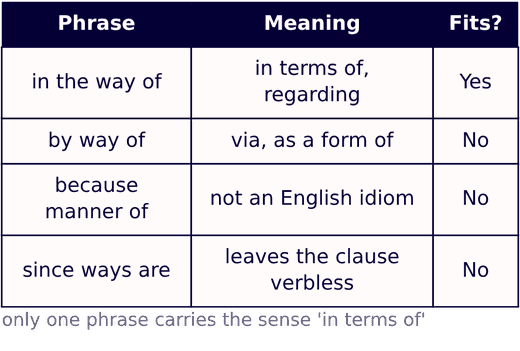 The sentence then reads: The crash comes at a time when the local tech sector is facing a slump in the way of low market sales and poor export growth.
'By way of' means 'via' or 'as a form of', which would wrongly turn the sales figures into a route or a purpose; 'because manner of' is not an English phrase, and 'since ways are' leaves the words that follow with no verb to hang on.
Hence option (d) is correct.
The sentence then reads: The crash comes at a time when the local tech sector is facing a slump in the way of low market sales and poor export growth.
'By way of' means 'via' or 'as a form of', which would wrongly turn the sales figures into a route or a purpose; 'because manner of' is not an English phrase, and 'since ways are' leaves the words that follow with no verb to hang on.
Hence option (d) is correct.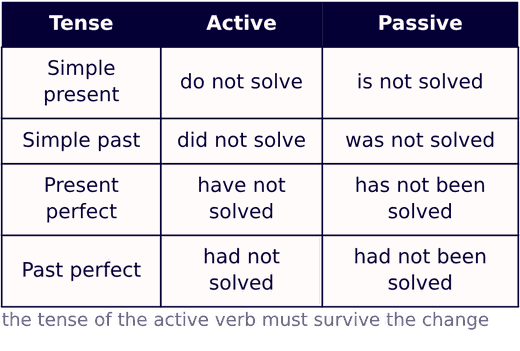 Substituting: 'the case' becomes the subject, 'solved' stays as the third form, and 'We' becomes 'by us'.
So the sentence becomes 'The case had not been solved by us.'
Option (a) shifts to the present perfect 'has not been', (b) to the simple past 'was not' and (d) to the simple present 'is not'; each changes the tense of the original, so only (c) is correct.
Substituting: 'the case' becomes the subject, 'solved' stays as the third form, and 'We' becomes 'by us'.
So the sentence becomes 'The case had not been solved by us.'
Option (a) shifts to the present perfect 'has not been', (b) to the simple past 'was not' and (d) to the simple present 'is not'; each changes the tense of the original, so only (c) is correct.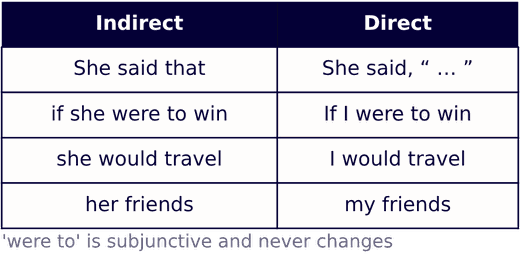 This gives: She said, "If I were to win the lottery, I would travel the world with my friends."
Option (a) replaces 'were to win' by 'won', changing the structure the speaker used; (c) turns it into an open condition 'if I win ... I will travel'; and (d) uses 'had won / would have travelled', a third conditional about the past.
This gives: She said, "If I were to win the lottery, I would travel the world with my friends."
Option (a) replaces 'were to win' by 'won', changing the structure the speaker used; (c) turns it into an open condition 'if I win ... I will travel'; and (d) uses 'had won / would have travelled', a third conditional about the past.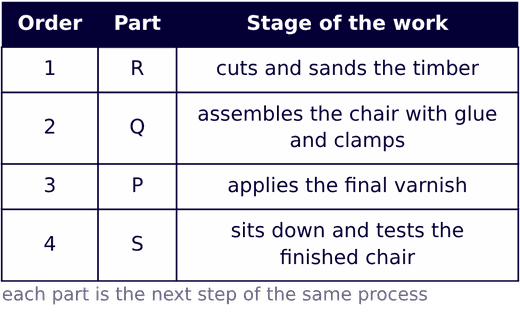 The correct order is R, Q, P, S, which is option (b).
Options (a) and (d) begin with the finished chair being tested or varnished, and (c) starts with the assembly before the wood has been cut.
The correct order is R, Q, P, S, which is option (b).
Options (a) and (d) begin with the finished chair being tested or varnished, and (c) starts with the assembly before the wood has been cut.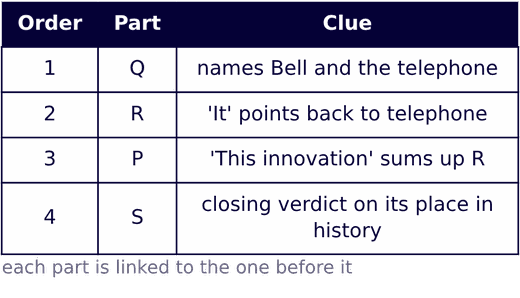 The correct order is Q, R, P, S, which is option (a).