SSC CHSL 29 November 2025 · Shift 3 · General Intelligence — questions with answers · ShikshaSphere
Chapter 185 of 200
29 November 2025 · Shift 3
General Intelligence
25 questions ~25 min readFree
25 questions
A
26
Find the next element that replace the ?
Logically
10,7,1,-11,?
A.-35
B.-32
C.-36
D.-38
Solution
Number series
Every term is smaller than the one before, so look at what is subtracted each time.
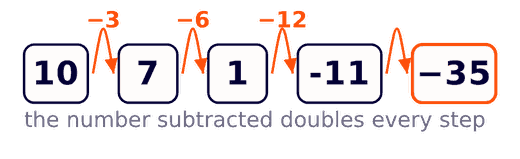
10-3=7, then 7-6=1, then 1-12=-11.
The numbers subtracted are — each is twice the one before it.
So the next subtraction is and the missing term =-11-24=-35. Hence option (a).
27
In a row of boys, is 12th from the left and is 8th from the right. If is 6th to the left of , how many boys are there in the row ?
A.25
B.26
C.27
D.28
Solution
Ranking in a row
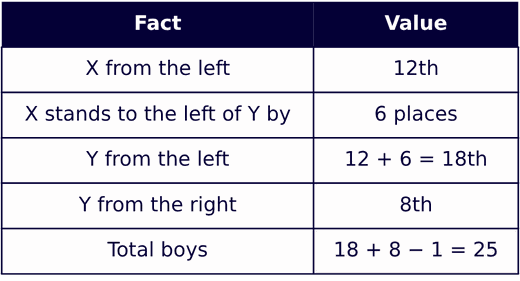
X is 12th from the left, and Y stands 6 places to the right of X.
So the position of Y from the left =12+6=18.
For one and the same person, total = (rank from left) + (rank from right) -1.
Total number of boys =18+8-1=25. Hence option (a).
28
Street lights are placed in a straight line. The 7th light from one end is not working. If there are 18 lights in total, what is its position from the other end?
A.10th
B.11th
C.12th
D.13th
Solution
Position from either end
Only one light is being talked about, so use the single-object rule.
Position from the other end = total - position from the given end .
=18-7+1=12.
So the light that is not working is 12th from the other end. Hence option (c).
29
If 72 # and 20 # , then what is the value of 85 # 20 ?
A.13
B.15
C.16.5
D.17
Solution
Symbol-based operation
Look for one rule that turns both given pairs into their stated values.
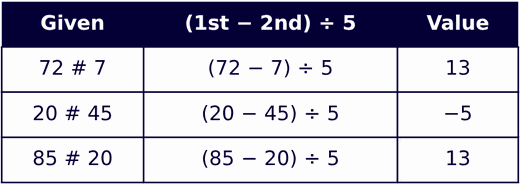
, and .
So the rule is: subtract the second number from the first and divide the result by 5.
Therefore the required value . Hence option (a).
30
If and , then what is the value of ?
A.360
B.420
C.480
D.500
Solution
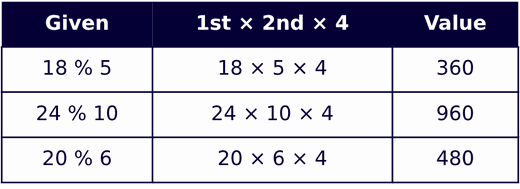
Symbol-based operation
Check both given results against a single rule.
and , so both fit.
The rule is: multiply the two numbers and then multiply the product by 4.
Therefore the required value . Hence option (c).
31
Find the next element that replace the ? Logically
2, 14, 62, 254, ?
A.1014
B.1006
C.1022
D.998
Solution
Number series
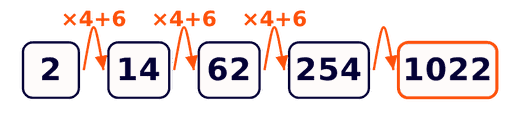
Each term is roughly four times the previous one, so try 'multiply, then add'.
, , — the same rule works every time.
So the next term . Hence option (c).
32
A piece of paper is folded and punched as shown below in the question figures. From the given option figures, indicate how it will appear when opened.
A.
B.
C.
D.
Solution
Paper folding and punching
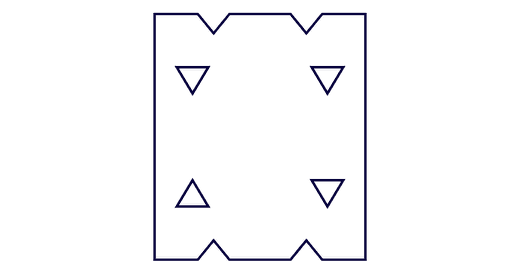
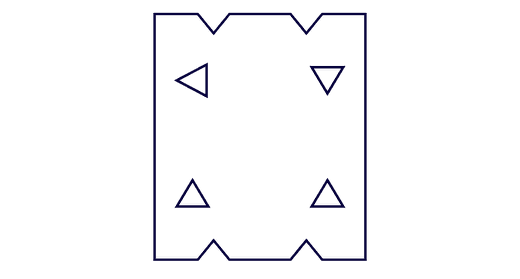
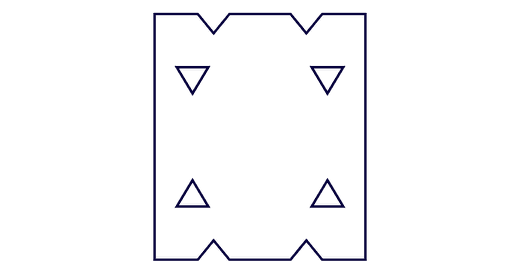
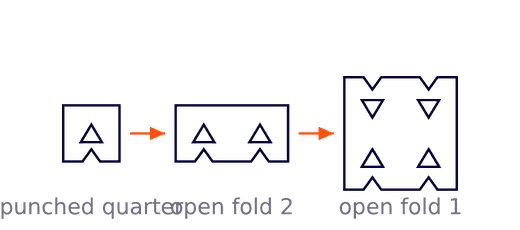
The first fold brings the top half down on to the bottom half; the second fold brings the left half on to the right half, so only the bottom-right quarter is left in hand.
That quarter is punched twice: one triangle pointing upwards inside it, and one triangular notch cut into its bottom edge.
Opening the second fold mirrors both cuts into the bottom-left quarter across a vertical line; a triangle pointing up keeps pointing up in a left–right mirror.
Opening the first fold mirrors the whole bottom half into the top half across a horizontal line, so there each triangle turns over and points downwards and the notches move to the top edge.
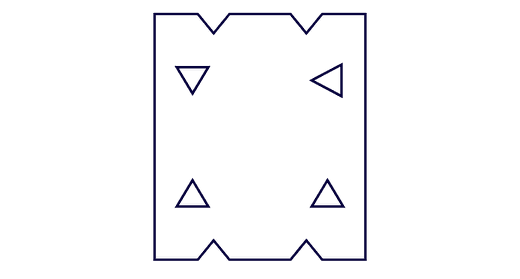
The opened sheet therefore has two downward triangles in the top half, two upward triangles in the bottom half, and two notches on the top edge and two on the bottom edge. Hence option (c).
33
A piece of paper is folded and punched as shown below in the question figures. From the given option figures, indicate how it will appear when opened.
A.
B.
C.
D.
Solution
Paper folding and punching
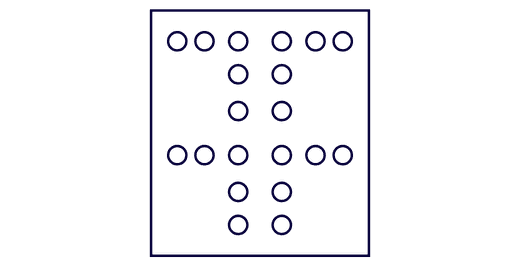
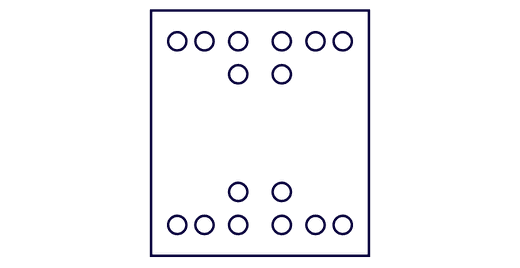
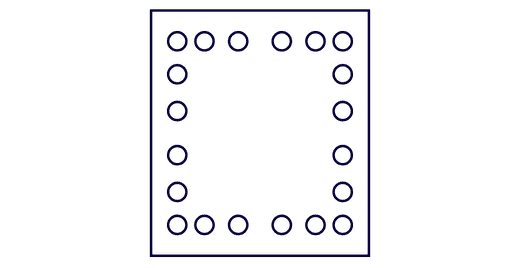
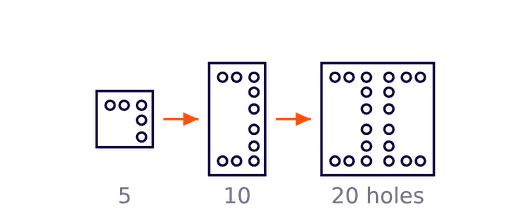
The first fold brings the right half on to the left half; the second fold brings the bottom half up, so only the top-left quarter is left in hand.
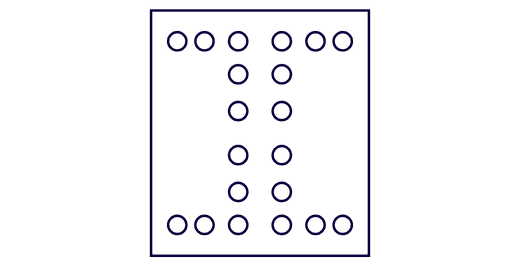
That quarter carries 5 holes: three in a row along its top edge and two more directly below the innermost of those three.
Opening the upward fold copies these 5 holes into the bottom-left quarter as a mirror image about the horizontal fold, giving 10 holes in the left half.
Opening the right-to-left fold copies the whole left half across the vertical fold, so the sheet carries holes in all.
The opened sheet therefore shows six holes along the top edge, six along the bottom edge and four more in each of the two middle columns. Hence option (a).
34
Identify the next number.
5, 11, 19, 29, 41, ?
A.55
B.53
C.51
D.49
Solution
Number series
Take the difference of every pair of consecutive terms.
11-5=6, , , .
The differences themselves rise by 2 each time, so the next difference is 14.
Required number =41+14=55. Hence option (a).
35
In the following question, select the number which can be placed at the sign of question mark (?) from the given alternatives.
A.6
B.5
C.4
D.2
Solution
Missing number
In such an arrangement every row obeys one and the same rule, so the rule read off the completed rows fixes the entry that is missing.
Read that rule from the rows whose three numbers are all given, and then apply it, step for step, to the incomplete row.
Doing so makes the number in place of the question mark 2. Hence option (d).
36
Find the number of triangles in the given figure.
A.14
B.10
C.8
D.12
Solution
Counting triangles
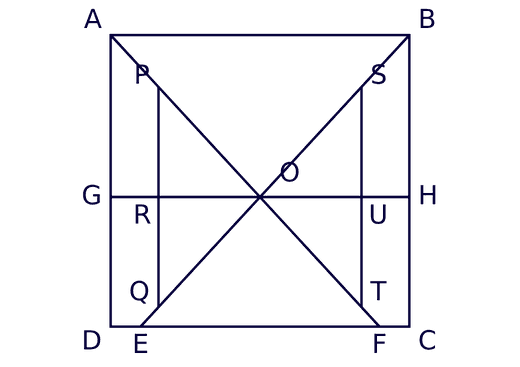
Name the square ABCD with A top-left, B top-right, C bottom-right and D bottom-left. The two slant lines are AF and BE, with E and F on DC; they cross at O. The horizontal line through O meets AD at G and BC at H. The two vertical lines are PQ and ST, cutting the horizontal at R and U.
Smallest ones, each made of a slant line, the horizontal and a vertical: — that is 4.
Made of both slant lines and one vertical: OPQ and OST — that is 2.
Made of both slant lines and a horizontal side: AOB on the top side and EOF on the bottom side — that is 2.
Made of one slant line, the horizontal line and a vertical side: AGO and BHO — that is 2.
The two largest, each using a whole slant line: ADF and BCE — that is 2.
Total =4+2+2+2+2=12. Hence option (d).
37
In the figure given below the square represents the car, the triangle represents the bus and the circle represents the train. The number in each area represents the number of items in that area.
Which of the following statement is NOT correct?
I. Number of Car which are bus are 7 .
II. Total number of train are 21.
A.Only II
B.Only I
C.Both I and II
D.Neither I nor II
Solution
Venn diagram: counting
Cars that are also buses lie in the part common to the square and the triangle, that is the regions marked 1 and 6.
1+6=7, so statement I is correct.
All trains are everything inside the circle: the regions marked and 2.
8+6+3+2=19, not 21, so statement II is not correct.
Only statement II is wrong. Hence option (a).
38
Sales of 5 bikes and T are compared. Sales of no two bikes are equal. Sales of Q is less than only P. Sales of S is less than R but more than T. If sales of R is 450, then what is the possible value of sales of ?
A.460
B.440
C.430
D.445
Solution
Ranking and ordering
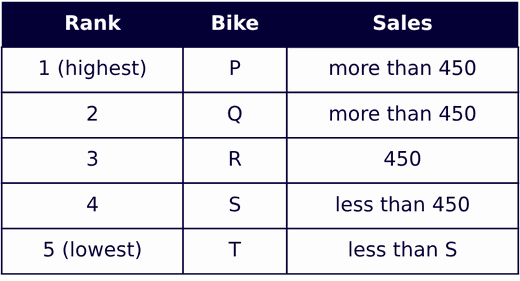
'Sales of Q is less than only P' means exactly one bike beats Q, so P is the highest and Q is second.
'S is less than R but more than T' gives R>S>T, and all three stand below Q.
So the full order is P>Q>R>S>T.
With R=450, we need P>Q>450, so the sales of P must exceed 450.
Among , only 460 is greater than 450. Hence option (a).
39
There are 6 flats on a floor in two rows (three in each row opposite to each other). Flats of one row are facing north. Flats of other row are facing south. These flats are alloted to P, Q, R, S, T and U. S and U get diagonally opposite flats. U's flat is next to R's flat. R gets a South facing flat. The direction in which the flats of Q and T are facing is same. Q's flat is not next to S. Which of the following pair represents people having flats opposite to each other ?
A.UR
B.UT
C.QP
D.TR
Solution
Two-row seating
R gets a south-facing flat, so R sits in the south-facing row, and U, being next to R, is in that same row.
S and U take diagonally opposite flats, so U must be at one end of its row and S at the far end of the other row.
Let U take the left end of the south row. Then R, next to U, takes the middle of that row, and S takes the right end of the north row.
Q and T face the same direction, and only one flat of the south row is still free, so both Q and T are in the north row and P takes the right end of the south row.
Q must not be next to S, so Q cannot take the middle; Q takes the left end of the north row and T the middle.
Facing pairs are therefore Q–U, T–R and S–P, and only TR appears in the options. Hence option (d).
40
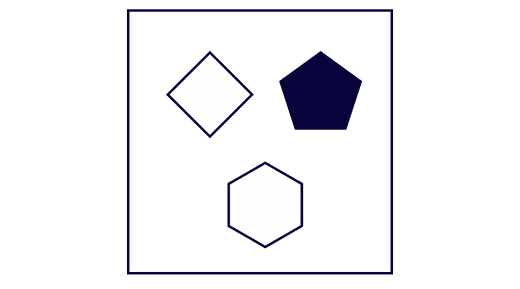
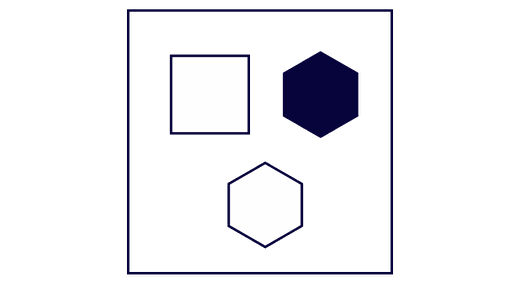
Select the option which has the same relation with the figure C as the relation of figure B with the figure A.
A.
B.
C.
D.
Solution
Figure analogy
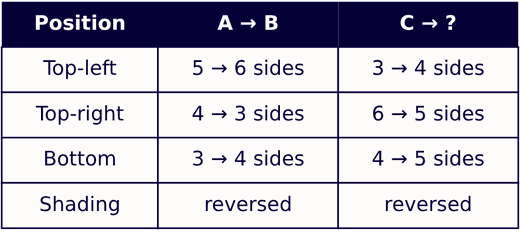
The analogy is A : B :: C : ?, so compare A with B position by position, counting the sides of each shape and noting whether it is shaded.
Top-left: pentagon (5 sides) becomes a hexagon (6 sides), one side more. Top-right: square (4) becomes a triangle (3), one side fewer. Bottom: triangle (3) becomes a four-sided diamond (4), one side more.
In every one of the three positions the shading is also reversed — shaded turns unshaded and unshaded turns shaded.
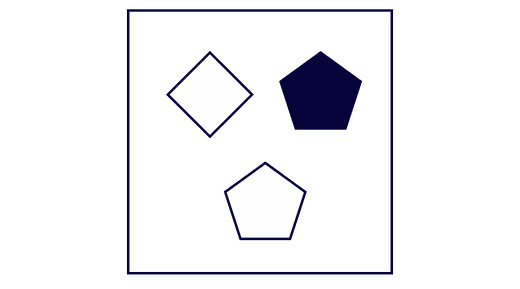
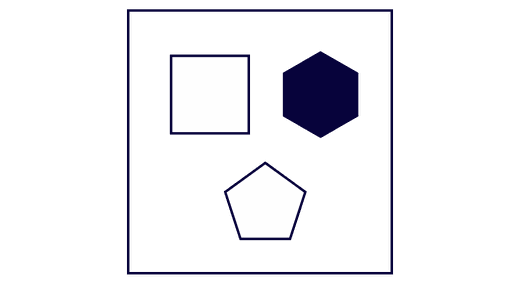
Apply the same changes to C: top-left triangle (3) becomes a four-sided figure (4); top-right hexagon (6) becomes a pentagon (5); bottom diamond (4) becomes a pentagon (5).
Reversing the shading as well, the answer figure carries an unshaded diamond at the top-left, a shaded pentagon at the top-right and an unshaded pentagon at the bottom. Hence option (c).
41
Select the option figure that is related to the third figure in the same way as the second figure is related to the first figure.
A.
B.
C.
D.
Solution
Figure analogy - rotation
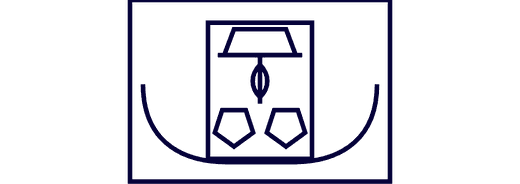
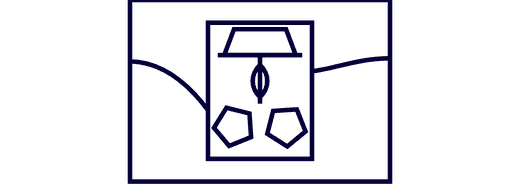
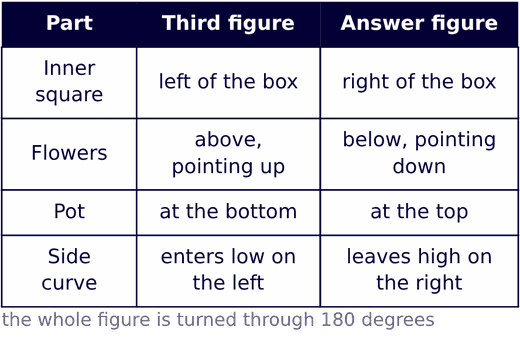
Compare the first two figures part by part: the head, the two eyes with their slanting strokes, the small vertical line, the wavy line and the two long side strokes are all still there, only their places have been exchanged top for bottom and left for right.
That is exactly what turning the whole figure through about the centre of the box does.
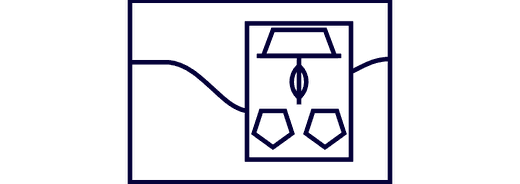
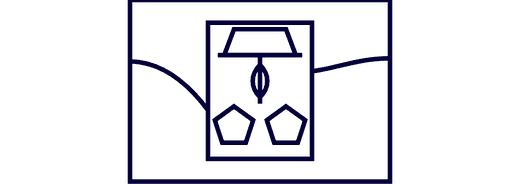
Apply the same turn to the third figure: the inner square, which lies to the left of the box, must move to the right of the box.
The two flowers must come below the pot and point downwards, while the pot must sit above them.
The two side curves also change ends, so the curve that came in low on the left now leaves high on the right.
Only the first answer figure shows every one of these changes together.
Hence the correct option is (a).
42
In the following figure series, select the figure which can be placed at the sign of question mark (?) from the given alternatives.
A.
B.
C.
D.
Solution
Figure series - movement
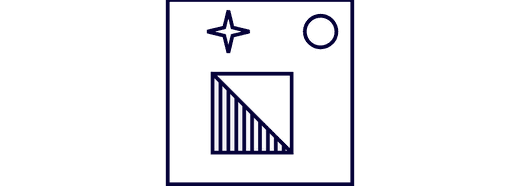
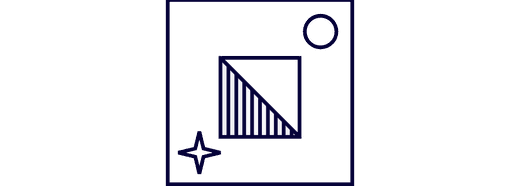
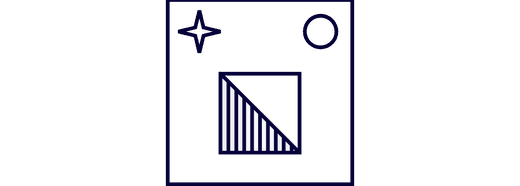
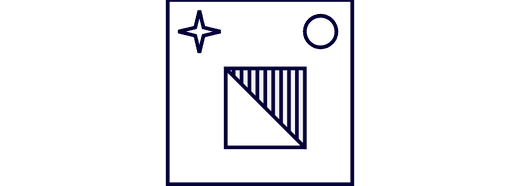
Track the circle first. It stands in the top-left corner, then in the bottom-left corner, then in the bottom-right corner, that is one corner anticlockwise each time.
So in the missing figure the circle must reach the top-right corner.
The star moves the same way: top-right, then bottom-right, then bottom-left, so next it must reach the top-left corner.
The shading of the square simply alternates: the upper-right half is dark, then the lower-left half, then the upper-right half again.
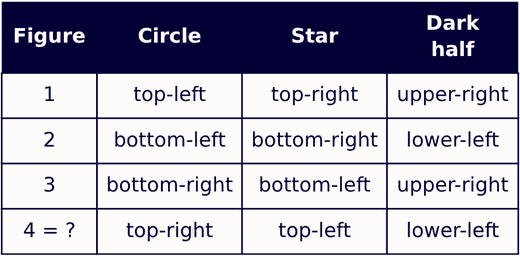
The fourth figure therefore needs the lower-left half of the square dark.
The figure wanted has the star in the top-left corner, the circle in the top-right corner and the lower-left half of the square shaded.
Hence the correct option is (c).
43
After interchanging the given two numbers (not digits), what will be the value of the given equation ?
6 and 8
?
A.36
B.38
C.40
D.42
Solution
BODMAS after interchange
Interchange the numbers 6 and 8: wherever 6 stands write 8, and wherever 8 stands write 6.
The equation becomes .
By BODMAS the division comes first: .
Then the multiplication: .
Now work from left to right: 32+6-2=36.
Hence the correct option is (a).
44
Select the correct combination of mathematical signs to replace (*) signs sequentially and to balance the given equation.
50 * 5 * 6 * 15 *
A.
B.
C.
D.
Solution
Signs to balance an equation
Put the four signs of an option into the stars in order and simplify by BODMAS; the combination that gives 65 is the answer.
Take : the statement becomes .
Division and multiplication are done first, from left to right: and .
Then 60-15+20=65, which is the value asked for.
Hence the correct option is (d).
45
In the following question, four letter-number pairs are given. The letter-number on the left side of ( - ) is related to the letter-number on the right side of (-) with some Logic/Rule/Relation. Three pairs are similar on the basis of same Logic/Rule/Relation. Select the odd one out from the given alternatives.
(NOTE: Operations should be performed on the whole numbers, without breaking down the number into its constituent digits. E.g. 13 - Operations on 13 such as adding /subtracting /multiplying etc. to 13 can be performed. Breaking down 13 into 1 and 3 and then performing mathematical operations on 1 and 3 is not allowed)
A.D150P - E300R
B.M210H - N420J
C.B175E - C350G
D.K198S - L390U
Solution
Odd letter-number pair
Read every pair as: first letter, a number, last letter.
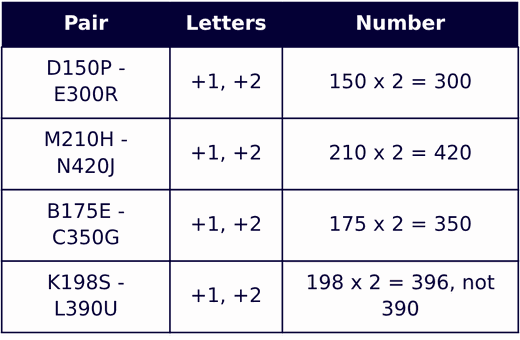
In D150P - E300R the first letter moves 1 step forward (), the number is doubled () and the last letter moves 2 steps forward ().
M210H - N420J obeys it: , , .
B175E - C350G obeys it too: , , .
In K198S - L390U the letters are right (, ), but , not 390.
Hence the odd one out is (d).
46
In the following question, four letter-number pairs are given. The letter-number on the left side of (-) is related to the letter-number on the right side of (-) with some Logic/Rule/Relation. Three pairs are similar on the basis of same Logic/Rule/Relation. Select the odd one out from the given alternatives. (NOTE: Operations should be performed on the whole numbers, without breaking down the number into its constituent digits. E.g. 13 - Operations on 13 such as adding /subtracting /multiplying etc. to 13 can be performed. Breaking down 13 into 1 and 3 and then performing mathematical operations on 1 and 3 is not allowed)
A.BD315 - WY525
B.HK329 - CE539
C.GT541 - BO751
D.QC487 - LX697
Solution
Odd letter-number pair
Each cluster is two letters followed by a three-digit number.
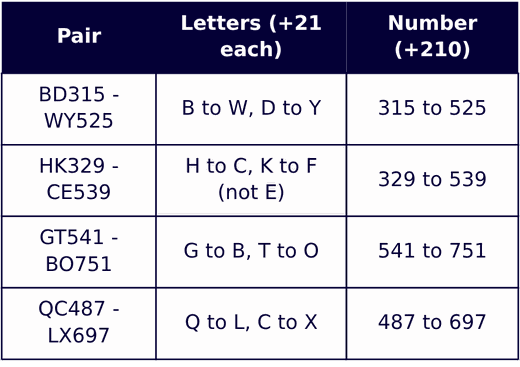
In BD315 - WY525 every letter moves 21 places forward in the cyclic alphabet (B+21=W, D+21=Y) and the number rises by 210 (315+210=525).
GT541 - BO751 obeys it: G+21=B and T+21=O after passing Z, and 541+210=751.
QC487 - LX697 obeys it as well: Q+21=L, C+21=X, and 487+210=697.
In HK329 - CE539 the number is right (329+210=539) and H+21=C is right, but K+21=F, not E.
Hence the odd one out is (b).
47
In the following each alternative a group of numbers is given. The numbers of each group are related to the numbers of the same group by some Logic/Rule/Relation. Select that group of numbers in which numbers are not related by that same Logic/Rule/Relation.
(NOTE: Operations should be performed on the whole numbers, without breaking down the number into its constituent digits. E.g. 13 - Operations on 13 such as adding /subtracting /multiplying etc. to 13 can be performed. Breaking down 13 into 1 and 3 and then performing mathematical operations on 1 and 3 is not allowed)
A.(1231, 1197, 1163)
B.(1050, 1016, 982)
C.
D.
Solution
Odd number group
Look at the gaps between the numbers of each group.
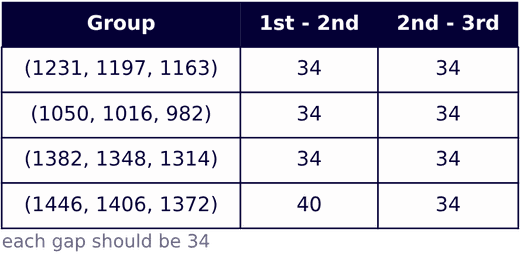
(a): 1231-1197=34 and 1197-1163=34.
(b): 1050-1016=34 and 1016-982=34.
(c): 1382-1348=34 and 1348-1314=34.
(d): 1446-1406=40, which is not 34, even though 1406-1372=34.
Hence the group that breaks the rule is (d).
48
In the following question, in each alternative a group of numbers is given. The numbers of each group are related to the numbers of the same group by some Logic/Rule/Relation. Select that group of numbers in which numbers are not related by that same Logic/Rule/Relation.
(NOTE: Operations should be performed on the whole numbers, without breaking down the number into its constituent digits. E.g. 13 - Operations on 13 such as adding /subtracting /multiplying etc. to 13 can be performed. Breaking down 13 into 1 and 3 and then performing mathematical operations on 1 and 3 is not allowed)
A.(152, 408, 16)
B.(175, 500, 18)
C.(120, 520, 20)
D.(168, 492, 18)
Solution
Odd number group
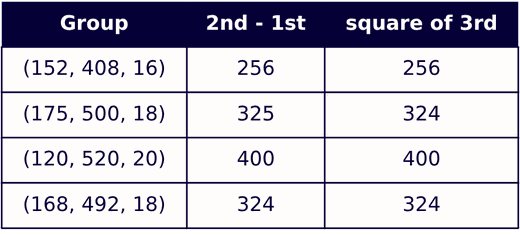
Subtract the first number from the second in each group and compare the result with the square of the third number.
(a): 408-152=256 and .
(c): 520-120=400 and .
(d): 492-168=324 and .
(b): 500-175=325, but , so the difference is one more than the square.
Hence the group that breaks the rule is (b).
49
Select the option that is related to the fifth letter-number cluster in the same way as the second letter-number cluster is related to the first letter-number cluster and fourth letter-number cluster is related to third letter-number cluster.
(NOTE: Operations should be performed on the whole numbers, without breaking down the numbers into its constituent digits. E.g. 13 - Operations on 13 such as adding /subtracting /multiplying etc. to 13 can be performed. Breaking down 13 into 1 and 3 and then performing mathematical operations on 1 and 3 is not allowed)
JD150 : LG345 :: FM130 : HP325 :: CX70 :?
A.EA265
B.FA265
C.EA245
D.FA245
Solution
Letter-number cluster analogy
Split every cluster into two letters and a number.
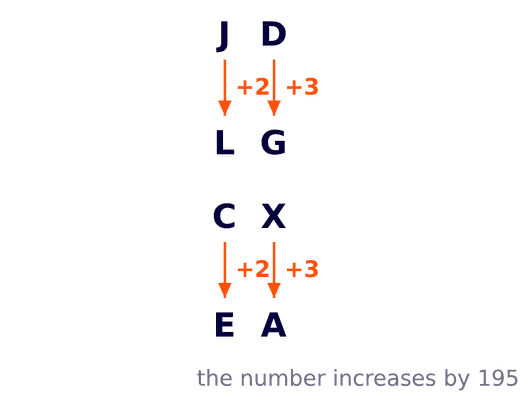
JD150 to LG345: J+2=L, D+3=G, and the number grows by 195, since 150+195=345.
Check with the next pair: F+2=H, M+3=P, and 130+195=325 - the same rule.
Apply it to CX70: C+2=E, and X+3=A after passing Z back to A.
For the number, 70+195=265.
So the required cluster is EA265.
Hence the correct option is (a).
50
Select the option that is related to the fifth letter-number cluster in the same way as the second letter-number cluster is related to the first letter-number cluster and fourth letter-number cluster is related to third letter-number cluster.
(NOTE: Operations should be performed on the whole numbers, without breaking down the numbers into its constituent digits. E.g. 13 - Operations on 13 such as adding /subtracting /multiplying etc. to 13 can be performed. Breaking down 13 into 1 and 3 and then performing mathematical operations on 1 and 3 is not allowed)
BM25 : DP126 :: D030 : FR151 :: TJ35 : ?
A.FU169
B.VM176
C.NV169
D.RV171
Solution
Letter-number cluster analogy
Each cluster is two letters followed by a number.
BM25 to DP126: B+2=D, M+3=P, and .
The middle pair follows the same rule: D+2=F, O+3=R, and .
Now take TJ35: T+2=V and J+3=M.
For the number, .
So the required cluster is VM176.
Hence the correct option is (b).
Finished reading? Now test yourself.
The same 25 questions, but with a timer and the answers hidden — 15 minutes.

 So the next subtraction is and the missing term =-11-24=-35. Hence option (a).
 For one and the same person, total = (rank from left) + (rank from right) -1.
Total number of boys =18+8-1=25. Hence option (a).
For one and the same person, total = (rank from left) + (rank from right) -1.
Total number of boys =18+8-1=25. Hence option (a).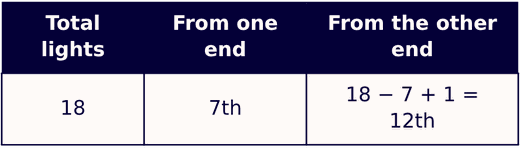 So the light that is not working is 12th from the other end. Hence option (c).
 Therefore the required value . Hence option (a).
 Therefore the required value . Hence option (c).
 So the next term . Hence option (c).
 Opening the second fold mirrors both cuts into the bottom-left quarter across a vertical line; a triangle pointing up keeps pointing up in a left–right mirror.
Opening the first fold mirrors the whole bottom half into the top half across a horizontal line, so there each triangle turns over and points downwards and the notches move to the top edge.
The opened sheet therefore has two downward triangles in the top half, two upward triangles in the bottom half, and two notches on the top edge and two on the bottom edge. Hence option (c).
Opening the second fold mirrors both cuts into the bottom-left quarter across a vertical line; a triangle pointing up keeps pointing up in a left–right mirror.
Opening the first fold mirrors the whole bottom half into the top half across a horizontal line, so there each triangle turns over and points downwards and the notches move to the top edge.
The opened sheet therefore has two downward triangles in the top half, two upward triangles in the bottom half, and two notches on the top edge and two on the bottom edge. Hence option (c).
 Opening the upward fold copies these 5 holes into the bottom-left quarter as a mirror image about the horizontal fold, giving 10 holes in the left half.
Opening the right-to-left fold copies the whole left half across the vertical fold, so the sheet carries holes in all.
The opened sheet therefore shows six holes along the top edge, six along the bottom edge and four more in each of the two middle columns. Hence option (a).
Opening the upward fold copies these 5 holes into the bottom-left quarter as a mirror image about the horizontal fold, giving 10 holes in the left half.
Opening the right-to-left fold copies the whole left half across the vertical fold, so the sheet carries holes in all.
The opened sheet therefore shows six holes along the top edge, six along the bottom edge and four more in each of the two middle columns. Hence option (a).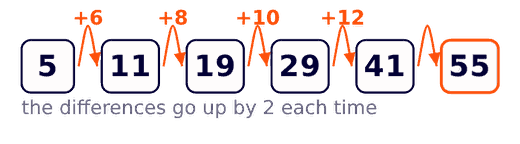 Required number =41+14=55. Hence option (a).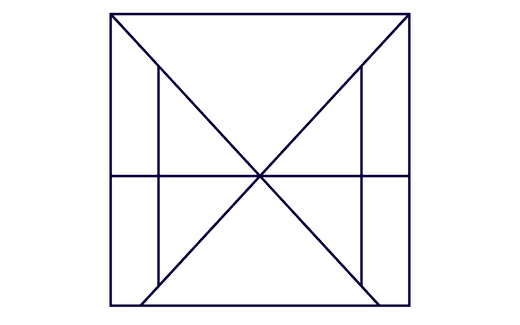
 Smallest ones, each made of a slant line, the horizontal and a vertical: — that is 4.
Made of both slant lines and one vertical: OPQ and OST — that is 2.
Made of both slant lines and a horizontal side: AOB on the top side and EOF on the bottom side — that is 2.
Made of one slant line, the horizontal line and a vertical side: AGO and BHO — that is 2.
The two largest, each using a whole slant line: ADF and BCE — that is 2.
Total =4+2+2+2+2=12. Hence option (d).
Smallest ones, each made of a slant line, the horizontal and a vertical: — that is 4.
Made of both slant lines and one vertical: OPQ and OST — that is 2.
Made of both slant lines and a horizontal side: AOB on the top side and EOF on the bottom side — that is 2.
Made of one slant line, the horizontal line and a vertical side: AGO and BHO — that is 2.
The two largest, each using a whole slant line: ADF and BCE — that is 2.
Total =4+2+2+2+2=12. Hence option (d).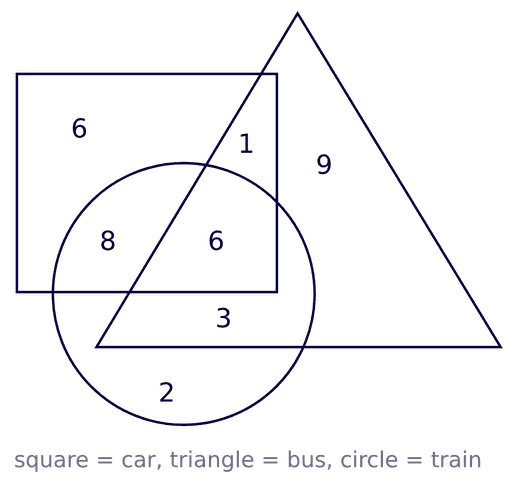 Which of the following statement is NOT correct?
I. Number of Car which are bus are 7 .
II. Total number of train are 21.
Which of the following statement is NOT correct?
I. Number of Car which are bus are 7 .
II. Total number of train are 21.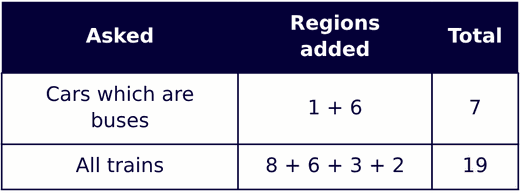 Only statement II is wrong. Hence option (a).
 With R=450, we need P>Q>450, so the sales of P must exceed 450.
Among , only 460 is greater than 450. Hence option (a).
With R=450, we need P>Q>450, so the sales of P must exceed 450.
Among , only 460 is greater than 450. Hence option (a).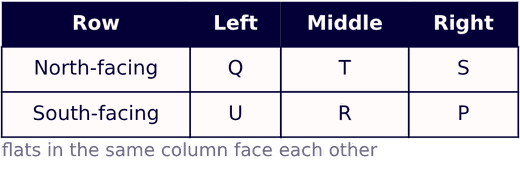 Facing pairs are therefore Q–U, T–R and S–P, and only TR appears in the options. Hence option (d).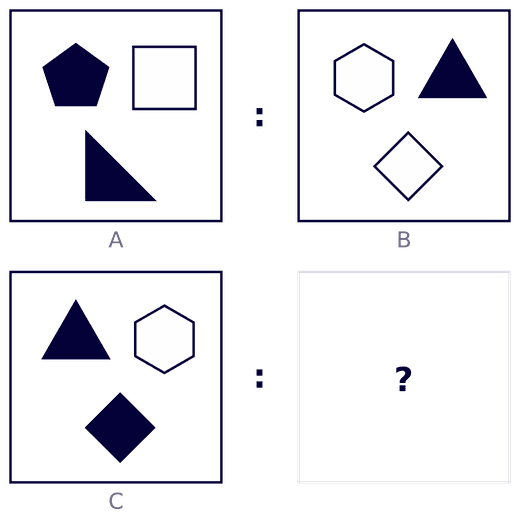
 Apply the same changes to C: top-left triangle (3) becomes a four-sided figure (4); top-right hexagon (6) becomes a pentagon (5); bottom diamond (4) becomes a pentagon (5).
Reversing the shading as well, the answer figure carries an unshaded diamond at the top-left, a shaded pentagon at the top-right and an unshaded pentagon at the bottom. Hence option (c).
Apply the same changes to C: top-left triangle (3) becomes a four-sided figure (4); top-right hexagon (6) becomes a pentagon (5); bottom diamond (4) becomes a pentagon (5).
Reversing the shading as well, the answer figure carries an unshaded diamond at the top-left, a shaded pentagon at the top-right and an unshaded pentagon at the bottom. Hence option (c).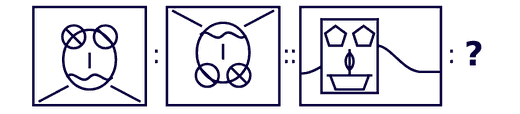
 Only the first answer figure shows every one of these changes together.
Hence the correct option is (a).
Only the first answer figure shows every one of these changes together.
Hence the correct option is (a).
 The figure wanted has the star in the top-left corner, the circle in the top-right corner and the lower-left half of the square shaded.
Hence the correct option is (c).
The figure wanted has the star in the top-left corner, the circle in the top-right corner and the lower-left half of the square shaded.
Hence the correct option is (c).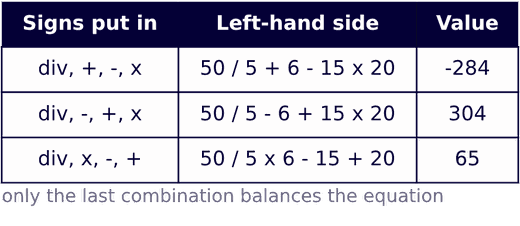 Hence the correct option is (d).
 Hence the odd one out is (d).
 Hence the odd one out is (b).
 Hence the group that breaks the rule is (d).
 Hence the group that breaks the rule is (b).
 Apply it to CX70: C+2=E, and X+3=A after passing Z back to A.
For the number, 70+195=265.
So the required cluster is EA265.
Hence the correct option is (a).
Apply it to CX70: C+2=E, and X+3=A after passing Z back to A.
For the number, 70+195=265.
So the required cluster is EA265.
Hence the correct option is (a).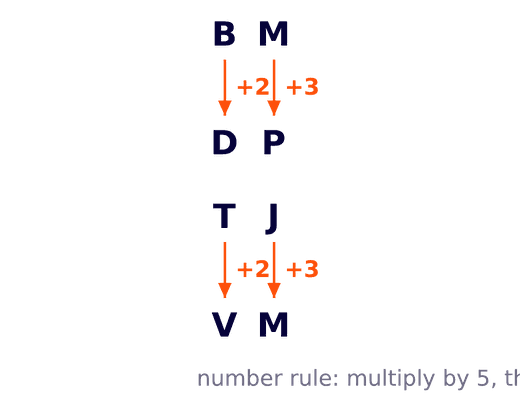 Now take TJ35: T+2=V and J+3=M.
For the number, .
So the required cluster is VM176.
Hence the correct option is (b).
Now take TJ35: T+2=V and J+3=M.
For the number, .
So the required cluster is VM176.
Hence the correct option is (b).