SSC CHSL 30 November 2025 · Shift 3 · English Language — questions with answers · ShikshaSphere
Chapter 200 of 200
30 November 2025 · Shift 3
English Language
25 questions ~25 min readFree
25 questions
A
1
Identify the incorrect sentence.
A.These pieces of equipments are handled by trained technicians.
B.Horses can run very fast.
C.The Aravallis are the oldest mountains of the west.
D.There are not many supporters of Netaji these days.
Solution
Uncountable nouns
The four sentences have to be scanned for a noun that has no plural form of its own.
'Equipment' is an uncountable (mass) noun, so it never takes '-s'; the quantity is shown by the counter placed before it — 'pieces of equipment'.
Option (a) writes 'pieces of equipments', which marks the plural twice, so it is the incorrect sentence; the other three are grammatically sound.
2
Identify the incorrect sentence.
A.Twenty percent of the workers in the factory work night shifts.
B.Two hours is enough time to complete the test.
C.Her information was accurate and helpful for the investigation.
D.The jury was undivided in their verdict to imprison the person.
Solution
Collective noun agreement
A collective noun such as 'jury' takes a singular verb and a singular pronoun when the group acts as one body.
Option (d) uses the singular verb 'was' but refers back with the plural pronoun 'their', so the sentence contradicts itself.
The word 'undivided' itself says the jury acted as a single unit, so the correct form is: The jury was undivided in its verdict to imprison the person.
The other three are sound: a percentage of a plural noun takes a plural verb, a stretch of time treated as one block takes a singular verb, and 'information' is an uncountable noun used correctly.
3
Fill in the blank with the most appropriate preposition:
She invested heavily green technology projects last year.
A.on
B.from
C.in
D.at
Solution
Preposition with 'invest'
The verb 'invest' is followed by 'in' when money, time or effort is put into something in the hope of a return.
So the sentence reads: She invested heavily in green technology projects last year.
'invest on' and 'invest at' are not standard collocations, and 'from' would reverse the direction of the money.
4
Fill in the blank with the most appropriate conjunction:
The patient performed well under medication, the diagnosis remains unclear.
A.thus
B.so
C.yet
D.since
Solution
Conjunction of contrast
The two halves of the sentence pull in opposite directions: the patient did well, but the diagnosis is still unknown.
A contrast link is therefore needed, and 'yet' joins a second clause that goes against the expectation raised by the first.
'Thus' and 'so' both mark a result and 'since' marks a cause, so none of them can carry the contrast.
5
Select the most appropriate synonym of the word:
Fact
A.Mirage
B.Testimony
C.Fantasy
D.Truth
Solution
Synonym
'Fact' is a piece of information that is real and can be verified.
'Truth' names exactly that quality of being in accordance with reality, so it is the closest synonym.
'Mirage' and 'Fantasy' are the opposite — appearances or imaginings that are not real — and 'Testimony' is only a witness's statement, which may or may not be true.
6
Select the part of the sentence that contains an incorrect spelling.
A. The school comitee decided to
B. organize a cultural
C. festival to celebrate
D. diversity and student talents.
A.A
B.B
C.C
D.D
Solution
Spelling error
Part A reads 'The school comitee decided to'.
The word is spelt 'committee' — a double m, a double t and a double e; the sentence has dropped one letter from each pair.
Parts B, C and D — 'organize', 'festival', 'diversity' — are all spelt correctly, so the error lies in part A.
7
Select the most appropriate antonym of the word:
Modern
A.Contemporary
B.Current
C.Obsolete
D.Recent
Solution
Antonym
'Modern' describes whatever belongs to the present time or to the latest style.
'Obsolete' describes what has gone out of use and been replaced by something newer, so it is the direct opposite.
'Contemporary', 'Current' and 'Recent' all point to the present or the very near past, which makes them synonyms of 'Modern', not antonyms.
8
Choose the most suitable option to replace the highlighted part of the sentence:
The fashion of carrying backpacks is something that has most certain become popular this year.
A.most certainly
B.very certainly
C.very certain
D.maybe
Solution
Adverb form
The highlighted words qualify the verb phrase 'become popular', and a verb can be modified only by an adverb, never by an adjective.
'Certain' is an adjective; its adverb form is 'certainly', and 'most' intensifies that adverb.
So the sentence should read '... has most certainly become popular this year'. 'Very certainly' is unidiomatic, 'very certain' repeats the adjective error, and 'maybe' destroys the confident sense.
9
Choose the correct one-word substitute for:
A person who is guided more by ideals than by practical considerations.
A.Pessimist
B.Fatalist
C.Idealist
D.Opportunist
Solution
One word substitution
The definition points to a person whose actions are shaped by high principles rather than by what is practical.
'Idealist' is precisely that word — one who lives by ideals and perfect standards.
A pessimist expects the worst, a fatalist believes everything is already fixed by destiny, and an opportunist seizes whatever benefits him, so none of them fits the definition.
10
Select the most appropriate antonym of the word:
Coax
A.appeal
B.attract
C.Bully
D.Cajole
Solution
Antonym
'Coax' means to persuade somebody gently, patiently and with kind words.
'Bully' means to force somebody by threats and intimidation, which is the exact opposite method of getting one's way.
'Cajole' is a near synonym of 'coax', while 'appeal' and 'attract' carry no idea of forcing anyone, so none of them is the antonym.
11
Choose the option that is the most appropriate conversion of the following sentence into Direct Speech.
The teacher asked whether she had been revising consistently and if she would be prepared by Friday.
A.The teacher asked, "Have you been revising consistently and will you be prepared by Friday?"
B.The teacher asked, "Had you been revising consistently and would you be prepared by Friday?"
C.The teacher asked, "Were you revising consistently and will you be prepared by Friday?"
D.The teacher asked, "Have you revised consistently and are you prepared by Friday?"
Solution
Direct speech
When an indirect question is turned into direct speech the reporting verb 'asked' stays, the back-shift of tense is undone, and the reported words go inside inverted commas with a question mark.
'had been revising' comes forward to 'have you been revising', and 'would be prepared' returns to 'will you be prepared'.
'Whether' and 'if' are dropped because the direct form is itself a question, and 'she' becomes 'you' since the teacher is speaking to the student.
Hence: The teacher asked, "Have you been revising consistently and will you be prepared by Friday?"
12
Change the following sentence into the Active form.
The revised plan will have been discussed for weeks before it is approved.
A.They will have discussed the revised plan for weeks before it is approved.
B.The revised plan will have discussed for weeks before they approve it.
C.The revised plan will be discussed for weeks before it is approved.
D.They will be discussing the revised plan for weeks before they approve it.
Solution
Passive to active voice
The passive verb is 'will have been discussed', which is the future perfect tense.
The active of 'will have been + V3' is 'will have + V3', and since the passive names no doer, the general subject 'They' is supplied.
The old subject 'the revised plan' now becomes the object: They will have discussed the revised plan for weeks before it is approved.
Option (c) drops the perfect aspect and (d) turns it into a continuous, while (b) leaves the plan as the subject of an active verb, which absurdly makes the plan the discusser.
13
Select the option that expresses the given sentence in indirect voice.
He said to us, "You will be successful."
A.He told us that you would be successful.
B.He told us that we would be successful.
C.He told us that we will be successful.
D.He told us that he would be successful.
Solution
Indirect speech
The reporting verb 'said to' becomes 'told', and the conjunction 'that' introduces the reported clause.
'You' stands for the listeners, who appear as 'us' in the reporting clause, so inside the reported speech it becomes 'we'.
'Will' back-shifts to 'would' because the reporting verb 'said' is in the past tense.
Hence: He told us that we would be successful.
14
Choose the correct passive voice transformation of the sentence:
The teacher is guiding the students.
A.The students were being guided by the teacher.
B.The students are guided by the teacher.
C.The students are being guided by the teacher.
D.The students have been guided by the teacher.
Solution
Passive voice
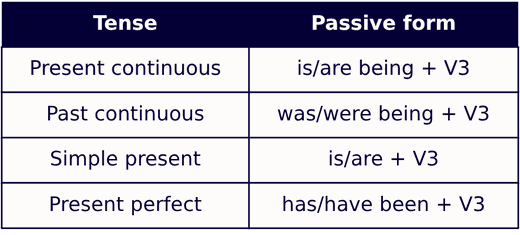
The sentence is in the present continuous, whose passive pattern is 'is/are + being + V3'.
The object 'the students' becomes the subject and is plural, so the verb must be 'are being guided'.
That gives: The students are being guided by the teacher. Option (a) shifts to the past, (b) drops 'being' and becomes a simple present, and (d) turns it into a present perfect.
15
Directions (Qs. 15-19): Read the following passage carefully and answer the questions that follow.
Spices, though commonplace in daily cooking, exist in a wide array of forms, each shaped by regional origins and preparation techniques. Common ground spices, the most widely used variety, are produced through drying and grinding processes that remove moisture and standardise texture. Their fine consistency and strong aroma make them essential in household kitchens and commercial food production.
In contrast, whole spices are minimally processed and retain natural oils that enhance depth of flavour. Culinary experts often praise their robust character, especially when freshly crushed. Certain spices, such as saffron, are valued not only for taste but also for their rarity and labour-intensive harvesting methods.
Turmeric, sourced primarily from tropical regions, derives its vibrant colour from curcumin compounds. While many believe it possesses medicinal properties beyond mere seasoning, scientific evidence remains under continuous examination. Asafoetida, widely used in South Asian cuisine, emits a pungent aroma due to sulphur compounds, adding complexity to vegetarian dishes.
Vanilla pods, regarded as one of the most luxurious flavouring agents, are hand-cured through meticulous processes. Highly prized for their fragrance and subtlety, they serve more as a finishing accent than a routine ingredient.
Thus, although unified by their role in flavour enhancement, spices differ markedly in aroma, potency, processing, and cultural relevance, making them objects of both necessity and refined appreciation.
Identify the correct transformation of the sentence below into the passive voice without altering its meaning.
Original sentence:
"Culinary experts often praise their robust character for the depth of flavour they provide.
A.Their robust character is often praised by culinary experts for the depth of flavour they provide.
B.Their robust character provides the depth of flavour often praised by culinary experts.
C.The depth of flavour is often praised by culinary experts for their robust character.
D.The robust character provides the depth of flavour often admired by culinary experts.
Solution
Passive voice
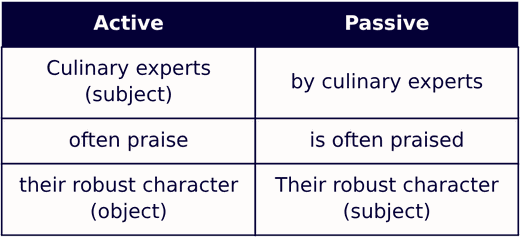
In the active sentence 'Culinary experts' is the subject and 'their robust character' is the object of 'praise'.
In the passive the object moves to the front, the verb becomes 'is praised' — simple present, singular because 'character' is singular — and the old subject follows 'by'.
The adverb 'often' keeps its place before the main verb and the trailing phrase 'for the depth of flavour they provide' is left untouched.
Hence option (a). Options (b) and (d) are still active and shift the meaning, while (c) wrongly promotes 'the depth of flavour' to subject.
16
Directions (Qs. 15-19): Read the following passage carefully and answer the questions that follow.
Spices, though commonplace in daily cooking, exist in a wide array of forms, each shaped by regional origins and preparation techniques. Common ground spices, the most widely used variety, are produced through drying and grinding processes that remove moisture and standardise texture. Their fine consistency and strong aroma make them essential in household kitchens and commercial food production.
In contrast, whole spices are minimally processed and retain natural oils that enhance depth of flavour. Culinary experts often praise their robust character, especially when freshly crushed. Certain spices, such as saffron, are valued not only for taste but also for their rarity and labour-intensive harvesting methods.
Turmeric, sourced primarily from tropical regions, derives its vibrant colour from curcumin compounds. While many believe it possesses medicinal properties beyond mere seasoning, scientific evidence remains under continuous examination. Asafoetida, widely used in South Asian cuisine, emits a pungent aroma due to sulphur compounds, adding complexity to vegetarian dishes.
Vanilla pods, regarded as one of the most luxurious flavouring agents, are hand-cured through meticulous processes. Highly prized for their fragrance and subtlety, they serve more as a finishing accent than a routine ingredient.
Thus, although unified by their role in flavour enhancement, spices differ markedly in aroma, potency, processing, and cultural relevance, making them objects of both necessity and refined appreciation.
Choose the sentence that correctly changes the tense of the following from present simple to past perfect.
"Many believe it possesses medicinal properties beyond mere seasoning."
A.Many believed it had possessed medicinal properties beyond mere seasoning.
B.Many had believed it possessed medicinal properties beyond mere seasoning.
C.Many had believed it had possessed medicinal properties beyond mere seasoning.
D.Many believed it had been possessing medicinal properties beyond mere seasoning.
Solution
Past perfect tense
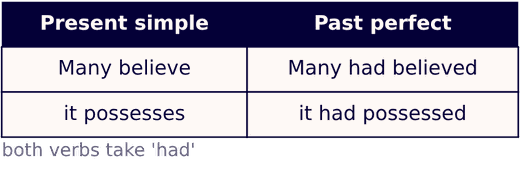
The past perfect is formed with 'had + past participle', and here both verbs of the sentence have to be shifted — the reporting verb 'believe' and the verb 'possesses' in the that-clause.
'believe' becomes 'had believed' and 'possesses' becomes 'had possessed'.
Only option (c) makes both changes; (a) and (b) shift just one verb each, and (d) uses the past perfect continuous, which is a different tense altogether.
17
Directions (Qs. 15-19): Read the following passage carefully and answer the questions that follow.
Spices, though commonplace in daily cooking, exist in a wide array of forms, each shaped by regional origins and preparation techniques. Common ground spices, the most widely used variety, are produced through drying and grinding processes that remove moisture and standardise texture. Their fine consistency and strong aroma make them essential in household kitchens and commercial food production.
In contrast, whole spices are minimally processed and retain natural oils that enhance depth of flavour. Culinary experts often praise their robust character, especially when freshly crushed. Certain spices, such as saffron, are valued not only for taste but also for their rarity and labour-intensive harvesting methods.
Turmeric, sourced primarily from tropical regions, derives its vibrant colour from curcumin compounds. While many believe it possesses medicinal properties beyond mere seasoning, scientific evidence remains under continuous examination. Asafoetida, widely used in South Asian cuisine, emits a pungent aroma due to sulphur compounds, adding complexity to vegetarian dishes.
Vanilla pods, regarded as one of the most luxurious flavouring agents, are hand-cured through meticulous processes. Highly prized for their fragrance and subtlety, they serve more as a finishing accent than a routine ingredient.
Thus, although unified by their role in flavour enhancement, spices differ markedly in aroma, potency, processing, and cultural relevance, making them objects of both necessity and refined appreciation.
Which word from the passage means 'origin'?
A.Provenance
B.Cuisine
C.Aroma
D.Texture
Solution
Vocabulary from passage
The question asks for the word that carries the sense of 'origin' — the source or place a thing comes from.
'Provenance' means exactly the place of origin or earliest known history of something, which matches the passage's idea of spices being shaped by their regional origins.
'Cuisine' is a style of cooking, 'aroma' is a smell and 'texture' is the feel of a substance, so none of them names a source.
18
Directions (Qs. 15-19): Read the following passage carefully and answer the questions that follow.
Spices, though commonplace in daily cooking, exist in a wide array of forms, each shaped by regional origins and preparation techniques. Common ground spices, the most widely used variety, are produced through drying and grinding processes that remove moisture and standardise texture. Their fine consistency and strong aroma make them essential in household kitchens and commercial food production.
In contrast, whole spices are minimally processed and retain natural oils that enhance depth of flavour. Culinary experts often praise their robust character, especially when freshly crushed. Certain spices, such as saffron, are valued not only for taste but also for their rarity and labour-intensive harvesting methods.
Turmeric, sourced primarily from tropical regions, derives its vibrant colour from curcumin compounds. While many believe it possesses medicinal properties beyond mere seasoning, scientific evidence remains under continuous examination. Asafoetida, widely used in South Asian cuisine, emits a pungent aroma due to sulphur compounds, adding complexity to vegetarian dishes.
Vanilla pods, regarded as one of the most luxurious flavouring agents, are hand-cured through meticulous processes. Highly prized for their fragrance and subtlety, they serve more as a finishing accent than a routine ingredient.
Thus, although unified by their role in flavour enhancement, spices differ markedly in aroma, potency, processing, and cultural relevance, making them objects of both necessity and refined appreciation.
Which word from the passage means 'expert understanding and judgement' ?
A.Casual
B.Potency
C.Connoisseurship
D.Examination
Solution
Vocabulary from passage
'Expert understanding and judgement' describes a trained, discriminating taste in some field.
'Connoisseurship' is exactly that — the knowledge and refined judgement of a connoisseur, matching the passage's closing idea of 'refined appreciation'.
'Casual' means informal, 'potency' means strength and 'examination' means inspection, so none of them carries the sense of expert judgement.
19
Directions (Qs. 15-19): Read the following passage carefully and answer the questions that follow.
Spices, though commonplace in daily cooking, exist in a wide array of forms, each shaped by regional origins and preparation techniques. Common ground spices, the most widely used variety, are produced through drying and grinding processes that remove moisture and standardise texture. Their fine consistency and strong aroma make them essential in household kitchens and commercial food production.
In contrast, whole spices are minimally processed and retain natural oils that enhance depth of flavour. Culinary experts often praise their robust character, especially when freshly crushed. Certain spices, such as saffron, are valued not only for taste but also for their rarity and labour-intensive harvesting methods.
Turmeric, sourced primarily from tropical regions, derives its vibrant colour from curcumin compounds. While many believe it possesses medicinal properties beyond mere seasoning, scientific evidence remains under continuous examination. Asafoetida, widely used in South Asian cuisine, emits a pungent aroma due to sulphur compounds, adding complexity to vegetarian dishes.
Vanilla pods, regarded as one of the most luxurious flavouring agents, are hand-cured through meticulous processes. Highly prized for their fragrance and subtlety, they serve more as a finishing accent than a routine ingredient.
Thus, although unified by their role in flavour enhancement, spices differ markedly in aroma, potency, processing, and cultural relevance, making them objects of both necessity and refined appreciation.
Which item is described as "more as a finishing accent than a routine ingredient"?
A.Turmeric
B.Asafoetida
C.Vanilla pods
D.Ground spices
Solution
Reading comprehension detail
The fourth paragraph of the passage deals with vanilla pods.
It says they are 'highly prized for their fragrance and subtlety' and that they 'serve more as a finishing accent than a routine ingredient'.
Turmeric and asafoetida are presented as everyday cooking spices and ground spices are called the most widely used variety, so none of them is the item described.
20
Rearrange the following sentences to form a meaningful and grammatically correct paragraph:
P. The final figure, a woman carved from a single slab of stone, carried an expression of profound grief.
Q. For several months, the artist had laboured continuously, chiselling the rock with precision.
R. She drew inspiration from an old photograph of her mother taken during a time of great suffering.
S . The artwork was a tribute, intended to honour the woman's memory and enduring strength.
A.P, R, Q, S
B.R, Q, P, S
C.S, R, P, Q
D.Q, R, P, S
Solution
Sentence rearrangement
R opens the paragraph: it introduces the artist and the old photograph of her mother from which she drew her inspiration.
Q follows with the months of patient chiselling that this inspiration led to.
P then presents the finished figure — the woman carved from a single slab of stone.
S closes by giving the purpose of that finished work: a tribute to the woman's memory and strength.
The correct order is therefore R, Q, P, S.
21
Rearrange the following sentence parts to form a meaningful and grammatically correct paragraph:
P. He explained his assessment and recommended a plan of treatment confidently.
Q. To look for specific indicators, he requested several diagnostic scans and blood tests.
R. He reviewed all the details, comparing them with his medical knowledge.
S. As the patient described the symptoms, the physician listened carefully.
A.S, P, R, Q
B.Q, S, R, P
C.S, Q, R, P
D.P, Q, R, S
Solution
Sentence rearrangement
The paragraph describes one medical consultation, so it must begin at the moment the consultation begins.
S introduces both persons - the patient describing the symptoms and the physician listening - so S is the opening part.
Q follows naturally: only after hearing the symptoms would he order diagnostic scans and blood tests to look for indicators.
R comes next, because 'all the details' can only mean the results of those tests, which he now compares with his medical knowledge.
P is the closing step - after that review he explains his assessment and recommends a plan of treatment.
So the correct order is S, Q, R, P, and option (c) is correct.
22
Select the most appropriate option to replace the word highlighted in Bold/underline.
She mastered the skill of bluffing with confidence and dramatic expressions.
A.describing
B.pretending
C.demonstrating
D.confessing
Solution
One-word substitution
To 'bluff' is to put on a show of confidence or knowledge that one does not really have, so as to mislead others.
The sentence supports this sense - she used confidence and dramatic expressions as a practised skill, that is, she was acting a part.
'Pretending' means exactly this - behaving as if something is true when it is not - so it can replace the highlighted word without changing the meaning.
'Describing' (telling about something) and 'demonstrating' (showing how something works) miss the idea of deception, and 'confessing' (admitting the truth) is its very opposite.
Hence option (b) is correct.
23
Choose the most suitable option to fill in the blanks.
The people brought the young girl to the
who checked her carefully, saw a scar on her right and duly announced her the destined one.
A.moral, morale
B.oracle, auricle
C.capital, capitol
D.aural, oral
Solution
Homophone pair
Both blanks are to be filled by a pair of similar-sounding words, and each word must suit its own slot.
The first blank names the person the girl is brought before for a judgement: an 'oracle' is a priest or priestess through whom a god's prophecy is delivered.
The second blank names a body part on which a scar is seen: the 'auricle' is the visible outer part of the ear.
This fits the sentence exactly - the oracle examines her, finds the scar on her right auricle and declares her the destined one.
'Moral/morale', 'capital/capitol' and 'aural/oral' offer no word that can mean a prophet, so all three fail at the very first blank.
Hence option (b) is correct.
24
Select the incorrectly spelt word.
A.underline
B.archiac
C.obfuscated
D.enchant
Solution
Spelling
Test each option against its standard dictionary spelling.
'Underline', 'obfuscated' and 'enchant' are all written correctly.
'Archiac' is wrong - the correct spelling is 'archaic', meaning very old or no longer in use.
The trap lies in the vowel order: it is arch-a-i-c, not arch-i-a-c.
Hence option (b) is the incorrectly spelt word.
25
Which of the following terms refers to a protein produced in the blood that fights diseases by attacking and killing harmful bacteria, viruses, etc.?
A.Antibody
B.Antidote
C.Antivenom
D.Antitoxin
Solution
One-word substitution
An antibody is a protein produced in the blood in response to an infection; it attacks and destroys harmful bacteria, viruses and other foreign bodies.
That is word-for-word the definition given, so 'Antibody' is the term asked for.
An antidote is a medicine taken to counteract a poison, and an antivenom is the particular antidote used against snake or insect venom - both are given from outside, not produced in the blood.
An antitoxin acts only on a toxin, whereas the definition speaks of fighting the bacteria and viruses themselves.
Hence option (a) is correct.
Finished reading? Now test yourself.
The same 25 questions, but with a timer and the answers hidden — 15 minutes.

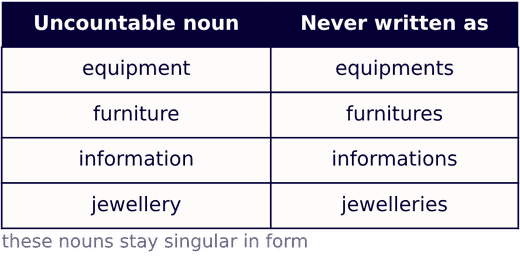 Option (a) writes 'pieces of equipments', which marks the plural twice, so it is the incorrect sentence; the other three are grammatically sound.
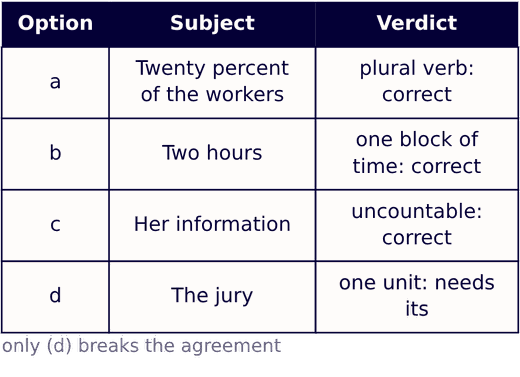 The other three are sound: a percentage of a plural noun takes a plural verb, a stretch of time treated as one block takes a singular verb, and 'information' is an uncountable noun used correctly.
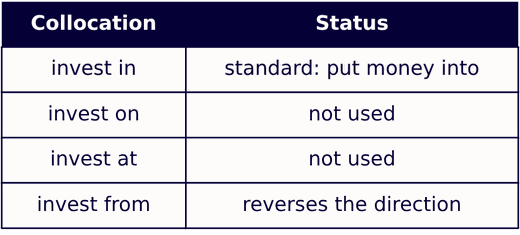 'invest on' and 'invest at' are not standard collocations, and 'from' would reverse the direction of the money.
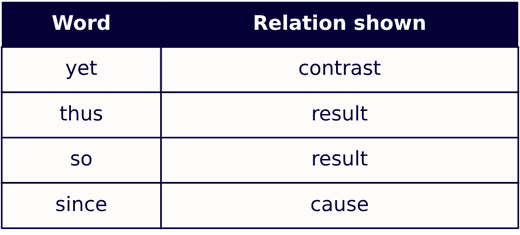 'Thus' and 'so' both mark a result and 'since' marks a cause, so none of them can carry the contrast.
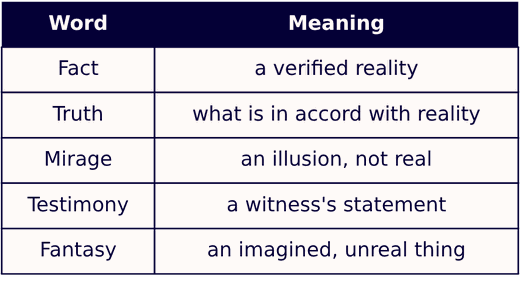 'Mirage' and 'Fantasy' are the opposite — appearances or imaginings that are not real — and 'Testimony' is only a witness's statement, which may or may not be true.
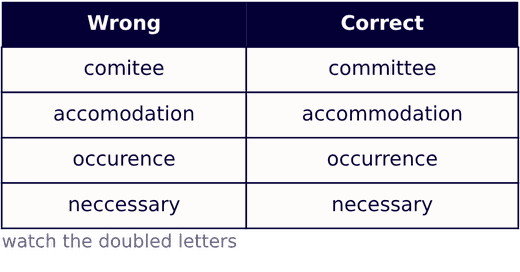 Parts B, C and D — 'organize', 'festival', 'diversity' — are all spelt correctly, so the error lies in part A.
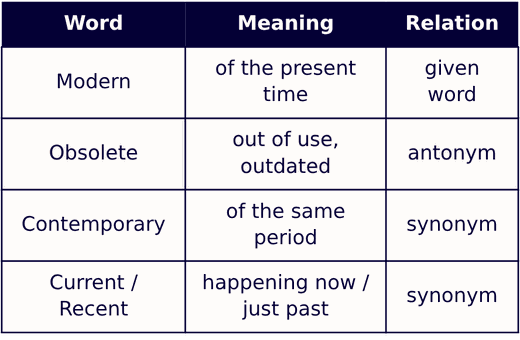 'Contemporary', 'Current' and 'Recent' all point to the present or the very near past, which makes them synonyms of 'Modern', not antonyms.
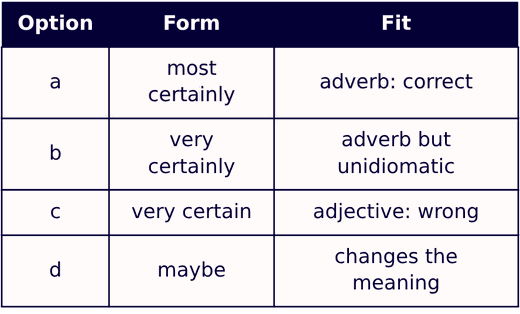 So the sentence should read '... has most certainly become popular this year'. 'Very certainly' is unidiomatic, 'very certain' repeats the adjective error, and 'maybe' destroys the confident sense.
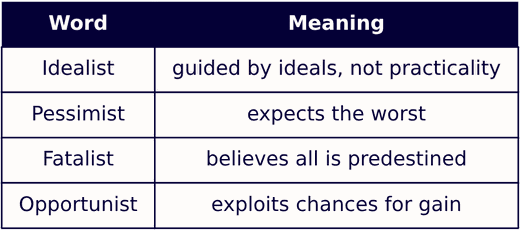 A pessimist expects the worst, a fatalist believes everything is already fixed by destiny, and an opportunist seizes whatever benefits him, so none of them fits the definition.
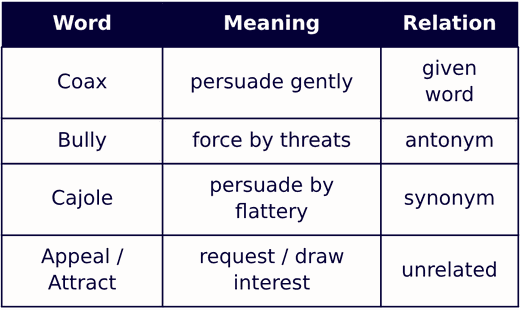 'Cajole' is a near synonym of 'coax', while 'appeal' and 'attract' carry no idea of forcing anyone, so none of them is the antonym.
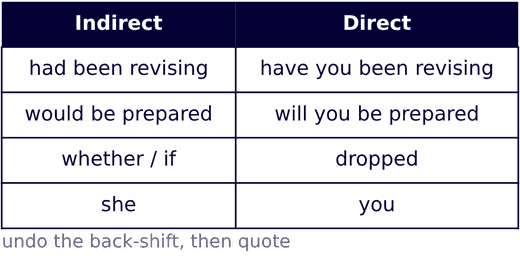 'Whether' and 'if' are dropped because the direct form is itself a question, and 'she' becomes 'you' since the teacher is speaking to the student.
Hence: The teacher asked, "Have you been revising consistently and will you be prepared by Friday?"
'Whether' and 'if' are dropped because the direct form is itself a question, and 'she' becomes 'you' since the teacher is speaking to the student.
Hence: The teacher asked, "Have you been revising consistently and will you be prepared by Friday?"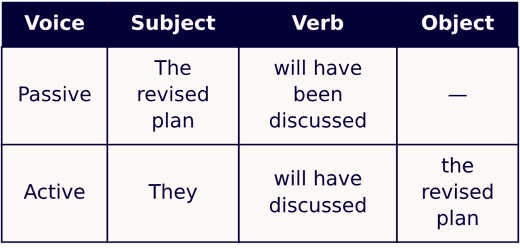 The old subject 'the revised plan' now becomes the object: They will have discussed the revised plan for weeks before it is approved.
Option (c) drops the perfect aspect and (d) turns it into a continuous, while (b) leaves the plan as the subject of an active verb, which absurdly makes the plan the discusser.
The old subject 'the revised plan' now becomes the object: They will have discussed the revised plan for weeks before it is approved.
Option (c) drops the perfect aspect and (d) turns it into a continuous, while (b) leaves the plan as the subject of an active verb, which absurdly makes the plan the discusser.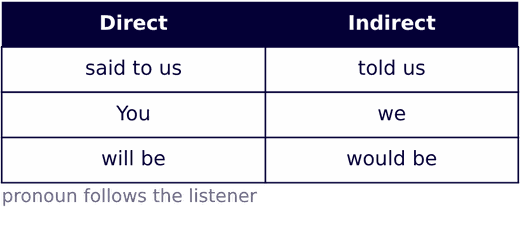 Hence: He told us that we would be successful.
 That gives: The students are being guided by the teacher. Option (a) shifts to the past, (b) drops 'being' and becomes a simple present, and (d) turns it into a present perfect.
 Hence option (a). Options (b) and (d) are still active and shift the meaning, while (c) wrongly promotes 'the depth of flavour' to subject.
 Only option (c) makes both changes; (a) and (b) shift just one verb each, and (d) uses the past perfect continuous, which is a different tense altogether.
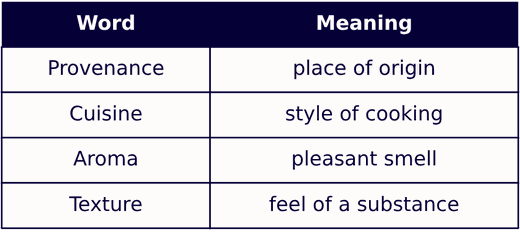 'Cuisine' is a style of cooking, 'aroma' is a smell and 'texture' is the feel of a substance, so none of them names a source.
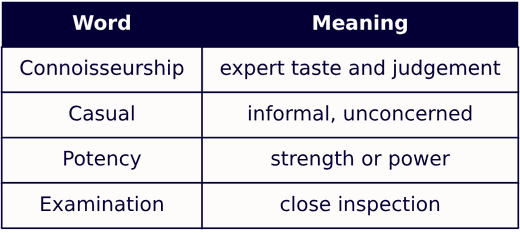 'Casual' means informal, 'potency' means strength and 'examination' means inspection, so none of them carries the sense of expert judgement.
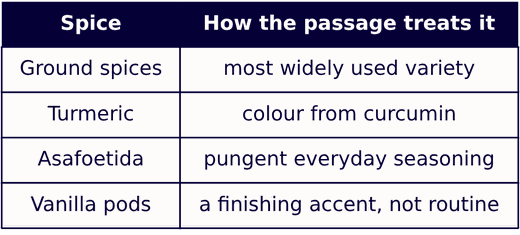 Turmeric and asafoetida are presented as everyday cooking spices and ground spices are called the most widely used variety, so none of them is the item described.
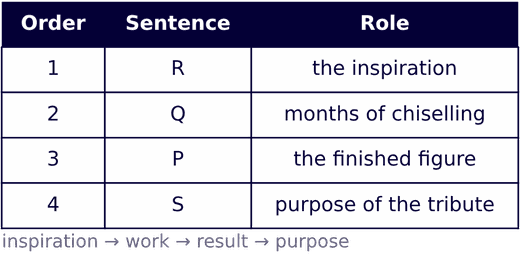 The correct order is therefore R, Q, P, S.