
1
In a certain code language, 'BSGN' is coded as '5-22-10-17' and 'TAUE' is coded as '23-4-24-8'. How is 'PJDQ' coded in the given language?
- A.15-11-5-19
- B.19-13-7-20
- C.16-12-8-18
- D.17-13-6-20
Solution
Letter-to-number coding
Rule: replace every letter by its position in the English alphabet, increased by 3.
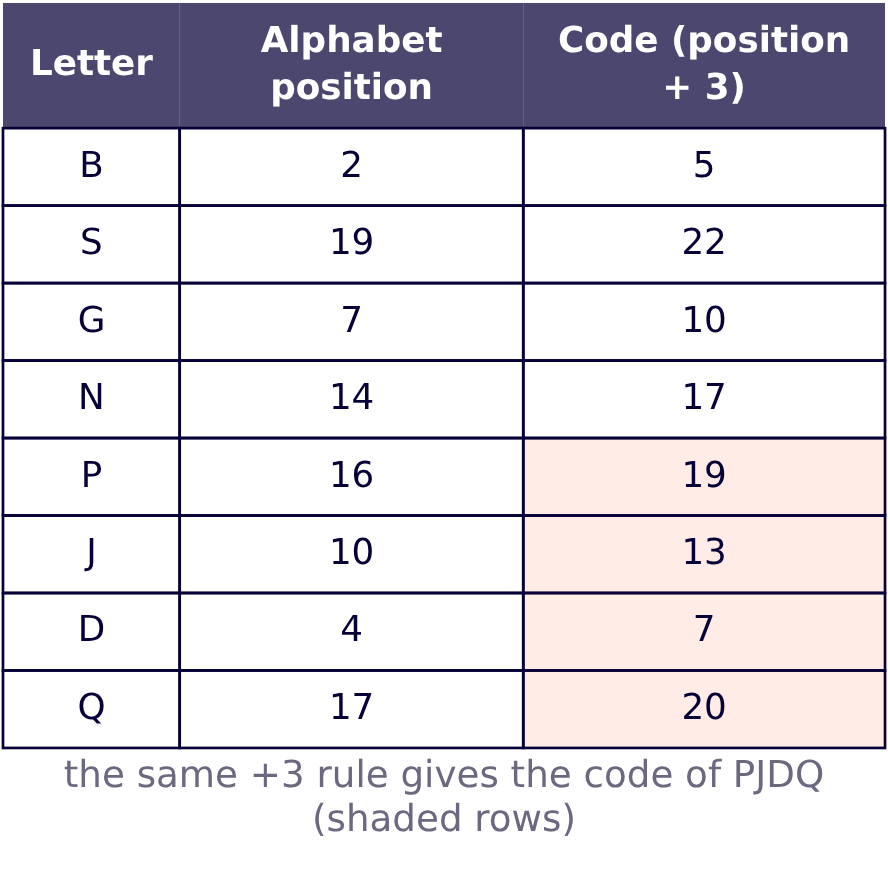 Check on BSGN: 2+3=5, 19+3=22, 7+3=10, 14+3=17, which is 5-22-10-17.
Check on TAUE: 20+3=23, 1+3=4, 21+3=24, 5+3=8, which is 23-4-24-8.
Now PJDQ has positions P =16, J =10, D =4, Q =17.
Adding 3 to each: 16+3=19, 10+3=13, 4+3=7, 17+3=20.
So PJDQ is coded as 19-13-7-20, i.e. option (b).
Check on BSGN: 2+3=5, 19+3=22, 7+3=10, 14+3=17, which is 5-22-10-17.
Check on TAUE: 20+3=23, 1+3=4, 21+3=24, 5+3=8, which is 23-4-24-8.
Now PJDQ has positions P =16, J =10, D =4, Q =17.
Adding 3 to each: 16+3=19, 10+3=13, 4+3=7, 17+3=20.
So PJDQ is coded as 19-13-7-20, i.e. option (b).
Check on BSGN: 2+3=5, 19+3=22, 7+3=10, 14+3=17, which is 5-22-10-17.
Check on TAUE: 20+3=23, 1+3=4, 21+3=24, 5+3=8, which is 23-4-24-8.
Now PJDQ has positions P =16, J =10, D =4, Q =17.
Adding 3 to each: 16+3=19, 10+3=13, 4+3=7, 17+3=20.
So PJDQ is coded as 19-13-7-20, i.e. option (b).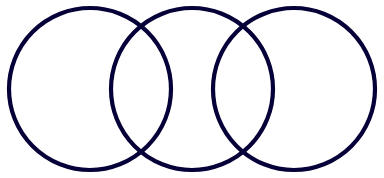
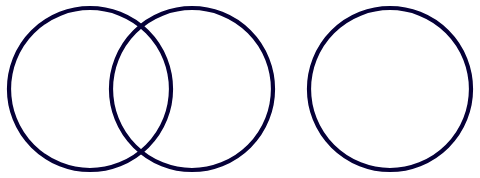
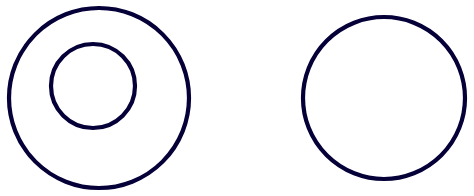
 The required picture is a middle circle cutting the two outer circles, with the two outer circles apart from each other.
That is option (a).
The required picture is a middle circle cutting the two outer circles, with the two outer circles apart from each other.
That is option (a).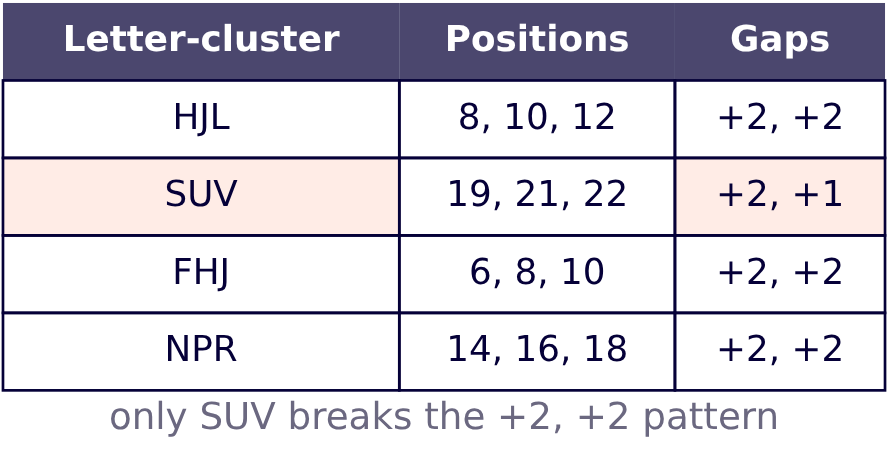 HJL gives 8, 10, 12 - gaps +2 and +2.
FHJ gives 6, 8, 10 and NPR gives 14, 16, 18 - again gaps +2 and +2.
SUV gives 19, 21, 22 - gaps +2 and +1, so the second gap is wrong.
Hence SUV does not belong to the group - option (b).
HJL gives 8, 10, 12 - gaps +2 and +2.
FHJ gives 6, 8, 10 and NPR gives 14, 16, 18 - again gaps +2 and +2.
SUV gives 19, 21, 22 - gaps +2 and +1, so the second gap is wrong.
Hence SUV does not belong to the group - option (b).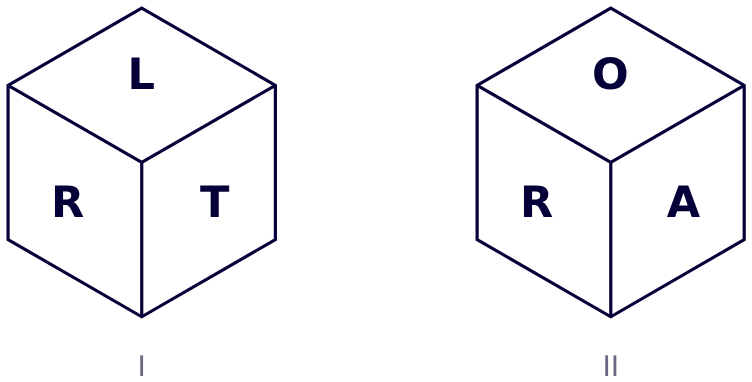
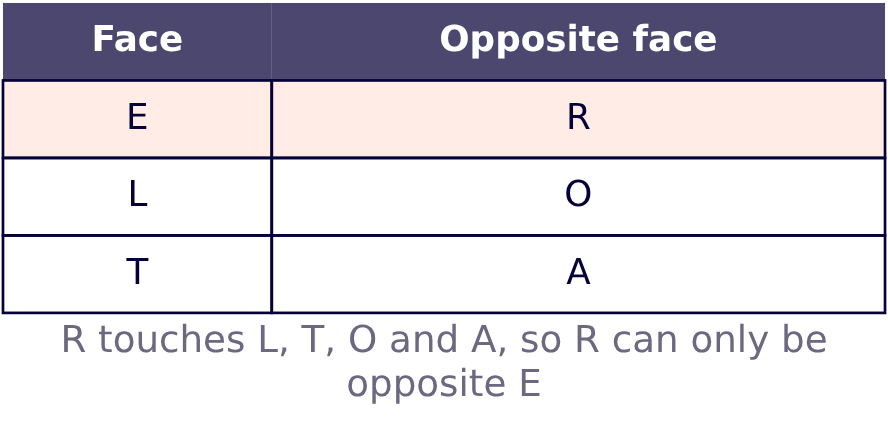 Hence the face opposite E is R - option (d).
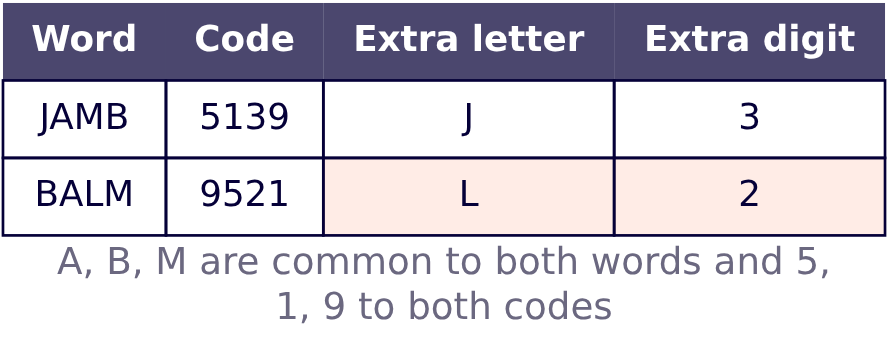 Letters: JAMB and BALM have A, B and M in common; J belongs only to the first word and L only to the second.
Digits: 5139 and 9521 have 5, 1 and 9 in common; 3 belongs only to the first code and 2 only to the second.
So the three common letters A, B, M use up the three common digits 5, 1, 9.
The letter left over in the first word, J, must take the digit left over in the first code, 3; the letter left over in the second word, L, must take the digit left over in the second code, 2.
Hence the code for L is 2 - option (c).
Letters: JAMB and BALM have A, B and M in common; J belongs only to the first word and L only to the second.
Digits: 5139 and 9521 have 5, 1 and 9 in common; 3 belongs only to the first code and 2 only to the second.
So the three common letters A, B, M use up the three common digits 5, 1, 9.
The letter left over in the first word, J, must take the digit left over in the first code, 3; the letter left over in the second word, L, must take the digit left over in the second code, 2.
Hence the code for L is 2 - option (c).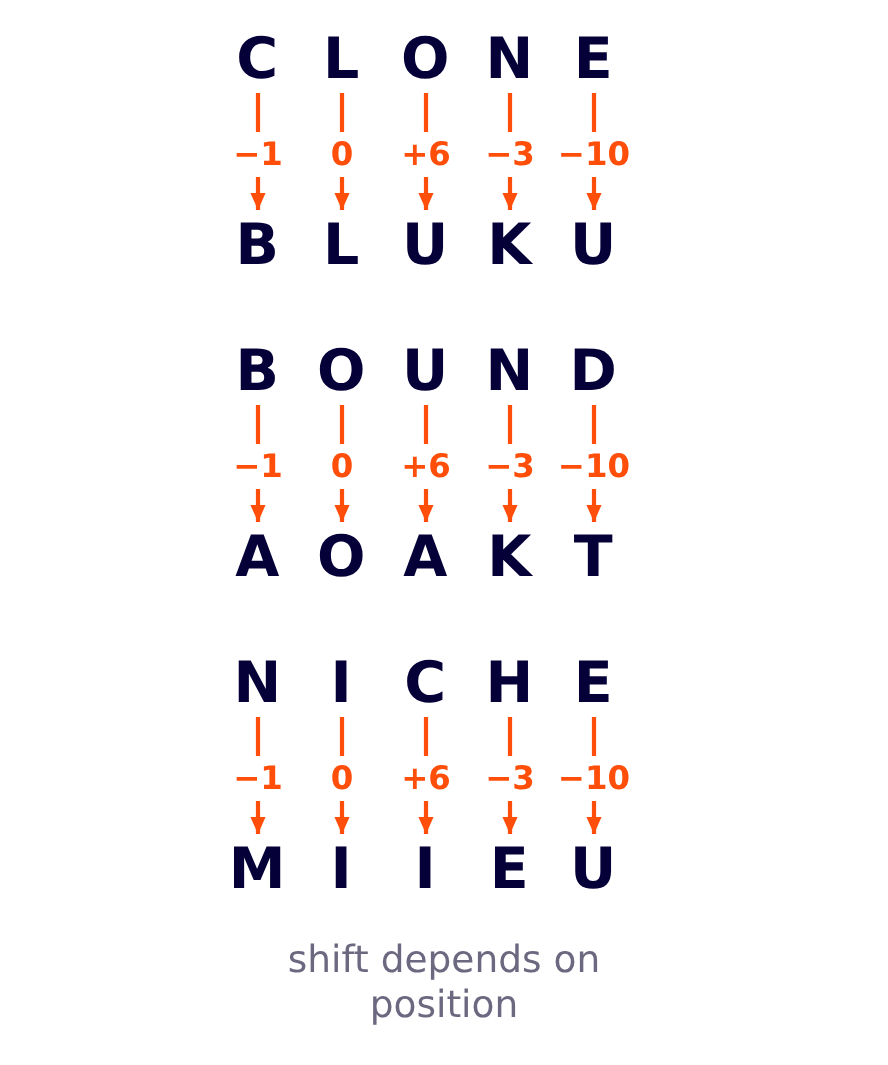 CLONE → BLUKU: C-1=B, L+0=L, O+6=U, N-3=K, E-10=U (counting round the alphabet, 5-10=-5, i.e. 21=U).
BOUND → AOAKT: B-1=A, O+0=O, U+6=A (since 21+6=27=1), N-3=K, D-10=T (since 4-10=-6, i.e. 20).
So the fixed pattern of shifts is -1, 0, +6, -3, -10.
Apply it to NICHE: N-1=M, I+0=I, C+6=I, H-3=E, E-10=U.
Hence NICHE is written as MIIEU - option (c).
CLONE → BLUKU: C-1=B, L+0=L, O+6=U, N-3=K, E-10=U (counting round the alphabet, 5-10=-5, i.e. 21=U).
BOUND → AOAKT: B-1=A, O+0=O, U+6=A (since 21+6=27=1), N-3=K, D-10=T (since 4-10=-6, i.e. 20).
So the fixed pattern of shifts is -1, 0, +6, -3, -10.
Apply it to NICHE: N-1=M, I+0=I, C+6=I, H-3=E, E-10=U.
Hence NICHE is written as MIIEU - option (c).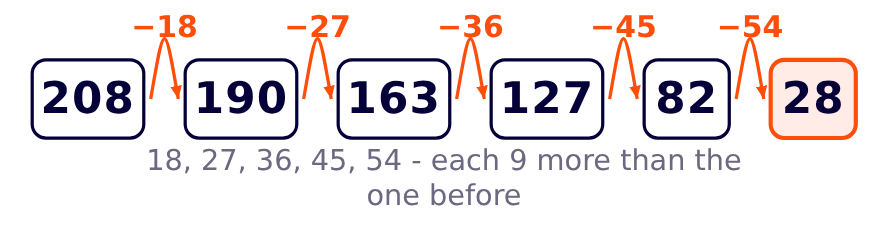 Differences: 190-208=-18, 163-190=-27, 127-163=-36, 82-127=-45.
The amounts subtracted are 18, 27, 36, 45 - each one is 9 more than the previous one.
So the next amount to subtract is 45+9=54.
82-54=28.
Hence the missing term is 28 - option (a).
Differences: 190-208=-18, 163-190=-27, 127-163=-36, 82-127=-45.
The amounts subtracted are 18, 27, 36, 45 - each one is 9 more than the previous one.
So the next amount to subtract is 45+9=54.
82-54=28.
Hence the missing term is 28 - option (a).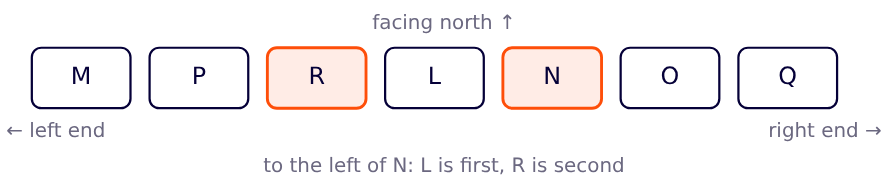 Counting to the left of N: L is first and R is second.
Hence R sits second to the left of N - option (c).
Counting to the left of N: L is first and R is second.
Hence R sits second to the left of N - option (c).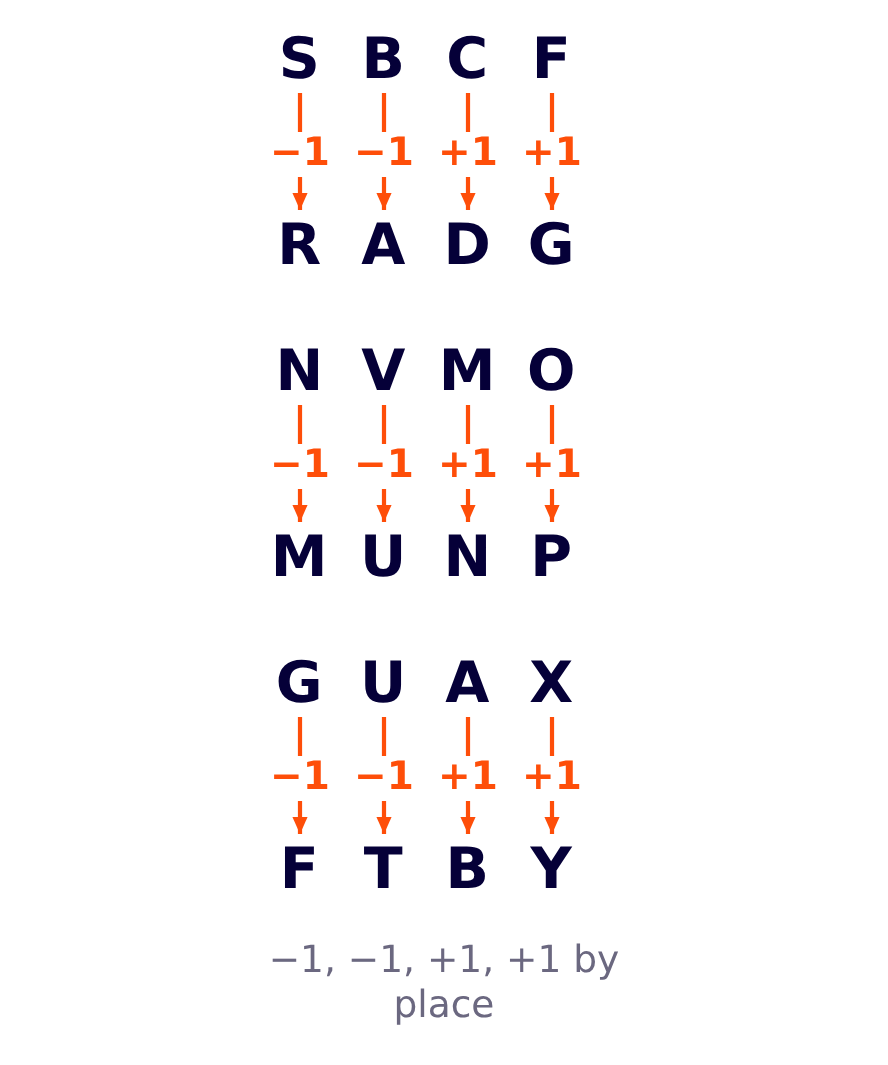 SBCF → RADG: S → R and B → A are one step back; C → D and F → G are one step forward.
NVMO → MUNP: N → M and V → U are one step back; M → N and O → P are one step forward.
So the rule is -1, -1, +1, +1 on the four letters.
Apply it to GUAX: G-1=F, U-1=T, A+1=B, X+1=Y.
Hence GUAX is related to FTBY - option (b).
SBCF → RADG: S → R and B → A are one step back; C → D and F → G are one step forward.
NVMO → MUNP: N → M and V → U are one step back; M → N and O → P are one step forward.
So the rule is -1, -1, +1, +1 on the four letters.
Apply it to GUAX: G-1=F, U-1=T, A+1=B, X+1=Y.
Hence GUAX is related to FTBY - option (b).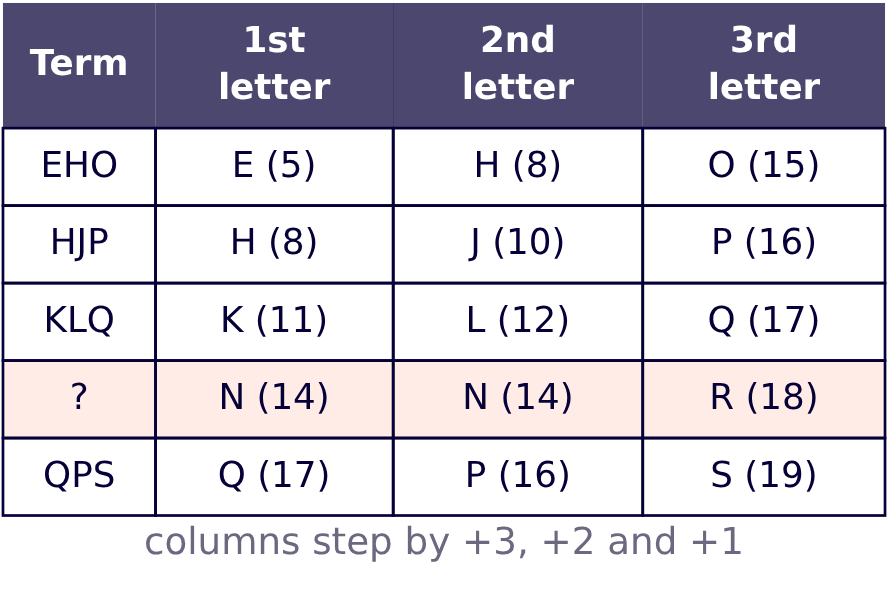 First letters: E(5), H(8), K(11), ?, Q(17) - the step is +3, so the missing letter is 11+3=14, i.e. N.
Second letters: H(8), J(10), L(12), ?, P(16) - the step is +2, so the missing letter is 12+2=14, i.e. N.
Third letters: O(15), P(16), Q(17), ?, S(19) - the step is +1, so the missing letter is 17+1=18, i.e. R.
Hence the missing cluster is NNR - option (d).
First letters: E(5), H(8), K(11), ?, Q(17) - the step is +3, so the missing letter is 11+3=14, i.e. N.
Second letters: H(8), J(10), L(12), ?, P(16) - the step is +2, so the missing letter is 12+2=14, i.e. N.
Third letters: O(15), P(16), Q(17), ?, S(19) - the step is +1, so the missing letter is 17+1=18, i.e. R.
Hence the missing cluster is NNR - option (d).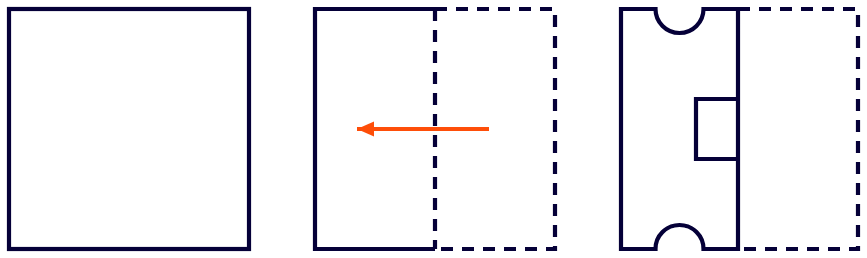
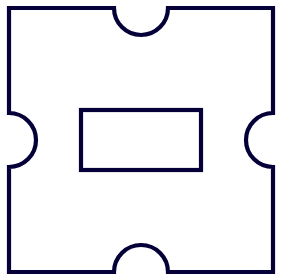
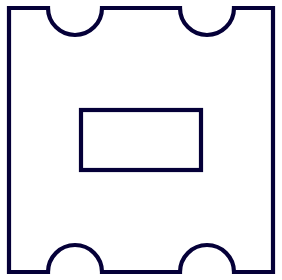
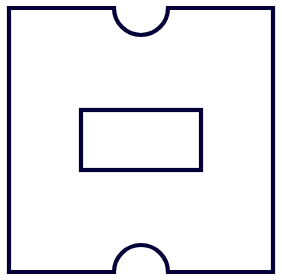
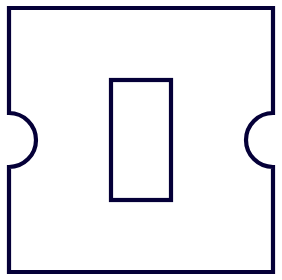
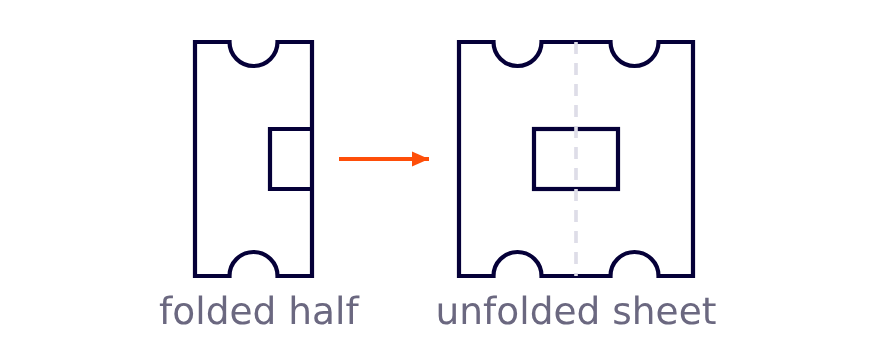 The semicircular notch on the top edge and the one on the bottom edge each open out into two notches, giving two notches above and two below.
The rectangular piece was cut with one of its sides lying on the fold itself, so its two halves join on unfolding into a single rectangle in the middle of the sheet.
The open sheet therefore shows two notches on the top edge, two on the bottom edge and one rectangular hole at the centre, which is option (b).
The semicircular notch on the top edge and the one on the bottom edge each open out into two notches, giving two notches above and two below.
The rectangular piece was cut with one of its sides lying on the fold itself, so its two halves join on unfolding into a single rectangle in the middle of the sheet.
The open sheet therefore shows two notches on the top edge, two on the bottom edge and one rectangular hole at the centre, which is option (b).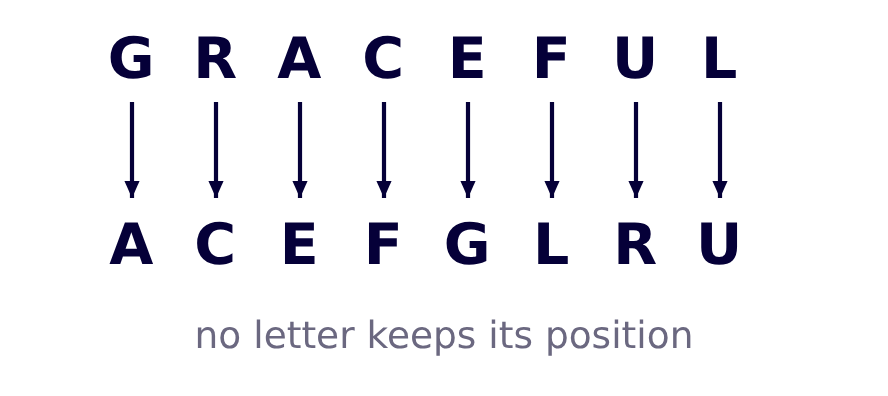 Compare the two words position by position: G-A, R-C, A-E, C-F, E-G, F-L, U-R, L-U.
No position carries the same letter in both words, so the number of letters that stay in place is none.
Compare the two words position by position: G-A, R-C, A-E, C-F, E-G, F-L, U-R, L-U.
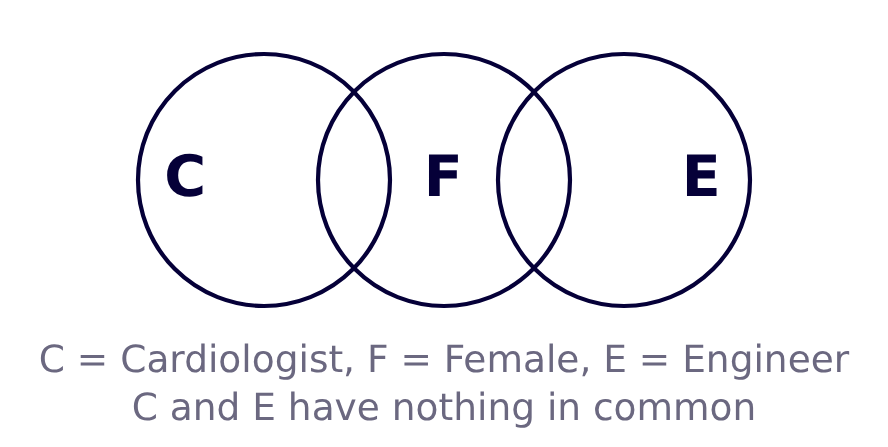
No position carries the same letter in both words, so the number of letters that stay in place is none.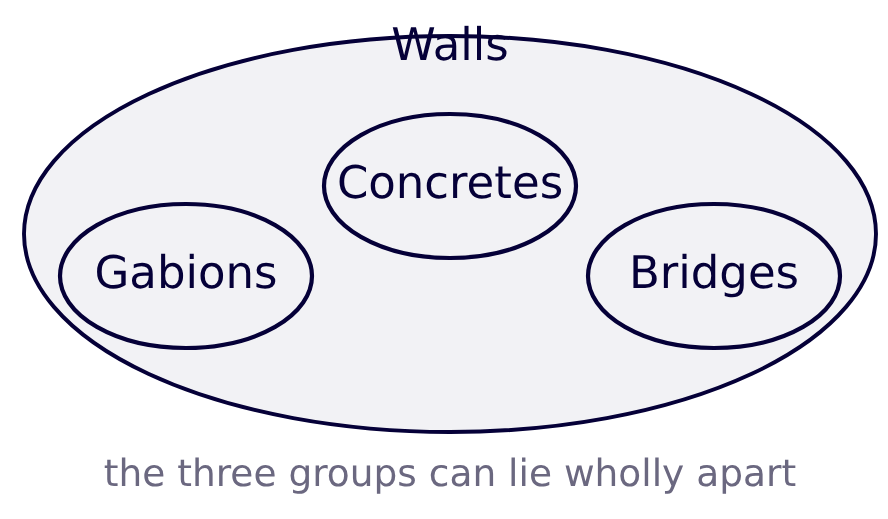 Two groups placed inside one larger group are not forced to touch each other - they may sit entirely apart, as drawn above.
So 'Some bridges are gabions' is only a possibility and never a certainty; conclusion (I) does not follow.
For exactly the same reason 'Some concretes are bridges' need not be true, so conclusion (II) does not follow either.
Hence neither conclusion (I) nor (II) follows.
Two groups placed inside one larger group are not forced to touch each other - they may sit entirely apart, as drawn above.
So 'Some bridges are gabions' is only a possibility and never a certainty; conclusion (I) does not follow.
For exactly the same reason 'Some concretes are bridges' need not be true, so conclusion (II) does not follow either.
Hence neither conclusion (I) nor (II) follows.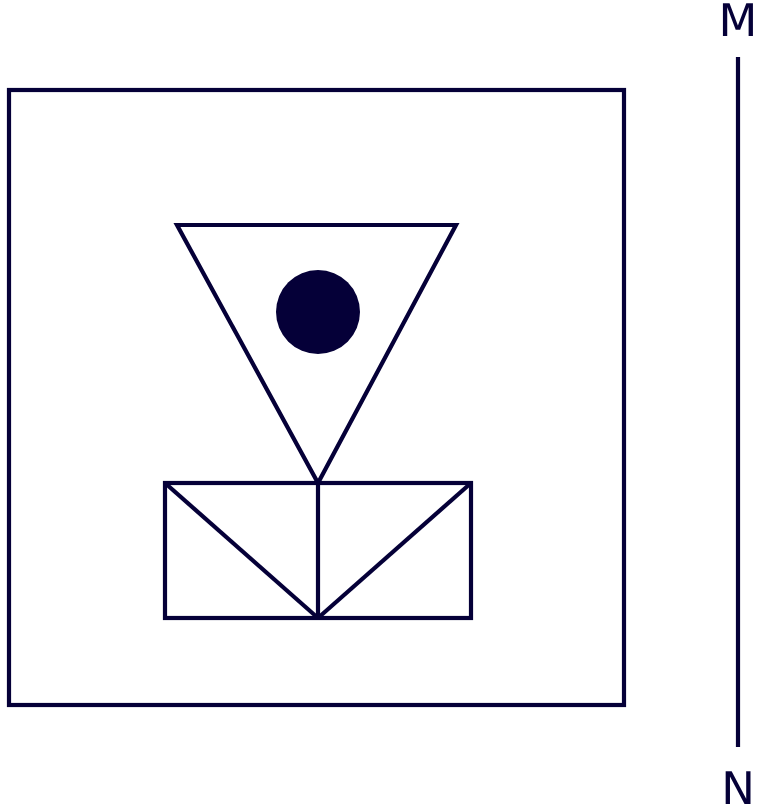
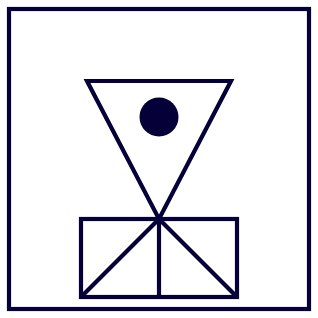
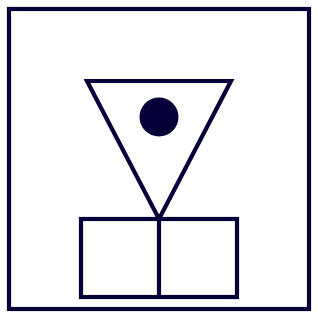
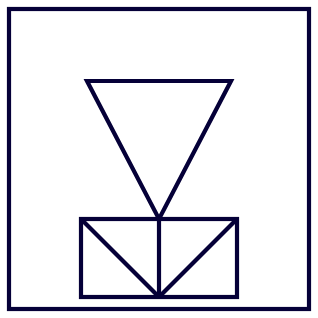
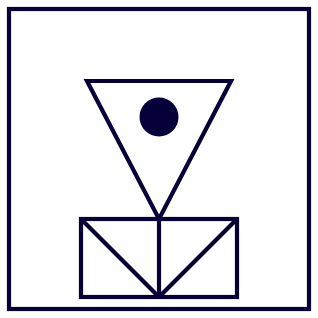
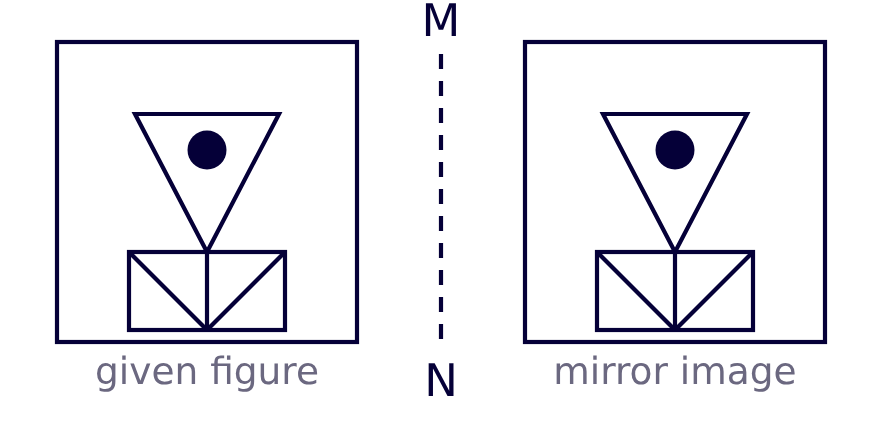 A figure that is already symmetrical about a vertical line reflects into itself, so the mirror image must look exactly like the given figure.
Only option (d) reproduces it completely - the dot inside the triangle, and the two slanting lines running from the upper corners of the rectangle down to the middle of its lower side.
In (a) the slanting lines start from the top centre instead, (b) has lost both slanting lines and (c) has lost the dot, so none of them can be the image.
A figure that is already symmetrical about a vertical line reflects into itself, so the mirror image must look exactly like the given figure.
Only option (d) reproduces it completely - the dot inside the triangle, and the two slanting lines running from the upper corners of the rectangle down to the middle of its lower side.
In (a) the slanting lines start from the top centre instead, (b) has lost both slanting lines and (c) has lost the dot, so none of them can be the image.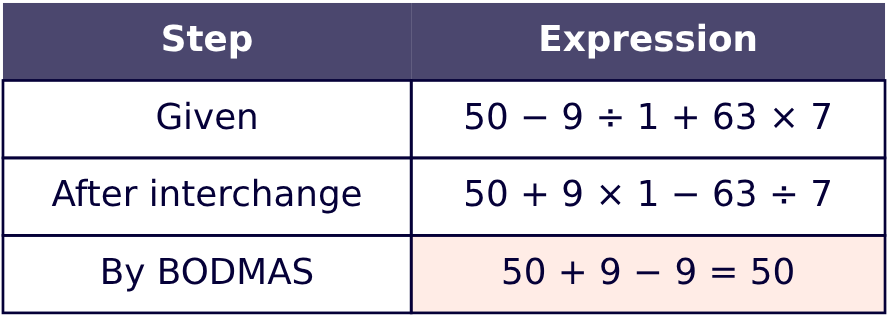 The equation becomes .
Solve it by BODMAS - division and multiplication come first: and .
So the value is 50+9-9=50, and the question mark stands for 50.
The equation becomes .
Solve it by BODMAS - division and multiplication come first: and .
So the value is 50+9-9=50, and the question mark stands for 50.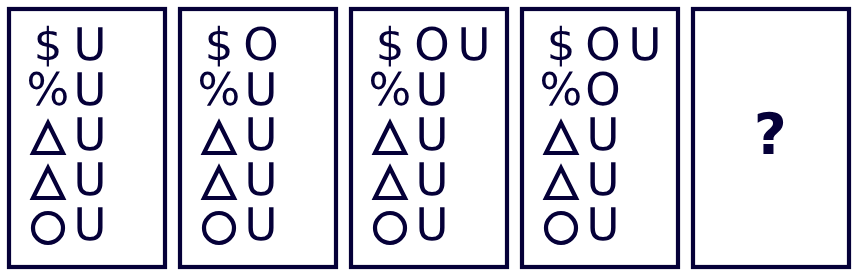
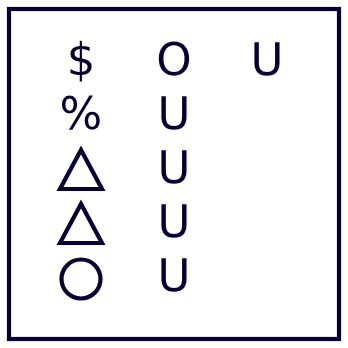
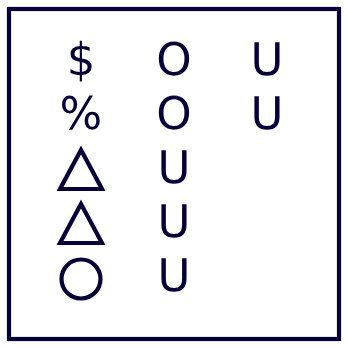
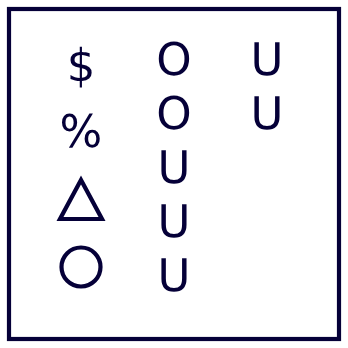
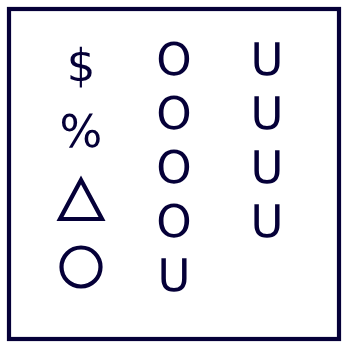
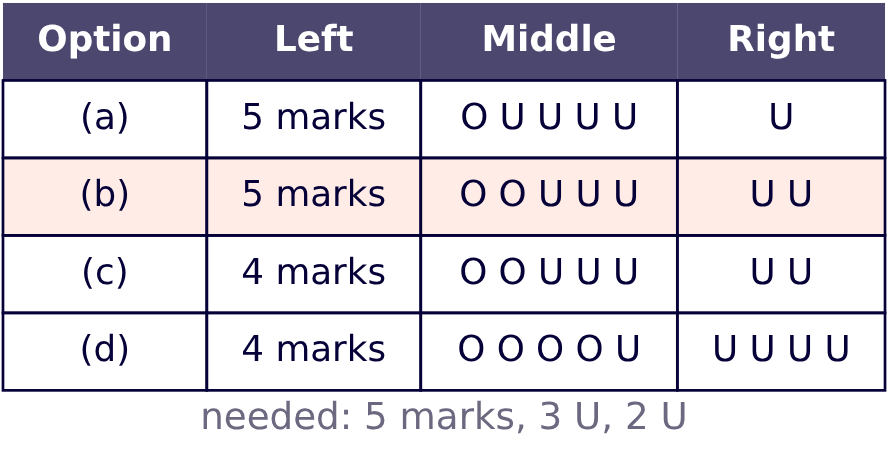 Only option (b) matches on all three columns; option (a) is an earlier figure of the same series, and options (c) and (d) drop a mark from the left column.
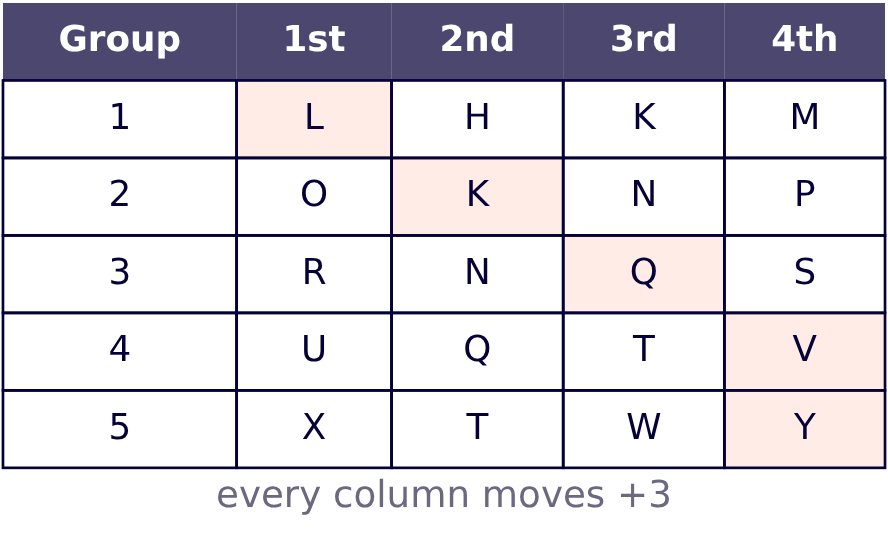 Read the groups column-wise. The first letters run L, O, R, U, X - each one is +3 from the letter before it.
The second letters run H, K, N, Q, T, the third letters K, N, Q, T, W and the fourth letters M, P, S, V, Y - every column again moves forward by 3.
Reading the blanks in order gives L (group 1), K (group 2), Q (group 3), V (group 4) and Y (group 5).
So the required combination of letters is LKQVY.
Read the groups column-wise. The first letters run L, O, R, U, X - each one is +3 from the letter before it.
The second letters run H, K, N, Q, T, the third letters K, N, Q, T, W and the fourth letters M, P, S, V, Y - every column again moves forward by 3.
Reading the blanks in order gives L (group 1), K (group 2), Q (group 3), V (group 4) and Y (group 5).
So the required combination of letters is LKQVY.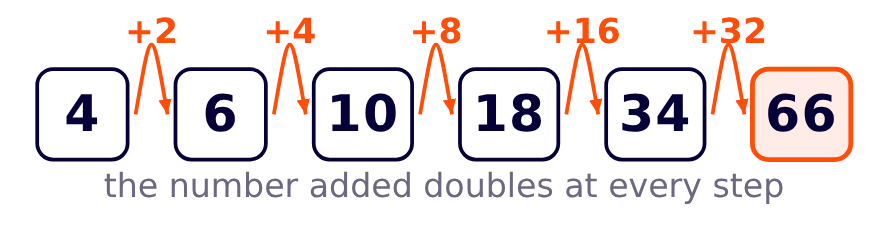 The number being added doubles every time - - so the next number to be added is 32.
Hence the missing term is 34+32=66.
The number being added doubles every time - - so the next number to be added is 32.
Hence the missing term is 34+32=66.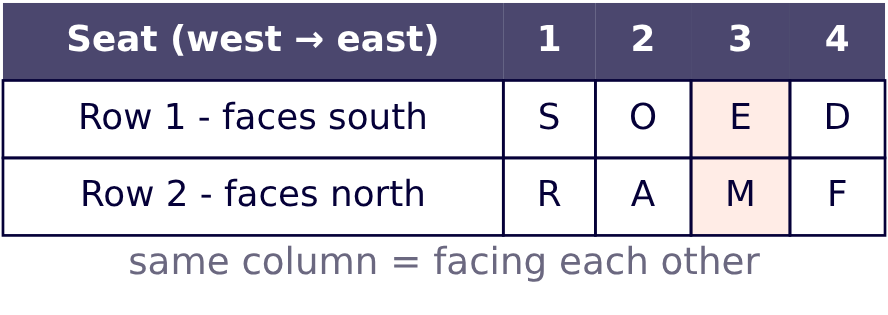 Two people in the same column of this picture are the ones sitting opposite each other, so the facing pairs are S-R, O-A, E-M and D-F.
Hence E and M face each other.
Two people in the same column of this picture are the ones sitting opposite each other, so the facing pairs are S-R, O-A, E-M and D-F.
Hence E and M face each other.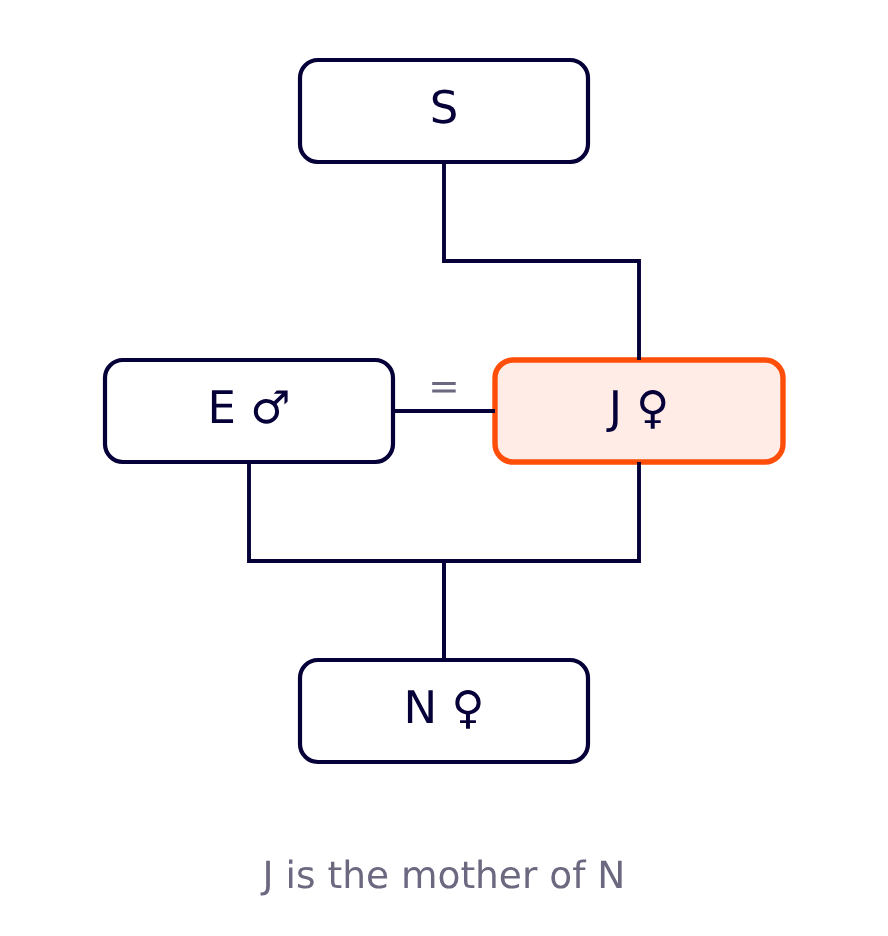 N is the daughter of E, and J is E's wife, so N is the daughter of J as well.
Therefore J is the mother of N.
N is the daughter of E, and J is E's wife, so N is the daughter of J as well.
Therefore J is the mother of N.