
1
What should come in place of the question mark (?) in the given series? 65 86 114 149 191 ?
- A.240
- B.216
- C.226
- D.232
Solution
Number series
Write down the difference between one term and the next.
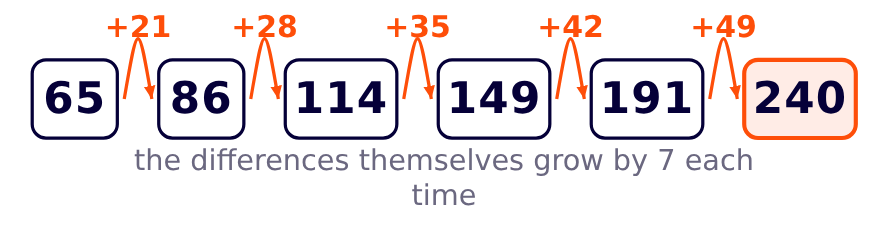 The differences are 86-65=21, 114-86=28, 149-114=35 and 191-149=42.
Each difference is 7 more than the one before it, so the next difference is 42+7=49.
Required term =191+49=240.
The differences are 86-65=21, 114-86=28, 149-114=35 and 191-149=42.
Each difference is 7 more than the one before it, so the next difference is 42+7=49.
Required term =191+49=240.
The differences are 86-65=21, 114-86=28, 149-114=35 and 191-149=42.
Each difference is 7 more than the one before it, so the next difference is 42+7=49.
Required term =191+49=240.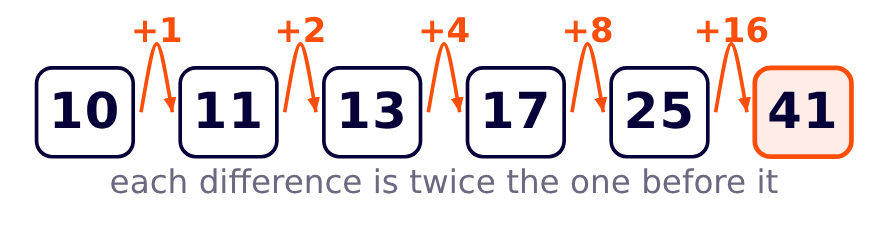 11-10=1, 13-11=2, 17-13=4, 25-17=8 - every difference is double the previous one.
So the next difference is .
Required term =25+16=41.
11-10=1, 13-11=2, 17-13=4, 25-17=8 - every difference is double the previous one.
So the next difference is .
Required term =25+16=41.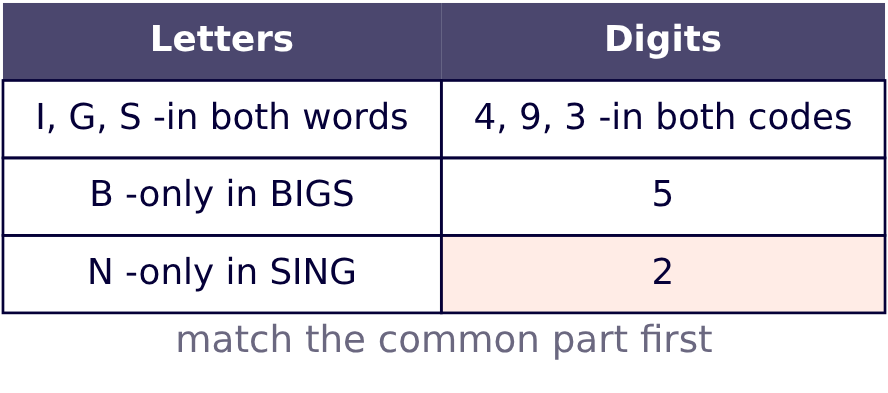 BIGS and SING share the letters I, G and S; their codes 4593 and 9432 share the digits 4, 9 and 3.
So B, the letter found only in BIGS, must be the left-over digit 5, and N, the letter found only in SING, must be the left-over digit 2.
Hence the code for N is 2.
BIGS and SING share the letters I, G and S; their codes 4593 and 9432 share the digits 4, 9 and 3.
So B, the letter found only in BIGS, must be the left-over digit 5, and N, the letter found only in SING, must be the left-over digit 2.
Hence the code for N is 2.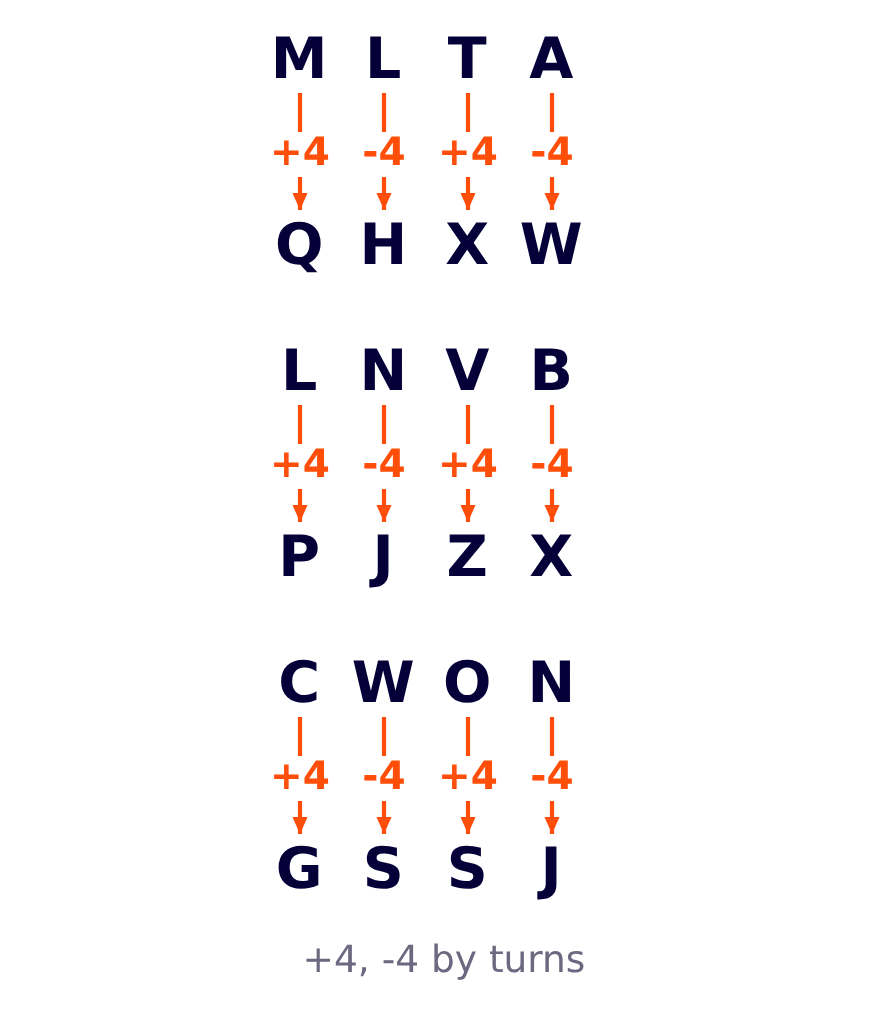 M+4=Q, L-4=H, T+4=X, A-4=W, so the rule is +4, -4, +4, -4.
It checks out on the second pair: L+4=P, N-4=J, V+4=Z, B-4=X, which is PJZX.
Applying it to CWON: C+4=G, W-4=S, O+4=S, N-4=J.
Hence CWON is related to GSSJ.
M+4=Q, L-4=H, T+4=X, A-4=W, so the rule is +4, -4, +4, -4.
It checks out on the second pair: L+4=P, N-4=J, V+4=Z, B-4=X, which is PJZX.
Applying it to CWON: C+4=G, W-4=S, O+4=S, N-4=J.
Hence CWON is related to GSSJ.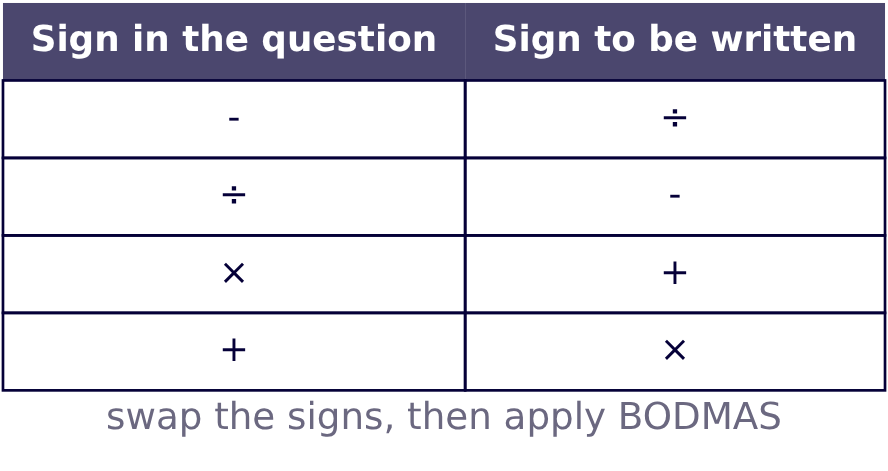 So becomes .
By BODMAS, do the division and the multiplication first: and .
Now 72+7-9=79-9=70.
Hence ?=70.
So becomes .
By BODMAS, do the division and the multiplication first: and .
Now 72+7-9=79-9=70.
Hence ?=70.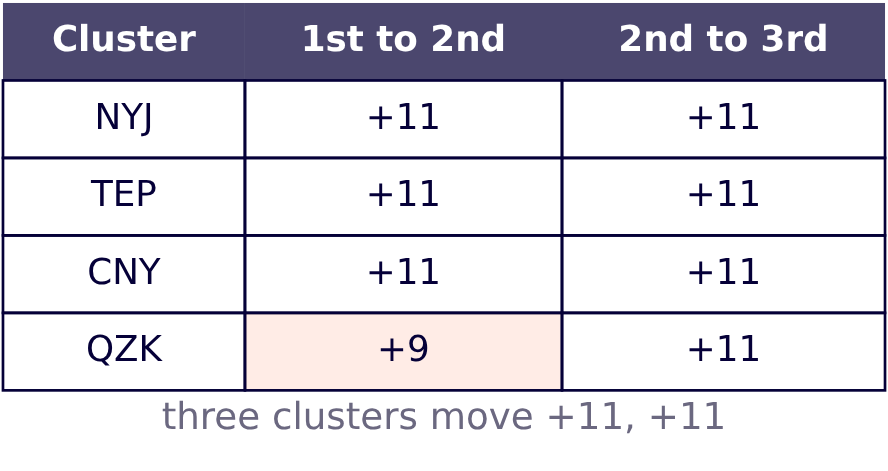 NYJ: N+11=Y and Y+11=J. TEP: T+11=E and E+11=P. CNY: C+11=N and N+11=Y.
QZK: Q+9=Z, not +11, although Z+11=K is right - so its first gap breaks the pattern.
Hence QZK does not belong to the group.
NYJ: N+11=Y and Y+11=J. TEP: T+11=E and E+11=P. CNY: C+11=N and N+11=Y.
QZK: Q+9=Z, not +11, although Z+11=K is right - so its first gap breaks the pattern.
Hence QZK does not belong to the group.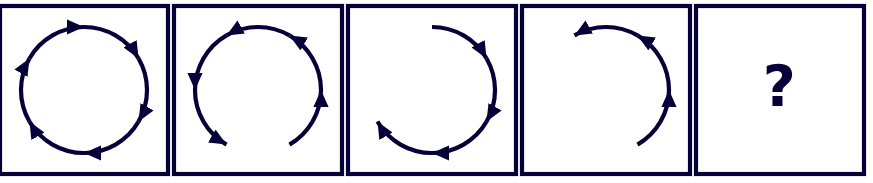
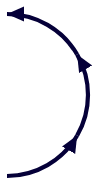
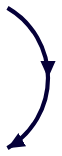
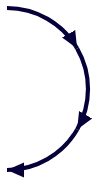
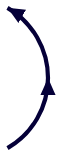
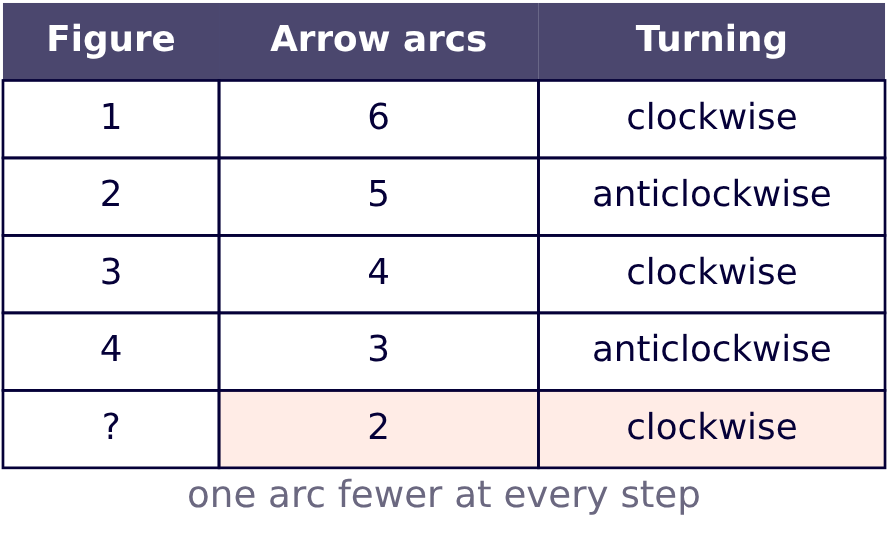 The first figure is a complete circle of 6 arcs; after that one arc is rubbed out every step, giving 5, 4 and 3, so the fifth figure must have 2 arcs.
The turning also alternates - clockwise, anticlockwise, clockwise, anticlockwise - so the fifth figure turns clockwise again.
Only option (b) shows 2 arcs whose arrowheads run clockwise.
The first figure is a complete circle of 6 arcs; after that one arc is rubbed out every step, giving 5, 4 and 3, so the fifth figure must have 2 arcs.
The turning also alternates - clockwise, anticlockwise, clockwise, anticlockwise - so the fifth figure turns clockwise again.
Only option (b) shows 2 arcs whose arrowheads run clockwise.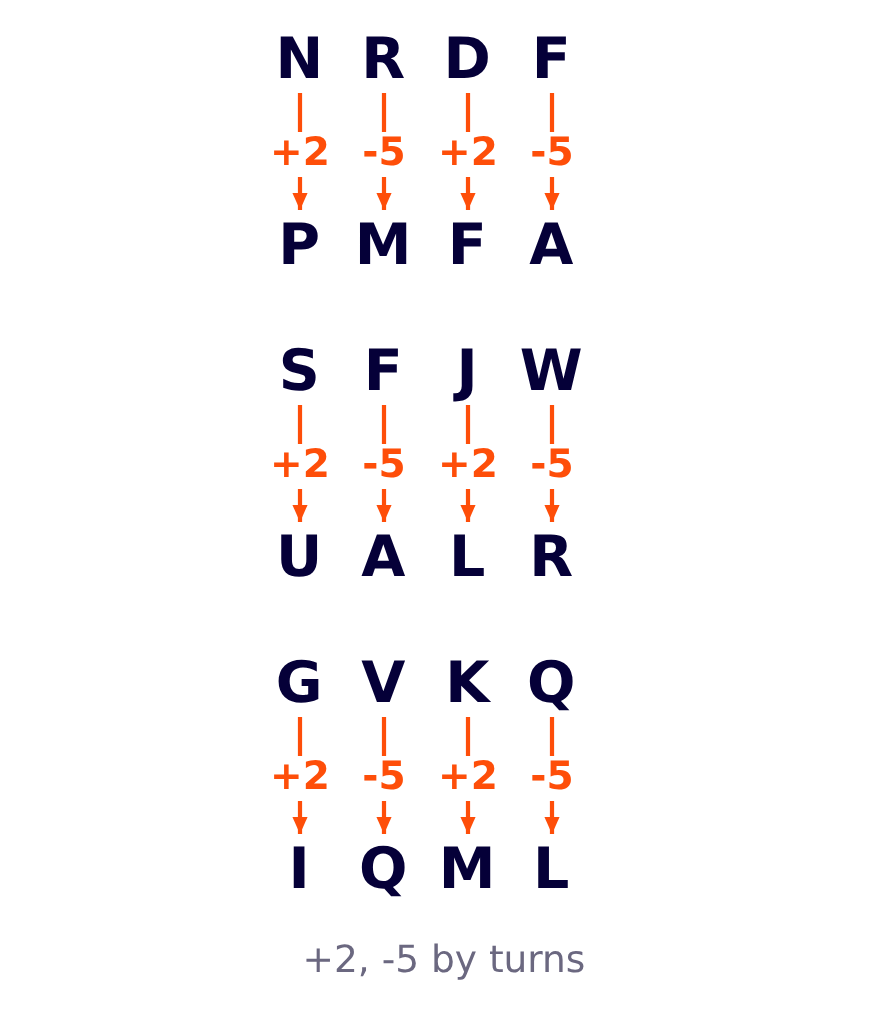 N+2=P, R-5=M, D+2=F, F-5=A, so the rule is +2, -5, +2, -5.
It checks out on SFJW: S+2=U, F-5=A, J+2=L, W-5=R, which is UALR.
Applying it to GVKQ: G+2=I, V-5=Q, K+2=M, Q-5=L.
Hence GVKQ is related to IQML.
N+2=P, R-5=M, D+2=F, F-5=A, so the rule is +2, -5, +2, -5.
It checks out on SFJW: S+2=U, F-5=A, J+2=L, W-5=R, which is UALR.
Applying it to GVKQ: G+2=I, V-5=Q, K+2=M, Q-5=L.
Hence GVKQ is related to IQML.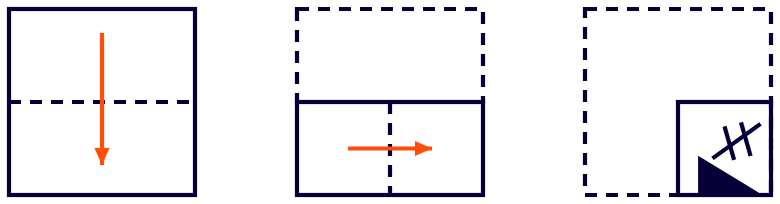
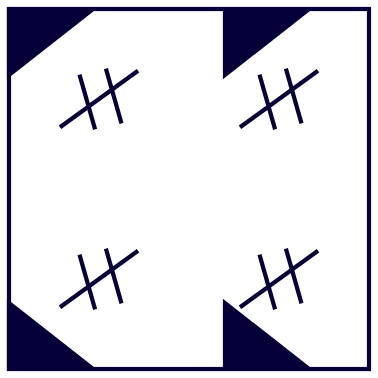
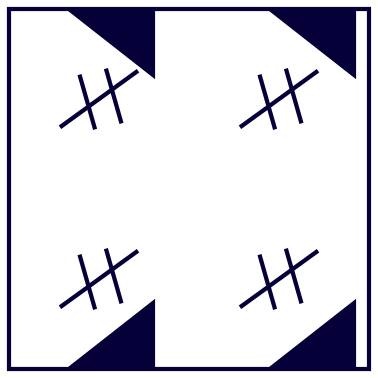
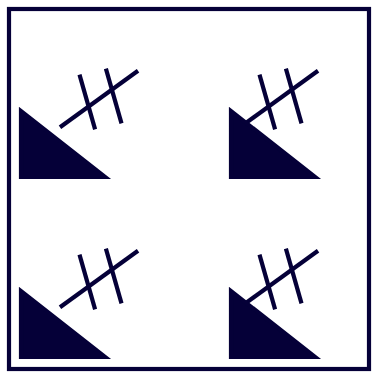
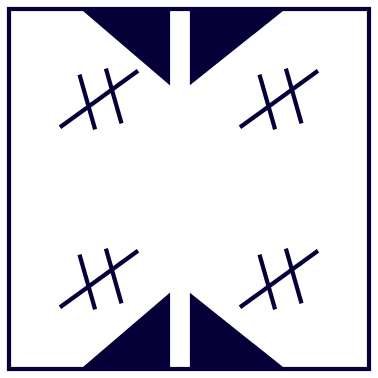
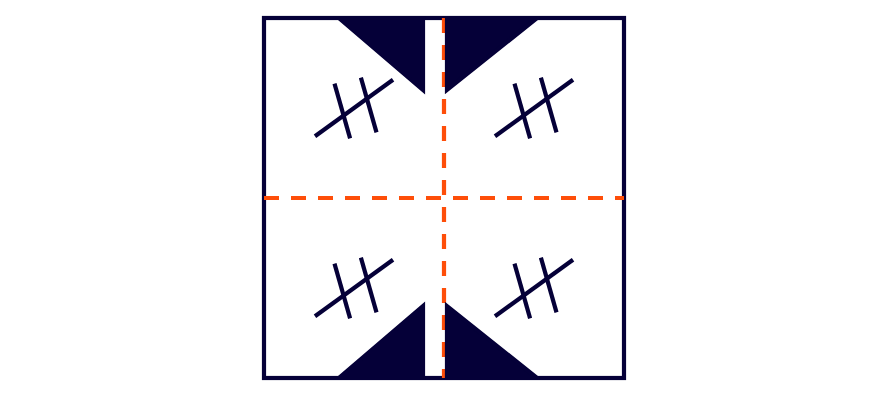 The four cross-shaped punches sit one in each quarter towards the outer corners, and the four solid triangles hang from the top and the bottom edge beside the vertical centre line.
Only option (d) shows exactly this double mirror image.
The four cross-shaped punches sit one in each quarter towards the outer corners, and the four solid triangles hang from the top and the bottom edge beside the vertical centre line.
Only option (d) shows exactly this double mirror image.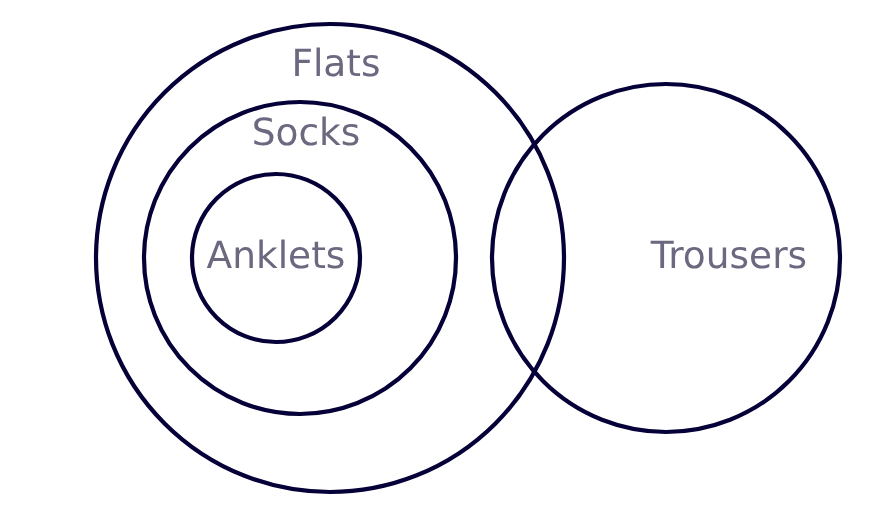 All anklets are socks and all socks are flats, so the anklets circle lies completely inside flats - conclusion (I) follows.
The statement only says that some flats are trousers; those flats may all lie outside socks, so no trouser need be an anklet - conclusion (II) does not follow.
Hence only conclusion (I) follows.
All anklets are socks and all socks are flats, so the anklets circle lies completely inside flats - conclusion (I) follows.
The statement only says that some flats are trousers; those flats may all lie outside socks, so no trouser need be an anklet - conclusion (II) does not follow.
Hence only conclusion (I) follows.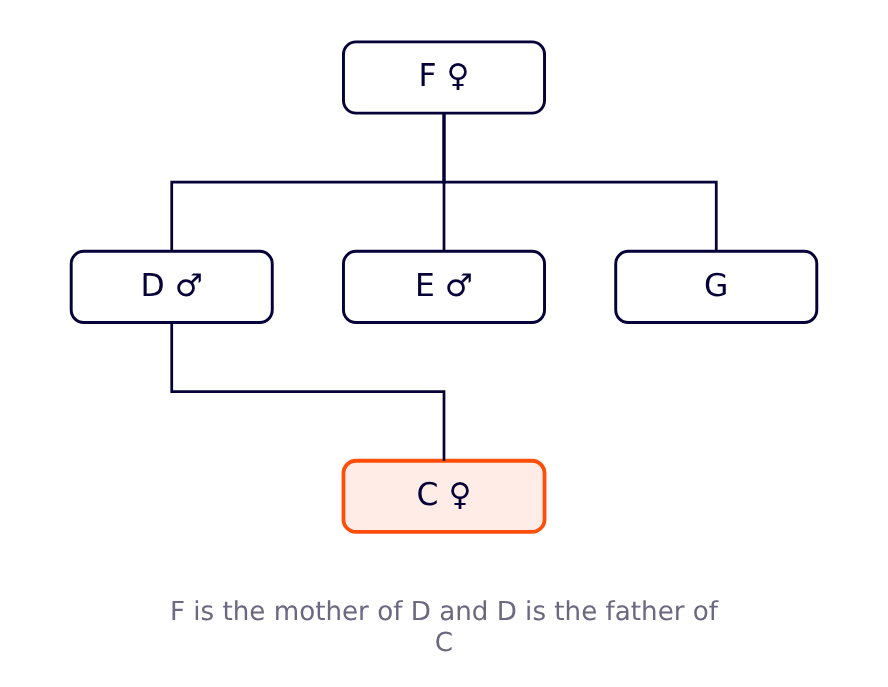 E is F's son and D is E's brother, so D is also a child of F; therefore F is the mother of D.
C is the daughter of D, and D is male, so D is the father of C.
F is thus the mother of C's father, i.e. F is the father's mother of C.
E is F's son and D is E's brother, so D is also a child of F; therefore F is the mother of D.
C is the daughter of D, and D is male, so D is the father of C.
F is thus the mother of C's father, i.e. F is the father's mother of C.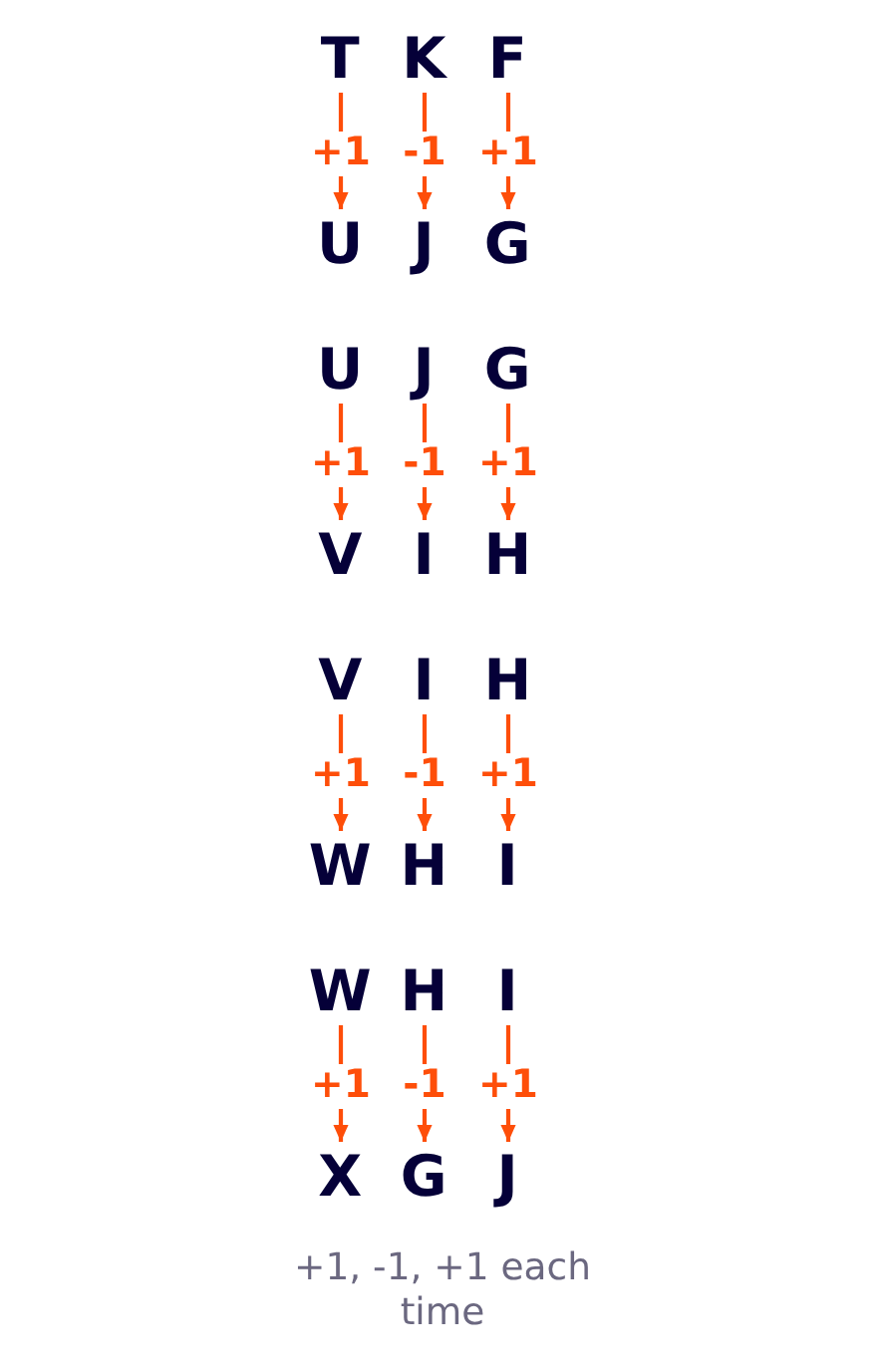 First letters: T, U, V, W - each one step forward, so the next is X.
Second letters: K, J, I, H - each one step back, so the next is G.
Third letters: F, G, H, I - each one step forward, so the next is J.
Hence the missing cluster is XGJ.
First letters: T, U, V, W - each one step forward, so the next is X.
Second letters: K, J, I, H - each one step back, so the next is G.
Third letters: F, G, H, I - each one step forward, so the next is J.
Hence the missing cluster is XGJ.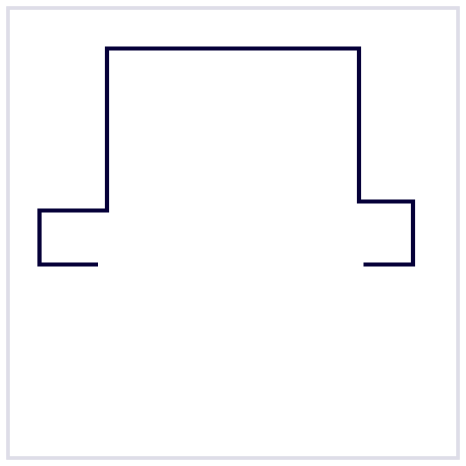
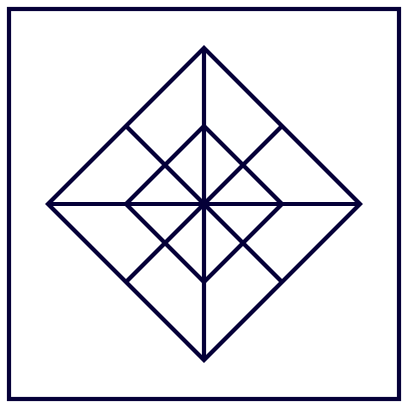
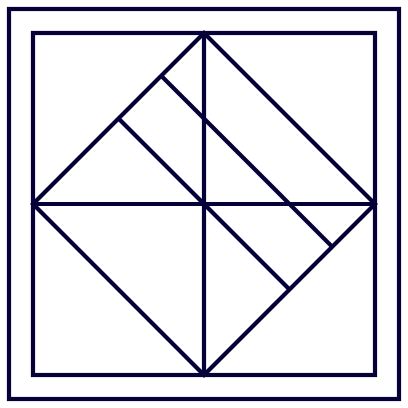
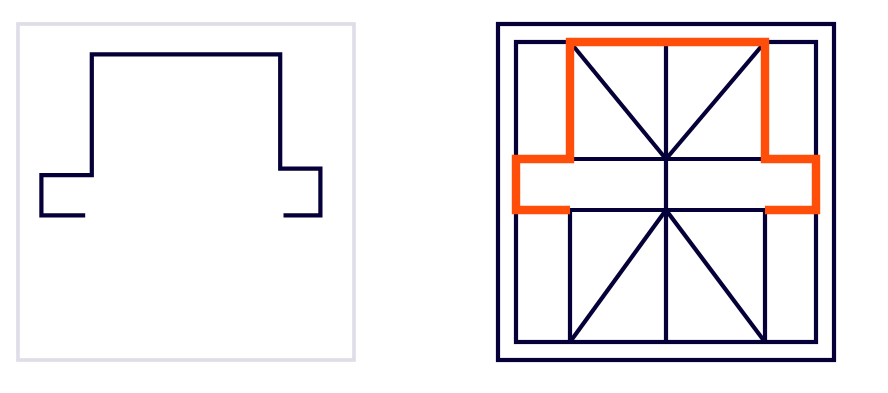 In option (c) the top edge of the inner square gives the top of the U, the two inner vertical lines give its arms, the upper line of the middle band gives the two outward steps, and the side edges of the inner square give the two short outer arms.
Every part of the outline is found in the same size and the same position, with no turning.
Hence the given figure is embedded in option (c).
In option (c) the top edge of the inner square gives the top of the U, the two inner vertical lines give its arms, the upper line of the middle band gives the two outward steps, and the side edges of the inner square give the two short outer arms.
Every part of the outline is found in the same size and the same position, with no turning.
Hence the given figure is embedded in option (c).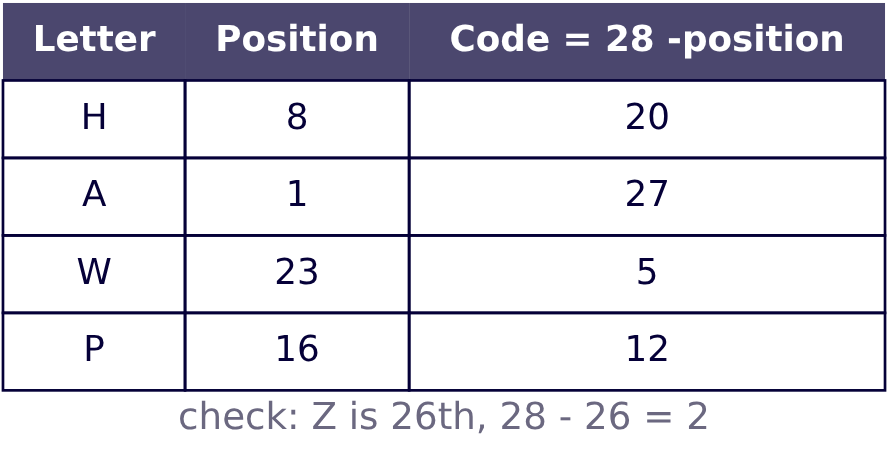 Hence HAWP is coded as 20-27-5-12.
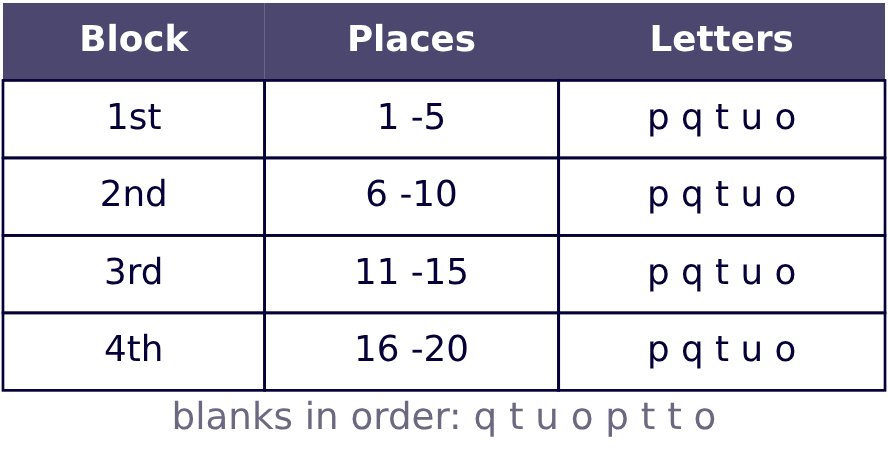 The 4th, 5th, 6th, 7th and 8th places read u, o, p, q, t, so the block is p q t u o, and the 14th to 17th places u, o, p, q confirm it.
Filling every place from the block and reading only the blanks from left to right gives q, t, u, o, p, t, t, o.
Hence the series is completed by qtuoptto.
The 4th, 5th, 6th, 7th and 8th places read u, o, p, q, t, so the block is p q t u o, and the 14th to 17th places u, o, p, q confirm it.
Filling every place from the block and reading only the blanks from left to right gives q, t, u, o, p, t, t, o.
Hence the series is completed by qtuoptto.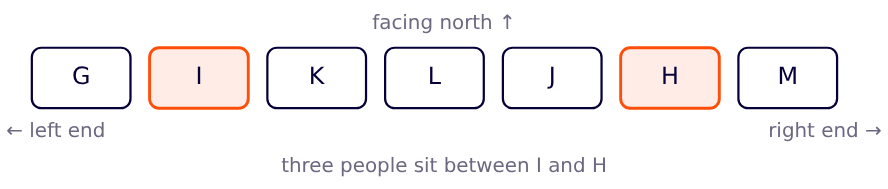 Between I (seat 2) and H (seat 6) sit K, L and J - three people.
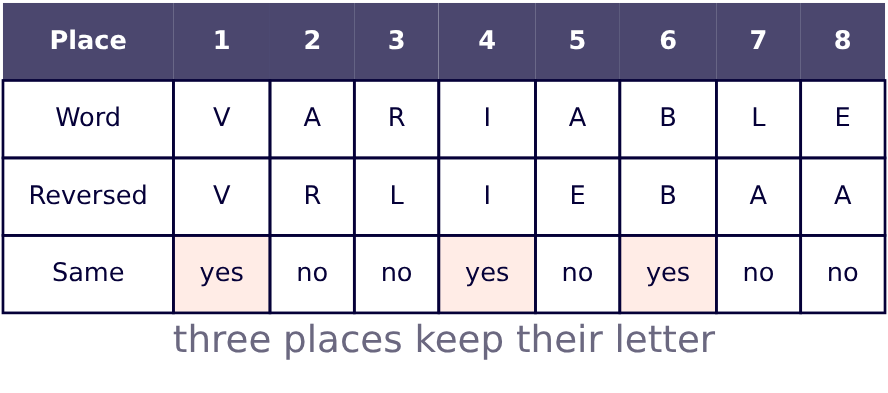 Comparing place by place, only the 1st (V), the 4th (I) and the 6th (B) letter stay where they were.
Hence the position of three letters remains unchanged.
Comparing place by place, only the 1st (V), the 4th (I) and the 6th (B) letter stay where they were.
Hence the position of three letters remains unchanged.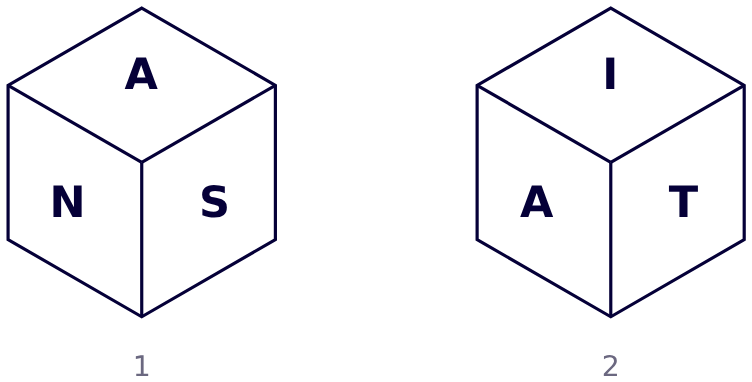
 The first position shows A touching N and S; the second shows A touching I and T.
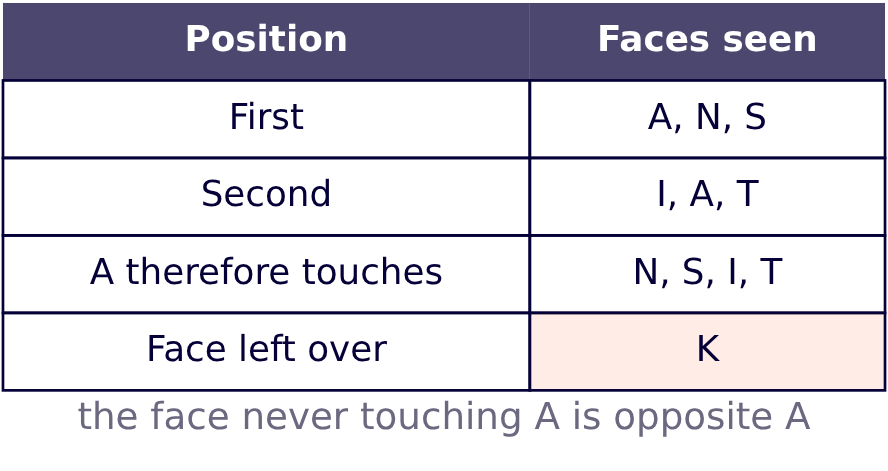
So A touches four different faces - N, S, I and T - and every face of a cube touches exactly four faces.
The only face left, K, must therefore be the face opposite A.
Hence the face opposite K is A.
The first position shows A touching N and S; the second shows A touching I and T.
So A touches four different faces - N, S, I and T - and every face of a cube touches exactly four faces.
The only face left, K, must therefore be the face opposite A.
Hence the face opposite K is A.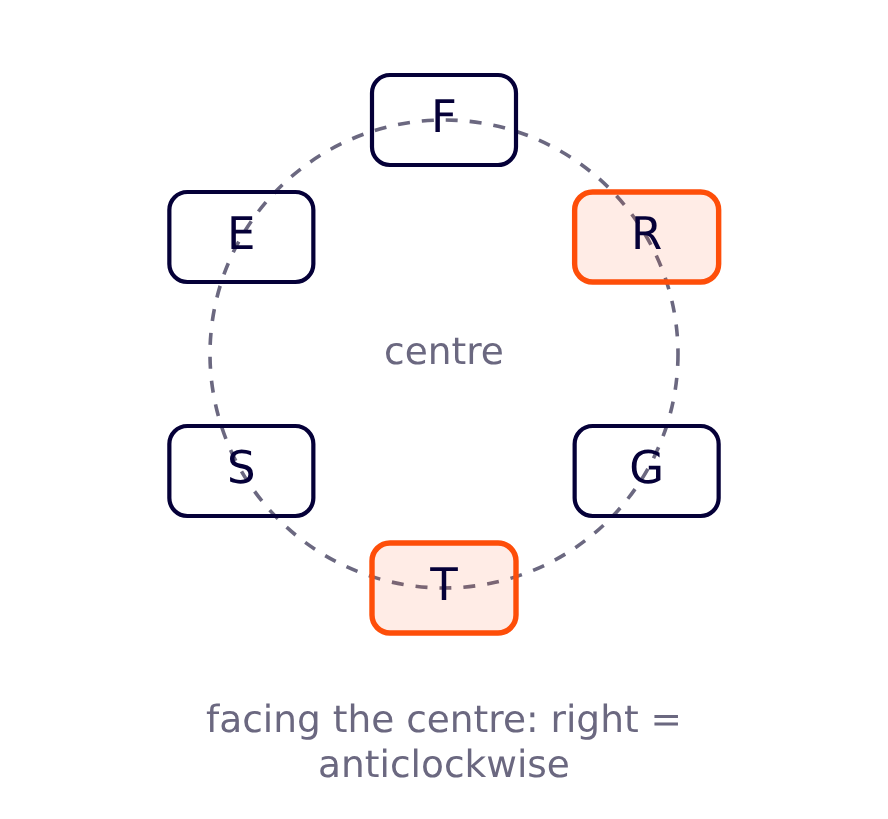 Counting from R towards R's right, that is anticlockwise, we pass F, E and S before reaching T.
Hence three people sit between R and T.
Counting from R towards R's right, that is anticlockwise, we pass F, E and S before reaching T.
Hence three people sit between R and T.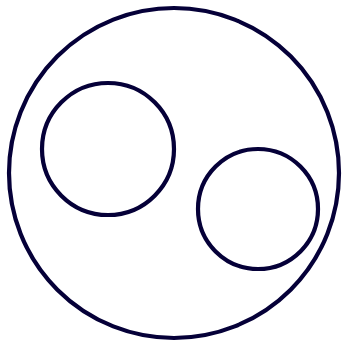
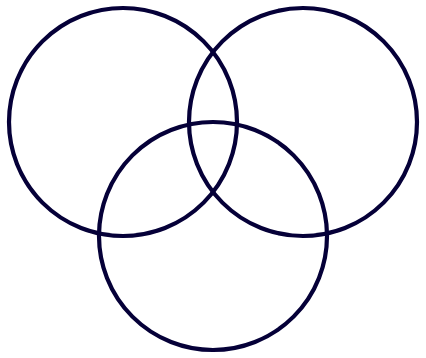
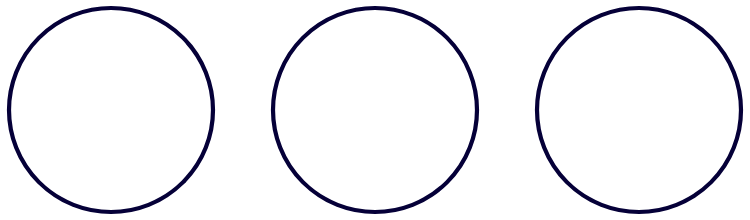
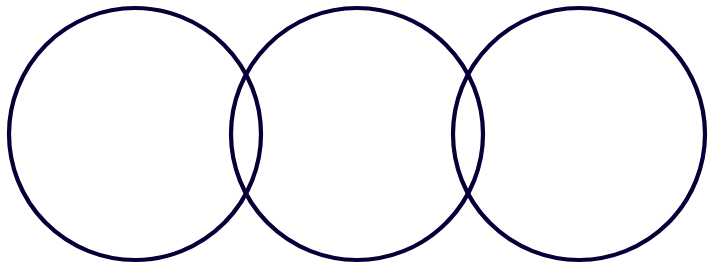
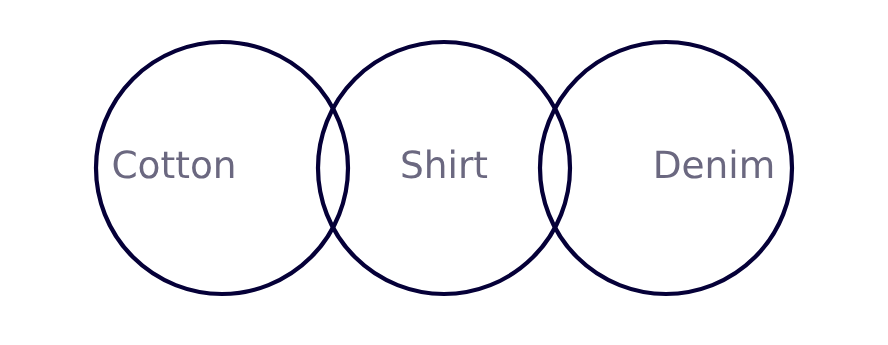 The correct picture therefore has two separate circles with a third circle overlapping both of them in the middle.
Option (d) shows exactly this arrangement.
The correct picture therefore has two separate circles with a third circle overlapping both of them in the middle.
Option (d) shows exactly this arrangement.