
1
Select the Venn diagram that best illustrates the relationship between the following classes.
Doctors, Men, Tables
- A.
- B.
- C.
- D.
Solution
Venn diagram of classes
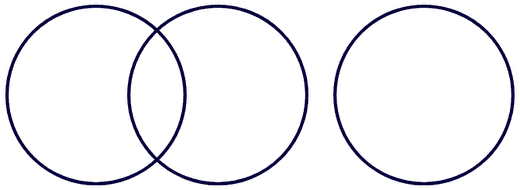
Some doctors are men and some men are doctors, but not every doctor is a man and not every man is a doctor, so the two classes only partly overlap.
A table is a piece of furniture, so no table can be a doctor or a man; that class stays completely outside both.
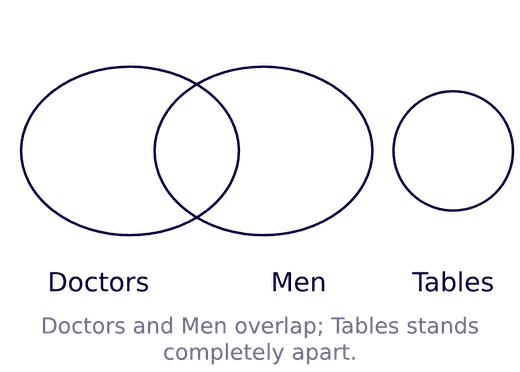 The picture therefore needs two intersecting circles for Doctors and Men and a third circle standing on its own for Tables.
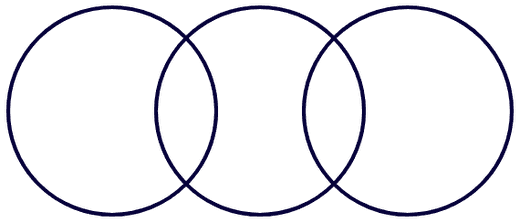
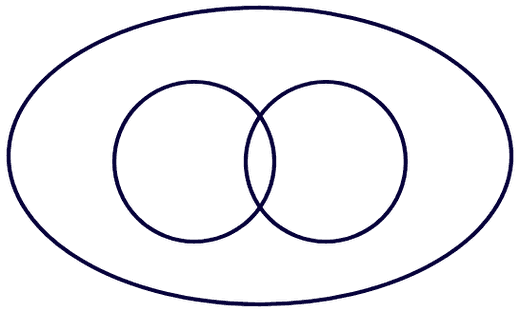
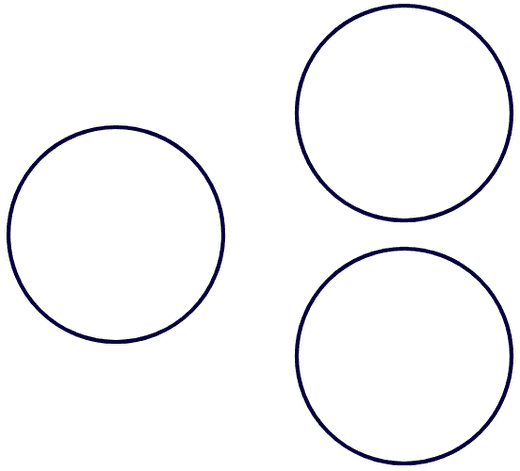
Option (a) makes Tables cut Men, option (c) puts both circles inside one larger class and option (d) keeps Doctors and Men apart, so each of them states a relation the words do not.
Hence the correct option is (b).
The picture therefore needs two intersecting circles for Doctors and Men and a third circle standing on its own for Tables.
Option (a) makes Tables cut Men, option (c) puts both circles inside one larger class and option (d) keeps Doctors and Men apart, so each of them states a relation the words do not.
Hence the correct option is (b).
The picture therefore needs two intersecting circles for Doctors and Men and a third circle standing on its own for Tables.
Option (a) makes Tables cut Men, option (c) puts both circles inside one larger class and option (d) keeps Doctors and Men apart, so each of them states a relation the words do not.
Hence the correct option is (b).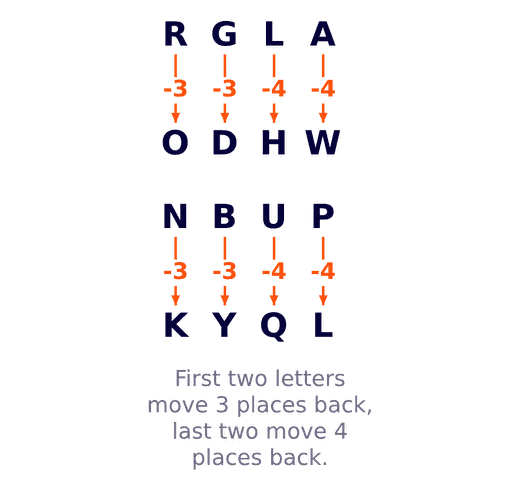 The second pair obeys the same rule: C-3=Z, T-3=Q, Z-4=V, W-4=S, giving ZQVS.
Now apply -3,-3,-4,-4 to NBUP: N-3=K, B-3=Y, U-4=Q, P-4=L.
Hence the correct option is (d).
The second pair obeys the same rule: C-3=Z, T-3=Q, Z-4=V, W-4=S, giving ZQVS.
Now apply -3,-3,-4,-4 to NBUP: N-3=K, B-3=Y, U-4=Q, P-4=L.
Hence the correct option is (d).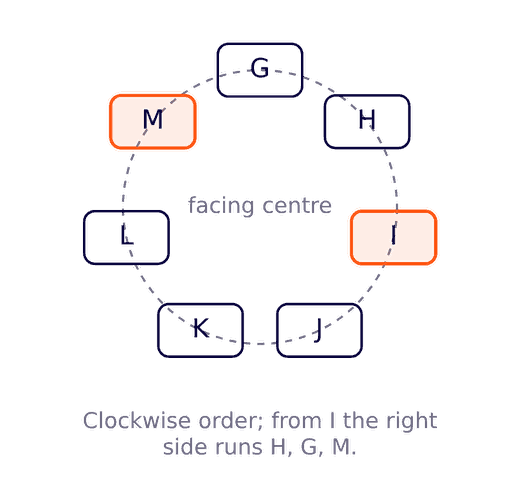 The clockwise order is G, H, I, J, K, L, M. Counting from I towards its right (anticlockwise) we pass H and G before reaching M.
So two people sit between I and M, and the correct option is (d).
The clockwise order is G, H, I, J, K, L, M. Counting from I towards its right (anticlockwise) we pass H and G before reaching M.
So two people sit between I and M, and the correct option is (d).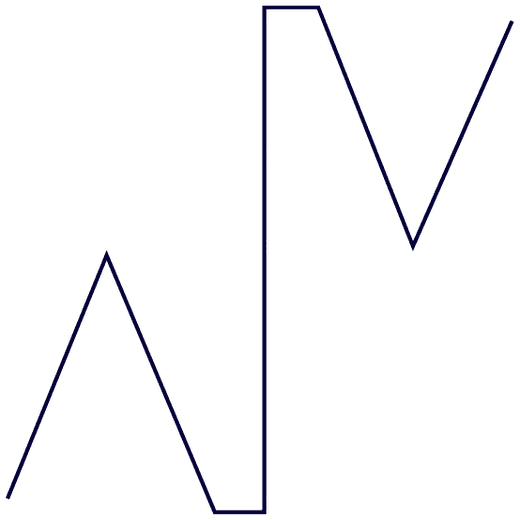
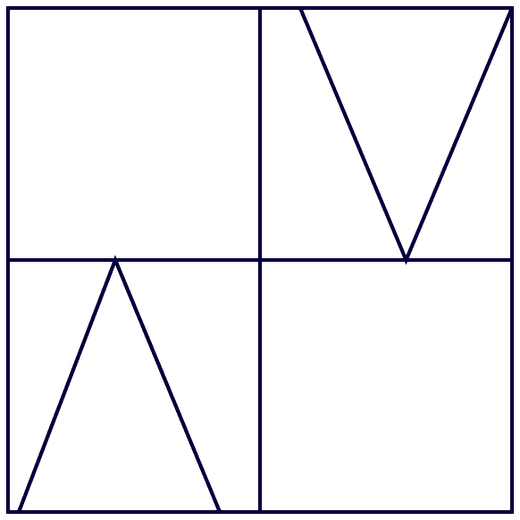
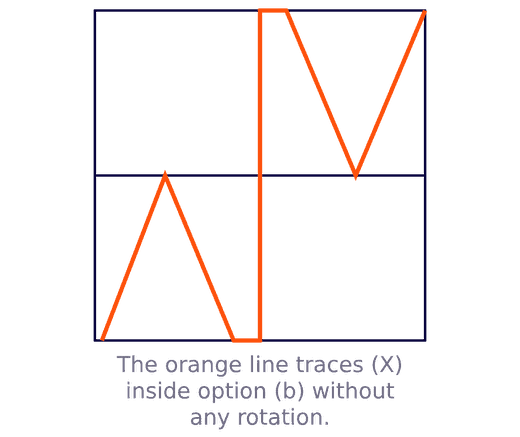 In option (b) start at the bottom-left corner, climb to the peak, come down to the bottom edge, run right to the foot of the centre line, go straight up it, step right along the top edge, drop to the vertex of the V and rise to the top-right corner - that is exactly (X).
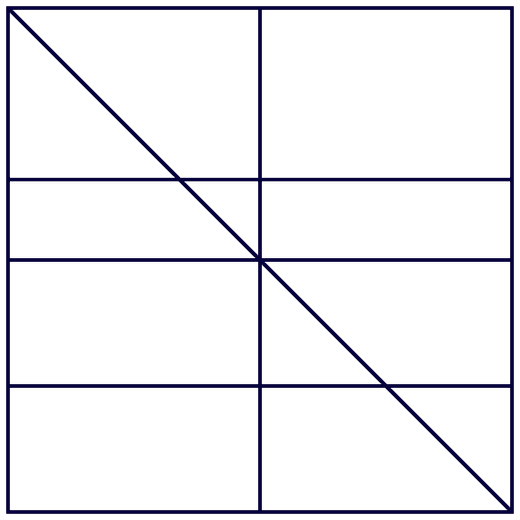
Option (a) has only a long corner-to-corner diagonal and parallel bars, so it holds no peak at all.
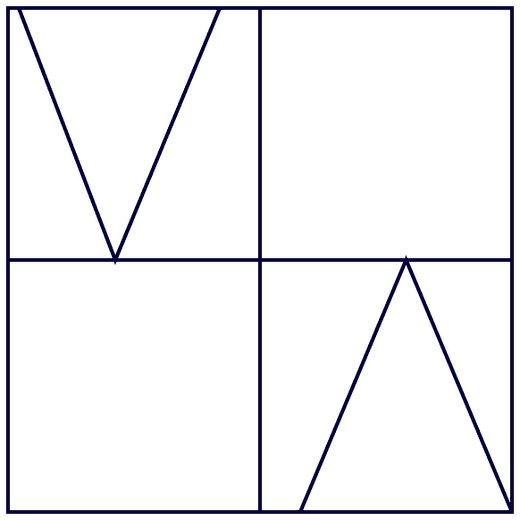
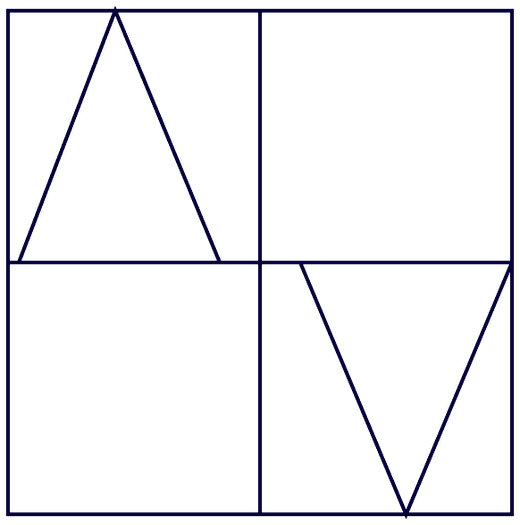
Options (c) and (d) do carry a peak and a V, but on the wrong sides of the centre line - the V is at the top left or the peak at the top - and rotation is not allowed, so (X) cannot be laid on them.
Hence the correct option is (b).
In option (b) start at the bottom-left corner, climb to the peak, come down to the bottom edge, run right to the foot of the centre line, go straight up it, step right along the top edge, drop to the vertex of the V and rise to the top-right corner - that is exactly (X).
Option (a) has only a long corner-to-corner diagonal and parallel bars, so it holds no peak at all.
Options (c) and (d) do carry a peak and a V, but on the wrong sides of the centre line - the V is at the top left or the peak at the top - and rotation is not allowed, so (X) cannot be laid on them.
Hence the correct option is (b).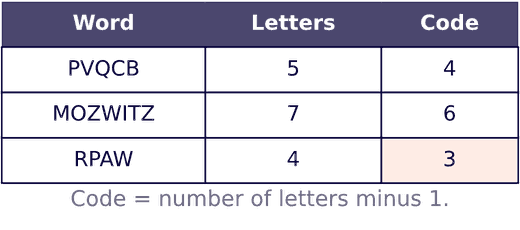 'RPAW' has 4 letters, so its code is 4-1=3.
Hence the correct option is (a).
'RPAW' has 4 letters, so its code is 4-1=3.
Hence the correct option is (a).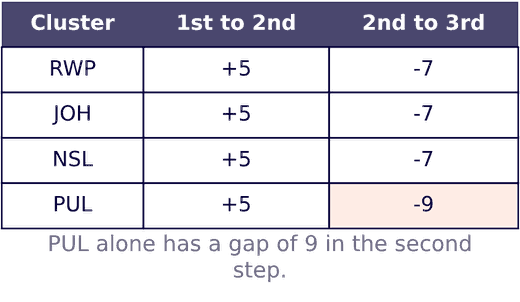 PUL: P+5=U is right, but U-9=L, not -7; the second gap is the one that breaks.
Hence the correct option is (d).
PUL: P+5=U is right, but U-9=L, not -7; the second gap is the one that breaks.
Hence the correct option is (d).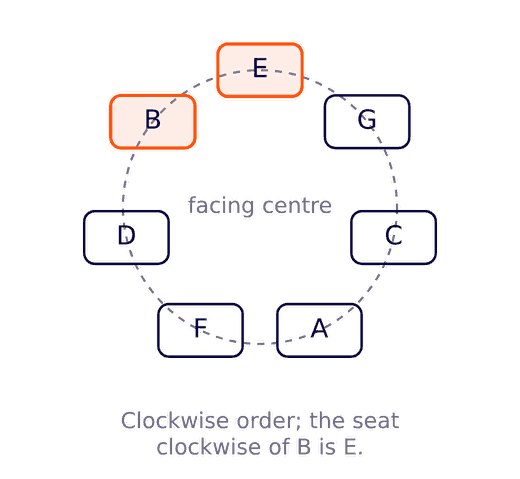 The immediate left of B is the next seat clockwise from B, which brings us back to E.
Hence the correct option is (a).
The immediate left of B is the next seat clockwise from B, which brings us back to E.
Hence the correct option is (a).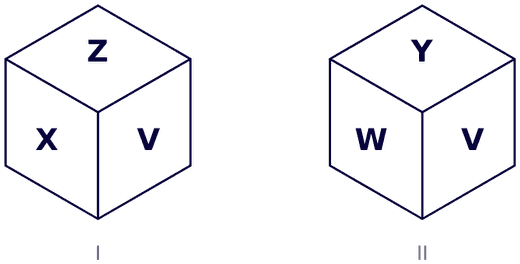
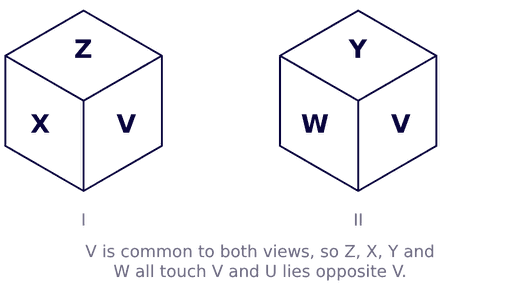 Everything that appears beside V is therefore adjacent to V: Z and X from view I, Y and W from view II.
That is four different neighbours - Z, X, Y and W - and a cube face has exactly four neighbours.
The only letter never seen next to V is U, so U must be the face hidden behind V.
So U and V lie opposite each other and the face opposite U carries V; the correct option is (d).
Everything that appears beside V is therefore adjacent to V: Z and X from view I, Y and W from view II.
That is four different neighbours - Z, X, Y and W - and a cube face has exactly four neighbours.
The only letter never seen next to V is U, so U must be the face hidden behind V.
So U and V lie opposite each other and the face opposite U carries V; the correct option is (d).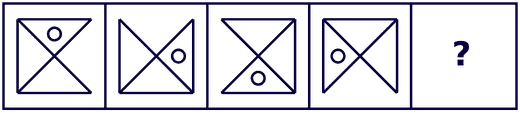
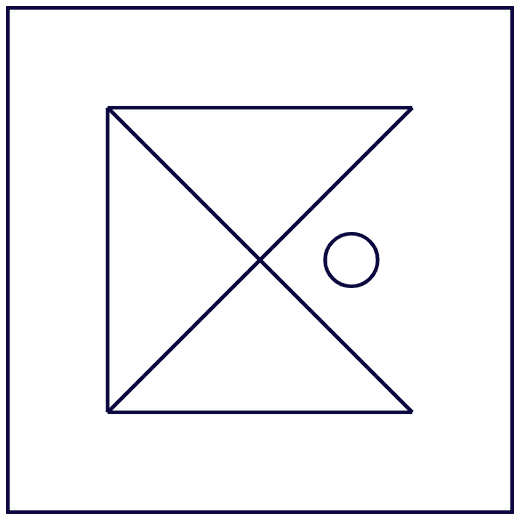
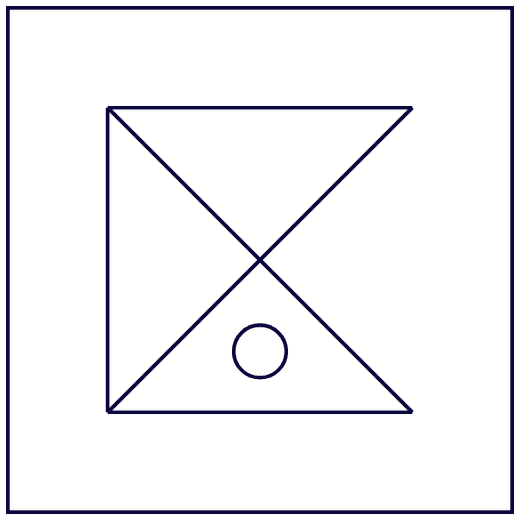
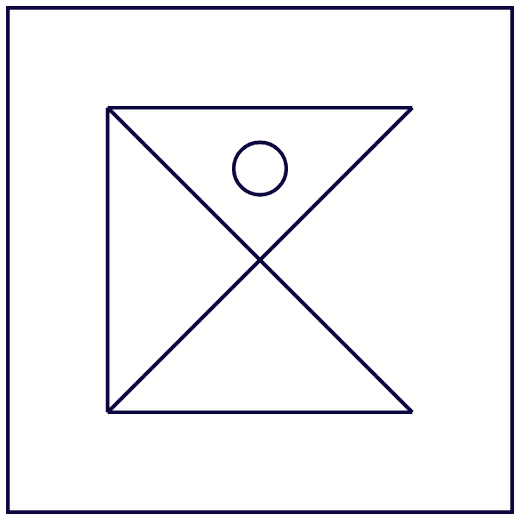
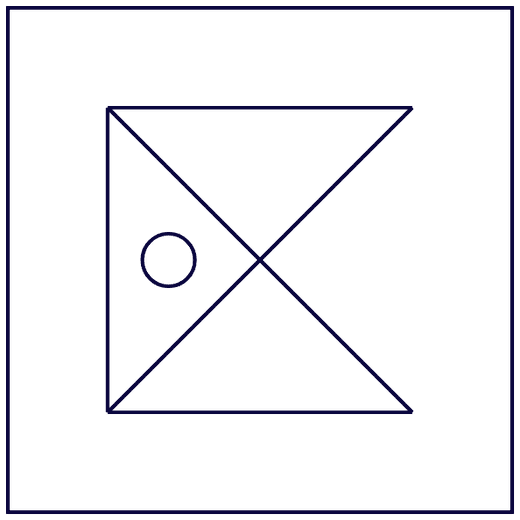
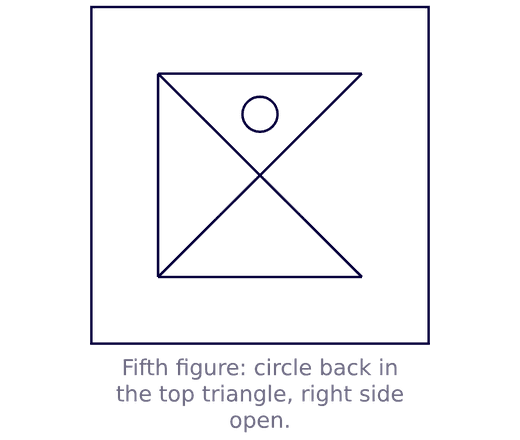 Both cycles have length four, so after the fourth figure they return to their starting places: the fifth figure has the circle in the TOP triangle and the RIGHT side open.
All four options are drawn with the right side open, so the circle's triangle is the only feature that separates them - it is in the right triangle in (a), the bottom in (b) and the left in (d).
Only (c) puts the circle in the top triangle, so the correct option is (c).
Both cycles have length four, so after the fourth figure they return to their starting places: the fifth figure has the circle in the TOP triangle and the RIGHT side open.
All four options are drawn with the right side open, so the circle's triangle is the only feature that separates them - it is in the right triangle in (a), the bottom in (b) and the left in (d).
Only (c) puts the circle in the top triangle, so the correct option is (c).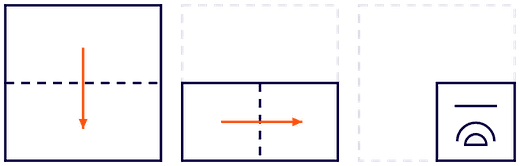
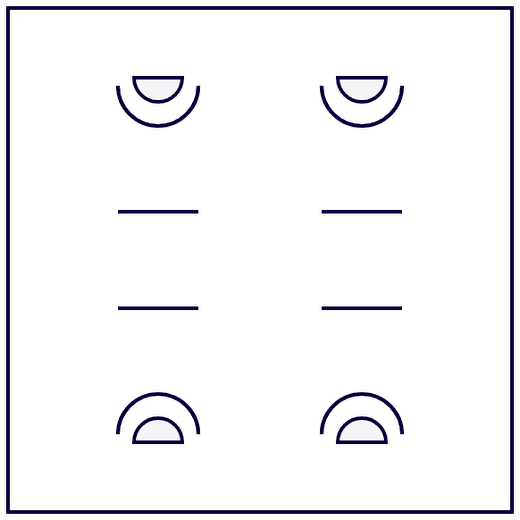
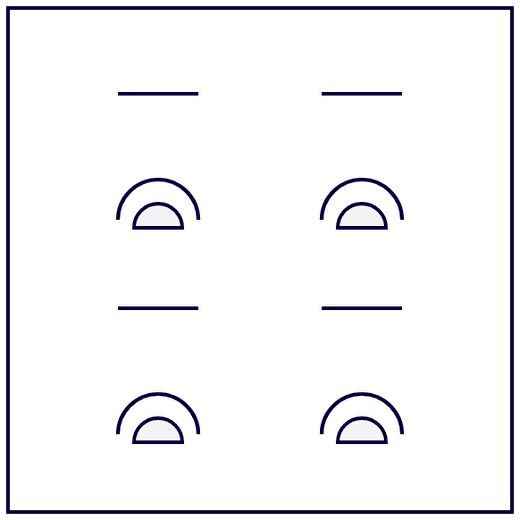
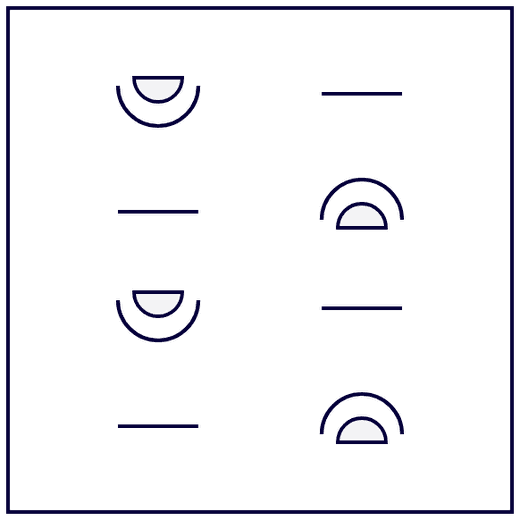
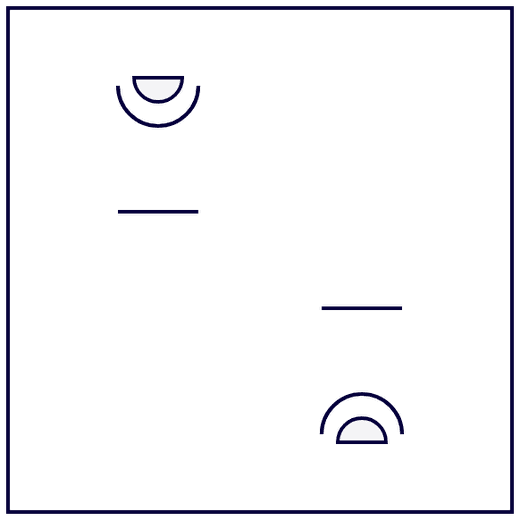
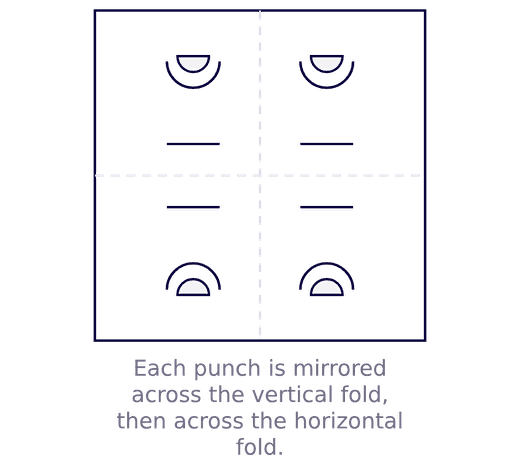 So the sheet must show, from top to bottom, two cups, then a row of two slits, then another row of two slits, then two domes - eight marks in two matching columns.
Option (b) has curved punches in the second row where slits belong, option (c) is not symmetric about either fold line, and option (d) shows only four marks instead of eight.
Hence the correct option is (a).
So the sheet must show, from top to bottom, two cups, then a row of two slits, then another row of two slits, then two domes - eight marks in two matching columns.
Option (b) has curved punches in the second row where slits belong, option (c) is not symmetric about either fold line, and option (d) shows only four marks instead of eight.
Hence the correct option is (a).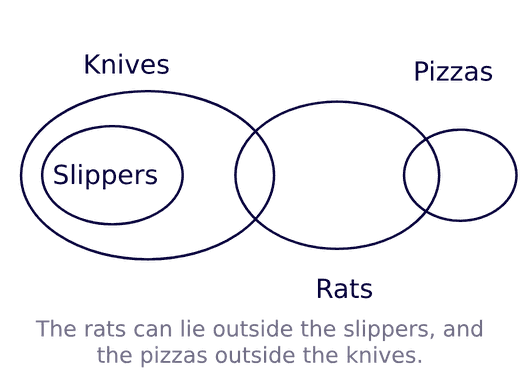 Conclusion (I): the pizzas touch only the rats, the rats touch only part of the knives, and that part need not contain a single slipper - so 'Some pizzas are slippers' is possible but not certain.
Conclusion (II): 'Some knives are rats' does not say which knives; the rats may overlap the knives entirely outside the slipper circle, so 'Some rats are slippers' is also only possible.
A conclusion follows only if it is true in EVERY diagram the statements allow, and the diagram above is a counter-example to both.
Hence neither conclusion follows and the correct option is (d).
Conclusion (I): the pizzas touch only the rats, the rats touch only part of the knives, and that part need not contain a single slipper - so 'Some pizzas are slippers' is possible but not certain.
Conclusion (II): 'Some knives are rats' does not say which knives; the rats may overlap the knives entirely outside the slipper circle, so 'Some rats are slippers' is also only possible.
A conclusion follows only if it is true in EVERY diagram the statements allow, and the diagram above is a counter-example to both.
Hence neither conclusion follows and the correct option is (d).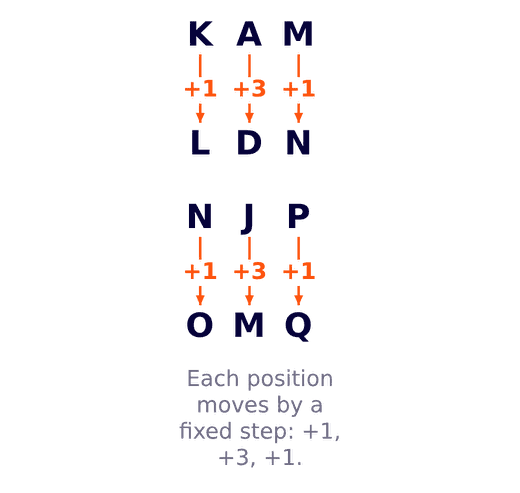 Putting them together gives OMQ; OPQ fails because the middle letter must jump 3, not 6.
Hence the correct option is (d).
Putting them together gives OMQ; OPQ fails because the middle letter must jump 3, not 6.
Hence the correct option is (d).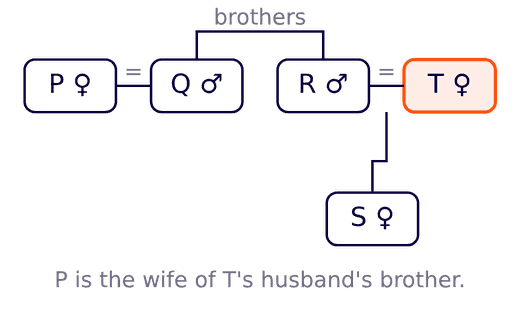 Q is the brother of R, so Q is the brother of T's husband, and P is the wife of Q.
P is therefore the wife of T's husband's brother - in one phrase, T's husband's brother's wife.
Hence the correct option is (c).
Q is the brother of R, so Q is the brother of T's husband, and P is the wife of Q.
P is therefore the wife of T's husband's brother - in one phrase, T's husband's brother's wife.
Hence the correct option is (c).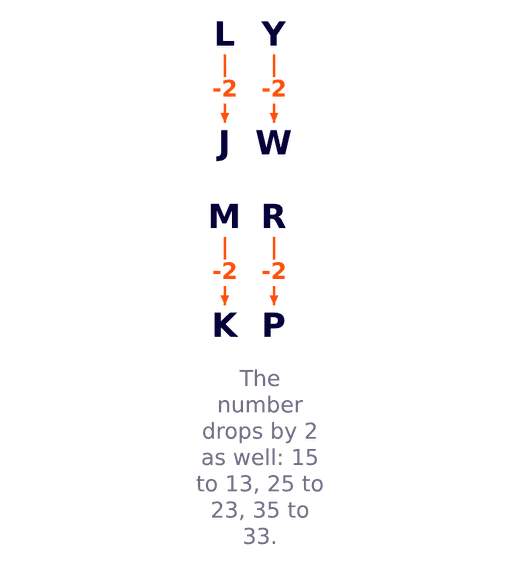 MR 35: M-2=K, R-2=P and 35-2=33, giving KP 33.
Hence the correct option is (d).
MR 35: M-2=K, R-2=P and 35-2=33, giving KP 33.
Hence the correct option is (d).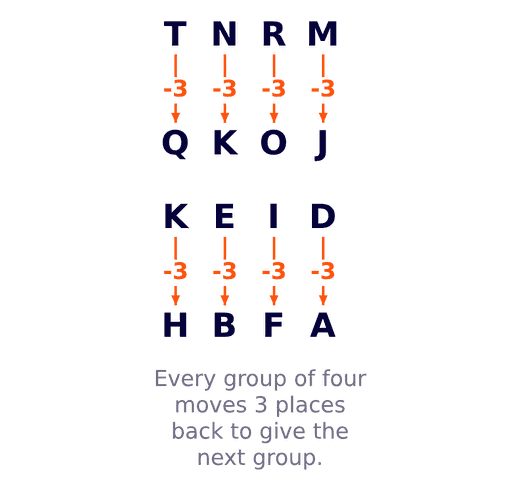 Work the chain from the known letters: NRM in the first group needs T in front of it, because T-3=Q matches the Q that opens the second group.
That gives TNRM, QKOJ, NHLG, KEID, HBFA.
Reading the five blanks in order: T, K, L, D, A.
Hence the correct option is (d).
Work the chain from the known letters: NRM in the first group needs T in front of it, because T-3=Q matches the Q that opens the second group.
That gives TNRM, QKOJ, NHLG, KEID, HBFA.
Reading the five blanks in order: T, K, L, D, A.
Hence the correct option is (d).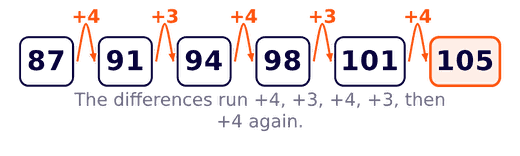 The differences repeat in the cycle +4, +3, so after +3 the next difference must be +4.
101+4=105.
Hence the correct option is (a).
The differences repeat in the cycle +4, +3, so after +3 the next difference must be +4.
101+4=105.
Hence the correct option is (a).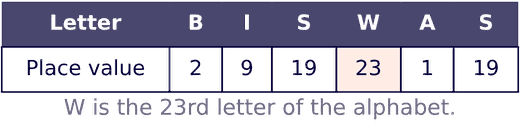 For BISWAS: B=2, I=9, S=19, W=23, A=1, S=19.
All four options agree except at the fourth number, so only W matters: W is the 23rd letter, while 20, 21 and 22 are T, U and V.
Hence the correct option is (d).
For BISWAS: B=2, I=9, S=19, W=23, A=1, S=19.
All four options agree except at the fourth number, so only W matters: W is the 23rd letter, while 20, 21 and 22 are T, U and V.
Hence the correct option is (d).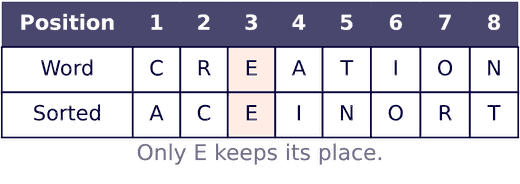 Now compare the two rows place by place: C/A, R/C, E/E, A/I, T/N, I/O, O/R, N/T.
Only the third place has the same letter in both rows, namely E.
So exactly one letter keeps its position, and the correct option is (d).
Now compare the two rows place by place: C/A, R/C, E/E, A/I, T/N, I/O, O/R, N/T.
Only the third place has the same letter in both rows, namely E.
So exactly one letter keeps its position, and the correct option is (d).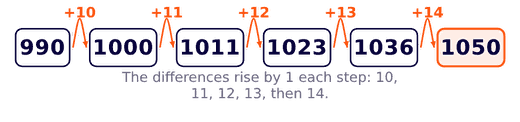 The differences themselves grow by 1 each time, so the next difference is 14.
1036+14=1050.
Hence the correct option is (d).
The differences themselves grow by 1 each time, so the next difference is 14.
1036+14=1050.
Hence the correct option is (d).