
1
Each letter in the word DUMPERS is arranged in the English alphabetical order. How many letters are there in the English alphabetical order between the letter which is fourth from the left end and the one which is second from the right end in the new letter-cluster thus formed?
- A.2
- B.5
- C.1
- D.3
Solution
Alphabetical rearrangement
Put the letters of DUMPERS in alphabetical order: D, E, M, P, R, S, U.
The new letter-cluster is DEMPRSU.
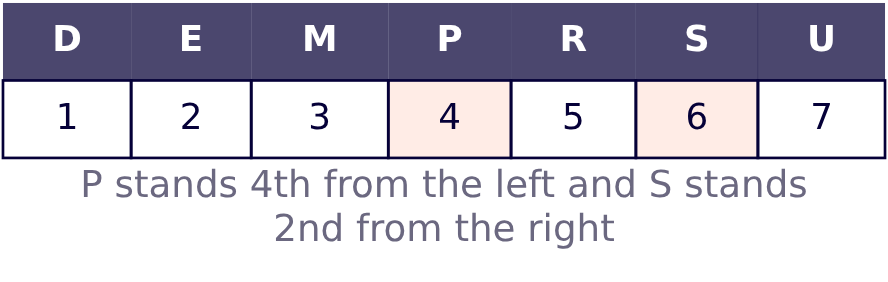 Fourth from the left end = P; second from the right end = S.
Between P and S the alphabet has only Q and R, so 2 letters lie between them.
So the correct option is (a).
Fourth from the left end = P; second from the right end = S.
Between P and S the alphabet has only Q and R, so 2 letters lie between them.
So the correct option is (a).
Fourth from the left end = P; second from the right end = S.
Between P and S the alphabet has only Q and R, so 2 letters lie between them.
So the correct option is (a).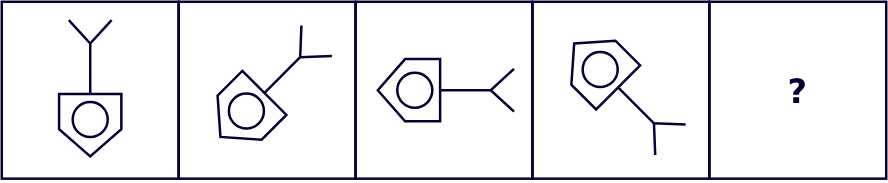
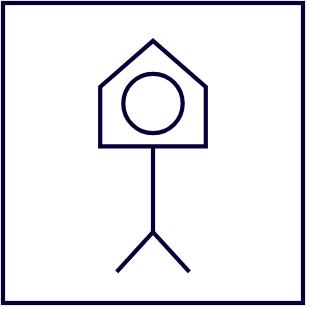
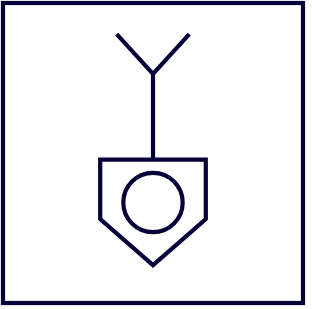
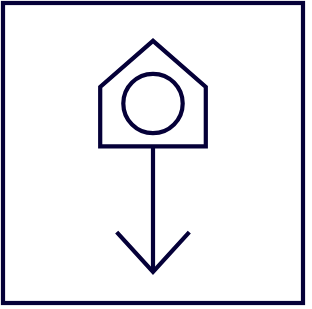
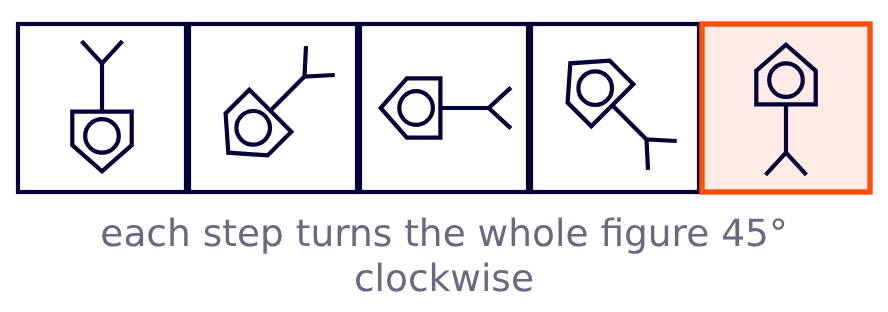 One more turn of 45° puts the figure 180° from the first frame: the pentagon on top with its apex pointing up and the stalk hanging below it.
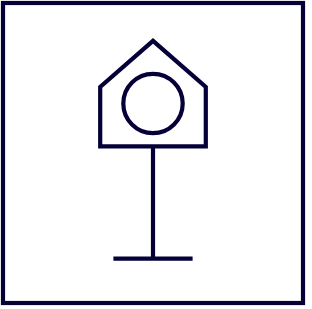
The stalk must still end in an OPEN fork whose two arms spread apart - option (d) closes them into an arrowhead and option (b) ends in a straight cross-bar, while option (c) is the first frame unturned.
So the correct option is (a).
One more turn of 45° puts the figure 180° from the first frame: the pentagon on top with its apex pointing up and the stalk hanging below it.
The stalk must still end in an OPEN fork whose two arms spread apart - option (d) closes them into an arrowhead and option (b) ends in a straight cross-bar, while option (c) is the first frame unturned.
So the correct option is (a).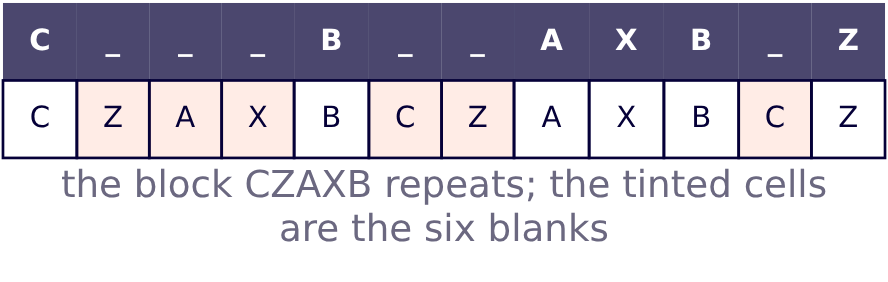 Reading only the six blank places, from left to right, gives Z, A, X, C, Z, C.
So the correct option is (c).
Reading only the six blank places, from left to right, gives Z, A, X, C, Z, C.
So the correct option is (c).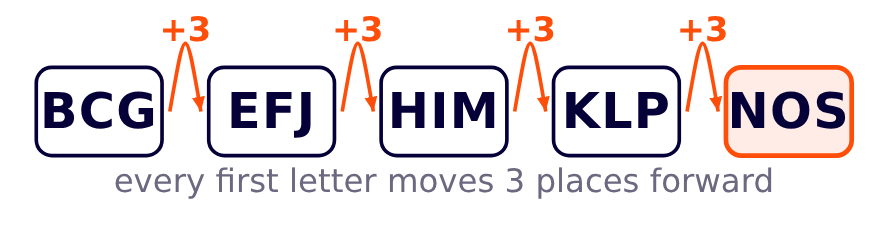 Next cluster: first =14=N, second =15=O, third =15+4=19=S, i.e. NOS.
So the correct option is (a).
Next cluster: first =14=N, second =15=O, third =15+4=19=S, i.e. NOS.
So the correct option is (a).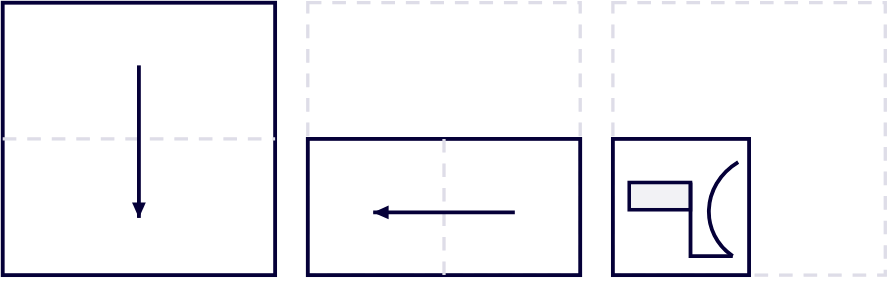
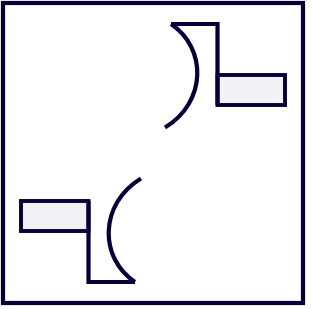
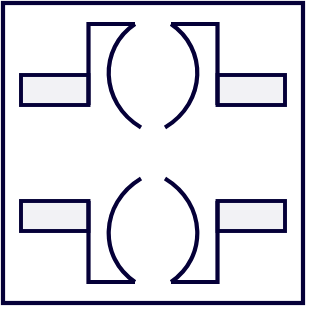
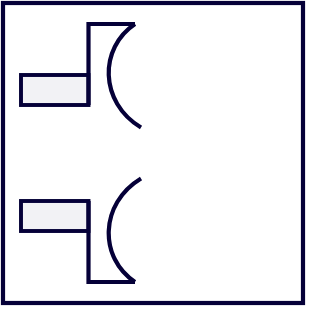
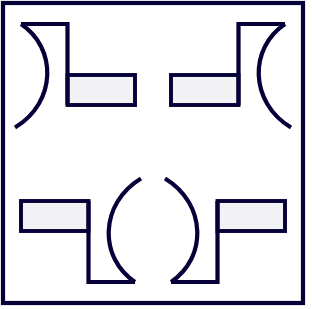
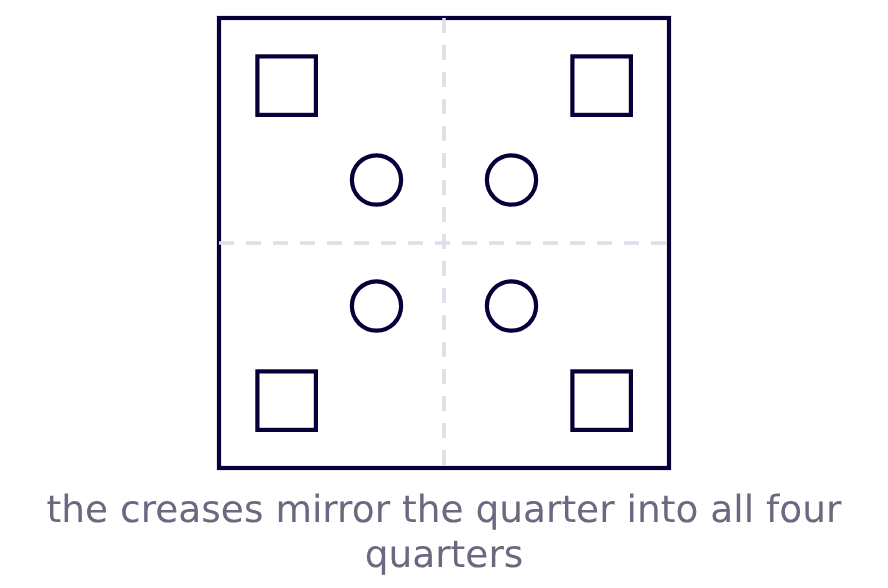
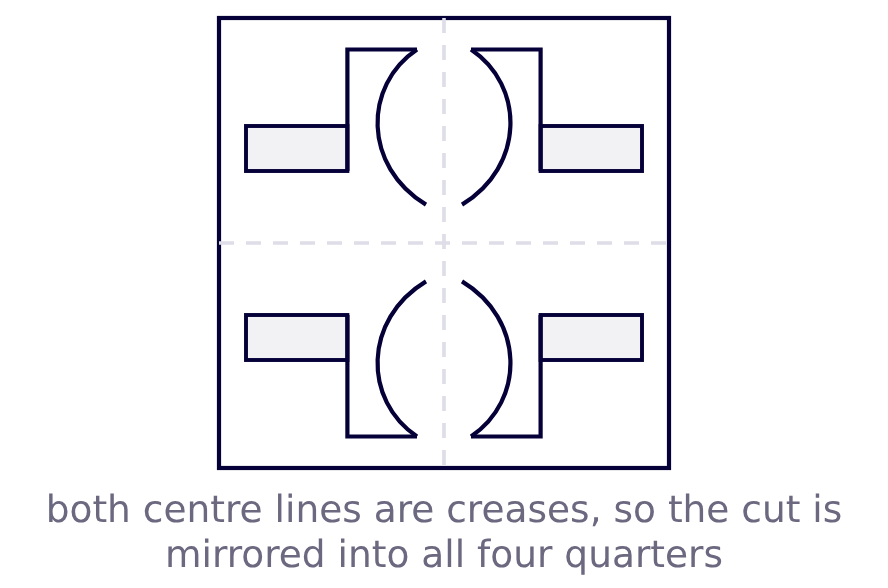 Each crease acts as a mirror, so every cut is a reflection of its neighbour: in all four the solid bar stays on the OUTER side and the curve faces the centre of the sheet.
Options (a) and (c) show only two cuts, and (d) turns the two upper cuts round so their bars point inwards.
So the correct option is (b).
Each crease acts as a mirror, so every cut is a reflection of its neighbour: in all four the solid bar stays on the OUTER side and the curve faces the centre of the sheet.
Options (a) and (c) show only two cuts, and (d) turns the two upper cuts round so their bars point inwards.
So the correct option is (b).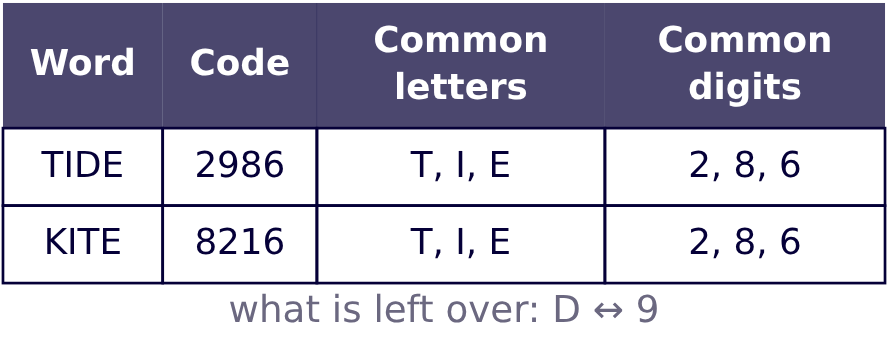 So T, I and E use up 2, 8 and 6, and the only letter left in TIDE is D against the only digit left, 9.
So the correct option is (a).
So T, I and E use up 2, 8 and 6, and the only letter left in TIDE is D against the only digit left, 9.
So the correct option is (a).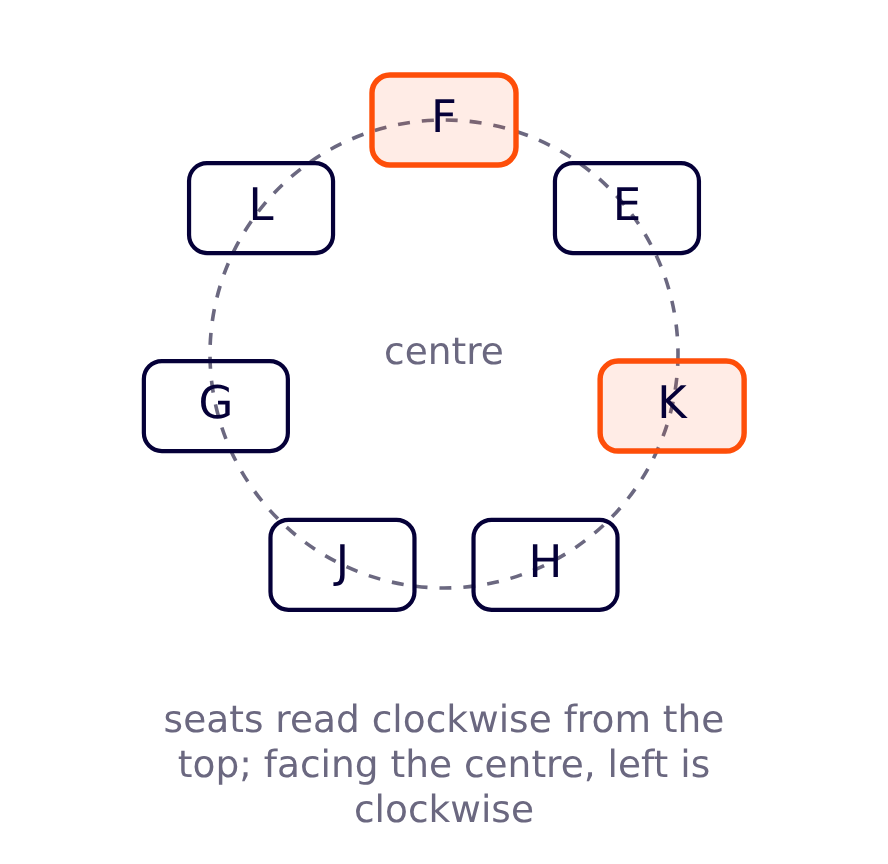 Now count from K towards K's right, i.e. anticlockwise: E, then F.
Only one person, E, sits between them, so the answer is One.
So the correct option is (c).
Now count from K towards K's right, i.e. anticlockwise: E, then F.
Only one person, E, sits between them, so the answer is One.
So the correct option is (c).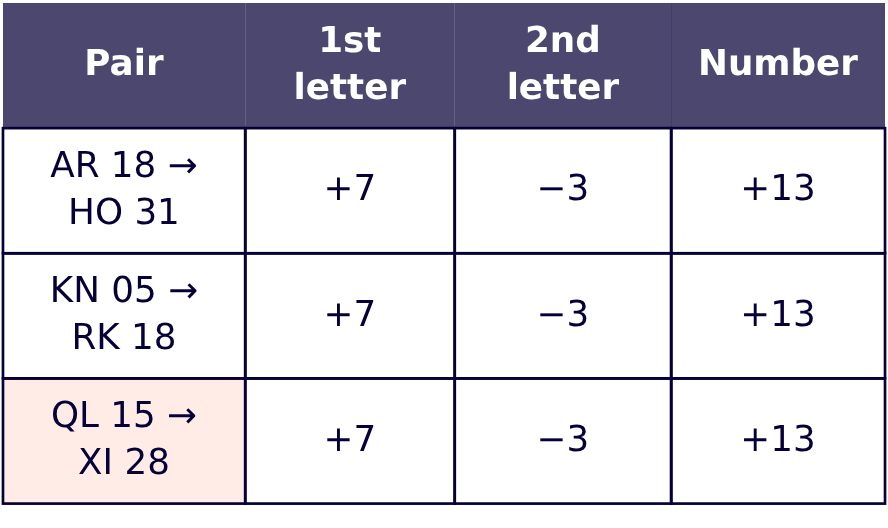 Apply it to QL 15: Q + 7 = X, L − 3 = I and 15+13=28.
That gives XI 28; option (a) keeps the letters but adds only 12 to the number.
So the correct option is (b).
Apply it to QL 15: Q + 7 = X, L − 3 = I and 15+13=28.
That gives XI 28; option (a) keeps the letters but adds only 12 to the number.
So the correct option is (b).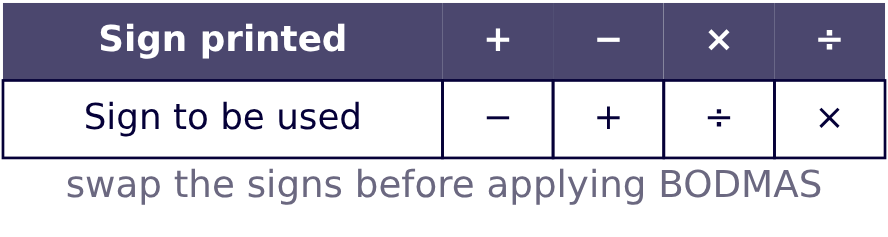 becomes .
By BODMAS do × and ÷ first: and .
41-48+12=5.
So the correct option is (a).
becomes .
By BODMAS do × and ÷ first: and .
41-48+12=5.
So the correct option is (a).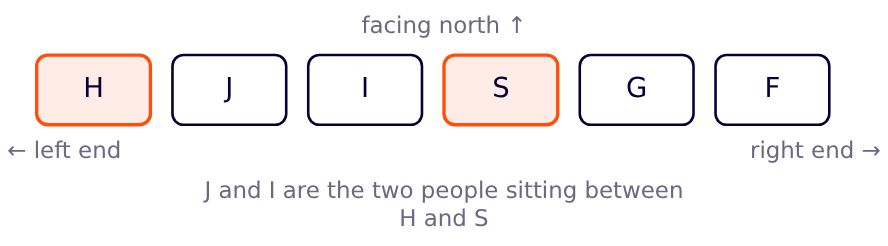 Between H (seat 1) and S (seat 4) sit J and I - two people.
So the correct option is (a).
Between H (seat 1) and S (seat 4) sit J and I - two people.
So the correct option is (a).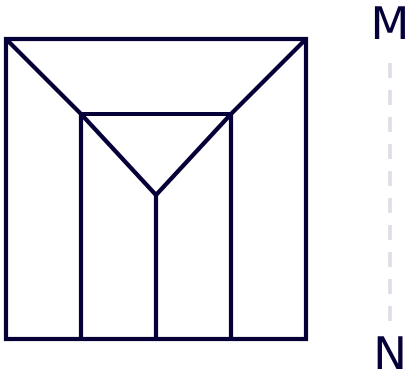
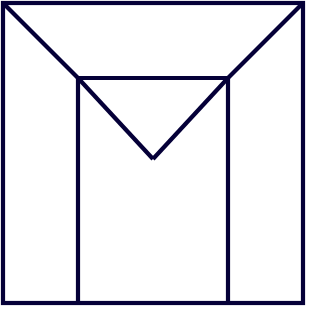
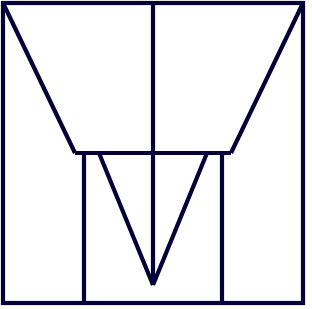
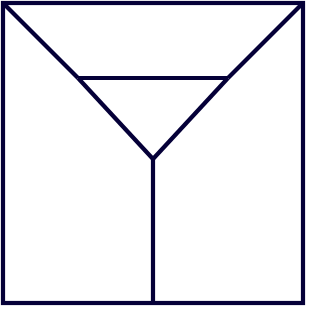
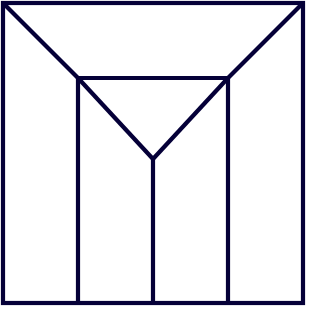
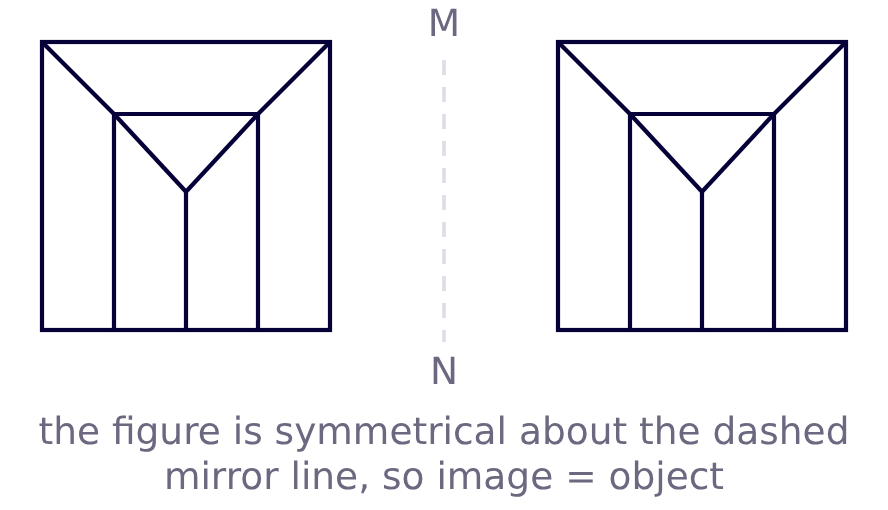 So the image must keep every line of the original - and the deciding detail is the count of lines reaching the base: two side verticals AND the short centre vertical below the V.
Option (a) drops that centre vertical, option (c) drops the two side verticals and option (b) moves the fan to the top and adds a line from the top edge.
So the correct option is (d).
So the image must keep every line of the original - and the deciding detail is the count of lines reaching the base: two side verticals AND the short centre vertical below the V.
Option (a) drops that centre vertical, option (c) drops the two side verticals and option (b) moves the fan to the top and adds a line from the top edge.
So the correct option is (d).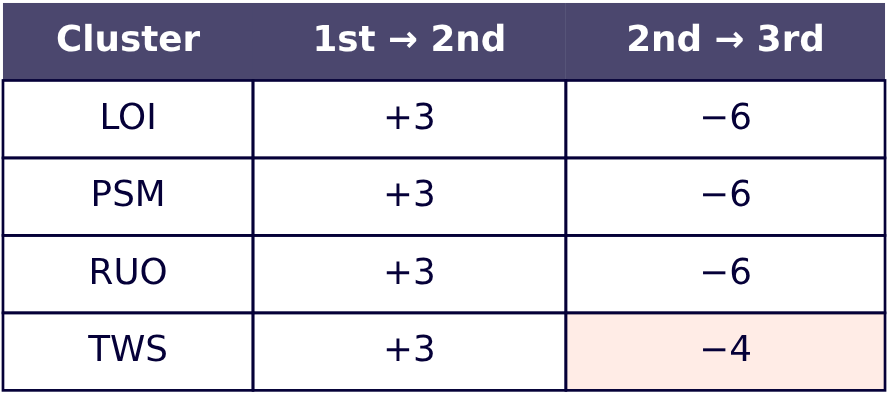 The second step breaks the pattern only in TWS, so it is the odd one out.
So the correct option is (d).
The second step breaks the pattern only in TWS, so it is the odd one out.
So the correct option is (d).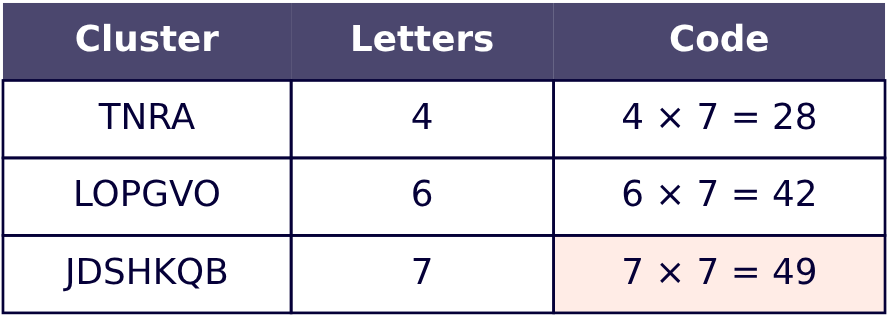 JDSHKQB has 7 letters, so its code is .
So the correct option is (d).
JDSHKQB has 7 letters, so its code is .
So the correct option is (d).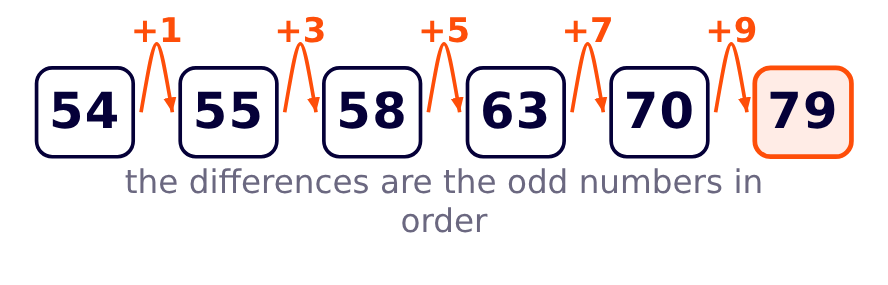 Missing term =70+9=79.
So the correct option is (d).
Missing term =70+9=79.
So the correct option is (d).

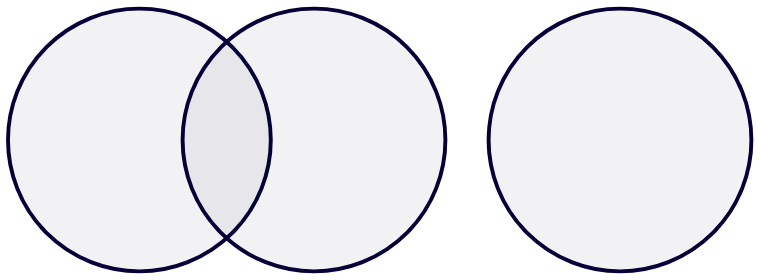
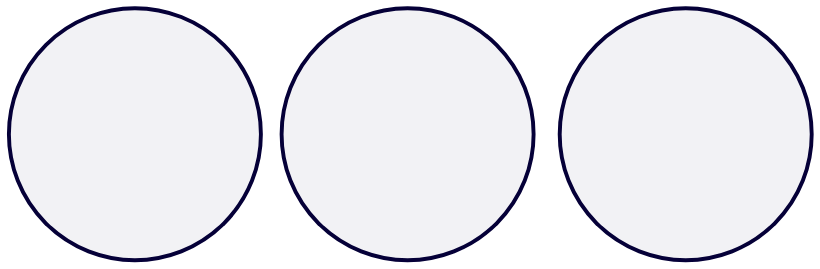
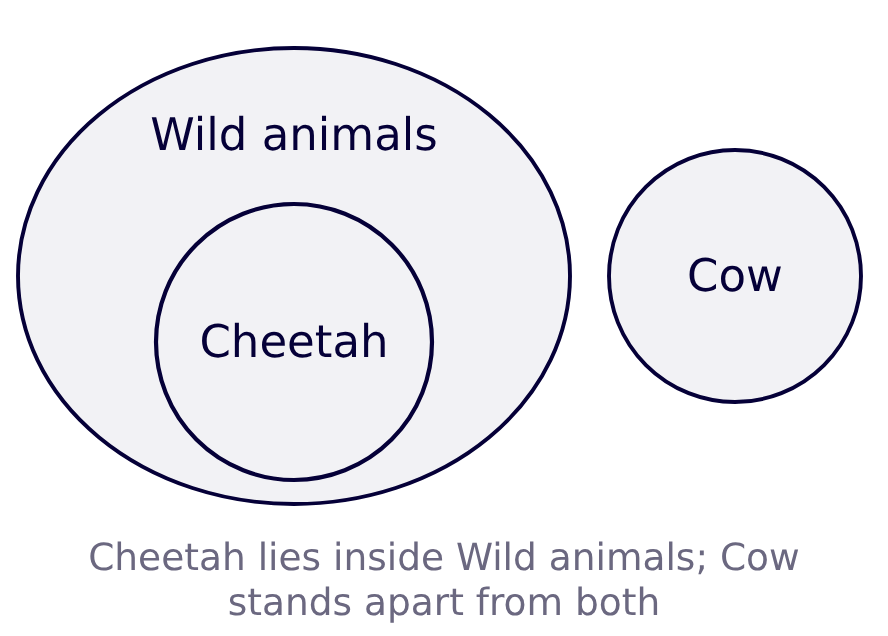 So the diagram needs exactly one small circle inside a big one, plus a third circle standing apart.
Option (a) puts the Cow circle inside Wild animals as well, (c) lets Cow and Cheetah overlap, and (d) leaves Cheetah outside Wild animals.
So the correct option is (b).
So the diagram needs exactly one small circle inside a big one, plus a third circle standing apart.
Option (a) puts the Cow circle inside Wild animals as well, (c) lets Cow and Cheetah overlap, and (d) leaves Cheetah outside Wild animals.
So the correct option is (b).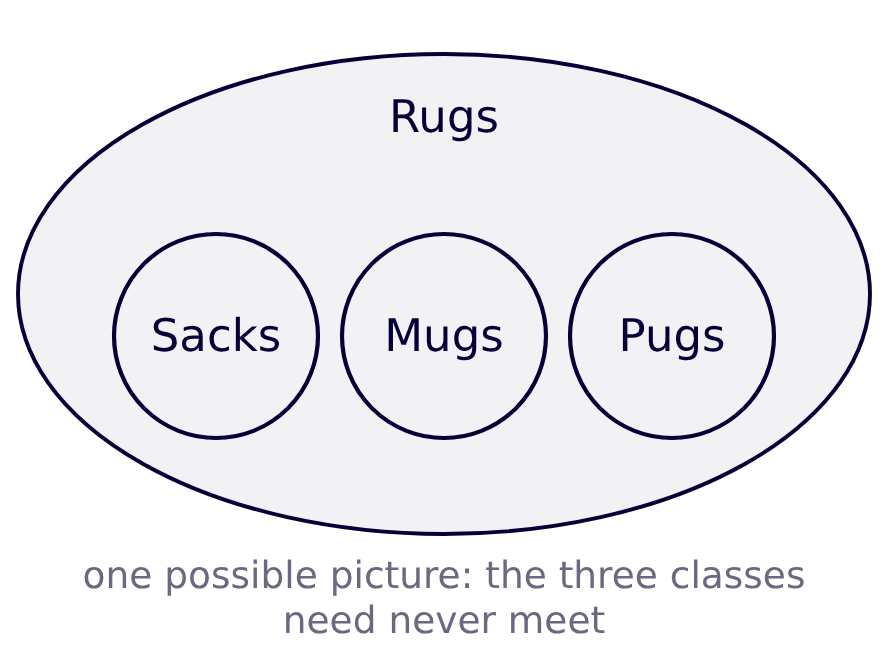 They can therefore be drawn as three separate circles inside rugs, and that picture breaks both conclusions at once.
Since a conclusion must hold in EVERY possible picture, 'Some pugs are sacks' does not follow and neither does 'Some mugs are pugs'.
So the correct option is (c).
They can therefore be drawn as three separate circles inside rugs, and that picture breaks both conclusions at once.
Since a conclusion must hold in EVERY possible picture, 'Some pugs are sacks' does not follow and neither does 'Some mugs are pugs'.
So the correct option is (c).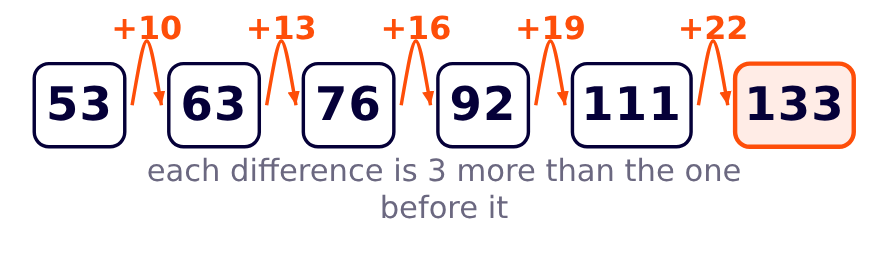 Missing term =111+22=133.
So the correct option is (b).
Missing term =111+22=133.
So the correct option is (b).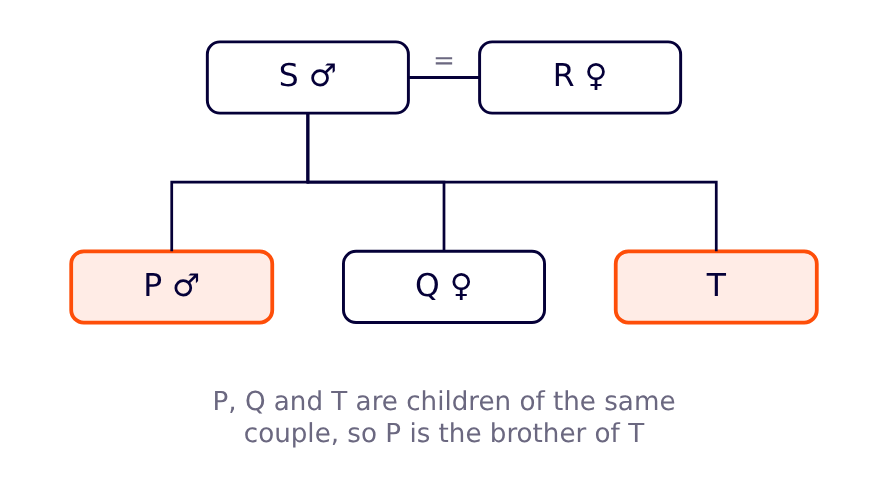 P is male and shares his parents with T, so P is the brother of T.
So the correct option is (b).
P is male and shares his parents with T, so P is the brother of T.
So the correct option is (b).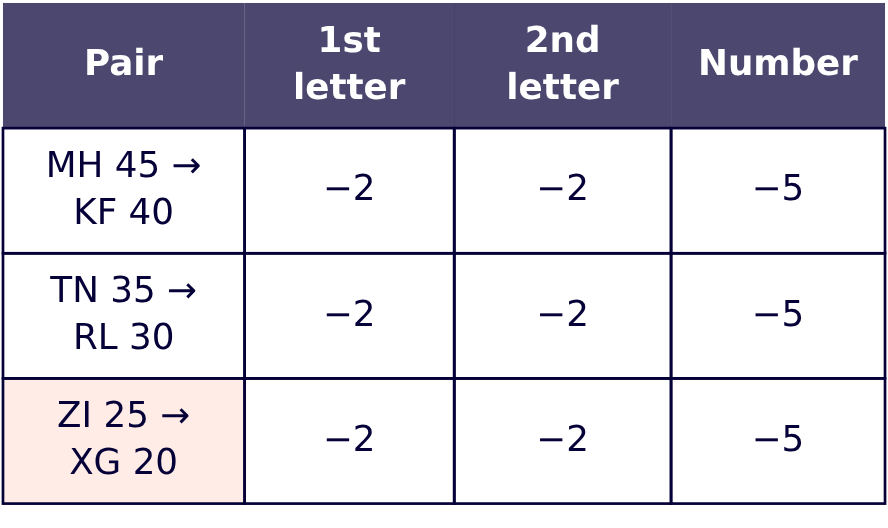 Apply it to ZI 25: Z − 2 = X, I − 2 = G and 25-5=20.
That gives XG 20; option (c) moves only the first letter and leaves the number untouched.
So the correct option is (b).
Apply it to ZI 25: Z − 2 = X, I − 2 = G and 25-5=20.
That gives XG 20; option (c) moves only the first letter and leaves the number untouched.
So the correct option is (b).
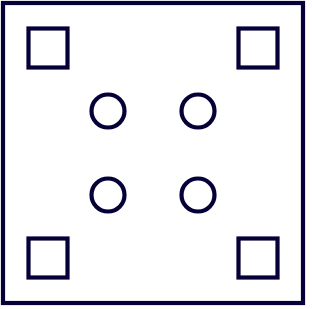
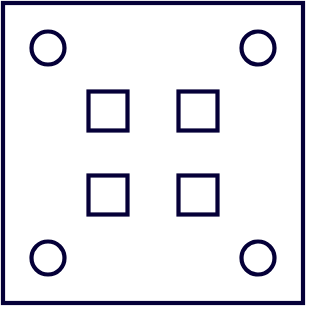
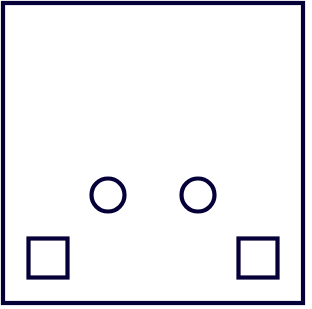
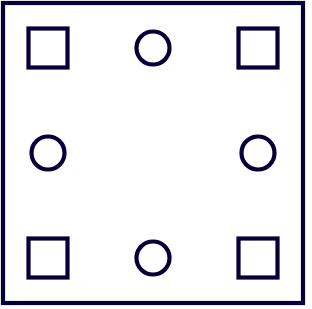
 Only the option that keeps the squares in the corners and the circles round the centre - four of each - can be right.
So the correct option is (a).
Only the option that keeps the squares in the corners and the circles round the centre - four of each - can be right.
So the correct option is (a).