
1
In a certain code language, 'A / B' means 'A is the father of B', 'A : B' means 'A is the wife of B', 'A ! B' means 'A is the brother of B' and 'A < B' means 'A is the son of B'. How is T related to S if 'T < I / M : E ! S'?
- A.Brother's wife's mother
- B.Brother's wife's brother
- C.Brother's wife's sister
- D.Brother's wife's father
Solution
Blood relation coding
Read 'T < I / M : E ! S' one link at a time, using the code given.
'T < I' means T is the son of I, and 'I / M' means I is the father of M, so T and M are children of the same father - T is M's brother.
'M : E' means M is the wife of E, so E is the husband of T's sister M.
'E ! S' means E is the brother of S.
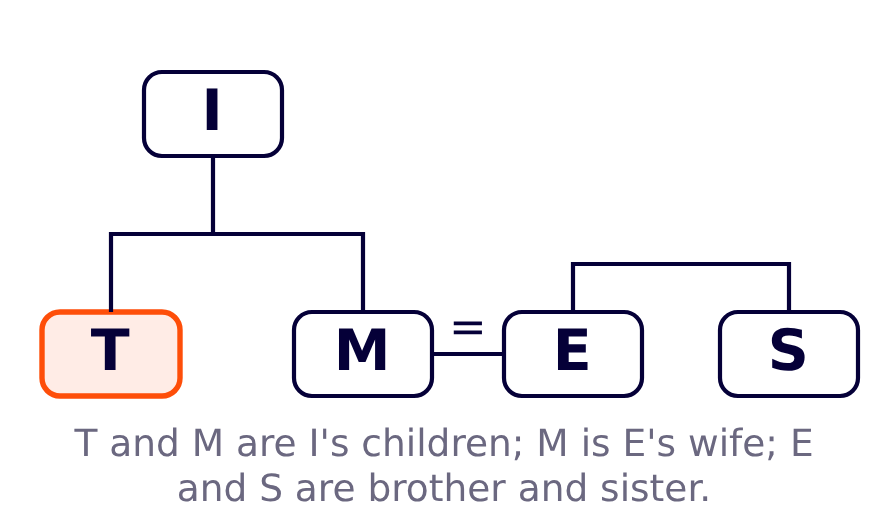 Now start from S: E is S's brother, M is that brother's wife, and T is that wife's brother.
Hence T is S's brother's wife's brother, so the correct option is (b).
Now start from S: E is S's brother, M is that brother's wife, and T is that wife's brother.
Hence T is S's brother's wife's brother, so the correct option is (b).
Now start from S: E is S's brother, M is that brother's wife, and T is that wife's brother.
Hence T is S's brother's wife's brother, so the correct option is (b).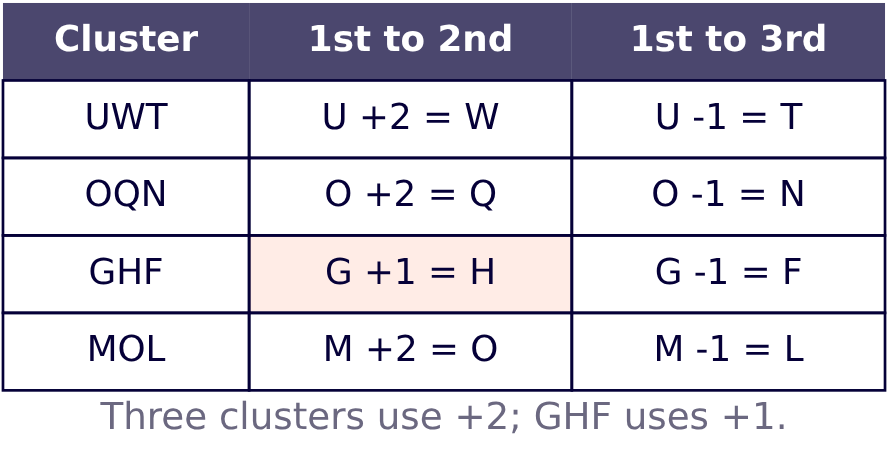 UWT, OQN and MOL all follow the same rule: second letter = first +2, third letter = first -1.
In GHF the second letter is only one step ahead (G+1=H), not two, so the second step is broken.
Therefore GHF does not belong to the group and the correct option is (c).
UWT, OQN and MOL all follow the same rule: second letter = first +2, third letter = first -1.
In GHF the second letter is only one step ahead (G+1=H), not two, so the second step is broken.
Therefore GHF does not belong to the group and the correct option is (c).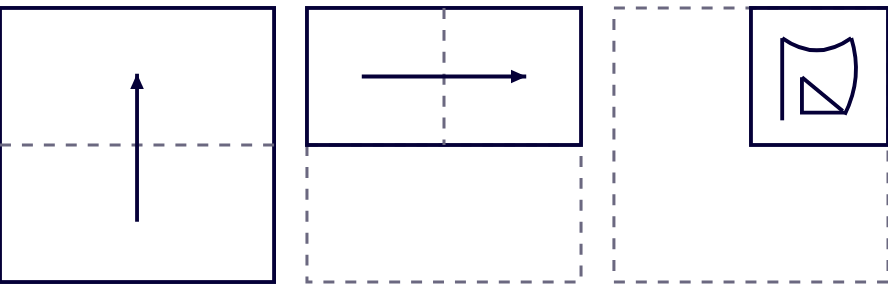
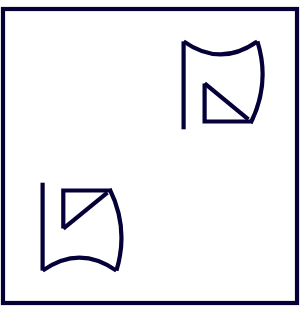
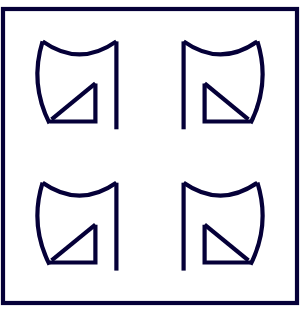
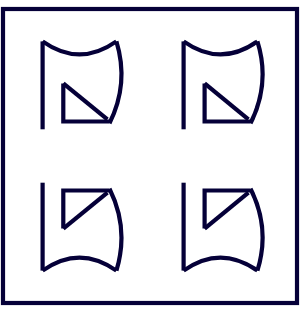
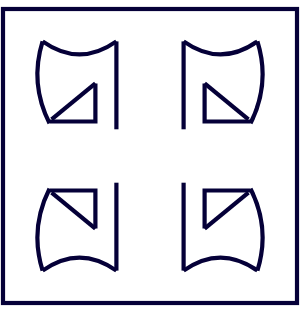
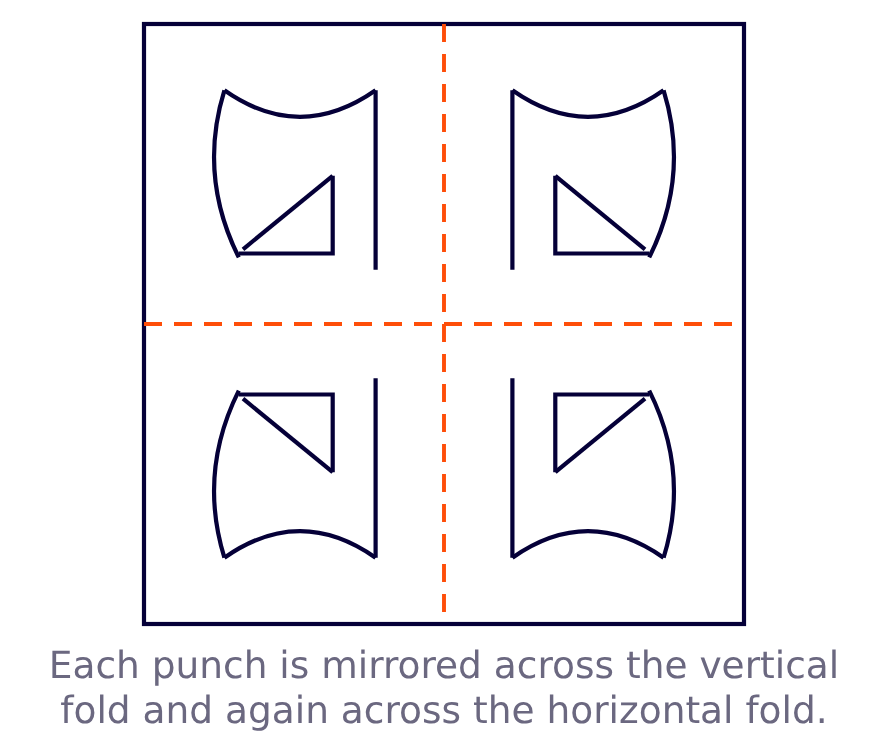 The answer must therefore carry four punches whose left pair mirrors the right pair AND whose lower pair mirrors the upper pair.
Option (a) shows only two punches, option (b) repeats the top row unchanged at the bottom (no mirroring about the horizontal fold) and option (c) repeats the left punch unchanged on the right (no mirroring about the vertical fold).
Only option (d) is mirrored about both fold lines, so the correct option is (d).
The answer must therefore carry four punches whose left pair mirrors the right pair AND whose lower pair mirrors the upper pair.
Option (a) shows only two punches, option (b) repeats the top row unchanged at the bottom (no mirroring about the horizontal fold) and option (c) repeats the left punch unchanged on the right (no mirroring about the vertical fold).
Only option (d) is mirrored about both fold lines, so the correct option is (d).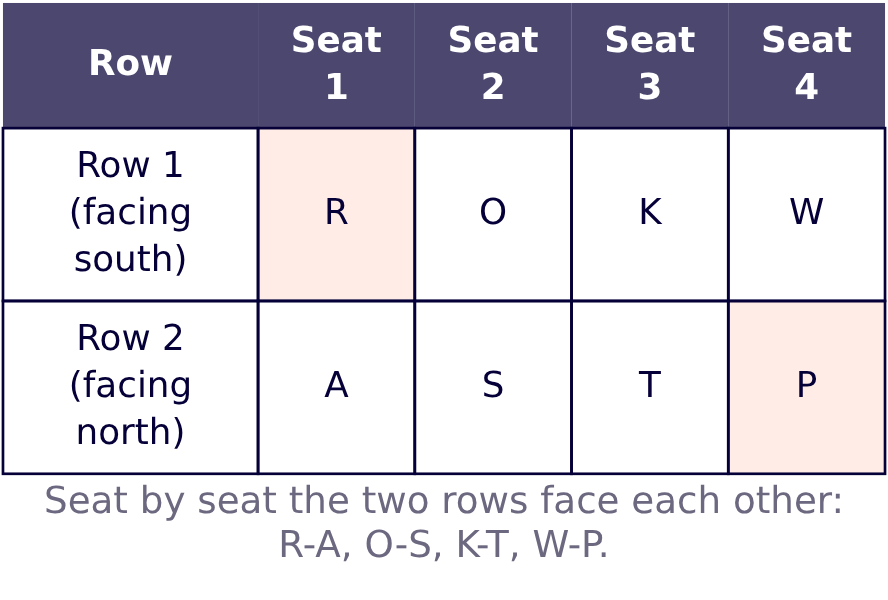 The ends are R and W in row 1 and A and P in row 2; the only pair offered that is made of two end seats is R and P.
Hence the correct option is (a).
The ends are R and W in row 1 and A and P in row 2; the only pair offered that is made of two end seats is R and P.
Hence the correct option is (a).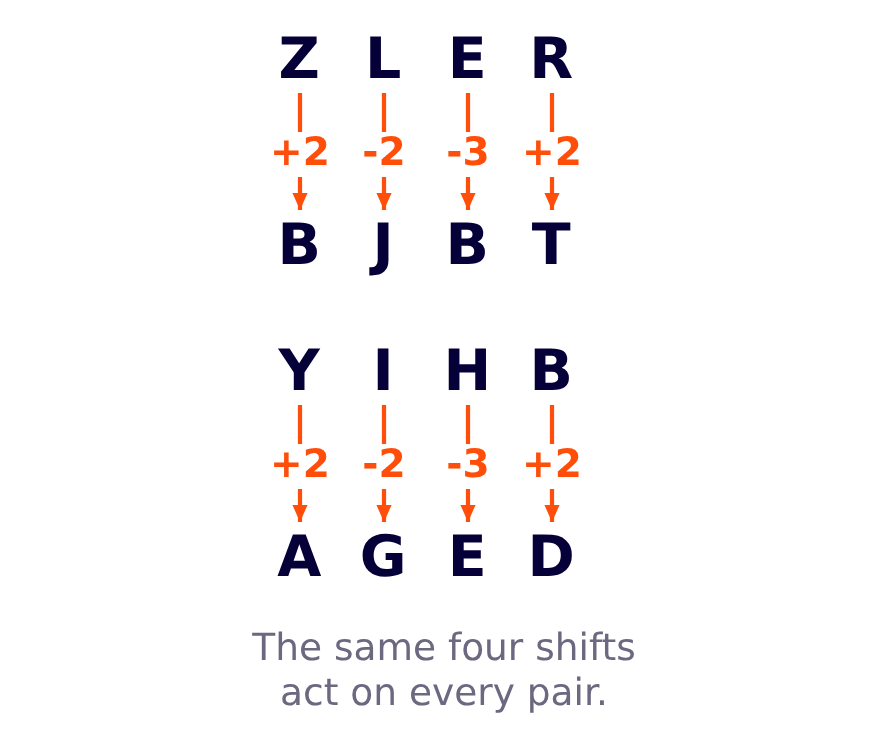 Apply +2, -2, -3, +2 to YIHB: Y+2=A, I-2=G, H-3=E, B+2=D.
This gives AGED, so the correct option is (d).
Apply +2, -2, -3, +2 to YIHB: Y+2=A, I-2=G, H-3=E, B+2=D.
This gives AGED, so the correct option is (d).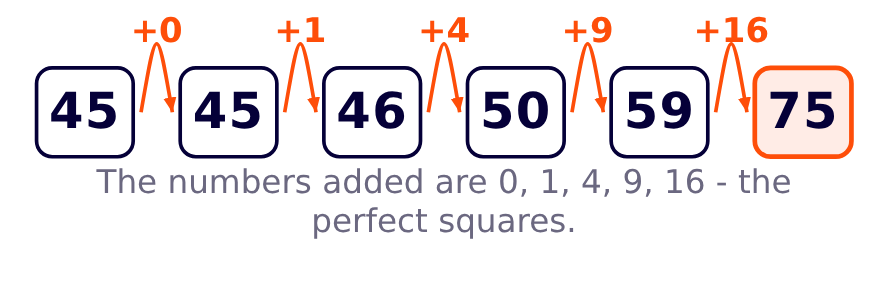 Missing term =59+16=75, so the correct option is (d).
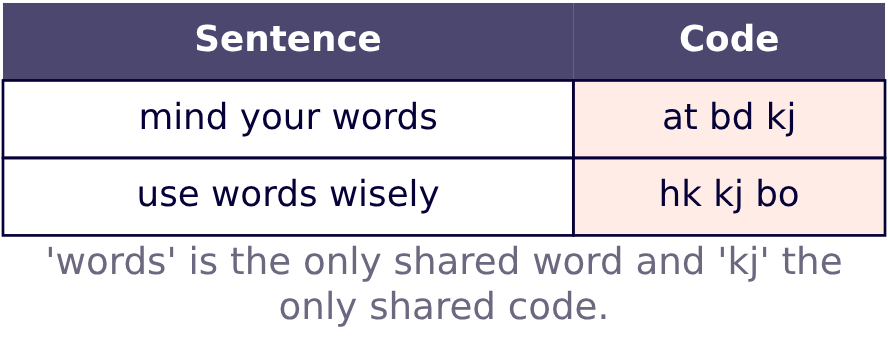 'words' is the only word common to both sentences, and 'kj' is the only code common to both codes.
A word that appears in both must carry the code that appears in both, so 'words' is coded 'kj'.
Hence the correct option is (b).
'words' is the only word common to both sentences, and 'kj' is the only code common to both codes.
A word that appears in both must carry the code that appears in both, so 'words' is coded 'kj'.
Hence the correct option is (b).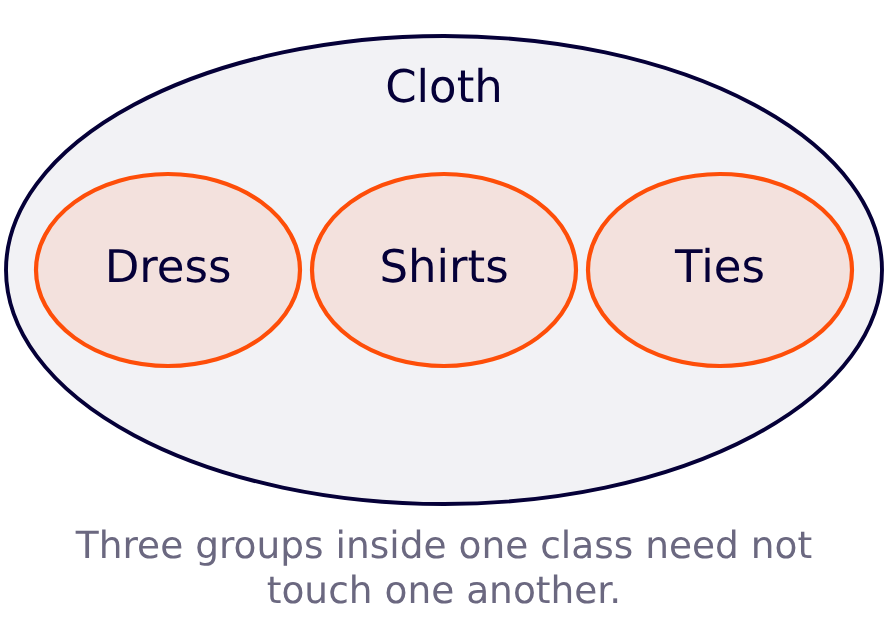 Nothing in the statements forces any two of those three groups to overlap - they can be drawn completely apart inside cloth.
Conclusion (I) 'Some ties are dress' therefore need not be true, and conclusion (II) 'Some shirts are tie' need not be true either.
A universal affirmative shared parent never guarantees an overlap between its children, so neither conclusion follows and the correct option is (a).
Nothing in the statements forces any two of those three groups to overlap - they can be drawn completely apart inside cloth.
Conclusion (I) 'Some ties are dress' therefore need not be true, and conclusion (II) 'Some shirts are tie' need not be true either.
A universal affirmative shared parent never guarantees an overlap between its children, so neither conclusion follows and the correct option is (a).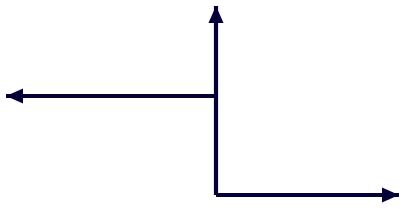
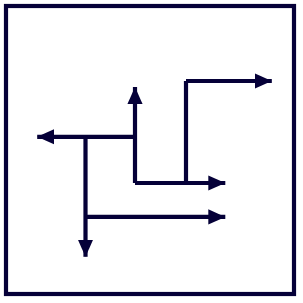
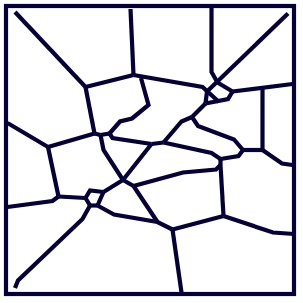
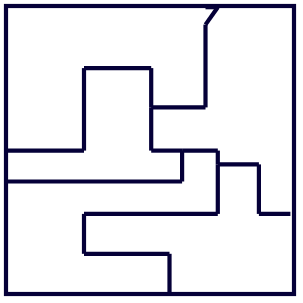
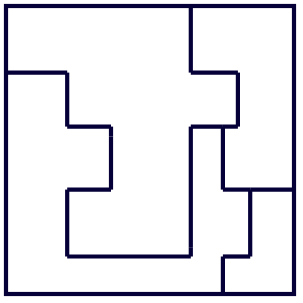
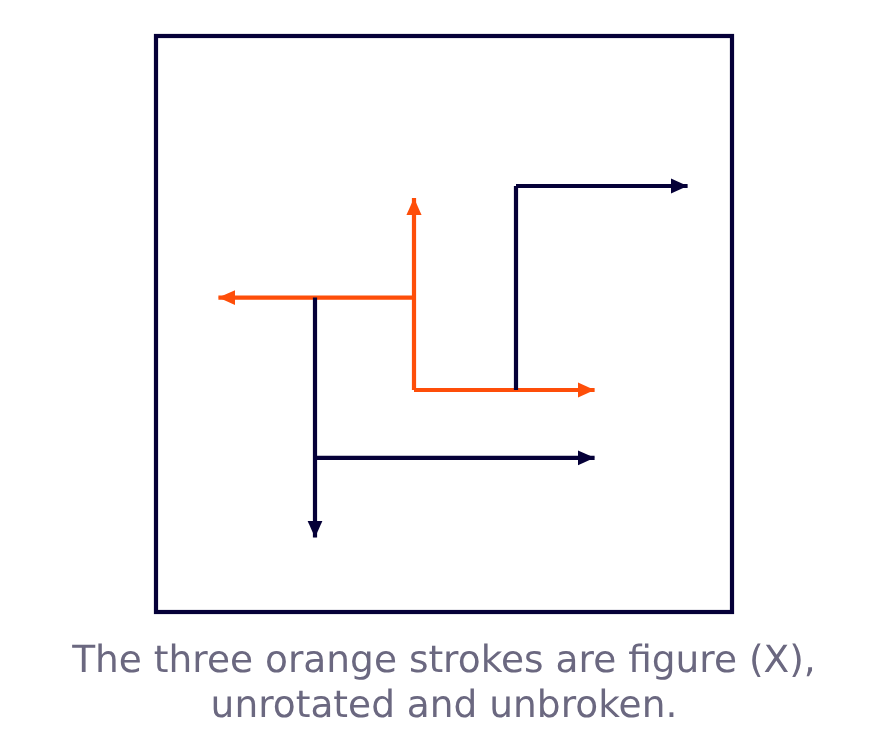 In option (a) the upward arrow, the left arrow from the middle of its stem and the right arrow from its foot are all present, unturned and unbroken.
Options (b), (c) and (d) are built only of plain line segments with no arrowheads at all, so figure (X) cannot sit inside any of them.
Hence the correct option is (a).
In option (a) the upward arrow, the left arrow from the middle of its stem and the right arrow from its foot are all present, unturned and unbroken.
Options (b), (c) and (d) are built only of plain line segments with no arrowheads at all, so figure (X) cannot sit inside any of them.
Hence the correct option is (a).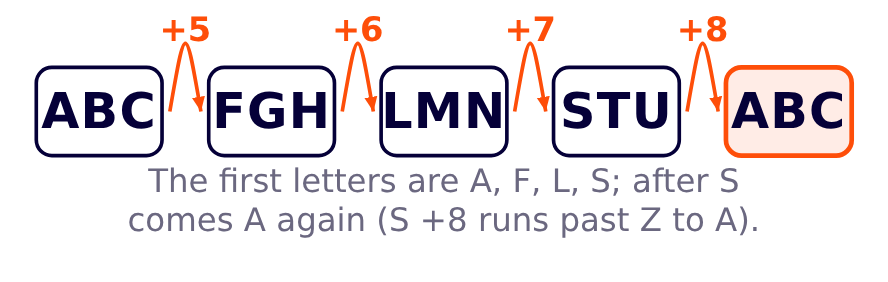 The next gap is +8, so the first letter is 19+8=27; the alphabet has 26 letters, so 27-26=1, that is A.
The term is therefore ABC and the correct option is (a).
The next gap is +8, so the first letter is 19+8=27; the alphabet has 26 letters, so 27-26=1, that is A.
The term is therefore ABC and the correct option is (a).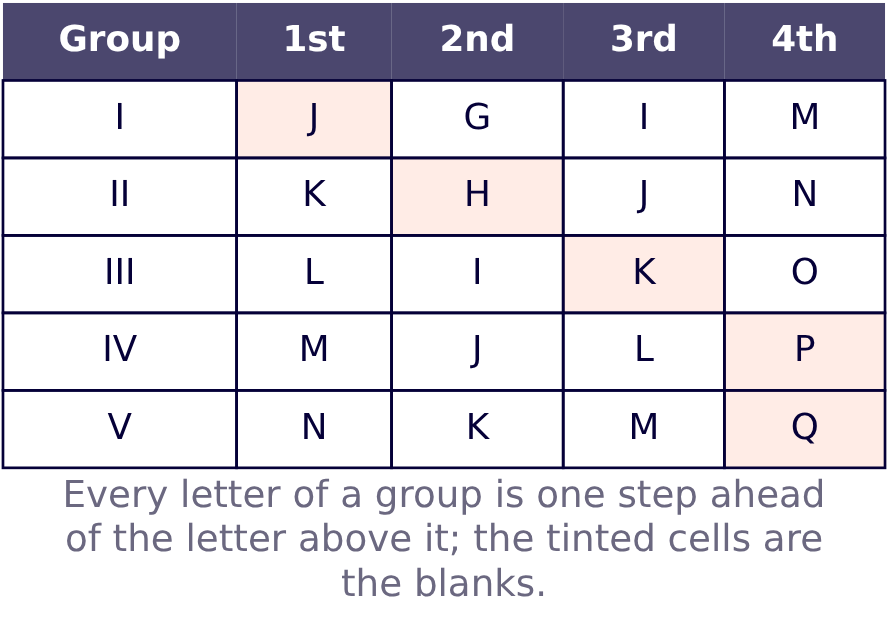 So the blanks are J, H, K, P and Q in that order.
That combination is JHKPQ, so the correct option is (d).
So the blanks are J, H, K, P and Q in that order.
That combination is JHKPQ, so the correct option is (d).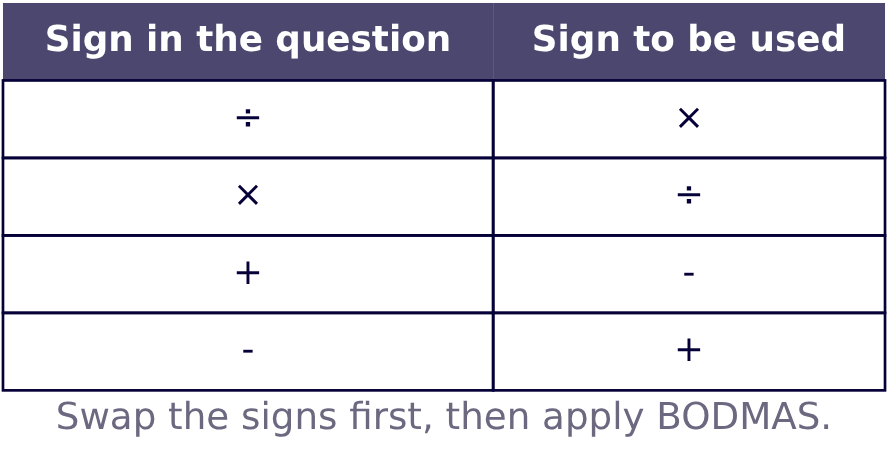 becomes .
By BODMAS do division and multiplication first: and .
=11+18-2
=29-2=27
Hence the correct option is (a).
becomes .
By BODMAS do division and multiplication first: and .
=11+18-2
=29-2=27
Hence the correct option is (a).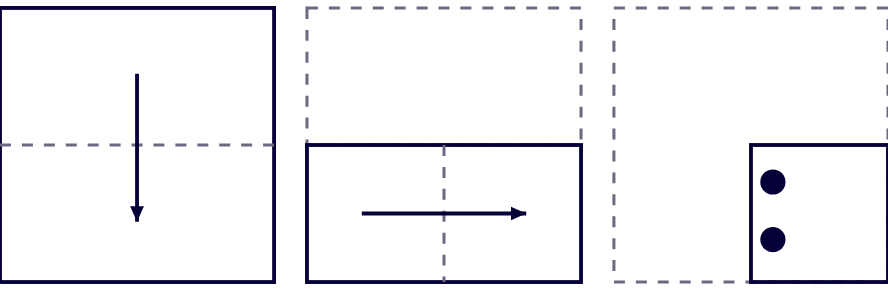
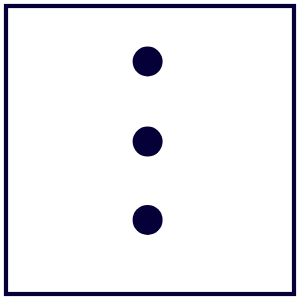
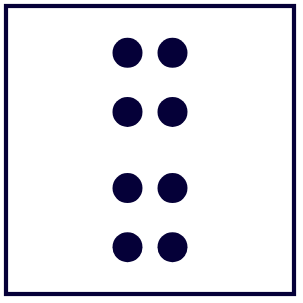
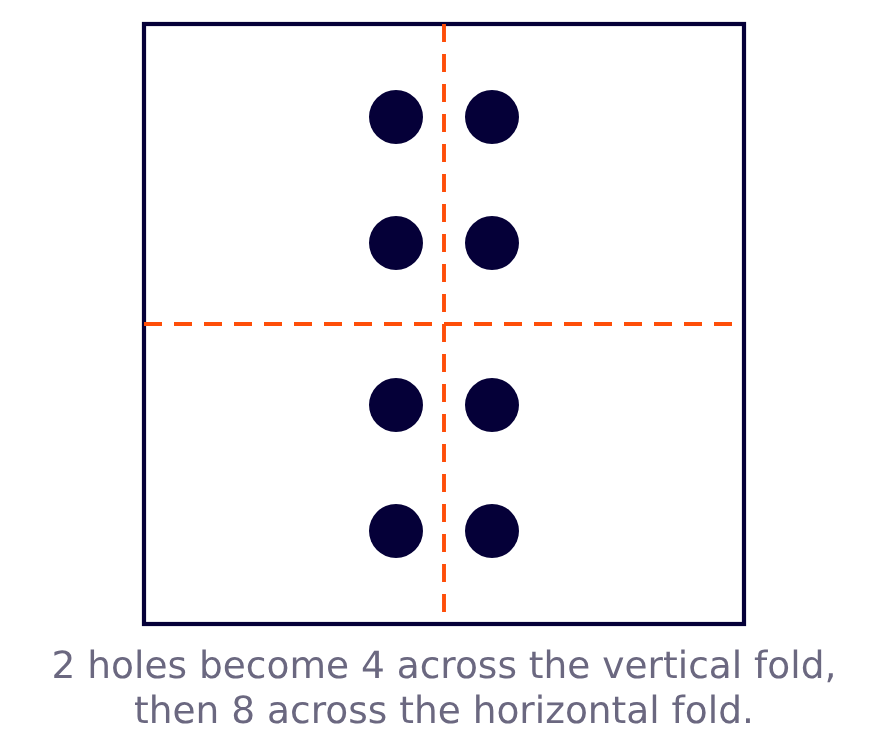 So the answer must show 8 holes in two columns and four rows, symmetric about both centre lines.
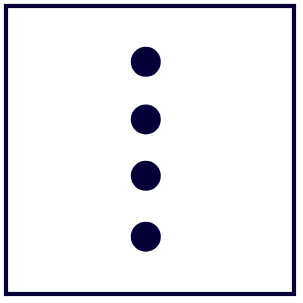
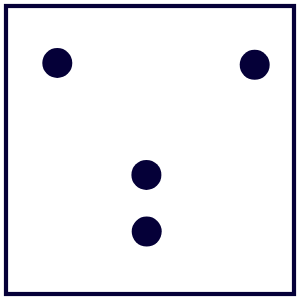
Option (a) has 3 holes and option (b) has 4, both in a single column, and option (d) has only 4 holes placed unsymmetrically.
Only option (c) shows the required 8 holes, so the correct option is (c).
So the answer must show 8 holes in two columns and four rows, symmetric about both centre lines.
Option (a) has 3 holes and option (b) has 4, both in a single column, and option (d) has only 4 holes placed unsymmetrically.
Only option (c) shows the required 8 holes, so the correct option is (c).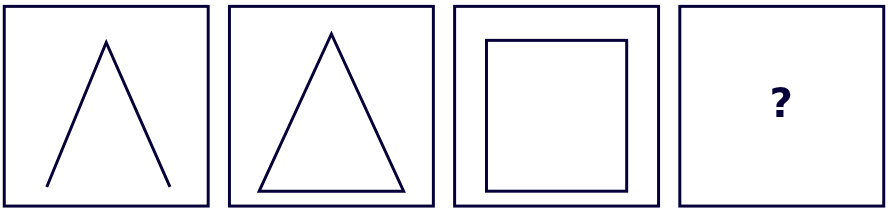
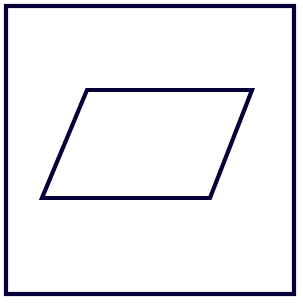
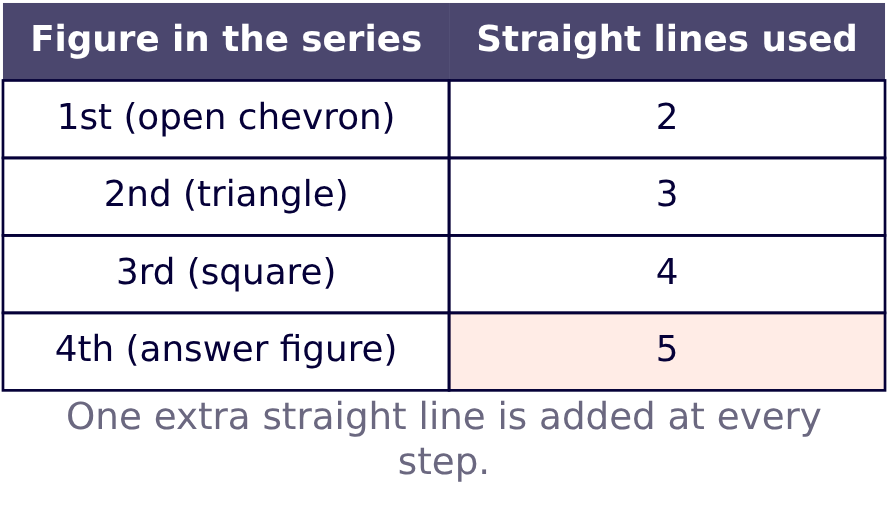 The count rises by one each time, so the missing figure must be drawn with exactly 5 straight lines.
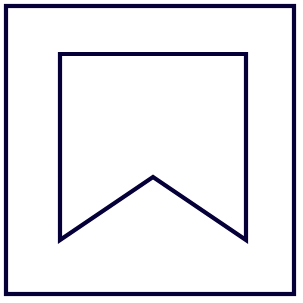
Option (a) is a square whose bottom side is replaced by two slanting lines - two sides, the top and two slants, that is exactly 5 lines.
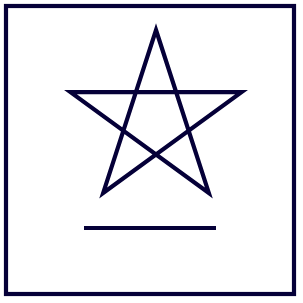
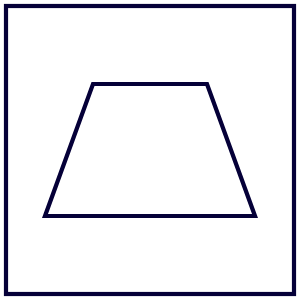
Options (c) and (d) are a trapezium and a parallelogram, 4 lines each - the same count as the previous figure - and option (b) needs 6 lines (a five-line star plus the separate line beneath it).
Hence the correct option is (a).
The count rises by one each time, so the missing figure must be drawn with exactly 5 straight lines.
Option (a) is a square whose bottom side is replaced by two slanting lines - two sides, the top and two slants, that is exactly 5 lines.
Options (c) and (d) are a trapezium and a parallelogram, 4 lines each - the same count as the previous figure - and option (b) needs 6 lines (a five-line star plus the separate line beneath it).
Hence the correct option is (a).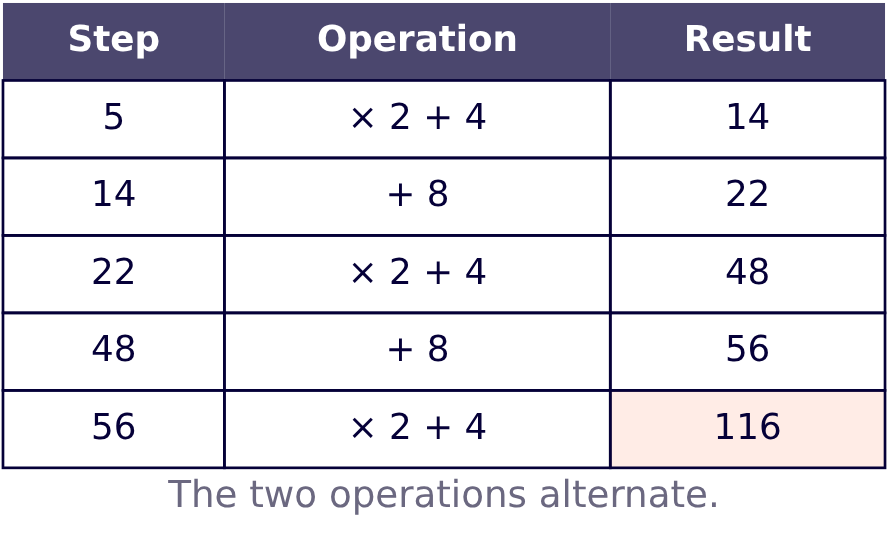 The next step is the '' step: .
Hence the correct option is (a).
The next step is the '' step: .
Hence the correct option is (a).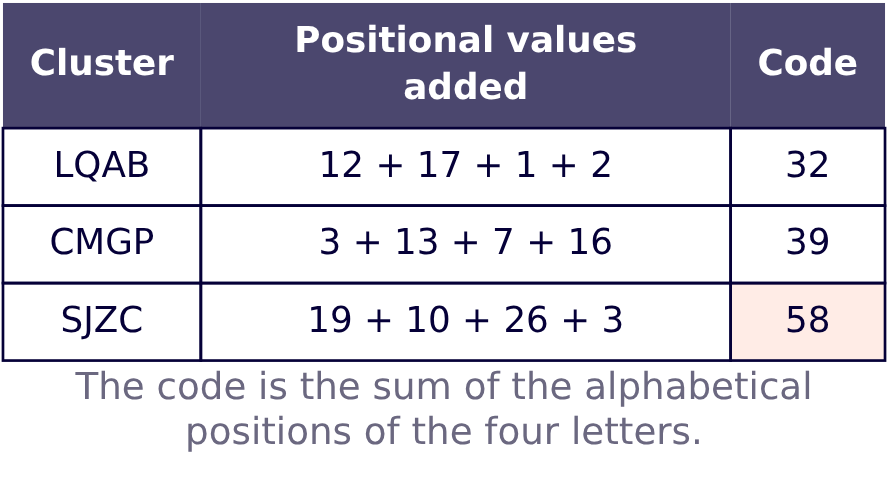 SJZC: 19+10+26+3=58.
Hence the correct option is (a).
SJZC: 19+10+26+3=58.
Hence the correct option is (a).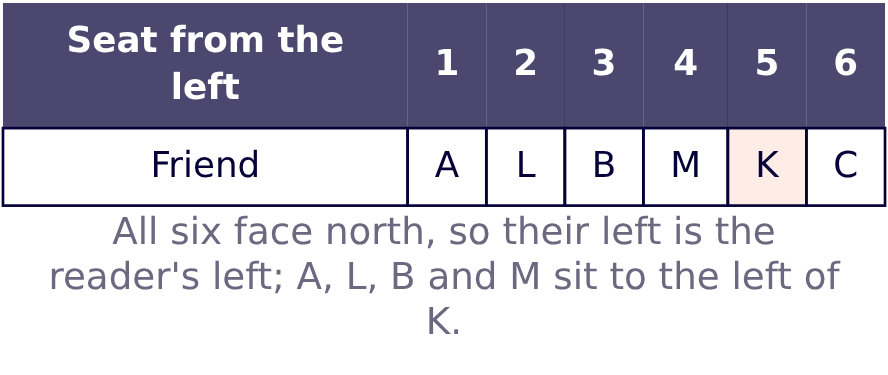 A, L, B and M all sit to the left of K, that is four people.
Hence the correct option is (c).
A, L, B and M all sit to the left of K, that is four people.
Hence the correct option is (c).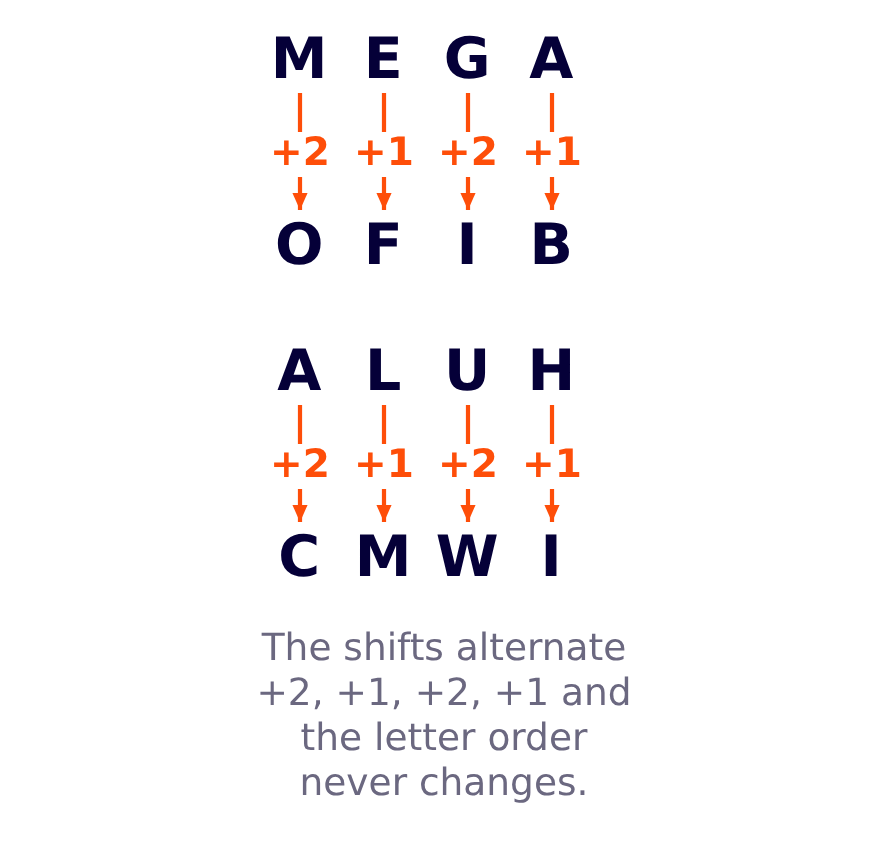 Apply it to ALUH: A+2=C, L+1=M, U+2=W, H+1=I, giving CMWI.
Option (a) CMIW and options (c) and (d) hold the same four letters but in a shuffled order, which the rule never allows.
Hence the correct option is (b).
Apply it to ALUH: A+2=C, L+1=M, U+2=W, H+1=I, giving CMWI.
Option (a) CMIW and options (c) and (d) hold the same four letters but in a shuffled order, which the rule never allows.
Hence the correct option is (b).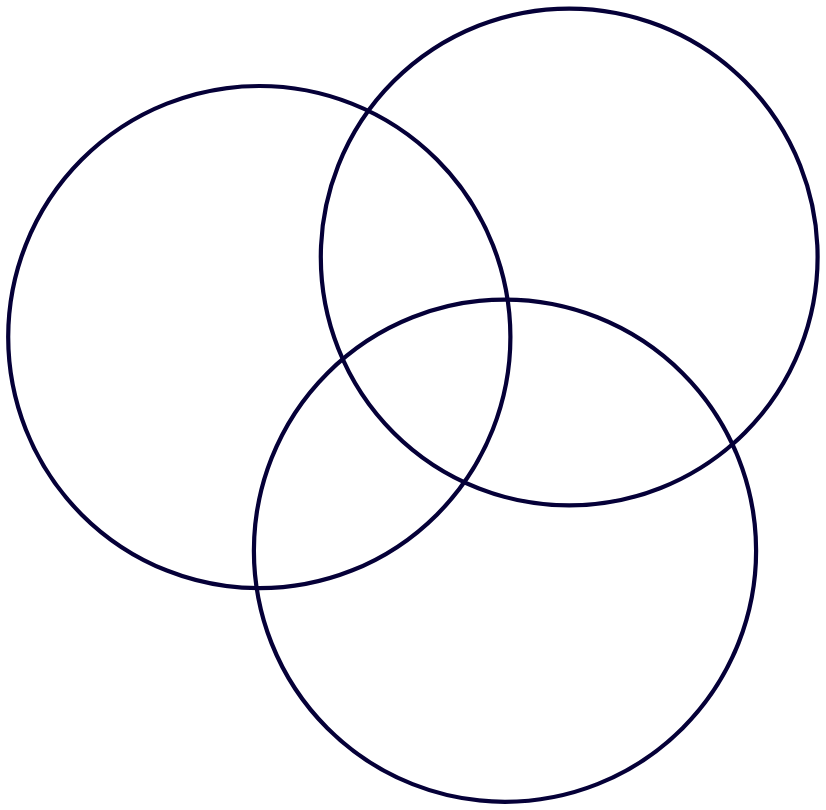
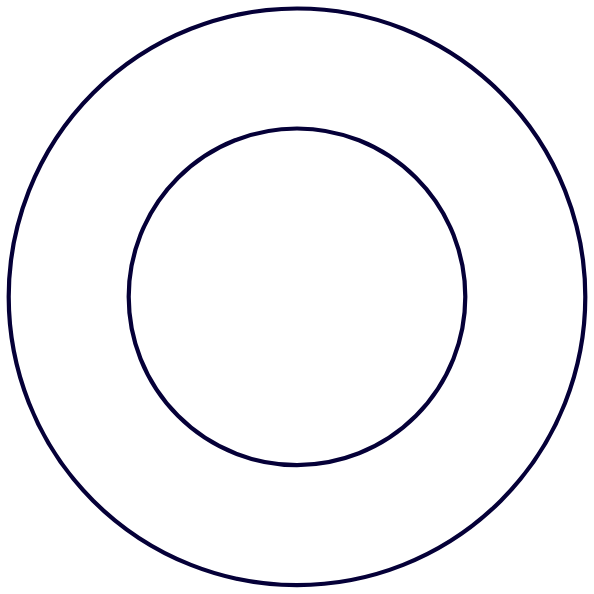
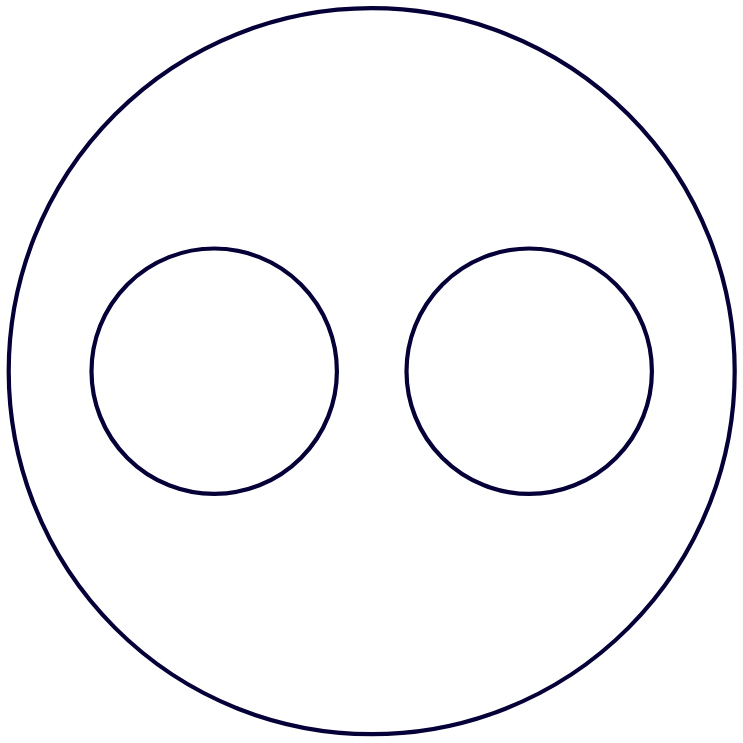
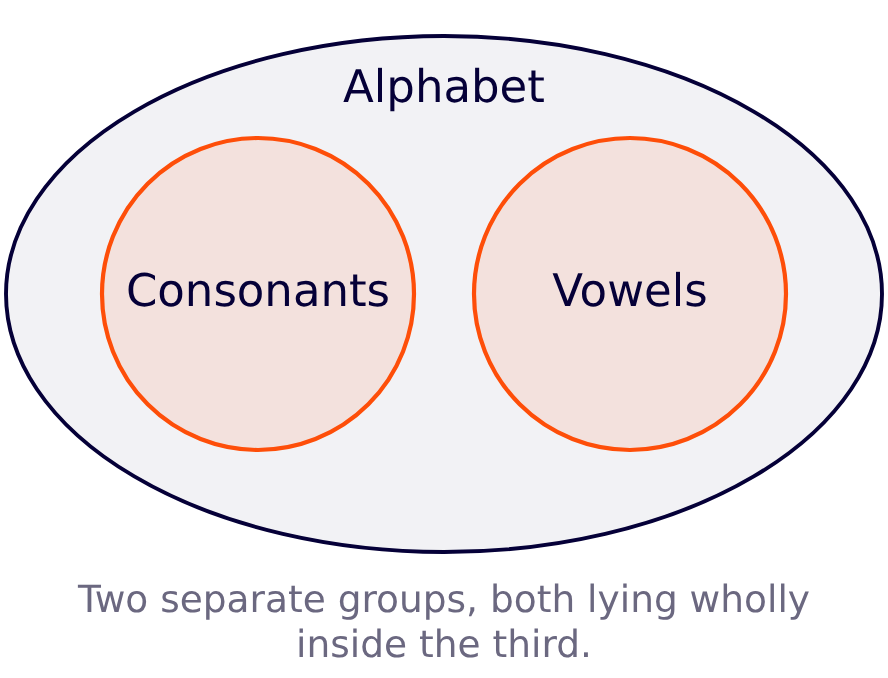 The diagram needed is therefore one large circle holding two smaller circles that are separate from each other.
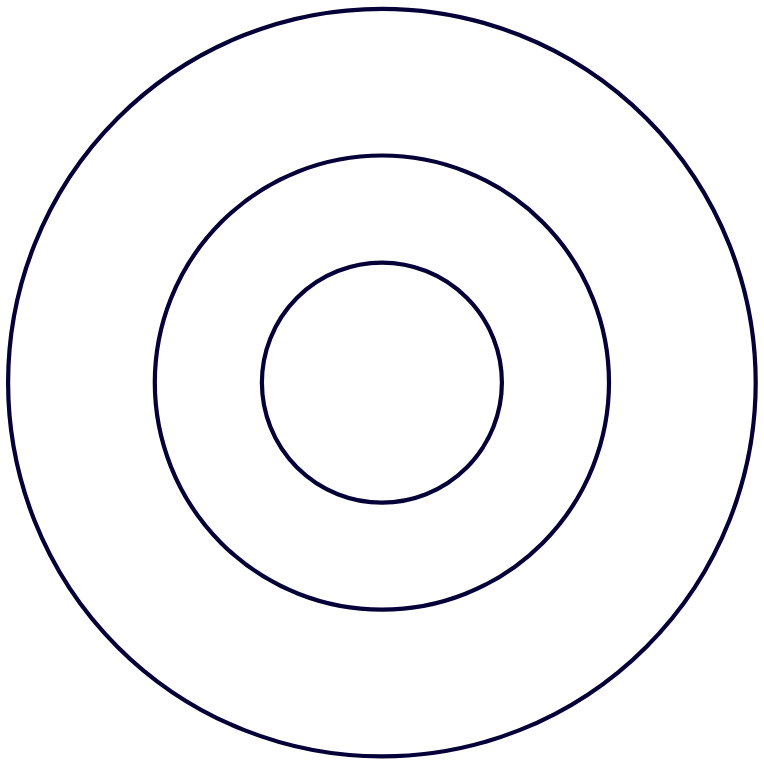
Option (a) makes all three overlap, option (b) leaves one class outside the alphabet, and option (d) puts the vowels inside the consonants.
Hence the correct option is (c).
The diagram needed is therefore one large circle holding two smaller circles that are separate from each other.
Option (a) makes all three overlap, option (b) leaves one class outside the alphabet, and option (d) puts the vowels inside the consonants.
Hence the correct option is (c).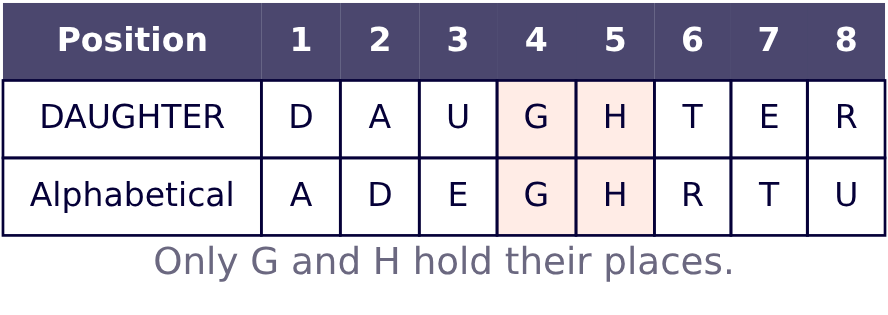 Only the 4th letter G and the 5th letter H stand in the same place in both words.
So two positions remain unchanged and the correct option is (c).
Only the 4th letter G and the 5th letter H stand in the same place in both words.
So two positions remain unchanged and the correct option is (c).