
26
Each item describes a situation and is followed by four possible responses. Indicate the response you find most appropriate. Choose only one response for each item. The responses will be evaluated based on the level of appropriateness for the given situation. Sneha is working on a college project. One member of her group is not contributing which is affecting the entire project. Sneha is the group leader. What should she do ?
- A.Immediately remove the member
- B.Complain to the teacher
- C.Talk to the member to understand the problem and provide guidance
- D.Do the member's work herself
Solution
Situation judgement
A group leader's first duty is to find out why a member is not contributing — illness, difficulty with the topic or some personal problem.
Talking to him and guiding him removes the cause, keeps the team together and gets the project moving again, so option (c) is correct.
Removing him at once (a) or complaining to the teacher (b) is an extreme first step, and doing his share herself (d) overloads the leader without curing the problem.
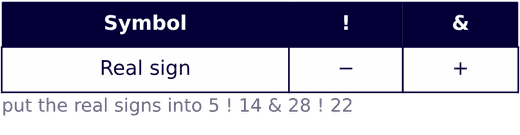 The expression becomes 5-14+28-22.
Group the additions and the subtractions: (5+28)-(14+22).
=33-36=-3
So the required value is -3, i.e. option (d).
The expression becomes 5-14+28-22.
Group the additions and the subtractions: (5+28)-(14+22).
=33-36=-3
So the required value is -3, i.e. option (d).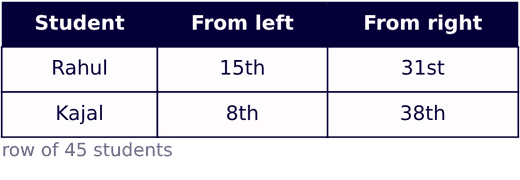 Rahul is 15th from the left and Kajal is 8th from the left, so the students between them are those in places 9 to 14.
Number of students between them =15-8-1=6.
So 6 students sit between them, i.e. option (d).
Rahul is 15th from the left and Kajal is 8th from the left, so the students between them are those in places 9 to 14.
Number of students between them =15-8-1=6.
So 6 students sit between them, i.e. option (d). Hence the term after 926 should be 926-24=902, but the series shows 905.
The check works: the difference after that is -28 and 902-28=874, which is exactly the last given term.
So the wrong term is 905, i.e. option (c).
Hence the term after 926 should be 926-24=902, but the series shows 905.
The check works: the difference after that is -28 and 902-28=874, which is exactly the last given term.
So the wrong term is 905, i.e. option (c).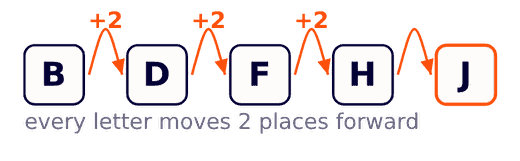 So the next place value is 8+2=10, and the 10th letter is J, i.e. option (b).
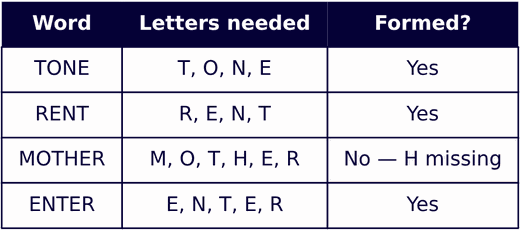 TONE and RENT use T, O, N, E and R, E, N, T, all of which are present.
ENTER needs E twice and ENVIRONMENT has two E's, so it can also be formed.
MOTHER needs the letter H, which does not occur in ENVIRONMENT at all, so it cannot be formed — option (c).
TONE and RENT use T, O, N, E and R, E, N, T, all of which are present.
ENTER needs E twice and ENVIRONMENT has two E's, so it can also be formed.
MOTHER needs the letter H, which does not occur in ENVIRONMENT at all, so it cannot be formed — option (c).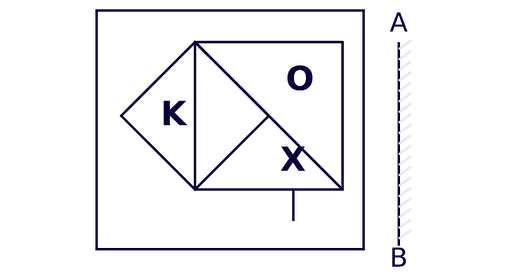
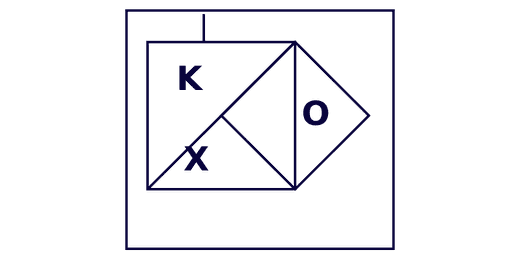
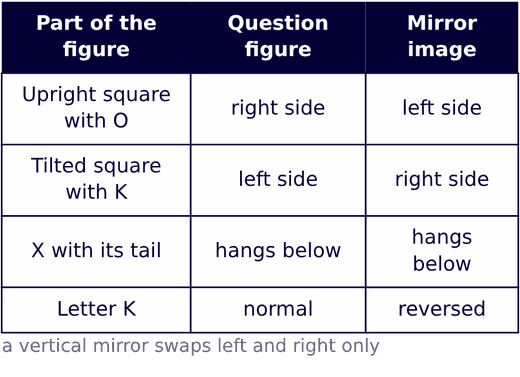 In the question figure the upright square carrying O is on the right, so in the image it must move to the left, and the tilted square carrying K must move to the right.
O stays in the upper part of the upright square and X stays in the small triangle at the bottom with its short tail hanging below, because a vertical mirror changes nothing in the up-down direction.
K is an unsymmetrical letter, so in the image it must appear written backwards.
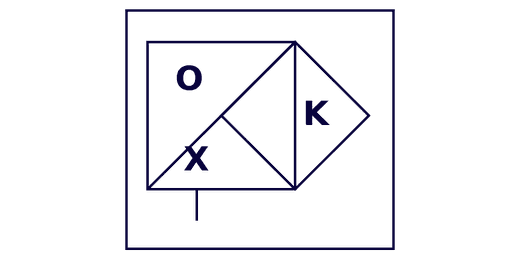
Option (b) shows exactly this — square with O on the left, tilted square with a reversed K on the right, X and its tail at the bottom left.
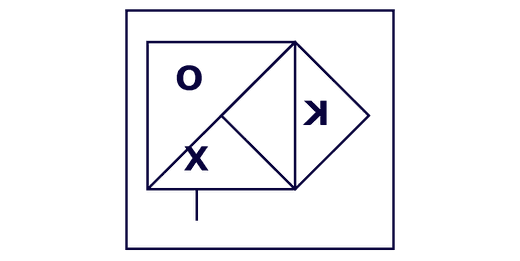
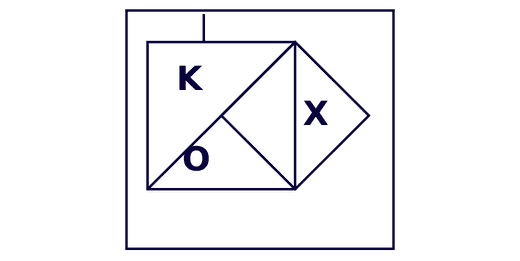
In option (a) the K is not reversed, and in options (c) and (d) the tail has moved to the top, so none of them can be the mirror image.
In the question figure the upright square carrying O is on the right, so in the image it must move to the left, and the tilted square carrying K must move to the right.
O stays in the upper part of the upright square and X stays in the small triangle at the bottom with its short tail hanging below, because a vertical mirror changes nothing in the up-down direction.
K is an unsymmetrical letter, so in the image it must appear written backwards.
Option (b) shows exactly this — square with O on the left, tilted square with a reversed K on the right, X and its tail at the bottom left.
In option (a) the K is not reversed, and in options (c) and (d) the tail has moved to the top, so none of them can be the mirror image.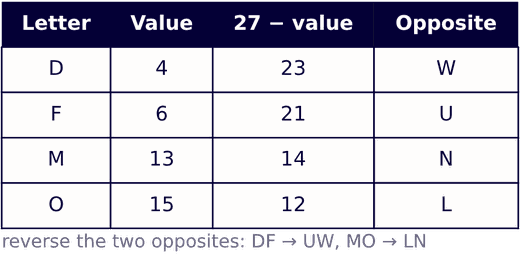 Apply the same rule to MO: M =13 gives 27-13=14= N, and O =15 gives 27-15=12= L.
Writing N and L in reverse order gives LN, i.e. option (a).
Apply the same rule to MO: M =13 gives 27-13=14= N, and O =15 gives 27-15=12= L.
Writing N and L in reverse order gives LN, i.e. option (a).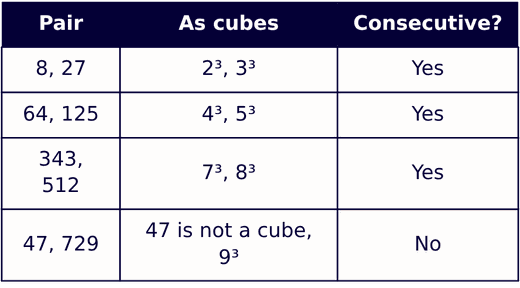 In (47, 729), , but 47 lies between and , so it is not a cube at all.
Hence the pair that does not follow the pattern is 47, 729, i.e. option (c).
In (47, 729), , but 47 lies between and , so it is not a cube at all.
Hence the pair that does not follow the pattern is 47, 729, i.e. option (c).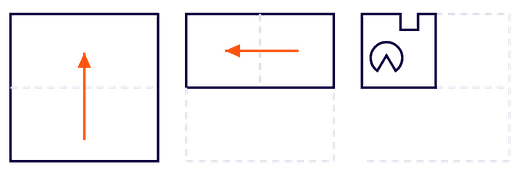
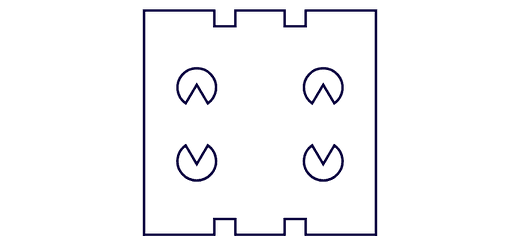
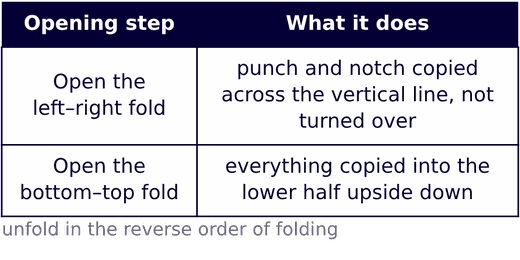 Open the last fold first: the right half comes back, so the arch punch and the notch on the top edge are copied across the vertical centre line; the arch still opens downwards because a left-right reflection does not turn it over.
Now open the first fold: the bottom half comes back as a reflection in the horizontal centre line, so the two punches are copied into the lower half upside down, i.e. opening upwards, and the two notches are copied to the bottom edge.
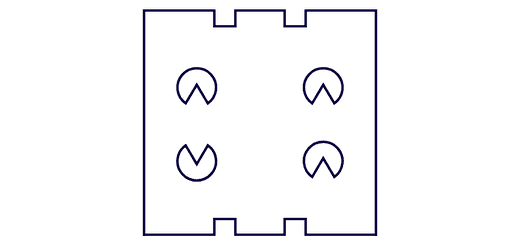
The open sheet therefore has four punches — the upper two opening downwards, the lower two opening upwards — with two notches on the top edge and two on the bottom edge.
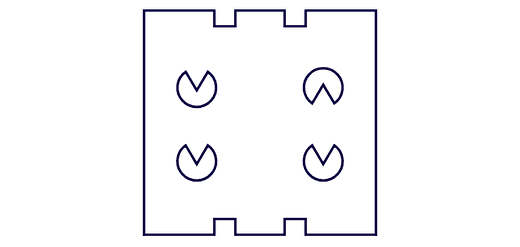
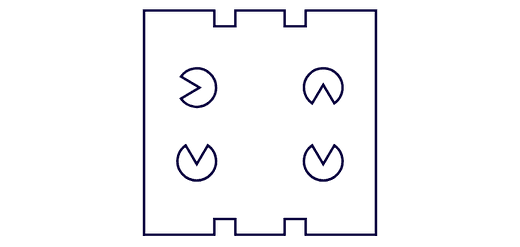
Only option (d) shows this; in (a) the lower-right punch faces the wrong way, in (b) the upper-left punch does, and in (c) the upper-left punch is turned on its side.
Open the last fold first: the right half comes back, so the arch punch and the notch on the top edge are copied across the vertical centre line; the arch still opens downwards because a left-right reflection does not turn it over.
Now open the first fold: the bottom half comes back as a reflection in the horizontal centre line, so the two punches are copied into the lower half upside down, i.e. opening upwards, and the two notches are copied to the bottom edge.
The open sheet therefore has four punches — the upper two opening downwards, the lower two opening upwards — with two notches on the top edge and two on the bottom edge.
Only option (d) shows this; in (a) the lower-right punch faces the wrong way, in (b) the upper-left punch does, and in (c) the upper-left punch is turned on its side.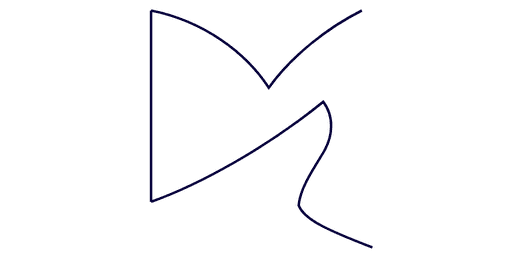
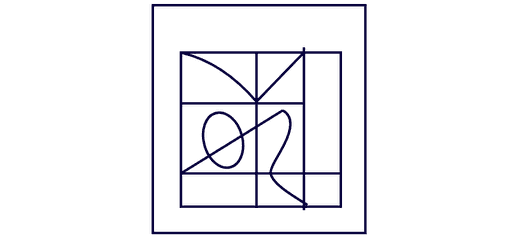
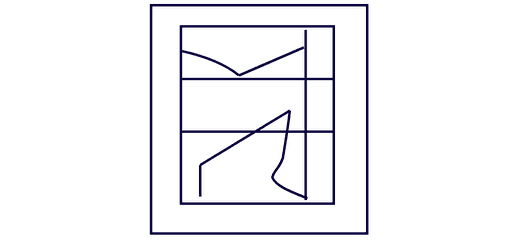
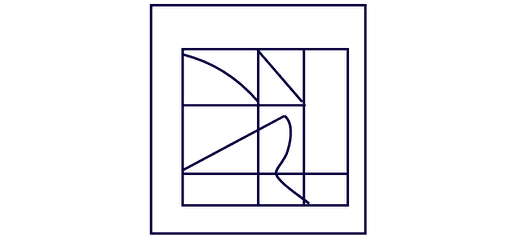
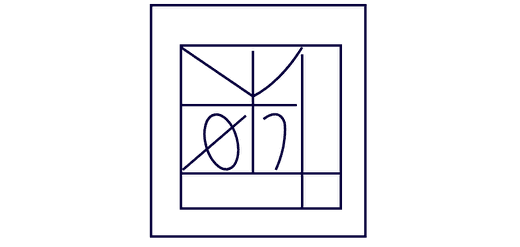
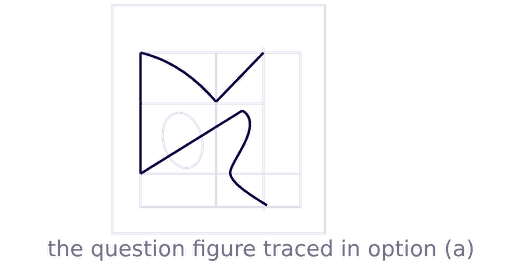 In option (a) the left edge of the inner square supplies the vertical, the downward curve and the straight slant above it form the V, and the long diagonal rising to a peak with the hook falling from it repeats the lower part exactly.
In option (b) the rising slant does not start at the foot of the vertical; in option (c) the second stroke of the upper part slopes downward instead of upward, so no V is formed; in option (d) the curved arm and the straight arm of the V are interchanged.
Since rotation is not allowed, only option (a) contains the question figure, so option (a) is correct.
In option (a) the left edge of the inner square supplies the vertical, the downward curve and the straight slant above it form the V, and the long diagonal rising to a peak with the hook falling from it repeats the lower part exactly.
In option (b) the rising slant does not start at the foot of the vertical; in option (c) the second stroke of the upper part slopes downward instead of upward, so no V is formed; in option (d) the curved arm and the straight arm of the V are interchanged.
Since rotation is not allowed, only option (a) contains the question figure, so option (a) is correct.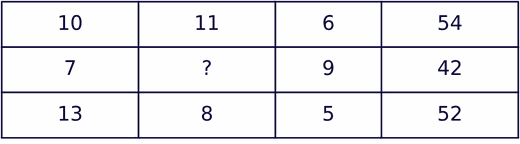
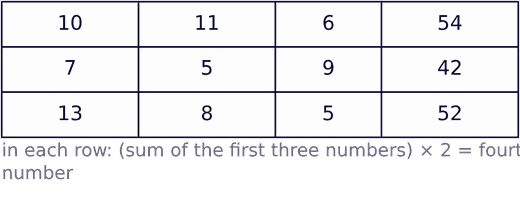 Hence ?=21-16=5, and option (c) is correct.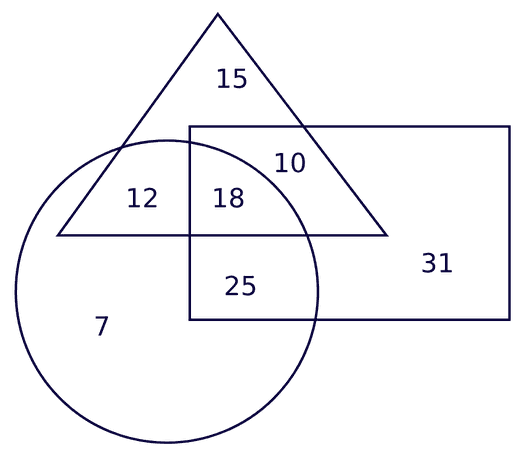
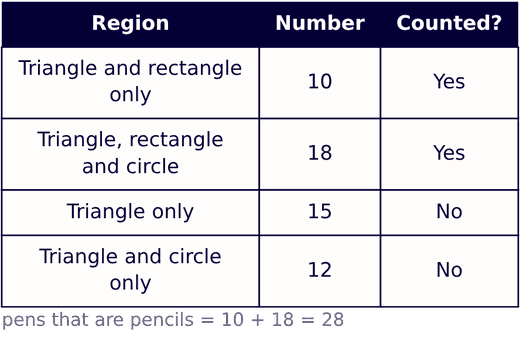 The part of the triangle inside the rectangle but outside the circle holds 10, and the part common to all three figures holds 18.
Required number =10+18=28.
The region marked 15 lies in the triangle only and the region marked 12 lies in the triangle and the circle but outside the rectangle, so neither of them is counted.
Hence option (d) is correct.
The part of the triangle inside the rectangle but outside the circle holds 10, and the part common to all three figures holds 18.
Required number =10+18=28.
The region marked 15 lies in the triangle only and the region marked 12 lies in the triangle and the circle but outside the rectangle, so neither of them is counted.
Hence option (d) is correct.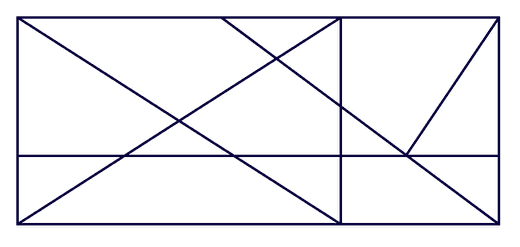
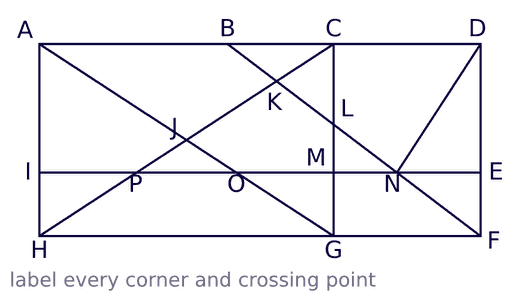 The left rectangle ACGH, with its two diagonals AG and CH and the cross-line IM, gives 13 triangles: ACH, ACG, AGH, CGH, ACJ, CGJ, GHJ, AHJ, AIO, HIP, JOP, CPM, GOM.
The long slant BF cuts CH at K, the middle line CG at L and the horizontal at N, and creates 11 more: BCK, BCL, CKL, BDF, BDN, DFN, EFN, FGL, FHK, KPN, LMN.
One triangle is still left over, DEN, formed by the short slant DN with the right edge and the horizontal.
Total number of triangles =13+11+1=25.
Hence option (c) is correct.
The left rectangle ACGH, with its two diagonals AG and CH and the cross-line IM, gives 13 triangles: ACH, ACG, AGH, CGH, ACJ, CGJ, GHJ, AHJ, AIO, HIP, JOP, CPM, GOM.
The long slant BF cuts CH at K, the middle line CG at L and the horizontal at N, and creates 11 more: BCK, BCL, CKL, BDF, BDN, DFN, EFN, FGL, FHK, KPN, LMN.
One triangle is still left over, DEN, formed by the short slant DN with the right edge and the horizontal.
Total number of triangles =13+11+1=25.
Hence option (c) is correct.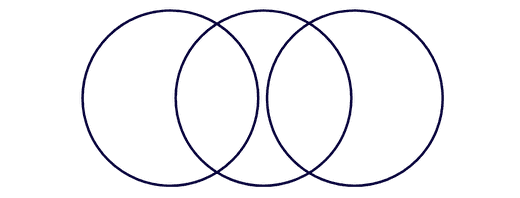
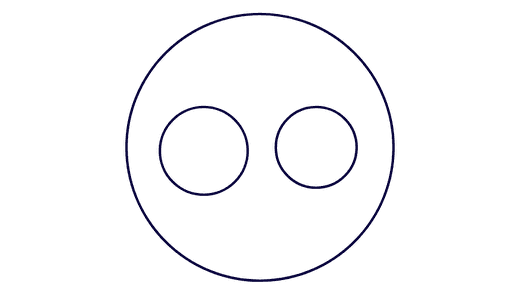
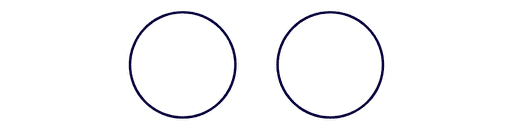
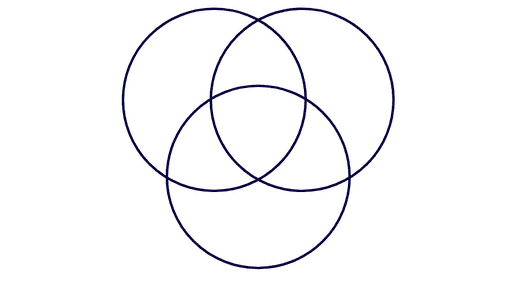
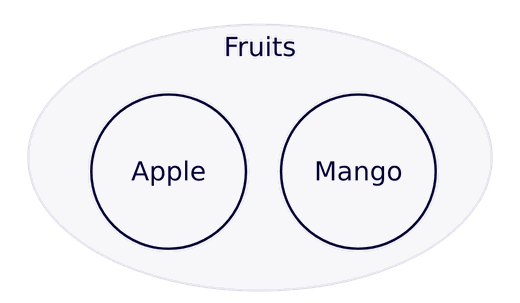 The required diagram is therefore one large circle for Fruits containing two separate small circles for Apple and Mango, which is what option (b) shows.
Three mutually overlapping circles would wrongly make some apples mangoes, and two circles standing apart would not show that both are fruits.
Hence option (b) is correct.
The required diagram is therefore one large circle for Fruits containing two separate small circles for Apple and Mango, which is what option (b) shows.
Three mutually overlapping circles would wrongly make some apples mangoes, and two circles standing apart would not show that both are fruits.
Hence option (b) is correct.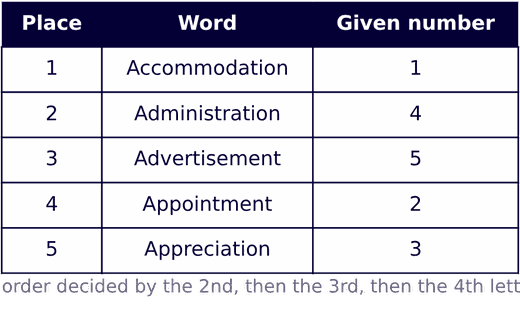 The dictionary order is Accommodation (1), Administration (4), Advertisement (5), Appointment (2), Appreciation (3).
That is the sequence 1, 4, 5, 2, 3, so option (a) is correct.
The dictionary order is Accommodation (1), Administration (4), Advertisement (5), Appointment (2), Appreciation (3).
That is the sequence 1, 4, 5, 2, 3, so option (a) is correct.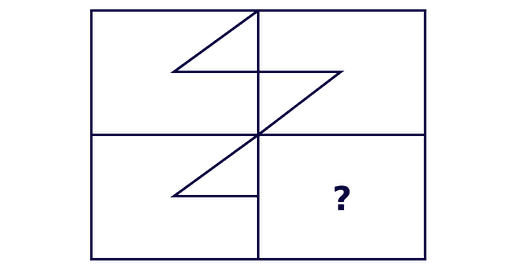
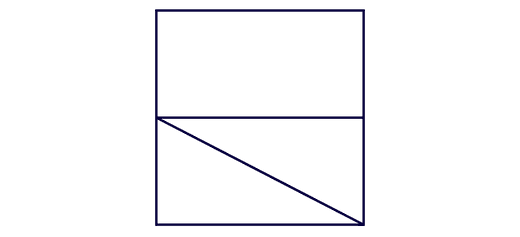
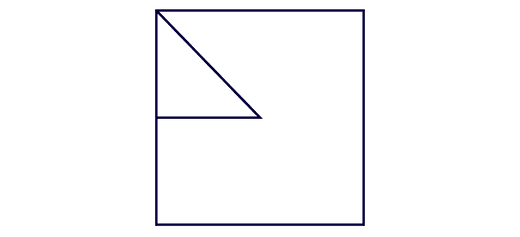
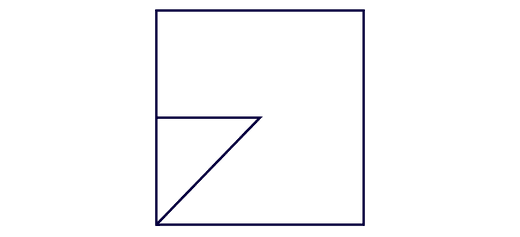
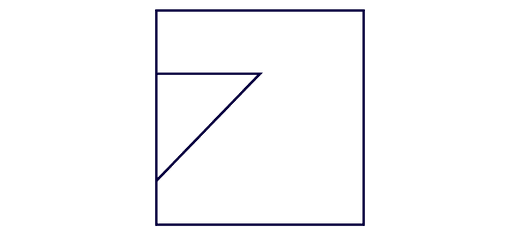
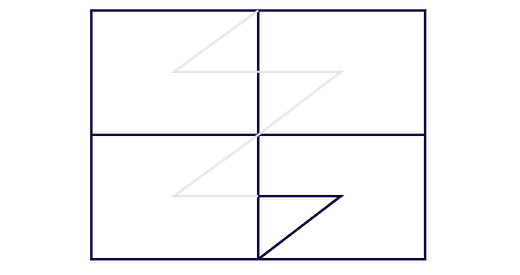 The missing cell therefore carries a horizontal line from the middle of its left side to the centre and a slanting line from the centre down to its bottom-left corner, which is exactly what option (c) shows.
Hence option (c) is correct.
The missing cell therefore carries a horizontal line from the middle of its left side to the centre and a slanting line from the centre down to its bottom-left corner, which is exactly what option (c) shows.
Hence option (c) is correct.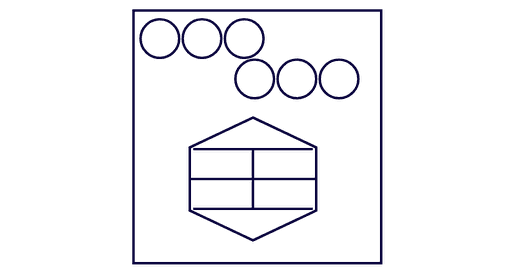
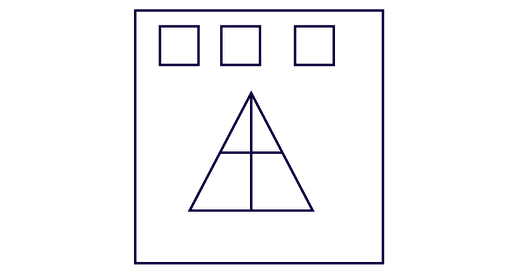
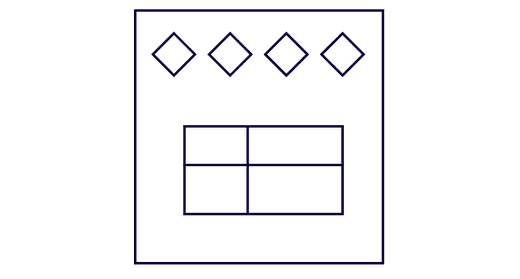
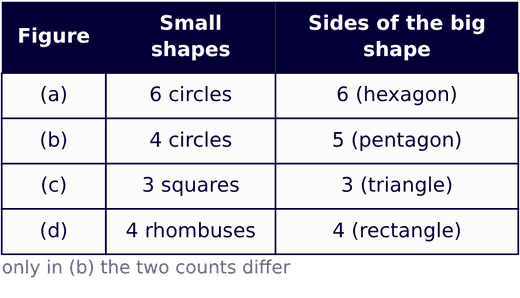 In (a) there are 6 circles and the large shape is a hexagon, which has 6 sides; in (c) there are 3 squares and the large shape is a triangle, which has 3 sides; in (d) there are 4 rhombuses and the large shape is a rectangle, which has 4 sides.
So in three of the figures the number of small shapes equals the number of sides of the large shape.
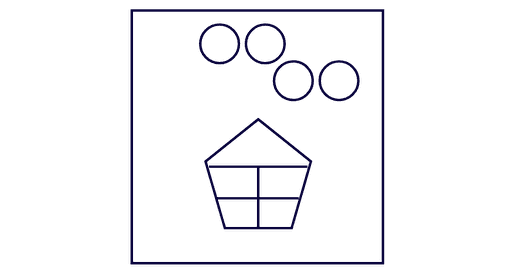
In (b) there are only 4 circles while the large shape is a pentagon, which has 5 sides, so the rule breaks.
Hence option (b) is the odd one out.
In (a) there are 6 circles and the large shape is a hexagon, which has 6 sides; in (c) there are 3 squares and the large shape is a triangle, which has 3 sides; in (d) there are 4 rhombuses and the large shape is a rectangle, which has 4 sides.
So in three of the figures the number of small shapes equals the number of sides of the large shape.
In (b) there are only 4 circles while the large shape is a pentagon, which has 5 sides, so the rule breaks.
Hence option (b) is the odd one out.
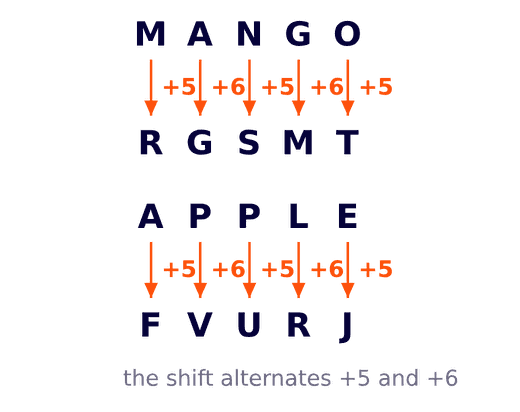 Apply it to APPLE: A(1)+5=F(6), P(16)+6=V(22), P(16)+5=U(21), L(12)+6=R(18), E(5)+5=J(10).
So APPLE is coded as FVURJ, and option (d) is correct.
Apply it to APPLE: A(1)+5=F(6), P(16)+6=V(22), P(16)+5=U(21), L(12)+6=R(18), E(5)+5=J(10).
So APPLE is coded as FVURJ, and option (d) is correct.