
76
Identify the renowned philosopher who was born in Kerala during the 8th century.
- A.Madhvacharya
- B.Vallabhacharya
- C.Shankaracharya
- D.Kabirdas
Solution
Advaita Vedanta philosopher
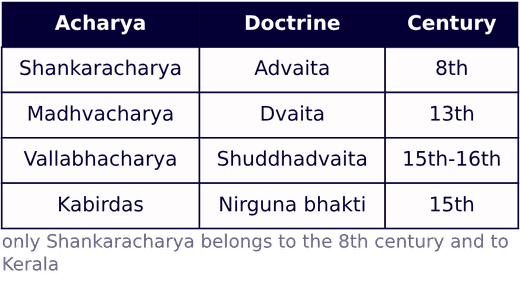
The renowned philosopher born in Kerala in the 8th century is Adi Shankaracharya, born at Kaladi on the bank of the Periyar river.
He propounded Advaita Vedanta — Brahman alone is real and the individual soul is not different from it — and wrote commentaries on the Upanishads, the Brahma Sutra and the Bhagavad Gita.
 He established four mathas at Sringeri, Puri, Dwarka and Badrinath to spread this teaching.
Madhvacharya (13th century) founded Dvaita; Vallabhacharya (15th–16th century) founded Shuddhadvaita and the Pushti Marg; Kabirdas was a 15th-century Nirguna saint-poet.
Hence, option (c) is the correct answer.
He established four mathas at Sringeri, Puri, Dwarka and Badrinath to spread this teaching.
Madhvacharya (13th century) founded Dvaita; Vallabhacharya (15th–16th century) founded Shuddhadvaita and the Pushti Marg; Kabirdas was a 15th-century Nirguna saint-poet.
Hence, option (c) is the correct answer.
He established four mathas at Sringeri, Puri, Dwarka and Badrinath to spread this teaching.
Madhvacharya (13th century) founded Dvaita; Vallabhacharya (15th–16th century) founded Shuddhadvaita and the Pushti Marg; Kabirdas was a 15th-century Nirguna saint-poet.
Hence, option (c) is the correct answer.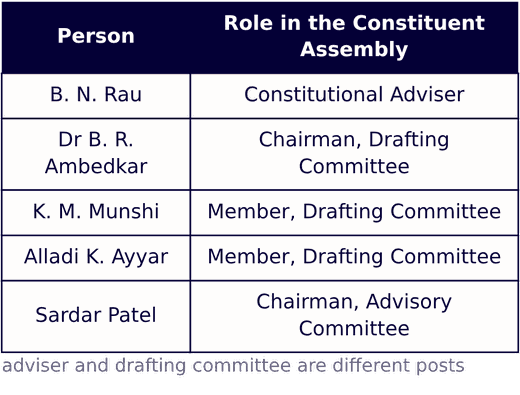 K. M. Munshi and Alladi Krishnaswami Ayyar were members of that Drafting Committee, while Sardar Vallabhbhai Patel chaired the Advisory Committee on Fundamental Rights and Minorities.
Rau later represented India at the UN Security Council and became a judge of the International Court of Justice at The Hague.
Hence, option (c) is the correct answer.
K. M. Munshi and Alladi Krishnaswami Ayyar were members of that Drafting Committee, while Sardar Vallabhbhai Patel chaired the Advisory Committee on Fundamental Rights and Minorities.
Rau later represented India at the UN Security Council and became a judge of the International Court of Justice at The Hague.
Hence, option (c) is the correct answer.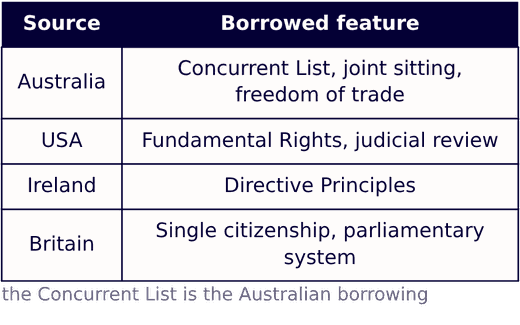 Freedom of trade, commerce and intercourse within the territory of India (Article 301) and the joint sitting of the two Houses (Article 108) also come from Australia.
Fundamental Rights are drawn from the USA, the Directive Principles from Ireland, and single citizenship from Britain.
Hence, option (c) is the correct answer.
Freedom of trade, commerce and intercourse within the territory of India (Article 301) and the joint sitting of the two Houses (Article 108) also come from Australia.
Fundamental Rights are drawn from the USA, the Directive Principles from Ireland, and single citizenship from Britain.
Hence, option (c) is the correct answer.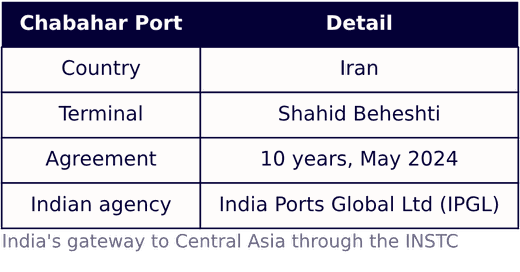 Chabahar stands on the Gulf of Oman in Sistan-Baluchistan province and gives India sea access to Afghanistan and Central Asia while bypassing Pakistan.
It is a key node of the International North–South Transport Corridor (INSTC).
Hence, option (d) is the correct answer.
Chabahar stands on the Gulf of Oman in Sistan-Baluchistan province and gives India sea access to Afghanistan and Central Asia while bypassing Pakistan.
It is a key node of the International North–South Transport Corridor (INSTC).
Hence, option (d) is the correct answer.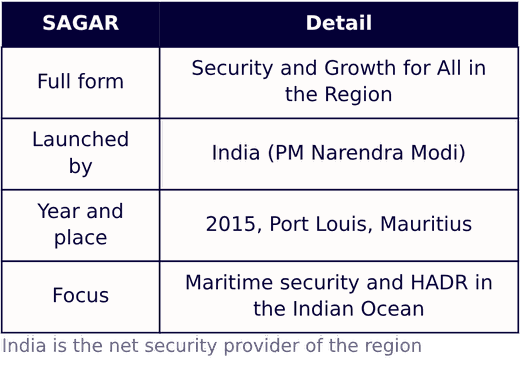 Mission Sagar and Operation Samudra Setu during the COVID-19 pandemic carried this policy forward.
The vision also covers maritime security, sustainable use of ocean resources and closer economic ties with island neighbours.
Hence, option (c) is the correct answer.
Mission Sagar and Operation Samudra Setu during the COVID-19 pandemic carried this policy forward.
The vision also covers maritime security, sustainable use of ocean resources and closer economic ties with island neighbours.
Hence, option (c) is the correct answer.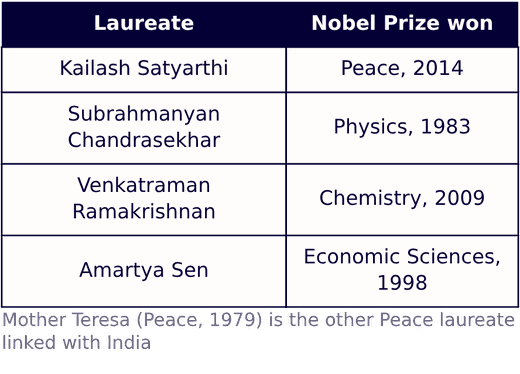 The other three Indians in the options are Nobel laureates too, but in Physics, Chemistry and Economic Sciences — not Peace.
Hence the correct option is (c).
The other three Indians in the options are Nobel laureates too, but in Physics, Chemistry and Economic Sciences — not Peace.
Hence the correct option is (c).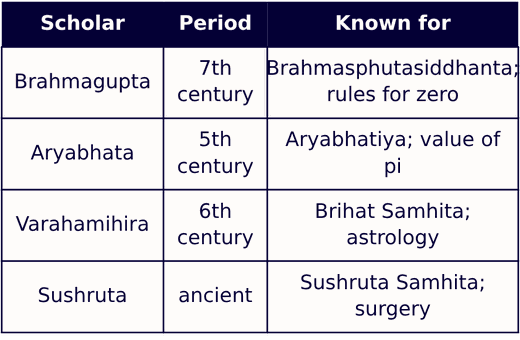 Aryabhata belongs to the 5th century, Varahamihira to the 6th, and Sushruta was a surgeon, not a mathematician — so only Brahmagupta fits both the century and the subject.
Hence the correct option is (c).
Aryabhata belongs to the 5th century, Varahamihira to the 6th, and Sushruta was a surgeon, not a mathematician — so only Brahmagupta fits both the century and the subject.
Hence the correct option is (c).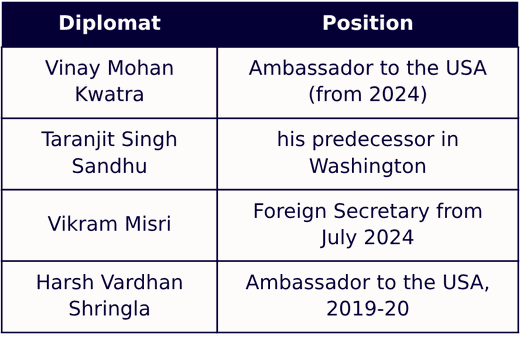 He took over the Washington mission from Taranjit Singh Sandhu, while Vikram Misri succeeded him as Foreign Secretary in the same month.
Hence the correct option is (b).
He took over the Washington mission from Taranjit Singh Sandhu, while Vikram Misri succeeded him as Foreign Secretary in the same month.
Hence the correct option is (b).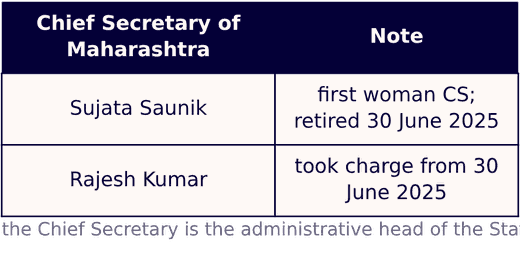 He took charge from Sujata Saunik, who retired on 30 June 2025 after becoming the first woman Chief Secretary of Maharashtra.
The Chief Secretary is the senior-most civil servant of a State and heads its entire administrative machinery.
Hence the correct option is (b).
He took charge from Sujata Saunik, who retired on 30 June 2025 after becoming the first woman Chief Secretary of Maharashtra.
The Chief Secretary is the senior-most civil servant of a State and heads its entire administrative machinery.
Hence the correct option is (b).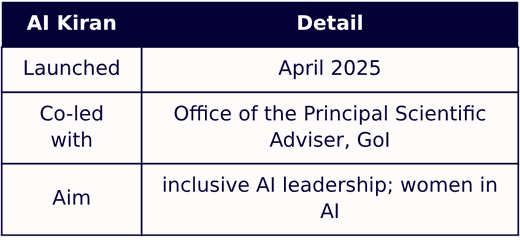 The movement is co-led with the Office of the Principal Scientific Adviser to the Government of India and works through mentorship, capacity building and recognition of women AI leaders.
Hence the correct option is (c).
The movement is co-led with the Office of the Principal Scientific Adviser to the Government of India and works through mentorship, capacity building and recognition of women AI leaders.
Hence the correct option is (c).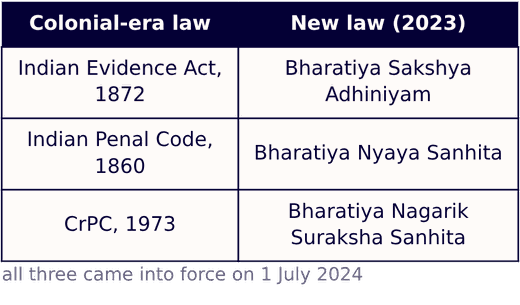 It is one of three laws that together replaced the colonial criminal-law framework, so the other options — which deal with data protection, women's reservation and decriminalising minor offences — are unrelated.
Hence the correct option is (b).
It is one of three laws that together replaced the colonial criminal-law framework, so the other options — which deal with data protection, women's reservation and decriminalising minor offences — are unrelated.
Hence the correct option is (b).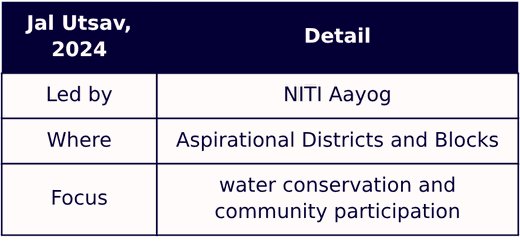 Its purpose was to spread awareness of water conservation, revive traditional water bodies and get the local community involved in managing water — matching NITI Aayog's role as the government's policy think tank for such programmes.
Hence the correct option is (b).
Its purpose was to spread awareness of water conservation, revive traditional water bodies and get the local community involved in managing water — matching NITI Aayog's role as the government's policy think tank for such programmes.
Hence the correct option is (b).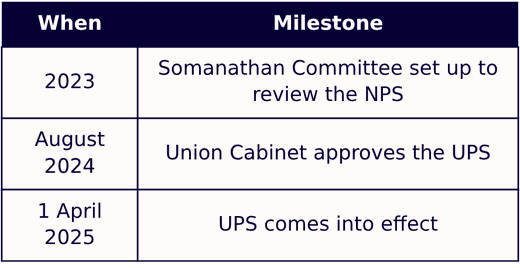 It assures a pension of 50 per cent of the average basic pay of the last twelve months for employees with at least 25 years of service, along with a family pension and a guaranteed minimum pension of ₹10,000 a month.
The UPS came into effect from 1 April 2025 as an option for central government employees covered by the NPS.
Hence the correct option is (c).
It assures a pension of 50 per cent of the average basic pay of the last twelve months for employees with at least 25 years of service, along with a family pension and a guaranteed minimum pension of ₹10,000 a month.
The UPS came into effect from 1 April 2025 as an option for central government employees covered by the NPS.
Hence the correct option is (c).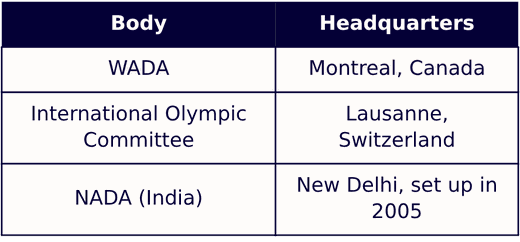 Lausanne is often confused with it because the International Olympic Committee sits there; India's own body is the National Anti-Doping Agency, set up in New Delhi in 2005.
Hence the correct option is (c).
Lausanne is often confused with it because the International Olympic Committee sits there; India's own body is the National Anti-Doping Agency, set up in New Delhi in 2005.
Hence the correct option is (c).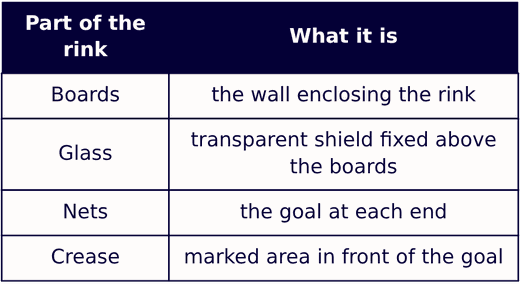 The boards keep the puck in play, so players can deliberately bank a pass off them or check an opponent against them.
'Nets' are the goals at the two ends, while 'rails' and 'curbs' are not ice hockey terms at all.
Hence the correct option is (c).
The boards keep the puck in play, so players can deliberately bank a pass off them or check an opponent against them.
'Nets' are the goals at the two ends, while 'rails' and 'curbs' are not ice hockey terms at all.
Hence the correct option is (c).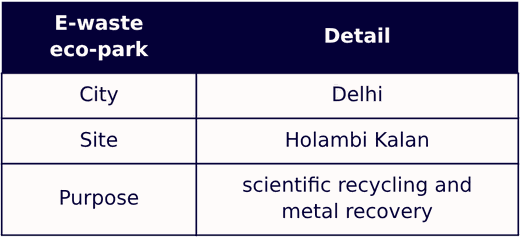 The aim is to draw the huge informal e-waste trade of the capital into a safe, formal system, cutting pollution and supporting a circular economy in line with the E-Waste (Management) Rules.
Hence the correct option is (b).
The aim is to draw the huge informal e-waste trade of the capital into a safe, formal system, cutting pollution and supporting a circular economy in line with the E-Waste (Management) Rules.
Hence the correct option is (b).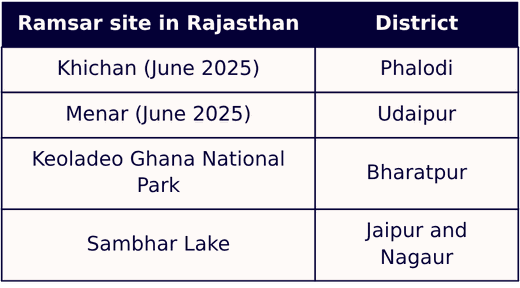 With these two, Rajasthan's Ramsar tally rose to four, the earlier ones being Keoladeo Ghana National Park in Bharatpur and Sambhar Lake.
A Ramsar site is a wetland recognised as being of international importance under the Ramsar Convention of 1971.
Hence the correct option is (c).
With these two, Rajasthan's Ramsar tally rose to four, the earlier ones being Keoladeo Ghana National Park in Bharatpur and Sambhar Lake.
A Ramsar site is a wetland recognised as being of international importance under the Ramsar Convention of 1971.
Hence the correct option is (c).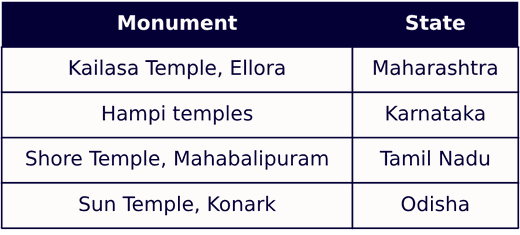 It is called monolithic because the whole temple — tower, courtyard, pillars and elephants — was cut downwards out of a single basalt hillside instead of being built up stone by stone.
The Ellora caves are a UNESCO World Heritage Site.
Hence the correct option is (b).
It is called monolithic because the whole temple — tower, courtyard, pillars and elephants — was cut downwards out of a single basalt hillside instead of being built up stone by stone.
The Ellora caves are a UNESCO World Heritage Site.
Hence the correct option is (b).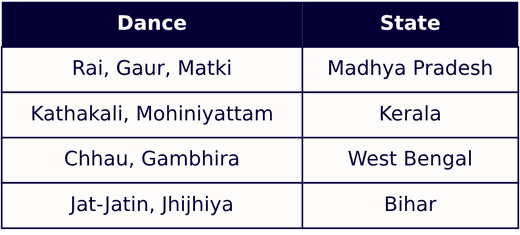 Gaur, Matki, Karma, Jawara and Tertali are the other well-known folk dances of Madhya Pradesh.
Hence the correct option is (c).
Gaur, Matki, Karma, Jawara and Tertali are the other well-known folk dances of Madhya Pradesh.
Hence the correct option is (c).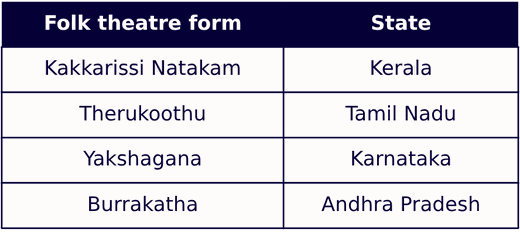 Its dialogue is a lively mixture of Malayalam and Tamil, and the satirical, comic tone is what sets it apart from Kerala's classical forms.
Kathakali, Koodiyattam, Ottan Thullal and Chakyar Koothu are the better-known dance-drama traditions of the same State.
Hence the correct option is (b).
Its dialogue is a lively mixture of Malayalam and Tamil, and the satirical, comic tone is what sets it apart from Kerala's classical forms.
Kathakali, Koodiyattam, Ottan Thullal and Chakyar Koothu are the better-known dance-drama traditions of the same State.
Hence the correct option is (b).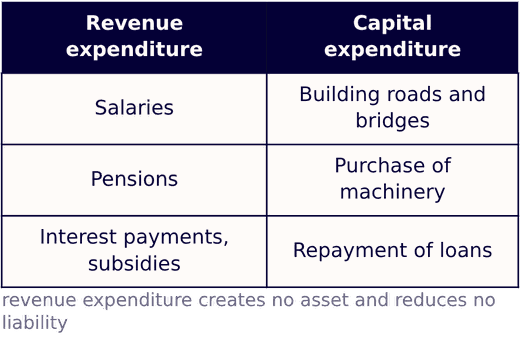 Capital expenditure, by contrast, covers items such as building roads, buying machinery or repaying loans.
Both statements are therefore correct, and the correct option is (c).
Capital expenditure, by contrast, covers items such as building roads, buying machinery or repaying loans.
Both statements are therefore correct, and the correct option is (c).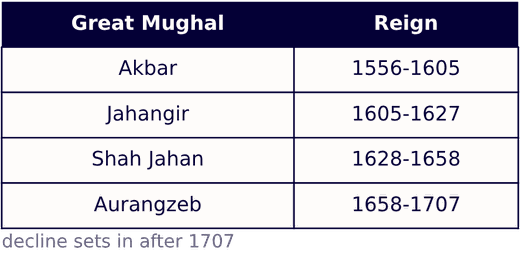 After his death in 1707 the throne passed to weak successors beginning with Bahadur Shah I, and the empire slid into decline — so the emperors after him are called the Later Mughals.
Bahadur Shah Zafar was the last Mughal emperor of all, deposed after the Revolt of 1857, but he ruled only in name.
Hence the correct option is (c).
After his death in 1707 the throne passed to weak successors beginning with Bahadur Shah I, and the empire slid into decline — so the emperors after him are called the Later Mughals.
Bahadur Shah Zafar was the last Mughal emperor of all, deposed after the Revolt of 1857, but he ruled only in name.
Hence the correct option is (c).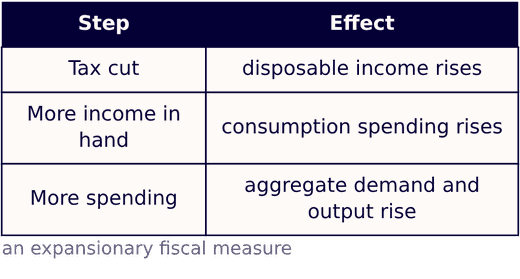 Higher consumption raises aggregate demand, which encourages firms to produce more — this is why a tax cut financed by a deficit is called an expansionary fiscal measure.
Options (a), (c) and (d) all describe a contraction, which is the opposite of what a tax cut does.
Hence the correct option is (b).
Higher consumption raises aggregate demand, which encourages firms to produce more — this is why a tax cut financed by a deficit is called an expansionary fiscal measure.
Options (a), (c) and (d) all describe a contraction, which is the opposite of what a tax cut does.
Hence the correct option is (b).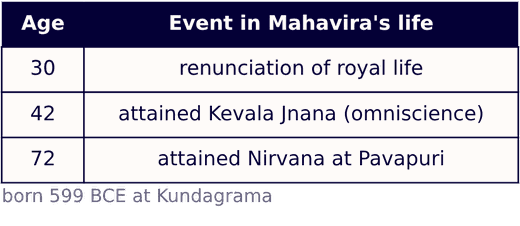 After renunciation he practised severe penance for 12 years, attained Kevala Jnana at 42 on the bank of the Rijupalika river, and attained Nirvana at 72 at Pavapuri.
The age 29 belongs to Gautama Buddha's Great Renunciation, which is the usual trap in this question.
Hence the correct option is (b).
After renunciation he practised severe penance for 12 years, attained Kevala Jnana at 42 on the bank of the Rijupalika river, and attained Nirvana at 72 at Pavapuri.
The age 29 belongs to Gautama Buddha's Great Renunciation, which is the usual trap in this question.
Hence the correct option is (b).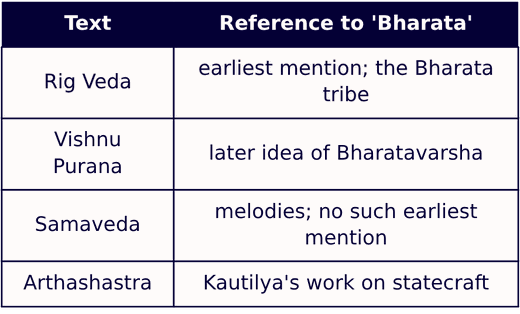 The Vishnu Purana later develops the idea of Bharatavarsha as the land south of the Himalayas, but that is a much later use of the name.
The Samaveda is a collection of melodies drawn largely from Rig Vedic verses, and the Arthashastra of Kautilya is a treatise on statecraft, so neither can be the earliest source.
Hence the correct option is (c).
The Vishnu Purana later develops the idea of Bharatavarsha as the land south of the Himalayas, but that is a much later use of the name.
The Samaveda is a collection of melodies drawn largely from Rig Vedic verses, and the Arthashastra of Kautilya is a treatise on statecraft, so neither can be the earliest source.
Hence the correct option is (c).