
76
Raja Todar Mal served as the Revenue Minister during the reign of which Mughal emperor?
- A.Babur
- B.Humayun
- C.Akbar
- D.Jahangir
Solution
Mughal revenue administration
Raja Todar Mal was the revenue minister of Akbar and one of the navaratnas of his court.
He framed the Zabti system, also called the Todar Mal Bandobast, in which land was surveyed and measured and the revenue was fixed in cash.
Its refined form, the Dahsala system of 1580, fixed the demand on the ten-year average of yields and prices of each locality.
Babur and Humayun ruled long before this settlement was drawn up, and by Jahangir's reign the arrangement was already in force.
Hence option (c) is correct.
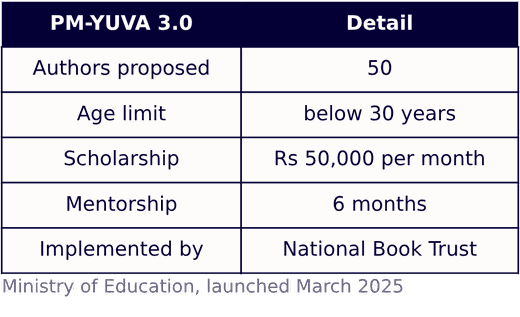 Each selected author receives a consolidated scholarship of ₹50,000 per month for a six-month mentorship, and a royalty of 10% on the sale of the published book.
The themes announced for this edition were the contribution of the Indian diaspora in nation building, Indian Knowledge Systems, and Makers of Modern India (1950-2025).
Hence, option (b) is the most appropriate answer.
Each selected author receives a consolidated scholarship of ₹50,000 per month for a six-month mentorship, and a royalty of 10% on the sale of the published book.
The themes announced for this edition were the contribution of the Indian diaspora in nation building, Indian Knowledge Systems, and Makers of Modern India (1950-2025).
Hence, option (b) is the most appropriate answer.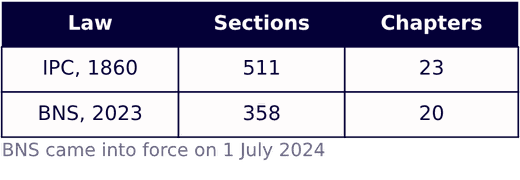 It also introduces new offences such as organised crime, terrorism and mob lynching, and makes community service a form of punishment for the first time.
The BNS is one of three new criminal laws, the other two being the Bharatiya Nagarik Suraksha Sanhita (replacing the CrPC) and the Bharatiya Sakshya Adhiniyam (replacing the Indian Evidence Act).
Hence, option (a) is the most appropriate answer.
It also introduces new offences such as organised crime, terrorism and mob lynching, and makes community service a form of punishment for the first time.
The BNS is one of three new criminal laws, the other two being the Bharatiya Nagarik Suraksha Sanhita (replacing the CrPC) and the Bharatiya Sakshya Adhiniyam (replacing the Indian Evidence Act).
Hence, option (a) is the most appropriate answer.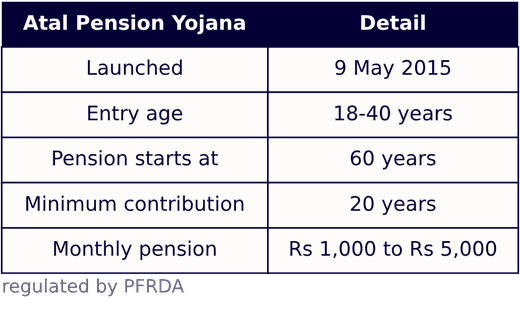 The age band is fixed at 40 at the upper end because the pension starts at 60, and the scheme requires a minimum contribution period of 20 years.
The subscriber receives a guaranteed monthly pension of ₹1,000 to ₹5,000 from the age of 60, the amount depending on the age of joining and the contribution chosen.
Since 1 October 2022 income-tax payers have been barred from joining, as the scheme targets workers of the unorganised sector.
Hence, option (b) is the most appropriate answer.
The age band is fixed at 40 at the upper end because the pension starts at 60, and the scheme requires a minimum contribution period of 20 years.
The subscriber receives a guaranteed monthly pension of ₹1,000 to ₹5,000 from the age of 60, the amount depending on the age of joining and the contribution chosen.
Since 1 October 2022 income-tax payers have been barred from joining, as the scheme targets workers of the unorganised sector.
Hence, option (b) is the most appropriate answer.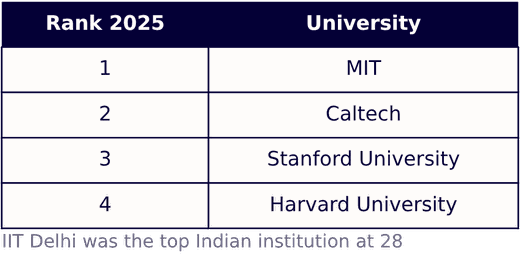 The three institutions above it were the Massachusetts Institute of Technology at 1st, the California Institute of Technology at 2nd and Stanford University at 3rd.
IIT Delhi, at 28th, was the highest ranked Indian institution in this edition.
Hence, option (d) is the most appropriate answer.
The three institutions above it were the Massachusetts Institute of Technology at 1st, the California Institute of Technology at 2nd and Stanford University at 3rd.
IIT Delhi, at 28th, was the highest ranked Indian institution in this edition.
Hence, option (d) is the most appropriate answer.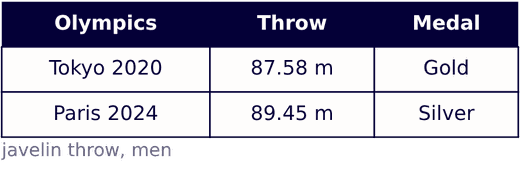 This was India's first ever Olympic gold in athletics, and only the second individual Olympic gold for the country after Abhinav Bindra's shooting gold at Beijing 2008.
At Paris 2024 he threw 89.45 m and finished with the silver medal, so 2024 is the tempting but wrong option here.
Hence, option (b) is the most appropriate answer.
This was India's first ever Olympic gold in athletics, and only the second individual Olympic gold for the country after Abhinav Bindra's shooting gold at Beijing 2008.
At Paris 2024 he threw 89.45 m and finished with the silver medal, so 2024 is the tempting but wrong option here.
Hence, option (b) is the most appropriate answer.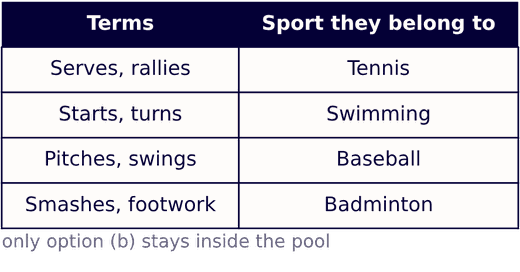 The remaining options each borrow their second and third words from a different sport, which is the quickest way to eliminate them.
Hence, option (b) is the most appropriate answer.
The remaining options each borrow their second and third words from a different sport, which is the quickest way to eliminate them.
Hence, option (b) is the most appropriate answer.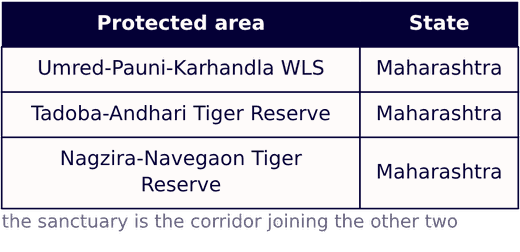 Such corridors matter because they allow genetic exchange between otherwise isolated tiger populations, which is what keeps small populations healthy.
The sanctuary became widely known through the tiger Jai, who was collared and tracked here.
Hence, option (c) is the most appropriate answer.
Such corridors matter because they allow genetic exchange between otherwise isolated tiger populations, which is what keeps small populations healthy.
The sanctuary became widely known through the tiger Jai, who was collared and tracked here.
Hence, option (c) is the most appropriate answer.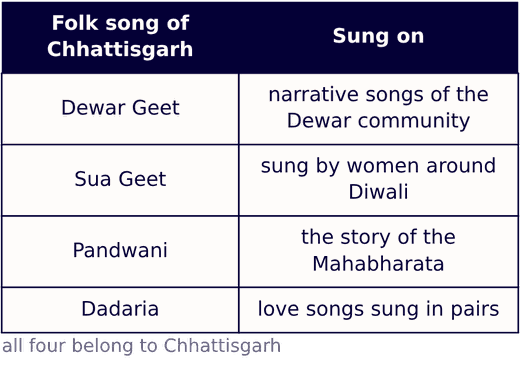 Since the community is the singer group of Chhattisgarh, the song form is placed there and not in the neighbouring states offered as options.
Hence, option (d) is the most appropriate answer.
Since the community is the singer group of Chhattisgarh, the song form is placed there and not in the neighbouring states offered as options.
Hence, option (d) is the most appropriate answer.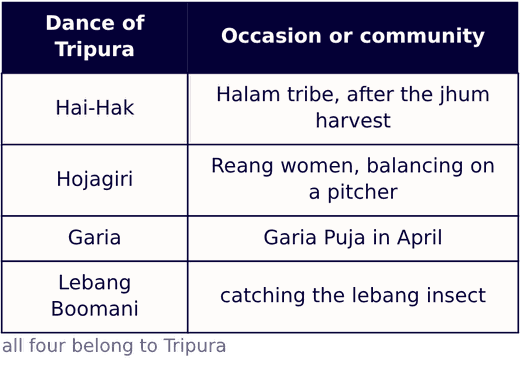 Tripura's better known dances are Hojagiri, Garia, Lebang Boomani and Mamita, all of them likewise linked to harvest and to community festivals.
Hence, option (b) is the most appropriate answer.
Tripura's better known dances are Hojagiri, Garia, Lebang Boomani and Mamita, all of them likewise linked to harvest and to community festivals.
Hence, option (b) is the most appropriate answer.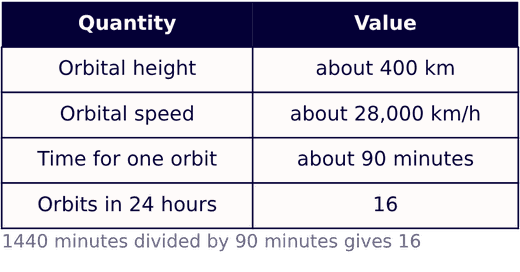 This is why an astronaut aboard the station sees about 16 sunrises and 16 sunsets in every 24 hours.
Hence, option (c) is the most appropriate answer.
This is why an astronaut aboard the station sees about 16 sunrises and 16 sunsets in every 24 hours.
Hence, option (c) is the most appropriate answer.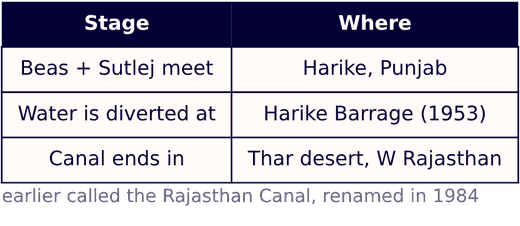 The barrage was completed in 1953 to hold and divert this combined flow for irrigation.
The canal was originally named the Rajasthan Canal and was renamed after Indira Gandhi in 1984; it carries water across Punjab and Haryana into the Thar desert of western Rajasthan.
Its purpose is to green the arid districts of Sriganganagar, Hanumangarh, Bikaner, Jaisalmer and Barmer, which is why it is one of the longest irrigation canal systems in India.
Hence, option (b) is the most appropriate answer.
The barrage was completed in 1953 to hold and divert this combined flow for irrigation.
The canal was originally named the Rajasthan Canal and was renamed after Indira Gandhi in 1984; it carries water across Punjab and Haryana into the Thar desert of western Rajasthan.
Its purpose is to green the arid districts of Sriganganagar, Hanumangarh, Bikaner, Jaisalmer and Barmer, which is why it is one of the longest irrigation canal systems in India.
Hence, option (b) is the most appropriate answer.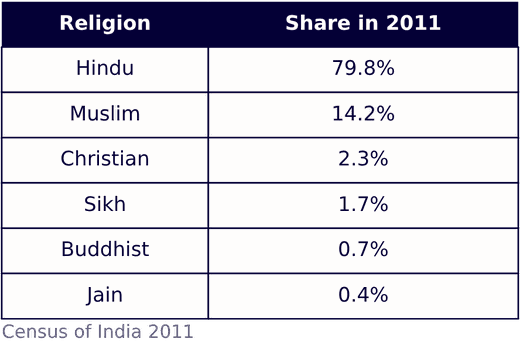 The order after them was Christians , Sikhs , Buddhists and Jains , which fixes every option in the question.
In absolute numbers the Muslim population was about 17.22 crore out of a total of 121.09 crore.
Their largest concentrations were in Uttar Pradesh, West Bengal, Bihar, Maharashtra, Assam and Kerala, and Lakshadweep, Jammu and Kashmir and Assam had the highest shares.
Hence, option (c) is the most appropriate answer.
The order after them was Christians , Sikhs , Buddhists and Jains , which fixes every option in the question.
In absolute numbers the Muslim population was about 17.22 crore out of a total of 121.09 crore.
Their largest concentrations were in Uttar Pradesh, West Bengal, Bihar, Maharashtra, Assam and Kerala, and Lakshadweep, Jammu and Kashmir and Assam had the highest shares.
Hence, option (c) is the most appropriate answer.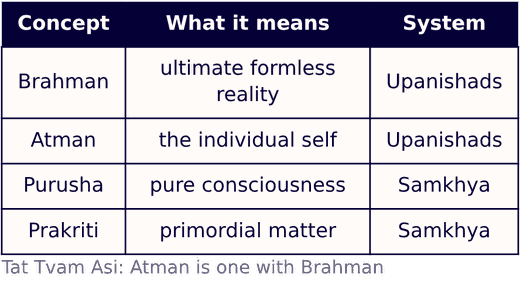 Atman is the individual self, and the central Upanishadic teaching Tat Tvam Asi (That thou art) asserts that Atman is identical with Brahman; Atman is therefore the self, not the cosmic source.
Purusha and Prakriti are the two principles of Samkhya philosophy, consciousness and primordial matter, and belong to a different system altogether.
Hence, option (c) is the most appropriate answer.
Atman is the individual self, and the central Upanishadic teaching Tat Tvam Asi (That thou art) asserts that Atman is identical with Brahman; Atman is therefore the self, not the cosmic source.
Purusha and Prakriti are the two principles of Samkhya philosophy, consciousness and primordial matter, and belong to a different system altogether.
Hence, option (c) is the most appropriate answer.