SSC CHSL 25 November 2025 · Shift 2 · General Awareness — questions with answers · ShikshaSphere
Chapter 134 of 200
25 November 2025 · Shift 2
General Awareness
25 questions ~25 min readFree
25 questions
A
76
Rajendra I, the famous Chola ruler, was the son of .
A.Vijayalaya Chola
B.Rajaraja I
C.Aditya Chola
D.Kulothunga Chola
Solution
Chola dynasty
Rajendra I was the son of Rajaraja I, also called Rajaraja the Great, and he succeeded his father in 1014 CE.
He led a famous northern expedition up to the river Ganga and took the title Gangaikonda Chola, meaning the one who brought the Ganga.
He shifted his capital to the new city of Gangaikonda Cholapuram and used a powerful navy to carry Chola power to Sri Lanka and the Srivijaya empire in South-East Asia.
Vijayalaya founded the imperial Chola line and Aditya I was his son, while Kulothunga I ruled much later, from 1070 CE, so none of them was Rajendra I's father.
Hence option (b) is correct.
77
As of 31 July 2025, what is the total number of members in the United Nations Security Council, including both permanent and non-permanent members?
A.10
B.12
C.15
D.18
Solution
United Nations Security Council
The United Nations Security Council has 15 members in all.
Five of them are permanent members holding the veto power: China, France, Russia, the United Kingdom and the United States.
The remaining ten are non-permanent members elected by the General Assembly for two-year terms, five of them being replaced every year.
The strength was raised from 11 to 15 by an amendment to the UN Charter that came into force in 1965 and has stayed unchanged since.
Hence option (c) is correct.
78
In September 2024, who was appointed as the Director General of the Sashastra Seema Bal (SSB) ?
A.Vivek Johri
B.Amrit Mohan Prasad
C.Kuldeep Singh
D.Daljit Singh Chaudhary
Solution
Appointments in news
Amrit Mohan Prasad, a 1989-batch IPS officer of the Odisha cadre, was appointed Director General of the Sashastra Seema Bal in September 2024 by the Appointments Committee of the Cabinet.
He was then serving as Special Director General of the CRPF, and he took charge from Daljit Singh Chaudhary, the BSF chief who was holding additional charge of the SSB.
The SSB is the Central Armed Police Force that guards India's borders with Nepal and Bhutan and works under the Ministry of Home Affairs.
Hence option (b) is correct.
79
During the Union Budget 2025-26 speech, the Finance Minister announced the extension of the Jal Jeevan Mission up to which year?
A.2030
B.2028
C.2032
D.2025
Solution
Union Budget 2025-26
In the Union Budget 2025-26 speech the Finance Minister announced that the Jal Jeevan Mission would be extended up to 2028.
The mission was launched in 2019 with the goal of giving every rural household a functional tap water connection.
The extended phase puts the stress on quality of infrastructure, operation and maintenance of the schemes, and on Jan Bhagidari, that is people's participation.
Hence option (b) is correct.
80
The District Project Management Units (DPMUs) initiative, launched in July 2025 under the PM Vishwakarma scheme, functions under which Union Ministry ?
A.Ministry of Skill Development and Entrepreneurship
B.Ministry of Micro, Small and Medium Enterprises
C.Ministry of Panchayati Raj
D.Ministry of Rural Development
Solution
PM Vishwakarma scheme
PM Vishwakarma is a Central Sector Scheme of the Ministry of Micro, Small and Medium Enterprises, so the District Project Management Units created under it in July 2025 also work under that ministry.
The scheme was launched on 17 September 2023 to support traditional artisans and craftspeople of 18 trades who work with their hands and simple tools.
It gives recognition through a PM Vishwakarma certificate and ID card, skill training with a stipend, a toolkit incentive, collateral-free credit and marketing support.
The DPMUs give every district a dedicated team for registration, verification, training and monitoring, so that the scheme reaches artisans faster.
Hence option (b) is correct.
81
Dr. James Naismith introduced which sport in the year 1891?
A.Volleyball
B.Basketball
C.Baseball
D.Rugby
Solution
Origin of sports
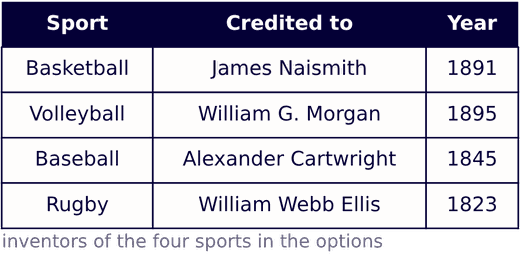
Dr. James Naismith, a physical-education instructor at the YMCA training school in Springfield, Massachusetts, invented basketball in December 1891.
He needed a game that could be played indoors during the harsh New England winter, so he fixed two peach baskets to the gallery railing, used a football and framed 13 basic rules.
The other three sports are credited to different people, so option (b) is correct.
82
Which Indian hockey player was a member of the gold-medal winning team at the 1928 Amsterdam Summer Olympics ?
A.Leslie Claudius
B.Major Dhyan Chand
C.Gurbux Singh
D.Balbir Singh Jr.
Solution
Indian hockey history
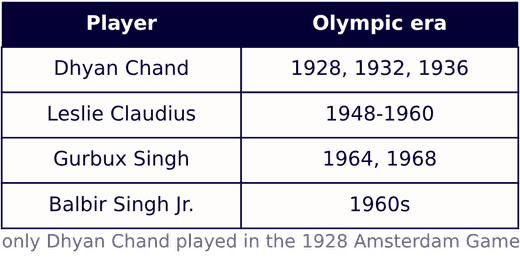
The 1928 Amsterdam Olympics gave India its first-ever Olympic gold medal in hockey, and Major Dhyan Chand was the star of that team.
He finished as the highest scorer of the tournament with 14 goals and went on to win gold again in 1932 (Los Angeles) and 1936 (Berlin).
Nicknamed 'The Wizard' for his ball control, his birthday, 29 August, is celebrated as National Sports Day in India.
The other three players belong to later decades, so option (b) is correct.
83
In which year was the sport of judo developed by Jigoro Kano?
A.1875
B.1882
C.1895
D.1901
Solution
Origin of judo
Judo was developed in 1882 by Jigoro Kano, who founded the Kodokan Judo Institute at Tokyo in that year.
He reshaped the older combat art of jujutsu into a safe, throw-based sport built on the maxim 'maximum efficiency, minimum effort'.
The name itself means 'the gentle way' — the judoka uses the opponent's own force instead of resisting it.
Judo became the first Asian martial art in the Olympics, at the Tokyo Games of 1964, so option (b) is correct.
84
India's first green waste processing plant developed under the Public-Private Partnership (PPP) model has been established in which city ?
A.Bhopal
B.Indore
C.Raipur
D.Nagpur
Solution
Green waste plant
India's first green (garden) waste processing plant on the Public-Private Partnership model came up at Bicholi Hapsi in Indore, Madhya Pradesh, in 2025.
Set up under the Swachh Bharat Mission-Urban, it processes the city's leaves, branches and grass cuttings into wooden pellets and sawdust.
The pellets are sold to industry as a cleaner substitute for coal, so the municipal corporation earns revenue instead of paying to dump the waste.
Indore, repeatedly ranked India's cleanest city in the Swachh Survekshan survey, is therefore the answer and option (b) is correct.
85
The traditional musical form known as 'Mando', characterized by slow rhythm and thematic focus on love, tragedy, social issues, and political expression, belongs to which Indian state?
A.Kerala
B.Goa
C.Maharashtra
D.Odisha
Solution
Folk music of India
Mando is the ceremonial song-and-dance form of Goa, sung mainly in Konkani by the Goan Catholic community.
It grew in the 19th century out of the meeting of Indian melody with Portuguese harmony, which is why it is slow, dignified and accompanied by the violin along with the local ghumot drum.
Its verses speak of love and longing, but also of social injustice and colonial politics — exactly the themes named in the question.
Hence the form belongs to Goa and option (b) is correct.
86
Which of the following books was written by Arundhati Roy ?
A.The Inheritance of Loss
B.War Talk
C.Clear Light of Day
D.Fire on the Mountain
Solution
Books and authors
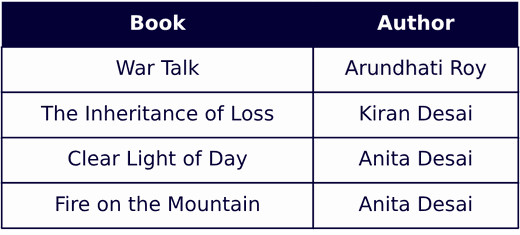
War Talk (2003) is a collection of political essays by Arundhati Roy on nuclear weapons, war and global justice.
Roy is best known for her debut novel The God of Small Things, which won the Booker Prize in 1997.
The other three titles belong to Kiran Desai and Anita Desai, so option (b) is correct.
87
Which of the following books was written by Anita Nair ?
A.The God of Small Things
B.Ladies Coupe
C.Palace of Illusions
D.Train to Pakistan
Solution
Books and authors
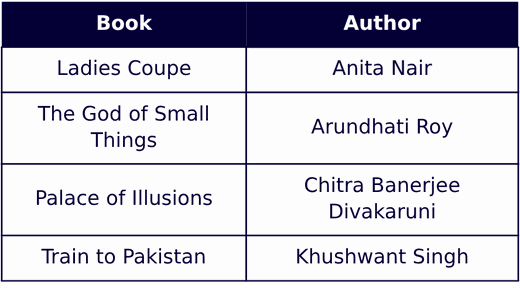
Ladies Coupe (2001) is the best-known novel of the Indian writer Anita Nair.
It follows Akhila, a middle-aged woman travelling alone, who hears the life stories of five women sharing a ladies' compartment and decides to live for herself.
The other titles are by Arundhati Roy, Chitra Banerjee Divakaruni and Khushwant Singh, so option (b) is correct.
88
In which city is the famous 'Tulip Festival' celebrated annually ?
A.Srinagar
B.Shimla
C.Jaipur
D.Pune
Solution
Festivals of India
The annual Tulip Festival is held in Srinagar, at the Indira Gandhi Memorial Tulip Garden on the slopes of the Zabarwan range overlooking Dal Lake.
Opened in 2007, it is Asia's largest tulip garden and blooms for only a few weeks in late March and April.
The festival marks the start of Kashmir's tourist season, when lakhs of tulips of dozens of varieties open together.
Hence the city is Srinagar and option (a) is correct.
89
The Bhitargaon Temple, a notable example of Gupta architecture, is located in which district ?
A.Kanpur
B.Agra
C.Jhansi
D.Varanasi
Solution
Gupta architecture
The Bhitargaon temple stands in the Kanpur district of Uttar Pradesh and dates from the 5th century CE, the Gupta age.
It is the oldest surviving brick-and-terracotta temple in India, and the largest of its kind.
Its importance lies in the shikhara — a tall pyramidal tower over the sanctum, an early step towards the classical North Indian temple form — and in the terracotta panels of deities on its walls.
So the district is Kanpur and option (a) is correct.
90
The traditional dance form 'Badhai' is popularly performed in which Indian state?
A.Rajasthan
B.Madhya Pradesh
C.Odisha
D.Punjab
Solution
Folk dances of India
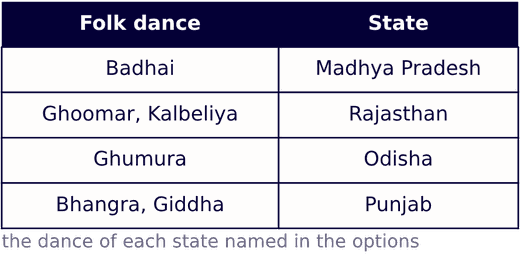
Badhai is a folk dance of the Bundelkhand region of Madhya Pradesh.
The word 'badhai' means congratulation, and the dance is performed on happy occasions — the birth of a child, a marriage or a festival — often as a thanksgiving to the goddess.
Men and women dance together to the beat of the dholak, nagara and the shehnai.
Hence the state is Madhya Pradesh and option (b) is correct.
91
India's maiden interplanetary mission, aimed at exploring Mars, is known as
A.Chandrayaan-2
B.Mangalyaan
C.Shukrayaan
D.Astrosat
Solution
Indian space missions
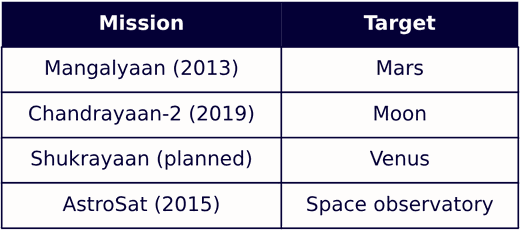
Mangalyaan, formally the Mars Orbiter Mission, was launched by ISRO on 5 November 2013 and entered Mars orbit on 24 September 2014.
It was India's first mission beyond the Earth-Moon system, and India became the first country in the world to reach Mars orbit at its very first attempt.
Chandrayaan-2 went to the Moon, Shukrayaan is the planned Venus mission and AstroSat is a space telescope, so option (b) is correct.
92
Which term describes the perception of the frequency of a sound by the human brain ?
A.Wave number
B.Pitch
C.Note
D.Amplitude
Solution
Characteristics of sound
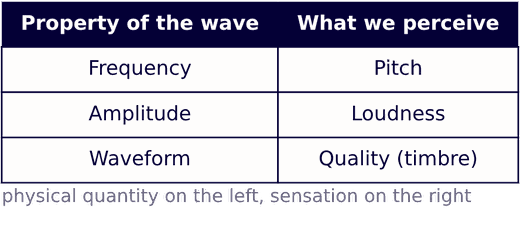
Pitch is the sensation by which the brain judges how shrill or how deep a sound is, and it is decided by the frequency of the sound wave.
The higher the frequency, the higher the pitch: a whistle is shriller than a drum because its frequency is greater.
Frequency is the objective quantity measured in hertz, while pitch is what we perceive; amplitude decides loudness, not pitch.
Hence option (b) is correct.
93
In 2025, which high-speed charging battery technology was developed by the Jawaharlal Nehru Centre for Advanced Scientific Research ?
A.Sodium-ion battery
B.Nikon battery
C.Magnesium-ion battery
D.Lithium-sulfur battery
Solution
Battery technology
In 2025 scientists at the Jawaharlal Nehru Centre for Advanced Scientific Research (JNCASR), Bengaluru — an autonomous institute of the Department of Science and Technology — announced a super-fast-charging sodium-ion battery.
It reaches about 80 per cent charge in roughly six minutes and survives more than 3,000 charge-discharge cycles.
The gain came from a NASICON-type electrode chemistry improved by aluminium doping, which lets sodium ions move in and out quickly.
Sodium is far cheaper and far more abundant in India than lithium, so the work supports self-reliance in energy storage.
Hence option (a) is correct.
94
In which year was the princely state of Satara annexed by the British under the Doctrine of Lapse?
A.1857
B.1848
C.1849
D.1851
Solution
Doctrine of Lapse
Satara was annexed in 1848 — the very first state taken over by Lord Dalhousie under the Doctrine of Lapse.
The doctrine said that if a ruler died without a natural heir, the British would not recognise an adopted son and the state would 'lapse' to the Company.
Such annexations bred deep resentment among princes and were a major cause of the Revolt of 1857, so option (b) is correct.
95
In which year did the Government of India form a committee under Vijay Kelkar to review fiscal reforms and recommend an appropriate framework ?
A.2010-11
B.2002-03
C.2007-08
D.2005-06
Solution
Kelkar Committee
The Government of India set up the Task Force headed by Dr. Vijay Kelkar in 2002-03 to review fiscal policy and suggest a framework of reform.
Its terms covered both direct and indirect taxes: widen the base, lower and simplify rates, cut exemptions and computerise administration.
The recommendations fed into the Fiscal Responsibility and Budget Management (FRBM) Act of 2003 and later into the design of GST.
A separate Kelkar Committee on the FRBM roadmap was appointed in 2012, but the fiscal-reform task force of the question belongs to 2002-03, so option (b) is correct.
96
According to India's Industrial Policy Resolution of 1956, industries were classified into how many categories?
A.One
B.Five
C.Three
D.Seven
Solution
Industrial Policy 1956
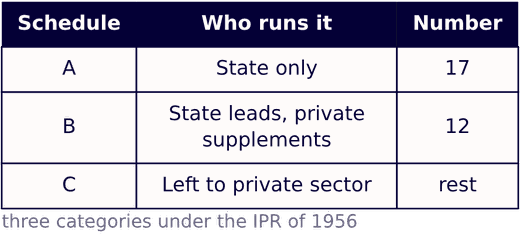
The Industrial Policy Resolution of 1956 divided industry into three schedules, A, B and C.
Schedule A listed 17 industries reserved for the State, Schedule B listed 12 in which the State would take the lead while private firms could supplement it, and Schedule C left everything else to the private sector.
The aim was the 'socialistic pattern of society' of the Second Five Year Plan, which is why this resolution is called the economic constitution of India.
Hence the number of categories is three and option (c) is correct.
97
Which of the following factors contribute to brain drain from India?
I. Limited employment opportunities within the country
II. Perceived lower quality of higher education in India
A.Only II
B.Only I
C.Neither I nor II
D.Both I and II
Solution
Brain drain
Brain drain is the migration of trained and skilled people to other countries, and it is driven by push factors at home and pull factors abroad.
Statement I is a push factor: too few jobs and limited openings in advanced research force qualified people to look outside for careers and better pay.
Statement II is a pull factor: when higher education at home is seen as weaker in research facilities and curriculum, students go abroad to study and many settle there.
Both factors therefore contribute, so option (d) is correct.
98
In economic terms, which of the following is considered an intermediate good?
A.Bicycle sold to a consumer
B.Copper used in manufacturing utensils
C.Television bought by a household
D.Refrigerator purchased for home use
Solution
Intermediate goods
An intermediate good is one that is bought by a producer to be used up or transformed while making another good; a final good is bought for final use and needs no further processing.
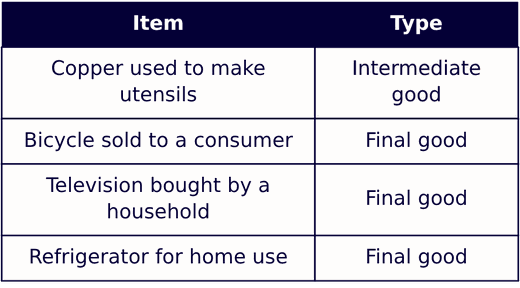
Copper bought to manufacture utensils is consumed inside the production process, so it is an intermediate good.
A bicycle, a television and a refrigerator bought by households are final goods.
Note also that only final goods are counted in national income; counting intermediate goods too would mean counting the same value twice, so option (b) is correct.
99
In the human heart, deoxygenated blood returning from the body enters which chamber first?
A.Right ventricle
B.Right atrium
C.Left ventricle
D.Left atrium
Solution
Human heart
Deoxygenated blood from the body is collected by the superior and inferior vena cava, which empty into the right atrium.
Atria are the receiving chambers of the heart and ventricles are the pumping chambers, so blood always enters an atrium first.
From the right atrium it passes through the tricuspid valve into the right ventricle, which pumps it to the lungs through the pulmonary artery.
Hence the first chamber is the right atrium and option (b) is correct.
100
Who was the 7th-century Chinese traveler that visited India to document Buddhist practices?
A.Marco Polo
B.Xuanzang (Hiuen Tsang)
C.Megasthenes
D.Ibn Battuta
Solution
Foreign travellers
Xuanzang, also written Hiuen Tsang, was a Chinese Buddhist monk who travelled in India in the 7th century, in the reign of Harshavardhana.
He spent about fifteen years here, studied at Nalanda under Silabhadra and carried back hundreds of Buddhist manuscripts and relics to China.
His account Si-Yu-Ki, 'Record of the Western Regions', is a chief source for the society, religion and politics of that age.
The other travellers belong to other lands and other centuries, so option (b) is correct.
Finished reading? Now test yourself.
The same 25 questions, but with a timer and the answers hidden — 15 minutes.

 The other three sports are credited to different people, so option (b) is correct.
 Nicknamed 'The Wizard' for his ball control, his birthday, 29 August, is celebrated as National Sports Day in India.
The other three players belong to later decades, so option (b) is correct.
Nicknamed 'The Wizard' for his ball control, his birthday, 29 August, is celebrated as National Sports Day in India.
The other three players belong to later decades, so option (b) is correct.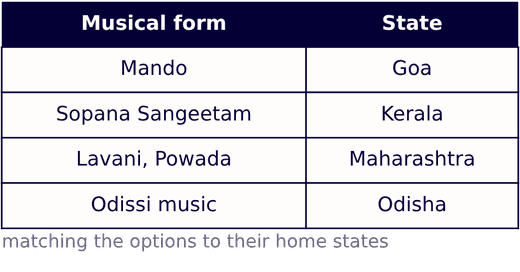 Hence the form belongs to Goa and option (b) is correct.
 The other three titles belong to Kiran Desai and Anita Desai, so option (b) is correct.
 The other titles are by Arundhati Roy, Chitra Banerjee Divakaruni and Khushwant Singh, so option (b) is correct.
 Hence the state is Madhya Pradesh and option (b) is correct.
 Chandrayaan-2 went to the Moon, Shukrayaan is the planned Venus mission and AstroSat is a space telescope, so option (b) is correct.
 Frequency is the objective quantity measured in hertz, while pitch is what we perceive; amplitude decides loudness, not pitch.
Hence option (b) is correct.
Frequency is the objective quantity measured in hertz, while pitch is what we perceive; amplitude decides loudness, not pitch.
Hence option (b) is correct.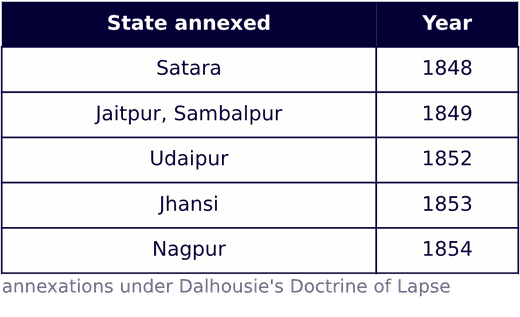 Such annexations bred deep resentment among princes and were a major cause of the Revolt of 1857, so option (b) is correct.
 Schedule A listed 17 industries reserved for the State, Schedule B listed 12 in which the State would take the lead while private firms could supplement it, and Schedule C left everything else to the private sector.
The aim was the 'socialistic pattern of society' of the Second Five Year Plan, which is why this resolution is called the economic constitution of India.
Hence the number of categories is three and option (c) is correct.
Schedule A listed 17 industries reserved for the State, Schedule B listed 12 in which the State would take the lead while private firms could supplement it, and Schedule C left everything else to the private sector.
The aim was the 'socialistic pattern of society' of the Second Five Year Plan, which is why this resolution is called the economic constitution of India.
Hence the number of categories is three and option (c) is correct.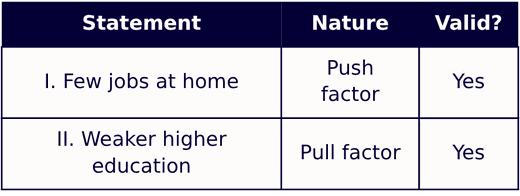 Both factors therefore contribute, so option (d) is correct.
 A bicycle, a television and a refrigerator bought by households are final goods.
Note also that only final goods are counted in national income; counting intermediate goods too would mean counting the same value twice, so option (b) is correct.
A bicycle, a television and a refrigerator bought by households are final goods.
Note also that only final goods are counted in national income; counting intermediate goods too would mean counting the same value twice, so option (b) is correct.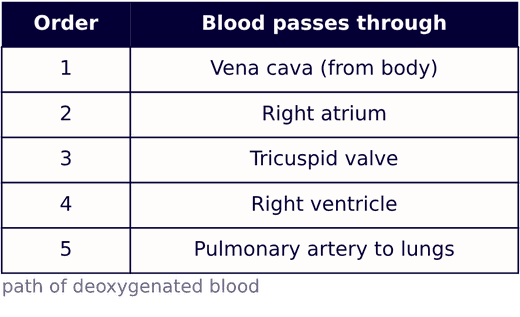 From the right atrium it passes through the tricuspid valve into the right ventricle, which pumps it to the lungs through the pulmonary artery.
Hence the first chamber is the right atrium and option (b) is correct.
From the right atrium it passes through the tricuspid valve into the right ventricle, which pumps it to the lungs through the pulmonary artery.
Hence the first chamber is the right atrium and option (b) is correct.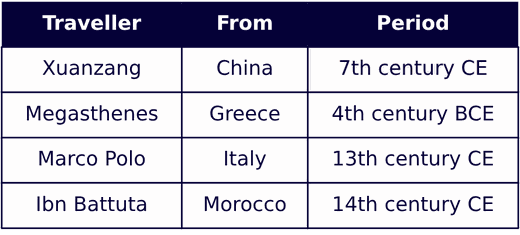 The other travellers belong to other lands and other centuries, so option (b) is correct.