SSC CHSL 27 November 2025 · Shift 3 · English Language — questions with answers · ShikshaSphere
Chapter 164 of 200
27 November 2025 · Shift 3
English Language
25 questions ~25 min readFree
25 questions
A
1
Choose the option which is similar in meaning to the underlined word. She is aware of her responsibilities and fulfills them sincerely.
A.Obligations
B.Preferences
C.Choices
D.Opportunities
Solution
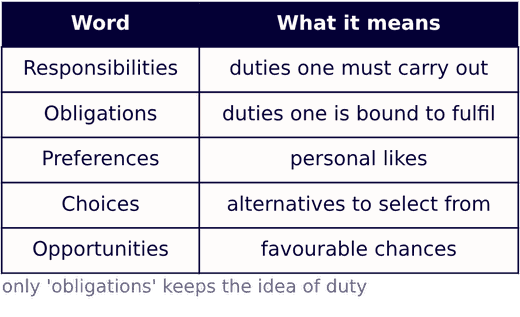
Synonym of 'responsibilities'
The underlined word 'responsibilities' means the duties a person is bound to carry out.
'Obligations' carries exactly that sense — things one is required to do, whether by duty or by promise — so it can replace the word without changing the meaning.
'Preferences' and 'choices' point to what one likes or may select, and 'opportunities' to favourable chances; none of them carries any idea of duty.
Hence option (a) is correct.
2
Choose the option which is similar in meaning to the underlined word. The team decided not to Forsake their original plan despite the challenges.
A.Maintain
B.Improve
C.Delay
D.Abandon
Solution
Synonym of 'forsake'
'Forsake' means to give up or leave behind something one was attached to.
'Abandon' carries the same sense of leaving a plan or a person for good, so it is the closest in meaning.
Note that the sentence says the team decided not to forsake the plan; the synonym asked for is still 'abandon' and not its opposite 'maintain'.
Hence option (d) is correct.
3
Choose the option that has an error in the sentence.
The school has planned several activities for this years annual function.
A.The school has planned
B.several activities
C.for this years
D.annual function
Solution
Possessive apostrophe
The phrase 'this years annual function' expresses possession — the annual function belonging to this year.
A singular noun shows possession by taking an apostrophe and s, so 'year' must become 'year's'.
Part (c) prints the bare plural 'years', which has no apostrophe at all, so the error lies there.
Parts (a), (b) and (d) are free of error, the present perfect 'has planned' being right for a plan already made.
Hence option (c) is correct.
4
Identify the error in the given sentence.
"Had she took the right turn, she would have reached on time."
A.Had she
B.took the right turn
C.she would have
D.reached on time
Solution
Third conditional with inversion
The sentence is a third conditional — an unreal condition set in the past — written with inversion instead of 'if'.
In that structure 'if' is dropped and 'had' is placed before the subject, and it must then be followed by the third form of the verb: Had + subject + V3.
'Took' is the second form, so 'Had she took' is wrong; the correct part is 'Had she taken the right turn'.
The main clause 'she would have reached on time' already follows the pattern 'would have + V3'.
Hence option (b) is correct.
5
Fill in the blank with the most appropriate preposition:
After spending the night inside the cave, the travelers came the old cave at sunrise.
A.across
B.beyond
C.out of
D.into
Solution
Preposition of movement
The travellers had spent the night inside the cave and left it at sunrise, so the blank must show movement from inside to outside.
'Come out of' is the phrase that expresses exactly that movement.
'Into' shows the opposite movement, 'across' means from one side to the other, and 'beyond' means past or farther than a point — none of them fits leaving a cave at daybreak.
Hence option (c) is correct.
6
Fill in the blank with the most appropriate option:
The unexpected merger announcement sent through the financial market.
A.rumours
B.anecdotes
C.giggles
D.tremors
Solution
Collocation with 'send'
The blank needs a noun that tells what a sudden, unexpected announcement does to a market.
The fixed collocation is 'send tremors through' — a figurative shock-wave that shakes something.
'Rumours' are spread rather than sent through, 'anecdotes' are short amusing stories and 'giggles' are light laughter; none of them suits a serious financial jolt.
Hence option (d) is correct.
7
Choose the correctly spelt word:
A.Acommplice
B.Accomplise
C.Acoomplice
D.Accomplice
Solution
Spelling
'Accomplice' means a person who helps another commit a crime.
It is spelt with a double c after the a and ends in -plice: ac-com-plice.
The other three either double the wrong letter — 'Acommplice', 'Acoomplice' — or write the ending as '-plise'.
Hence option (d) is correct.
8
Choose the correctly spelt word:
A.Garuulous
B.Garrolous
C.Garrulous
D.Garruluos
Solution
Spelling
'Garrulous' means excessively talkative, especially about trivial matters.
The correct spelling doubles the r and ends in -ulous: gar-ru-lous.
The other options double the wrong letter or reverse the vowels of the ending, giving 'Garuulous', 'Garrolous' and 'Garruluos'.
Hence option (c) is correct.
9
Choose the best option to replace the underlined part to improve the given sentence. If no substitution is required, select 'No substitution.'
She has been living in this city since 9
A.till
B.for
C.across
D.No substitution
Solution
'For' versus 'since'
'Since' and 'for' both go with the present perfect continuous, but they introduce different things.
'Since' is followed by the point at which the action began, while 'for' is followed by the length of time the action has lasted.
Here the underlined word is followed by a counted stretch of time and not by a starting point, so 'for' is required: She has been living in this city for 9 years.
'Till' marks an end point and 'across' shows movement, so neither can measure duration.
Hence option (b) is correct.
10
Choose the best option to replace the underlined part to improve the given sentence. If no substitution is required, select 'No substitution.'
The coach praised the athlete for her dedication for the sport.
A.Dedication to
B.Dedication with
C.Dedication into
D.No substitution
Solution
Preposition with 'dedication'
'Dedication' is one of those nouns that takes a fixed preposition, and that preposition is 'to'.
So the athlete shows dedication to the sport, not dedication for the sport.
'With' and 'into' never follow 'dedication', and leaving 'for' unchanged keeps the error, so 'No substitution' is ruled out as well.
Hence option (a) is correct.
11
Choose the correct indirect narration of the following statement from the given alternatives:
Riya said to the assistant, 'I phoned the manager to sign this document, but he just passed it to you."
A.Riya told the assistant that she phoned the manager to sign that document, but he had just passed it to him.
B.Riya told the assistant that she had phoned the manager to sign that document, but he just passed it to him.
C.Riya told the assistant that she had phoned the manager to sign that document, but he had just passed it to him.
D.Riya told the assistant that she phoned the manager to sign that document, but he just passed it to him.
Solution
Direct to indirect speech
The reporting verb 'said to' becomes 'told', and the inverted commas give way to the conjunction 'that'.
The reporting verb is in the past, so every verb inside the speech moves one tense back: the simple past forms 'phoned' and 'passed' both become the past perfect 'had phoned' and 'had passed'.
'This' changes to 'that', and 'you' — which stands for the assistant, the person spoken to — becomes 'him'.
Only option (c) back-shifts both verbs; (a) and (b) back-shift one and leave the other, and (d) back-shifts neither.
Hence option (c) is correct.
12
Change the following sentence into the Active form.
A new bicycle has been purchased for the school.
A.The school purchased a new bicycle.
B.Someone has purchased a new bicycle for the school.
C.A new bicycle was purchased for the school.
D.Someone is purchasing a new bicycle for the school.
Solution
Passive to active voice
The passive verb is 'has been purchased', so the active verb must stay in the same tense — the present perfect 'has purchased'.
No doer is named in the passive sentence, so the active version supplies the indefinite subject 'Someone'.
'A new bicycle' then becomes the object, and the phrase 'for the school' is carried over unchanged.
Option (a) shifts to the simple past and invents a doer, (c) is still passive, and (d) uses the present continuous.
Hence option (b) is correct.
13
Choose the option that is the most appropriate conversion of the following sentence into Direct Speech.
The manager asked me why I had left my previous position.
A.The manager said, "Why did you leave your previous position?"
B.The manager said, "Why you have left your previous position?"
C.The manager said, "Why you had left your previous position?"
D.The manager asked me, "Why you left your previous position?"
Solution
Indirect to direct speech
When an indirect question is turned into direct speech, the reported clause must become a real question again.
That means the auxiliary comes before the subject, and the back-shifted past perfect 'had left' returns to the simple past 'did ... leave'.
'My previous position' belongs to the person addressed in direct speech, so it becomes 'your previous position', and a question mark closes the quotation.
Options (b), (c) and (d) keep the statement order 'why you ...' with no auxiliary before the subject, which no direct question allows.
Hence option (a) is correct.
14
One of the following sentences contains an incorrect spelling of the word meaning "overly sentimental, often tearful." Identify the incorrect sentence:
A.He grew maudlin while talking about his childhood.
B.Her maudlin reaction made everyone uncomfortable.
C.The song was so maudlin that some people laughed.
D.His moddlin behaviour surprised the audience.
Solution
Spelling in context
The word meaning 'overly sentimental, often tearful' is 'maudlin'.
Sentences (a), (b) and (c) all print that spelling correctly.
Sentence (d) prints 'moddlin', which is not an English word at all, so that is the sentence carrying the incorrect spelling.
Hence option (d) is correct.
15
Choose the correct passive voice transformation of the sentence:
The diligent candidates, who had been preparing all night, were answering the difficult questions during the entrance test.
A.The difficult questions were answered by the diligent candidates during the entrance test.
B.The difficult questions were being answered by the diligent candidates during the entrance test.
C.The difficult questions had been answered by the diligent candidates during the entrance test.
D.The difficult questions are being answered by the diligent candidates during the entrance test.
Solution
Passive of past continuous
Only the main clause is to be changed; the relative clause 'who had been preparing all night' stays with the doer as it is.
The main verb 'were answering' is in the past continuous, and the passive of the past continuous is 'was/were being + V3'.
The object 'the difficult questions' becomes the subject, and being plural it takes 'were being answered'.
The doer follows as 'by the diligent candidates', and 'during the entrance test' is carried over unchanged.
Option (a) drops 'being' and gives a simple past passive, (c) shifts to the past perfect and (d) to the present continuous.
Hence option (b) is correct.
16
Directions (Qs. 16-20): Read the following passage carefully and answer the questions that follow.
In the current convenience-driven age, plastic products have become essential to daily routines. From grocery bags and bottles to packaging materials, the appetite for cheap and durable synthetics continues to rise.
However, this growing reliance has triggered a major crisis: plastic pollution, specifically single-use plastics.
Single-use plastics refer to disposable items intended to be used once before being thrown away. Unlike organic matter, they contain persistent compounds that do not break down easily in nature.
Careless dumping of plastics permits these pollutants to drift into oceans and landscapes, triggering wide-scale ecological damage and threatening marine life survival.
Coastal regions are particularly susceptible, as they frequently accumulate vast tides of debris from ocean currents. In many instances, local wildlife consumes this debris without any biological defense.
On a positive note, systematic recycling of plastics allows the creation of useful goods like fabric, furniture, and construction blocks. This not only alleviates ecosystem stress but also curbs the demand for crude oil.
Communities and global organizations are pushing for greener habits such as
carrying reusable bags, refusing straws, and adopting strict waste policies. Consumer education, alongside firm laws, is crucial for resolving this mounting issue.
In conclusion, controlling plastic waste requires both personal responsibility and united action. Embracing sustainable choices can guide us toward a greener, healthier, and more balanced planet.
Identify the type of the following sentence and justify your answer:
"Careless dumping of plastics permits these pollutants to drift into oceans and landscapes, triggering wide-scale ecological damage and threatening marine life survival."
A.Simple sentence
B.Compound sentence
C.Complex sentence
D.Compound-complex sentence
Solution
Type of sentence
The type of a sentence is decided by counting its finite clauses, that is, its subject-plus-verb units.
Here the only finite verb is 'permits', whose subject is 'Careless dumping of plastics' — one independent clause and no more.
'To drift into oceans and landscapes' is an infinitive phrase, while 'triggering ...' and 'threatening ...' are participial phrases; none of them has a subject and a finite verb of its own.
With one independent clause and no subordinate clause, the sentence is simple however long it looks.
A compound sentence would need two independent clauses joined by a coordinator, and a complex one would need a subordinate clause.
Hence option (a) is correct.
17
Directions (Qs. 16-20): Read the following passage carefully and answer the questions that follow.
In the current convenience-driven age, plastic products have become essential to daily routines. From grocery bags and bottles to packaging materials, the appetite for cheap and durable synthetics continues to rise.
However, this growing reliance has triggered a major crisis: plastic pollution, specifically single-use plastics.
Single-use plastics refer to disposable items intended to be used once before being thrown away. Unlike organic matter, they contain persistent compounds that do not break down easily in nature.
Careless dumping of plastics permits these pollutants to drift into oceans and landscapes, triggering wide-scale ecological damage and threatening marine life survival.
Coastal regions are particularly susceptible, as they frequently accumulate vast tides of debris from ocean currents. In many instances, local wildlife consumes this debris without any biological defense.
On a positive note, systematic recycling of plastics allows the creation of useful goods like fabric, furniture, and construction blocks. This not only alleviates ecosystem stress but also curbs the demand for crude oil.
Communities and global organizations are pushing for greener habits such as
carrying reusable bags, refusing straws, and adopting strict waste policies. Consumer education, alongside firm laws, is crucial for resolving this mounting issue.
In conclusion, controlling plastic waste requires both personal responsibility and united action. Embracing sustainable choices can guide us toward a greener, healthier, and more balanced planet.
Transform the above assertive sentence into an interrogative sentence. "Plastic products have become essential to daily routines."
A.Why plastic products have become essential to daily routines?
B.Had plastic products become essential to daily routines?
C.Are plastic products become essential to daily routines?
D.Have plastic products become essential to daily routines?
Solution
Assertive to interrogative
To turn an assertive sentence into a yes/no question, the auxiliary already present in the verb phrase moves in front of the subject.
The verb here is 'have become', so 'have' shifts forward: Have plastic products become essential to daily routines?
Option (a) keeps statement order after 'why', (b) wrongly changes the tense to the past perfect, and (c) puts 'are' before a past participle.
Hence option (d) is correct.
18
Directions (Qs. 16-20): Read the following passage carefully and answer the questions that follow.
In the current convenience-driven age, plastic products have become essential to daily routines. From grocery bags and bottles to packaging materials, the appetite for cheap and durable synthetics continues to rise.
However, this growing reliance has triggered a major crisis: plastic pollution, specifically single-use plastics.
Single-use plastics refer to disposable items intended to be used once before being thrown away. Unlike organic matter, they contain persistent compounds that do not break down easily in nature.
Careless dumping of plastics permits these pollutants to drift into oceans and landscapes, triggering wide-scale ecological damage and threatening marine life survival.
Coastal regions are particularly susceptible, as they frequently accumulate vast tides of debris from ocean currents. In many instances, local wildlife consumes this debris without any biological defense.
On a positive note, systematic recycling of plastics allows the creation of useful goods like fabric, furniture, and construction blocks. This not only alleviates ecosystem stress but also curbs the demand for crude oil.
Communities and global organizations are pushing for greener habits such as
carrying reusable bags, refusing straws, and adopting strict waste policies. Consumer education, alongside firm laws, is crucial for resolving this mounting issue.
In conclusion, controlling plastic waste requires both personal responsibility and united action. Embracing sustainable choices can guide us toward a greener, healthier, and more balanced planet.
What is the most appropriate meaning of the word "susceptible" as used in the sentence below?
"Coastal regions are particularly susceptible, as they frequently accumulate vast tides of debris from ocean currents.'
A.Strong and fortified
B.Remote and hidden
C.Prone or liable to harm
D.Clean and untouched
Solution
Word meaning in context
The clause after the comma explains the word: coastal regions 'frequently accumulate vast tides of debris from ocean currents'.
That is a reason for being easily harmed, so 'susceptible' here means open or liable to harm.
'Strong and fortified' and 'clean and untouched' say the opposite of what the passage states, and 'remote and hidden' has nothing to do with the debris.
Hence option (c) is correct.
19
Directions (Qs. 16-20): Read the following passage carefully and answer the questions that follow.
In the current convenience-driven age, plastic products have become essential to daily routines. From grocery bags and bottles to packaging materials, the appetite for cheap and durable synthetics continues to rise.
However, this growing reliance has triggered a major crisis: plastic pollution, specifically single-use plastics.
Single-use plastics refer to disposable items intended to be used once before being thrown away. Unlike organic matter, they contain persistent compounds that do not break down easily in nature.
Careless dumping of plastics permits these pollutants to drift into oceans and landscapes, triggering wide-scale ecological damage and threatening marine life survival.
Coastal regions are particularly susceptible, as they frequently accumulate vast tides of debris from ocean currents. In many instances, local wildlife consumes this debris without any biological defense.
On a positive note, systematic recycling of plastics allows the creation of useful goods like fabric, furniture, and construction blocks. This not only alleviates ecosystem stress but also curbs the demand for crude oil.
Communities and global organizations are pushing for greener habits such as
carrying reusable bags, refusing straws, and adopting strict waste policies. Consumer education, alongside firm laws, is crucial for resolving this mounting issue.
In conclusion, controlling plastic waste requires both personal responsibility and united action. Embracing sustainable choices can guide us toward a greener, healthier, and more balanced planet.
Which word is closest in meaning to "alleviates" as used in this sentence?
"This not only alleviates ecosystem stress but also curbs the demand for crude oil."
A.Increases
B.Describes
C.Relieves
D.Ignores
Solution
Synonym in context
The sentence pairs 'alleviates ecosystem stress' with 'curbs the demand for crude oil', so both verbs must reduce something.
'Alleviate' means to make a burden or a pain less severe, which is exactly what 'relieve' means.
'Increases' reverses the sense, while 'describes' and 'ignores' do not act on the stress at all.
Hence option (c) is correct.
20
Directions (Qs. 16-20): Read the following passage carefully and answer the questions that follow.
In the current convenience-driven age, plastic products have become essential to daily routines. From grocery bags and bottles to packaging materials, the appetite for cheap and durable synthetics continues to rise.
However, this growing reliance has triggered a major crisis: plastic pollution, specifically single-use plastics.
Single-use plastics refer to disposable items intended to be used once before being thrown away. Unlike organic matter, they contain persistent compounds that do not break down easily in nature.
Careless dumping of plastics permits these pollutants to drift into oceans and landscapes, triggering wide-scale ecological damage and threatening marine life survival.
Coastal regions are particularly susceptible, as they frequently accumulate vast tides of debris from ocean currents. In many instances, local wildlife consumes this debris without any biological defense.
On a positive note, systematic recycling of plastics allows the creation of useful goods like fabric, furniture, and construction blocks. This not only alleviates ecosystem stress but also curbs the demand for crude oil.
Communities and global organizations are pushing for greener habits such as
carrying reusable bags, refusing straws, and adopting strict waste policies. Consumer education, alongside firm laws, is crucial for resolving this mounting issue.
In conclusion, controlling plastic waste requires both personal responsibility and united action. Embracing sustainable choices can guide us toward a greener, healthier, and more balanced planet.
Why are coastal regions particularly vulnerable to plastic pollution, according to the passage?
A.They produce the most plastic in the world.
B.They lack any form of government regulation.
C.They often accumulate large amounts of debris from ocean currents.
D.Their inhabitants prefer using single-use items.
Solution
Reading comprehension
The passage gives coastal regions one sentence: 'Coastal regions are particularly susceptible, as they frequently accumulate vast tides of debris from ocean currents.'
The word 'as' introduces the reason, and that reason is the debris brought in by ocean currents.
The passage nowhere says that these regions produce the most plastic, that they lack regulation, or that their people prefer single-use items, so those options lie outside the text.
Hence option (c) is correct.
21
Rearrange the following sentences to form a meaningful and grammatically correct paragraph:
P. Vast open lands and fertile soil, suitable for agriculture and settlement, attracted them.
Q. During the 19th century, a wave of settlers moved westward across the American continent.
R. The long and challenging journey was driven by hopes of a new life and affordable land.
S. This mass migration brought lasting changes to the region's culture and landscape.
A.R, Q, P, S
B.P, R, Q, S
C.S, R, P, Q
D.Q, R, P, S
Solution
Sentence rearrangement
The paragraph needs an opening sentence that introduces the subject, and only Q names it - settlers moving westward across America in the 19th century.
R must follow Q, because 'the long and challenging journey' in R can only mean the journey already described in Q.
P comes next: 'attracted them' has no noun to point to until the settlers of Q and R have been introduced.
S is the natural close - 'This mass migration' sums up the whole movement and states its lasting effect.
So the correct order is Q, R, P, S.
Hence option (d) is correct.
22
What is the antonym of "Attentive"?
A.Punctilious
B.Derelict
C.Meticulous
D.Wary
Solution
Antonyms
'Attentive' means paying close and careful attention to what one is doing.
Its opposite must describe someone careless or neglectful of a duty, and that word is 'Derelict'.
'Punctilious' and 'Meticulous' both mean extremely careful about detail, so they are synonyms of attentive, not antonyms.
'Wary' means cautious and watchful, which is again close in sense to attentive.
Hence option (b) is correct.
23
Which of the following options is NOT a meaning of the homonym 'medium' ?
A.A method or means of communication
B.The lowest level on a rating scale
C.A material through which something passes
D.A person who claims to contact spirits
Solution
Homonyms
A homonym is one word that carries more than one unrelated meaning.
'Medium' can mean a channel of communication (the print medium), a substance through which something travels (air is a medium for sound), and a person who claims to speak with spirits.
On a rating scale 'medium' names the middle level - small, medium, large - and never the lowest one.
So the meaning that does not belong to 'medium' is 'the lowest level on a rating scale'.
Hence option (b) is correct.
24
Which term describes a person who shows concern for the happiness and welfare of other people ?
A.Altruist
B.Narcissist
C.Philanthropist
D.Optimist
Solution
One-word substitution
The word wanted describes a person whose concern is the happiness and welfare of other people: an 'Altruist'.
Altruism is unselfish concern for others, so an altruist puts other people before himself.
A 'Narcissist' is the exact opposite - he is absorbed in himself.
A 'Philanthropist' gives money or resources to those in need, which is narrower than a general concern for others' welfare.
An 'Optimist' merely expects good outcomes; the word says nothing about caring for others.
Hence option (a) is correct.
25
Choose the correct one-word substitution for the italicized phrase. "The nation descended into disorder after it was thrown into a state of political instability characterized by the removal of a leader by force."
A.Uprising
B.Sedition
C.Coup
D.Revolt
Solution
One-word substitution
The italicised phrase describes political instability caused by a leader being removed from power by force - that is exactly a 'Coup'.
A coup (coup d'etat) is the sudden, usually violent seizure of power from a sitting government, normally from within, by the army or a faction.
An 'Uprising' or a 'Revolt' is a rising of ordinary people against those in power; it need not remove the leader at all.
'Sedition' is only speech or action that incites people against the government, not the actual overthrow.
Hence option (c) is correct.
Finished reading? Now test yourself.
The same 25 questions, but with a timer and the answers hidden — 15 minutes.

 'Preferences' and 'choices' point to what one likes or may select, and 'opportunities' to favourable chances; none of them carries any idea of duty.
Hence option (a) is correct.
'Preferences' and 'choices' point to what one likes or may select, and 'opportunities' to favourable chances; none of them carries any idea of duty.
Hence option (a) is correct.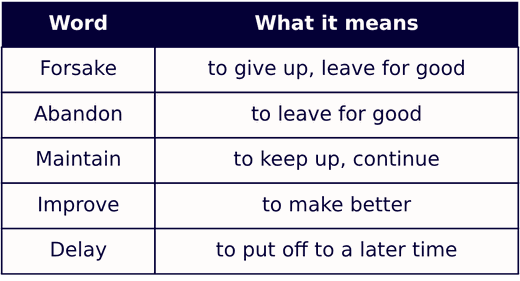 Note that the sentence says the team decided not to forsake the plan; the synonym asked for is still 'abandon' and not its opposite 'maintain'.
Hence option (d) is correct.
Note that the sentence says the team decided not to forsake the plan; the synonym asked for is still 'abandon' and not its opposite 'maintain'.
Hence option (d) is correct.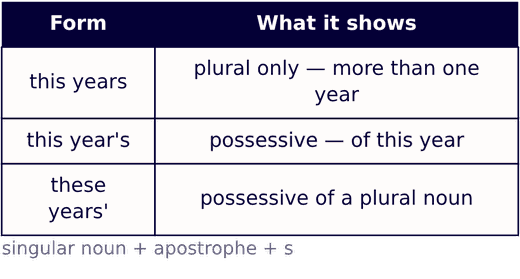 Part (c) prints the bare plural 'years', which has no apostrophe at all, so the error lies there.
Parts (a), (b) and (d) are free of error, the present perfect 'has planned' being right for a plan already made.
Hence option (c) is correct.
Part (c) prints the bare plural 'years', which has no apostrophe at all, so the error lies there.
Parts (a), (b) and (d) are free of error, the present perfect 'has planned' being right for a plan already made.
Hence option (c) is correct.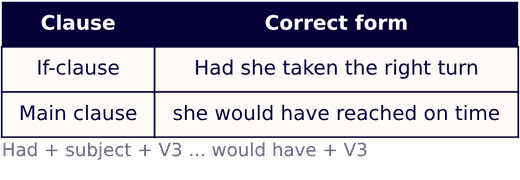 'Took' is the second form, so 'Had she took' is wrong; the correct part is 'Had she taken the right turn'.
The main clause 'she would have reached on time' already follows the pattern 'would have + V3'.
Hence option (b) is correct.
'Took' is the second form, so 'Had she took' is wrong; the correct part is 'Had she taken the right turn'.
The main clause 'she would have reached on time' already follows the pattern 'would have + V3'.
Hence option (b) is correct.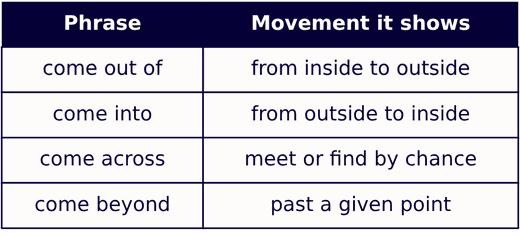 'Into' shows the opposite movement, 'across' means from one side to the other, and 'beyond' means past or farther than a point — none of them fits leaving a cave at daybreak.
Hence option (c) is correct.
'Into' shows the opposite movement, 'across' means from one side to the other, and 'beyond' means past or farther than a point — none of them fits leaving a cave at daybreak.
Hence option (c) is correct.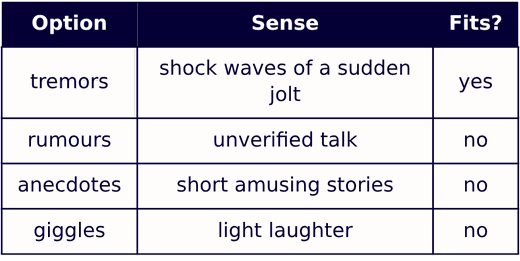 'Rumours' are spread rather than sent through, 'anecdotes' are short amusing stories and 'giggles' are light laughter; none of them suits a serious financial jolt.
Hence option (d) is correct.
'Rumours' are spread rather than sent through, 'anecdotes' are short amusing stories and 'giggles' are light laughter; none of them suits a serious financial jolt.
Hence option (d) is correct.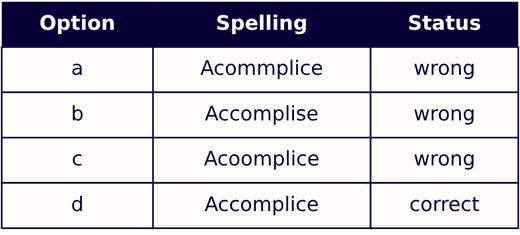 The other three either double the wrong letter — 'Acommplice', 'Acoomplice' — or write the ending as '-plise'.
Hence option (d) is correct.
The other three either double the wrong letter — 'Acommplice', 'Acoomplice' — or write the ending as '-plise'.
Hence option (d) is correct.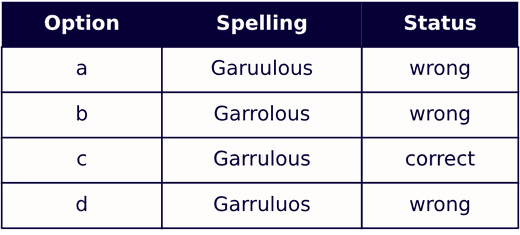 The other options double the wrong letter or reverse the vowels of the ending, giving 'Garuulous', 'Garrolous' and 'Garruluos'.
Hence option (c) is correct.
The other options double the wrong letter or reverse the vowels of the ending, giving 'Garuulous', 'Garrolous' and 'Garruluos'.
Hence option (c) is correct.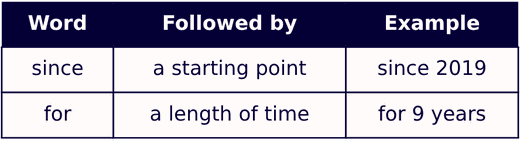 Here the underlined word is followed by a counted stretch of time and not by a starting point, so 'for' is required: She has been living in this city for 9 years.
'Till' marks an end point and 'across' shows movement, so neither can measure duration.
Hence option (b) is correct.
Here the underlined word is followed by a counted stretch of time and not by a starting point, so 'for' is required: She has been living in this city for 9 years.
'Till' marks an end point and 'across' shows movement, so neither can measure duration.
Hence option (b) is correct.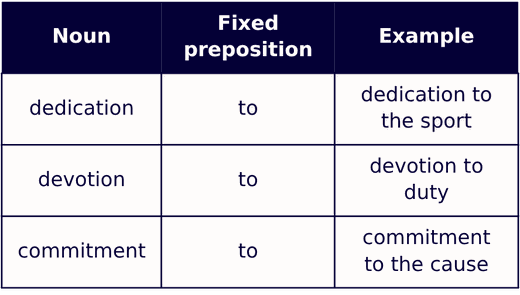 'With' and 'into' never follow 'dedication', and leaving 'for' unchanged keeps the error, so 'No substitution' is ruled out as well.
Hence option (a) is correct.
'With' and 'into' never follow 'dedication', and leaving 'for' unchanged keeps the error, so 'No substitution' is ruled out as well.
Hence option (a) is correct.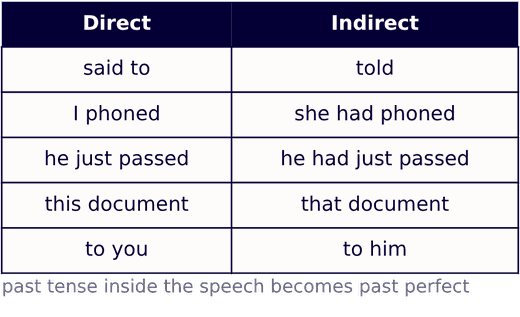 'This' changes to 'that', and 'you' — which stands for the assistant, the person spoken to — becomes 'him'.
Only option (c) back-shifts both verbs; (a) and (b) back-shift one and leave the other, and (d) back-shifts neither.
Hence option (c) is correct.
'This' changes to 'that', and 'you' — which stands for the assistant, the person spoken to — becomes 'him'.
Only option (c) back-shifts both verbs; (a) and (b) back-shift one and leave the other, and (d) back-shifts neither.
Hence option (c) is correct.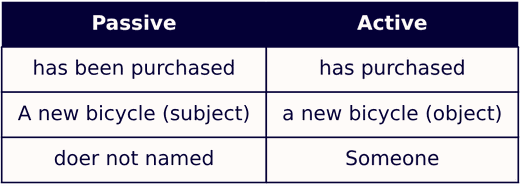 'A new bicycle' then becomes the object, and the phrase 'for the school' is carried over unchanged.
Option (a) shifts to the simple past and invents a doer, (c) is still passive, and (d) uses the present continuous.
Hence option (b) is correct.
'A new bicycle' then becomes the object, and the phrase 'for the school' is carried over unchanged.
Option (a) shifts to the simple past and invents a doer, (c) is still passive, and (d) uses the present continuous.
Hence option (b) is correct.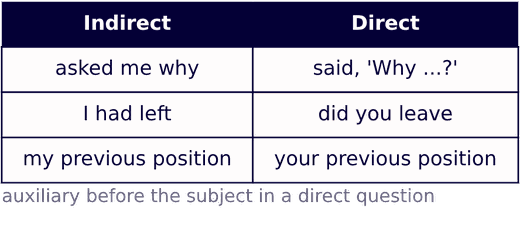 'My previous position' belongs to the person addressed in direct speech, so it becomes 'your previous position', and a question mark closes the quotation.
Options (b), (c) and (d) keep the statement order 'why you ...' with no auxiliary before the subject, which no direct question allows.
Hence option (a) is correct.
'My previous position' belongs to the person addressed in direct speech, so it becomes 'your previous position', and a question mark closes the quotation.
Options (b), (c) and (d) keep the statement order 'why you ...' with no auxiliary before the subject, which no direct question allows.
Hence option (a) is correct.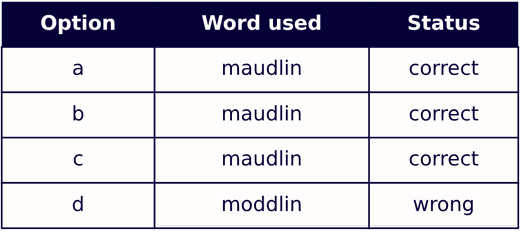 Sentence (d) prints 'moddlin', which is not an English word at all, so that is the sentence carrying the incorrect spelling.
Hence option (d) is correct.
Sentence (d) prints 'moddlin', which is not an English word at all, so that is the sentence carrying the incorrect spelling.
Hence option (d) is correct.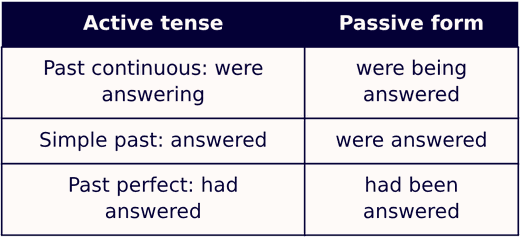 The object 'the difficult questions' becomes the subject, and being plural it takes 'were being answered'.
The doer follows as 'by the diligent candidates', and 'during the entrance test' is carried over unchanged.
Option (a) drops 'being' and gives a simple past passive, (c) shifts to the past perfect and (d) to the present continuous.
Hence option (b) is correct.
The object 'the difficult questions' becomes the subject, and being plural it takes 'were being answered'.
The doer follows as 'by the diligent candidates', and 'during the entrance test' is carried over unchanged.
Option (a) drops 'being' and gives a simple past passive, (c) shifts to the past perfect and (d) to the present continuous.
Hence option (b) is correct.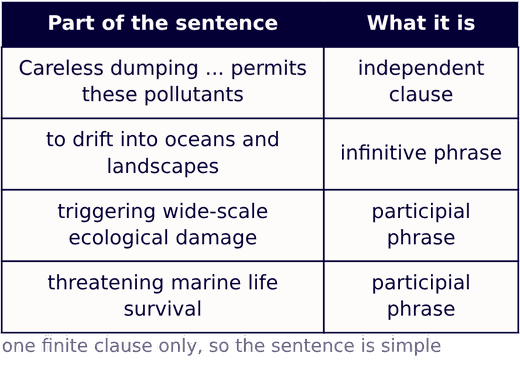 'To drift into oceans and landscapes' is an infinitive phrase, while 'triggering ...' and 'threatening ...' are participial phrases; none of them has a subject and a finite verb of its own.
With one independent clause and no subordinate clause, the sentence is simple however long it looks.
A compound sentence would need two independent clauses joined by a coordinator, and a complex one would need a subordinate clause.
Hence option (a) is correct.
'To drift into oceans and landscapes' is an infinitive phrase, while 'triggering ...' and 'threatening ...' are participial phrases; none of them has a subject and a finite verb of its own.
With one independent clause and no subordinate clause, the sentence is simple however long it looks.
A compound sentence would need two independent clauses joined by a coordinator, and a complex one would need a subordinate clause.
Hence option (a) is correct.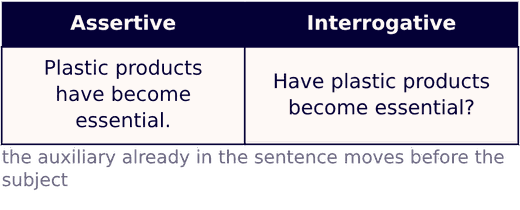 Option (a) keeps statement order after 'why', (b) wrongly changes the tense to the past perfect, and (c) puts 'are' before a past participle.
Hence option (d) is correct.
Option (a) keeps statement order after 'why', (b) wrongly changes the tense to the past perfect, and (c) puts 'are' before a past participle.
Hence option (d) is correct.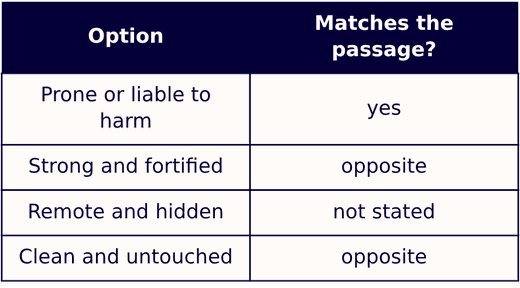 'Strong and fortified' and 'clean and untouched' say the opposite of what the passage states, and 'remote and hidden' has nothing to do with the debris.
Hence option (c) is correct.
'Strong and fortified' and 'clean and untouched' say the opposite of what the passage states, and 'remote and hidden' has nothing to do with the debris.
Hence option (c) is correct.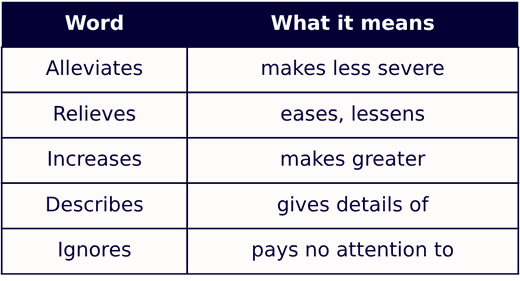 'Increases' reverses the sense, while 'describes' and 'ignores' do not act on the stress at all.
Hence option (c) is correct.
'Increases' reverses the sense, while 'describes' and 'ignores' do not act on the stress at all.
Hence option (c) is correct.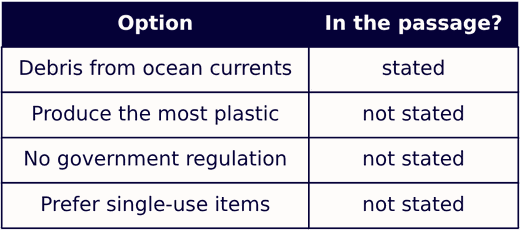 The passage nowhere says that these regions produce the most plastic, that they lack regulation, or that their people prefer single-use items, so those options lie outside the text.
Hence option (c) is correct.
The passage nowhere says that these regions produce the most plastic, that they lack regulation, or that their people prefer single-use items, so those options lie outside the text.
Hence option (c) is correct.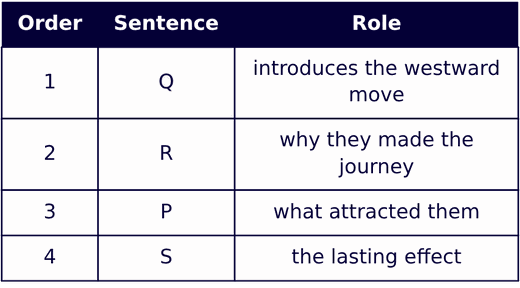 So the correct order is Q, R, P, S.
Hence option (d) is correct.
So the correct order is Q, R, P, S.
Hence option (d) is correct.