SSC CHSL 28 November 2025 · Shift 3 · English Language — questions with answers · ShikshaSphere
Chapter 176 of 200
28 November 2025 · Shift 3
English Language
25 questions ~25 min readFree
25 questions
A
1
Choose the one word substitute for: A person who abstains from marriage and sexual relations.
A.Divorced
B.Celibate
C.Misogamist
D.Bachelor
Solution
One word substitution
'Celibate' means a person who abstains from marriage and from sexual relations, usually by choice or for religious reasons.
The definition given covers both things together — no marriage and no physical relations — and only 'celibate' carries both ideas.
'Bachelor' merely means an unmarried man, 'Misogamist' means one who hates marriage, and 'Divorced' means one whose marriage has been legally dissolved.
Hence option (b) is correct.
2
Identify the meaning of the phrase highlighted in bold.
Paying by cheque has become a pain in the neck for those who are not used to carrying a cheque book with them.
A.something that is extremely useful
B.something that is highly enjoyable
C.someone/something that is very entertaining
D.someone/something that is very annoying
Solution
Idiom meaning
The idiom 'a pain in the neck' is used for someone or something that is very annoying, irritating or troublesome.
The sentence says that paying by cheque has become a problem for people who do not carry a cheque book, so the phrase must carry a negative sense.
Options (a), (b) and (c) all describe something pleasant or useful, which contradicts the situation.
Hence option (d) is correct.
3
Choose the option that has an error in the sentence.
We always face traffic in the city and it is very stressed.
A.We always face traffic
B.in the city and
C.it is very stressed
D.No correction required
Solution
Adjective form error
The error lies in part (c), 'it is very stressed', where 'it' stands for the traffic.
'Stressed' describes a living being that feels stress, while 'stressful' describes a thing or situation that causes stress.
Traffic cannot feel stress; it only produces stress, so the adjective must be 'stressful'.
The corrected sentence reads: 'We always face traffic in the city and it is very stressful.'
Hence option (c) is correct.
4
Spot the error in the given sentence. On the time / of the inauguration ceremony of the school / a number of people had appeared. / No error
A.No error
B.of the inauguration ceremony of the school
C.a number of people had appeared
D.On the time
Solution
Preposition of time
The error is in the first part, 'On the time'.
'At' is the preposition used with a point of time or with an occasion — at 5 o'clock, at the time of, at the ceremony.
'On' is used with days and dates (on Monday, on 5 June), so it cannot introduce 'the time of the inauguration ceremony'.
The corrected sentence begins: 'At the time of the inauguration ceremony of the school…'.
Hence option (d) is correct.
5
Fill in the blank with the most appropriate preposition:
After the intense snowfall, the water level rose the height of the bridge.
A.beneath
B.above
C.through
D.among
Solution
Preposition of position
The blank needs a preposition showing that the water climbed higher than the bridge.
'Above' means at a higher level than something, so 'the water level rose above the height of the bridge' is logical.
'Beneath' means below, 'through' shows movement from one side to the other, and 'among' is used for a group of three or more — none of them suits a rising level.
Hence option (b) is correct.
6
Read the line and select the word that fits best.
He went to the to get his beard shaved.
A.salonn
B.salon
C.sallon
D.saloon
Solution
Correct word choice
A 'salon' is a shop where hair is cut or styled, beards are shaved and beauty treatments are given.
A 'saloon' is a bar or a large public room, so it does not fit a shave; 'salonn' and 'sallon' are simply misspellings.
The sentence therefore reads: 'He went to the salon to get his beard shaved.'
Hence option (b) is correct.
7
Choose the incorrectly spelt word:
A.Cigarete
B.Tobacco
C.Cigar
D.Cannabis
Solution
Spelling error
'Cigarete' is misspelt; the correct spelling is 'cigarette', with a double 't' before the final '-e'.
'Tobacco', 'Cigar' and 'Cannabis' are all spelt correctly.
Hence option (a) is correct.
8
Choose the best option to replace the underlined part to improve the given sentence. If no substitution is required, select 'No substitution.'
The protestors had gathered at the streets to express their disappointment.
A.on the streets
B.about the streets
C.into the streets
D.No substitution
Solution
Preposition with 'street'
Presence along a road, street or avenue is expressed with the preposition 'on' — on the road, on the street.
'At' points to one precise spot ('at the corner'), 'about' means roughly or here and there, and 'into' shows movement from outside to inside.
The protestors were spread along the streets, so 'had gathered on the streets' is the correct form.
Hence option (a) is correct.
9
Choose the best option to replace the underlined part to improve the given sentence. If no substitution is required, select 'No substitution.'
I prefer reading books than watching movies in my free time as I like to learn new things.
A.prefer reading books to watching movies
B.prefer reading books over watching movies
C.prefer read books to watch movies
D.No substitution
Solution
Structure with 'prefer'
When two things are compared, the verb 'prefer' takes the fixed preposition 'to', never 'than'.
The two things compared must also be in the same form; here both are gerunds — reading and watching.
So the pattern is 'prefer + V-ing + to + V-ing': 'prefer reading books to watching movies'.
Option (b) replaces the fixed preposition with 'over', and option (c) uses the bare verbs 'read/watch' instead of gerunds.
Hence option (a) is correct.
10
Choose the option that is the most appropriate conversion of the following sentence into Active Voice.
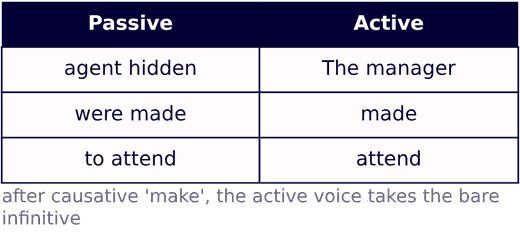
The employees were made to attend the training session.
A.The manager made the employees attend the training session.
B.The manager makes the employees attend the training session.
C.The manager is making the employees attend the training session.
D.The manager has made the employees attend the training session.
Solution
Passive to active voice
In the passive 'were made to attend' the doer is not named, so a suitable agent — the manager — has to be supplied as the subject of the active sentence.
'Were made' is simple past, so the active verb must also be simple past: 'made'.
After the causative verb 'make' in the active voice the bare infinitive is used, so 'to attend' becomes 'attend'.
Options (b), (c) and (d) change the tense to present, present continuous and present perfect respectively.
Hence option (a) is correct.
11
Choose the correct indirect narration of the following statement from the given alternatives:
Neha said, "You will finish the exercises tomorrow to improve your stamina as you must perform well in the trial."
A.Neha said that she would finish the exercises the day after to improve her stamina as she had to perform well in the trial.
B.Neha said that she should finish the exercises the day after to improve her stamina as she had to perform well in the trial.
C.Neha said that she should finish the exercises the day after to improve her stamina as she must perform well in the trial.
D.Neha said that you would finish the exercises the day after to improve your stamina as you had to perform well in the trial.
Solution
Direct to indirect speech
A second-person pronoun in reported speech changes according to the object of the reporting verb.
'Neha said' has no object, so there is no word for 'you/your' to agree with and both stay unchanged.
The past reporting verb 'said' back-shifts the rest: 'will finish' becomes 'would finish' and the modal 'must perform' becomes 'had to perform'.
The time word 'tomorrow' becomes 'the day after' (or 'the next day').
Only option (d) makes all these changes while keeping 'you' and 'your' intact.
Hence option (d) is correct.
12
Choose the option that is the most appropriate conversion of the following sentence into Direct Speech:
The intern inquired what the timeline for the project was.
A.The intern said, "When is the timeline for the project?"
B.The intern asked, "What the timeline for the project was?"
C.The intern inquired, 'What was the timeline for the project?"
D.The intern inquired, "What is the timeline for the project ?"
Solution
Indirect to direct speech
Moving from indirect to direct speech, the back-shift caused by the past reporting verb has to be undone.
So '…what the timeline for the project was' returns to the present tense: 'What is the timeline for the project?'
In direct speech an interrogative also regains its own order — question word + verb + subject — and the speaker's exact words stand inside inverted commas after a comma.
Option (a) changes the question word to 'When' and drops the reporting verb 'inquired'; option (b) keeps the indirect order 'the timeline … was'; option (c) leaves the verb in the back-shifted past.
Hence option (d) is correct.
13
The following sentence has two blanks. Choose the most suitable set of prepositions from the given options to fill in the blanks and complete the sentence meaningfully:
The company prides itself excellent customer support and conforms strictly
industry regulations.
A.in, of
B.for, by
C.at, on
D.on, to
Solution
Fixed prepositions
When 'pride' is used with a reflexive pronoun (itself, himself, herself, oneself), the preposition that follows is 'on' — to pride oneself on something.
The verb 'conform' takes the fixed preposition 'to' — conform to rules, regulations or standards.
So the complete sentence reads: 'The company prides itself on excellent customer support and conforms strictly to industry regulations.'
The pairs 'at, on' and 'in, of' break both of these fixed combinations.
Hence the correct pair is 'on, to', i.e. option (c).
14
Choose the option that is the most appropriate conversion of the following sentence into Direct Speech.
She said that she intended to meet her relatives that evening.
A.She said, "I intend to meet my relatives this evening."
B.She said, "I intend to meet my relatives that evening."
C.She said, 'I intended to meet my relatives in the evening."
D.She said, "I intend to meet her relatives that evening."
Solution
Indirect to direct speech
In direct speech the back-shifted verb goes back to its original tense, so 'intended' becomes 'intend'.
The pronouns return to the speaker's own: 'she … her relatives' becomes 'I … my relatives'.
The far demonstrative 'that evening' becomes the near 'this evening', because the speaker is speaking on the same day.
Option (b) keeps 'that evening', option (c) keeps the past 'intended', and option (d) keeps 'her relatives'.
Hence option (a) is correct.
15
Change the following sentence into the Active form.
The application, which should have been completed by the due date, was rejected due to missing details.
A.The application, which should have been completed by the due date, but it was rejected due to missing details.
B.They should have completed the application by the due date, but it was rejected due to missing details.
C.Due to missing details, the application was rejected, which should have been completed by the due date.
D.They should have completed the application by the due date, but missing details led to its rejection.
Solution
Passive to active voice
The sentence contains two passive parts — 'should have been completed' and 'was rejected' — so both must be turned round for a fully active version.
'The application … should have been completed by the due date' becomes 'They should have completed the application by the due date'.
'…was rejected due to missing details' becomes 'missing details led to its rejection', where the cause itself becomes the subject.
Options (a), (b) and (c) still keep 'was rejected' in the passive, so the conversion is only half done.
Hence option (d) is correct.
16
Select the part of the sentence containing an incorrect spelling.
The manager chose to acquiesce to the plan (A)/ remained conscientous in his duties (B)/ acted as a benevolent leader (C)/ and respected the hierarchy.(D)
A.A
B.B
C.C
D.D
Solution
Spelling error
Part (B) contains 'conscientous', which is misspelt; the correct spelling is 'conscientious', meaning careful and thorough in one's duties.
'Acquiesce' in (A), 'benevolent' in (C) and 'hierarchy' in (D) are all spelt correctly.
Hence option (b) is correct.
17
Choose the correct passive voice transformation of the sentence:
They are playing an exciting match today.
A.An exciting match has been played by them today.
B.An exciting match is played by them today.
C.An exciting match was being played by them today.
D.An exciting match is being played by them today.
Solution
Active to passive voice
'They are playing' is present continuous, and the passive of this tense is 'is/are + being + past participle'.
The object 'an exciting match' becomes the subject; it is singular, so the passive verb is 'is being played'.
Option (a) shifts to present perfect, (b) drops 'being' and makes it simple present, and (c) shifts to past continuous.
Hence option (d) is correct.
18
Choose the correct passive voice transformation of the sentence:
Had the experienced auditors reviewed all the financial records before they finalized the report?
A.Were all the financial records reviewed by the experienced auditors before they finalized the report?
B.Had all the financial records been reviewed by the experienced auditors before they finalized the report?
C.Has all the financial records been reviewed by the experienced auditors before they finalized the report?
D.Had all the financial records reviewed by the experienced auditors before they finalized the report?
Solution
Passive of past perfect
'Had + past participle' is the past perfect tense, and its passive form is 'had + been + past participle'.
The sentence is a question, so the auxiliary 'Had' stands first: 'Had all the financial records been reviewed by the experienced auditors…?'
The subordinate clause 'before they finalized the report' has its own subject and object, so it stays unchanged.
Option (a) shifts the tense to simple past, option (c) to present perfect, and option (d) drops 'been' altogether.
Hence option (b) is correct.
19
Directions (Qs. 19-23): Read the following passage carefully and answer the questions that follow.
Gold-plated accessories have been a popular alternative for fashion enthusiasts for decades, valued for their luxurious appearance and cost-effectiveness. In many social circles, wearing these pieces is not just a style choice but is also seen as a practical way to accessorize without the high risk of theft associated with solid gold. Some designers suggest that gold plating can offer the brilliance of precious metal while maintaining the durability of the stronger base metals underneath.
However, the longevity of these items is often debated. Low-quality plating over reactive alloys may cause the surface to tarnish quickly or lead to skin discoloration for those with sensitivities. Additionally, the frequent use of chemical cleaners on plated jewellery can sometimes cause the gold layer to wear off prematurely, especially for those who wear these pieces daily.
Therefore, while plated ornaments can elevate a person's wardrobe and offer a high-end look at a fraction of the cost, it is vital to check the base metal and wear them in moderation. Choosing pieces with thicker plating and avoiding contact with harsh chemicals can help owners preserve the luster of their jewellery without causing damage to the finish.
In the sentence: "Gold-plated accessories have been a popular alternative..." why is the verb "have" used instead of "has"?
A.Because "accessories" is a plural subject
B.Because "gold" is a singular material
C.Because "alternative" is the primary subject
D.Because the sentence is in the present continuous tense
Solution
Subject-verb agreement
The subject of 'have been' is 'Gold-plated accessories', and the head noun 'accessories' is plural.
A plural subject takes the plural verb 'have'; 'gold-plated' is only a compound adjective describing the noun and does not decide the number.
'Alternative' is the subject complement that comes after the verb, so it cannot control the verb, and the sentence is present perfect, not present continuous.
Hence option (a) is correct.
20
Directions (Qs. 19-23): Read the following passage carefully and answer the questions that follow.
Gold-plated accessories have been a popular alternative for fashion enthusiasts for decades, valued for their luxurious appearance and cost-effectiveness. In many social circles, wearing these pieces is not just a style choice but is also seen as a practical way to accessorize without the high risk of theft associated with solid gold. Some designers suggest that gold plating can offer the brilliance of precious metal while maintaining the durability of the stronger base metals underneath.
However, the longevity of these items is often debated. Low-quality plating over reactive alloys may cause the surface to tarnish quickly or lead to skin discoloration for those with sensitivities. Additionally, the frequent use of chemical cleaners on plated jewellery can sometimes cause the gold layer to wear off prematurely, especially for those who wear these pieces daily.
Therefore, while plated ornaments can elevate a person's wardrobe and offer a high-end look at a fraction of the cost, it is vital to check the base metal and wear them in moderation. Choosing pieces with thicker plating and avoiding contact with harsh chemicals can help owners preserve the luster of their jewellery without causing damage to the finish.
In the sentence: "...it is vital to check the base metal and wear them in moderation," what is the function of the article "the" before "base"?
A.It refers to the specific metal underneath the plating
B.It is used to describe all metals in general
C.It is used to indicate that the metal is expensive
D.It acts as a substitute for a conjunction
Solution
Use of definite article
'The' is the definite article; it points to one particular thing that both writer and reader can identify.
The passage has already spoken of the base metal lying underneath the gold plating, so 'the base metal' means that specific metal.
A general statement about all metals would use the plural without an article ('base metals'), which rules out option (b).
An article never indicates price and never replaces a conjunction, so options (c) and (d) are also wrong.
Hence option (a) is correct.
21
Directions (Qs. 19-23): Read the following passage carefully and answer the questions that follow.
Gold-plated accessories have been a popular alternative for fashion enthusiasts for decades, valued for their luxurious appearance and cost-effectiveness. In many social circles, wearing these pieces is not just a style choice but is also seen as a practical way to accessorize without the high risk of theft associated with solid gold. Some designers suggest that gold plating can offer the brilliance of precious metal while maintaining the durability of the stronger base metals underneath.
However, the longevity of these items is often debated. Low-quality plating over reactive alloys may cause the surface to tarnish quickly or lead to skin discoloration for those with sensitivities. Additionally, the frequent use of chemical cleaners on plated jewellery can sometimes cause the gold layer to wear off prematurely, especially for those who wear these pieces daily.
Therefore, while plated ornaments can elevate a person's wardrobe and offer a high-end look at a fraction of the cost, it is vital to check the base metal and wear them in moderation. Choosing pieces with thicker plating and avoiding contact with harsh chemicals can help owners preserve the luster of their jewellery without causing damage to the finish.
Which word from the passage means 'mixtures of different metals used as a base?
A.Pure
B.Alloy
C.Polished
D.plated
Solution
Vocabulary from passage
The clue asks for a single word meaning 'mixtures of different metals used as a base'.
The second paragraph says, 'Low-quality plating over reactive alloys may cause the surface to tarnish quickly' — those alloys are the mixed base metals lying under the gold layer.
'Alloy' is therefore the word wanted; 'Pure' means unmixed, 'Polished' means rubbed to a shine, and 'plated' means coated with a thin outer layer of another metal.
Hence option (b), 'Alloy', is correct.
22
Directions (Qs. 19-23): Read the following passage carefully and answer the questions that follow.
Gold-plated accessories have been a popular alternative for fashion enthusiasts for decades, valued for their luxurious appearance and cost-effectiveness. In many social circles, wearing these pieces is not just a style choice but is also seen as a practical way to accessorize without the high risk of theft associated with solid gold. Some designers suggest that gold plating can offer the brilliance of precious metal while maintaining the durability of the stronger base metals underneath.
However, the longevity of these items is often debated. Low-quality plating over reactive alloys may cause the surface to tarnish quickly or lead to skin discoloration for those with sensitivities. Additionally, the frequent use of chemical cleaners on plated jewellery can sometimes cause the gold layer to wear off prematurely, especially for those who wear these pieces daily.
Therefore, while plated ornaments can elevate a person's wardrobe and offer a high-end look at a fraction of the cost, it is vital to check the base metal and wear them in moderation. Choosing pieces with thicker plating and avoiding contact with harsh chemicals can help owners preserve the luster of their jewellery without causing damage to the finish.
Which word from the passage means 'balanced and limited use' ?
A.Frequent
B.Moderation
C.Daily
D.Avoiding
Solution
Vocabulary from passage
The phrase 'balanced and limited use' means using something neither too much nor too little.
The last paragraph advises the reader to 'check the base metal and wear them in moderation'.
'Moderation' is exactly restraint in use, so it is the word asked for.
'Frequent' and 'Daily' suggest heavy use, and 'Avoiding' means not using at all — the opposite extreme.
Hence option (b) is correct.
23
Directions (Qs. 19-23): Read the following passage carefully and answer the questions that follow.
Gold-plated accessories have been a popular alternative for fashion enthusiasts for decades, valued for their luxurious appearance and cost-effectiveness. In many social circles, wearing these pieces is not just a style choice but is also seen as a practical way to accessorize without the high risk of theft associated with solid gold. Some designers suggest that gold plating can offer the brilliance of precious metal while maintaining the durability of the stronger base metals underneath.
However, the longevity of these items is often debated. Low-quality plating over reactive alloys may cause the surface to tarnish quickly or lead to skin discoloration for those with sensitivities. Additionally, the frequent use of chemical cleaners on plated jewellery can sometimes cause the gold layer to wear off prematurely, especially for those who wear these pieces daily.
Therefore, while plated ornaments can elevate a person's wardrobe and offer a high-end look at a fraction of the cost, it is vital to check the base metal and wear them in moderation. Choosing pieces with thicker plating and avoiding contact with harsh chemicals can help owners preserve the luster of their jewellery without causing damage to the finish.
What is the main idea of the passage?
A.Gold-plated accessories are superior to solid gold.
B.Plated jewellery should be avoided due to skin allergies.
C.Plated ornaments have benefits but require careful use and quality checks.
D.Only high-quality alloys should be used in fashion.
Solution
Main idea of passage
The main idea must cover the whole passage, not one paragraph of it.
Paragraph 1 lists the merits of gold-plated pieces — a rich look, low cost and less risk of theft.
Paragraph 2 lists the drawbacks — tarnishing, skin discoloration and the plating wearing off.
Paragraph 3 gives the balancing advice — check the base metal, choose thicker plating and wear the pieces in moderation.
Only option (c) joins the benefits with the need for careful use and quality checks; the other options exaggerate one side.
Hence option (c) is correct.
24
What is the antonym of 'Ordinary'?
A.Courteous
B.Normal
C.Quaint
D.Gust
Solution
Antonyms
'Ordinary' means usual, common, with nothing special about it.
Its opposite must carry the sense of unusual or out of the common run.
'Quaint' means unusual or old-fashioned in an attractive way, so it stands opposite to 'ordinary'.
'Normal' is a synonym, not an antonym; 'Courteous' means polite and 'Gust' is a sudden rush of wind — neither is related in meaning.
Hence option (c) is correct.
25
What is the antonym of "Criticise"?
A.Censure
B.Praise
C.Obloquy
D.Condemnation
Solution
Antonyms
'Criticise' means to point out faults in somebody or something.
Its opposite must express approval or admiration.
'Praise' means to express approval, so it is the antonym asked for.
'Censure', 'Obloquy' and 'Condemnation' all carry strong disapproval and are therefore synonyms of 'criticise', not antonyms.
Hence option (b) is correct.
Finished reading? Now test yourself.
The same 25 questions, but with a timer and the answers hidden — 15 minutes.

 Options (b), (c) and (d) change the tense to present, present continuous and present perfect respectively.
Hence option (a) is correct.
Options (b), (c) and (d) change the tense to present, present continuous and present perfect respectively.
Hence option (a) is correct.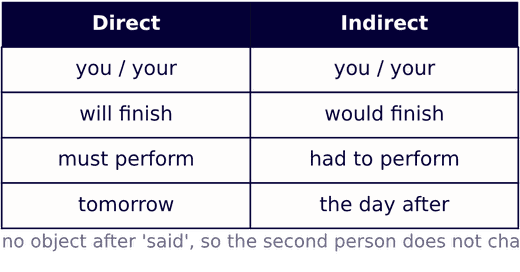 Only option (d) makes all these changes while keeping 'you' and 'your' intact.
Hence option (d) is correct.
Only option (d) makes all these changes while keeping 'you' and 'your' intact.
Hence option (d) is correct.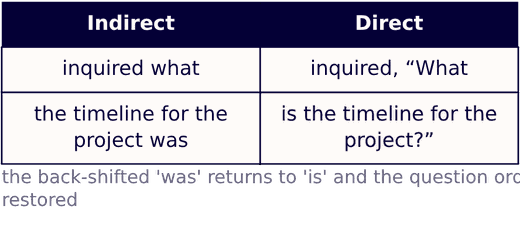 Option (a) changes the question word to 'When' and drops the reporting verb 'inquired'; option (b) keeps the indirect order 'the timeline … was'; option (c) leaves the verb in the back-shifted past.
Hence option (d) is correct.
Option (a) changes the question word to 'When' and drops the reporting verb 'inquired'; option (b) keeps the indirect order 'the timeline … was'; option (c) leaves the verb in the back-shifted past.
Hence option (d) is correct.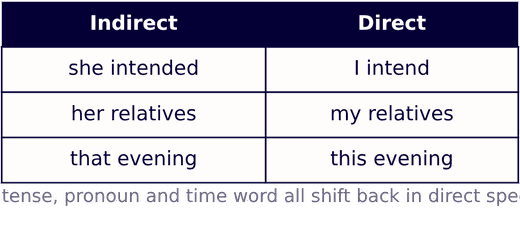 Option (b) keeps 'that evening', option (c) keeps the past 'intended', and option (d) keeps 'her relatives'.
Hence option (a) is correct.
Option (b) keeps 'that evening', option (c) keeps the past 'intended', and option (d) keeps 'her relatives'.
Hence option (a) is correct.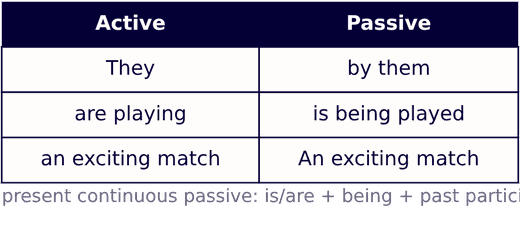 Option (a) shifts to present perfect, (b) drops 'being' and makes it simple present, and (c) shifts to past continuous.
Hence option (d) is correct.
Option (a) shifts to present perfect, (b) drops 'being' and makes it simple present, and (c) shifts to past continuous.
Hence option (d) is correct.