
76
Which ruler employed the Banjaras for transporting grains to urban markets?
- A.Sher Shah Suri
- B.Alauddin Khalji
- C.Muhammad bin Tughlaq
- D.Humayun
Solution
Alauddin Khalji market reform
Alauddin Khalji employed the Banjaras — the traditional nomadic grain-carriers — to bring grain from the countryside to the urban markets of Delhi.
They were registered under the Shahna-i-Mandi, the officer who supervised the grain market, and were required to settle along the Yamuna with their families so that supply never failed.
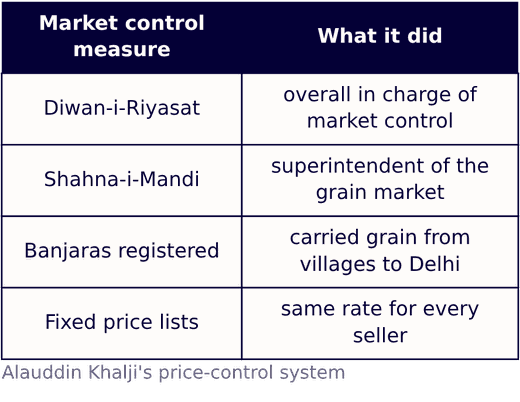 This was one piece of his celebrated market-control system, which fixed the rate of every commodity so that a large standing army could be maintained on low cash salaries.
Sher Shah Suri is remembered for the silver rupiya and the Grand Trunk Road, Muhammad bin Tughlaq for the token currency and the shifting of the capital, and Humayun for losing and regaining his throne.
Hence option (b) is correct.
This was one piece of his celebrated market-control system, which fixed the rate of every commodity so that a large standing army could be maintained on low cash salaries.
Sher Shah Suri is remembered for the silver rupiya and the Grand Trunk Road, Muhammad bin Tughlaq for the token currency and the shifting of the capital, and Humayun for losing and regaining his throne.
Hence option (b) is correct.
This was one piece of his celebrated market-control system, which fixed the rate of every commodity so that a large standing army could be maintained on low cash salaries.
Sher Shah Suri is remembered for the silver rupiya and the Grand Trunk Road, Muhammad bin Tughlaq for the token currency and the shifting of the capital, and Humayun for losing and regaining his throne.
Hence option (b) is correct.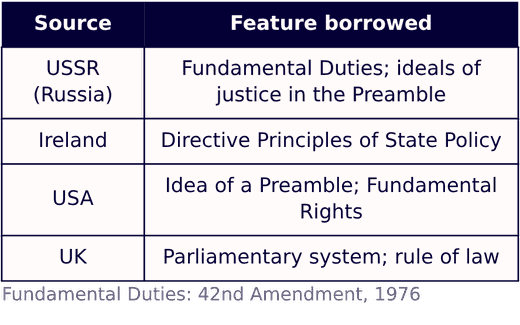 The Directive Principles came from Ireland, the idea of a Preamble and the Fundamental Rights from the USA, while an independent Election Commission was the Constituent Assembly's own arrangement.
Hence option (a) is correct.
The Directive Principles came from Ireland, the idea of a Preamble and the Fundamental Rights from the USA, while an independent Election Commission was the Constituent Assembly's own arrangement.
Hence option (a) is correct.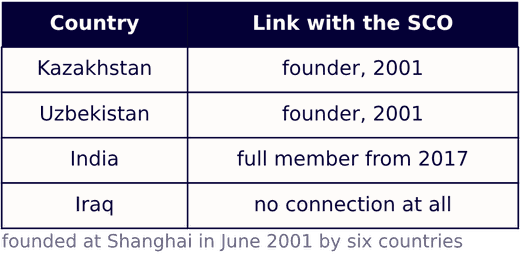 Iraq, by contrast, has no place in the grouping at all — it is neither a founder nor a member, an observer or a dialogue partner, so it is the country that stands apart.
The SCO secretariat is at Beijing and its Regional Anti-Terrorist Structure (RATS) is at Tashkent.
Hence option (a) is correct.
Iraq, by contrast, has no place in the grouping at all — it is neither a founder nor a member, an observer or a dialogue partner, so it is the country that stands apart.
The SCO secretariat is at Beijing and its Regional Anti-Terrorist Structure (RATS) is at Tashkent.
Hence option (a) is correct.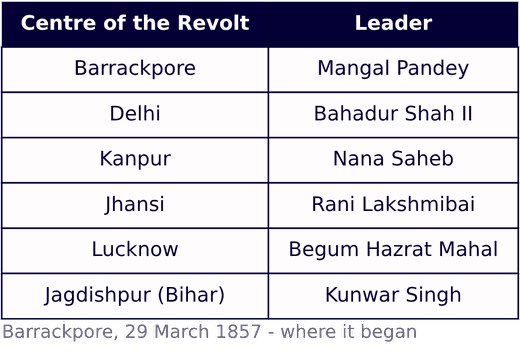 Rani Lakshmibai led the revolt at Jhansi only later in 1857, while Bal Gangadhar Tilak and Lala Lajpat Rai belong to the national movement of a much later generation.
Hence option (a) is correct.
Rani Lakshmibai led the revolt at Jhansi only later in 1857, while Bal Gangadhar Tilak and Lala Lajpat Rai belong to the national movement of a much later generation.
Hence option (a) is correct.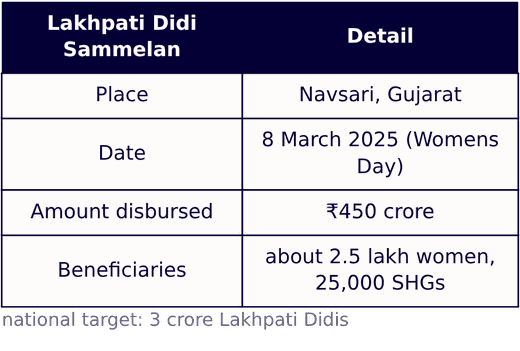 A 'Lakhpati Didi' is a woman member of a self-help group whose household earns at least ₹1 lakh a year; the mission's national target is 3 crore such women.
The same event saw the launch of the G-SAFAL and G-MAITRI initiatives for women-led rural enterprise.
Hence option (d) is correct.
A 'Lakhpati Didi' is a woman member of a self-help group whose household earns at least ₹1 lakh a year; the mission's national target is 3 crore such women.
The same event saw the launch of the G-SAFAL and G-MAITRI initiatives for women-led rural enterprise.
Hence option (d) is correct.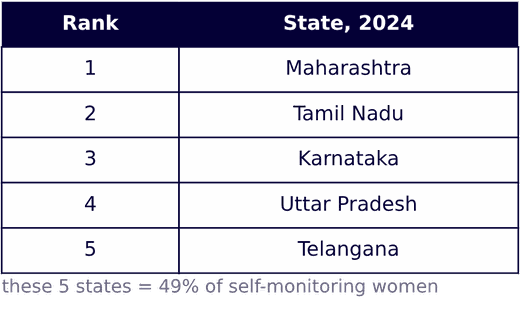 'Self-monitoring' means a woman checks her own credit score and credit report; the number of such women rose about 42% in a single year, a direct sign of rising financial awareness.
So the correct option is (a).
'Self-monitoring' means a woman checks her own credit score and credit report; the number of such women rose about 42% in a single year, a direct sign of rising financial awareness.
So the correct option is (a).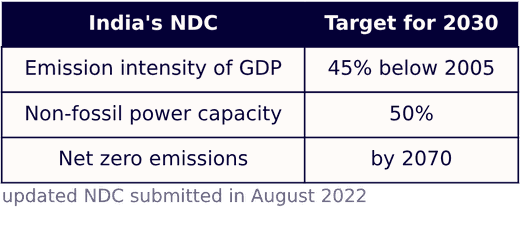 The first NDC of 2015 had promised only 33-35%; the update also raised the non-fossil share of installed power capacity to 50% by 2030, both steps towards net zero by 2070.
So the correct option is (a).
The first NDC of 2015 had promised only 33-35%; the update also raised the non-fossil share of installed power capacity to 50% by 2030, both steps towards net zero by 2070.
So the correct option is (a).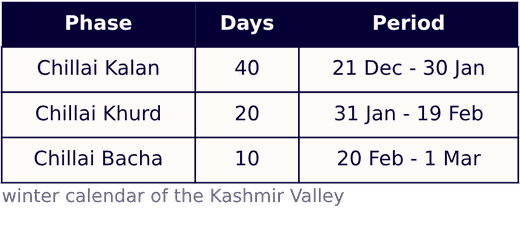 It is followed by Chillai Khurd, 20 days of milder cold, and then Chillai Bacha, a last 10 days of 'baby cold' — a local calendar that tells people how long the winter still has to run.
So the correct option is (a).
It is followed by Chillai Khurd, 20 days of milder cold, and then Chillai Bacha, a last 10 days of 'baby cold' — a local calendar that tells people how long the winter still has to run.
So the correct option is (a). For ice the value is J/kg. Sensible heat, in contrast, is heat that does change the temperature, and specific heat capacity is the heat needed to raise 1 kg of a substance by C.
So the correct option is (a).
For ice the value is J/kg. Sensible heat, in contrast, is heat that does change the temperature, and specific heat capacity is the heat needed to raise 1 kg of a substance by C.
So the correct option is (a).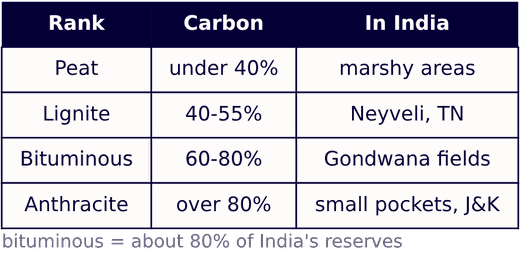 Because it is largely non-coking, this coal is burnt in thermal power stations, while coking coal for the steel industry has to be imported.
Anthracite, the highest rank, occurs in India only in small pockets in Jammu and Kashmir; lignite or brown coal is concentrated at Neyveli in Tamil Nadu, and peat is the youngest, lowest-carbon stage.
So the correct option is (a).
Because it is largely non-coking, this coal is burnt in thermal power stations, while coking coal for the steel industry has to be imported.
Anthracite, the highest rank, occurs in India only in small pockets in Jammu and Kashmir; lignite or brown coal is concentrated at Neyveli in Tamil Nadu, and peat is the youngest, lowest-carbon stage.
So the correct option is (a).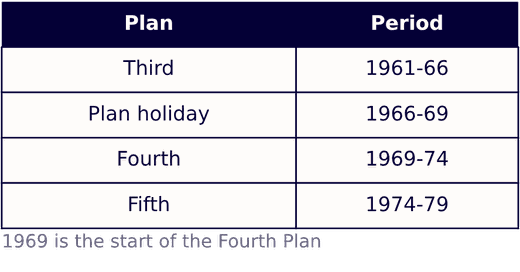 Its watchwords were 'growth with stability' and 'progressive achievement of self-reliance'; its landmarks were the nationalisation of 14 major banks in 1969, the spread of the Green Revolution and the Drought Prone Areas Programme.
The target growth rate was 5.7% but only 3.3% was achieved, largely because of the 1971 war and the cost of the refugee influx.
So the correct option is (a).
Its watchwords were 'growth with stability' and 'progressive achievement of self-reliance'; its landmarks were the nationalisation of 14 major banks in 1969, the spread of the Green Revolution and the Drought Prone Areas Programme.
The target growth rate was 5.7% but only 3.3% was achieved, largely because of the 1971 war and the cost of the refugee influx.
So the correct option is (a).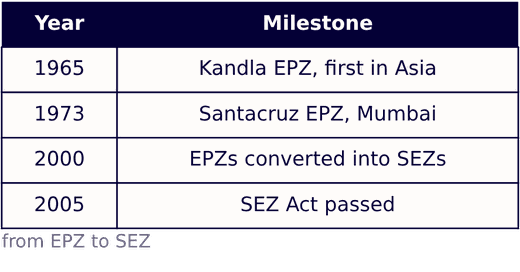 Santacruz in Mumbai followed in 1973 as the second EPZ, meant for electronics and for gems and jewellery.
The EPZ scheme was converted into the Special Economic Zone scheme announced in the EXIM Policy of 2000, and given statutory backing by the SEZ Act, 2005.
So the correct option is (a).
Santacruz in Mumbai followed in 1973 as the second EPZ, meant for electronics and for gems and jewellery.
The EPZ scheme was converted into the Special Economic Zone scheme announced in the EXIM Policy of 2000, and given statutory backing by the SEZ Act, 2005.
So the correct option is (a).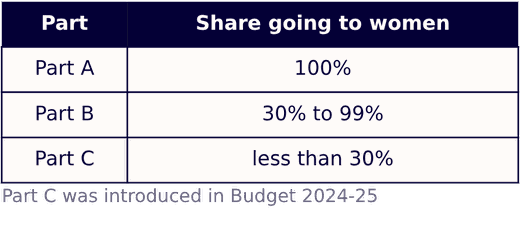 Part C was added in the Budget for 2024-25 so that pro-women spending inside large general schemes, such as PM-KISAN, could also be tracked; there is no Part D.
So the correct option is (c).
Part C was added in the Budget for 2024-25 so that pro-women spending inside large general schemes, such as PM-KISAN, could also be tracked; there is no Part D.
So the correct option is (c).