SSC CHSL 30 November 2025 · Shift 3 · General Awareness — questions with answers · ShikshaSphere
Chapter 198 of 200
30 November 2025 · Shift 3
General Awareness
25 questions ~25 min readFree
25 questions
A
76
In the administrative system of the Chola dynasty, what term was used to denote the land revenue collected from cultivators?
A.Sulkam
B.Vetti
C.Kadamai
D.Eripatti
Solution
Chola revenue administration
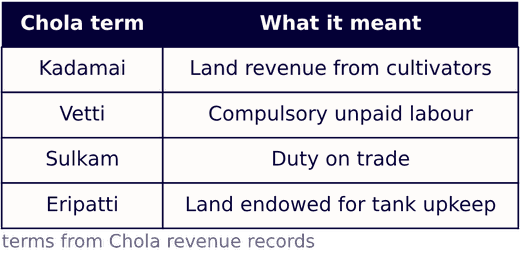
Kadamai was the land revenue that cultivators paid to the Chola state, usually taken as a share of the produce.
Land tax was the largest single source of Chola income; a separate department, the puravu-vari-tinaikkalam, surveyed and classified land for assessment.
Vetti meant unpaid compulsory labour demanded from villagers, and Sulkam was a duty levied on trade.
Eripatti was tank land - land whose income was set apart for the upkeep of an irrigation tank, a vital arrangement in the Kaveri delta.
Hence option (c) is correct.
77
Which medieval ruling house exercised control over a large part of India for a comparatively brief period of about fifteen years?
A.Khilji dynasty
B.Tughlaq dynasty
C.Lodi dynasty
D.Sur dynasty
Solution
Medieval dynasties
The Sur dynasty held a large part of India for only about fifteen years, from 1540 to 1555.
It was founded by Sher Shah Suri, who defeated Humayun at Chausa (1539) and Kannauj (1540) and drove the Mughals out of India for that spell.
In those few years he reorganised land revenue on measurement, issued the silver rupiya and restored the Grand Trunk Road with its sarais.
The other houses ruled far longer, so none of them fits a fifteen-year span.
Hence option (d) is correct.
78
Which provision of the Indian Constitution empowers Parliament to admit new territories into the Union or create new States?
A.Article 4
B.Article 2
C.Article 7
D.Article 8
Solution
Articles on new States
Article 2 empowers Parliament to admit into the Union, or establish, new States on such terms and conditions as it thinks fit.
It deals with territory that is not already part of India; re-drawing States that already exist is done under Article 3.
Article 4 only says that laws made under Articles 2 and 3 may amend the First and Fourth Schedules and are not amendments of the Constitution under Article 368.
Articles 7 and 8 belong to Part II and deal with citizenship - of migrants to Pakistan and of persons of Indian origin living abroad.
Hence option (b) is correct.
79
Examine the following statements concerning Fundamental Rights enshrined in the Constitution of India:
1. The provision related to the abolition of titles is contained in Article 30.
2. The ban on child labour in factories and hazardous employments is mentioned under Article 22.
Which of the statements given above is/are correct?
A.Statement 1 only
B.Statement 2 only
C.Both statements 1 and 2
D.Neither statement 1 nor statement 2
Solution
Fundamental Rights articles
Statement 1 is wrong: abolition of titles is Article 18, while Article 30 gives minorities the right to establish and administer educational institutions of their choice.
Statement 2 is wrong: the ban on employing children below 14 in factories, mines and other hazardous work is Article 24, while Article 22 protects a person against arbitrary arrest and detention.
Both statements attach the provision to the wrong Article, so neither is correct.
Hence option (d) is correct.
80
India regained the Miss World crown in 2017 after a long interval. Who was the Indian representative that achieved this feat?
A.Sushmita Sen
B.Manushi Chhillar
C.Dia Mirza
D.Yukta Mookhey
Solution
Miss World winners from India
Manushi Chhillar of Haryana won Miss World 2017, held at Sanya in China.
She was the sixth Indian to win the crown and brought it back after 17 years, the previous Indian winner being Priyanka Chopra in 2000.
Reita Faria (1966) was the first Indian and the first Asian to win Miss World.
Of the other names, Sushmita Sen won Miss Universe in 1994 and Dia Mirza was crowned Miss Asia Pacific in 2000, so they do not fit.
Hence option (b) is correct.
81
According to the Union Budget 2025-26, how many Atal Tinkering Labs (ATLs) are proposed to be established in government schools over the next five years?
A.25,000
B.40,000
C.50,000
D.75,000
Solution
Union Budget 2025-26
The Union Budget 2025-26 proposed setting up 50,000 Atal Tinkering Labs in government schools over the next five years.
Atal Tinkering Labs are the school-level arm of the Atal Innovation Mission of NITI Aayog; each lab gives children hands-on access to robotics kits, sensors, 3D printers and open-source electronics.
About 10,000 such labs already existed, so the announcement was a fivefold expansion aimed at building scientific temper and problem-solving skills in public schools.
Hence the required number is 50,000, option (c).
82
Under the Bharatiya Nyaya Sanhita (BNS), 2023, the punishment provisions were revised. For how many offences has the term of imprisonment been enhanced compared to the earlier law?
A.25
B.33
C.45
D.63
Solution
Bharatiya Nyaya Sanhita 2023
The Bharatiya Nyaya Sanhita, 2023 replaced the Indian Penal Code, 1860 and came into force on 1 July 2024.
While recasting the punishments, the term of imprisonment was enhanced for 33 offences.
The same revision raised the fine amount in 83 offences, fixed a mandatory minimum punishment in 23 offences and introduced community service as a penalty for 6 petty offences.
Hence the correct option is (b).
83
The Sakhi Niwas Scheme, which was highlighted in news reports in April 2025 , is implemented as a component of which government initiative?
A.Mission Shakti
B.Mission Poshan
C.Mission Vatsalya
D.Mission Swavalamban
Solution
Sakhi Niwas scheme
Sakhi Niwas is the Working Women Hostel scheme of the Ministry of Women and Child Development, run as a component of Mission Shakti.
Mission Shakti is the umbrella scheme for women's safety, security and empowerment launched in 2021-22; its Sambal sub-scheme covers safety (One Stop Centres, women helpline) and its Samarthya sub-scheme covers empowerment, under which Sakhi Niwas falls.
The hostels give safe and affordable accommodation, with day-care for children, to women who move away from home for work, education or training.
Mission Vatsalya is meant for child protection and Poshan 2.0 for nutrition, so neither can house this scheme.
Hence option (a) is correct.
84
Basketball, now played worldwide as a popular indoor sport, was first invented in which country?
A.Canada
B.United States of America
C.England
D.Australia
Solution
Origin of basketball
Basketball was invented in December 1891 by Dr James Naismith at the YMCA training school in Springfield, Massachusetts, in the United States of America.
He nailed two peach baskets to the gallery railings to give his students an indoor game for the New England winter, and the game took its name from those baskets.
Naismith was Canadian by birth, which is what makes option (a) tempting, but the game itself was created in the USA.
The world body FIBA was formed in 1932 and is based at Mies in Switzerland; basketball became a regular Olympic sport at the Berlin Games of 1936.
Hence option (b) is correct.
85
What was the total medal count won by Maharashtra at the National Games 2025?
A.92
B.189
C.201
D.250
Solution
National Games 2025
The 38th National Games were held in Uttarakhand from 28 January to 14 February 2025.
Maharashtra finished second, behind the Services Sports Control Board, with 54 gold, 71 silver and 76 bronze medals.
54+71+76=201
Hence Maharashtra's total medal count was 201, option (c).
86
Which of the following sports is played without using a ball?
A.Tennis
B.Table Tennis
C.Volleyball
D.Badminton
Solution
Sports equipment
Badminton is the only game in the list that is not played with a ball.
It is played with a shuttlecock (also called a birdie) - a cork or rubber base carrying a conical crown of sixteen goose feathers or a synthetic skirt.
That open cone creates heavy air drag, so the shuttle slows down sharply after being struck, which is why badminton is an indoor game.
Tennis and table tennis use small hard balls and volleyball a large inflated ball, so those three are ruled out.
Hence option (d) is correct.
87
The endangered black-collared yellow catfish is found in the Chalakudy River. This river is located in which Indian state?
A.Tamil Nadu
B.Karnataka
C.Kerala
D.Andhra Pradesh
Solution
Rivers of Kerala
The Chalakudy River lies in Kerala; it rises in the Anamalai hills of the Western Ghats and joins the Periyar before reaching the Arabian Sea.
It is the most fish-diverse river of Kerala and shelters the endangered black-collared yellow catfish, an endemic species of this river system.
The Athirappilly and Vazhachal waterfalls, often called the Niagara of India, are on this river.
Hence option (c) is correct.
88
In March 2025, the Prime Minister of India announced that the cheetah reintroduction programme would be expanded to Gandhisagar Wildlife Sanctuary. This sanctuary is located in which state?
A.Rajasthan
B.Chhattisgarh
C.Madhya Pradesh
D.Uttar Pradesh
Solution
Project Cheetah sites
Gandhi Sagar Wildlife Sanctuary lies in the Mandsaur and Neemuch districts of Madhya Pradesh, on the banks of the Chambal river near the Gandhi Sagar dam.
In March 2025 the Prime Minister announced that Project Cheetah would be extended to this sanctuary, making it the second cheetah home in India after Kuno National Park, which is also in Madhya Pradesh.
Its open grassland with dry deciduous forest and a growing chinkara and chital prey base suits the cheetah, an animal that hunts by speed in the open.
Hence option (c) is correct.
89
The term "Dedh Satara" is associated with a unique melodic scale used in the folk music tradition of which Indian state?
A.Gujarat
B.Rajasthan
C.Himachal Pradesh
D.Madhya Pradesh
Solution
Rajasthani folk music
Dedh Satara belongs to the folk music tradition of Rajasthan.
It is a twin flute of the desert region: the player blows both pipes together, one carrying the melody and the slightly longer one a continuous drone, and the 'dedh' (one-and-a-half) in the name refers to that unequal pairing of pipes and the half-note colour it gives the scale.
It is played by folk communities such as the Langas and Manganiyars, usually with circular breathing so that the drone never breaks.
Kamaycha, Ravanhatha, Sindhi Sarangi, Algoza, Morchang and Ektara are the other well-known Rajasthani folk instruments.
Hence option (b) is correct.
90
At an altitude of about 800 km , a satellite placed in a Sun-Synchronous Orbit (SSO) travels at an approximate speed of how many km per second?
A.6.2
B.7.5
C.9.8
D.12.0
Solution
Sun-synchronous orbit
A Sun-synchronous orbit is a near-polar low Earth orbit, usually 600-800 km high, in which the satellite crosses a given latitude at the same local solar time every day, so the lighting in the images stays comparable.
The orbital speed follows from , where r is measured from the centre of the Earth.
Here r=6371+800=7171 km and (in ).
km/s.
So the satellite moves at about 7.5 km per second and completes one revolution in roughly 100 minutes.
Hence option (b) is correct.
91
A force of 8 N acts on an object and produces a displacement of 3 metres in the direction of the force. The force acts throughout the motion. What is the work done?
A.12 J
B.18 J
C.24 J
D.30 J
Solution
Work done by a force
Work done by a constant force is , where is the angle between the force and the displacement.
Here the force acts along the displacement, so and .
Substituting F=8 N and s=3 m: .
W=24 J.
Hence the work done is 24 J, option (c).
92
The aircraft named 'Prachand', developed by Hindustan Aeronautics Limited (HAL), belongs to which category?
A.Unmanned aerial vehicle
B.Trainer aircraft
C.Light combat helicopter
D.Transport aircraft
Solution
Indigenous defence aircraft
'Prachand' is India's first indigenously designed and built Light Combat Helicopter (LCH), made by Hindustan Aeronautics Limited.
It was formally inducted into the Indian Air Force at Jodhpur in October 2022 and is also flown by the Indian Army.
It is the only attack helicopter in the world that can take off and land at heights above 5,000 m, which makes it fit for Siachen and eastern Ladakh.
It carries a pilot and a co-pilot, so it is neither an unmanned vehicle nor a trainer or transport machine.
Hence option (c) is correct.
93
Why is a low level of foreign exchange reserves considered a serious concern for India?
A.It encourages excessive foreign tourism
B.It restricts domestic tax collection
C.It limits the country's ability to import essential goods for long periods
D.It increases government spending Automatically
Solution
Foreign exchange reserves
Foreign exchange reserves are the stock of foreign currency assets, gold, SDRs and the reserve tranche with the IMF held by the RBI, and it is out of these that the country pays its import bills.
Their strength is judged by the 'import cover' - the number of months of imports the reserves can finance.
If reserves are low, essential imports such as crude oil, fertilisers, edible oil and medicines can be paid for only for a short period, the rupee weakens and a balance of payments crisis becomes possible, as happened in 1991.
Tax collection, tourism and government expenditure are domestic matters that the reserve level does not decide, so the other options do not hold.
Hence option (c) is correct.
94
Which statement correctly explains the nature of government receipts obtained through borrowing and disinvestment of assets?
A.Borrowing increases future obligations, while asset sale does not
B.Asset sale creates repayment liability, while borrowing does not
C.Both borrowing and asset sale are treated as revenue receipts
D.Neither borrowing nor asset sale affects government liabilities
Solution
Capital receipts
A receipt is a capital receipt when it either creates a liability for the government or reduces its assets; borrowing and disinvestment do exactly these two things.
Borrowing has to be repaid with interest, so it adds to the government's future obligations.
Disinvestment brings in money by giving up ownership of an asset; nothing has to be repaid, so no liability is created, though the asset base shrinks.
Both are capital and not revenue receipts, which rules out option (c), and option (b) reverses the two.
Hence option (a) is correct.
95
Which city served as the
administrative capital of Tipu Sultan's kingdom?
A.Mysuru
B.Srirangapatna
C.Bengaluru
D.Hassan
Solution
Tipu Sultan's capital
Srirangapatna, an island town on the Kaveri in present-day Karnataka, was the administrative capital of Tipu Sultan's kingdom of Mysore.
Tipu Sultan (1750-1799), the 'Tiger of Mysore' and son of Haidar Ali, fortified the town, built the Daria Daulat Bagh summer palace there and used iron-cased rockets against the British.
He died defending Srirangapatna in the Fourth Anglo-Mysore War of 1799.
Mysuru was the older royal seat of the Wodeyars and Bengaluru a fort and trade town, so neither served as his capital.
Hence option (b) is correct.
96
National Highways in India account for only a small share of the total road network but carry a disproportionately high volume of traffic. Approximately what percentage of the total road length do they constitute?
A.1%
B.2%
C.5%
D.10%
Solution
National Highways share
National Highways make up only about 2 per cent of India's total road length.
Yet they carry close to 40 per cent of the country's road traffic, because they link the state capitals, major ports, industrial towns and the borders.
That mismatch is why they are widened and maintained on priority under programmes such as Bharatmala Pariyojana.
They are developed and managed by the National Highways Authority of India (NHAI), set up under the NHAI Act of 1988 and operational from 1995, under the Ministry of Road Transport and Highways.
Hence option (b) is correct.
97
On whose ideas was the Second Five Year Plan of India based?
A.D. R. Gadgil
B.Amartya Sen
C.Prasanta Chandra Mahalanobis
D.V. K. R. V. Rao
Solution
Second Five Year Plan
The Second Five Year Plan (1956-61) was built on the Mahalanobis model, prepared by the statistician Prasanta Chandra Mahalanobis.
The model argued that a poor country grows faster in the long run if it first builds capital goods and heavy industries in the public sector, so steel plants at Bhilai, Rourkela and Durgapur came up under this plan.
It is therefore also called the Industrial Plan or the Nehru-Mahalanobis Plan; Mahalanobis also founded the Indian Statistical Institute.
D. R. Gadgil is remembered for the Gadgil formula for central assistance to states, Amartya Sen for welfare economics and V. K. R. V. Rao for national income estimation.
Hence option (c) is correct.
98
Which of the following objectives were emphasized under the Industrial Policy announced in 1991?
I. Reduction of industrial licensing and encouragement of foreign capital
II. Provision for closure of inefficient private enterprises with safeguards for workers
A.Only statement I
B.Only statement II
C.Both statements I and II
D.Neither statement I nor II
Solution
New Industrial Policy 1991
The New Industrial Policy of July 1991 abolished industrial licensing for all but a short list of industries and allowed foreign equity up to 51 per cent automatically in high-priority industries, so statement I is correct.
The same policy accepted an exit route: unviable and sick units could be closed, and the National Renewal Fund was created to retrain, redeploy and compensate the workers affected, so statement II is correct as well.
Together with liberalisation of the public sector's reserved list and disinvestment, these steps mark the shift from a controlled economy to a market-driven one.
Hence both statements are correct, option (c).
99
Which of the following are recognized forms of rural settlement patterns?
I. Clustered settlement
II. Scattered settlement
A.Only statement I
B.Only statement II
C.Both statements I and II
D.Neither statement I nor II
Solution
Rural settlement patterns
Rural settlements are classified by how closely the houses stand together, and both the given forms are standard types.
In a clustered (nucleated) settlement the houses form one compact block, usually on fertile plains, around a water source or for security.
In a scattered (dispersed) settlement the houses lie far apart among fields, on hill slopes or in forests, as in tribal and hilly tracts.
Semi-clustered and hamleted settlements are the other two recognised patterns, so statement I and statement II are both correct.
Hence option (c) is correct.
100
During the fermentation process, pyruvate is converted into which of the following end products?
A.Lactic acid and oxygen
B.Ethanol and carbon dioxide
C.Acetic acid and hydrogen
D.Glucose and water
Solution
Fermentation products
Glycolysis first breaks one molecule of glucose into two molecules of pyruvate in the cytoplasm; what happens to that pyruvate next depends on oxygen.
In fermentation, which is anaerobic, yeast decarboxylates and reduces pyruvate to ethanol and carbon dioxide - the reaction used in brewing and in the rising of bread.
The step regenerates , without which glycolysis itself would stop for want of an oxidising agent.
Our muscle cells run a different fermentation that gives lactic acid, and oxygen is never released in fermentation, so options (a), (c) and (d) fail.
Hence option (b) is correct.
Finished reading? Now test yourself.
The same 25 questions, but with a timer and the answers hidden — 15 minutes.

 Vetti meant unpaid compulsory labour demanded from villagers, and Sulkam was a duty levied on trade.
Eripatti was tank land - land whose income was set apart for the upkeep of an irrigation tank, a vital arrangement in the Kaveri delta.
Hence option (c) is correct.
Vetti meant unpaid compulsory labour demanded from villagers, and Sulkam was a duty levied on trade.
Eripatti was tank land - land whose income was set apart for the upkeep of an irrigation tank, a vital arrangement in the Kaveri delta.
Hence option (c) is correct.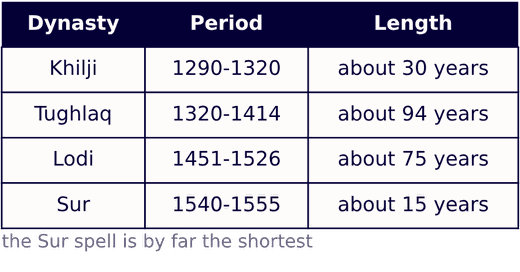 The other houses ruled far longer, so none of them fits a fifteen-year span.
Hence option (d) is correct.
The other houses ruled far longer, so none of them fits a fifteen-year span.
Hence option (d) is correct.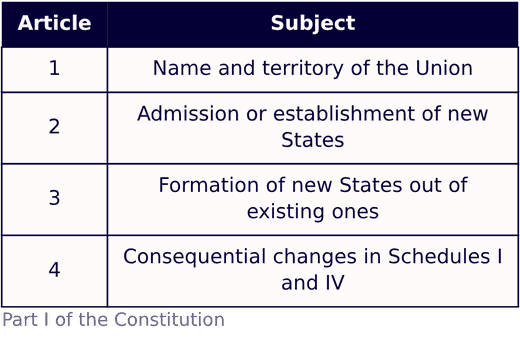 Article 4 only says that laws made under Articles 2 and 3 may amend the First and Fourth Schedules and are not amendments of the Constitution under Article 368.
Articles 7 and 8 belong to Part II and deal with citizenship - of migrants to Pakistan and of persons of Indian origin living abroad.
Hence option (b) is correct.
Article 4 only says that laws made under Articles 2 and 3 may amend the First and Fourth Schedules and are not amendments of the Constitution under Article 368.
Articles 7 and 8 belong to Part II and deal with citizenship - of migrants to Pakistan and of persons of Indian origin living abroad.
Hence option (b) is correct.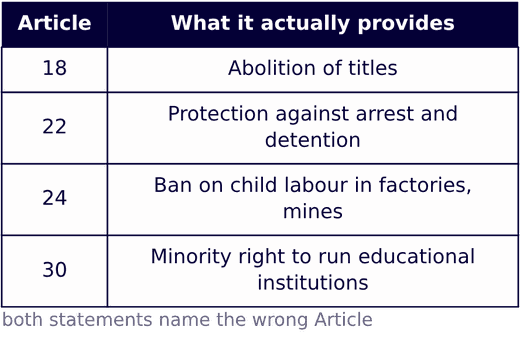 Both statements attach the provision to the wrong Article, so neither is correct.
Hence option (d) is correct.
Both statements attach the provision to the wrong Article, so neither is correct.
Hence option (d) is correct.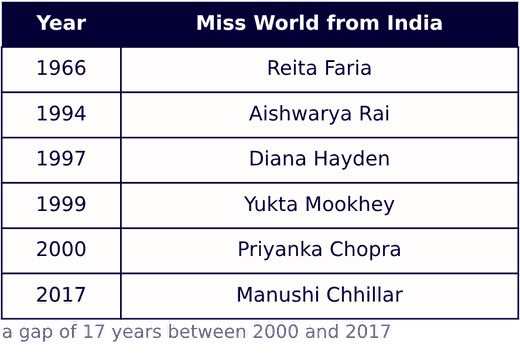 Reita Faria (1966) was the first Indian and the first Asian to win Miss World.
Of the other names, Sushmita Sen won Miss Universe in 1994 and Dia Mirza was crowned Miss Asia Pacific in 2000, so they do not fit.
Hence option (b) is correct.
Reita Faria (1966) was the first Indian and the first Asian to win Miss World.
Of the other names, Sushmita Sen won Miss Universe in 1994 and Dia Mirza was crowned Miss Asia Pacific in 2000, so they do not fit.
Hence option (b) is correct.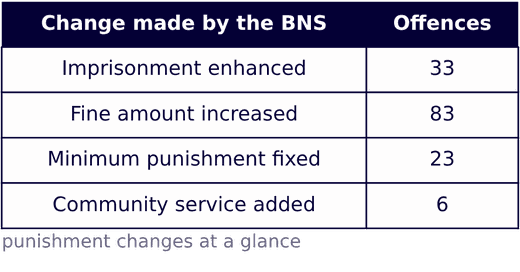 The same revision raised the fine amount in 83 offences, fixed a mandatory minimum punishment in 23 offences and introduced community service as a penalty for 6 petty offences.
Hence the correct option is (b).
The same revision raised the fine amount in 83 offences, fixed a mandatory minimum punishment in 23 offences and introduced community service as a penalty for 6 petty offences.
Hence the correct option is (b).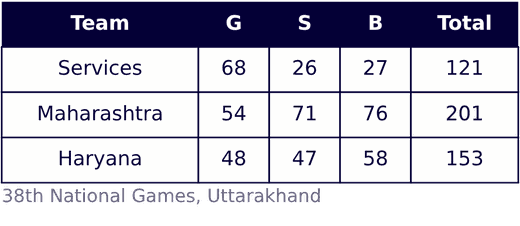 Maharashtra finished second, behind the Services Sports Control Board, with 54 gold, 71 silver and 76 bronze medals.
54+71+76=201
Hence Maharashtra's total medal count was 201, option (c).
Maharashtra finished second, behind the Services Sports Control Board, with 54 gold, 71 silver and 76 bronze medals.
54+71+76=201
Hence Maharashtra's total medal count was 201, option (c).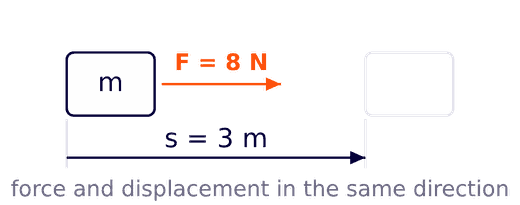 Here the force acts along the displacement, so and .
Substituting F=8 N and s=3 m: .
W=24 J.
Hence the work done is 24 J, option (c).
Here the force acts along the displacement, so and .
Substituting F=8 N and s=3 m: .
W=24 J.
Hence the work done is 24 J, option (c).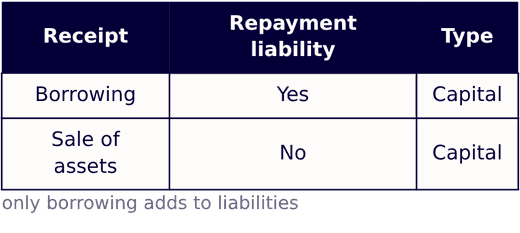 Borrowing has to be repaid with interest, so it adds to the government's future obligations.
Disinvestment brings in money by giving up ownership of an asset; nothing has to be repaid, so no liability is created, though the asset base shrinks.
Both are capital and not revenue receipts, which rules out option (c), and option (b) reverses the two.
Hence option (a) is correct.
Borrowing has to be repaid with interest, so it adds to the government's future obligations.
Disinvestment brings in money by giving up ownership of an asset; nothing has to be repaid, so no liability is created, though the asset base shrinks.
Both are capital and not revenue receipts, which rules out option (c), and option (b) reverses the two.
Hence option (a) is correct.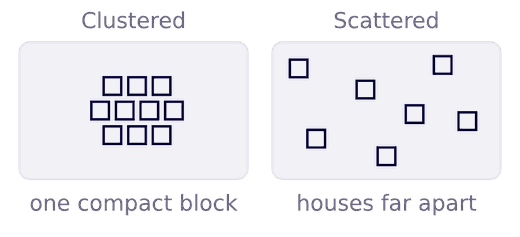 In a clustered (nucleated) settlement the houses form one compact block, usually on fertile plains, around a water source or for security.
In a scattered (dispersed) settlement the houses lie far apart among fields, on hill slopes or in forests, as in tribal and hilly tracts.
Semi-clustered and hamleted settlements are the other two recognised patterns, so statement I and statement II are both correct.
Hence option (c) is correct.
In a clustered (nucleated) settlement the houses form one compact block, usually on fertile plains, around a water source or for security.
In a scattered (dispersed) settlement the houses lie far apart among fields, on hill slopes or in forests, as in tribal and hilly tracts.
Semi-clustered and hamleted settlements are the other two recognised patterns, so statement I and statement II are both correct.
Hence option (c) is correct.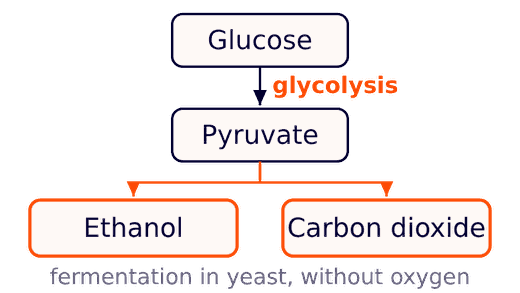 In fermentation, which is anaerobic, yeast decarboxylates and reduces pyruvate to ethanol and carbon dioxide - the reaction used in brewing and in the rising of bread.
The step regenerates , without which glycolysis itself would stop for want of an oxidising agent.
Our muscle cells run a different fermentation that gives lactic acid, and oxygen is never released in fermentation, so options (a), (c) and (d) fail.
Hence option (b) is correct.
In fermentation, which is anaerobic, yeast decarboxylates and reduces pyruvate to ethanol and carbon dioxide - the reaction used in brewing and in the rising of bread.
The step regenerates , without which glycolysis itself would stop for want of an oxidising agent.
Our muscle cells run a different fermentation that gives lactic acid, and oxygen is never released in fermentation, so options (a), (c) and (d) fail.
Hence option (b) is correct.