
1
Three of the following four letter - clusters are alike in a certain way and thus form a group. Which is the letter-cluster that does NOT belong to that group? (Note: The odd one out is not based on the number of consonants / vowels or their positions in the letter -cluster.)
- A.PTV
- B.CGI
- C.EIK
- D.GLM
Solution
Odd letter-cluster out
Write the English alphabet position of each letter and look at the gaps between them.
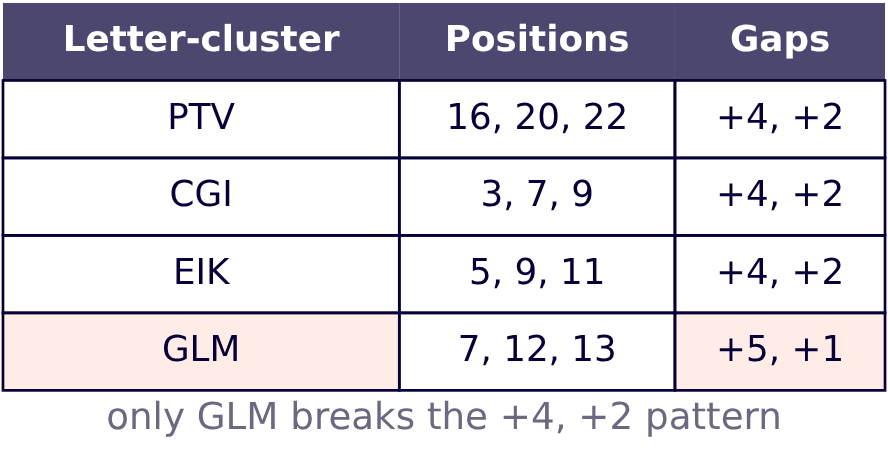 PTV gives 16, 20, 22, so the gaps are +4 and +2.
CGI gives 3, 7, 9 and EIK gives 5, 9, 11, again gaps +4 and +2.
GLM gives 7, 12, 13, so its gaps are +5 and +1.
GLM is the only cluster that breaks the +4, +2 pattern, so the answer is (d).
PTV gives 16, 20, 22, so the gaps are +4 and +2.
CGI gives 3, 7, 9 and EIK gives 5, 9, 11, again gaps +4 and +2.
GLM gives 7, 12, 13, so its gaps are +5 and +1.
GLM is the only cluster that breaks the +4, +2 pattern, so the answer is (d).
PTV gives 16, 20, 22, so the gaps are +4 and +2.
CGI gives 3, 7, 9 and EIK gives 5, 9, 11, again gaps +4 and +2.
GLM gives 7, 12, 13, so its gaps are +5 and +1.
GLM is the only cluster that breaks the +4, +2 pattern, so the answer is (d).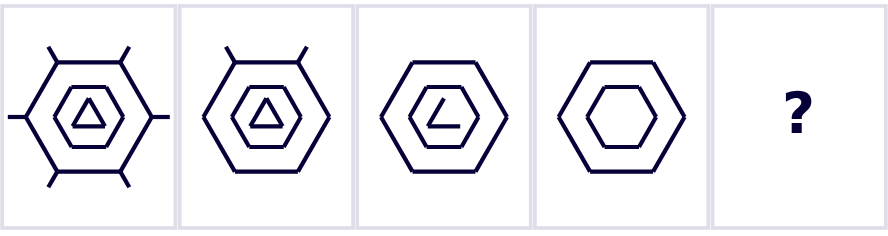



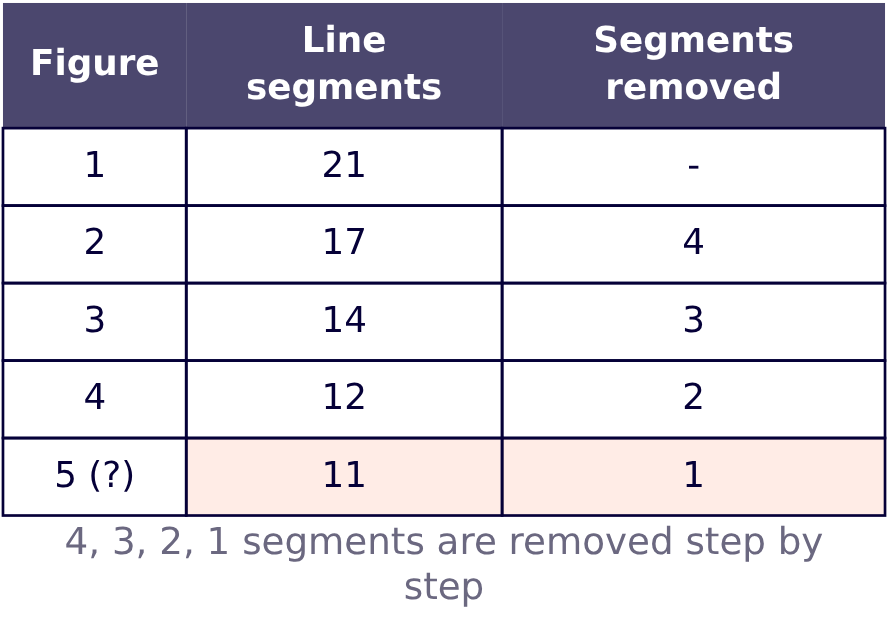 The number of segments lost at each step is 4, then 3, then 2, so the next step must lose 1.
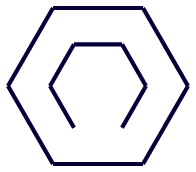
Figure 5 therefore has 12-1=11 segments: the outer hexagon complete and the inner hexagon with one side missing.
Only option (c) shows exactly this, so the answer is (c).
The number of segments lost at each step is 4, then 3, then 2, so the next step must lose 1.
Figure 5 therefore has 12-1=11 segments: the outer hexagon complete and the inner hexagon with one side missing.
Only option (c) shows exactly this, so the answer is (c).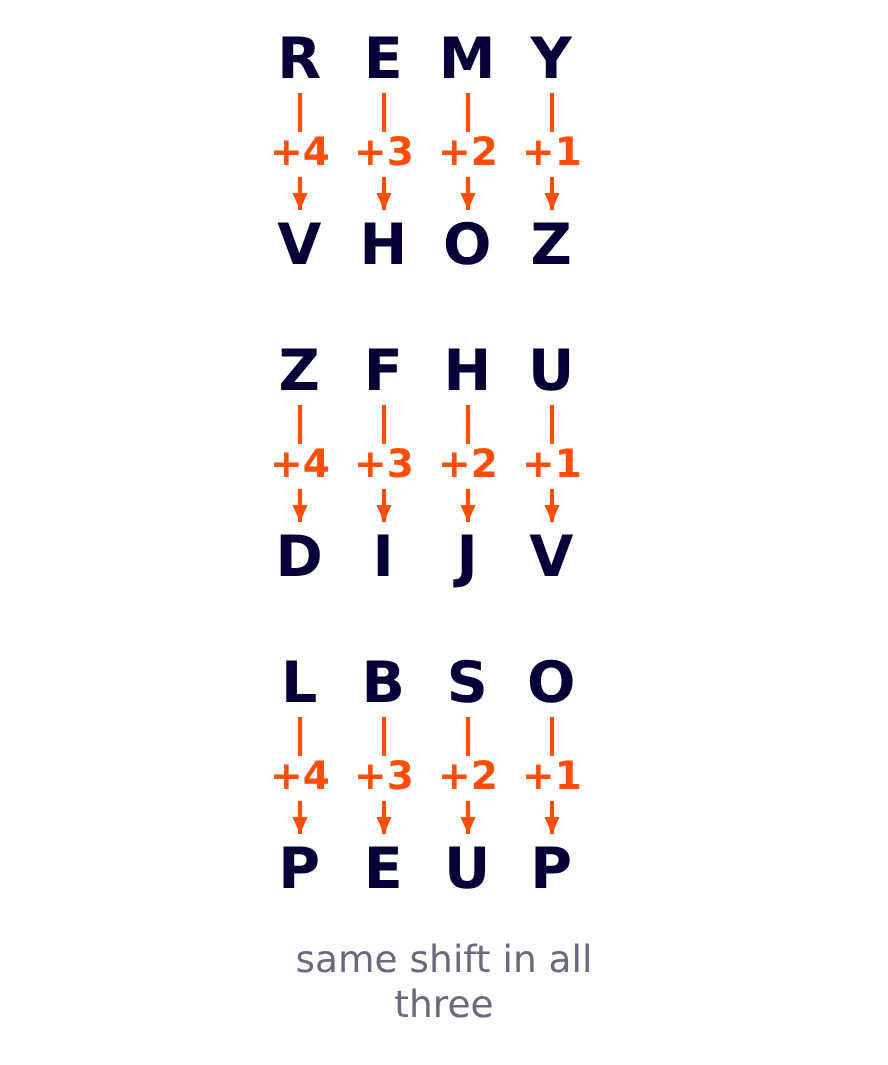 REMY to VHOZ: R +4= V, E +3= H, M +2= O, Y +1= Z.
ZFHU to DIJV: Z +4= D (counting on past Z to A), F +3= I, H +2= J, U +1= V.
So the shifts are +4, +3, +2, +1 from left to right.
Apply them to LBSO: L +4= P, B +3= E, S +2= U, O +1= P.
LBSO is related to PEUP, so the answer is (c).
REMY to VHOZ: R +4= V, E +3= H, M +2= O, Y +1= Z.
ZFHU to DIJV: Z +4= D (counting on past Z to A), F +3= I, H +2= J, U +1= V.
So the shifts are +4, +3, +2, +1 from left to right.
Apply them to LBSO: L +4= P, B +3= E, S +2= U, O +1= P.
LBSO is related to PEUP, so the answer is (c).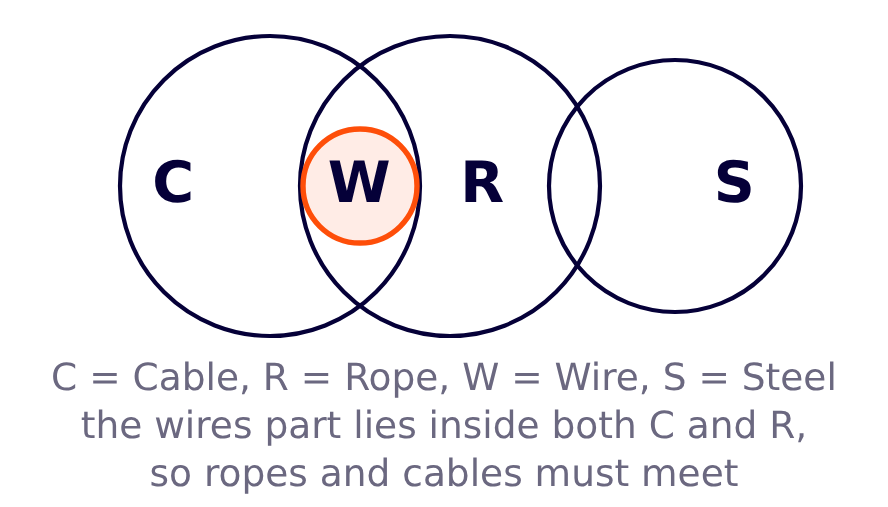 All wires are cables and all wires are ropes, so the whole wires circle lies inside the cables circle and inside the ropes circle.
Some ropes are steels only makes the steels circle touch the ropes circle somewhere; it need not touch the small wires part.
Conclusion (I): some steels are wires is therefore a possibility only, not a certainty, so it does not follow.
Conclusion (II): every wire is a rope and the same wire is also a cable, so at least those ropes are cables; hence some ropes are cables is certain and it follows.
Only conclusion (II) follows, so the answer is (b).
All wires are cables and all wires are ropes, so the whole wires circle lies inside the cables circle and inside the ropes circle.
Some ropes are steels only makes the steels circle touch the ropes circle somewhere; it need not touch the small wires part.
Conclusion (I): some steels are wires is therefore a possibility only, not a certainty, so it does not follow.
Conclusion (II): every wire is a rope and the same wire is also a cable, so at least those ropes are cables; hence some ropes are cables is certain and it follows.
Only conclusion (II) follows, so the answer is (b).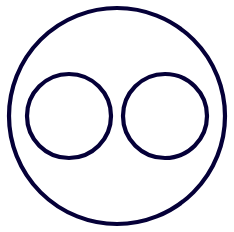


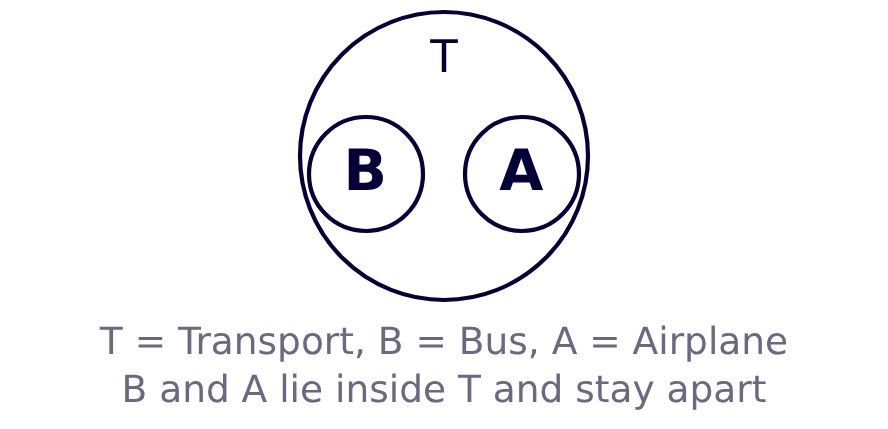 The picture needed is therefore one large circle with two separate smaller circles inside it.
That is option (a).
The picture needed is therefore one large circle with two separate smaller circles inside it.
That is option (a).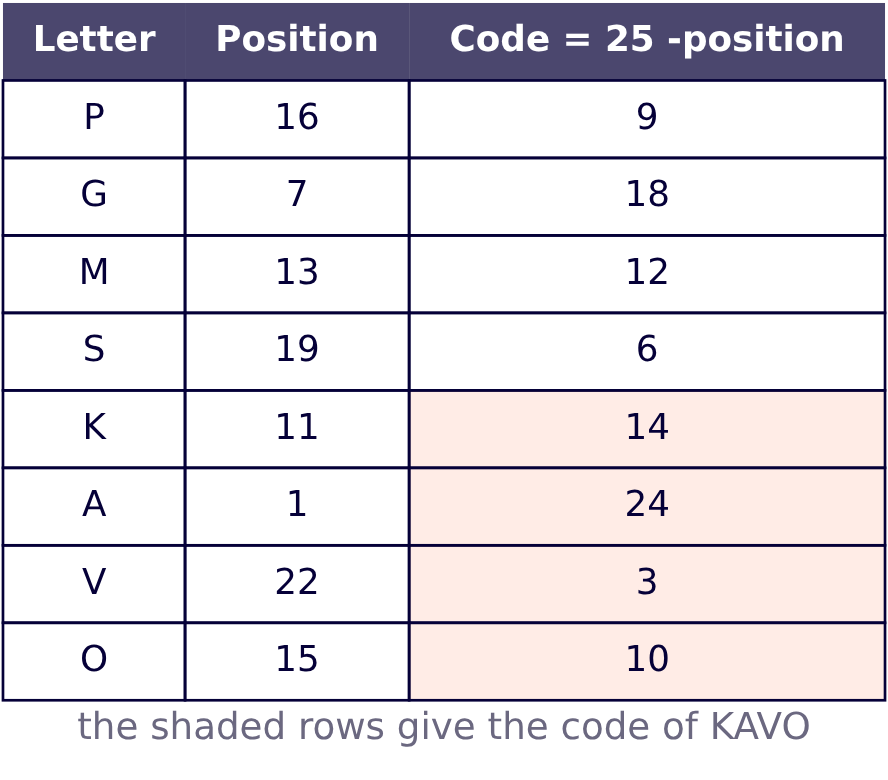 Check on the rest: 25-7=18 for G, 25-13=12 for M, 25-19=6 for S, which gives 9-18-12-6.
For KAVO the positions are K =11, A =1, V =22, O =15.
So the code is 25-11=14, 25-1=24, 25-22=3, 25-15=10.
KAVO is coded as 14-24-3-10, so the answer is (a).
Check on the rest: 25-7=18 for G, 25-13=12 for M, 25-19=6 for S, which gives 9-18-12-6.
For KAVO the positions are K =11, A =1, V =22, O =15.
So the code is 25-11=14, 25-1=24, 25-22=3, 25-15=10.
KAVO is coded as 14-24-3-10, so the answer is (a).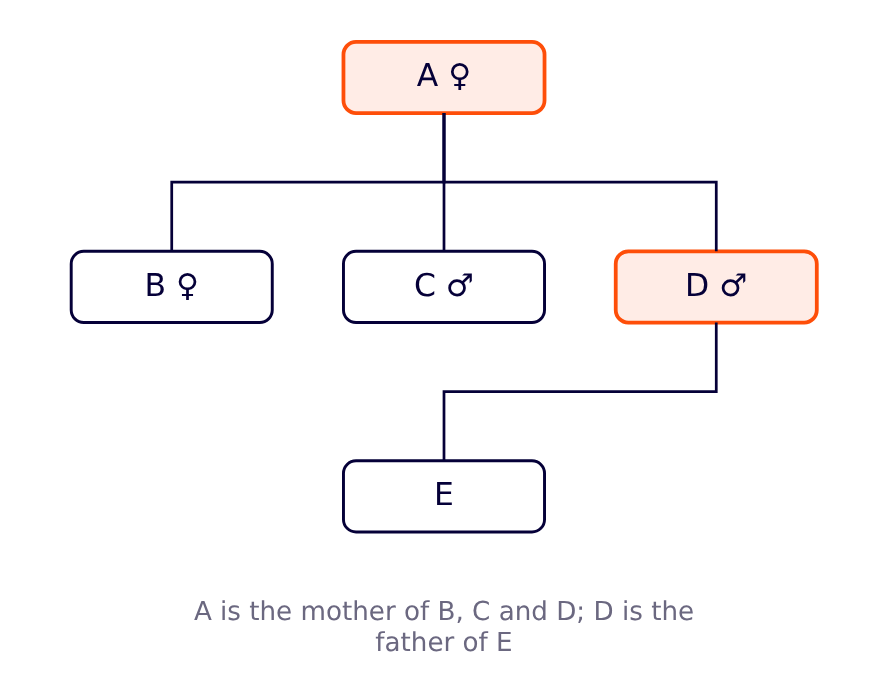 B, C and D are brothers and sisters of one another, so they are children of the same mother.
A is the mother of B, therefore A is the mother of C and of D as well.
So A is the mother of D, and the answer is (b).
B, C and D are brothers and sisters of one another, so they are children of the same mother.
A is the mother of B, therefore A is the mother of C and of D as well.
So A is the mother of D, and the answer is (b).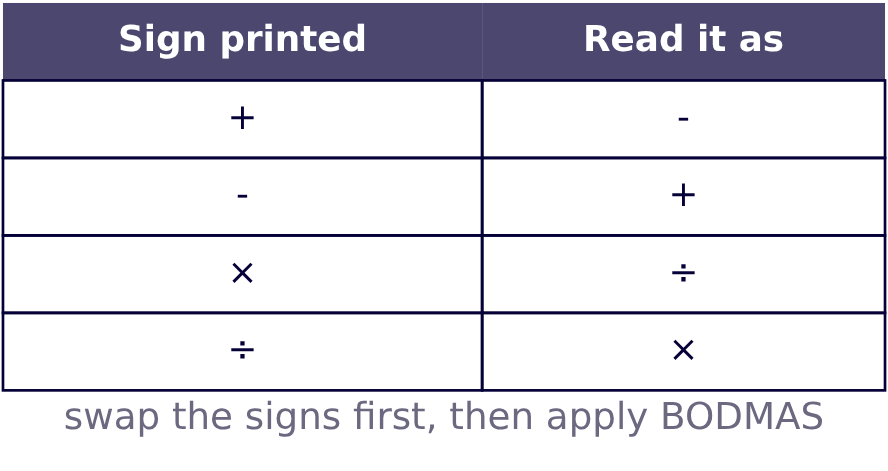 Given expression: .
Replacing every sign by its partner: .
By BODMAS do division and multiplication first: and .
The expression becomes 90 - 26 + 9.
90 - 26 = 64 and 64 + 9 = 73.
So the required value is 73, and the answer is (b).
Given expression: .
Replacing every sign by its partner: .
By BODMAS do division and multiplication first: and .
The expression becomes 90 - 26 + 9.
90 - 26 = 64 and 64 + 9 = 73.
So the required value is 73, and the answer is (b).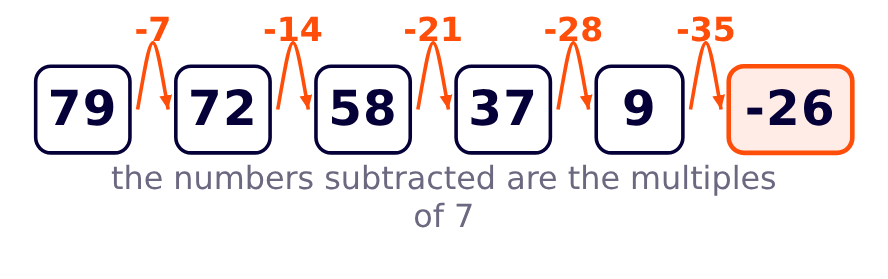 The numbers subtracted are 7, 14, 21, 28, that is the multiples of 7, so the next number to subtract is 35.
Required term =9-35=-26.
Hence the answer is (a).
The numbers subtracted are 7, 14, 21, 28, that is the multiples of 7, so the next number to subtract is 35.
Required term =9-35=-26.
Hence the answer is (a).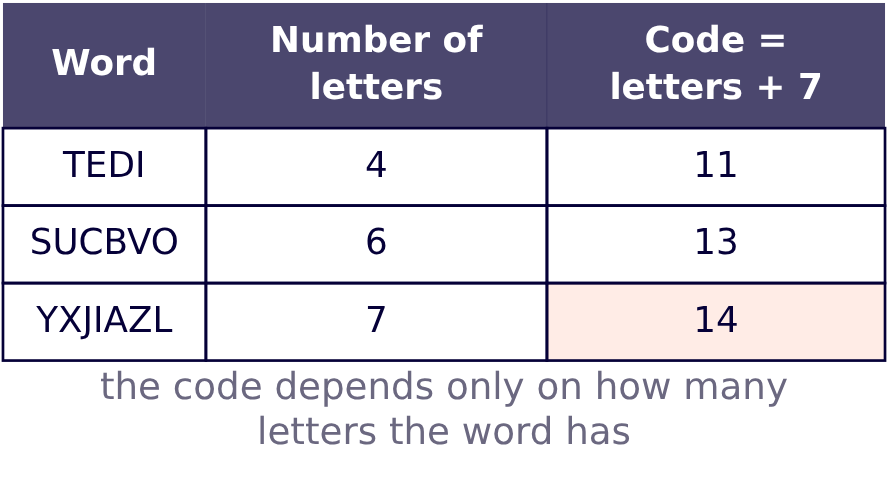 TEDI has 4 letters and its code is 11, and 4+7=11.
SUCBVO has 6 letters and its code is 13, and 6+7=13.
Rule: code = number of letters .
YXJIAZL has 7 letters, so its code is 7+7=14.
Hence the answer is (c).
TEDI has 4 letters and its code is 11, and 4+7=11.
SUCBVO has 6 letters and its code is 13, and 6+7=13.
Rule: code = number of letters .
YXJIAZL has 7 letters, so its code is 7+7=14.
Hence the answer is (c).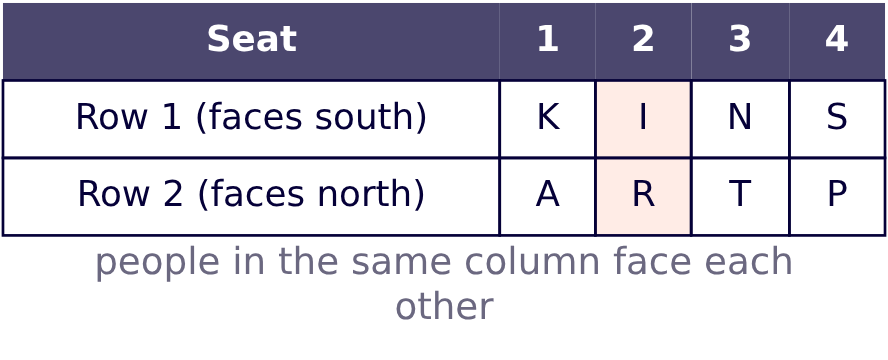 Column by column the facing pairs are K-A, I-R, N-T and S-P, so I and R face each other.
Therefore option (a) is correct.
Column by column the facing pairs are K-A, I-R, N-T and S-P, so I and R face each other.
Therefore option (a) is correct.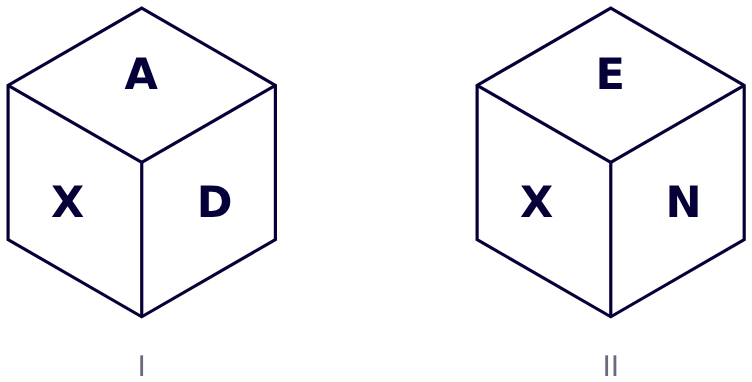
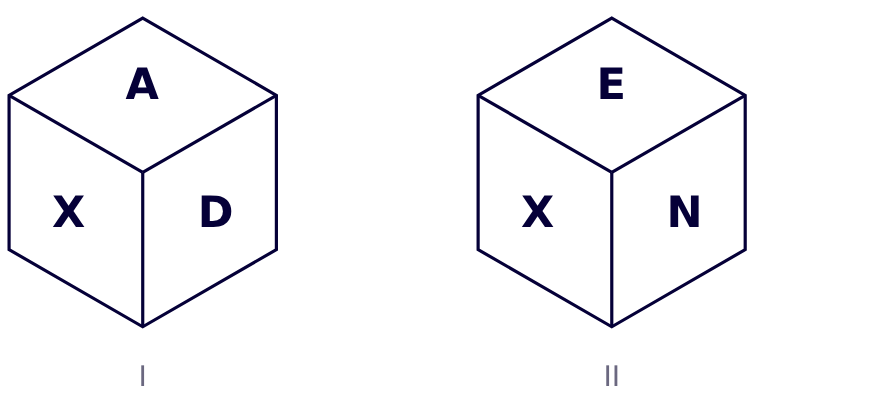 A quarter turn about that axis would bring the top face A round to the right, so Position II would show A on the right; it shows N, so the cube has been given a half turn.
A half turn sends the top face to the bottom and the right face to the back, so the new top E is the face opposite A and the new right N is the face opposite D.
That fixes A-E and D-N, and the two faces left over, X and R, must pair up.
A quarter turn about that axis would bring the top face A round to the right, so Position II would show A on the right; it shows N, so the cube has been given a half turn.
A half turn sends the top face to the bottom and the right face to the back, so the new top E is the face opposite A and the new right N is the face opposite D.
That fixes A-E and D-N, and the two faces left over, X and R, must pair up.
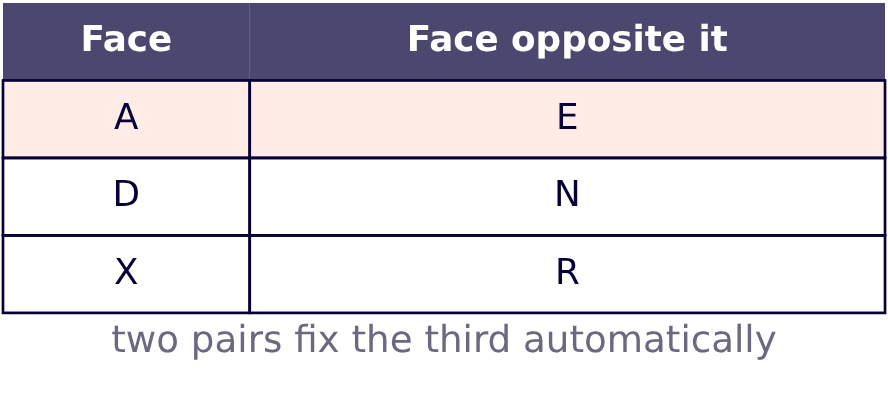 Therefore option (c) is correct: E lies opposite A.
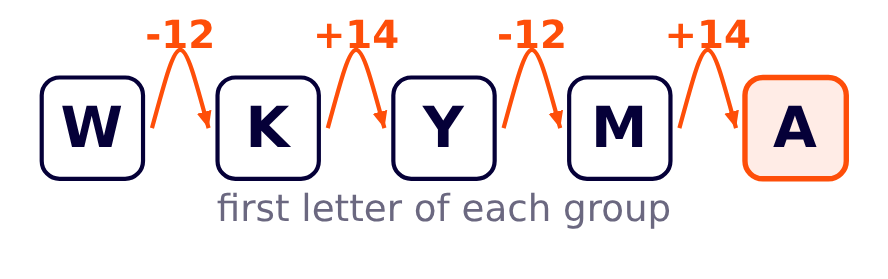
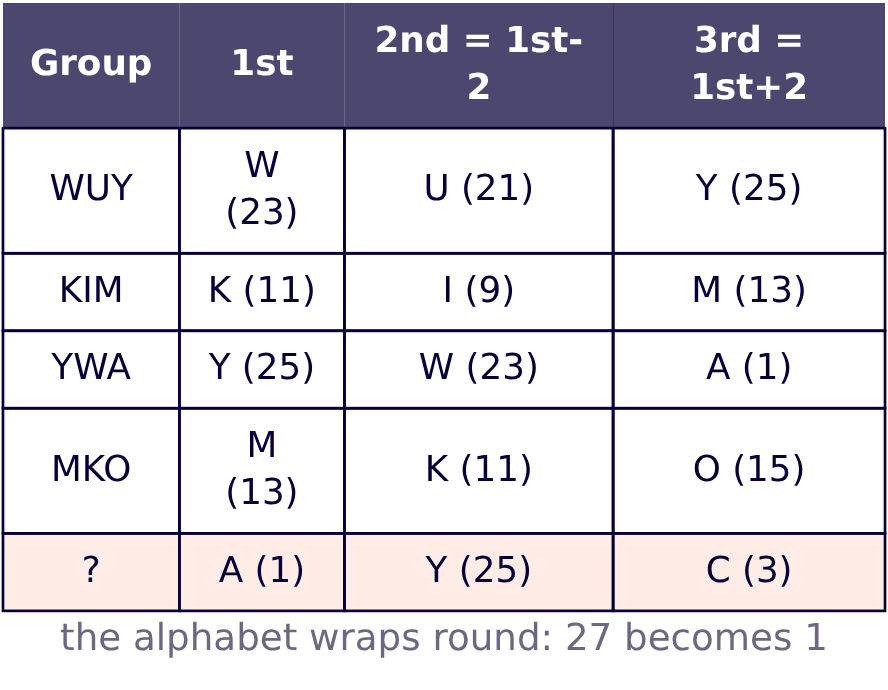 So the whole series is carried by the first letters W, K, Y, M, that is .
The jumps alternate -12 and +14: 23-12=11, 11+14=25, 25-12=13.
The next jump is +14, so 13+14=27, and counting round the 26 letters 27-26=1, which is A.
So the whole series is carried by the first letters W, K, Y, M, that is .
The jumps alternate -12 and +14: 23-12=11, 11+14=25, 25-12=13.
The next jump is +14, so 13+14=27, and counting round the 26 letters 27-26=1, which is A.
 With A as the first letter, 2 places before A is Y and 2 places after A is C, so the group is AYC.
Therefore option (c) is correct.
With A as the first letter, 2 places before A is Y and 2 places after A is C, so the group is AYC.
Therefore option (c) is correct.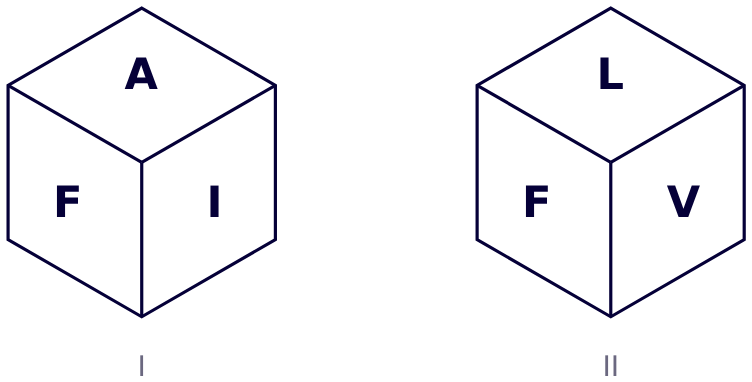
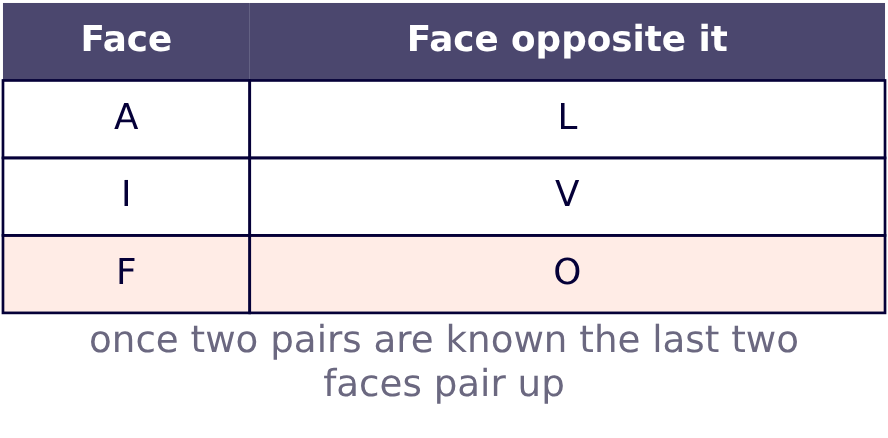 Therefore option (b) is correct: F lies opposite O.
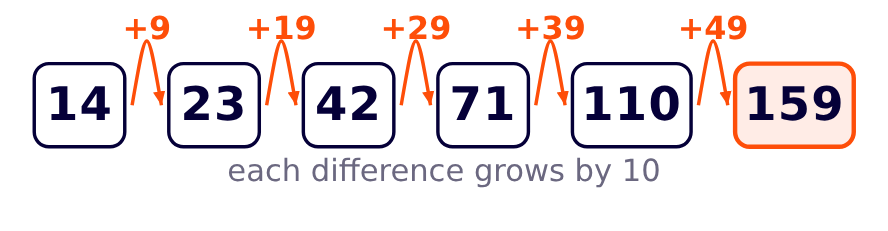 Required term =110+49=159.
Therefore option (d) is correct.
Required term =110+49=159.
Therefore option (d) is correct.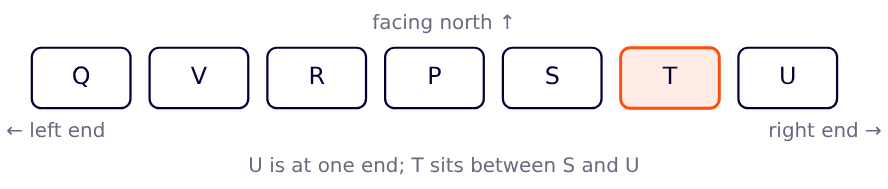 The person sitting between S and U is T.
Therefore option (a) is correct.
The person sitting between S and U is T.
Therefore option (a) is correct.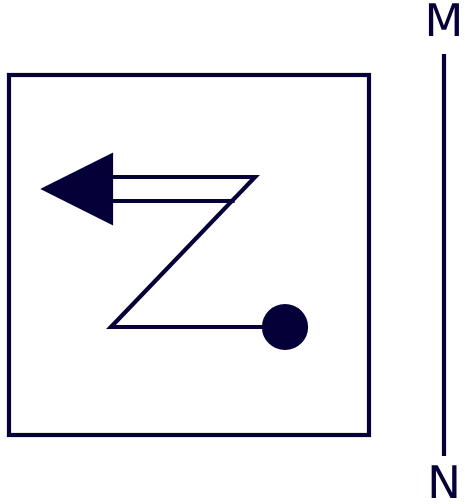
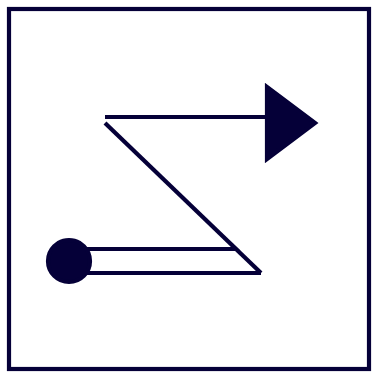
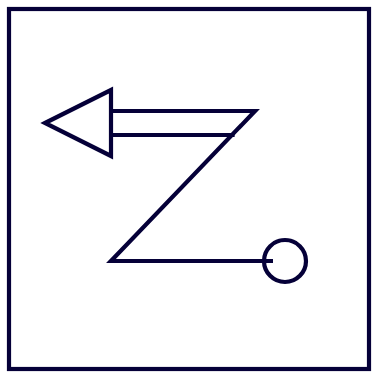
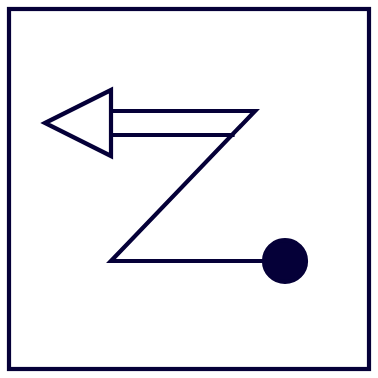
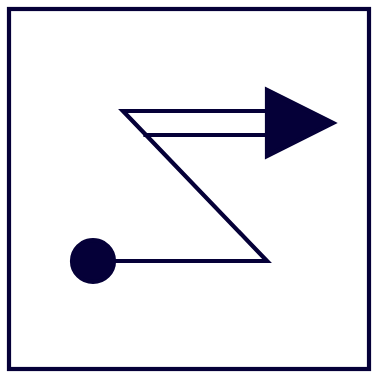
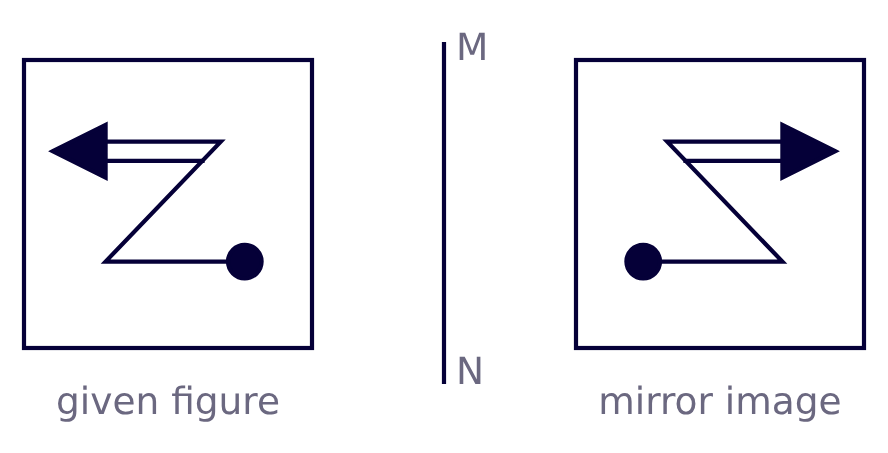 Option (a) turns the arrow the right way but shifts the two-line stroke to the bottom; options (b) and (c) are not reflected at all, their arrow still points left.
Therefore option (d) is correct.
Option (a) turns the arrow the right way but shifts the two-line stroke to the bottom; options (b) and (c) are not reflected at all, their arrow still points left.
Therefore option (d) is correct.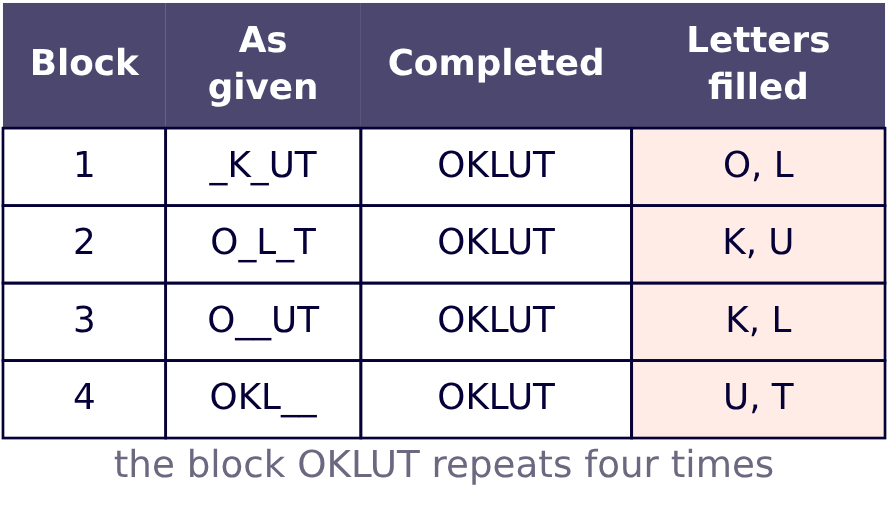 Reading the columns of the four blocks, position 1 shows O, position 2 shows K, position 3 shows L, position 4 shows U and position 5 shows T, so the repeating block is OKLUT.
Now complete each block: block 1 needs O and L, block 2 needs K and U, block 3 needs K and L, block 4 needs U and T.
Reading the fillers from left to right gives O, L, K, U, K, L, U, T.
Therefore option (b) is correct.
Reading the columns of the four blocks, position 1 shows O, position 2 shows K, position 3 shows L, position 4 shows U and position 5 shows T, so the repeating block is OKLUT.
Now complete each block: block 1 needs O and L, block 2 needs K and U, block 3 needs K and L, block 4 needs U and T.
Reading the fillers from left to right gives O, L, K, U, K, L, U, T.
Therefore option (b) is correct.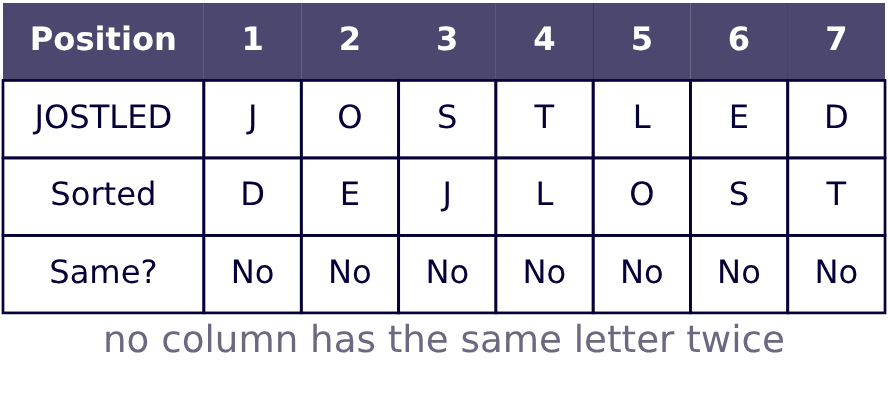 The pairs are J/D, O/E, S/J, T/L, L/O, E/S and D/T, so not one position carries the same letter.
Therefore option (c) is correct: 0 letters keep their position.
The pairs are J/D, O/E, S/J, T/L, L/O, E/S and D/T, so not one position carries the same letter.
Therefore option (c) is correct: 0 letters keep their position.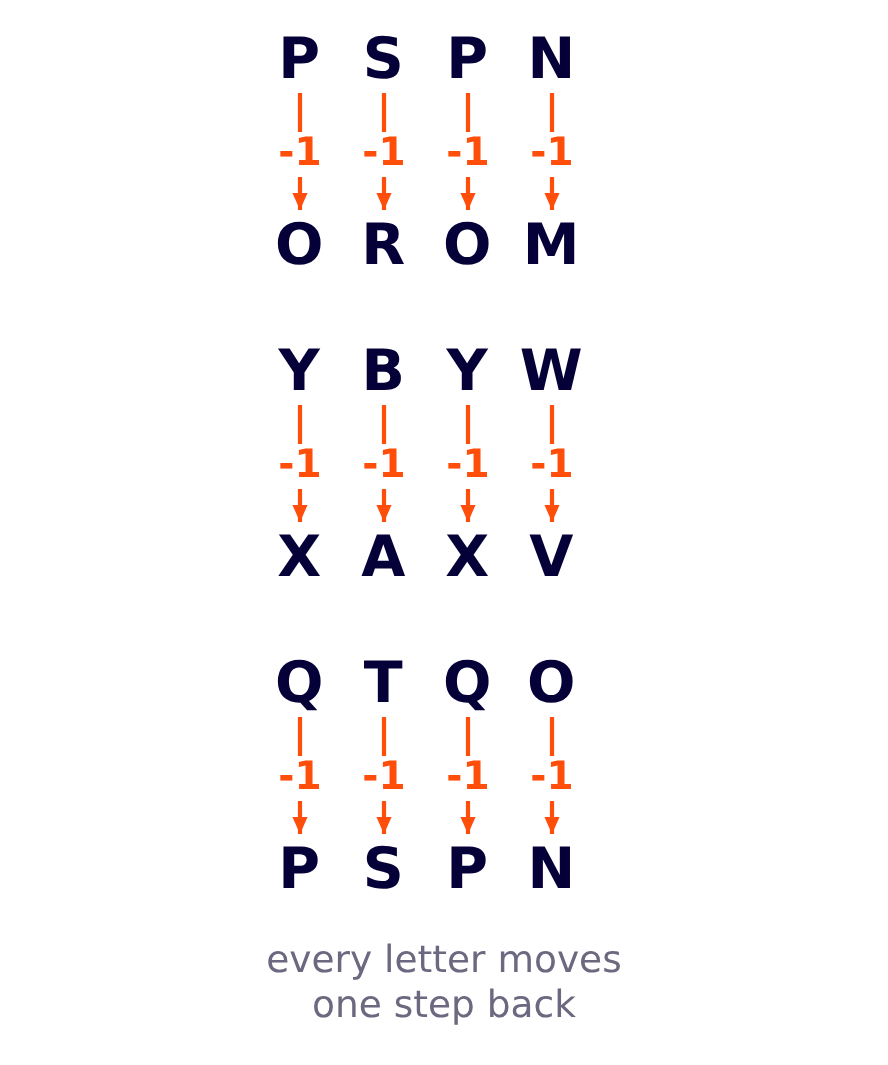 Apply -1 to QTQO: , , , , giving PSPN.
Therefore option (d) is correct.
Apply -1 to QTQO: , , , , giving PSPN.
Therefore option (d) is correct.