
41
Mahesh has ₹1617 with him. He divided it amongst his sons Vijay and Ajay and asked them to invest it at 10% rate of interest compounded annually. It was seen that Vijay and Ajay got same amount after 15 and 16 years respectively. How much (in ₹) did Mahesh give to Vijay ?
- A.847
- B.697
- C.870
- D.770
Solution
Compound interest ratio
Let Vijay receive V and Ajay receive A, so that V+A=1617.
Both amounts are equal, so
So V:A=11:10 and the total is 11+10=21 parts.
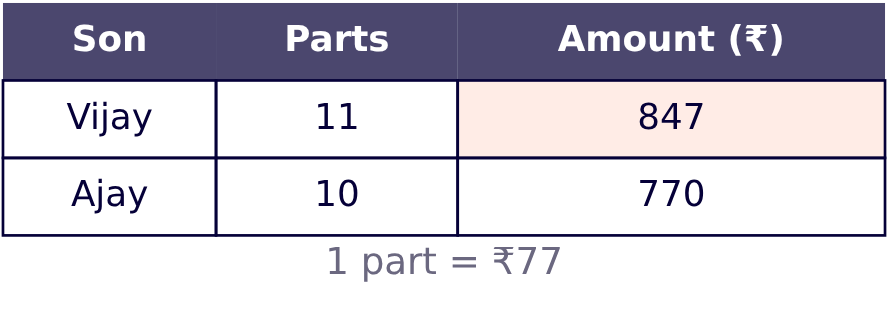 21 parts part
Vijay's share
Therefore Mahesh gave Vijay ₹847, so the correct option is (a).
21 parts part
Vijay's share
Therefore Mahesh gave Vijay ₹847, so the correct option is (a).
21 parts part
Vijay's share
Therefore Mahesh gave Vijay ₹847, so the correct option is (a).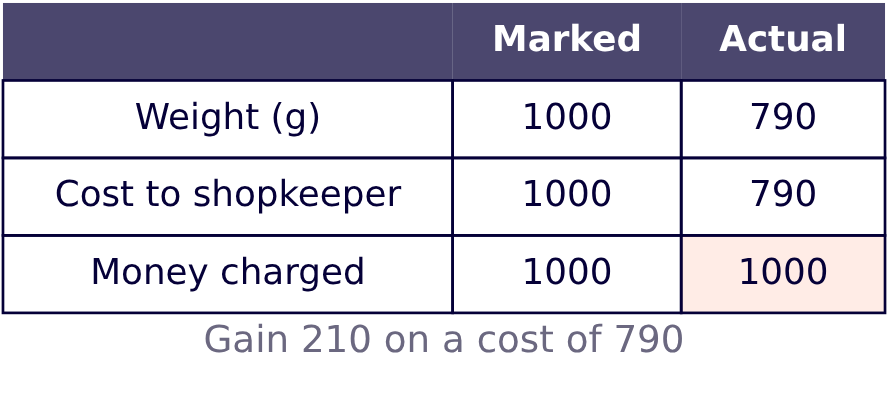 He charges the cost of 1000 g but parts with goods that cost him only 790 g.
Profit
, because and 2100-2054=46.
Therefore the profit is , so the correct option is (b).
He charges the cost of 1000 g but parts with goods that cost him only 790 g.
Profit
, because and 2100-2054=46.
Therefore the profit is , so the correct option is (b).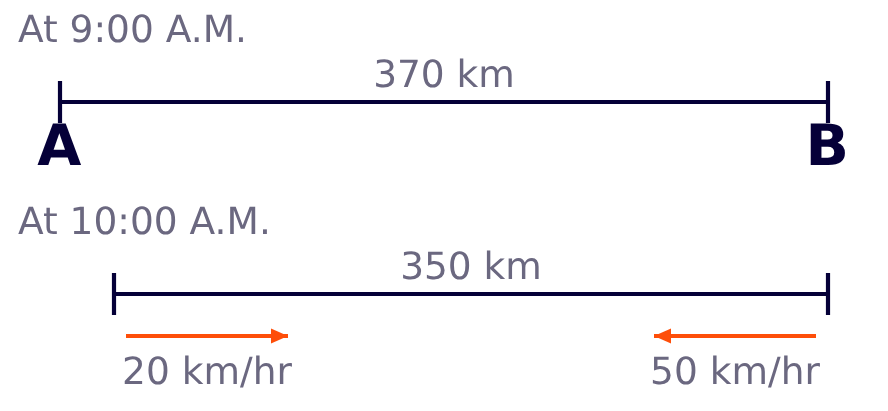 They now move towards each other, so relative speed =20+50=70 km/hr
Time to meet hours
Meeting time = 10:00 A.M. +5 hours = 3:00 P.M.
Therefore the correct option is (a).
They now move towards each other, so relative speed =20+50=70 km/hr
Time to meet hours
Meeting time = 10:00 A.M. +5 hours = 3:00 P.M.
Therefore the correct option is (a).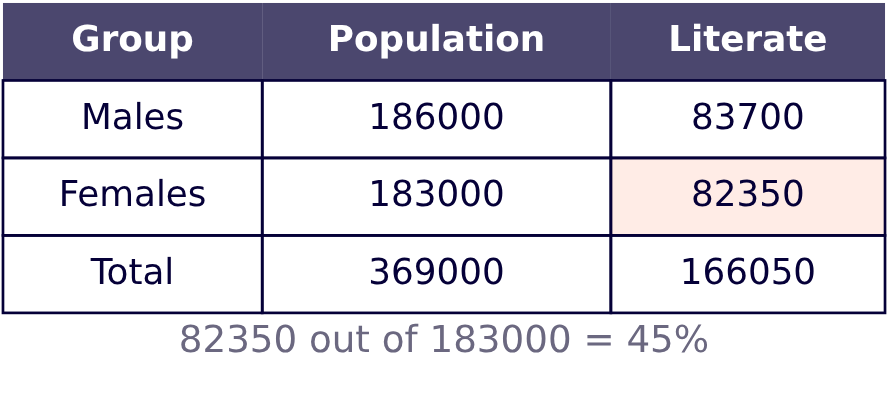 Required percentage
Therefore the correct option is (c).
Required percentage
Therefore the correct option is (c).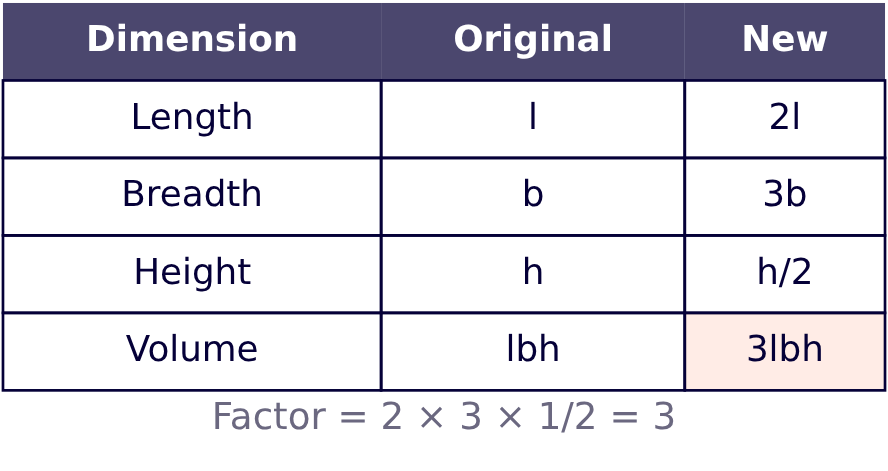 New volume
So the new volume =3V.
Therefore the correct option is (d).
New volume
So the new volume =3V.
Therefore the correct option is (d).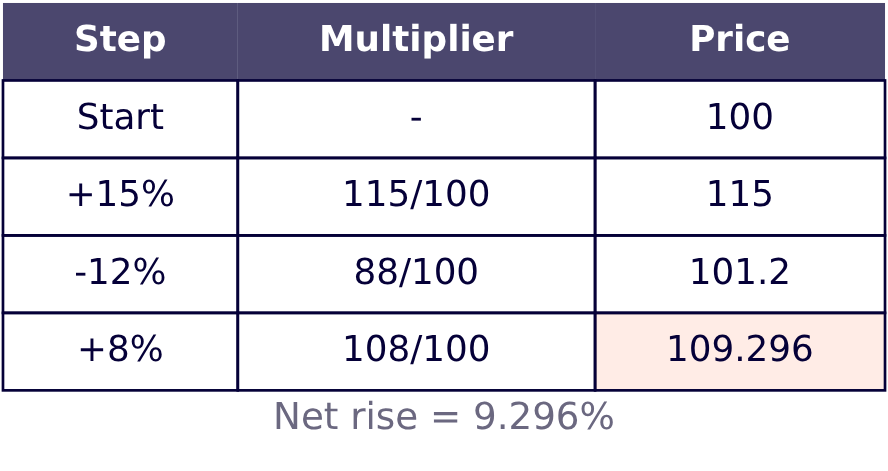 Net change =109.296-100=9.296
So the price rises by about , correct to one decimal place.
Therefore the correct option is (b).
Net change =109.296-100=9.296
So the price rises by about , correct to one decimal place.
Therefore the correct option is (b).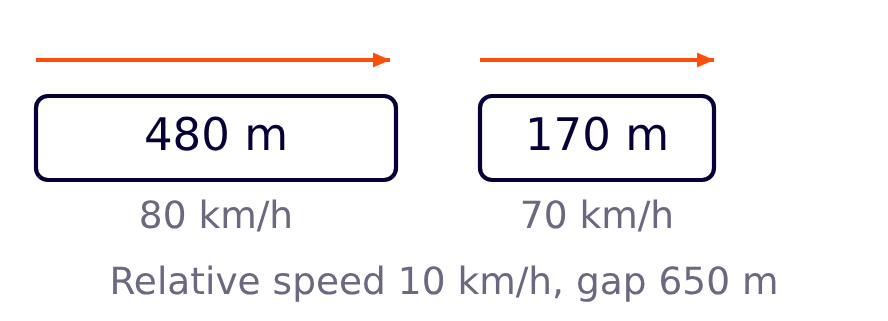 They run in the same direction, so relative speed =80-70=10 km/h
10 km/h m/s
Time s
Time in minutes
Therefore the correct option is (d).
They run in the same direction, so relative speed =80-70=10 km/h
10 km/h m/s
Time s
Time in minutes
Therefore the correct option is (d).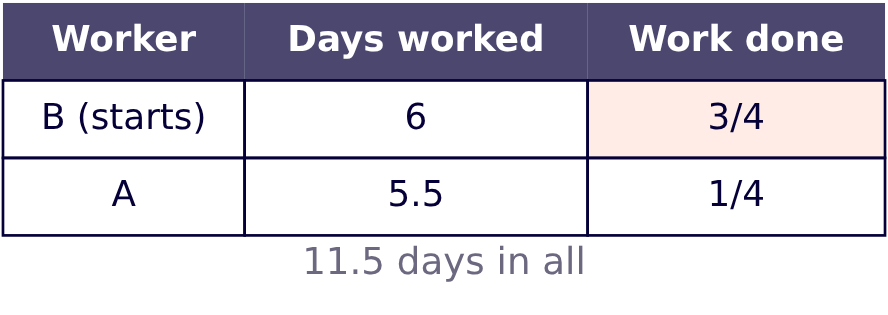 B's one day work , so B alone finishes the whole work in 8 days.
Time for B to do of the work days
Therefore the correct option is (c).
B's one day work , so B alone finishes the whole work in 8 days.
Time for B to do of the work days
Therefore the correct option is (c).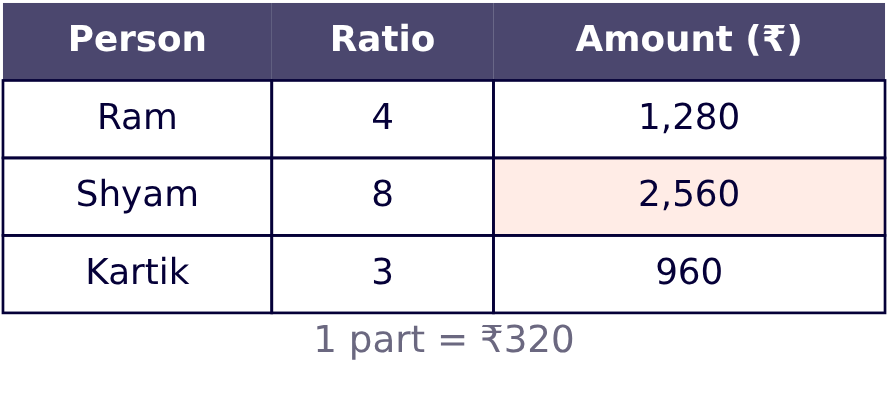 Therefore Shyam receives ₹2,560, so the correct option is (d).
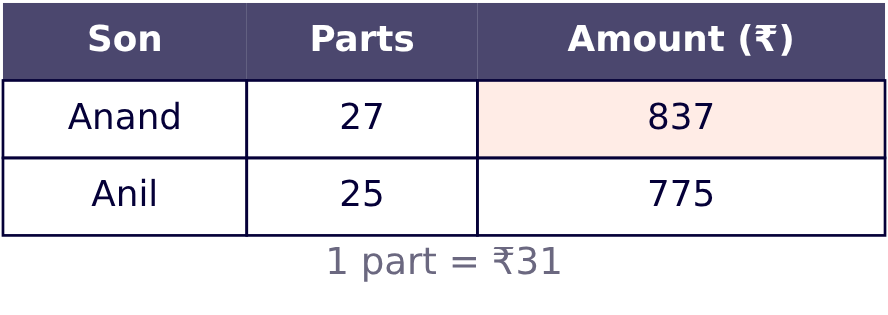 52 parts part
Anand's share
Therefore Manoj gave Anand ₹837, so the correct option is (d).
52 parts part
Anand's share
Therefore Manoj gave Anand ₹837, so the correct option is (d).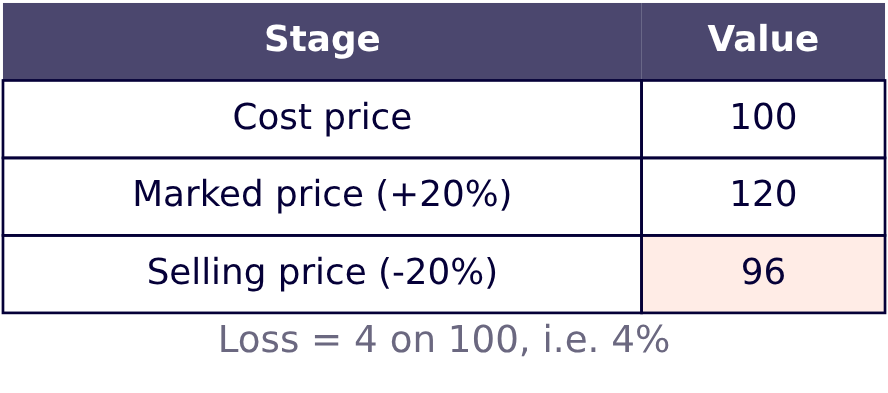 Since 96<100, there is a loss of 100-96=4
Loss
Therefore the correct option is (a).
Since 96<100, there is a loss of 100-96=4
Loss
Therefore the correct option is (a).