
21
The increased concentration of suspended solids in water and their accumulation on bottoms where they are undesirable, creates what kind of water pollution ?
- A.Siltation
- B.Microbiological pollution
- C.Nutrient pollution
- D.Thermal pollution
Solution
Water pollution - siltation
Siltation is the water pollution caused by a rise in suspended solids - silt, clay and fine sand washed in by soil erosion, deforestation, construction or farm run-off - which finally settle on the bed.
Picture a muddy river after heavy rain: the cloudy water blocks sunlight from reaching aquatic plants and the settled silt smothers fish eggs and the river bed, which is exactly why the deposit is called undesirable.
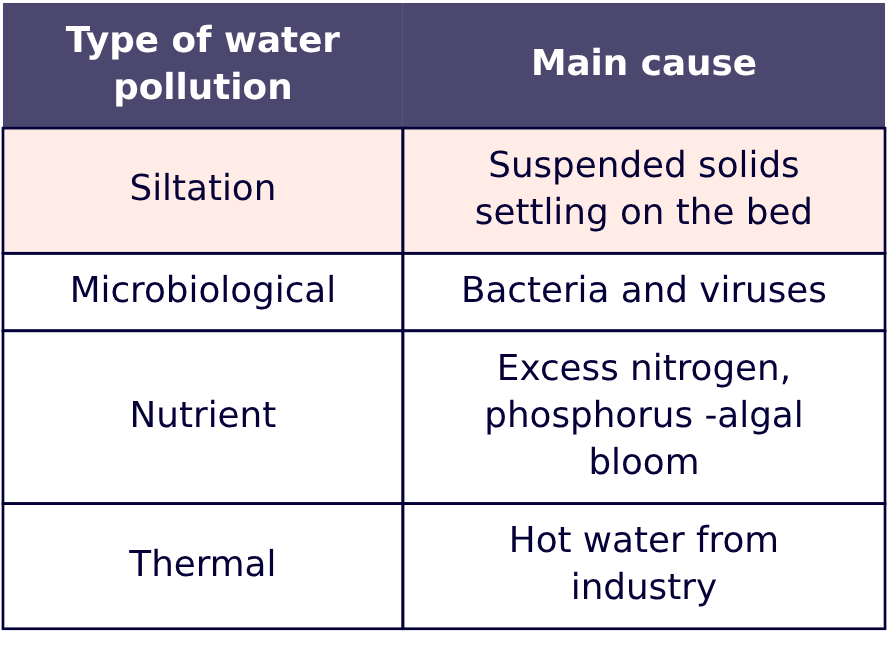 Microbiological pollution means disease-causing bacteria and viruses, nutrient pollution means excess nitrogen and phosphorus that trigger algal blooms, and thermal pollution means hot water discharged by industry - none of them is about solid particles settling at the bottom.
So the correct option is (a).
Microbiological pollution means disease-causing bacteria and viruses, nutrient pollution means excess nitrogen and phosphorus that trigger algal blooms, and thermal pollution means hot water discharged by industry - none of them is about solid particles settling at the bottom.
So the correct option is (a).
Microbiological pollution means disease-causing bacteria and viruses, nutrient pollution means excess nitrogen and phosphorus that trigger algal blooms, and thermal pollution means hot water discharged by industry - none of them is about solid particles settling at the bottom.
So the correct option is (a).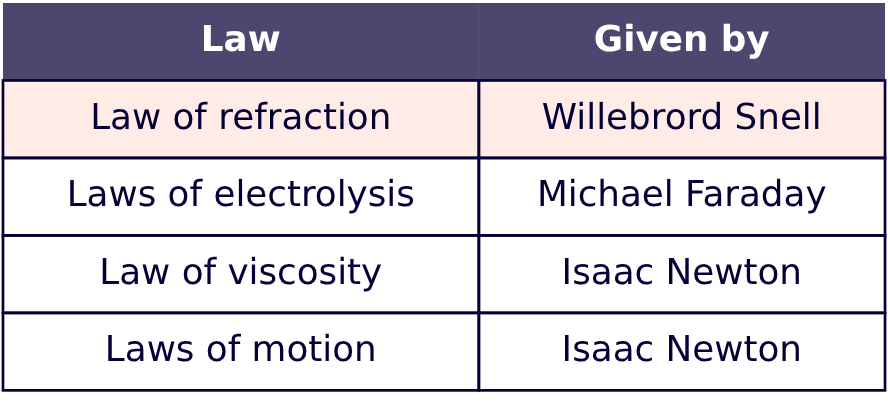 The laws of electrolysis are Faraday's, and both the laws of motion and the law of viscous flow are Newton's, so none of the other three can belong to Snell.
So the correct option is (c).
The laws of electrolysis are Faraday's, and both the laws of motion and the law of viscous flow are Newton's, so none of the other three can belong to Snell.
So the correct option is (c).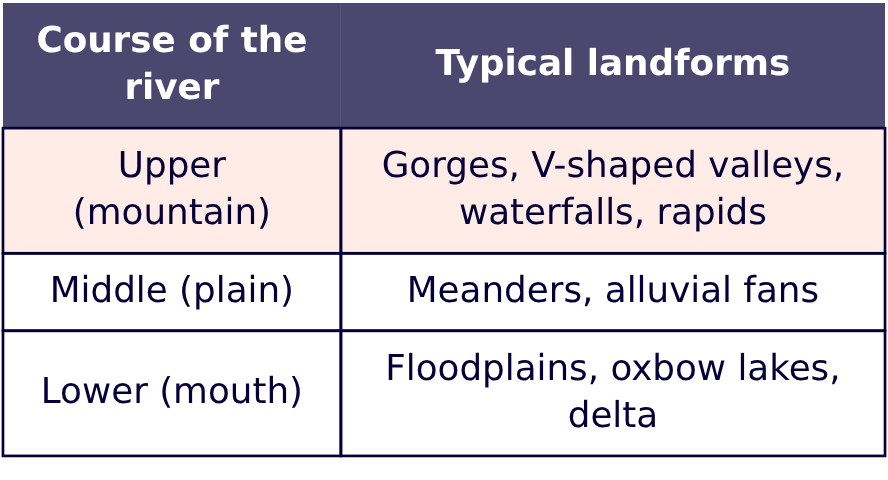 Meanders, oxbow lakes and floodplains all need a gentle gradient and a wide valley in which the river can swing from side to side, so they belong to the middle and lower courses.
The Bhagirathi below Gangotri and the Indus gorge in Ladakh are the textbook upper-course examples.
So the correct option is (c).
Meanders, oxbow lakes and floodplains all need a gentle gradient and a wide valley in which the river can swing from side to side, so they belong to the middle and lower courses.
The Bhagirathi below Gangotri and the Indus gorge in Ladakh are the textbook upper-course examples.
So the correct option is (c).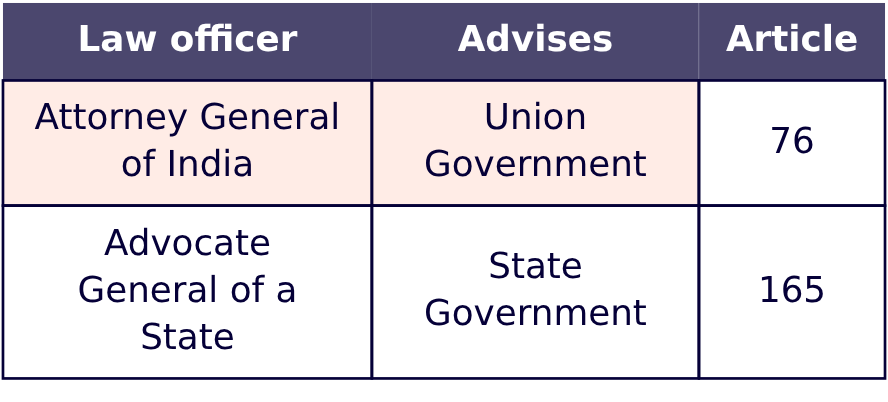 A State's legal adviser is its Advocate General under Article 165, so the Governor and the Chief Minister are advised by him, not by the Attorney General; and the Chief Justice of India heads the judiciary, which cannot be advised by the government's own lawyer.
The Attorney General may speak in both Houses of Parliament and in their committees, but he has no right to vote there.
So the correct option is (c).
A State's legal adviser is its Advocate General under Article 165, so the Governor and the Chief Minister are advised by him, not by the Attorney General; and the Chief Justice of India heads the judiciary, which cannot be advised by the government's own lawyer.
The Attorney General may speak in both Houses of Parliament and in their committees, but he has no right to vote there.
So the correct option is (c).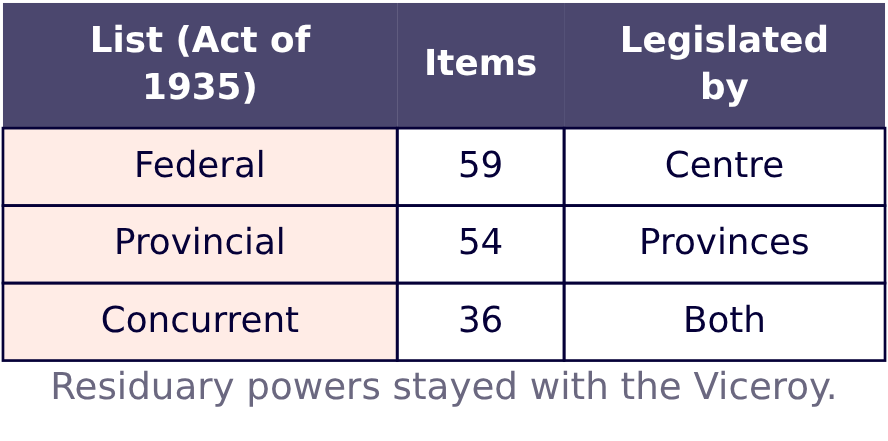 Residuary power went to neither level: it was kept with the Viceroy, and that is the one place where the 1935 scheme differs from our Constitution, where residuary subjects belong to the Union.
The Seventh Schedule of our own Constitution copies this three-list design, so remembering that the Constitution borrowed its federal scheme from the 1935 Act fixes the number three.
So the correct option is (d).
Residuary power went to neither level: it was kept with the Viceroy, and that is the one place where the 1935 scheme differs from our Constitution, where residuary subjects belong to the Union.
The Seventh Schedule of our own Constitution copies this three-list design, so remembering that the Constitution borrowed its federal scheme from the 1935 Act fixes the number three.
So the correct option is (d).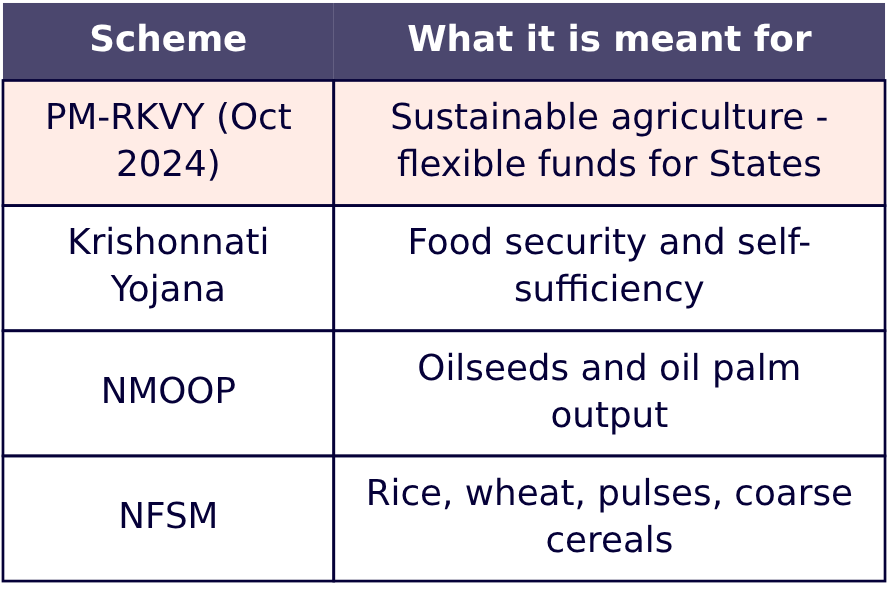 The National Mission on Oilseeds and Oil Palm and the National Food Security Mission are older, narrower missions that were folded in as components of these umbrellas, so neither is the scheme approved in October 2024.
So the correct option is (d).
The National Mission on Oilseeds and Oil Palm and the National Food Security Mission are older, narrower missions that were folded in as components of these umbrellas, so neither is the scheme approved in October 2024.
So the correct option is (d).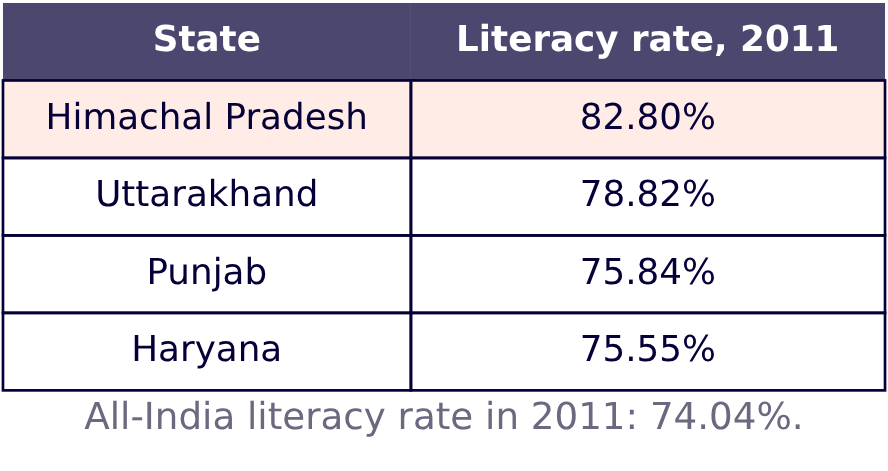 Uttarakhand at 78.82 per cent is a clear second, while Punjab (75.84%) and Haryana (75.55%) are almost level at the bottom of this group, so the tempting choice Punjab is about seven points short of Himachal Pradesh.
A useful pair to carry with it: Kerala led the whole country at about 94 per cent and Bihar was last at 61.80 per cent; C. Chandramauli was the Registrar General and Census Commissioner for 2011.
So the correct option is (d).
Uttarakhand at 78.82 per cent is a clear second, while Punjab (75.84%) and Haryana (75.55%) are almost level at the bottom of this group, so the tempting choice Punjab is about seven points short of Himachal Pradesh.
A useful pair to carry with it: Kerala led the whole country at about 94 per cent and Bihar was last at 61.80 per cent; C. Chandramauli was the Registrar General and Census Commissioner for 2011.
So the correct option is (d).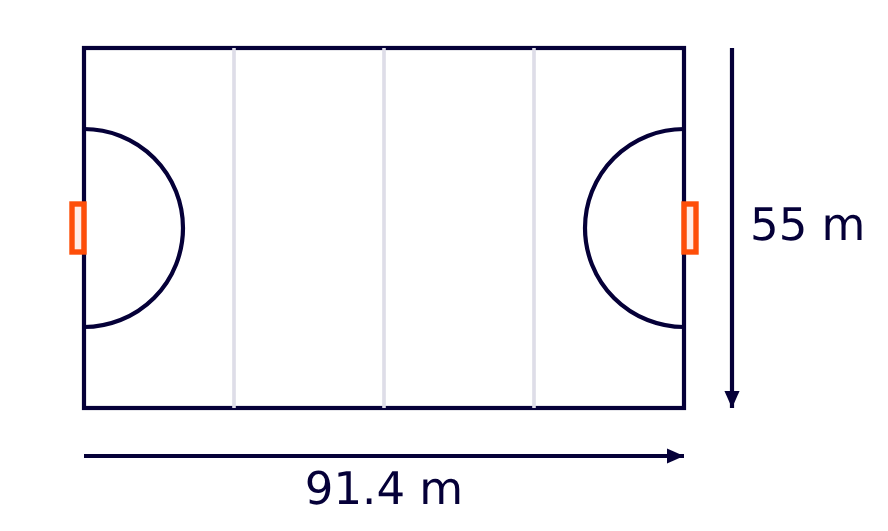 Every other marking follows the same yard conversion: the shooting circle is an arc 14.63 m (16 yards) from the goal, and the goal is 3.66 m wide and 2.14 m high.
A hockey pitch is a little narrower than a football field, so 60 m and 50 m feel plausible, but only 55 m is the figure fixed by the International Hockey Federation.
So the correct option is (b).
Every other marking follows the same yard conversion: the shooting circle is an arc 14.63 m (16 yards) from the goal, and the goal is 3.66 m wide and 2.14 m high.
A hockey pitch is a little narrower than a football field, so 60 m and 50 m feel plausible, but only 55 m is the figure fixed by the International Hockey Federation.
So the correct option is (b).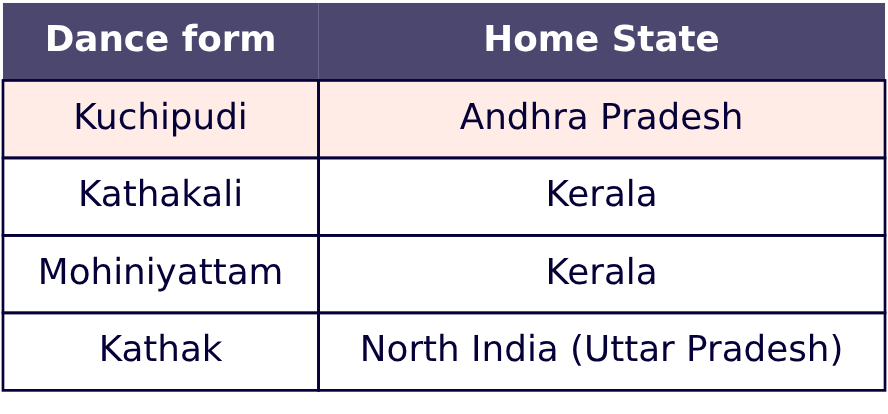 Kathakali and Mohiniyattam belong to Kerala and Kathak to the courts of north India, so no other option can come from a village in the Krishna district.
So the correct option is (c).
Kathakali and Mohiniyattam belong to Kerala and Kathak to the courts of north India, so no other option can come from a village in the Krishna district.
So the correct option is (c).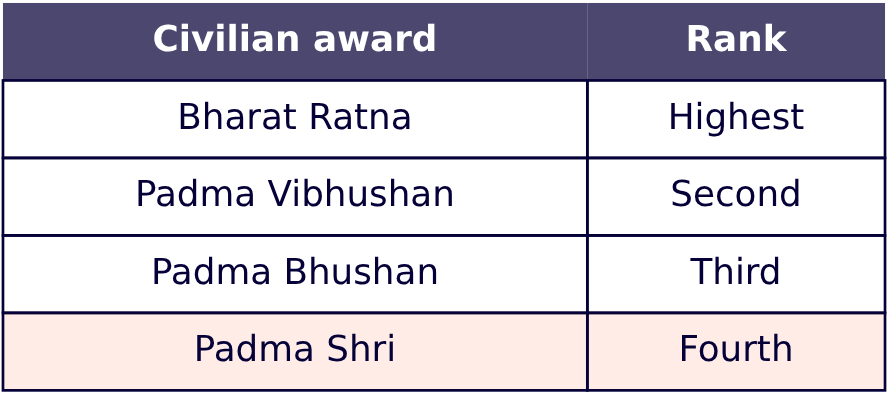 The Padma Shri, instituted in 1954, is the fourth-highest civilian award of the Republic and is the one given for distinguished service in any field, while Padma Bhushan and Padma Vibhushan stand above it for higher orders of service.
The Sahitya Akademi Award is a literary prize of an academy, not a civilian honour of the State, so it cannot be given to a dancer for dance.
The context in the question is worth remembering: the Raigarh court under Raja Chakradhar Singh was a famous patron of Kathak and gave the art its Raigarh gharana.
So the correct option is (c).
The Padma Shri, instituted in 1954, is the fourth-highest civilian award of the Republic and is the one given for distinguished service in any field, while Padma Bhushan and Padma Vibhushan stand above it for higher orders of service.
The Sahitya Akademi Award is a literary prize of an academy, not a civilian honour of the State, so it cannot be given to a dancer for dance.
The context in the question is worth remembering: the Raigarh court under Raja Chakradhar Singh was a famous patron of Kathak and gave the art its Raigarh gharana.
So the correct option is (c).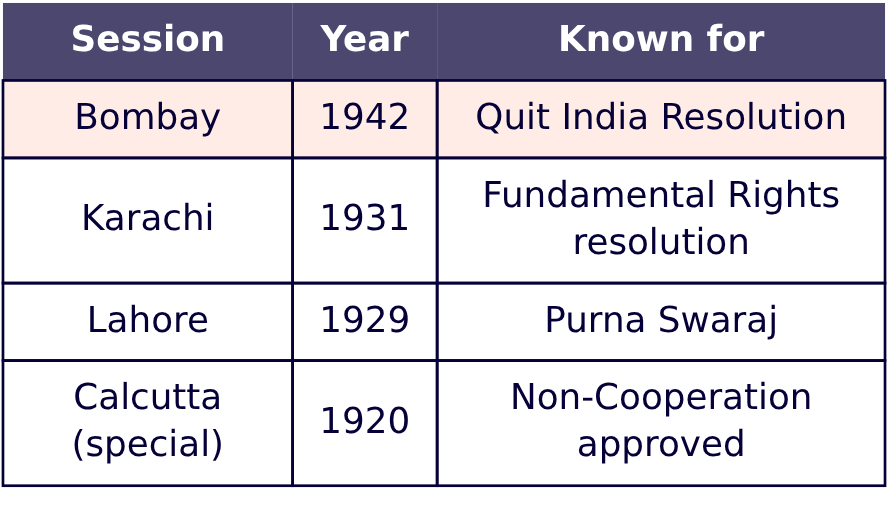 The other three are the sessions usually confused with it - Lahore 1929 for the Purna Swaraj resolution, Karachi 1931 for Fundamental Rights and the National Economic Programme, and the Calcutta special session of 1920 that approved Non-Cooperation.
So the correct option is (b).
The other three are the sessions usually confused with it - Lahore 1929 for the Purna Swaraj resolution, Karachi 1931 for Fundamental Rights and the National Economic Programme, and the Calcutta special session of 1920 that approved Non-Cooperation.
So the correct option is (b).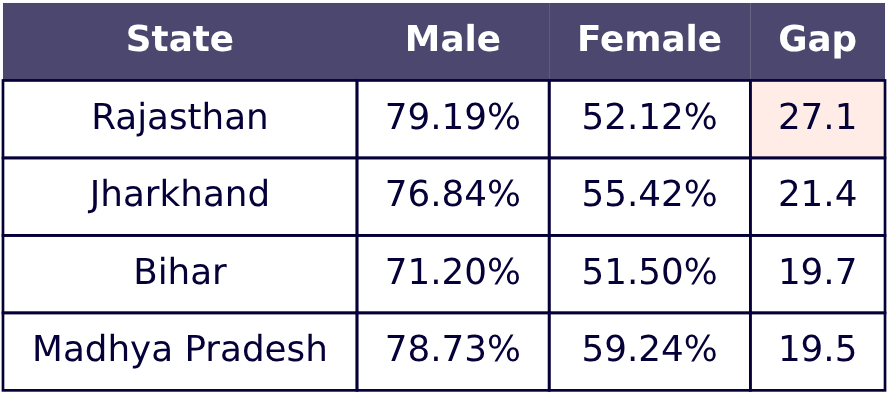 Bihar is the trap, because it has the lowest literacy of the four; but its men are barely literate above 71 per cent, so its gap is under 20 points - lowest literacy and widest gender gap are two different questions.
For comparison, the all-India gap in 2011 was 16.7 points (82.14% male, 65.46% female), and among the large States Kerala's gap was the narrowest.
So the correct option is (a).
Bihar is the trap, because it has the lowest literacy of the four; but its men are barely literate above 71 per cent, so its gap is under 20 points - lowest literacy and widest gender gap are two different questions.
For comparison, the all-India gap in 2011 was 16.7 points (82.14% male, 65.46% female), and among the large States Kerala's gap was the narrowest.
So the correct option is (a).