
1
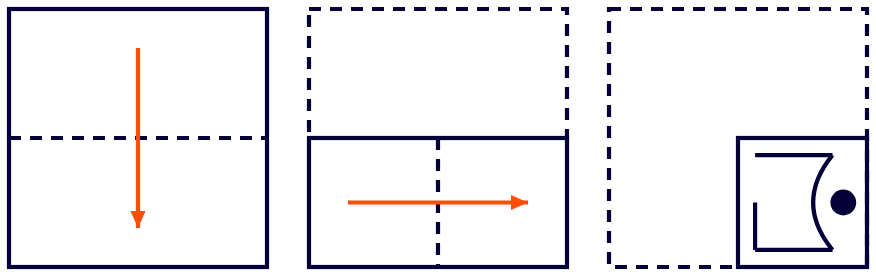
A paper is folded and punched as shown below. How will it appear when unfolded?
- A.
- B.
- C.
- D.
Solution
Paper folding and punching
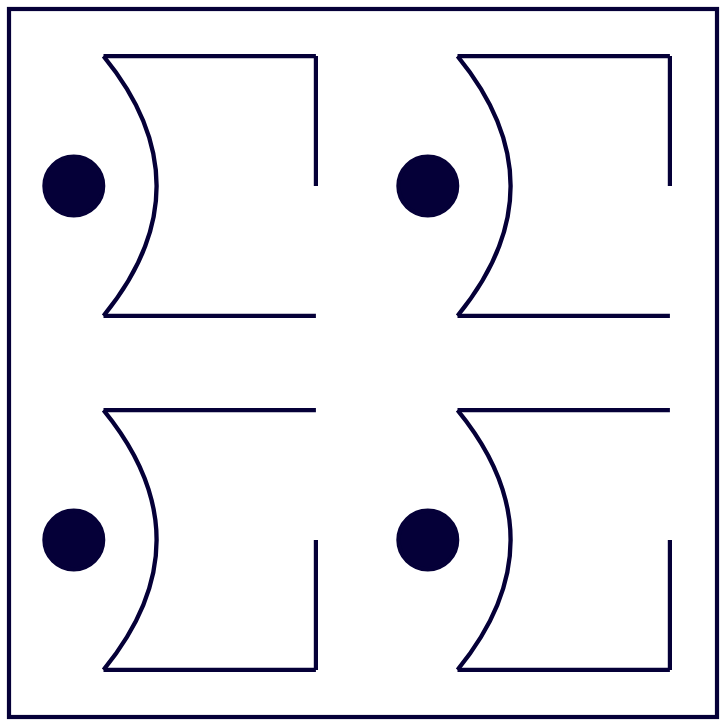
The first fold brings the top half down on to the bottom half; the second fold brings the left half on to the right half, so the punch was made in the bottom-right quarter of the sheet.
In that quarter the curved cut opens towards the outer right edge with the round hole beyond the curve, and the short upright nick at its inner end hangs from the BOTTOM arm.
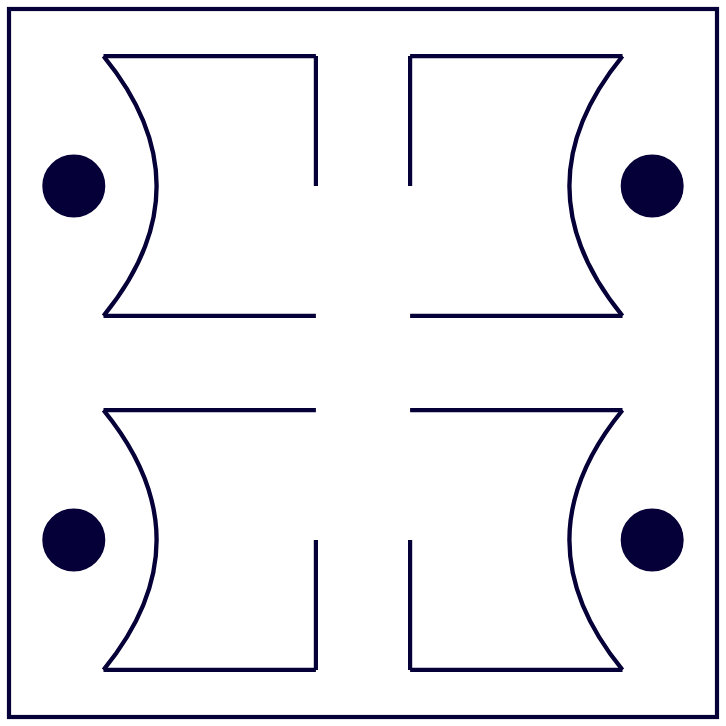
Unfolding reverses the folds: mirror that quarter left-right to get the bottom-left one, then mirror the whole bottom half top-bottom to get the two upper ones - so in the two upper quarters the nick must hang from the TOP arm instead.
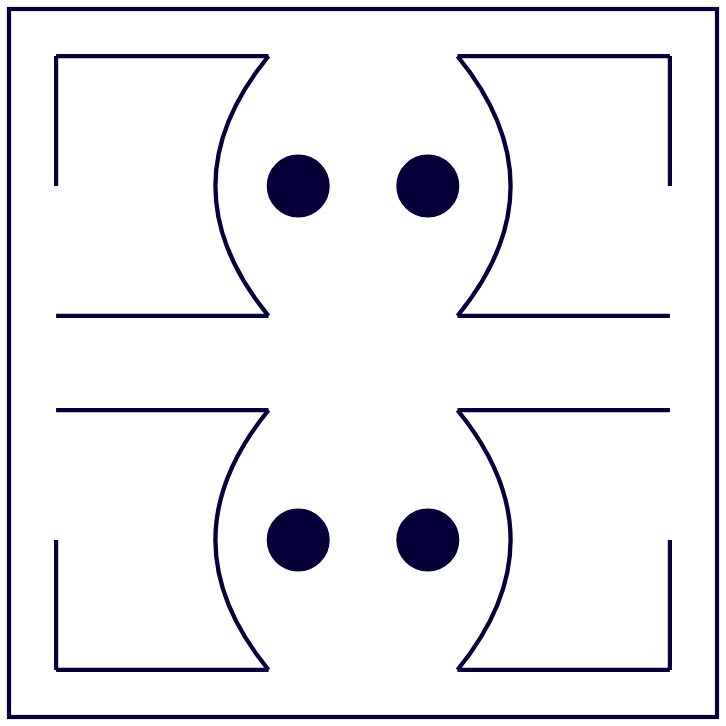
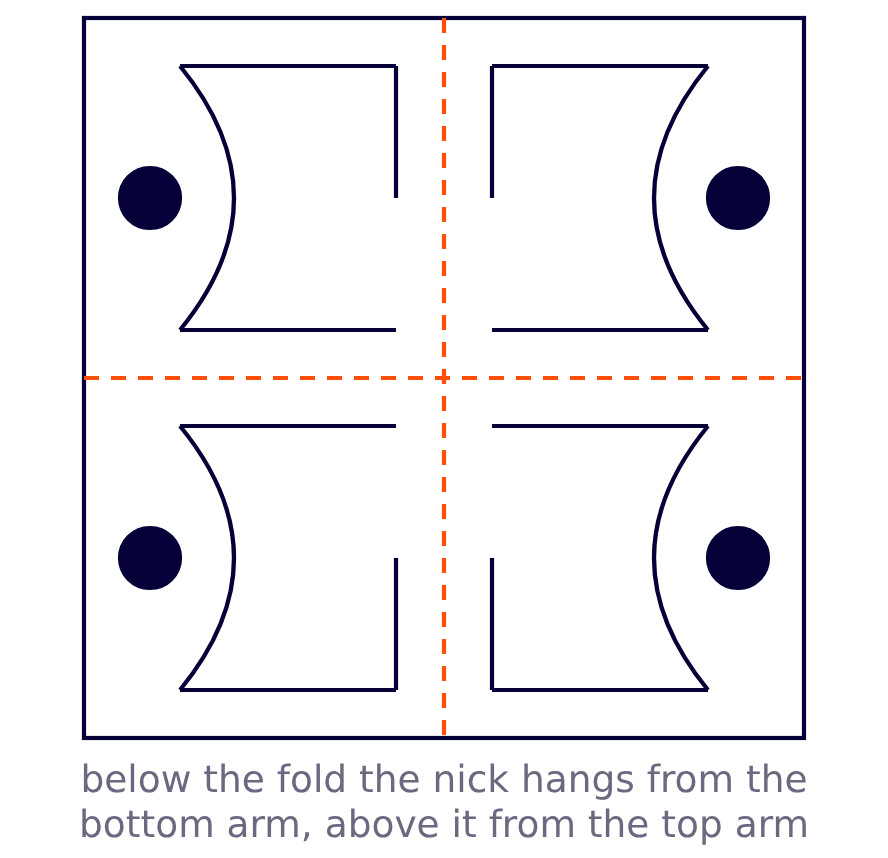 Option (b) turns every cut inwards and option (d) points all four the same way, so neither shows any mirroring.
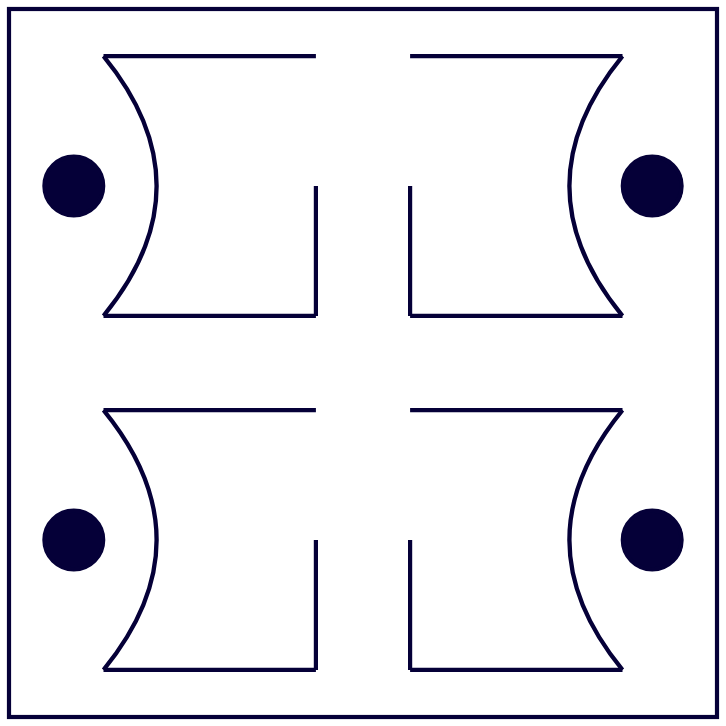
Option (a) mirrors left-right only - its nick hangs from the bottom arm in all four quarters. Only option (c) flips top to bottom as well, so (c) is the answer.
Option (b) turns every cut inwards and option (d) points all four the same way, so neither shows any mirroring.
Option (a) mirrors left-right only - its nick hangs from the bottom arm in all four quarters. Only option (c) flips top to bottom as well, so (c) is the answer.
Option (b) turns every cut inwards and option (d) points all four the same way, so neither shows any mirroring.
Option (a) mirrors left-right only - its nick hangs from the bottom arm in all four quarters. Only option (c) flips top to bottom as well, so (c) is the answer.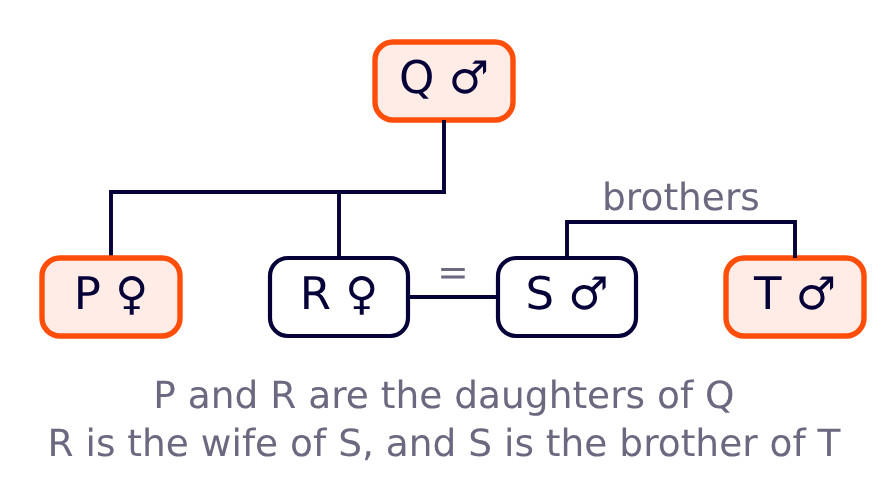 Now start at T: S is T's brother, R is that brother's wife, and P is that wife's sister.
So P is T's brother's wife's sister, which is option (a).
Now start at T: S is T's brother, R is that brother's wife, and P is that wife's sister.
So P is T's brother's wife's sister, which is option (a).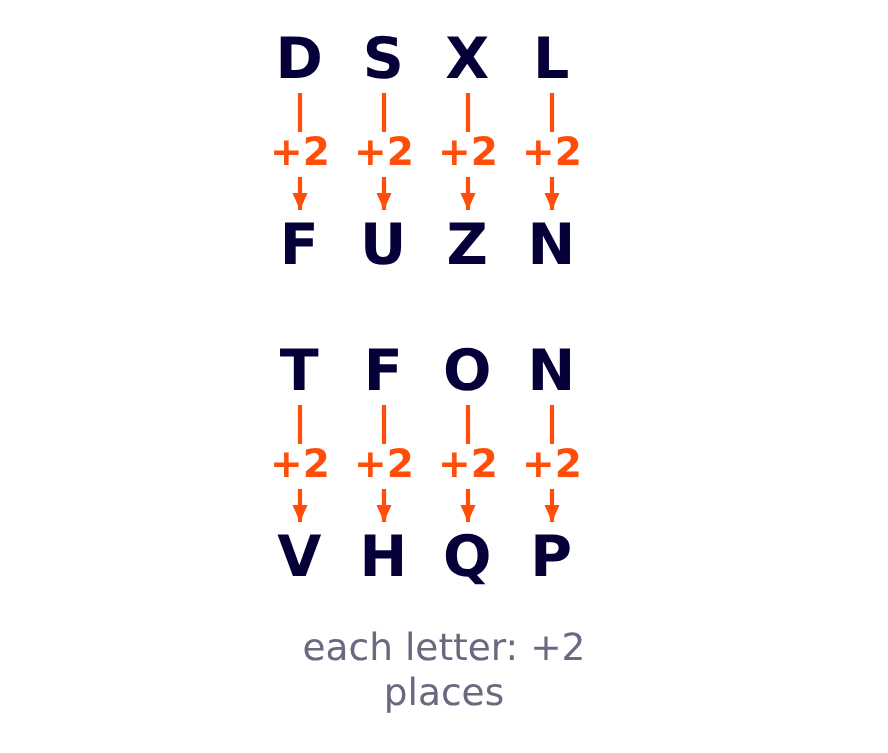 Apply +2 to TFON: T→V, F→H, O→Q, N→P.
The required cluster is VHQP, so the answer is option (b).
Apply +2 to TFON: T→V, F→H, O→Q, N→P.
The required cluster is VHQP, so the answer is option (b).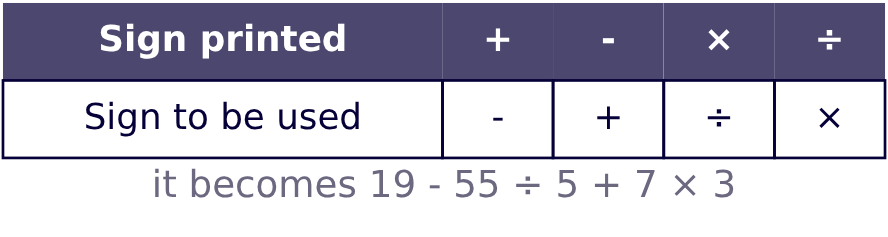 The expression therefore becomes .
By BODMAS, do the division and the multiplication first: and .
19-11+21=29.
So the question mark stands for 29, option (c).
The expression therefore becomes .
By BODMAS, do the division and the multiplication first: and .
19-11+21=29.
So the question mark stands for 29, option (c).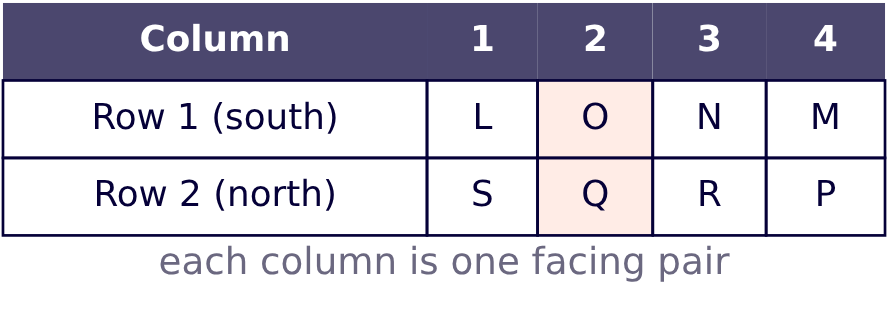 Column 2 has O in row 1 and Q in row 2, so O is faced by Q, which is option (d).
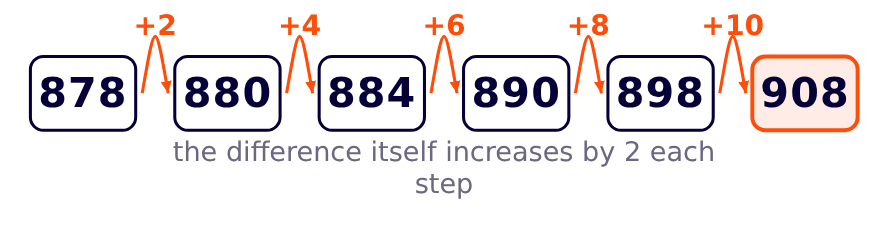 898+10=908, so the missing term is 908, option (c).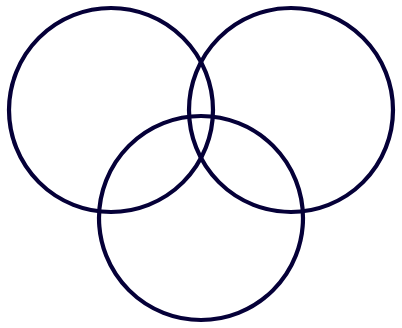
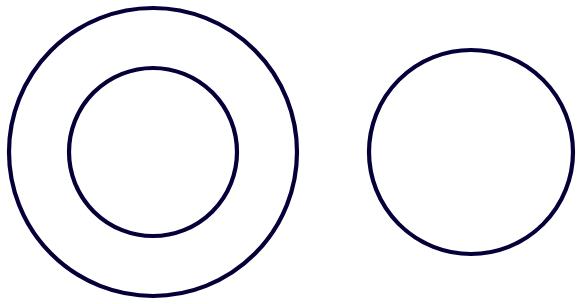
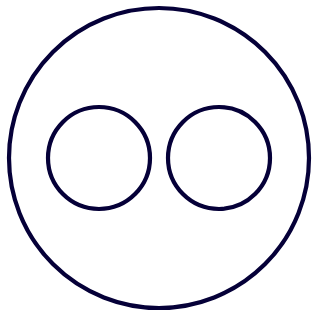
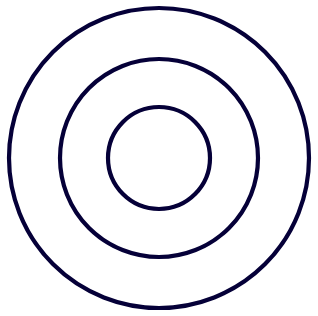
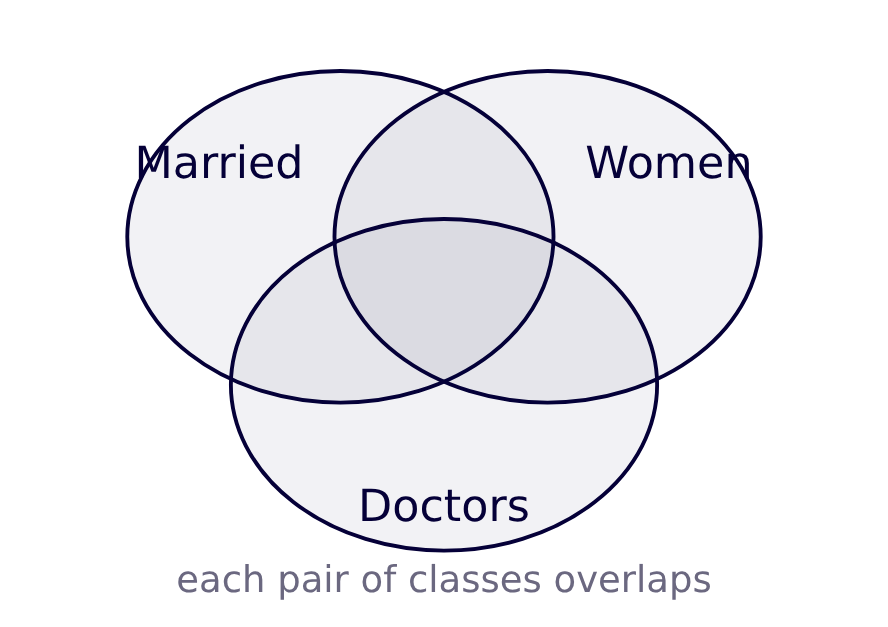 The picture must therefore be three circles that cut one another, which is option (a).
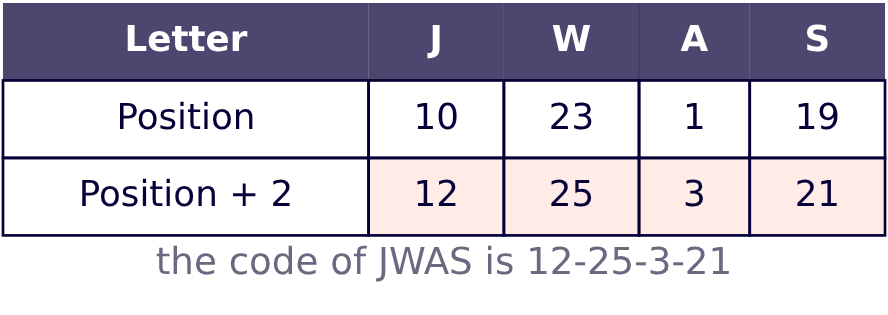 For JWAS: J = 10, W = 23, A = 1, S = 19, so the code is 12-25-3-21.
The answer is option (c).
For JWAS: J = 10, W = 23, A = 1, S = 19, so the code is 12-25-3-21.
The answer is option (c).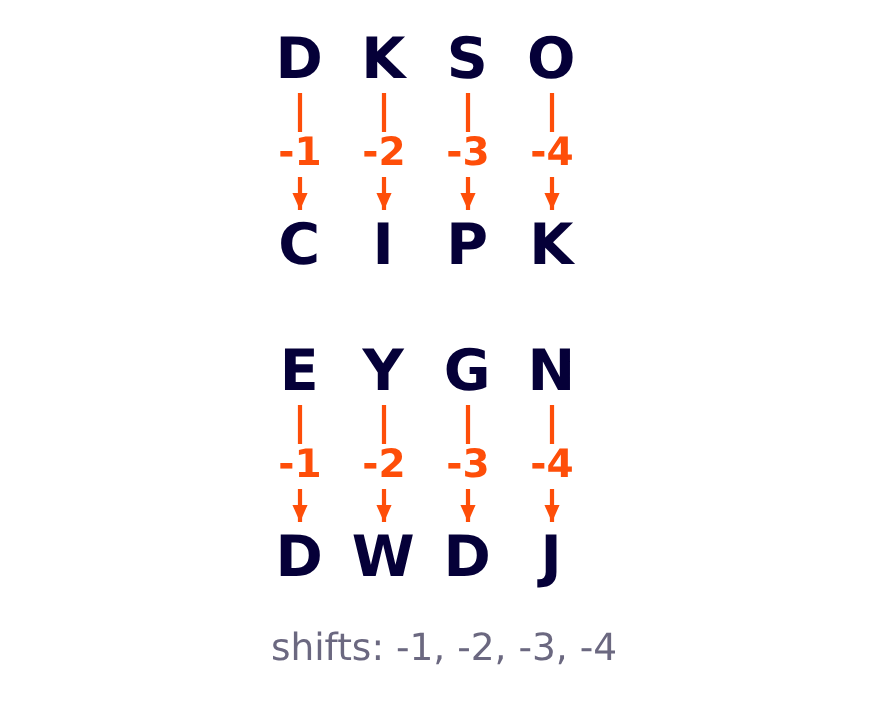 Apply -1, -2, -3, -4 to EYGN: E→D, Y→W, G→D, N→J.
The required cluster is DWDJ, so the answer is option (b).
Apply -1, -2, -3, -4 to EYGN: E→D, Y→W, G→D, N→J.
The required cluster is DWDJ, so the answer is option (b).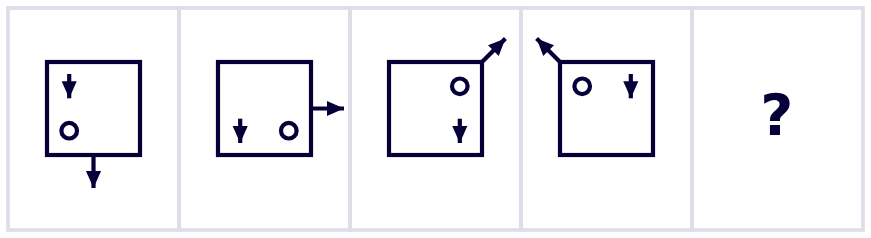
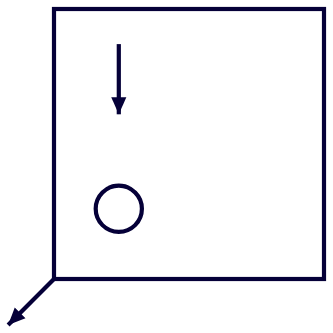
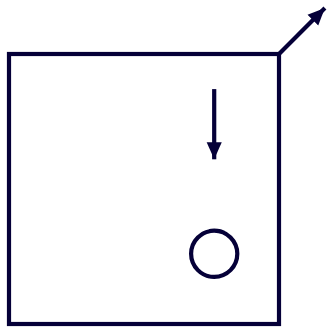
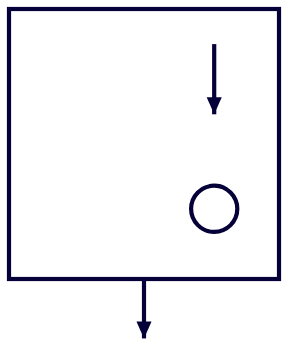
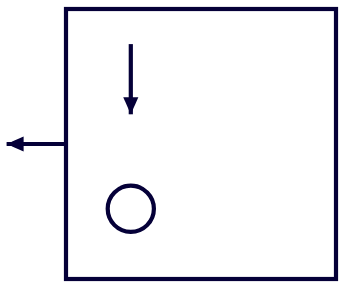
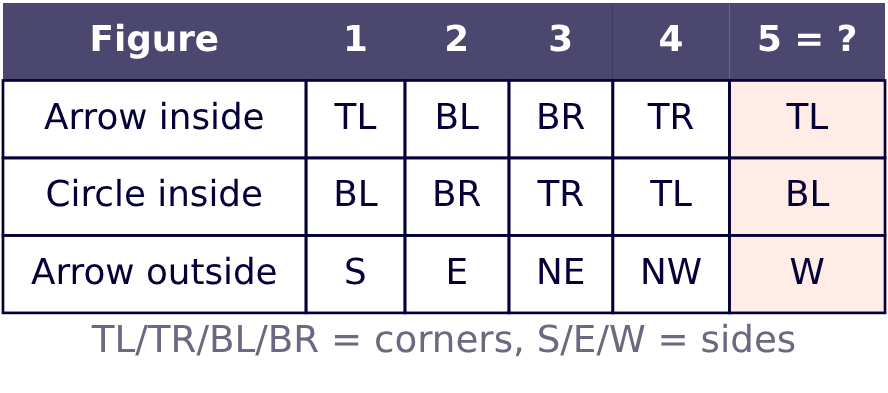 So the missing figure has the down-arrow at the top-left, the circle at the bottom-left and the outward arrow on the left side, which is option (d).
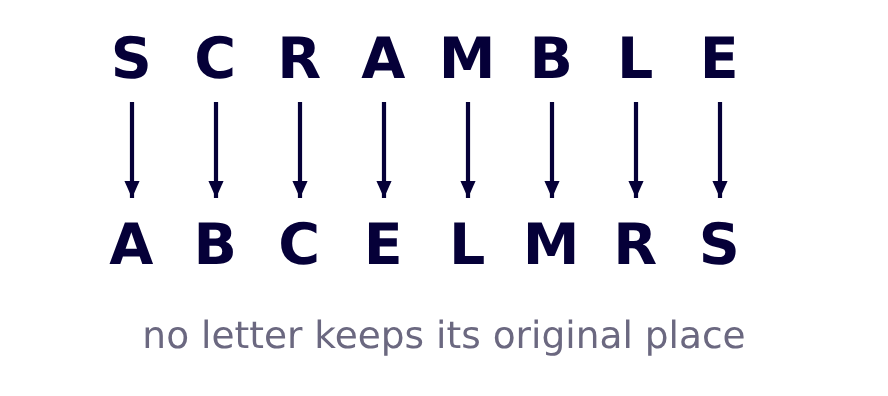 Now compare the two rows place by place: S-A, C-B, R-C, A-E, M-L, B-M, L-R, E-S.
No place has the same letter in both rows, so the answer is None, option (b).
Now compare the two rows place by place: S-A, C-B, R-C, A-E, M-L, B-M, L-R, E-S.
No place has the same letter in both rows, so the answer is None, option (b).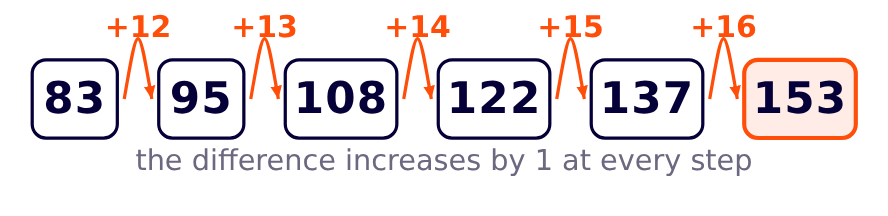 137+16=153, so the missing term is 153, option (b).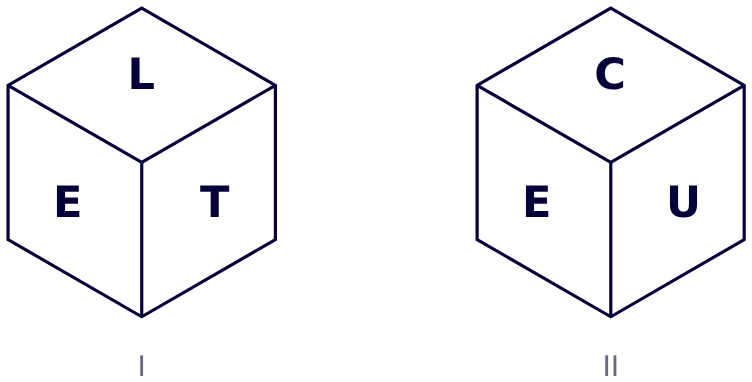
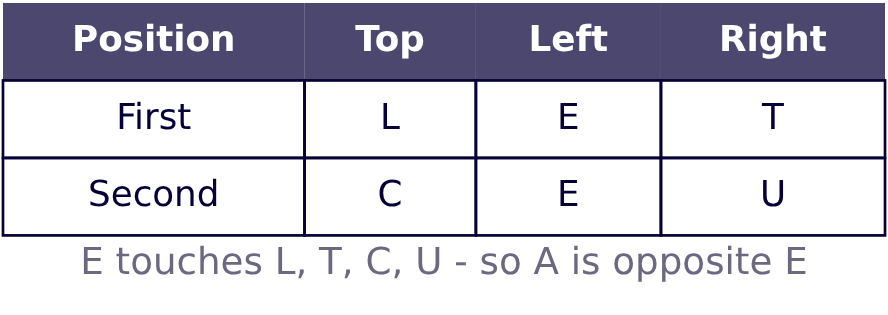 So E is adjacent to L, T, C and U - four of the five other faces.
The only face left, A, cannot touch E, so A and E are opposite each other.
Hence the face opposite A is E, option (b).
So E is adjacent to L, T, C and U - four of the five other faces.
The only face left, A, cannot touch E, so A and E are opposite each other.
Hence the face opposite A is E, option (b).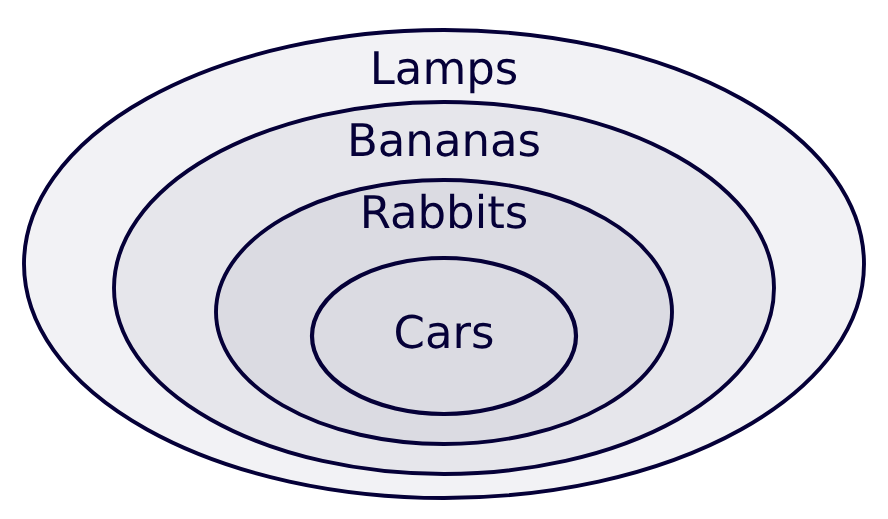 Conclusion (I): the chain gives all cars are rabbits, all rabbits are bananas and all bananas are lamps, so every car is a lamp; (I) follows.
Conclusion (II): all rabbits are lamps, and rabbits certainly exist in the diagram, so at least those lamps are rabbits; 'Some lamps are rabbits' is the valid converse and (II) follows.
Both conclusions follow, so the answer is option (c).
Conclusion (I): the chain gives all cars are rabbits, all rabbits are bananas and all bananas are lamps, so every car is a lamp; (I) follows.
Conclusion (II): all rabbits are lamps, and rabbits certainly exist in the diagram, so at least those lamps are rabbits; 'Some lamps are rabbits' is the valid converse and (II) follows.
Both conclusions follow, so the answer is option (c).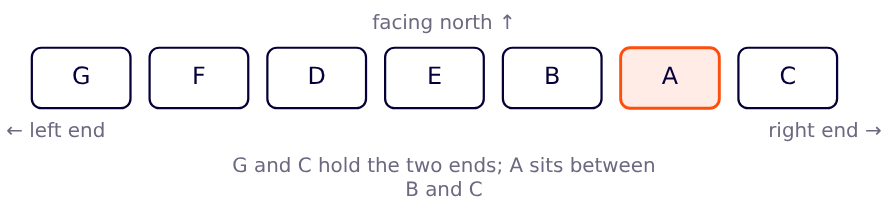 The order is G, F, D, E, B, A, C, so between B and C sits A, which is option (c).
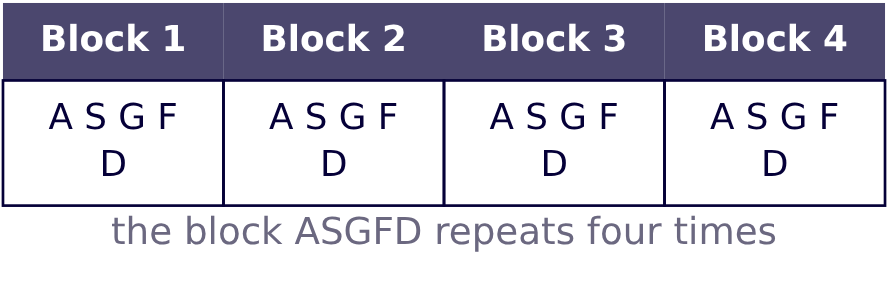 Fill the blanks block by block: S and G in the first block, A and D in the second, S and G in the third, G and F in the fourth.
Reading the filled letters from left to right gives SGADSGGF, which is option (c).
Fill the blanks block by block: S and G in the first block, A and D in the second, S and G in the third, G and F in the fourth.
Reading the filled letters from left to right gives SGADSGGF, which is option (c).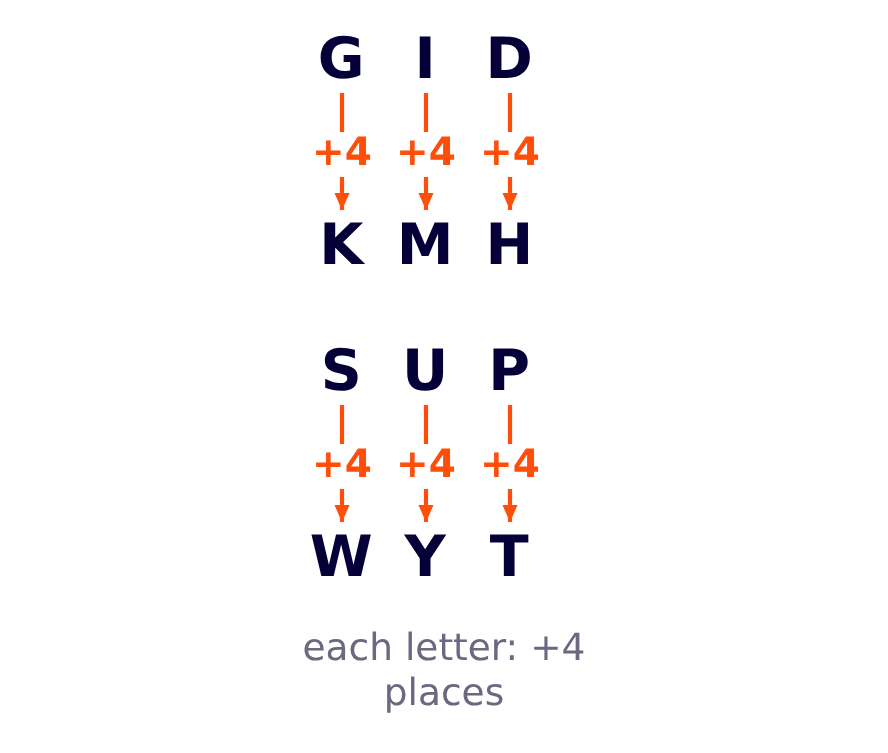 The missing cluster is WYT, option (c).
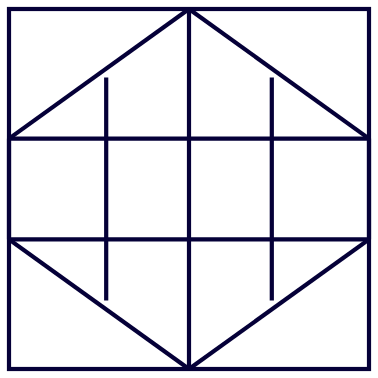
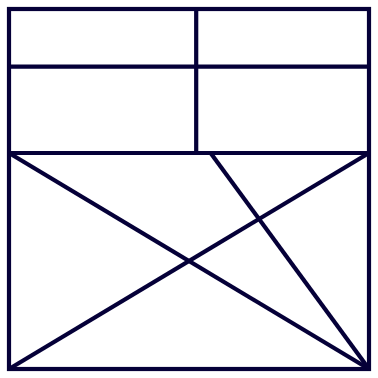
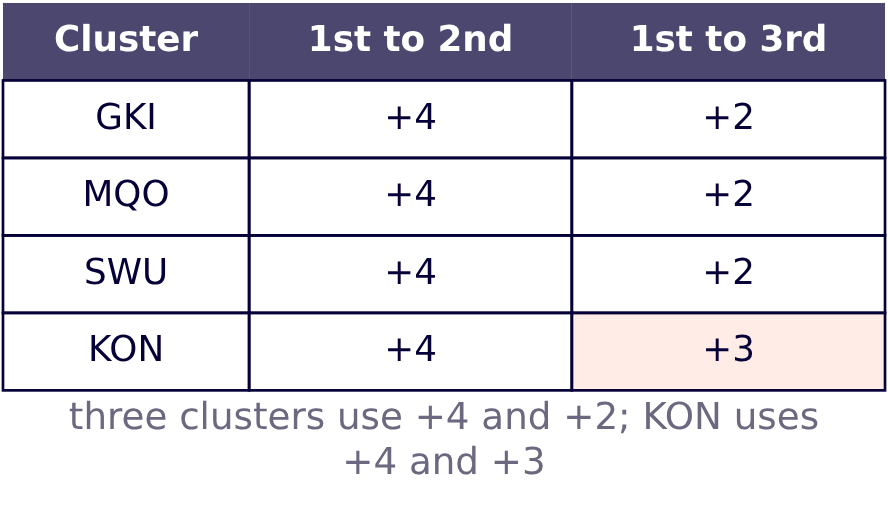 So KON does not belong to the group, and the answer is option (d).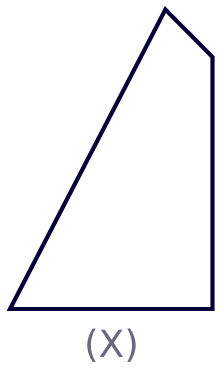
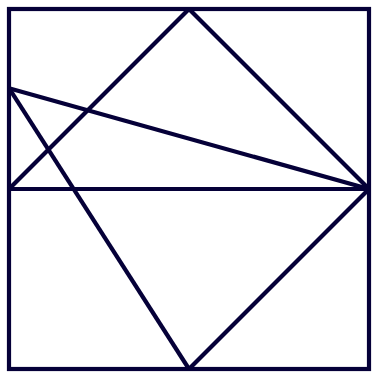
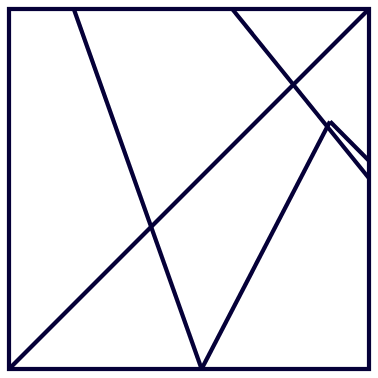
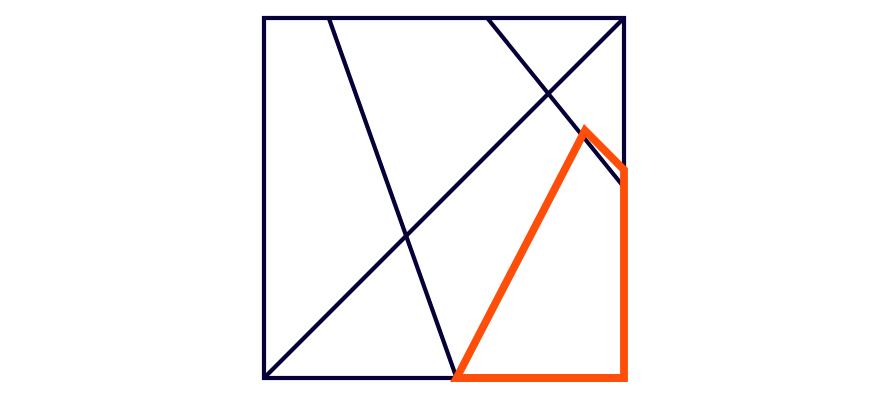 In the other three options every such region either has the slant on the wrong side or misses the short cut at the top.
So figure (X) is embedded in option (b).
In the other three options every such region either has the slant on the wrong side or misses the short cut at the top.
So figure (X) is embedded in option (b).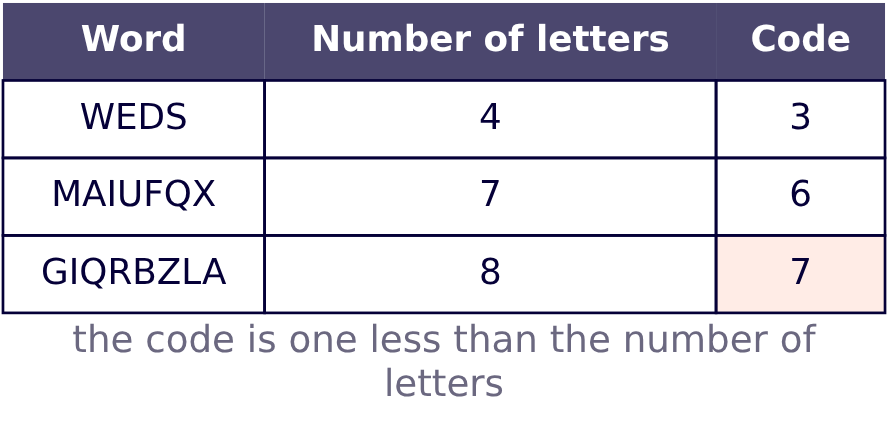 'GIQRBZLA' has 8 letters, so its code is 8-1=7.
The answer is option (a).
'GIQRBZLA' has 8 letters, so its code is 8-1=7.
The answer is option (a).