
1
In a certain code language, 'cup of coffee' is coded as 'lh em ro' and 'he loves coffee' is coded as 'em tf za'. How is 'coffee' coded in the given language?
- A.lh
- B.ro
- C.em
- D.za
Solution
Word coding
Write the two coded sentences one below the other and look for what they share.
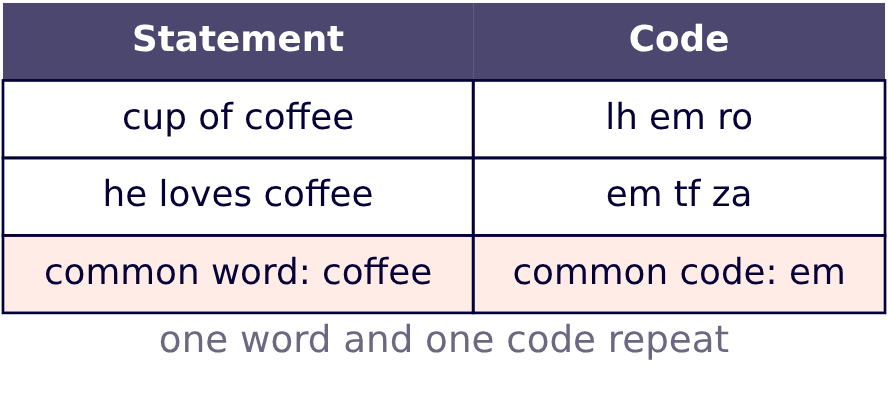 'coffee' is the only word that appears in both sentences, and 'em' is the only code that appears in both.
A code that repeats must stand for the word that repeats, so 'coffee' is coded as 'em'.
'coffee' is the only word that appears in both sentences, and 'em' is the only code that appears in both.
A code that repeats must stand for the word that repeats, so 'coffee' is coded as 'em'.
'coffee' is the only word that appears in both sentences, and 'em' is the only code that appears in both.
A code that repeats must stand for the word that repeats, so 'coffee' is coded as 'em'.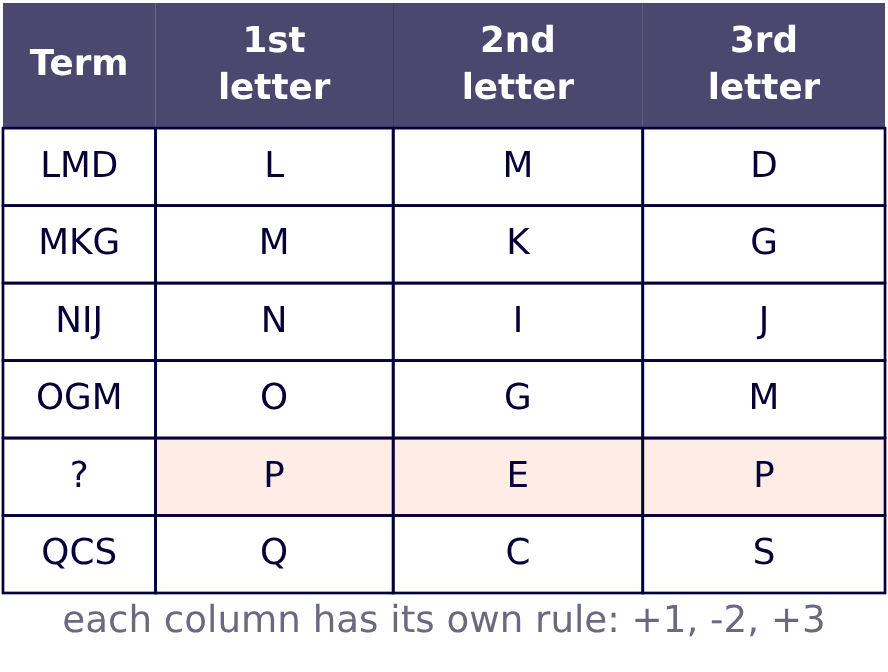 First letters: L, M, N, O, ?, Q - each step is +1, so the missing first letter is P.
Second letters: M, K, I, G, ?, C - each step is -2, so the missing second letter is E.
Third letters: D, G, J, M, ?, S - each step is +3, so the missing third letter is P.
The missing cluster is PEP.
First letters: L, M, N, O, ?, Q - each step is +1, so the missing first letter is P.
Second letters: M, K, I, G, ?, C - each step is -2, so the missing second letter is E.
Third letters: D, G, J, M, ?, S - each step is +3, so the missing third letter is P.
The missing cluster is PEP.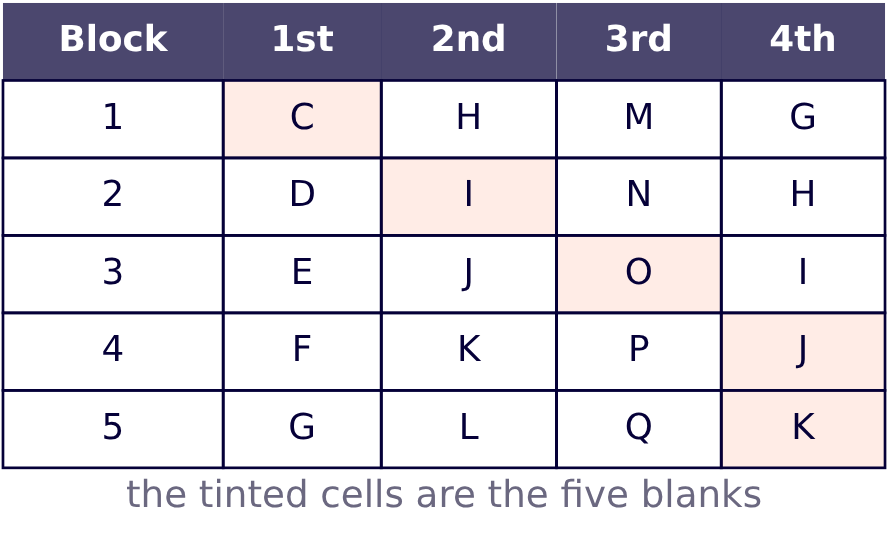 Column 1 runs C, D, E, F, G; column 2 runs H, I, J, K, L; column 3 runs M, N, O, P, Q; column 4 runs G, H, I, J, K - every column moves +1.
The tinted cells are the blanks, and reading them in order gives C, I, O, J, K.
So the required combination is CIOJK.
Column 1 runs C, D, E, F, G; column 2 runs H, I, J, K, L; column 3 runs M, N, O, P, Q; column 4 runs G, H, I, J, K - every column moves +1.
The tinted cells are the blanks, and reading them in order gives C, I, O, J, K.
So the required combination is CIOJK.
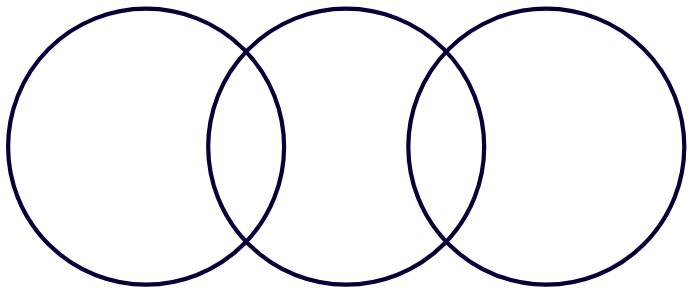
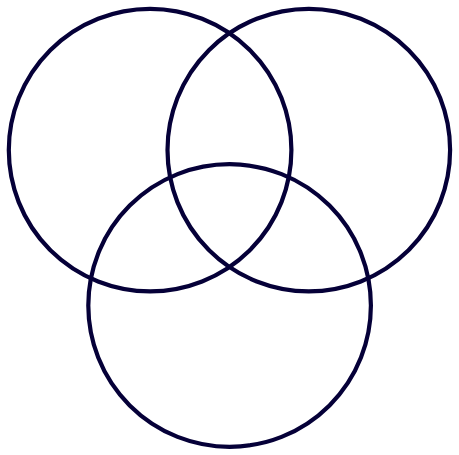

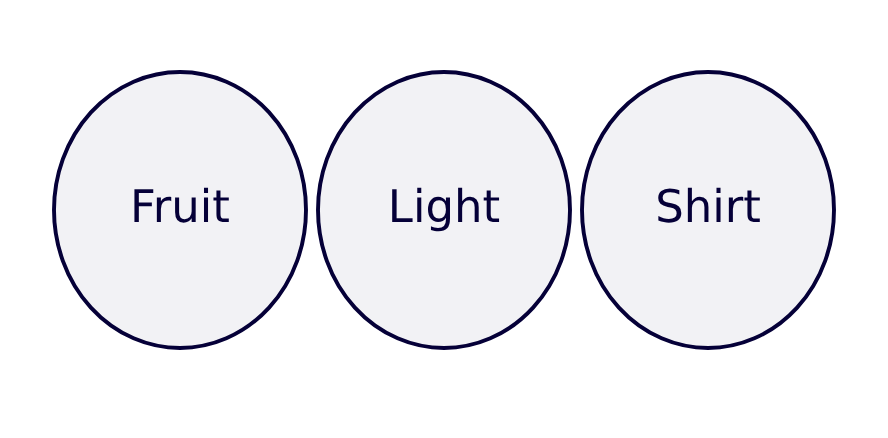 The three classes share nothing at all, so three separate circles show the relationship.
Only option (d) draws the three circles apart from one another.
The three classes share nothing at all, so three separate circles show the relationship.
Only option (d) draws the three circles apart from one another. (X)
(X)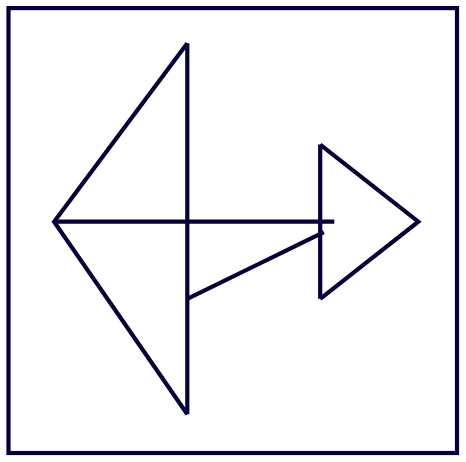
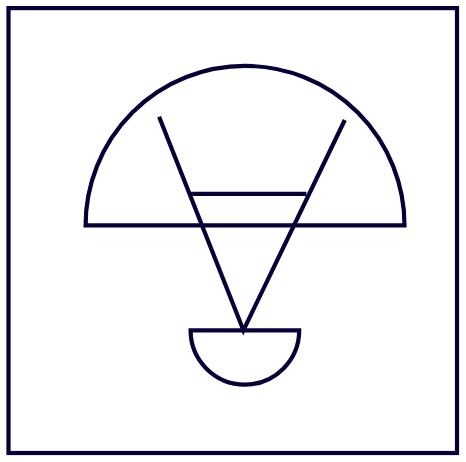
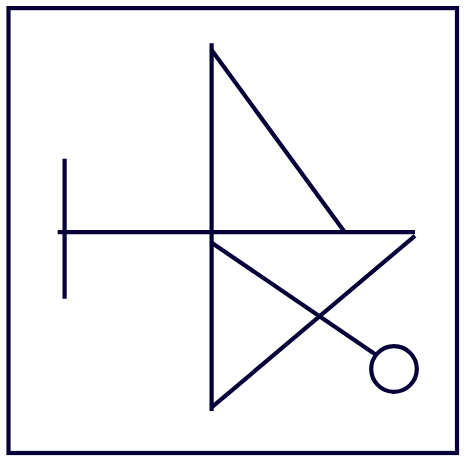
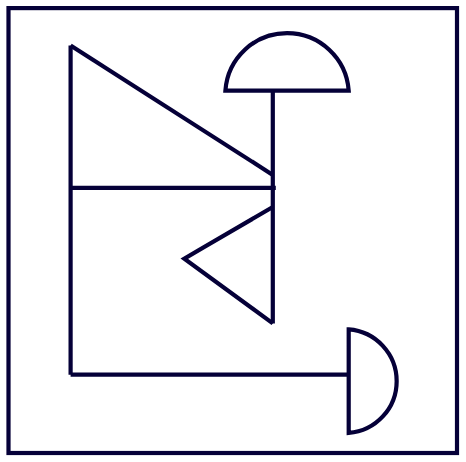
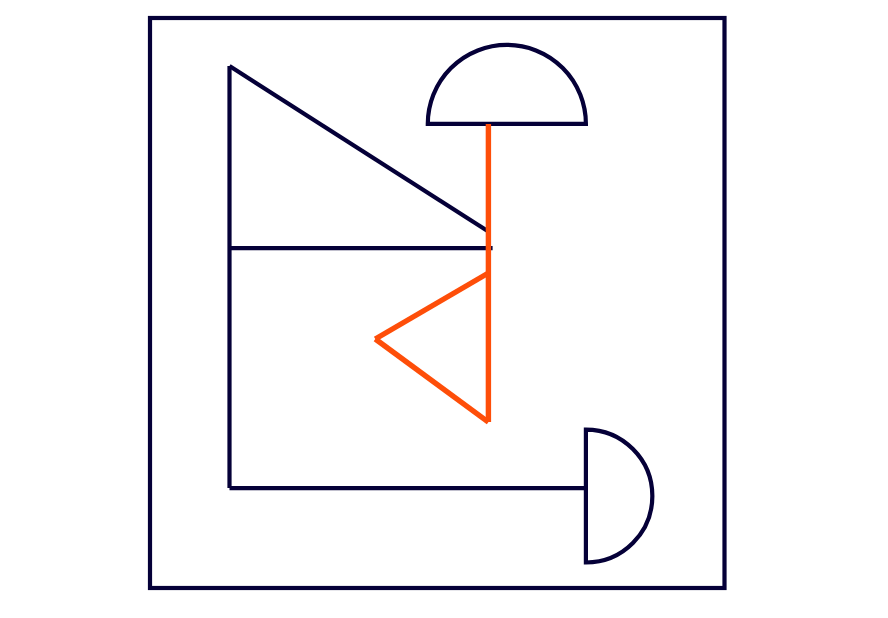 Option (d) contains exactly that pair, marked here; the other three options have the triangle on the wrong side of the line or no such line at all.
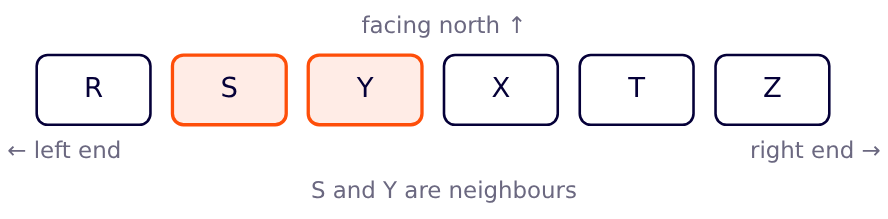 S is at seat 2 and Y at seat 3, so nobody sits between them - the answer is zero.
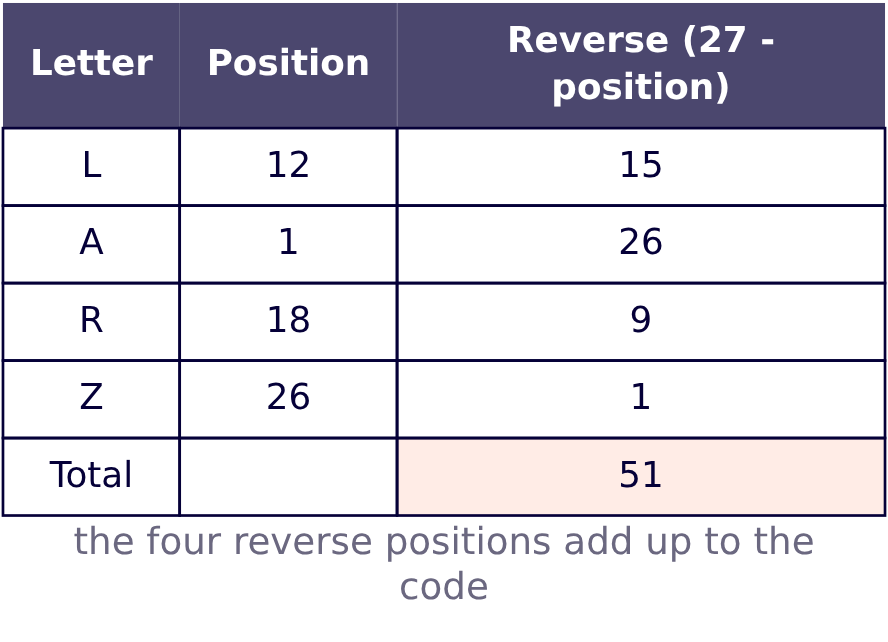 LARZ: 15+26+9+1=51.
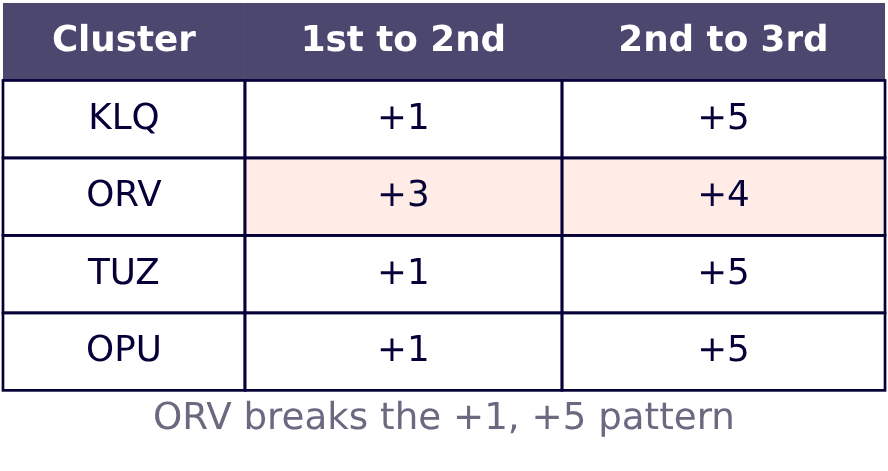 KLQ, TUZ and OPU each move +1 from the first letter to the second and +5 from the second to the third.
ORV moves +3 and then +4, so it is the cluster that does not belong.
KLQ, TUZ and OPU each move +1 from the first letter to the second and +5 from the second to the third.
ORV moves +3 and then +4, so it is the cluster that does not belong.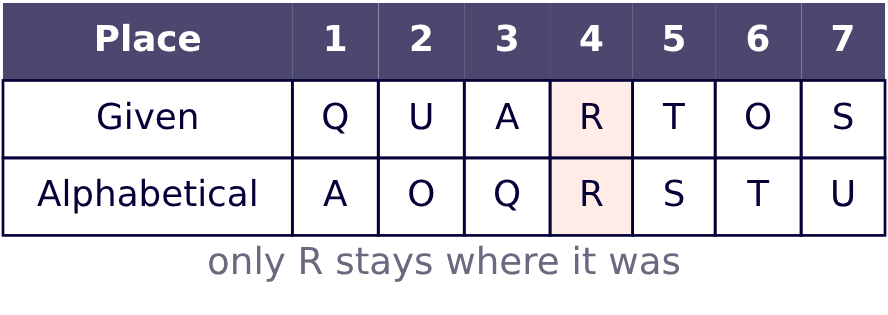 Comparing place by place, only the 4th place carries the same letter, R, in both rows.
So exactly one letter keeps its position.
Comparing place by place, only the 4th place carries the same letter, R, in both rows.
So exactly one letter keeps its position.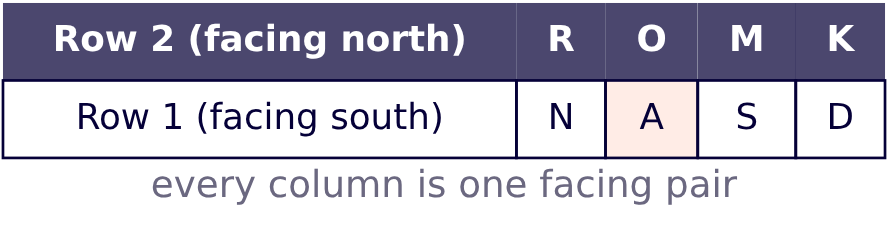 Each column of the table is one facing pair, and A faces O.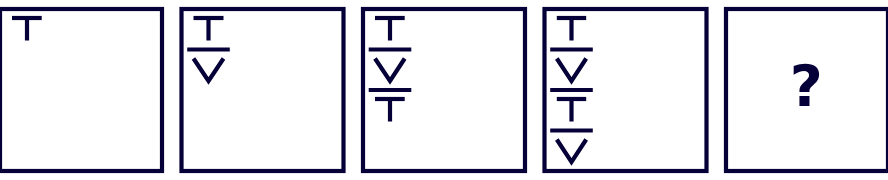
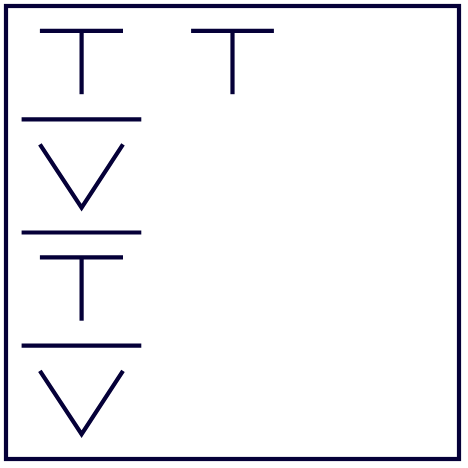
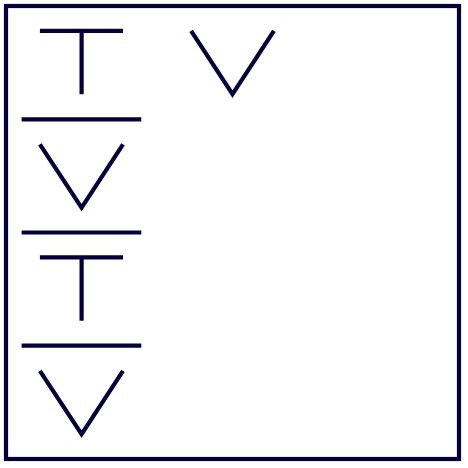
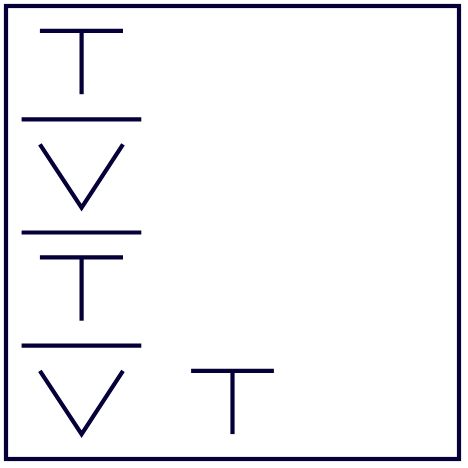
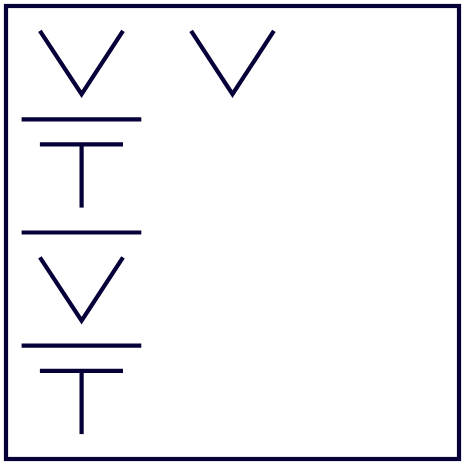
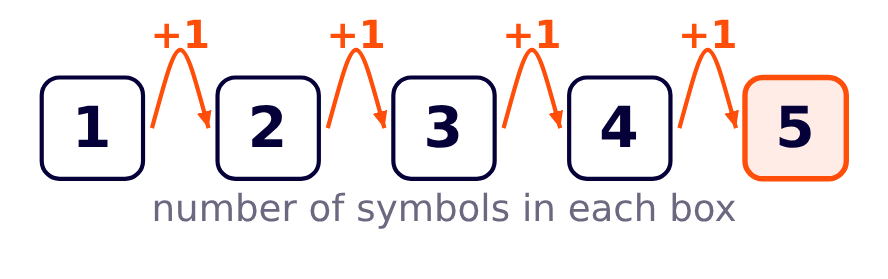 The four boxes hold 1, 2, 3 and 4 symbols, so the box in place of the question mark holds 5.
The symbols fill the first column from the top downwards, and the fifth one has to begin the second column at the top.
They also alternate in shape, T, V, T, V, so the fifth symbol is a T.
Only option (a) shows T, V, T, V down the first column and a T at the top of the second.
The four boxes hold 1, 2, 3 and 4 symbols, so the box in place of the question mark holds 5.
The symbols fill the first column from the top downwards, and the fifth one has to begin the second column at the top.
They also alternate in shape, T, V, T, V, so the fifth symbol is a T.
Only option (a) shows T, V, T, V down the first column and a T at the top of the second.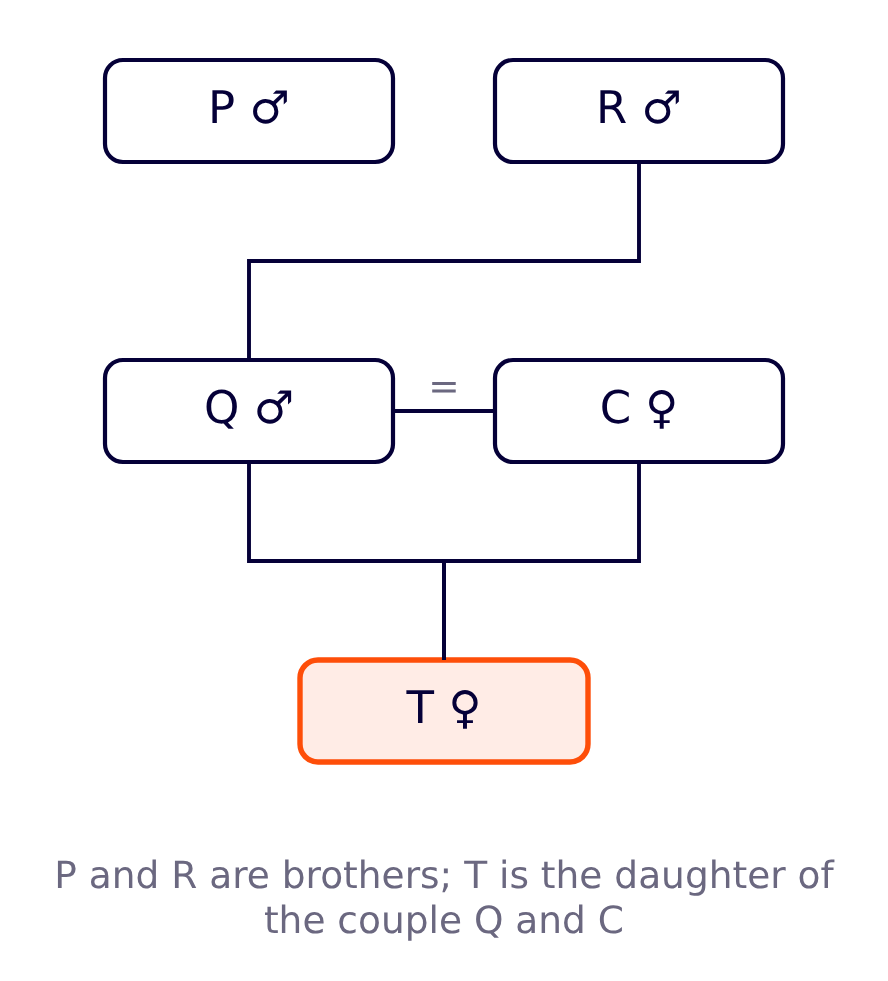 T is the daughter of C and C is the wife of Q, so Q is the father of T.
R is the father of Q, so R is the father of T's father.
P is the brother of R, so P is the brother of T's father's father.
That is, P is T's father's father's brother.
T is the daughter of C and C is the wife of Q, so Q is the father of T.
R is the father of Q, so R is the father of T's father.
P is the brother of R, so P is the brother of T's father's father.
That is, P is T's father's father's brother.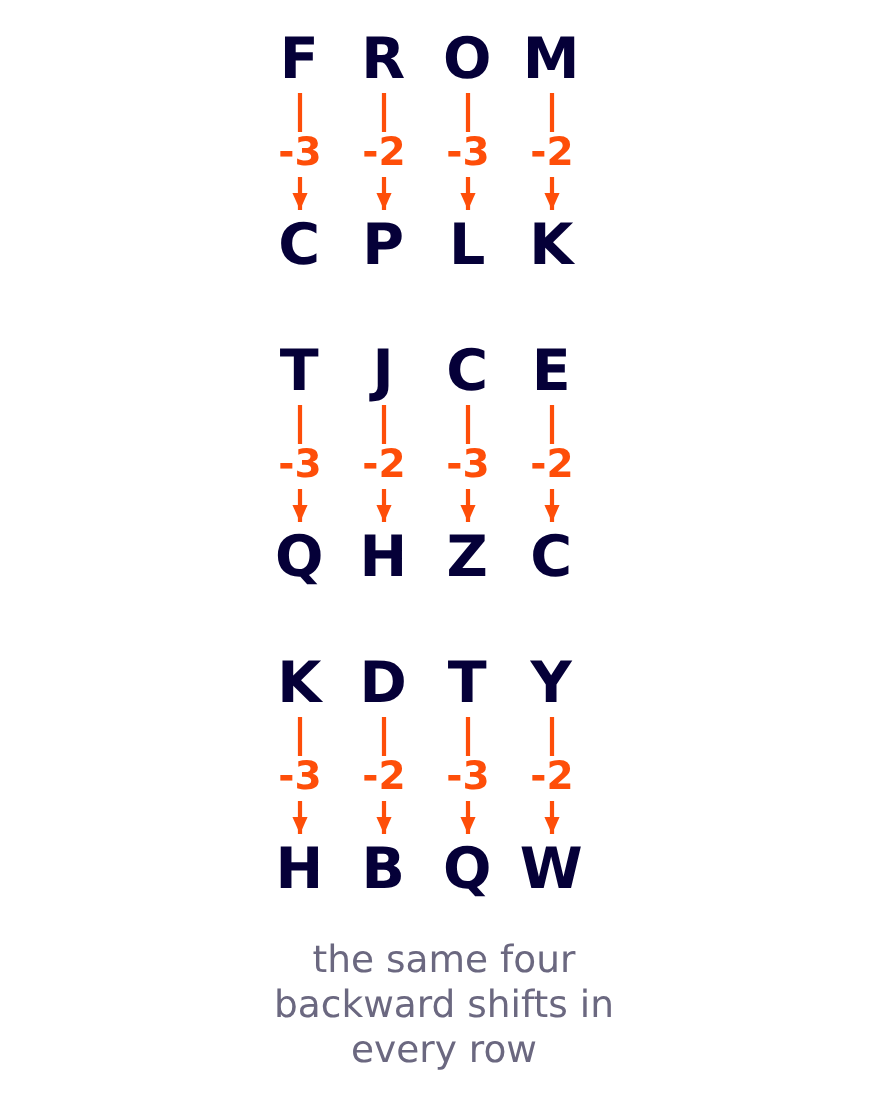 The four letters move back by 3, 2, 3 and 2 places, and both given pairs obey it.
Apply the same shifts to KDTY: K-3=H, D-2=B, T-3=Q, Y-2=W.
So KDTY is related to HBQW.
The four letters move back by 3, 2, 3 and 2 places, and both given pairs obey it.
Apply the same shifts to KDTY: K-3=H, D-2=B, T-3=Q, Y-2=W.
So KDTY is related to HBQW.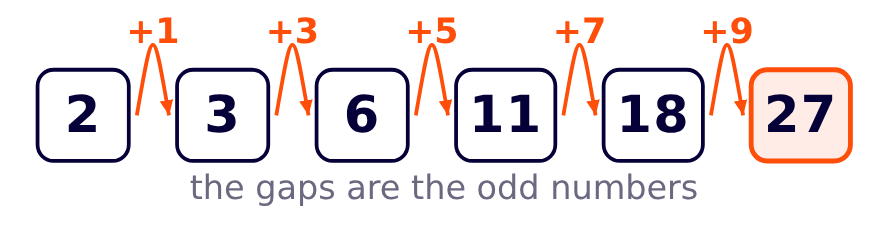 The differences are the odd numbers 1, 3, 5, 7, so the next difference is 9.
18+9=27.
The differences are the odd numbers 1, 3, 5, 7, so the next difference is 9.
18+9=27.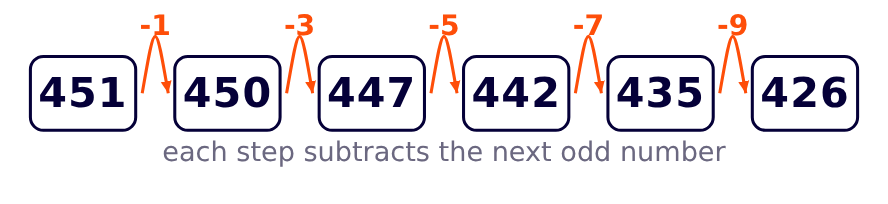 The terms fall by the odd numbers 1, 3, 5, 7, 9, so the missing term is 442-7=435.
The check works: 435-9=426, which is the last term given.
The terms fall by the odd numbers 1, 3, 5, 7, 9, so the missing term is 442-7=435.
The check works: 435-9=426, which is the last term given.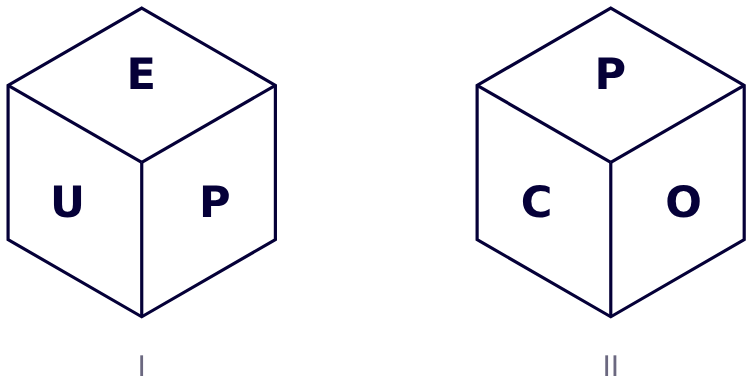
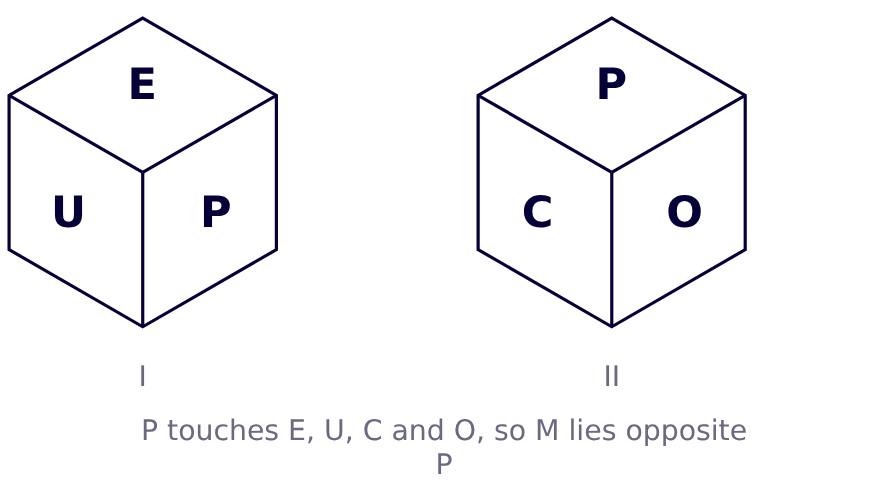 In view I, P is seen with E and U; in view II, P is seen with C and O.
So P touches E, U, C and O - four of the five other faces.
The only face left, M, must be the one opposite P, and therefore P is opposite M.
In view I, P is seen with E and U; in view II, P is seen with C and O.
So P touches E, U, C and O - four of the five other faces.
The only face left, M, must be the one opposite P, and therefore P is opposite M.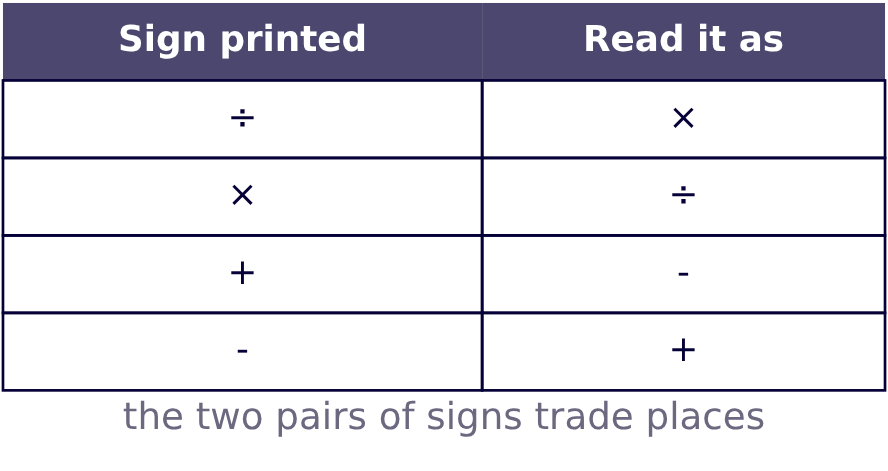 becomes .
Division and multiplication come first: and .
=40+8-9
=39
becomes .
Division and multiplication come first: and .
=40+8-9
=39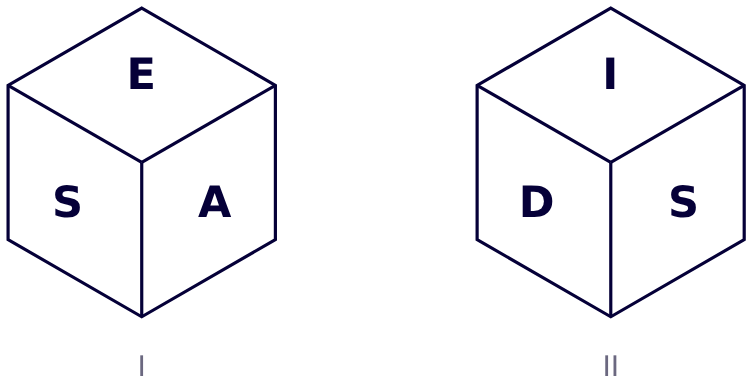
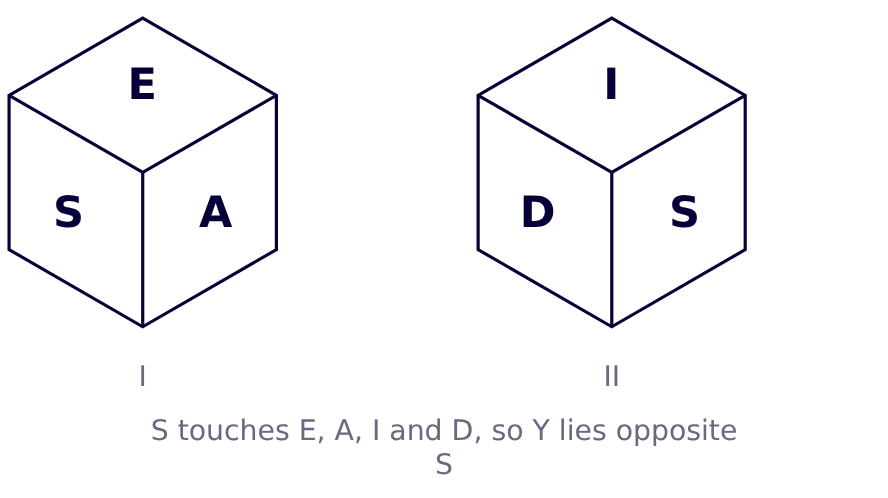 S appears with E and A in view I, and with I and D in view II.
So S touches E, A, I and D, which is four of the other five faces.
Only Y is left, so Y lies opposite S - the face opposite Y is S.
S appears with E and A in view I, and with I and D in view II.
So S touches E, A, I and D, which is four of the other five faces.
Only Y is left, so Y lies opposite S - the face opposite Y is S.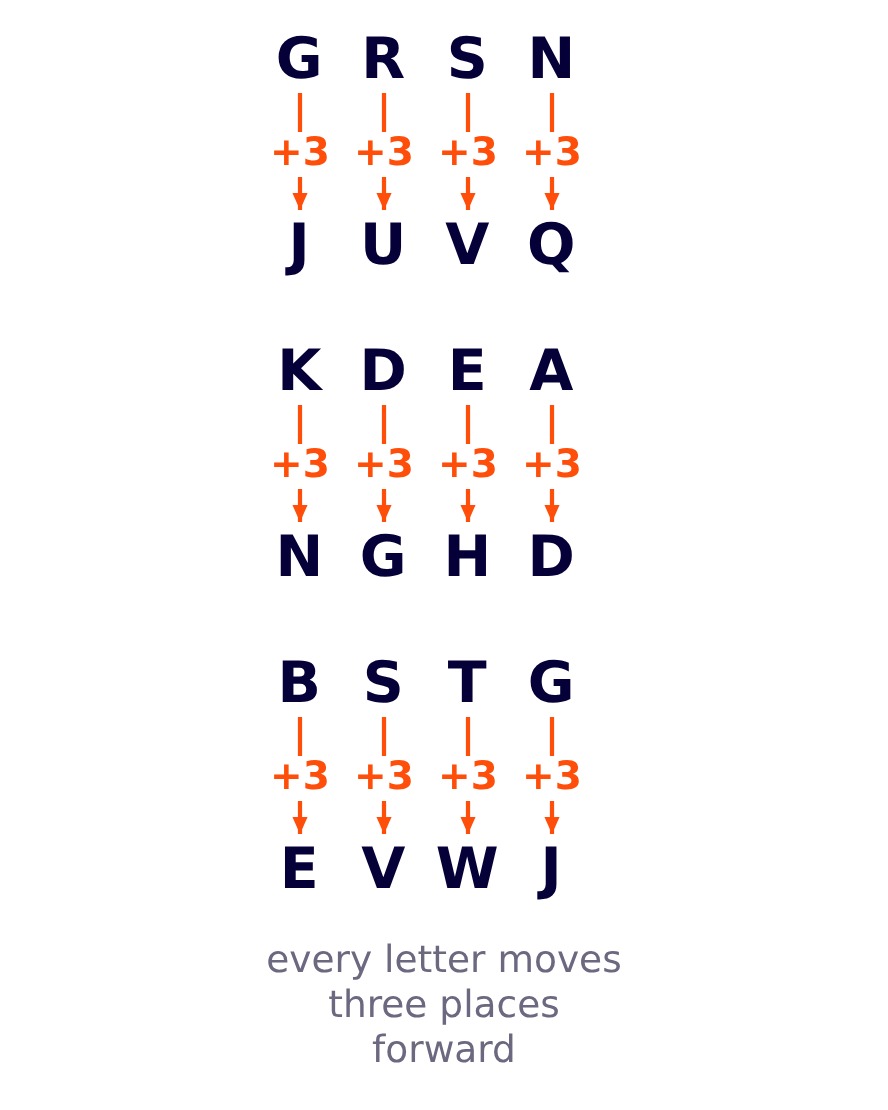 G+3=J, R+3=U, S+3=V, N+3=Q, and KDEA to NGHD works the same way.
Move every letter of BSTG three places forward: B+3=E, S+3=V, T+3=W, G+3=J.
So BSTG is related to EVWJ.
G+3=J, R+3=U, S+3=V, N+3=Q, and KDEA to NGHD works the same way.
Move every letter of BSTG three places forward: B+3=E, S+3=V, T+3=W, G+3=J.
So BSTG is related to EVWJ.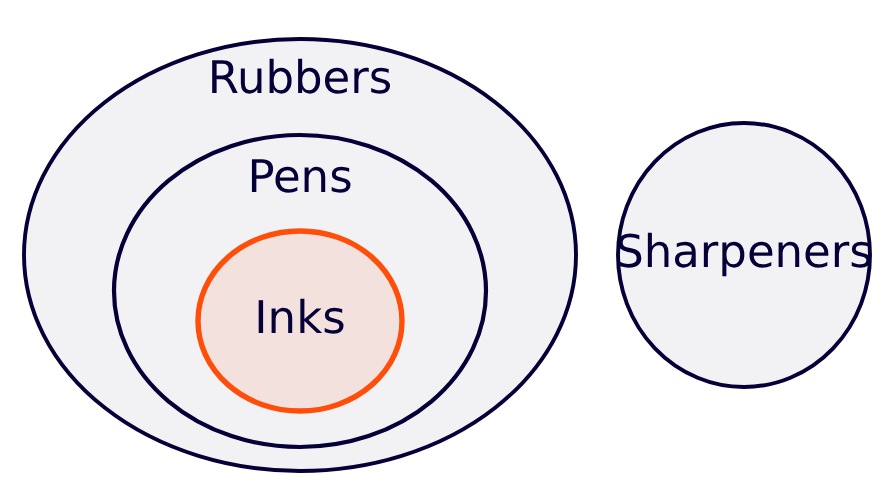 Every ink is a rubber, and no rubber is a sharpener, so no ink can be a sharpener - conclusion (I) follows.
The whole ink circle lies inside the rubber circle, so that part of the rubbers is ink - conclusion (II) follows.
Hence both conclusions follow.
Every ink is a rubber, and no rubber is a sharpener, so no ink can be a sharpener - conclusion (I) follows.
The whole ink circle lies inside the rubber circle, so that part of the rubbers is ink - conclusion (II) follows.
Hence both conclusions follow.