
1
Based on the English alphabetical order, three of the following four letter-clusters are alike in a certain way and thus form a group. Which letter-cluster DOES NOT belong to that group?
(Note: The odd one out is not based on the number of consonants/vowels or their position in the letter-cluster.)
- A.OIP
- B.LPJ
- C.OSM
- D.MQK
Solution
Odd one out: letter-cluster
Compare the gap between consecutive letters of each cluster, using their positions in the alphabet.
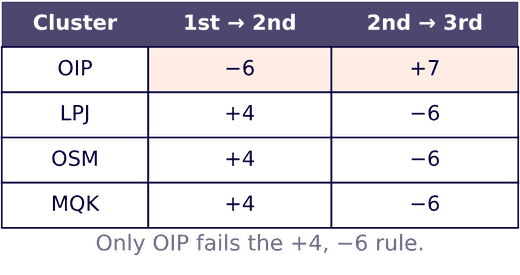 In LPJ, OSM and MQK the first letter moves +4 and then -6, so the third letter is always 2 less than the first.
In OIP the gaps are -6 and then +7, which breaks that pattern.
So OIP does not belong to the group, and the correct option is (a).
In LPJ, OSM and MQK the first letter moves +4 and then -6, so the third letter is always 2 less than the first.
In OIP the gaps are -6 and then +7, which breaks that pattern.
So OIP does not belong to the group, and the correct option is (a).
In LPJ, OSM and MQK the first letter moves +4 and then -6, so the third letter is always 2 less than the first.
In OIP the gaps are -6 and then +7, which breaks that pattern.
So OIP does not belong to the group, and the correct option is (a).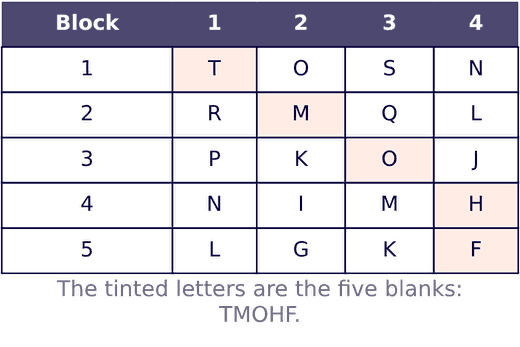 Inside every block the letters move -5, then +4, then -5.
The first letters of the five blocks are T, R, P, N, L - each one 2 less than the block before it.
Reading the five blanks in order gives T, M, O, H, F.
So the correct option is (c).
Inside every block the letters move -5, then +4, then -5.
The first letters of the five blocks are T, R, P, N, L - each one 2 less than the block before it.
Reading the five blanks in order gives T, M, O, H, F.
So the correct option is (c).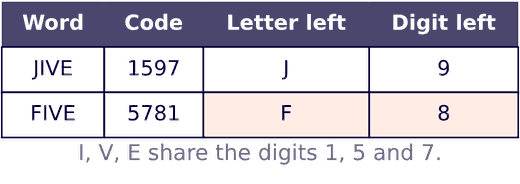 The digits common to both codes are 1, 5 and 7, so I, V, E use 1, 5, 7 in some order.
That leaves 9 for J in the first code and 8 for F in the second.
So the code for F is 8, and the correct option is (c).
The digits common to both codes are 1, 5 and 7, so I, V, E use 1, 5, 7 in some order.
That leaves 9 for J in the first code and 8 for F in the second.
So the code for F is 8, and the correct option is (c).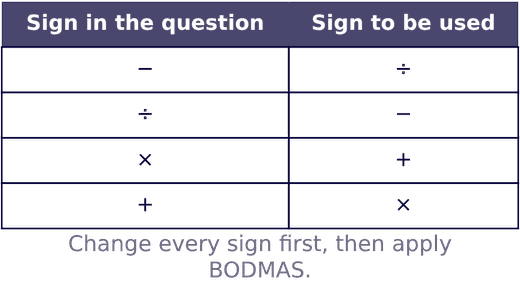 So becomes .
21+5-12=14
So the required value is 14, and the correct option is (a).
So becomes .
21+5-12=14
So the required value is 14, and the correct option is (a).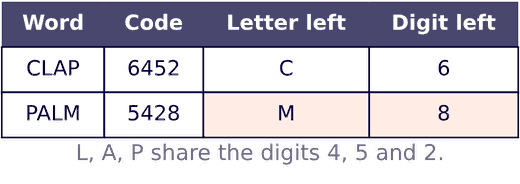 The digits common to both codes are 4, 5 and 2, so L, A, P use 4, 5, 2 in some order.
That leaves 6 for C in the first code and 8 for M in the second.
So M is coded as 8, and the correct option is (d).
The digits common to both codes are 4, 5 and 2, so L, A, P use 4, 5, 2 in some order.
That leaves 6 for C in the first code and 8 for M in the second.
So M is coded as 8, and the correct option is (d).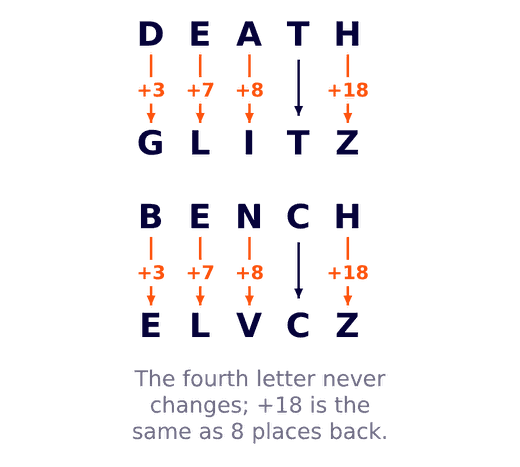 Applying the same shifts to BENCH: B+3=E, E+7=L, N+8=V, C stays C and H+18=Z.
So BENCH is related to ELVCZ, and the correct option is (d).
Applying the same shifts to BENCH: B+3=E, E+7=L, N+8=V, C stays C and H+18=Z.
So BENCH is related to ELVCZ, and the correct option is (d).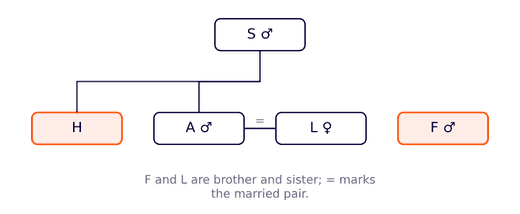 Now trace back from H: A is H's brother, L is A's wife and F is L's brother.
So F is H's brother's wife's brother, and the correct option is (b).
Now trace back from H: A is H's brother, L is A's wife and F is L's brother.
So F is H's brother's wife's brother, and the correct option is (b).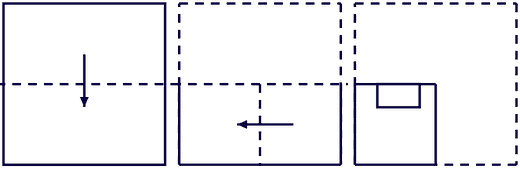
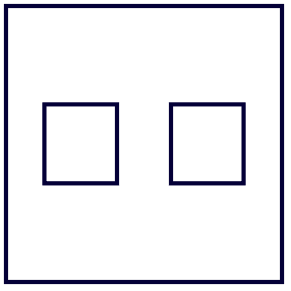
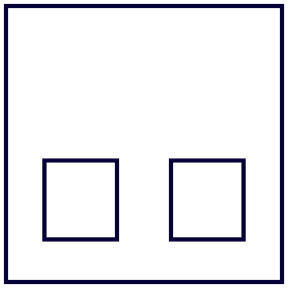
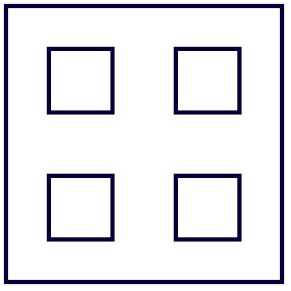
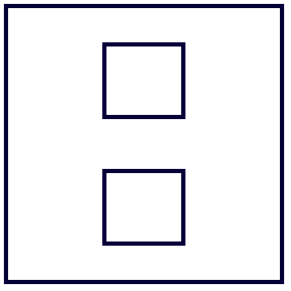
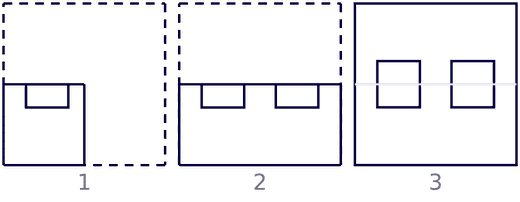 Opening the vertical fold mirrors the cut across the vertical centre line, giving two cuts side by side.
Opening the horizontal fold mirrors each of them across the horizontal centre line, so each cut closes into a complete rectangular hole sitting astride that line.
The sheet therefore shows exactly two rectangular holes, both cut through by the horizontal centre line and placed symmetrically about the vertical centre line, and neither hole touches an edge.
So the correct option is (a).
Opening the vertical fold mirrors the cut across the vertical centre line, giving two cuts side by side.
Opening the horizontal fold mirrors each of them across the horizontal centre line, so each cut closes into a complete rectangular hole sitting astride that line.
The sheet therefore shows exactly two rectangular holes, both cut through by the horizontal centre line and placed symmetrically about the vertical centre line, and neither hole touches an edge.
So the correct option is (a).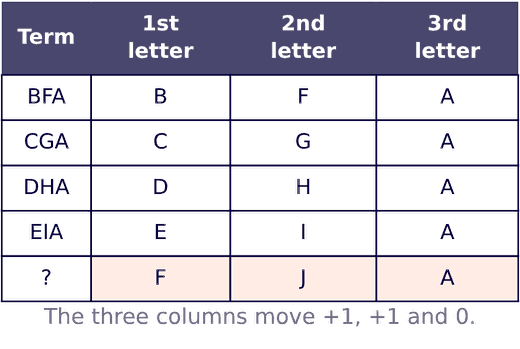 The first letters run B, C, D, E, so the next one is F.
The second letters run F, G, H, I, so the next one is J.
The third letter is A in every term, so it stays A.
The missing term is therefore FJA, and the correct option is (a).
The first letters run B, C, D, E, so the next one is F.
The second letters run F, G, H, I, so the next one is J.
The third letter is A in every term, so it stays A.
The missing term is therefore FJA, and the correct option is (a).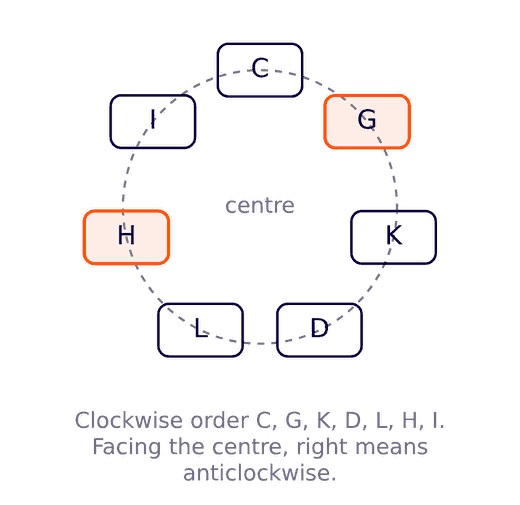 Counting three seats to G's right, i.e. anticlockwise, gives C, then I, then H.
So H sits third to the right of G, and the correct option is (c).
Counting three seats to G's right, i.e. anticlockwise, gives C, then I, then H.
So H sits third to the right of G, and the correct option is (c).

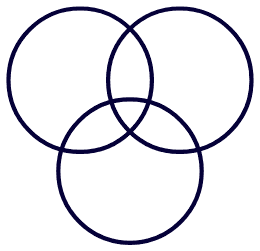
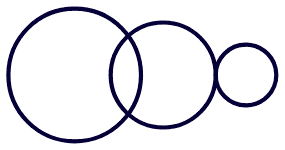
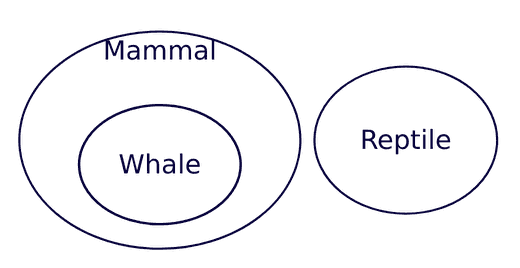 The diagram needed is therefore one small circle wholly inside a larger circle, with a third circle separate from both.
Option (a) keeps all three apart, (c) overlaps all three, and (d) only overlaps Whale with Mammal instead of enclosing it.
So the correct option is (b).
The diagram needed is therefore one small circle wholly inside a larger circle, with a third circle separate from both.
Option (a) keeps all three apart, (c) overlaps all three, and (d) only overlaps Whale with Mammal instead of enclosing it.
So the correct option is (b).
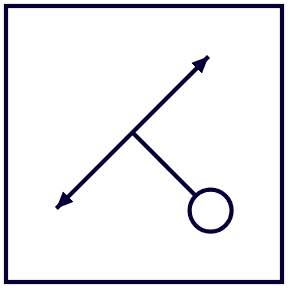
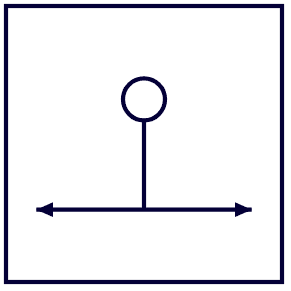
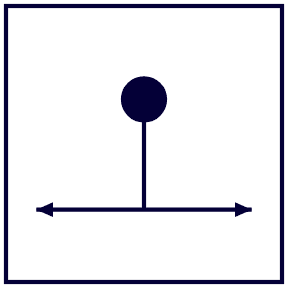
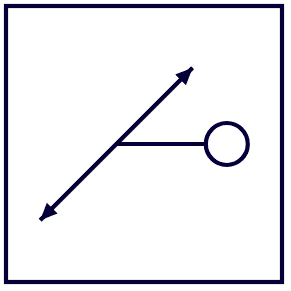
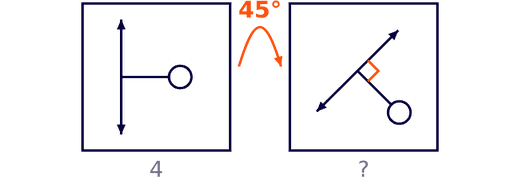 In the fourth figure the stem points right and the arrow is vertical, so in the fifth the stem must point down-right and the arrow must lie along the bottom-left to top-right diagonal.
Only option (a) shows that: the arrow on that diagonal, the stem still meeting it at a right angle, and the circle still hollow.
Option (d) does put the arrow on the right diagonal, but its stem is horizontal, so it no longer meets the arrow at a right angle; (b) and (c) have not turned at all and (c) also fills the circle in.
So the correct option is (a).
In the fourth figure the stem points right and the arrow is vertical, so in the fifth the stem must point down-right and the arrow must lie along the bottom-left to top-right diagonal.
Only option (a) shows that: the arrow on that diagonal, the stem still meeting it at a right angle, and the circle still hollow.
Option (d) does put the arrow on the right diagonal, but its stem is horizontal, so it no longer meets the arrow at a right angle; (b) and (c) have not turned at all and (c) also fills the circle in.
So the correct option is (a).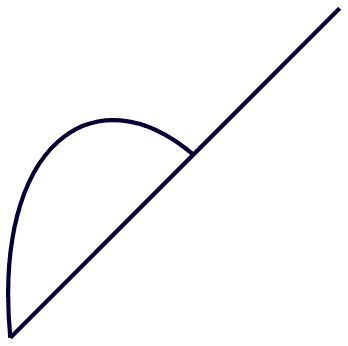
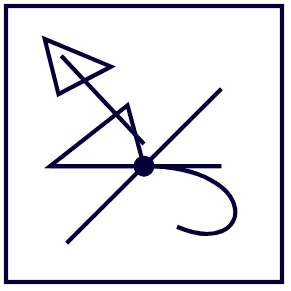
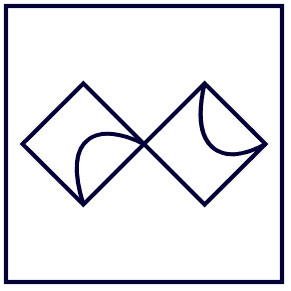
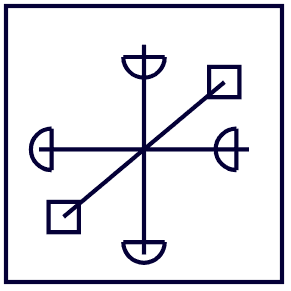
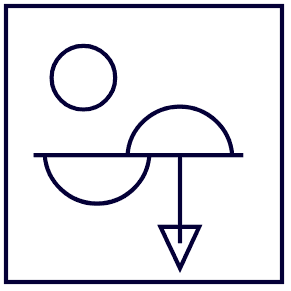
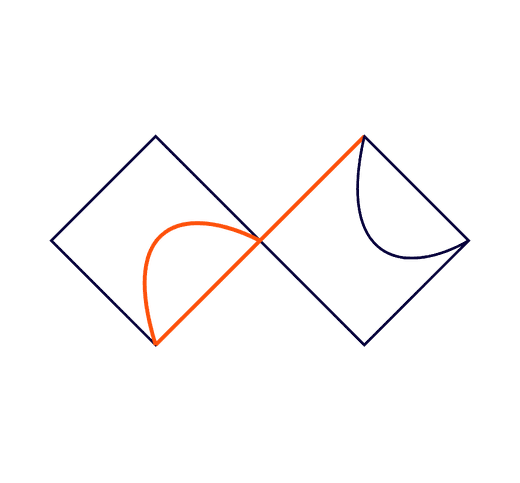 In option (b) the lower-left diamond's bottom-right edge runs straight on into the upper-right diamond's edge, giving one unbroken bottom-left to top-right stroke, and the curve inside the left diamond leaves the lower end of that stroke and rejoins it exactly as in (X).
In (a) the long slanting stroke carries an arrowhead, in (c) the strokes all meet at one centre and end in circles and half-discs, and in (d) the long stroke is horizontal, so none of them holds (X) as drawn.
So the correct option is (b).
In option (b) the lower-left diamond's bottom-right edge runs straight on into the upper-right diamond's edge, giving one unbroken bottom-left to top-right stroke, and the curve inside the left diamond leaves the lower end of that stroke and rejoins it exactly as in (X).
In (a) the long slanting stroke carries an arrowhead, in (c) the strokes all meet at one centre and end in circles and half-discs, and in (d) the long stroke is horizontal, so none of them holds (X) as drawn.
So the correct option is (b). 17-8=9 and .
29-8=21 and .
65-8=57, so the next step must be .
So the missing term is 173, and the correct option is (c).
17-8=9 and .
29-8=21 and .
65-8=57, so the next step must be .
So the missing term is 173, and the correct option is (c).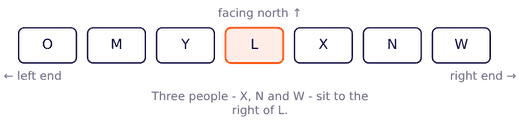 To the right of L (seat 4) sit X, N and W.
So three people sit to the right of L, and the correct option is (b).
To the right of L (seat 4) sit X, N and W.
So three people sit to the right of L, and the correct option is (b).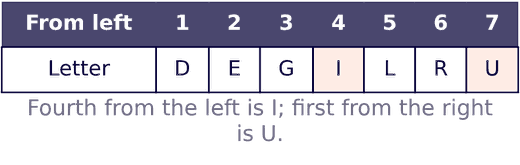 The fourth letter from the left end is I and the first from the right end is U.
I is the 9th letter and U is the 21st, so the letters strictly between them number 21-9-1=11.
So the answer is 11, and the correct option is (c).
The fourth letter from the left end is I and the first from the right end is U.
I is the 9th letter and U is the 21st, so the letters strictly between them number 21-9-1=11.
So the answer is 11, and the correct option is (c).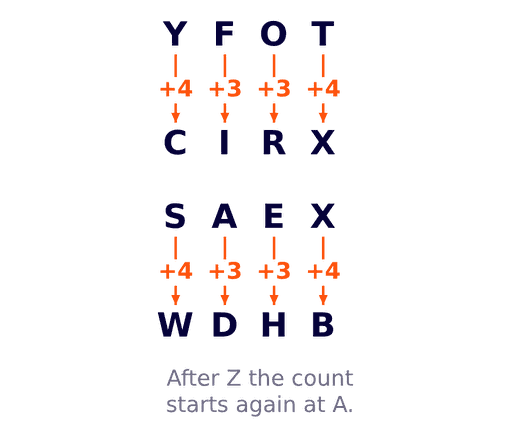 Applying it to SAEX: S+4=W, A+3=D, E+3=H and X+4=B (counting on past Z).
So SAEX is related to WDHB, and the correct option is (d).
Applying it to SAEX: S+4=W, A+3=D, E+3=H and X+4=B (counting on past Z).
So SAEX is related to WDHB, and the correct option is (d).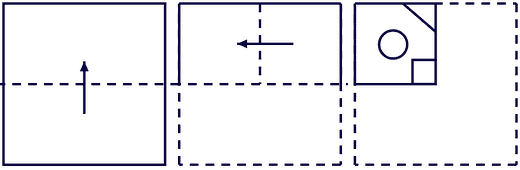
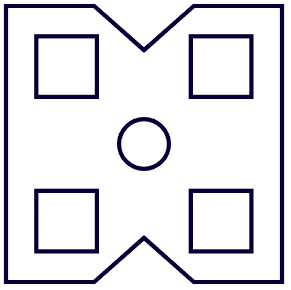
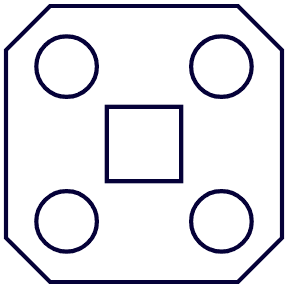
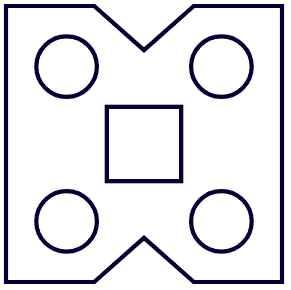
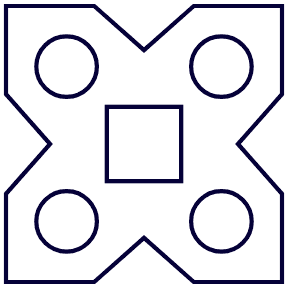
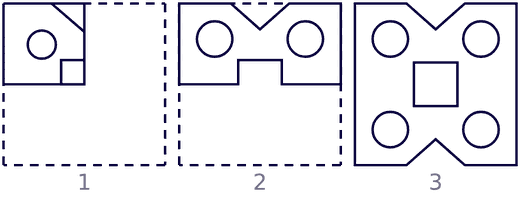 It never touches the free left edge, so the left and right edges must stay perfectly straight - that is what rules out (d), which notches them as well.
Option (a) turns the four circles into squares and the centre square into a circle, and (b) puts the cuts at the four corners instead of the edge midpoints.
So the correct option is (c).
It never touches the free left edge, so the left and right edges must stay perfectly straight - that is what rules out (d), which notches them as well.
Option (a) turns the four circles into squares and the centre square into a circle, and (b) puts the cuts at the four corners instead of the edge midpoints.
So the correct option is (c). The differences are +2, +4, +6, +8 - consecutive even numbers, so the next difference is +10.
730+10=740
So the missing term is 740, and the correct option is (c).
The differences are +2, +4, +6, +8 - consecutive even numbers, so the next difference is +10.
730+10=740
So the missing term is 740, and the correct option is (c).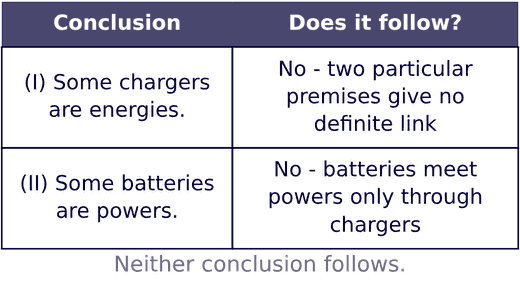 Neither conclusion is therefore compelled by the statements.
So the correct option is (d).
Neither conclusion is therefore compelled by the statements.
So the correct option is (d).