
21
When an object is moving with constant speed in a straight line, its acceleration:
- A.is zero
- B.is negative
- C.is positive
- D.cannot be determined
Solution
Uniform motion, acceleration
Correct option: (a) is zero.
Acceleration is the rate of change of velocity: .
Velocity has both magnitude and direction. Here the path is a straight line, so the direction never changes, and the speed is constant, so the magnitude never changes either - the velocity itself stays the same, i.e. u=v.
Substituting: .
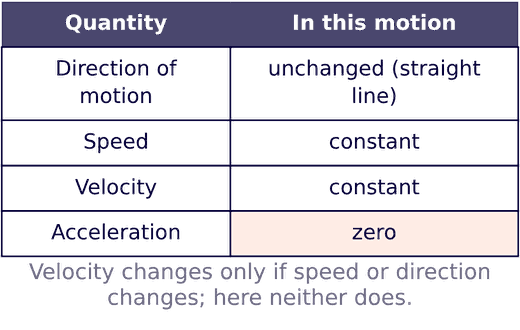 A positive acceleration would mean the speed is increasing and a negative one (retardation) that it is decreasing; neither happens in uniform motion, and since the data are complete the value can certainly be determined.
A positive acceleration would mean the speed is increasing and a negative one (retardation) that it is decreasing; neither happens in uniform motion, and since the data are complete the value can certainly be determined.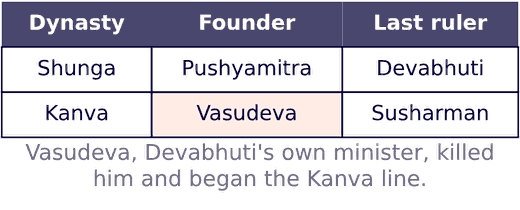 The Kanvas were Brahmanas and ruled only about 45 years (c. 75-30 BCE), the last of them, Susharman, being overthrown by the Satavahanas.
Pushyamitra founded the Shunga dynasty (he did not found the Kanvas), while Demetrius and Menander were Indo-Greek kings of the north-west - Menander is the Milinda of the Buddhist text Milindapanho.
The Kanvas were Brahmanas and ruled only about 45 years (c. 75-30 BCE), the last of them, Susharman, being overthrown by the Satavahanas.
Pushyamitra founded the Shunga dynasty (he did not found the Kanvas), while Demetrius and Menander were Indo-Greek kings of the north-west - Menander is the Milinda of the Buddhist text Milindapanho.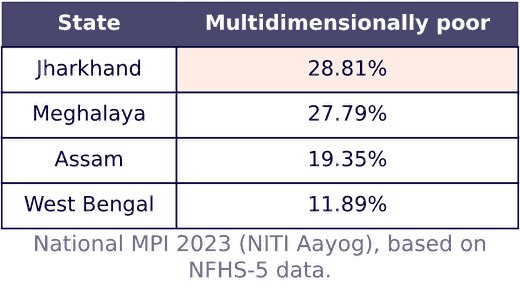 Meghalaya (about 27.79%) is a close second, while Assam (about 19.35%) and West Bengal (about 11.89%) are well behind.
The index measures deprivation on three equally weighted dimensions - health, education and standard of living - spread over 12 indicators, and follows the global Alkire-Foster method used by UNDP and OPHI.
Remember the all-India picture too: Bihar carries the highest headcount of any state, and the national poverty ratio fell from 24.85% in 2015-16 to 14.96% in 2019-21.
Meghalaya (about 27.79%) is a close second, while Assam (about 19.35%) and West Bengal (about 11.89%) are well behind.
The index measures deprivation on three equally weighted dimensions - health, education and standard of living - spread over 12 indicators, and follows the global Alkire-Foster method used by UNDP and OPHI.
Remember the all-India picture too: Bihar carries the highest headcount of any state, and the national poverty ratio fell from 24.85% in 2015-16 to 14.96% in 2019-21.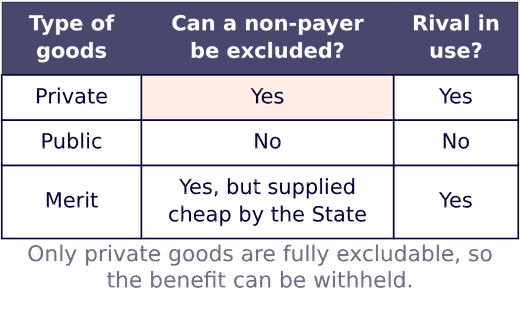 Public goods such as national defence or street lighting are non-excludable and non-rival, so nobody can be shut out of the benefit even if they pay nothing.
Merit goods (education, healthcare) are goods the State supplies below cost because society under-consumes them; the question is about exclusion, not about subsidy, so they are not the intended answer.
'Free riders' is not a category of goods at all - it names the people who enjoy a public good without paying for it.
Public goods such as national defence or street lighting are non-excludable and non-rival, so nobody can be shut out of the benefit even if they pay nothing.
Merit goods (education, healthcare) are goods the State supplies below cost because society under-consumes them; the question is about exclusion, not about subsidy, so they are not the intended answer.
'Free riders' is not a category of goods at all - it names the people who enjoy a public good without paying for it.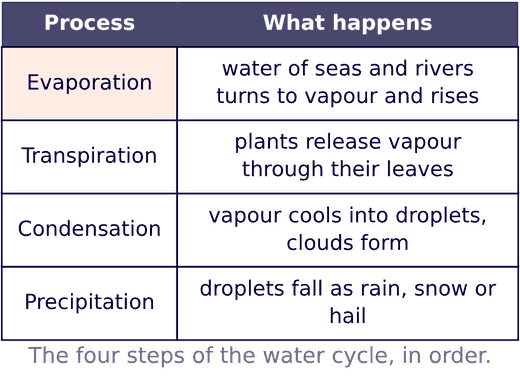 Transpiration is the same escape of vapour but through the stomata of plant leaves, so it is limited to vegetation, not open water bodies.
Condensation is the reverse change, vapour cooling back into droplets to form clouds, and precipitation is the fall of those droplets as rain, snow or hail.
Transpiration is the same escape of vapour but through the stomata of plant leaves, so it is limited to vegetation, not open water bodies.
Condensation is the reverse change, vapour cooling back into droplets to form clouds, and precipitation is the fall of those droplets as rain, snow or hail.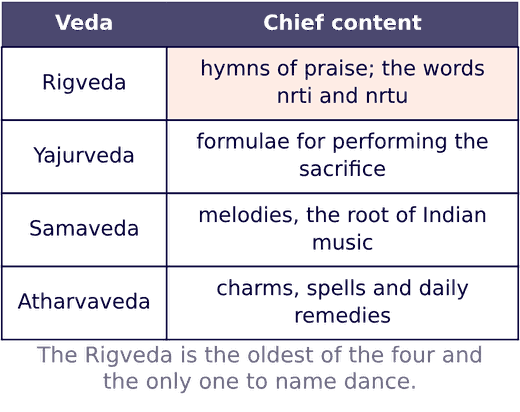 This makes the Rigveda the earliest literary evidence of dance in India; the systematic theory of dance comes much later, in Bharata's Natyashastra.
The Yajurveda is the book of sacrificial formulae, the Samaveda of melodies sung at the sacrifice, and the Atharvaveda of charms, spells and everyday remedies - none of them is the source of these two dance words.
This makes the Rigveda the earliest literary evidence of dance in India; the systematic theory of dance comes much later, in Bharata's Natyashastra.
The Yajurveda is the book of sacrificial formulae, the Samaveda of melodies sung at the sacrifice, and the Atharvaveda of charms, spells and everyday remedies - none of them is the source of these two dance words.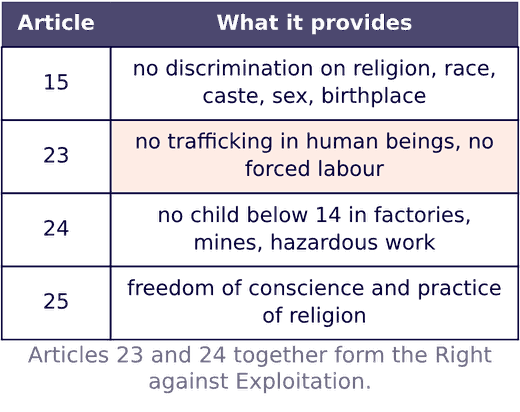 The right is available against private individuals as well as the State, which is why the Bonded Labour System (Abolition) Act, 1976 and the Immoral Traffic (Prevention) Act, 1956 flow from it.
Article 24 is the companion provision banning employment of children below 14 in factories, mines and other hazardous work; Article 15 forbids discrimination on grounds of religion, race, caste, sex or place of birth, and Article 25 guarantees freedom of conscience and religion.
The right is available against private individuals as well as the State, which is why the Bonded Labour System (Abolition) Act, 1976 and the Immoral Traffic (Prevention) Act, 1956 flow from it.
Article 24 is the companion provision banning employment of children below 14 in factories, mines and other hazardous work; Article 15 forbids discrimination on grounds of religion, race, caste, sex or place of birth, and Article 25 guarantees freedom of conscience and religion.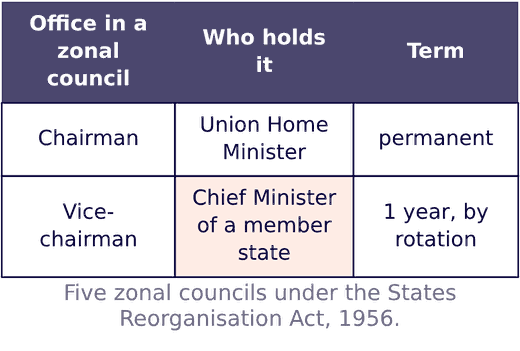 The five zonal councils - Northern, Central, Eastern, Western and Southern - are statutory, not constitutional, bodies set up under the States Reorganisation Act, 1956 to settle inter-state issues of economic and social planning, border and language disputes.
The North Eastern Council stands apart: it was created by a separate law, the North Eastern Council Act, 1971.
The Chief Secretary appears only as head of the standing committee of officials, and the Governor and the DGP hold no such rotating office.
The five zonal councils - Northern, Central, Eastern, Western and Southern - are statutory, not constitutional, bodies set up under the States Reorganisation Act, 1956 to settle inter-state issues of economic and social planning, border and language disputes.
The North Eastern Council stands apart: it was created by a separate law, the North Eastern Council Act, 1971.
The Chief Secretary appears only as head of the standing committee of officials, and the Governor and the DGP hold no such rotating office.