
1
Eight people are sitting in two parallel rows containing 4 people each, in such a way that there is equal distance between adjacent persons.
In row 1 - G, I, F and T are seated and all of them are facing south.
In row 2 - B, O, N and D are seated and all of them are facing north.
Thus each person faces another person from the other row.
No one sits to the right of B. Only two people sit between N and B. The one facing O sits second to the right of the one facing B. I sits to the immediate right of F. G sits to the immediate right of I and doesn't face O.
Which of the following represents both people sitting at the extreme ends of the rows?
- A.G and D
- B.T and N
- C.I and B
- D.T and O
Solution
Linear seating, two rows
No one sits to the right of B, so B takes the east end of row 2, and as exactly two people sit between N and B, N takes the west end.
Row 1 faces south, so for that row 'right' means towards the west. The person facing B sits opposite him at the east end, and the person facing O sits two seats to the west of that person, which puts O in the second seat of row 2 and leaves D in the third.
I sits immediately right of F and G immediately right of I, so row 1 runs G, I, F, T from west to east; the other possible order T, G, I, F would place G opposite O, which is not allowed.
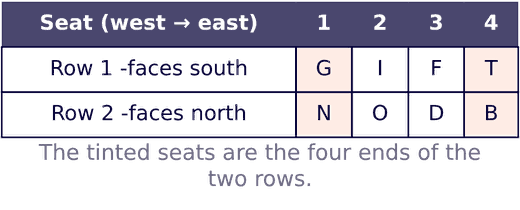 The ends are G and T in row 1 and N and B in row 2, and the only option that names two of these four is T and N, so option (b) is correct.
The ends are G and T in row 1 and N and B in row 2, and the only option that names two of these four is T and N, so option (b) is correct.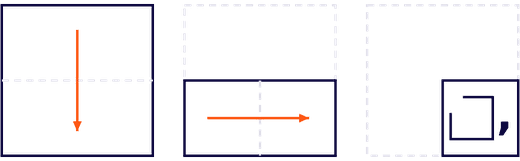
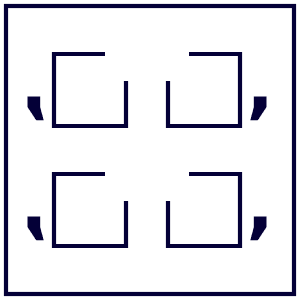
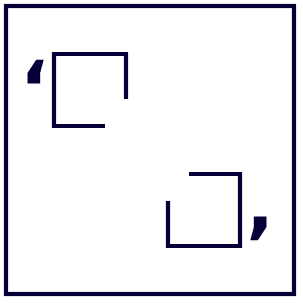
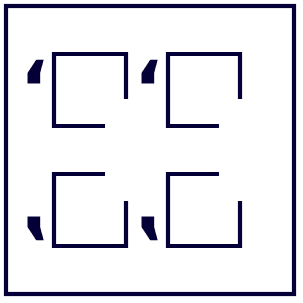
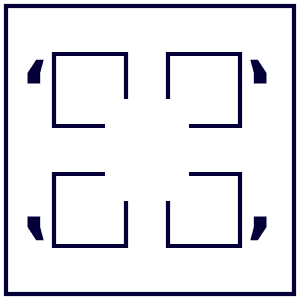
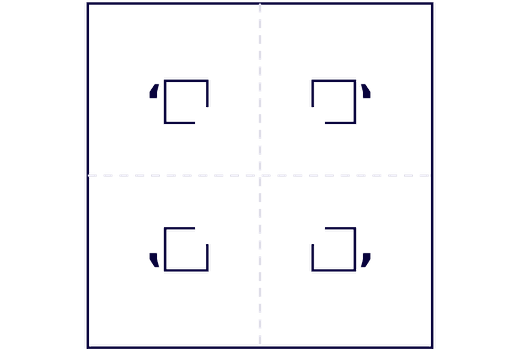 So the two upper marks must be the upside-down images of the two lower ones, and the left marks the left-right images of the right ones: every comma points outwards, away from the centre.
Option (a) merely repeats the lower pair at the top instead of turning it over, option (b) shows only two punches instead of four and option (c) leaves every comma on the left, so option (d) is correct.
So the two upper marks must be the upside-down images of the two lower ones, and the left marks the left-right images of the right ones: every comma points outwards, away from the centre.
Option (a) merely repeats the lower pair at the top instead of turning it over, option (b) shows only two punches instead of four and option (c) leaves every comma on the left, so option (d) is correct.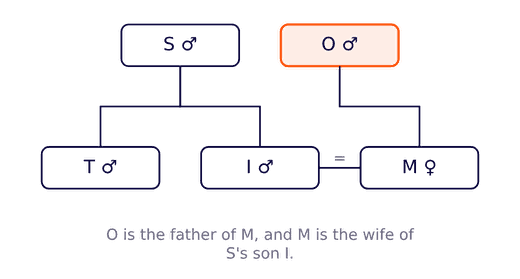 Hence O is the father of S's son's wife, i.e. son's wife's father, so option (c) is correct.
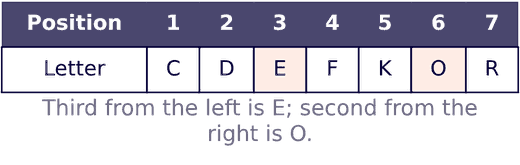 E is the 5th letter and O the 15th, so the letters strictly between them number 15-5-1=9 (F, G, H, I, J, K, L, M, N).
Hence option (a) is correct.
E is the 5th letter and O the 15th, so the letters strictly between them number 15-5-1=9 (F, G, H, I, J, K, L, M, N).
Hence option (a) is correct.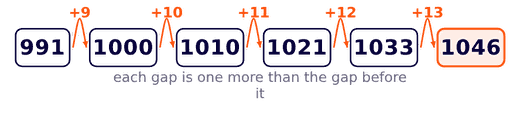 So the next gap is +13, giving 1033+13=1046.
Hence option (d) is correct.
So the next gap is +13, giving 1033+13=1046.
Hence option (d) is correct.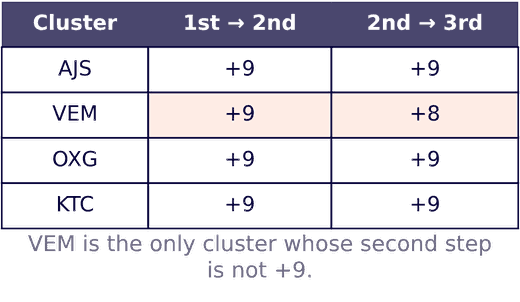 AJS, OXG and KTC all move +9 and then +9 ( and simply run past Z).
VEM moves , which is +9, but then , which is only +8.
So VEM breaks the pattern and option (b) is correct.
AJS, OXG and KTC all move +9 and then +9 ( and simply run past Z).
VEM moves , which is +9, but then , which is only +8.
So VEM breaks the pattern and option (b) is correct.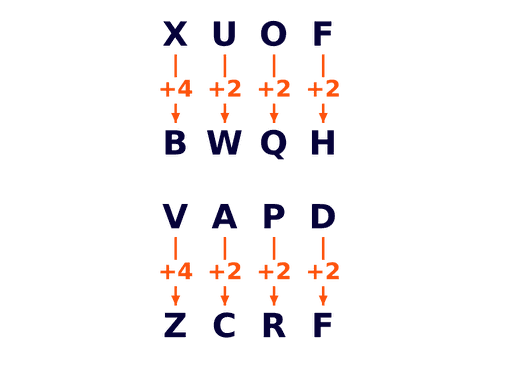 Applying it to VAPD gives V+4=Z, A+2=C, P+2=R and D+2=F.
So VAPD is related to ZCRF and option (a) is correct.
Applying it to VAPD gives V+4=Z, A+2=C, P+2=R and D+2=F.
So VAPD is related to ZCRF and option (a) is correct. So the next difference is -7, giving 715-7=708.
Hence option (a) is correct.
So the next difference is -7, giving 715-7=708.
Hence option (a) is correct.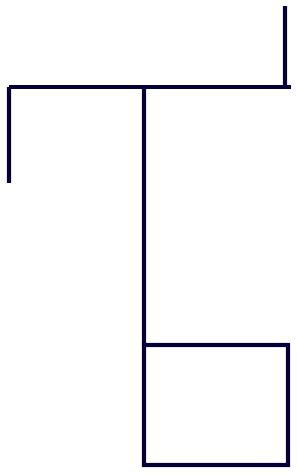 (X)
(X)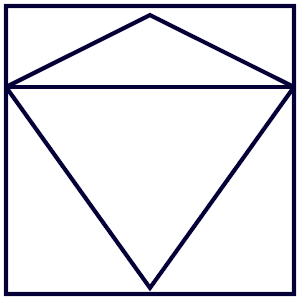
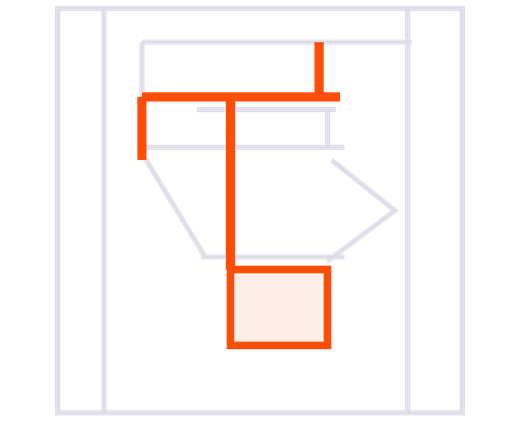 Option (c) contains all five parts in exactly that arrangement, and without turning the figure: the wide horizontal line, the line running down from its left end, the short line rising from its right end, the central vertical, and the small rectangle sitting to the right of the foot of that vertical.
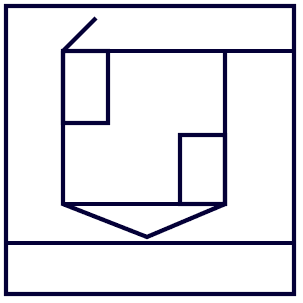
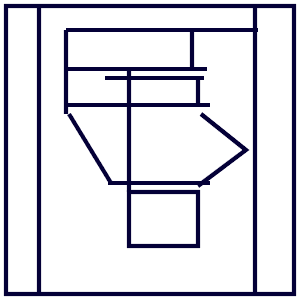
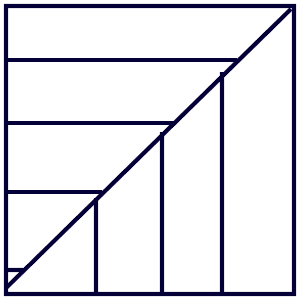
Option (a) is built only from a chord and two triangles, option (b) has no straight stem ending in a rectangle at its side, and option (d) is only a diagonal with lines parallel to the sides, so option (c) is correct.
Option (c) contains all five parts in exactly that arrangement, and without turning the figure: the wide horizontal line, the line running down from its left end, the short line rising from its right end, the central vertical, and the small rectangle sitting to the right of the foot of that vertical.
Option (a) is built only from a chord and two triangles, option (b) has no straight stem ending in a rectangle at its side, and option (d) is only a diagonal with lines parallel to the sides, so option (c) is correct.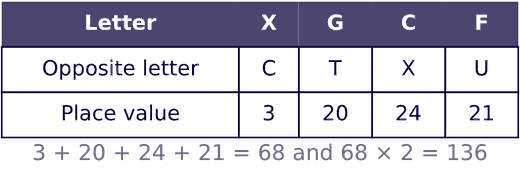 For XGCF the opposites are C, T, X, U, so the sum is 3+20+24+21=68 and the code is , i.e. option (a).
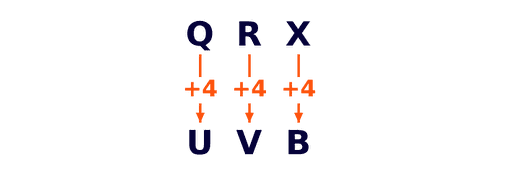 So the missing cluster is Q+4=U, R+4=V and X+4=B (counting on past Z), i.e. UVB.
Hence option (a) is correct.
So the missing cluster is Q+4=U, R+4=V and X+4=B (counting on past Z), i.e. UVB.
Hence option (a) is correct.
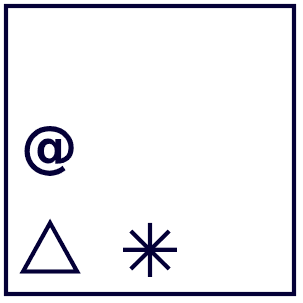
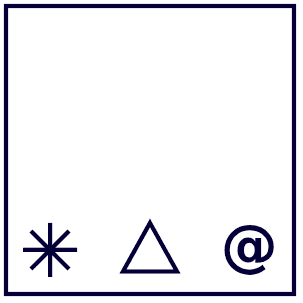
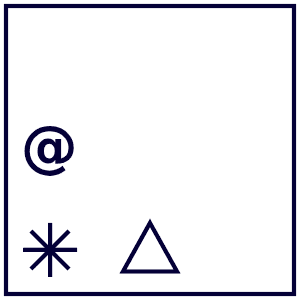
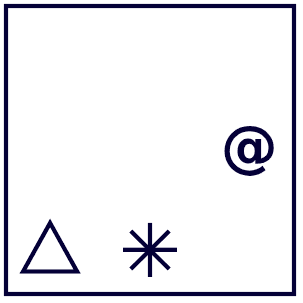
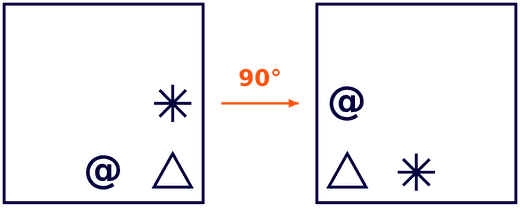 Four quarter-turns complete a full turn, so the fifth figure repeats the first: @ at the middle of the left edge, the triangle in the bottom-left corner and the star beside it in the bottom row.
Option (b) puts all three symbols in the bottom row, option (c) interchanges the triangle and the star, and option (d) shifts @ to the right edge, so option (a) is correct.
Four quarter-turns complete a full turn, so the fifth figure repeats the first: @ at the middle of the left edge, the triangle in the bottom-left corner and the star beside it in the bottom row.
Option (b) puts all three symbols in the bottom row, option (c) interchanges the triangle and the star, and option (d) shifts @ to the right edge, so option (a) is correct.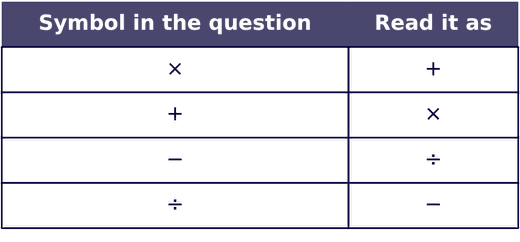 So becomes .
By BODMAS, divide first: , then multiply: .
This leaves 57-9+20=48+20=68, so option (a) is correct.
So becomes .
By BODMAS, divide first: , then multiply: .
This leaves 57-9+20=48+20=68, so option (a) is correct.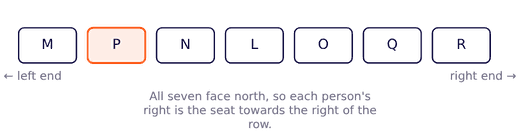 The only person between M and N is P, so option (d) is correct.
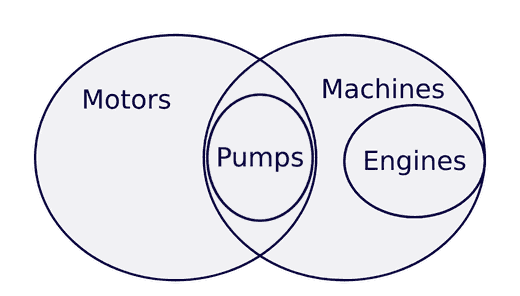 Every pump is a machine as well as a motor, so at least the pumps are machines that are motors; hence 'Some machines are motors' definitely follows.
Nothing links engines to motors, and the diagram shows the engines can sit entirely in the part of 'machines' lying outside 'motors', so 'All engines are motors' need not be true.
Only conclusion (II) follows, so option (c) is correct.
Every pump is a machine as well as a motor, so at least the pumps are machines that are motors; hence 'Some machines are motors' definitely follows.
Nothing links engines to motors, and the diagram shows the engines can sit entirely in the part of 'machines' lying outside 'motors', so 'All engines are motors' need not be true.
Only conclusion (II) follows, so option (c) is correct.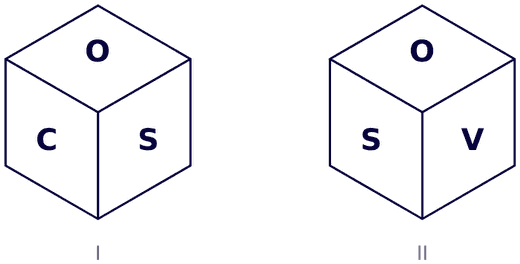
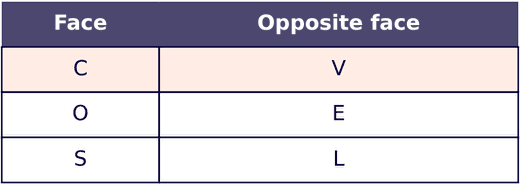 The remaining pair then splits as O opposite E and S opposite L.
So the face opposite V is C, and option (a) is correct.
The remaining pair then splits as O opposite E and S opposite L.
So the face opposite V is C, and option (a) is correct.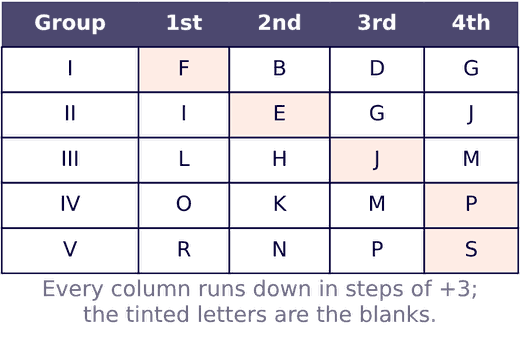 The first letters must therefore be F, I, L, O, R, so the first blank is F, and the other blanks are E, J, P and S.
The blanks in order give FEJPS, so option (c) is correct.
The first letters must therefore be F, I, L, O, R, so the first blank is F, and the other blanks are E, J, P and S.
The blanks in order give FEJPS, so option (c) is correct.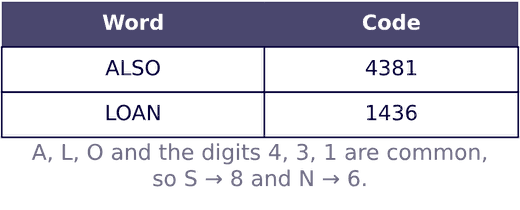 So the leftover digit of ALSO, 8, stands for S, and the leftover digit of LOAN, 6, stands for N.
Hence N is coded as 6 and option (b) is correct.
So the leftover digit of ALSO, 8, stands for S, and the leftover digit of LOAN, 6, stands for N.
Hence N is coded as 6 and option (b) is correct.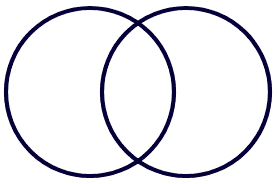


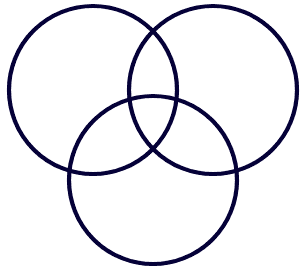
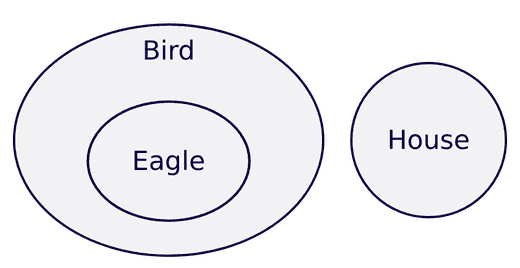 Only option (b) shows a small circle drawn inside a larger one with a third circle standing separately; (a) and (d) make the classes overlap and (c) offers a single circle for three different classes.
Hence option (b) is correct.
Only option (b) shows a small circle drawn inside a larger one with a third circle standing separately; (a) and (d) make the classes overlap and (c) offers a single circle for three different classes.
Hence option (b) is correct.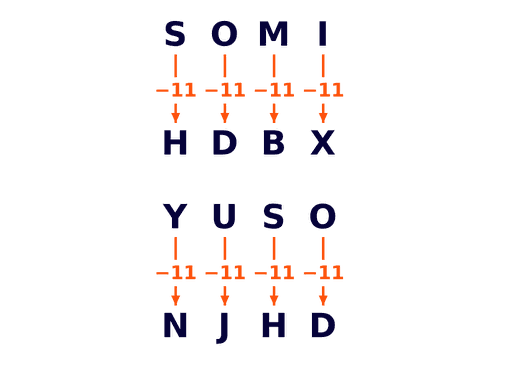 For YUSO: Y-11=N, U-11=J, S-11=H and O-11=D, giving NJHD, so option (a) is correct.