
1
G, H, I, J, M, N and O are sitting around a circular table facing the centre of the table (but not necessarily in the same order). N sits third to the left of I. Only one person sits between I and M when counted from the left of M. Only two people sit between J and O when counted from the right of O. H is an immediate neighbour of J. Who sits third to the right of G?
- A.I
- B.O
- C.N
- D.H
Solution
Circular seating
All seven face the centre, so for every one of them the clockwise direction is their left and the anticlockwise direction is their right.
Start with M. Counting to the left of M only one person sits between M and I, so clockwise the order runs M, one person, I.
N sits third to the left of I, so three seats clockwise from I is N; that fixes M, _, I, _, _, N and leaves one seat after N.
Counting to the right of O, two people sit between O and J, so J is three seats anticlockwise from O. Putting J in the seat right after I makes O the last free seat, and H, who must be next to J, takes the seat between J and N.
The only seat still empty is the one between M and I, and it goes to G.
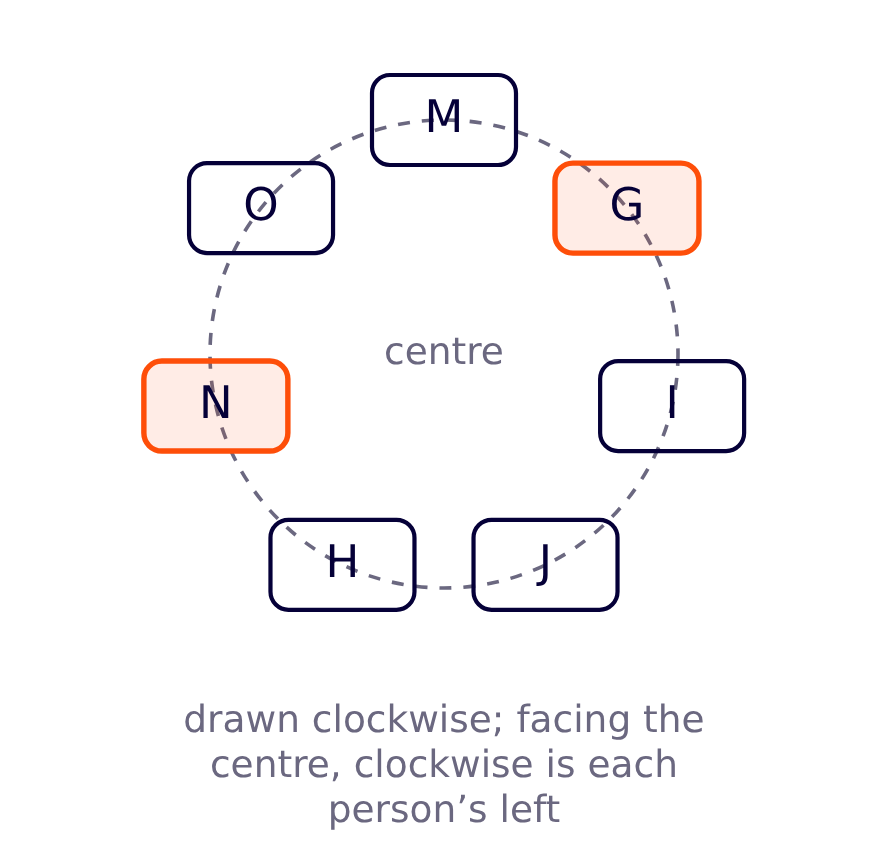 Reading clockwise the table is M, G, I, J, H, N, O.
Third to the right of G means three seats anticlockwise from G: M, then O, then N.
So N sits third to the right of G, and the answer is option (c).
Reading clockwise the table is M, G, I, J, H, N, O.
Third to the right of G means three seats anticlockwise from G: M, then O, then N.
So N sits third to the right of G, and the answer is option (c).
Reading clockwise the table is M, G, I, J, H, N, O.
Third to the right of G means three seats anticlockwise from G: M, then O, then N.
So N sits third to the right of G, and the answer is option (c).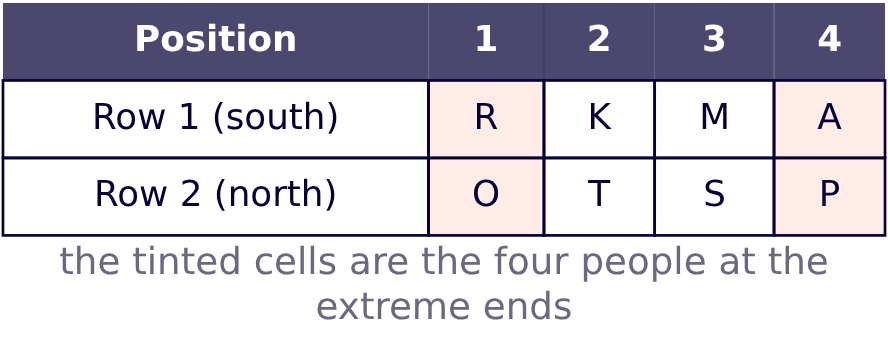 The ends of row 1 are R and A, the ends of row 2 are O and P; only option (b), A and O, names two people who are both sitting at an extreme end.
So the answer is option (b).
The ends of row 1 are R and A, the ends of row 2 are O and P; only option (b), A and O, names two people who are both sitting at an extreme end.
So the answer is option (b).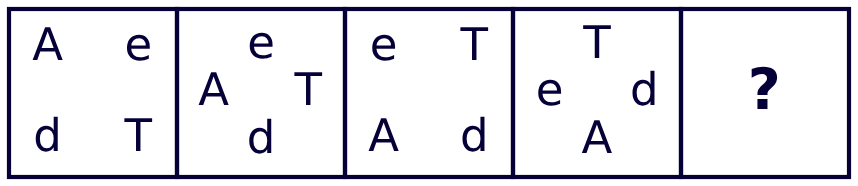
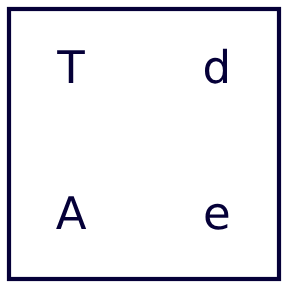
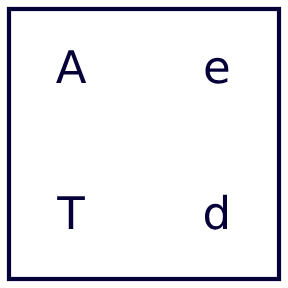
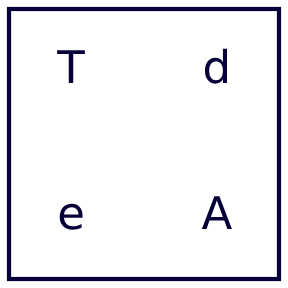
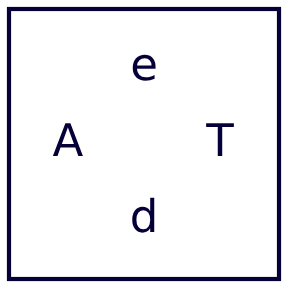
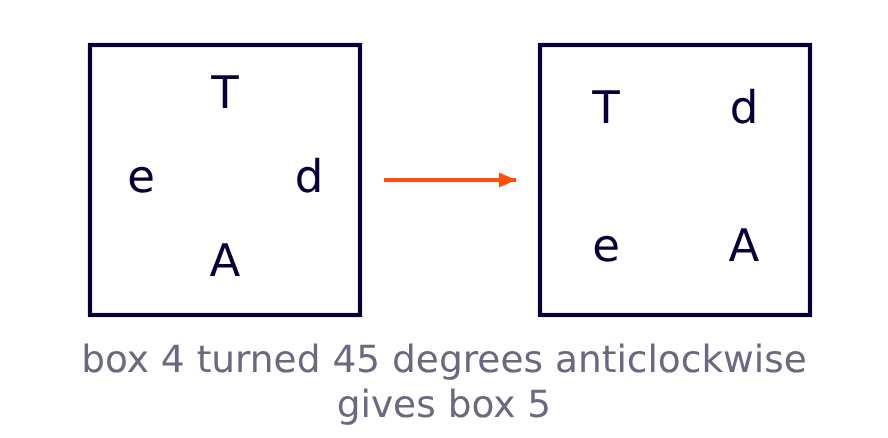 Option (c) has exactly that: T and d on top, e at the bottom-left and A at the bottom-right.
Option (a) carries the same top pair but has A and e interchanged along the bottom, which is what a clockwise turn would give, so it is not the answer.
Option (c) has exactly that: T and d on top, e at the bottom-left and A at the bottom-right.
Option (a) carries the same top pair but has A and e interchanged along the bottom, which is what a clockwise turn would give, so it is not the answer.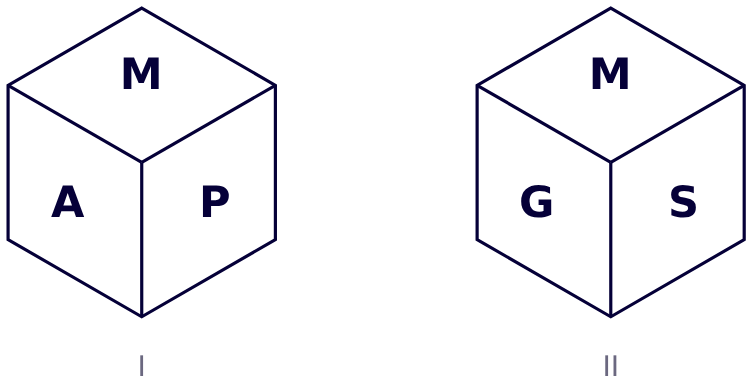
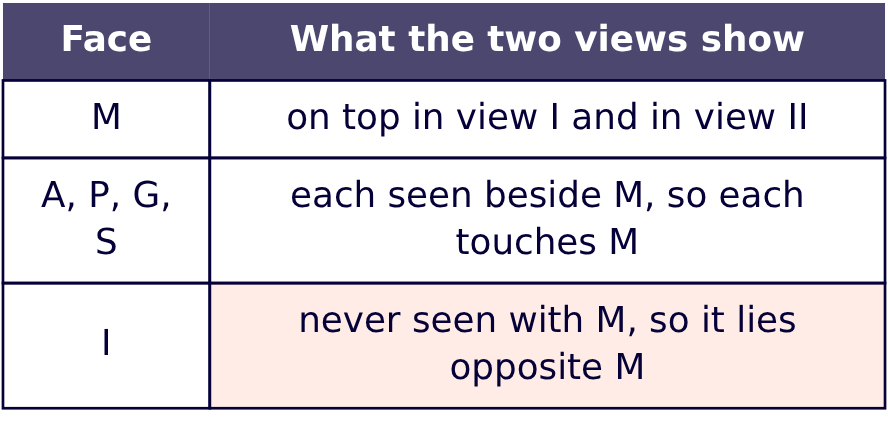 Four of the six letters therefore touch M, and the only letter never seen with M is I, so I is the face opposite M.
If I is opposite M, then M is opposite I, which is option (c).
Four of the six letters therefore touch M, and the only letter never seen with M is I, so I is the face opposite M.
If I is opposite M, then M is opposite I, which is option (c).
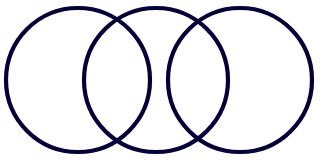


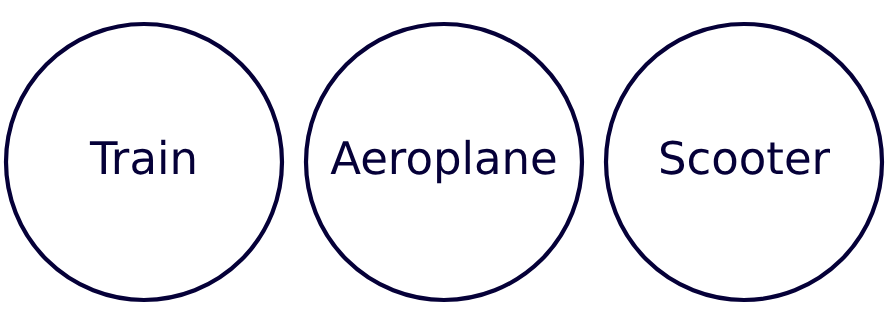 Three classes with nothing in common are drawn as three separate circles that do not touch, which is option (a).
Option (b) makes the circles overlap, option (c) puts one circle inside another and option (d) puts all three one inside the other; each of those claims a common member that does not exist.
Three classes with nothing in common are drawn as three separate circles that do not touch, which is option (a).
Option (b) makes the circles overlap, option (c) puts one circle inside another and option (d) puts all three one inside the other; each of those claims a common member that does not exist.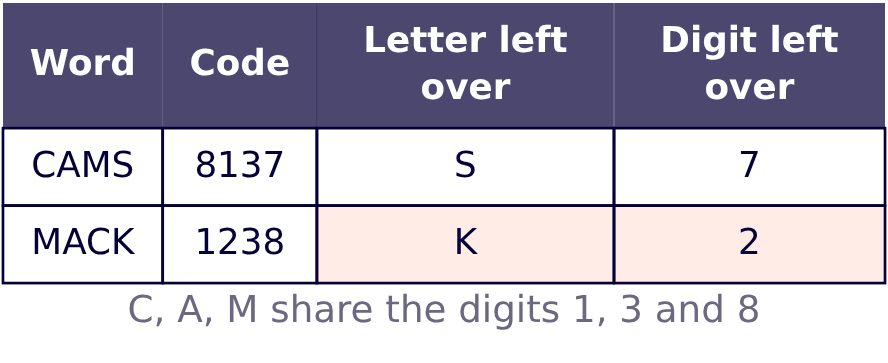 The code for K is therefore 2, which is option (a).
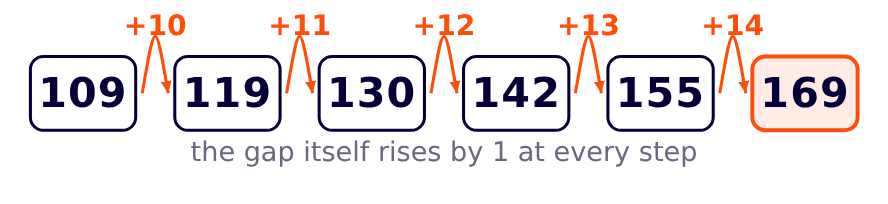 155+14=169, so the missing term is 169 and the answer is option (a).
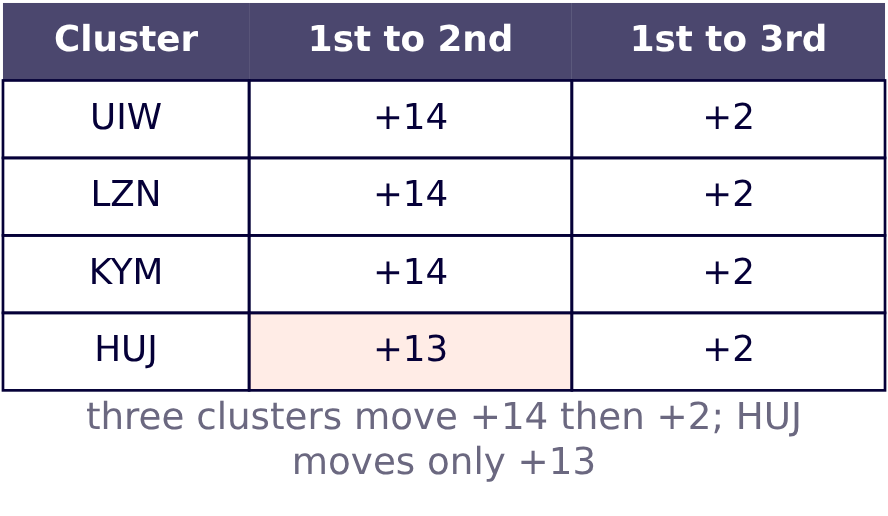 HUJ is the cluster whose first step is +13 instead of +14, so it does not belong to the group and the answer is option (d).
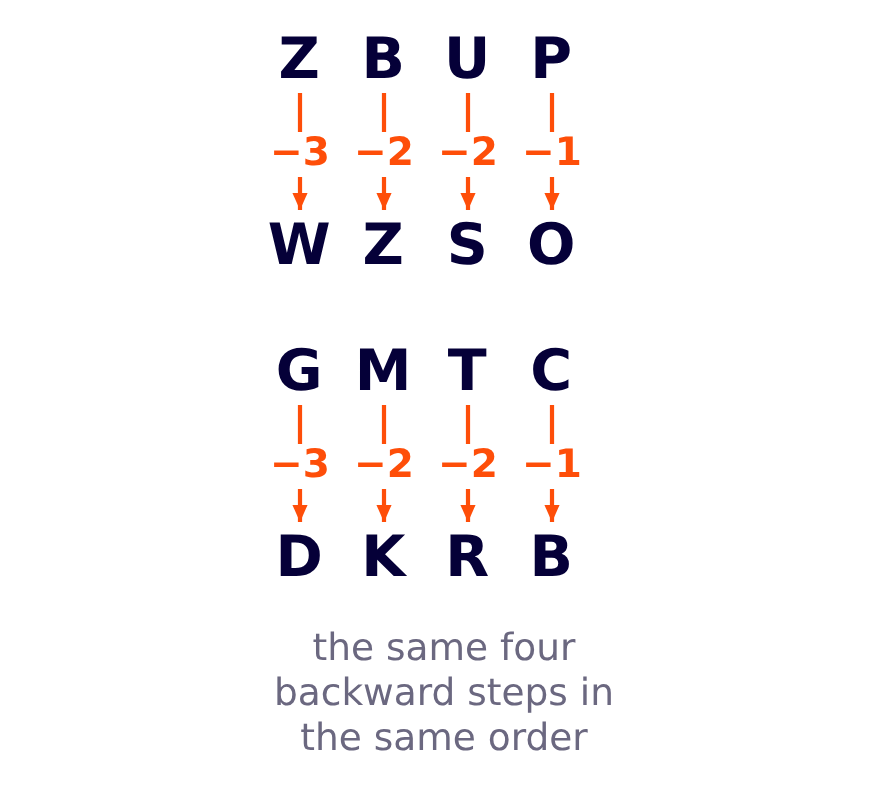 Apply -3, -2, -2, -1 to GMTC: G(7)-3 = D, M(13)-2 = K, T(20)-2 = R and C(3)-1 = B.
The required cluster is DKRB, so the answer is option (a).
Apply -3, -2, -2, -1 to GMTC: G(7)-3 = D, M(13)-2 = K, T(20)-2 = R and C(3)-1 = B.
The required cluster is DKRB, so the answer is option (a).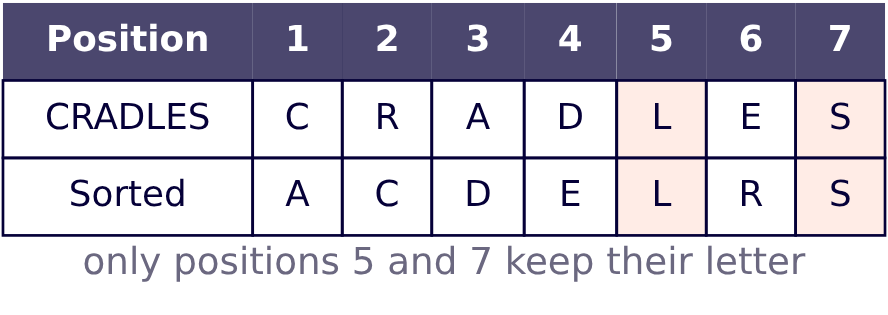 Compare the two rows position by position: only the 5th letter L and the 7th letter S sit in the same place in both rows.
That is two letters, so the answer is option (a).
Compare the two rows position by position: only the 5th letter L and the 7th letter S sit in the same place in both rows.
That is two letters, so the answer is option (a).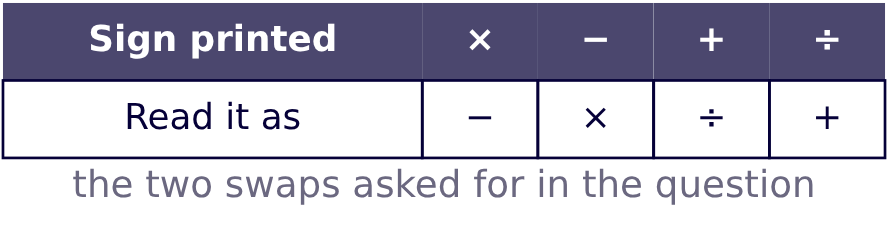 So is read as .
By BODMAS do multiplication and division first, left to right: and .
Then 88+7-28=95-28=67.
The value is 67, so the answer is option (a).
So is read as .
By BODMAS do multiplication and division first, left to right: and .
Then 88+7-28=95-28=67.
The value is 67, so the answer is option (a).
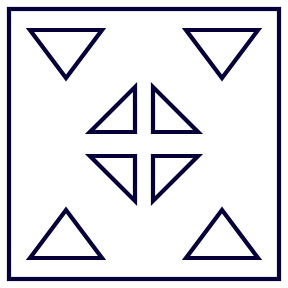
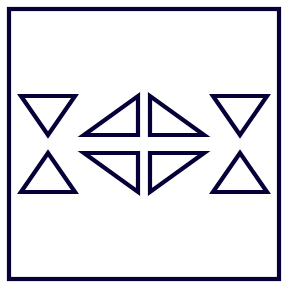
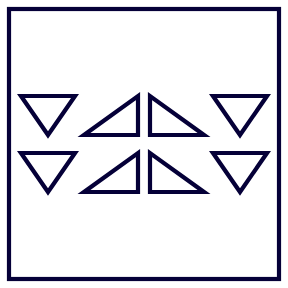
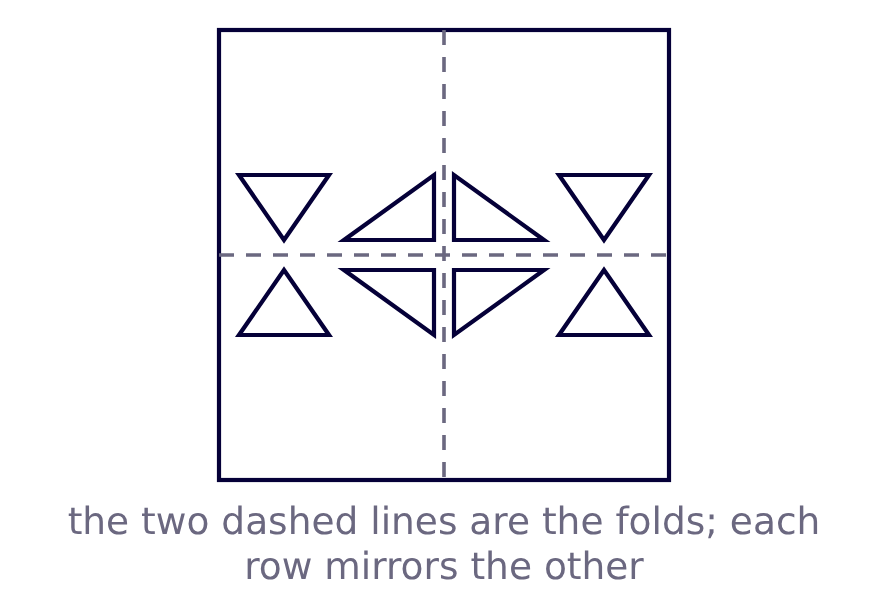 The finished sheet therefore carries eight triangles in two rows of four, clustered round the centre, and the bottom row is the exact mirror image of the top row.
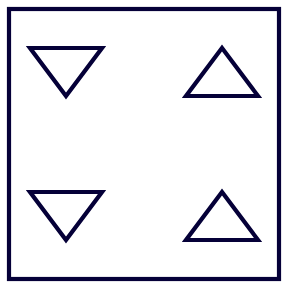
Option (b) is the only one in which the lower four triangles are flipped copies of the upper four; option (c) repeats the top row unchanged below, option (a) puts triangles in the four corners and option (d) has only four triangles.
So the answer is option (b).
The finished sheet therefore carries eight triangles in two rows of four, clustered round the centre, and the bottom row is the exact mirror image of the top row.
Option (b) is the only one in which the lower four triangles are flipped copies of the upper four; option (c) repeats the top row unchanged below, option (a) puts triangles in the four corners and option (d) has only four triangles.
So the answer is option (b).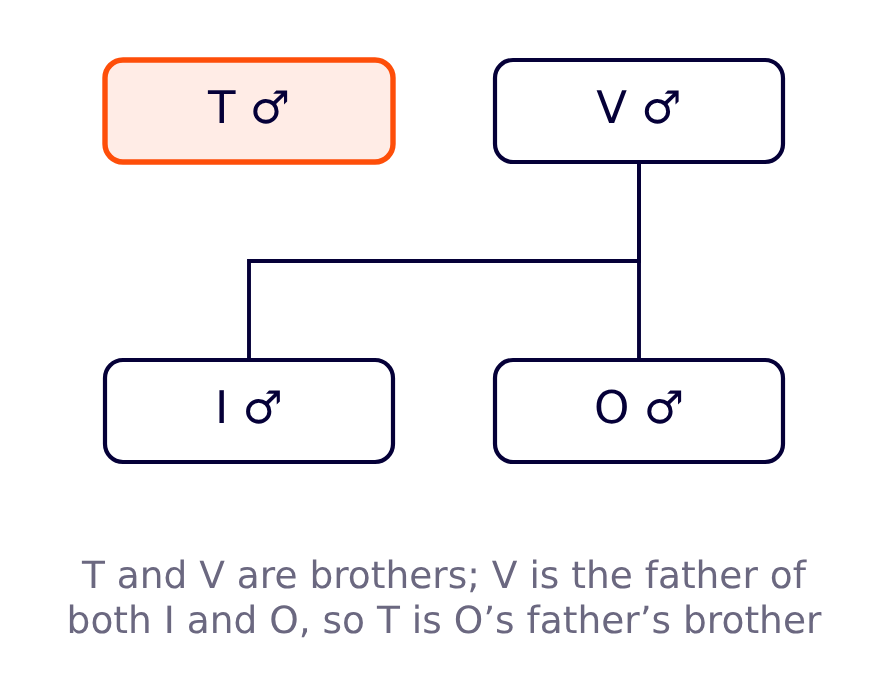 Since I is V's child and O is I's sibling, V is the father of O as well.
T is V's brother, so T is the brother of O's father, that is O's father's brother.
The answer is option (b).
Since I is V's child and O is I's sibling, V is the father of O as well.
T is V's brother, so T is the brother of O's father, that is O's father's brother.
The answer is option (b).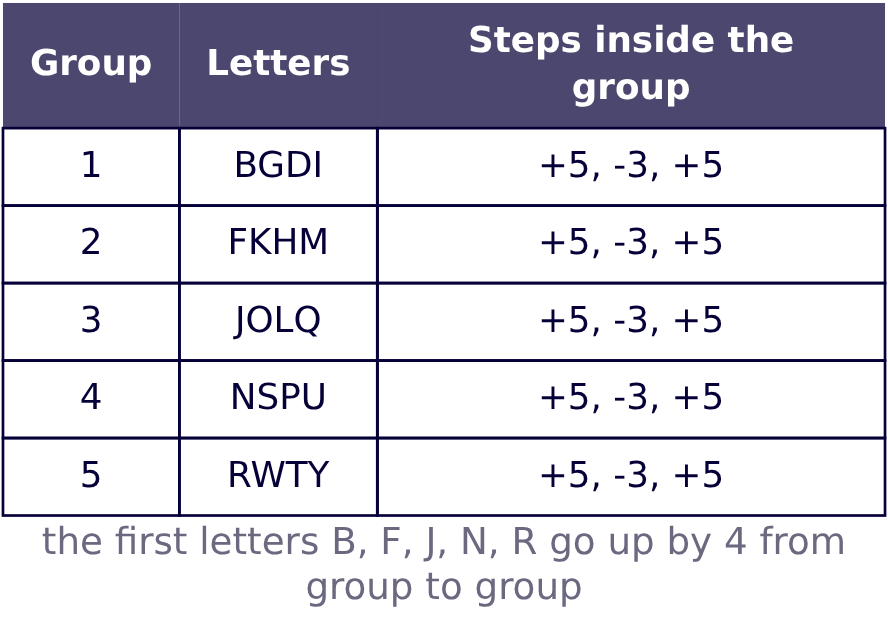 The first letters of the groups, B(2), F(6), J(10), N(14), R(18), also rise by 4 each time.
No other option makes all five groups obey this pattern, so the answer is option (d).
The first letters of the groups, B(2), F(6), J(10), N(14), R(18), also rise by 4 each time.
No other option makes all five groups obey this pattern, so the answer is option (d).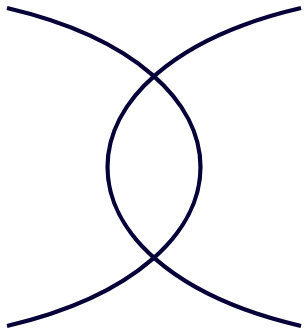
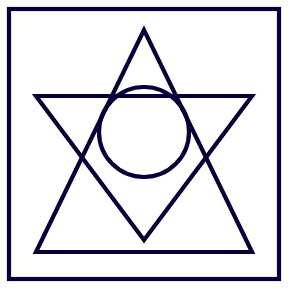
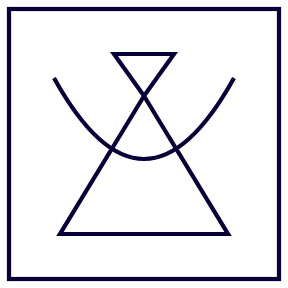
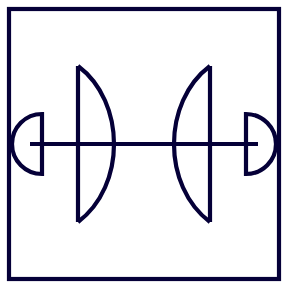
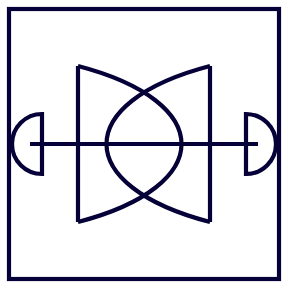
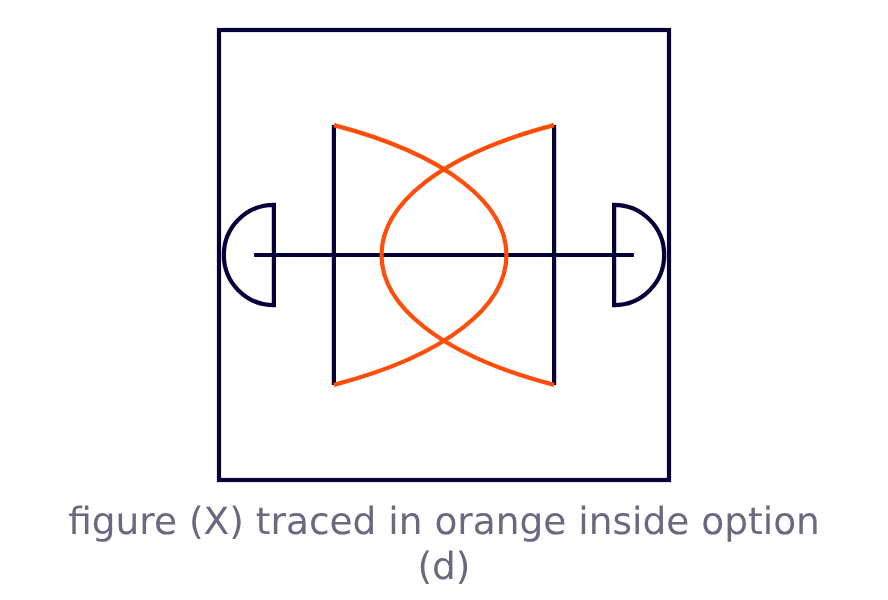 Option (d) contains exactly that: the upright lens sits in the middle of the frame and its four tails run out to the four corners of the inner rectangle, where they meet the two vertical sides.
Option (a) is drawn only with straight lines and a circle, option (b) has a single bowl shaped arc and no lens at all, and in option (c) the two arcs bulge towards each other but stop short, so they never cross and no lens is formed.
So the answer is option (d).
Option (d) contains exactly that: the upright lens sits in the middle of the frame and its four tails run out to the four corners of the inner rectangle, where they meet the two vertical sides.
Option (a) is drawn only with straight lines and a circle, option (b) has a single bowl shaped arc and no lens at all, and in option (c) the two arcs bulge towards each other but stop short, so they never cross and no lens is formed.
So the answer is option (d).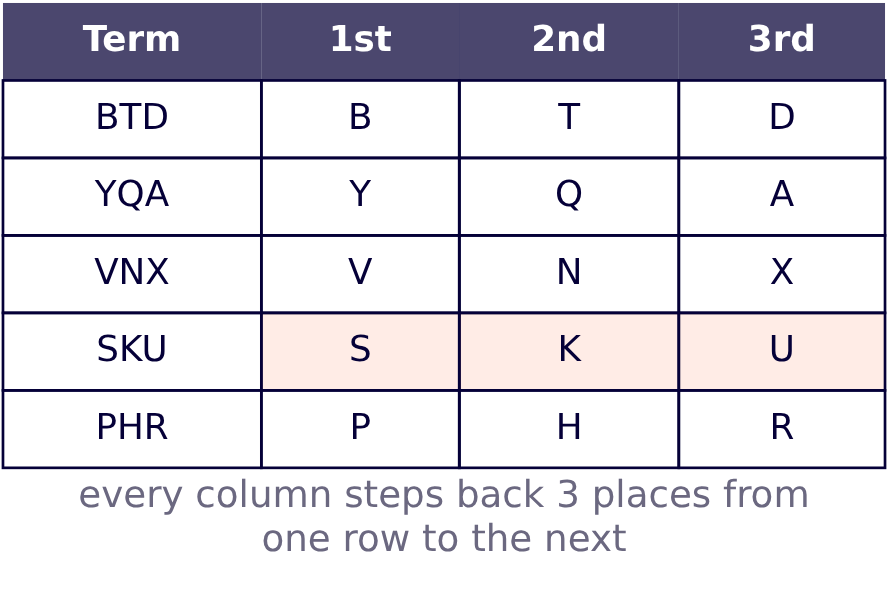 The missing term is SKU, which is option (b).
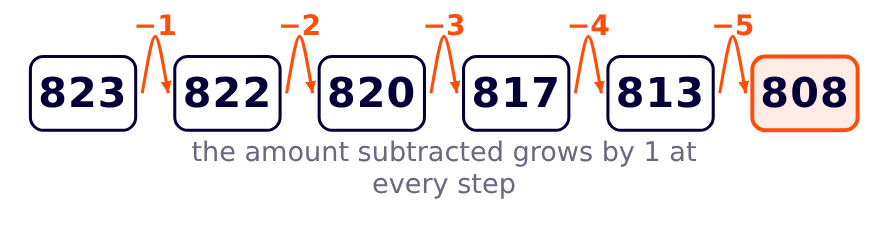 813-5=808, so the missing term is 808 and the answer is option (c).
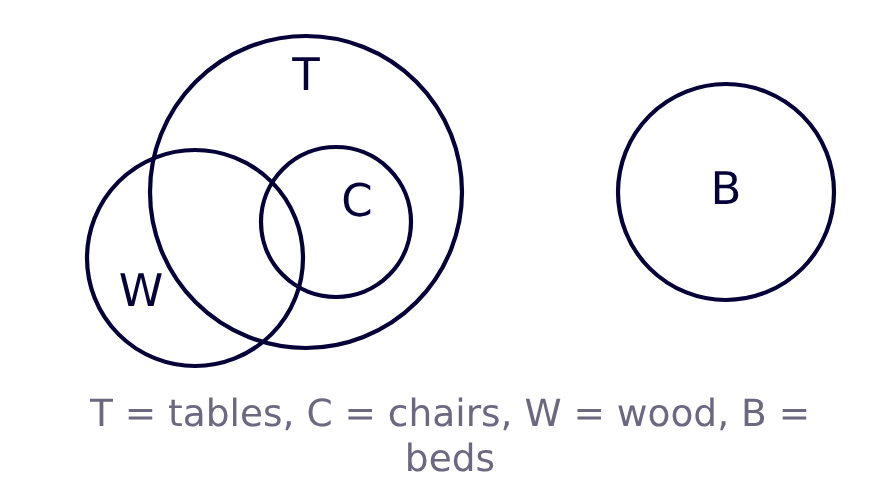 Conclusion (I): the wood that are chairs lie inside the chair circle, and the whole chair circle lies inside the table circle, so that same wood is table as well. 'Some wood are tables' is therefore certain.
Conclusion (II): every chair is a table and no table is a bed, so no chair can be a bed. 'All chairs are beds' is not merely uncertain, it is impossible.
Only conclusion (I) follows, so the answer is option (d).
Conclusion (I): the wood that are chairs lie inside the chair circle, and the whole chair circle lies inside the table circle, so that same wood is table as well. 'Some wood are tables' is therefore certain.
Conclusion (II): every chair is a table and no table is a bed, so no chair can be a bed. 'All chairs are beds' is not merely uncertain, it is impossible.
Only conclusion (I) follows, so the answer is option (d).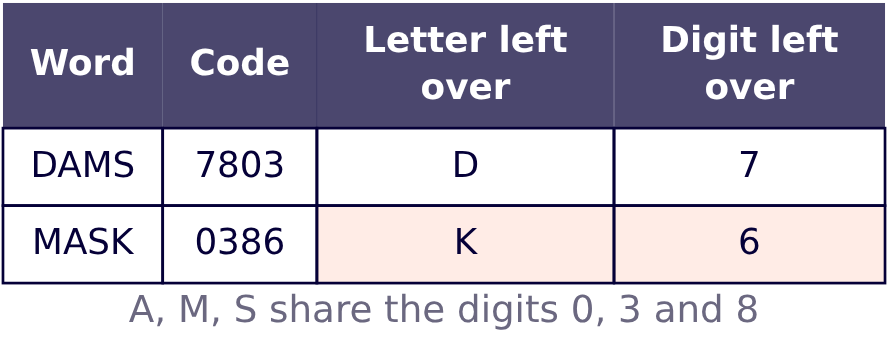 The code for K is therefore 6, which is option (d).
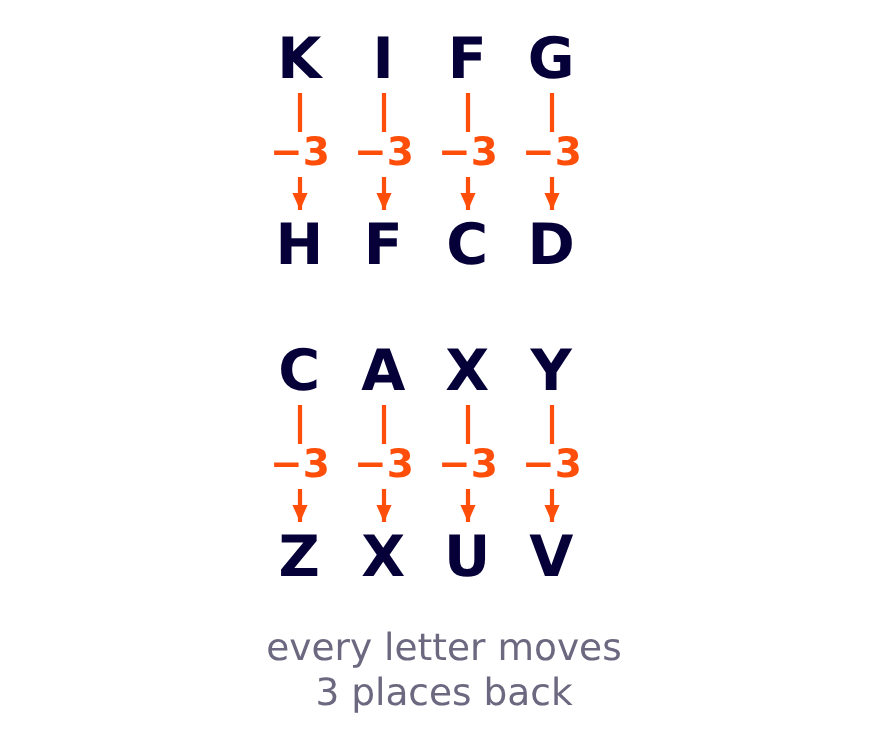 Apply -3 to CAXY: C(3) becomes Z, A(1) becomes X, X(24) becomes U and Y(25) becomes V.
The required cluster is ZXUV, so the answer is option (c).
Apply -3 to CAXY: C(3) becomes Z, A(1) becomes X, X(24) becomes U and Y(25) becomes V.
The required cluster is ZXUV, so the answer is option (c).