
1
In a certain code language,
'A + B' means 'A is the mother of B',
'A − B' means 'A is the brother of B',
'A × B' means 'A is the wife of B' and
'A ÷ B' means 'A is the father of B'.
Based on the above, how is D related to F if 'B + C × D − E ÷ F'?
- A.Wife's father
- B.Brother's brother
- C.Father's brother
- D.Mother's husband
Solution
Coded blood relations
Break the string at each symbol and read the symbols one at a time.
B+C: B is the mother of C.
: C is the wife of D, so D is C's husband.
D-E: D is the brother of E.
: E is the father of F.
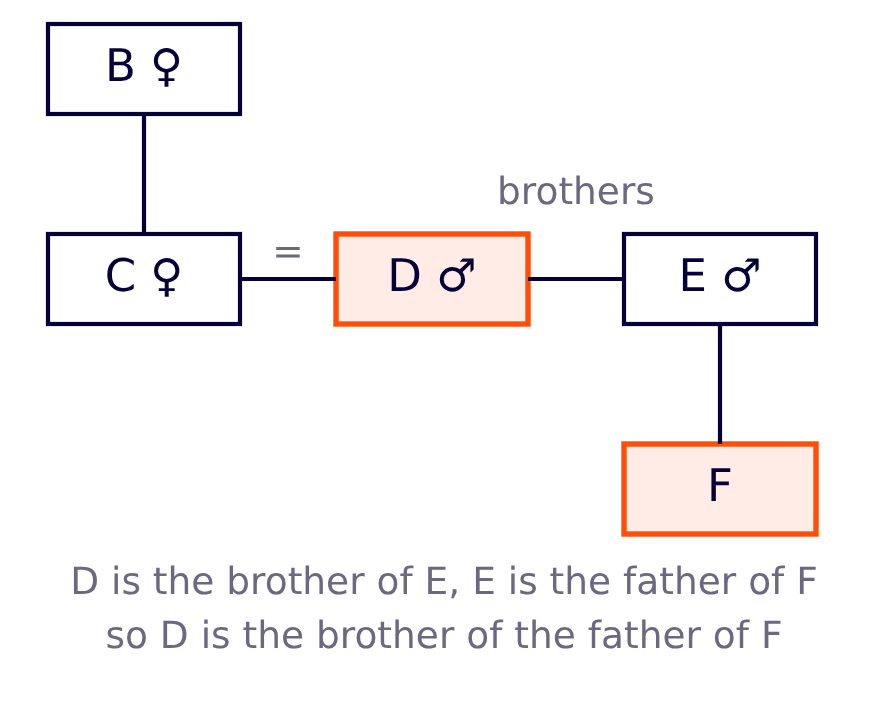 D is the brother of E, and E is the father of F, so D is the brother of F's father.
Hence D is F's father's brother - option (c).
D is the brother of E, and E is the father of F, so D is the brother of F's father.
Hence D is F's father's brother - option (c).
D is the brother of E, and E is the father of F, so D is the brother of F's father.
Hence D is F's father's brother - option (c).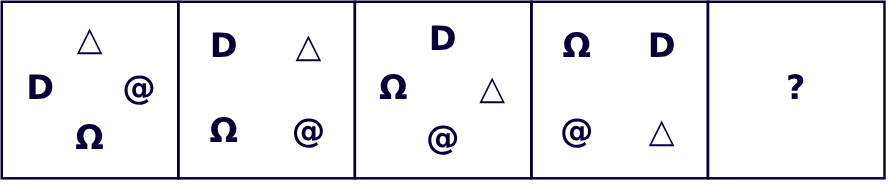
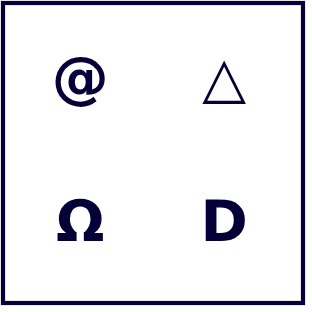
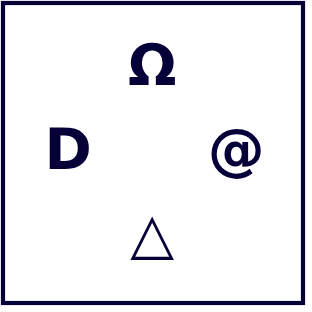
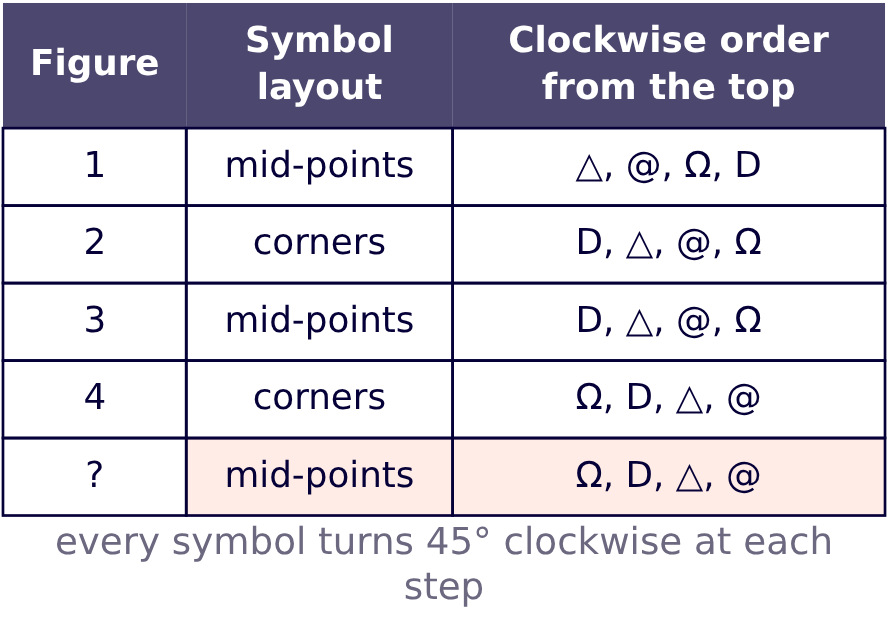 The same 45° clockwise step carries figure 2 to figure 3 and figure 3 to figure 4.
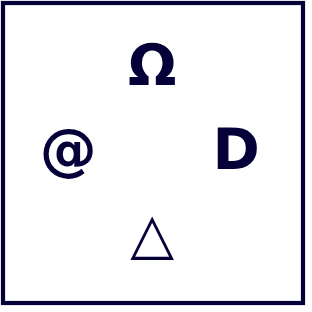
Figure 4 has Ω top-left, D top-right, △ bottom-right and @ bottom-left, so one more step puts Ω at the top, D at the right, △ at the bottom and @ at the left.
The same 45° clockwise step carries figure 2 to figure 3 and figure 3 to figure 4.
Figure 4 has Ω top-left, D top-right, △ bottom-right and @ bottom-left, so one more step puts Ω at the top, D at the right, △ at the bottom and @ at the left.
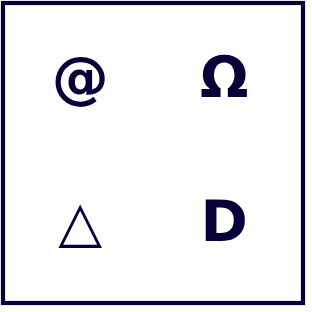
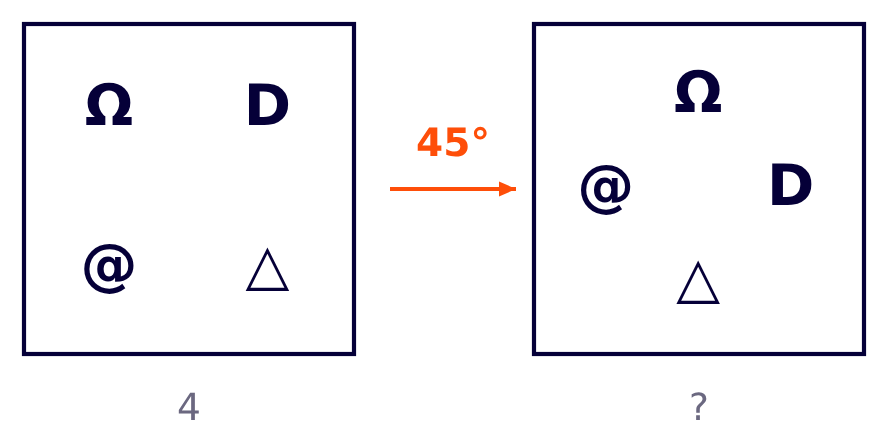 Options (b) and (c) place the symbols at the corners, which is the wrong layout for the fifth figure.
Option (d) has the right layout but D at the left and @ at the right, the exact opposite of what the clockwise turn gives; only option (a) keeps D on the right and @ on the left.
Hence the answer is option (a).
Options (b) and (c) place the symbols at the corners, which is the wrong layout for the fifth figure.
Option (d) has the right layout but D at the left and @ at the right, the exact opposite of what the clockwise turn gives; only option (a) keeps D on the right and @ on the left.
Hence the answer is option (a).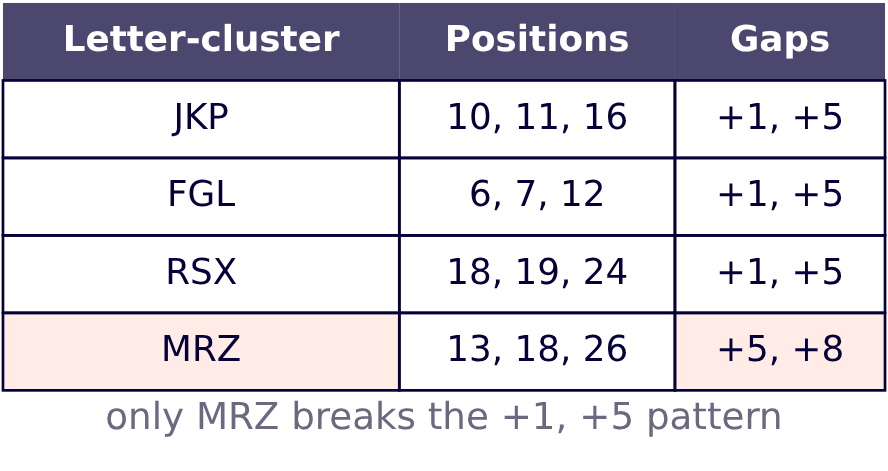 JKP gives 10, 11, 16 - gaps +1 and +5.
FGL gives 6, 7, 12 and RSX gives 18, 19, 24 - again gaps +1 and +5.
MRZ gives 13, 18, 26 - gaps +5 and +8, so both gaps are wrong.
Hence MRZ does not belong to the group - option (d).
JKP gives 10, 11, 16 - gaps +1 and +5.
FGL gives 6, 7, 12 and RSX gives 18, 19, 24 - again gaps +1 and +5.
MRZ gives 13, 18, 26 - gaps +5 and +8, so both gaps are wrong.
Hence MRZ does not belong to the group - option (d).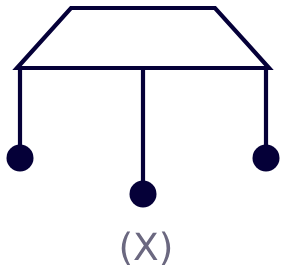
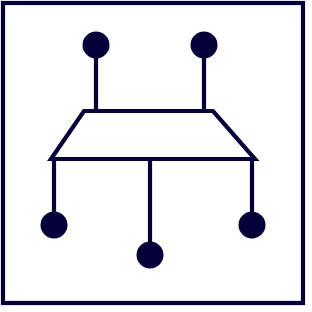
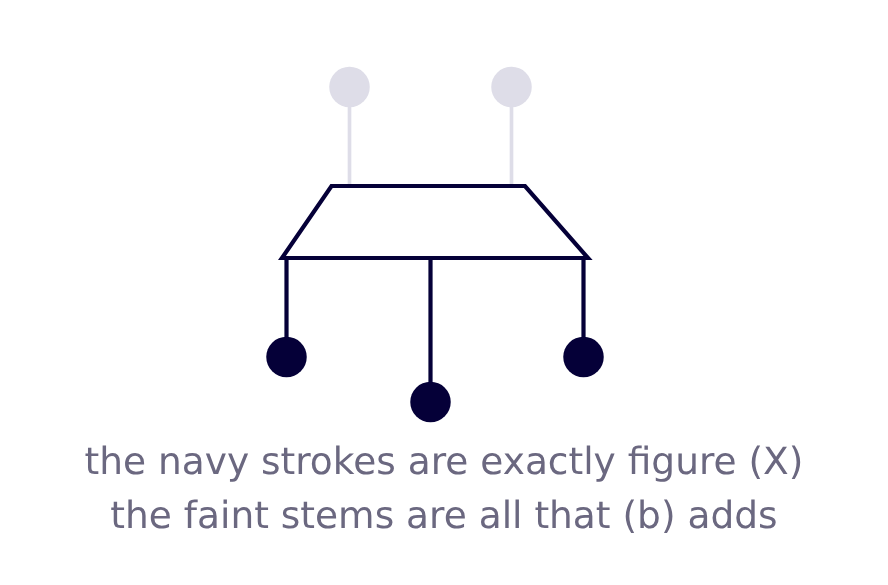 Option (b) contains exactly this: the same trapezium, the same three stems and the same three solid dots below it, and the only extra strokes are two stems rising from its top corners.
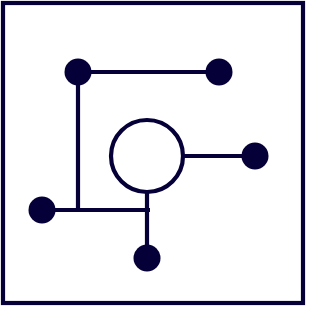
Option (a) is built round a circle and option (c) round a triangle, so neither has a trapezium at all.
Option (d) is only a zigzag of straight lines joining dots, with no closed four-sided figure in it.
Hence the answer is option (b).
Option (b) contains exactly this: the same trapezium, the same three stems and the same three solid dots below it, and the only extra strokes are two stems rising from its top corners.
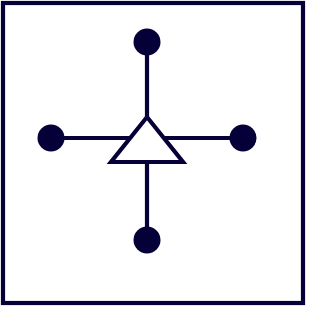
Option (a) is built round a circle and option (c) round a triangle, so neither has a trapezium at all.
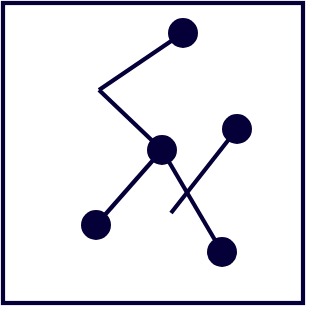
Option (d) is only a zigzag of straight lines joining dots, with no closed four-sided figure in it.
Hence the answer is option (b).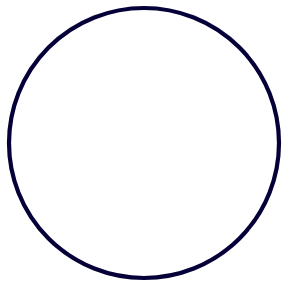
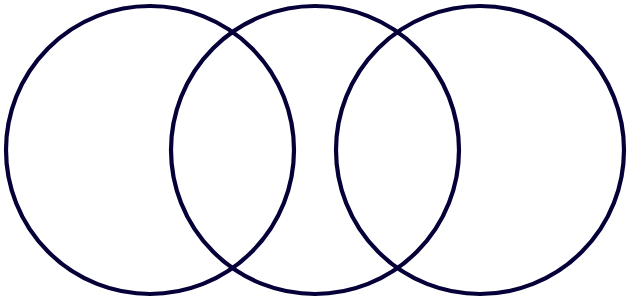
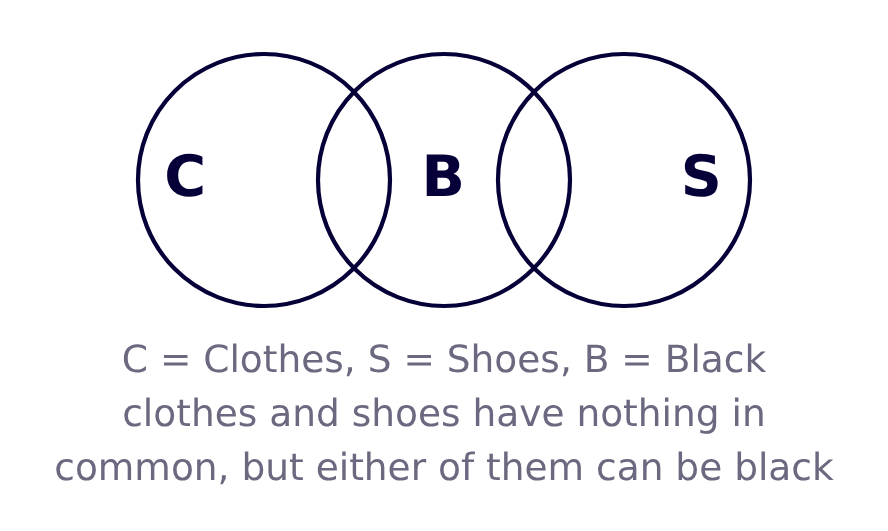 The required picture is therefore a middle circle cutting two outer circles that do not touch each other.
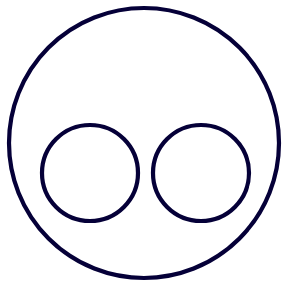
Option (a) is a single circle and option (b) puts two separate circles inside one big circle, which would make clothes and shoes both black.
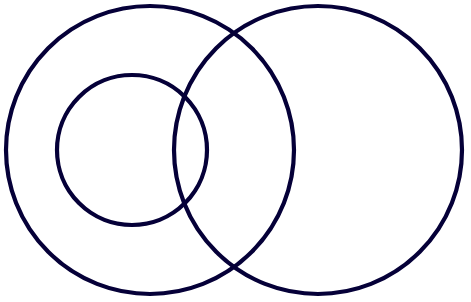
Option (c) makes the two big classes overlap, which would make some shoes clothes.
Hence the answer is option (d).
The required picture is therefore a middle circle cutting two outer circles that do not touch each other.
Option (a) is a single circle and option (b) puts two separate circles inside one big circle, which would make clothes and shoes both black.
Option (c) makes the two big classes overlap, which would make some shoes clothes.
Hence the answer is option (d).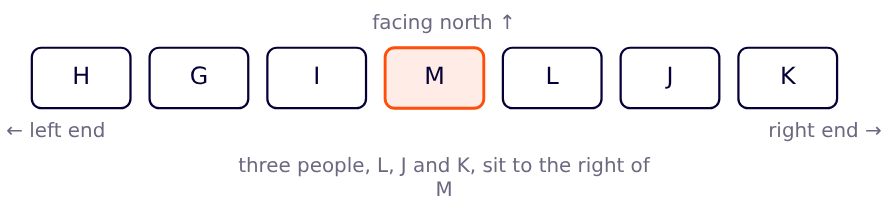 Seats 5, 6 and 7 lie to the right of M, so three people sit to his right - option (c).
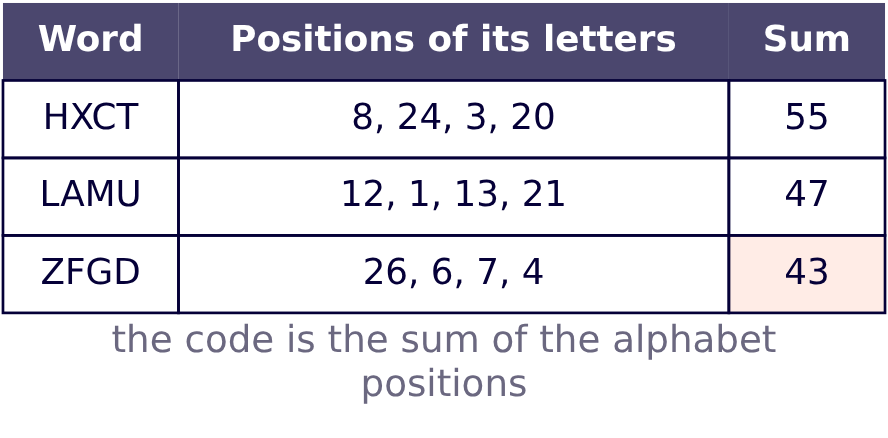 HXCT: 8+24+3+20=55, which is the given code.
LAMU: 12+1+13+21=47, again the given code, so the rule is confirmed.
ZFGD: 26+6+7+4=43.
Hence the code for ZFGD is 43 - option (d).
HXCT: 8+24+3+20=55, which is the given code.
LAMU: 12+1+13+21=47, again the given code, so the rule is confirmed.
ZFGD: 26+6+7+4=43.
Hence the code for ZFGD is 43 - option (d).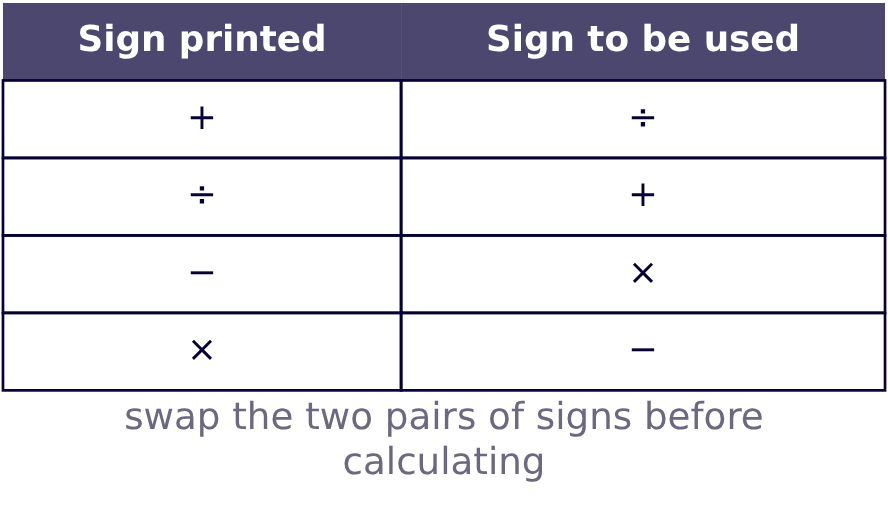 So turns into .
Now apply BODMAS. Division first: .
Then multiplication: .
Left with 14-26+21=9.
Hence the answer is option (b).
So turns into .
Now apply BODMAS. Division first: .
Then multiplication: .
Left with 14-26+21=9.
Hence the answer is option (b).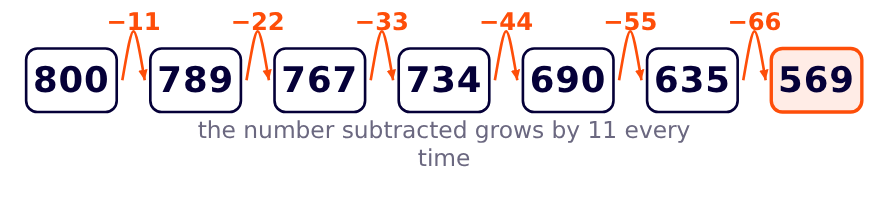 The numbers subtracted are 11, 22, 33, 44, 55, i.e. multiples of 11, so the next one is 66.
635-66=569.
Hence the answer is option (a).
The numbers subtracted are 11, 22, 33, 44, 55, i.e. multiples of 11, so the next one is 66.
635-66=569.
Hence the answer is option (a).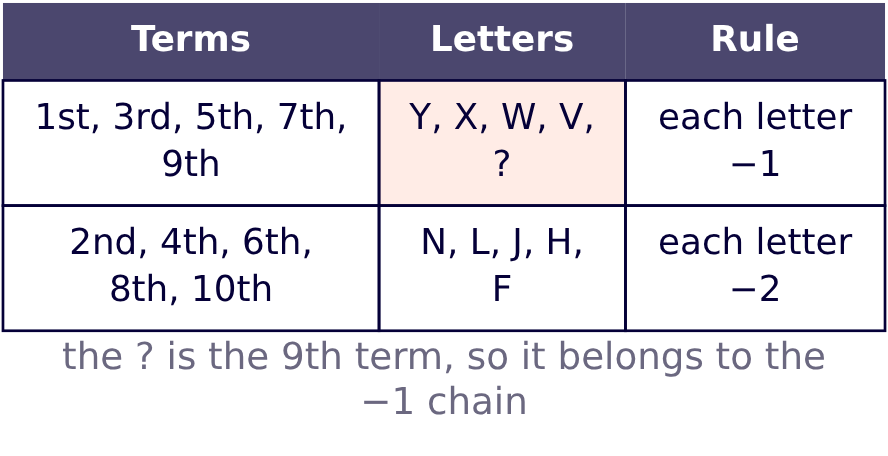 Odd places give Y, X, W, V, ? - each letter is one step back in the alphabet.
Even places give N, L, J, H, F - each letter is two steps back, which confirms the split.
The ? is at the ninth place, an odd place, so it follows V.
V =22, so the next letter is 22-1=21, which is U.
Hence the answer is option (c).
Odd places give Y, X, W, V, ? - each letter is one step back in the alphabet.
Even places give N, L, J, H, F - each letter is two steps back, which confirms the split.
The ? is at the ninth place, an odd place, so it follows V.
V =22, so the next letter is 22-1=21, which is U.
Hence the answer is option (c).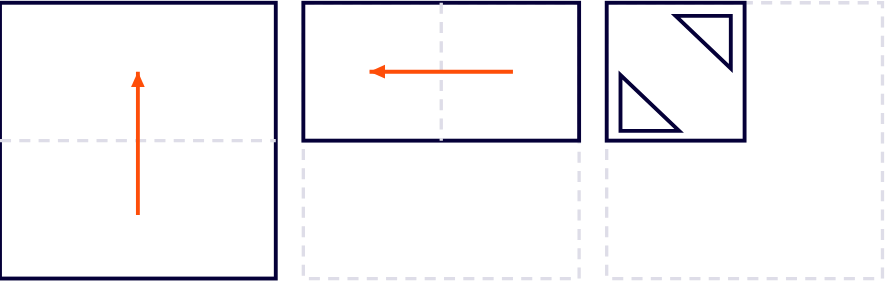
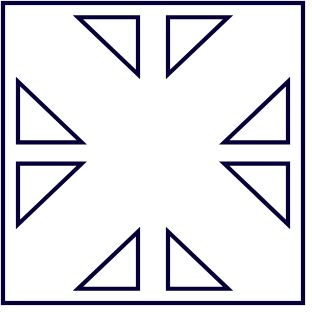
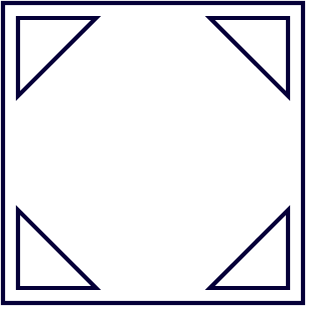
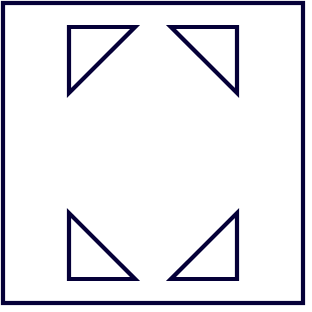
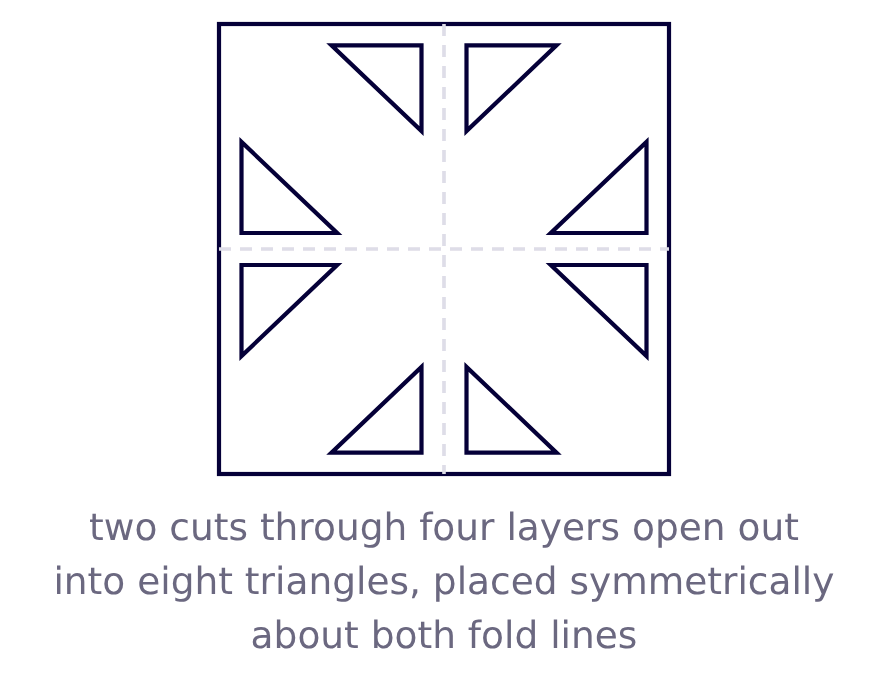 One cut lies near the top of the quarter and the other near its left side, so the eight triangles form four pairs - two near the top edge, two near the bottom edge, two near the left edge and two near the right edge - with the corners and the centre left uncut.
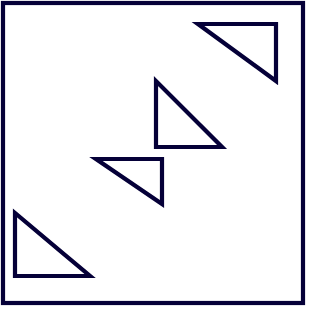
Options (c) and (d) show only four triangles, and option (b) only four placed with no symmetry at all, so none of them can come from two cuts through four layers.
Hence the answer is option (a).
One cut lies near the top of the quarter and the other near its left side, so the eight triangles form four pairs - two near the top edge, two near the bottom edge, two near the left edge and two near the right edge - with the corners and the centre left uncut.
Options (c) and (d) show only four triangles, and option (b) only four placed with no symmetry at all, so none of them can come from two cuts through four layers.
Hence the answer is option (a).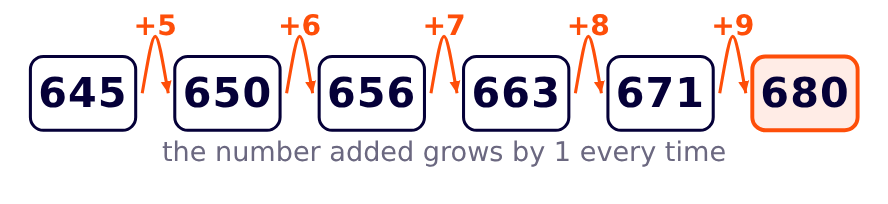 The numbers added are 5, 6, 7, 8, each one more than the last, so the next one added is 9.
671+9=680.
Hence the answer is option (c).
The numbers added are 5, 6, 7, 8, each one more than the last, so the next one added is 9.
671+9=680.
Hence the answer is option (c).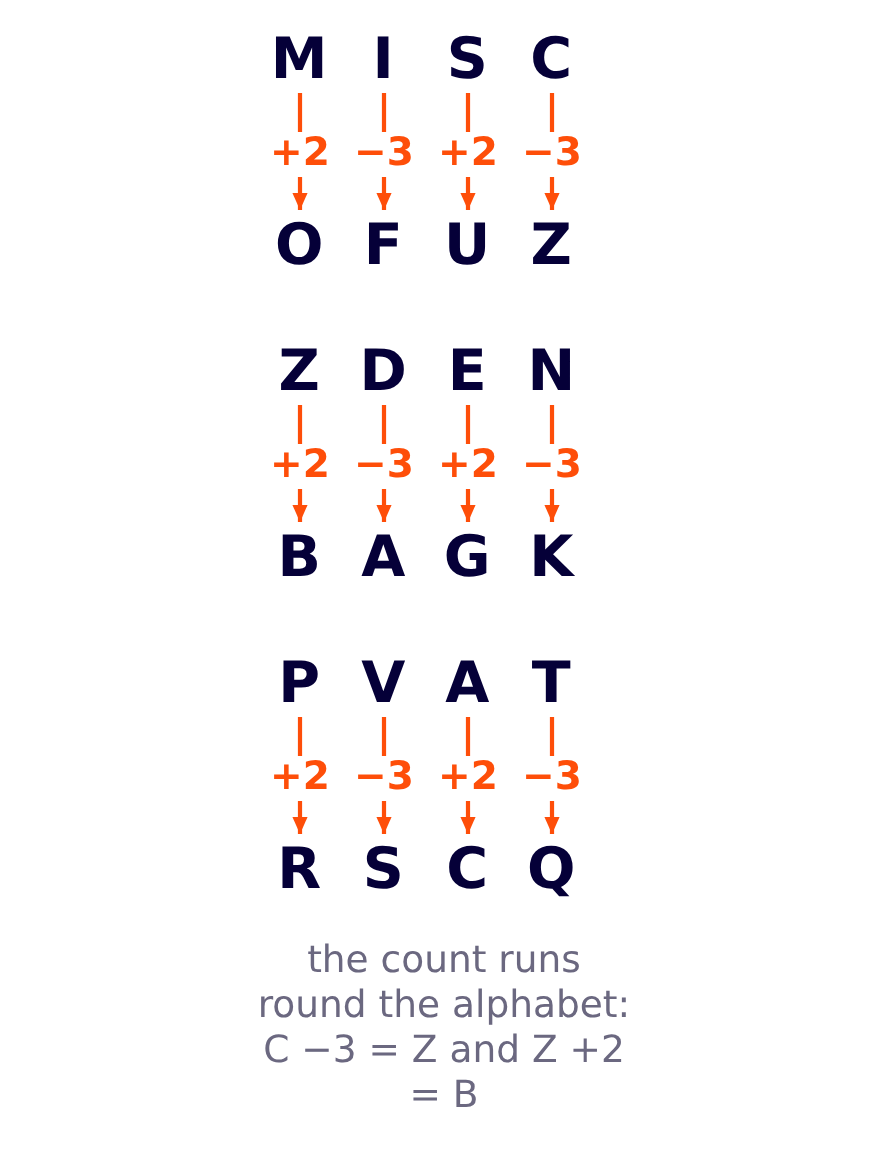 Apply it to PVAT: P =16, 16+2=18= R.
V =22, 22-3=19= S; A =1, 1+2=3= C; T =20, 20-3=17= Q.
So PVAT is related to RSCQ - option (b).
Apply it to PVAT: P =16, 16+2=18= R.
V =22, 22-3=19= S; A =1, 1+2=3= C; T =20, 20-3=17= Q.
So PVAT is related to RSCQ - option (b).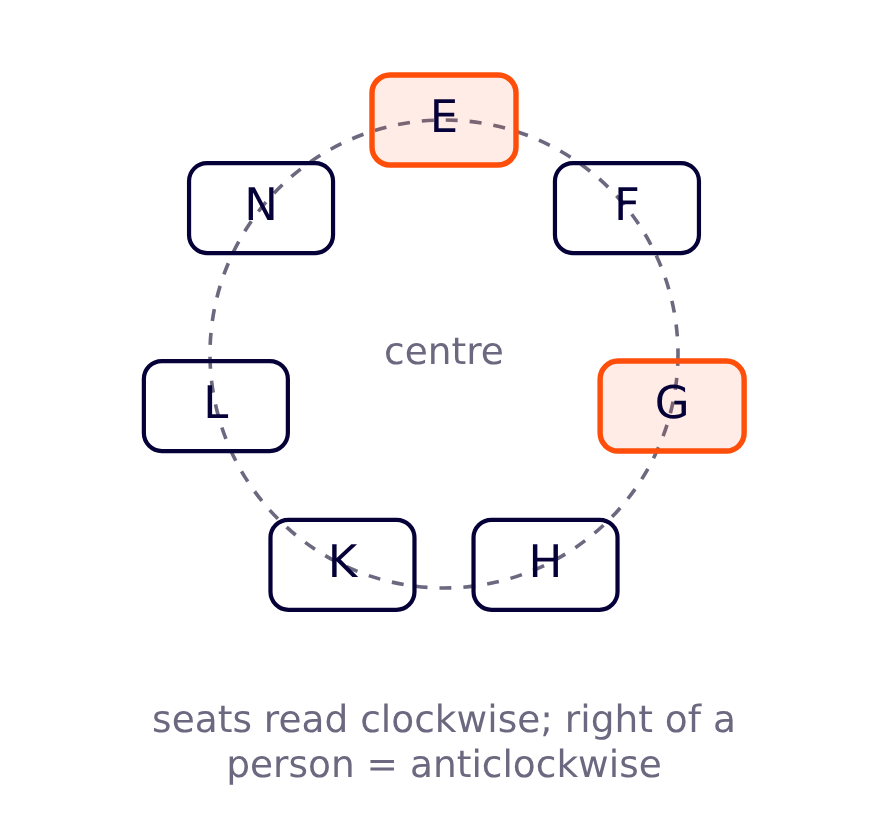 Counting from the right of G means going anticlockwise from seat 3: seat 2 holds F and seat 1 holds E.
So exactly one person, F, sits between them - option (c).
Counting from the right of G means going anticlockwise from seat 3: seat 2 holds F and seat 1 holds E.
So exactly one person, F, sits between them - option (c).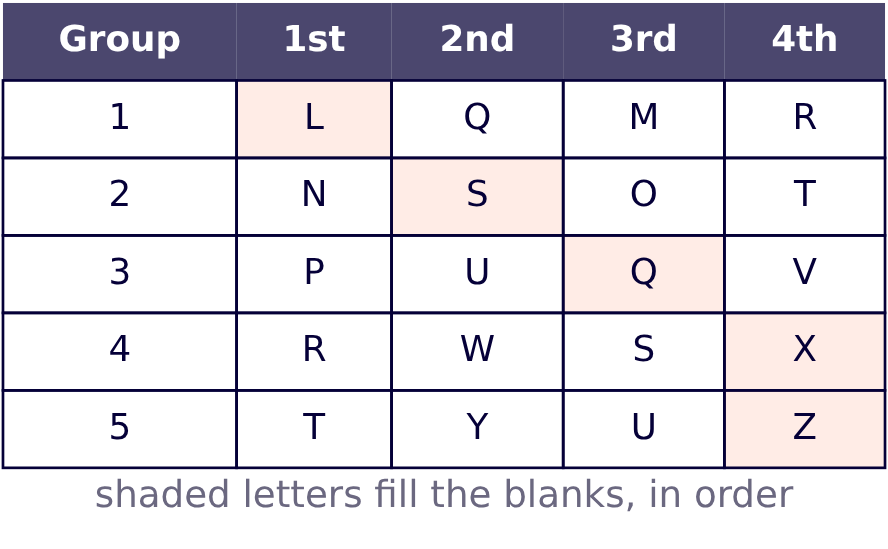 Compare block 2 with block 1 place by place: N is 2 after L, S is 2 after Q, O is 2 after M and T is 2 after R - each block is the one before it with every letter moved 2 places on.
Working forward with that rule the blocks are LQMR, NSOT, PUQV, RWSX and TYUZ.
The letters that were missing are L, then S, then Q, then X, then Z.
Hence the answer is option (a).
Compare block 2 with block 1 place by place: N is 2 after L, S is 2 after Q, O is 2 after M and T is 2 after R - each block is the one before it with every letter moved 2 places on.
Working forward with that rule the blocks are LQMR, NSOT, PUQV, RWSX and TYUZ.
The letters that were missing are L, then S, then Q, then X, then Z.
Hence the answer is option (a).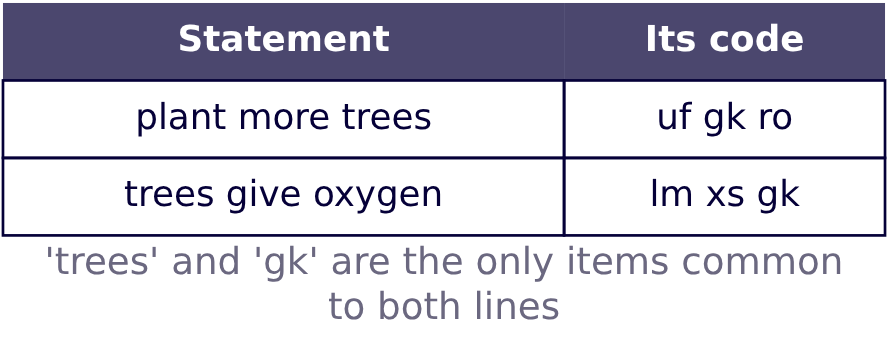 'trees' is the only word that appears in both statements.
'gk' is the only code that appears in both code groups.
A word common to two statements must carry the code common to their codes, so 'trees' is coded as 'gk'.
Hence the answer is option (d).
'trees' is the only word that appears in both statements.
'gk' is the only code that appears in both code groups.
A word common to two statements must carry the code common to their codes, so 'trees' is coded as 'gk'.
Hence the answer is option (d).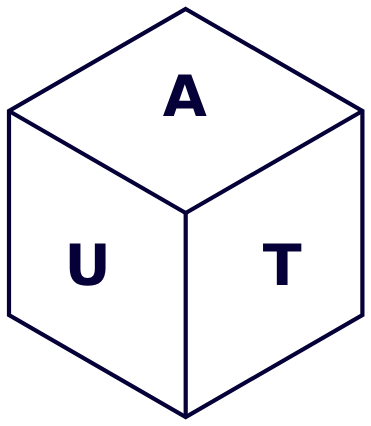
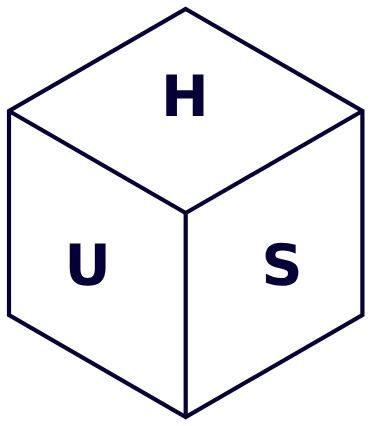
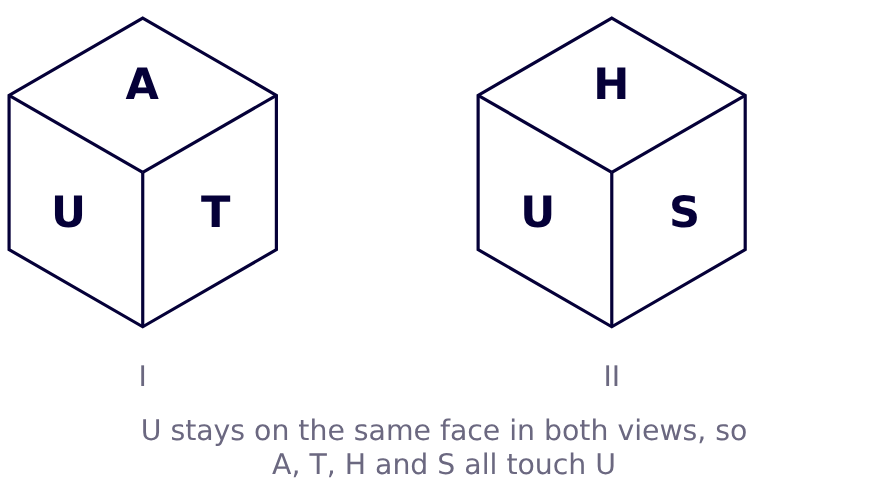 Every other letter that shows is therefore on a face touching U.
The first view gives A and T next to U, and the second view gives H and S next to U - four different faces.
A cube has six faces, so the four faces around U are A, T, H and S, and the only letter left, J, must be on the face hidden opposite U.
So J and U are on opposite faces, and the face opposite J is U - option (c).
Every other letter that shows is therefore on a face touching U.
The first view gives A and T next to U, and the second view gives H and S next to U - four different faces.
A cube has six faces, so the four faces around U are A, T, H and S, and the only letter left, J, must be on the face hidden opposite U.
So J and U are on opposite faces, and the face opposite J is U - option (c).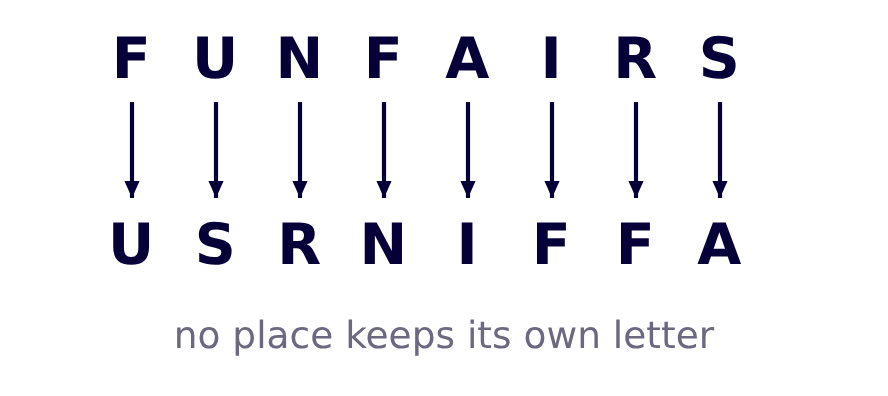 Now compare the two words place by place: F/U, U/S, N/R, F/N, A/I, I/F, R/F, S/A.
No place holds the same letter in both words, so not a single letter keeps its position.
Hence the answer is zero - option (a).
Now compare the two words place by place: F/U, U/S, N/R, F/N, A/I, I/F, R/F, S/A.
No place holds the same letter in both words, so not a single letter keeps its position.
Hence the answer is zero - option (a).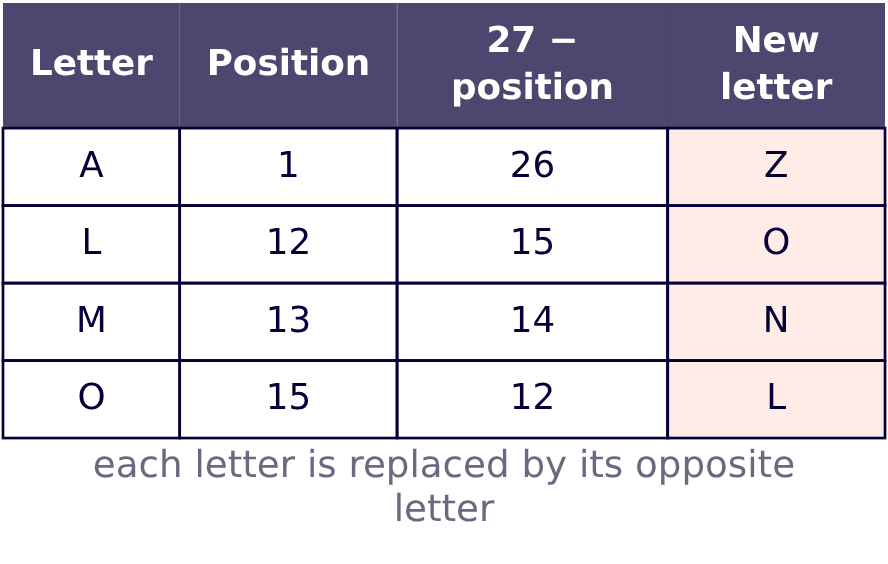 For ALMO: AZ(26), LO(15), MN(14) and OL(12).
So ALMO is written as ZONL - option (c).
For ALMO: AZ(26), LO(15), MN(14) and OL(12).
So ALMO is written as ZONL - option (c).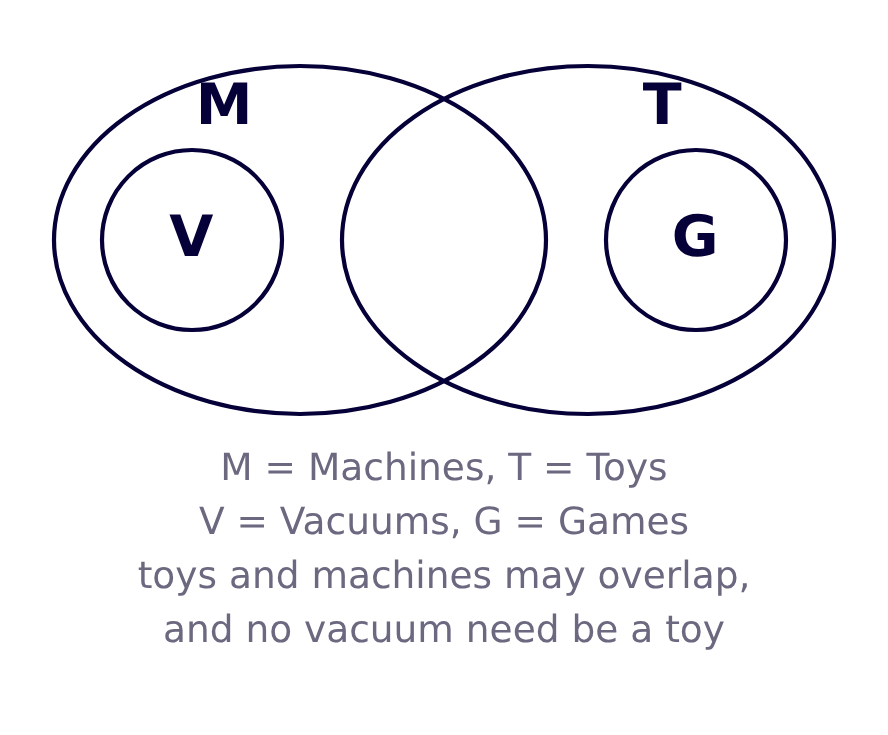 Conclusion (I) says no toy is a machine, but nothing in the statements forbids a toy from being a machine, and the diagram shows Toys and Machines overlapping, so (I) does not follow.
Conclusion (II) says some toys are vacuums; the statements only keep vacuums out of games, so every vacuum may lie outside Toys altogether, and (II) does not follow either.
Since a conclusion must be true in every possible diagram, neither follows - option (d).
Conclusion (I) says no toy is a machine, but nothing in the statements forbids a toy from being a machine, and the diagram shows Toys and Machines overlapping, so (I) does not follow.
Conclusion (II) says some toys are vacuums; the statements only keep vacuums out of games, so every vacuum may lie outside Toys altogether, and (II) does not follow either.
Since a conclusion must be true in every possible diagram, neither follows - option (d).