
21
Delhi signed an MoU with the central government to implement which education scheme in October 2024 ?
- A.Sarva Shiksha Abhiyan
- B.Mid-Day Meal Scheme
- C.PM-SHRI Scheme
- D.National Programme for Education of Girls at Elementary Level
Solution
PM-SHRI education scheme
In October 2024 the Delhi government signed a Memorandum of Understanding with the Centre to implement the PM-SHRI Scheme - Pradhan Mantri Schools for Rising India.
PM-SHRI was launched on 7 September 2022 to upgrade more than 14,500 existing government schools into model schools that show the National Education Policy 2020 in action; the Centre bears 60% of the cost and the State or UT the remaining 40%.
The signing mattered because a State gets its share of Samagra Shiksha funds only after it joins the scheme, which is why an MoU was needed in 2024.
The other three are older programmes that needed no fresh MoU: Sarva Shiksha Abhiyan (2001), the Mid-Day Meal Scheme (1995, now PM POSHAN) and NPEGEL (2003).
Hence the correct option is (c).
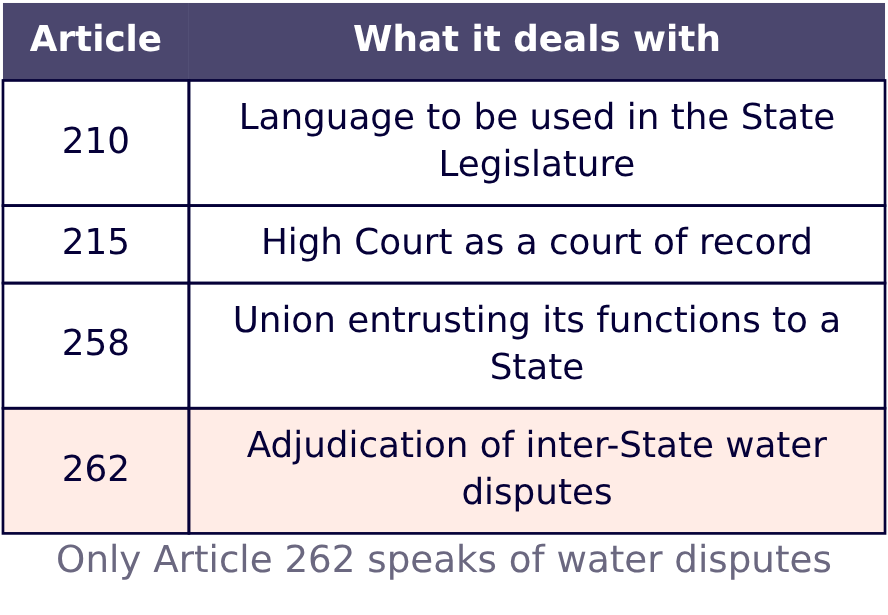 Hence the correct option is (d).
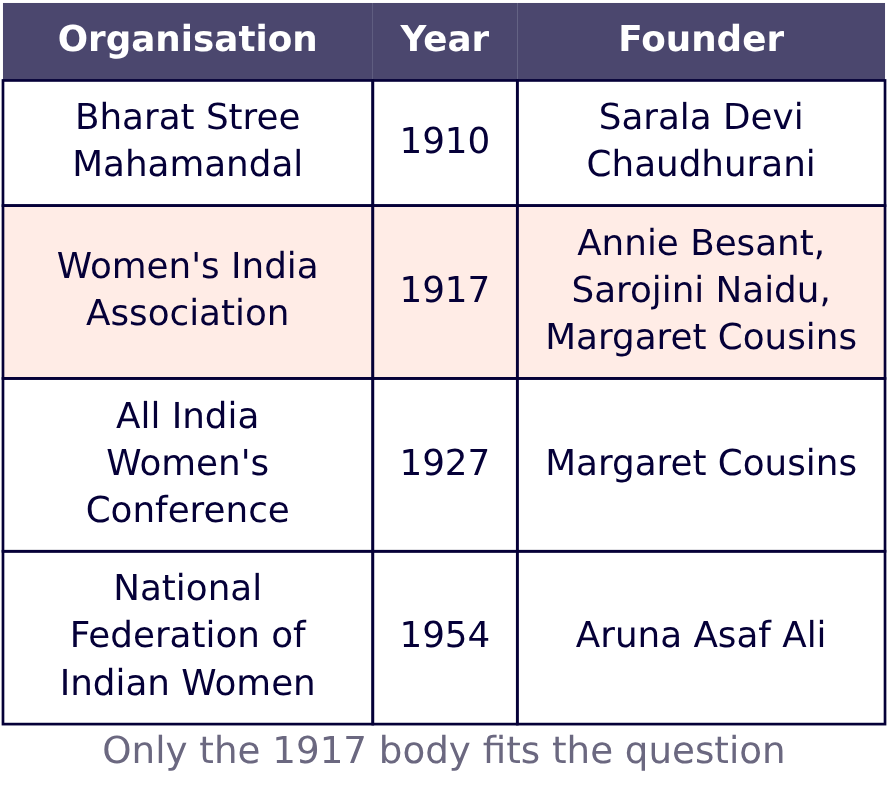 The year in the question settles it: no other option was born in 1917.
Hence the correct option is (a).
The year in the question settles it: no other option was born in 1917.
Hence the correct option is (a).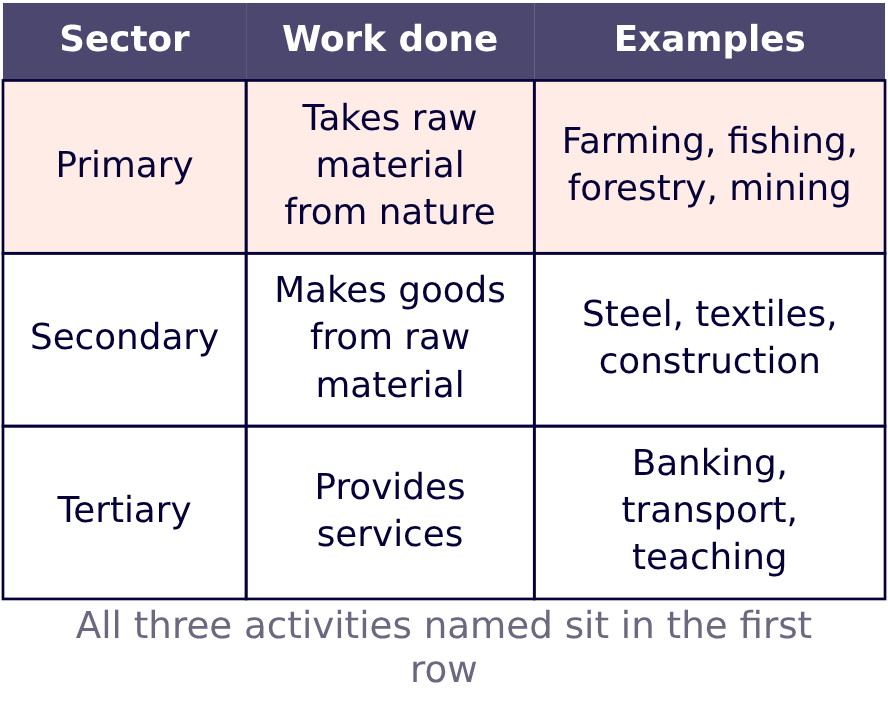 Manufacturing turns those raw materials into finished goods and the service industry sells intangible services, so neither fits. The genetic industry - rearing and breeding plants and animals - is only one small branch inside the primary sector, not the class that covers all three activities named.
Hence the correct option is (a).
Manufacturing turns those raw materials into finished goods and the service industry sells intangible services, so neither fits. The genetic industry - rearing and breeding plants and animals - is only one small branch inside the primary sector, not the class that covers all three activities named.
Hence the correct option is (a).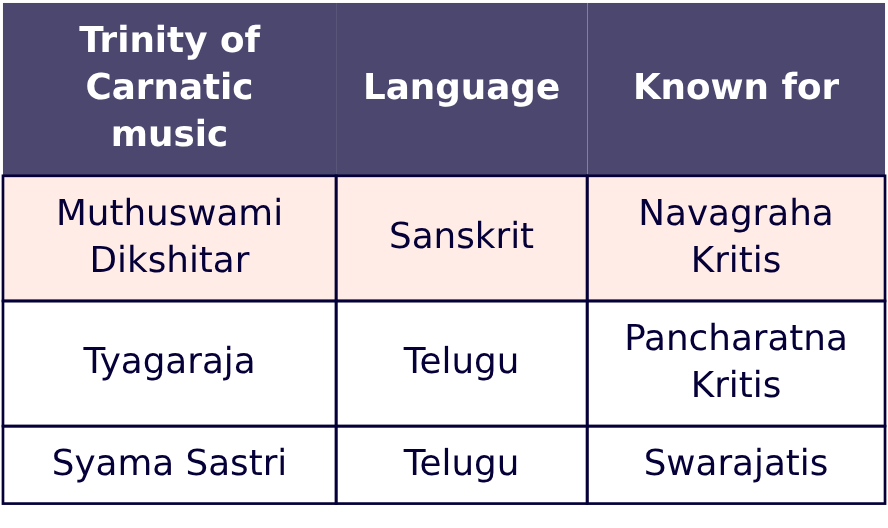 Hindustani music is the North Indian tradition, folk music is non-classical and Qawwali is Sufi devotional singing, so none of them can claim him.
Hence the correct option is (a).
Hindustani music is the North Indian tradition, folk music is non-classical and Qawwali is Sufi devotional singing, so none of them can claim him.
Hence the correct option is (a).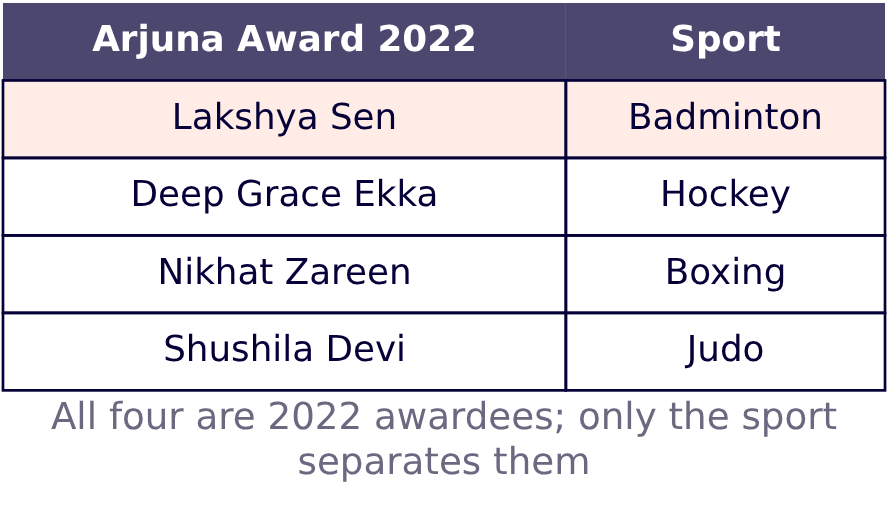 Lakshya Sen won the Commonwealth Games gold and the India Open in 2022 and was part of India's Thomas Cup winning team.
The Arjuna Award, instituted in 1961, is given for consistently outstanding performance in sport over the preceding four years.
Hence the correct option is (b).
Lakshya Sen won the Commonwealth Games gold and the India Open in 2022 and was part of India's Thomas Cup winning team.
The Arjuna Award, instituted in 1961, is given for consistently outstanding performance in sport over the preceding four years.
Hence the correct option is (b).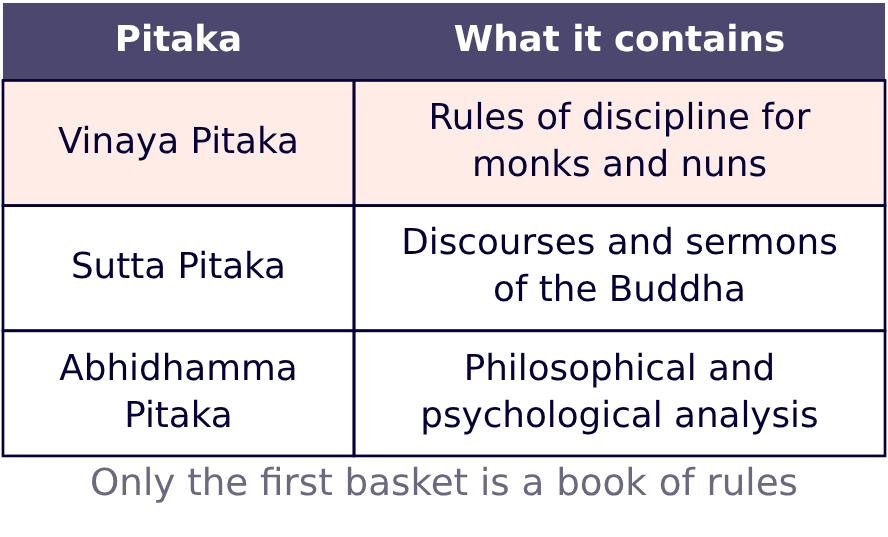 The Dhammapada is a collection of verses on the Buddha's teaching and sits inside the Khuddaka Nikaya of the Sutta Pitaka, so it is a book of moral verses, not a rule book.
The three Pitakas together, written in Pali, form the Tripitaka or 'Three Baskets'.
Hence the correct option is (c).
The Dhammapada is a collection of verses on the Buddha's teaching and sits inside the Khuddaka Nikaya of the Sutta Pitaka, so it is a book of moral verses, not a rule book.
The three Pitakas together, written in Pali, form the Tripitaka or 'Three Baskets'.
Hence the correct option is (c).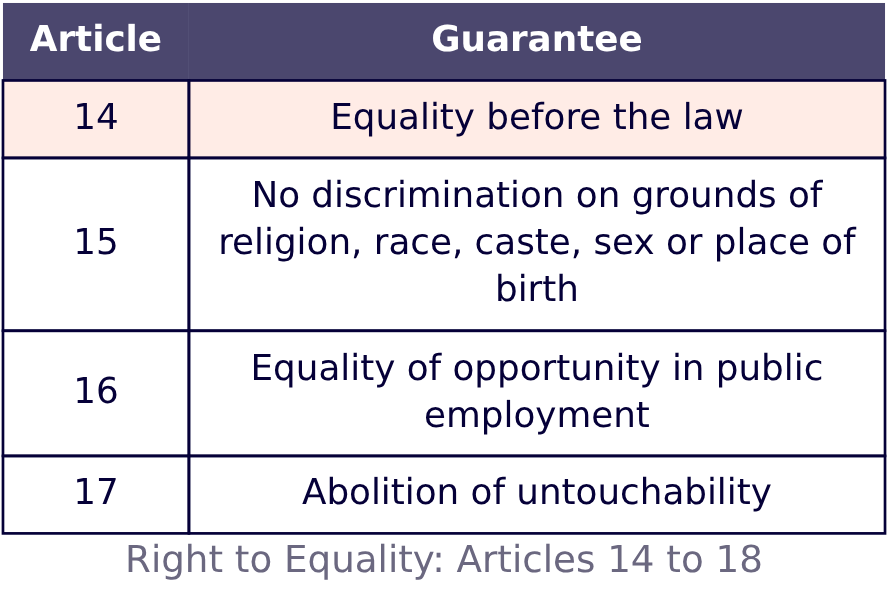 Note that it speaks of 'any person', so it protects foreigners and companies too, unlike Articles 15 and 16, which are available only to citizens.
Articles 14 to 18 together make up the Right to Equality, and Article 14 is the first and widest of them.
Hence the correct option is (b).
Note that it speaks of 'any person', so it protects foreigners and companies too, unlike Articles 15 and 16, which are available only to citizens.
Articles 14 to 18 together make up the Right to Equality, and Article 14 is the first and widest of them.
Hence the correct option is (b).