
21
Which dynasty succeeded the Mauryan Empire?
- A.Gupta
- B.Kanva
- C.Shunga
- D.Kushan
Solution
Post-Mauryan dynasties
The Mauryan Empire (321-185 BCE) came to an end when its last ruler, Brihadratha, was assassinated by his own commander-in-chief, Pushyamitra Shunga.
Pushyamitra then founded the Shunga dynasty, which ruled northern and eastern India from 185 BCE to about 73 BCE, keeping Pataliputra as its capital.
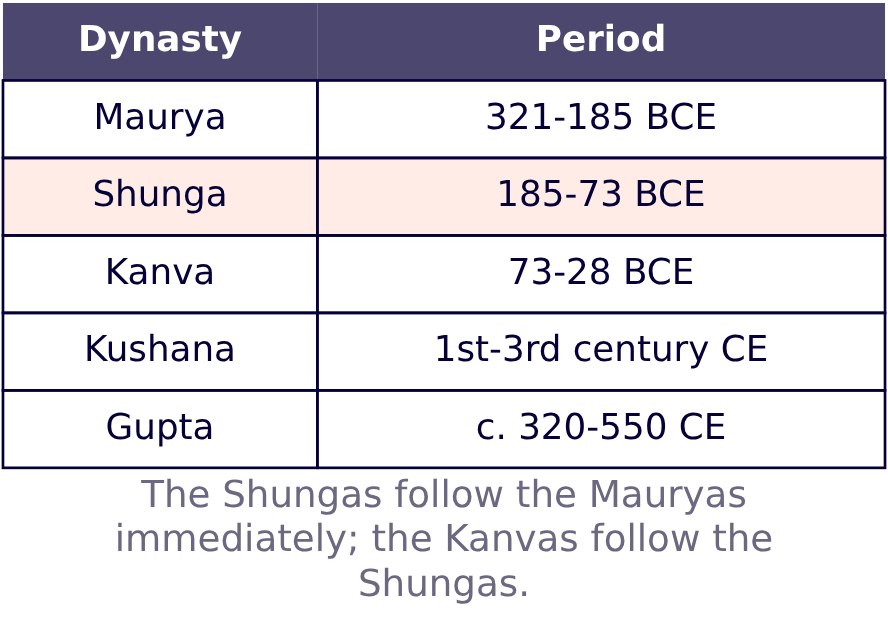 Order is what this question tests: the Kanvas came after the Shungas and not after the Mauryas, the Kushanas rose in the north-west only in the 1st century CE, and the Guptas as late as the 4th century CE.
Hence the correct option is (c).
Order is what this question tests: the Kanvas came after the Shungas and not after the Mauryas, the Kushanas rose in the north-west only in the 1st century CE, and the Guptas as late as the 4th century CE.
Hence the correct option is (c).
Order is what this question tests: the Kanvas came after the Shungas and not after the Mauryas, the Kushanas rose in the north-west only in the 1st century CE, and the Guptas as late as the 4th century CE.
Hence the correct option is (c).
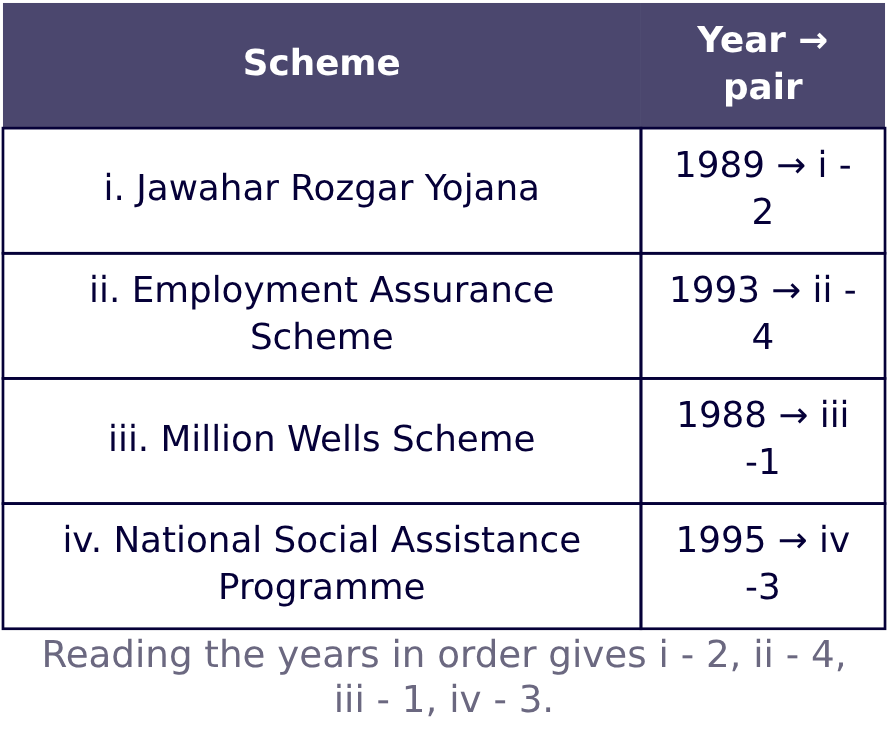 Hence the correct option is (d).
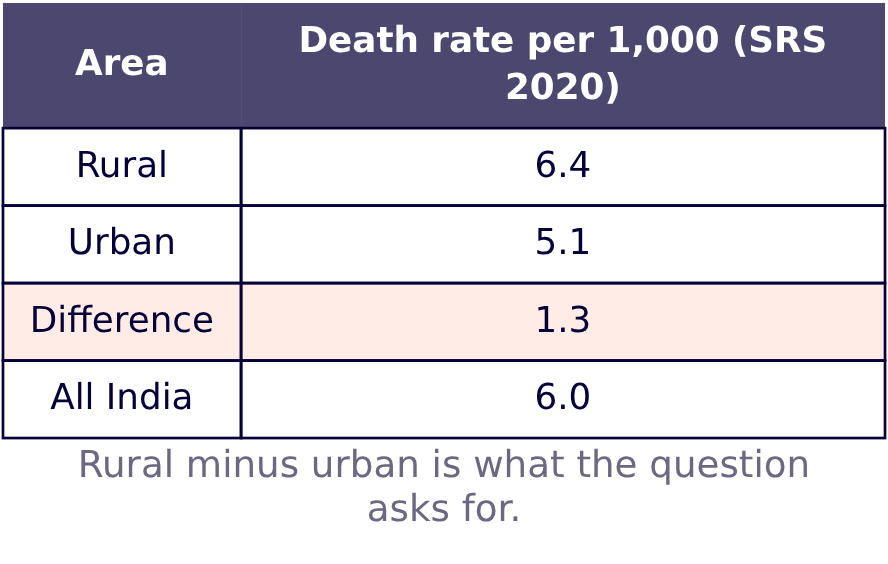 The question asks for the gap between the two, so subtract: 6.4-5.1=1.3 per 1,000.
The three wrong options are the raw rates themselves - 6.0 all-India, 6.4 rural and 5.1 urban - put there for a candidate who stops before doing the subtraction.
Hence the correct option is (a).
The question asks for the gap between the two, so subtract: 6.4-5.1=1.3 per 1,000.
The three wrong options are the raw rates themselves - 6.0 all-India, 6.4 rural and 5.1 urban - put there for a candidate who stops before doing the subtraction.
Hence the correct option is (a). Suspension particles are larger than about 1000 nm, so filter paper already holds them back - a suspension can be separated by filtration too, which rules out options (a) and (c).
A true solution has particles smaller than 1 nm that stay dispersed even in a centrifuge, so option (b) fails as well.
Colloidal particles lie in between, about 1 nm to 1000 nm: small enough to slip through filter paper, dense enough to be thrown down in a centrifuge - that is the one mixture the question describes.
Hence the correct option is (d).
Suspension particles are larger than about 1000 nm, so filter paper already holds them back - a suspension can be separated by filtration too, which rules out options (a) and (c).
A true solution has particles smaller than 1 nm that stay dispersed even in a centrifuge, so option (b) fails as well.
Colloidal particles lie in between, about 1 nm to 1000 nm: small enough to slip through filter paper, dense enough to be thrown down in a centrifuge - that is the one mixture the question describes.
Hence the correct option is (d).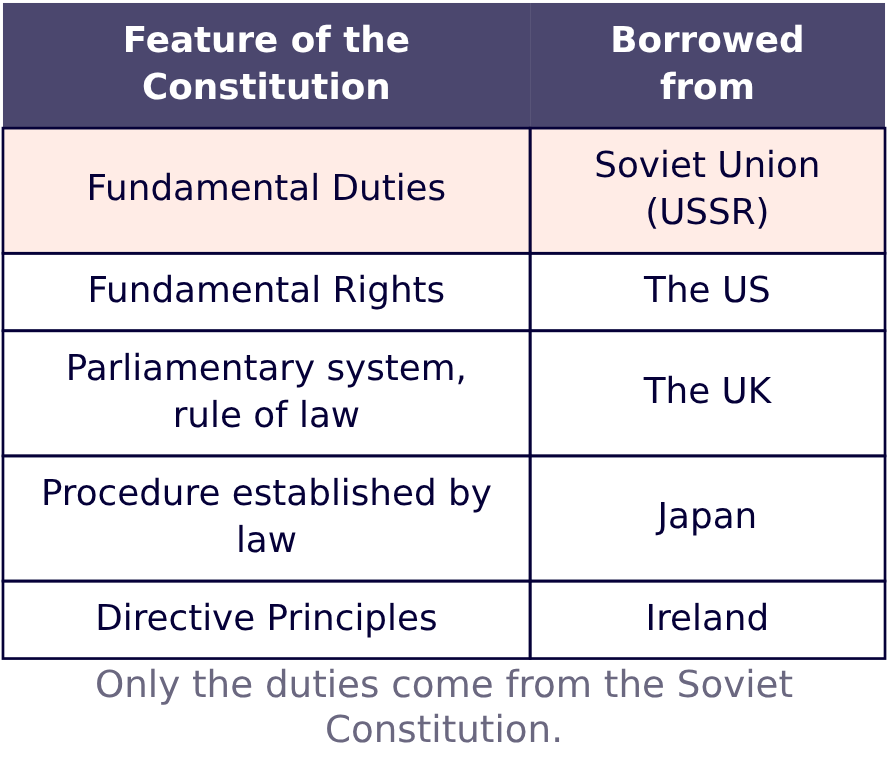 The other three options are the sources of other borrowings, which is why they are tempting: Fundamental Rights from the US, the parliamentary system and rule of law from the UK, and 'procedure established by law' from Japan.
The original ten duties became eleven when the 86th Amendment, 2002 added the duty of a parent or guardian to give education to a child between six and fourteen years.
Hence the correct option is (d).
The other three options are the sources of other borrowings, which is why they are tempting: Fundamental Rights from the US, the parliamentary system and rule of law from the UK, and 'procedure established by law' from Japan.
The original ten duties became eleven when the 86th Amendment, 2002 added the duty of a parent or guardian to give education to a child between six and fourteen years.
Hence the correct option is (d).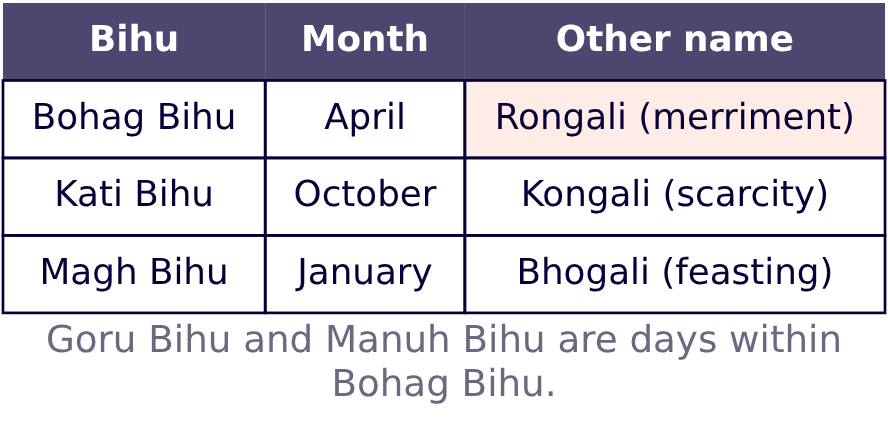 Kati Bihu comes in October and is the sombre Kongali Bihu of the lean season, so it is a different festival, not another name for this one.
Goru Bihu and Manuh Bihu are only the first two days inside Bohag Bihu itself - the cattle day and the human day - so neither names the whole festival.
Hence the correct option is (d).
Kati Bihu comes in October and is the sombre Kongali Bihu of the lean season, so it is a different festival, not another name for this one.
Goru Bihu and Manuh Bihu are only the first two days inside Bohag Bihu itself - the cattle day and the human day - so neither names the whole festival.
Hence the correct option is (d).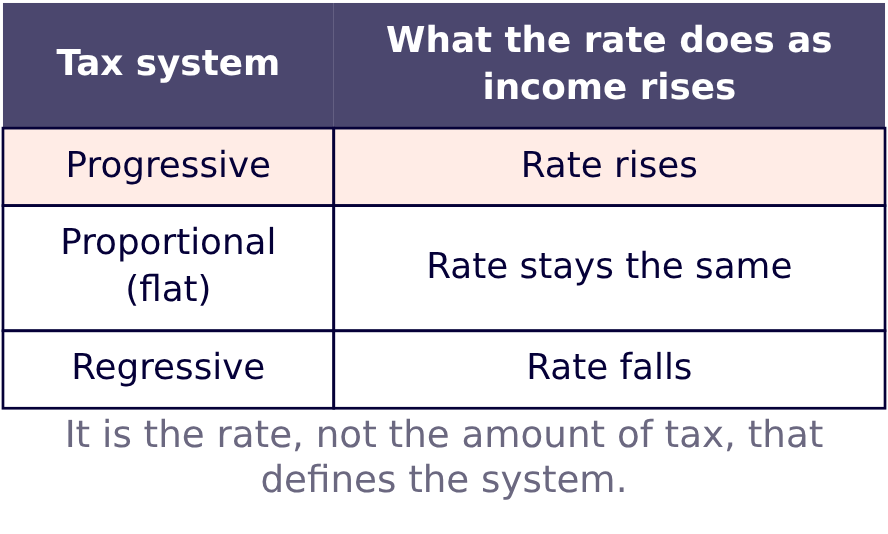 It rests on the ability-to-pay principle, and India's income tax with its rising slab rates is the standard example; the poorest are kept below the exemption limit altogether.
Option (b) is the definition of a regressive tax and option (c) of a proportional or flat tax, while option (a) merely compares two categories of taxpayer and says nothing about how the rate moves with income - which is the only thing 'progressive' describes.
Hence the correct option is (d).
It rests on the ability-to-pay principle, and India's income tax with its rising slab rates is the standard example; the poorest are kept below the exemption limit altogether.
Option (b) is the definition of a regressive tax and option (c) of a proportional or flat tax, while option (a) merely compares two categories of taxpayer and says nothing about how the rate moves with income - which is the only thing 'progressive' describes.
Hence the correct option is (d).