
1
'NZRB' is related to 'LXOY' in a certain way based on the English alphabetical order. In the same way, 'VJAT' is related to 'THXQ'. To which of the following is "PGXL" related, following the same logic?
- A.MGVH
- B.MFWJ
- C.NEUI
- D.OEVG
Solution
Letter-cluster analogy
Put the two clusters one below the other and compare letter by letter.
N becomes L and Z becomes X, a step of -2 each; R becomes O and B becomes Y, a step of -3 each (from B count back A, Z, Y).
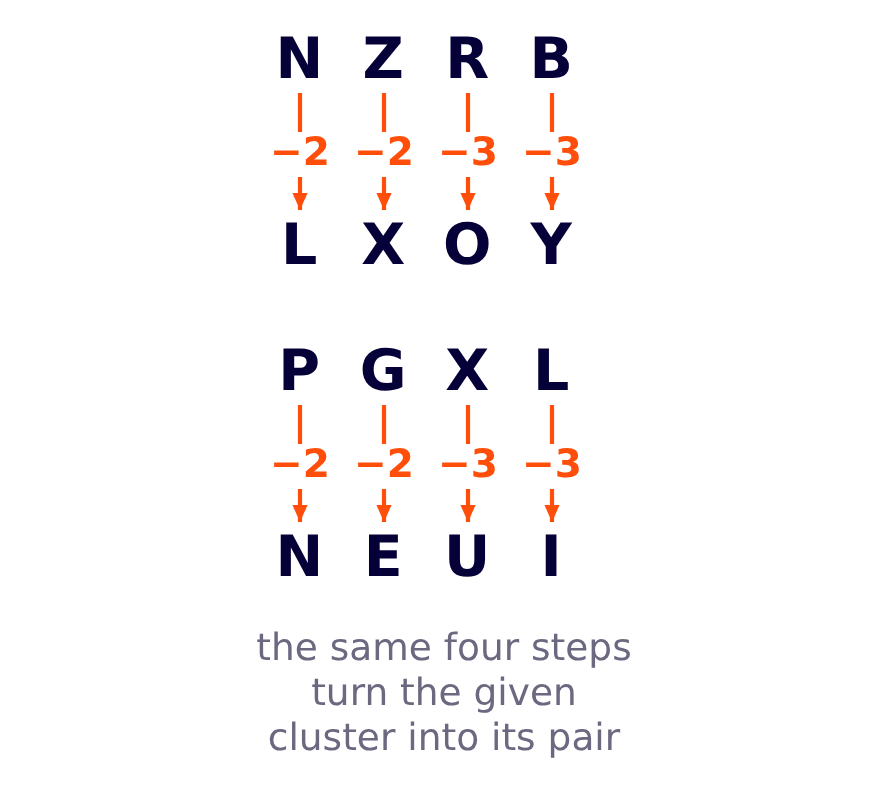 The second pair obeys the same rule: V -2= T, J -2= H, A -3= X and T -3= Q.
Now apply -2,-2,-3,-3 to PGXL: P (16)-2= N (14), G (7)-2= E (5), X (24)-3= U (21), L (12)-3= I (9).
So PGXL is related to NEUI, i.e. option (c).
The second pair obeys the same rule: V -2= T, J -2= H, A -3= X and T -3= Q.
Now apply -2,-2,-3,-3 to PGXL: P (16)-2= N (14), G (7)-2= E (5), X (24)-3= U (21), L (12)-3= I (9).
So PGXL is related to NEUI, i.e. option (c).
The second pair obeys the same rule: V -2= T, J -2= H, A -3= X and T -3= Q.
Now apply -2,-2,-3,-3 to PGXL: P (16)-2= N (14), G (7)-2= E (5), X (24)-3= U (21), L (12)-3= I (9).
So PGXL is related to NEUI, i.e. option (c).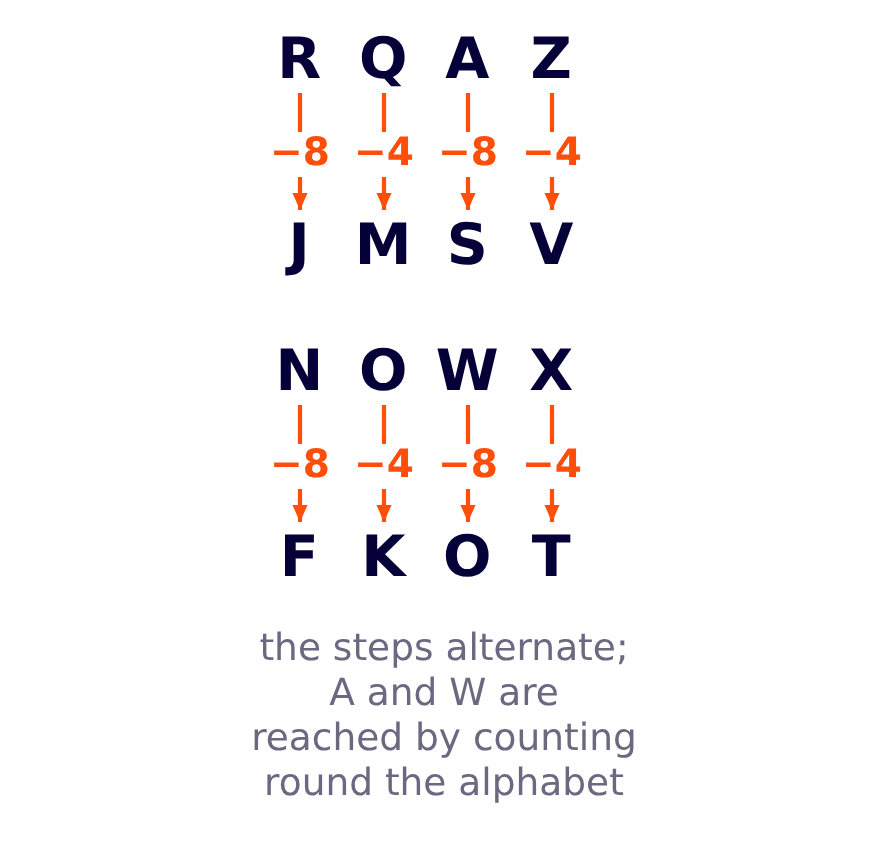 LAUJ confirms it: L -8= D, A -4= W (cyclic), U -8= M and J -4= F, which is DWMF.
Apply the same steps to NOWX: N (14)-8= F (6), O (15)-4= K (11), W (23)-8= O (15), X (24)-4= T (20).
So NOWX is related to FKOT, i.e. option (d).
LAUJ confirms it: L -8= D, A -4= W (cyclic), U -8= M and J -4= F, which is DWMF.
Apply the same steps to NOWX: N (14)-8= F (6), O (15)-4= K (11), W (23)-8= O (15), X (24)-4= T (20).
So NOWX is related to FKOT, i.e. option (d).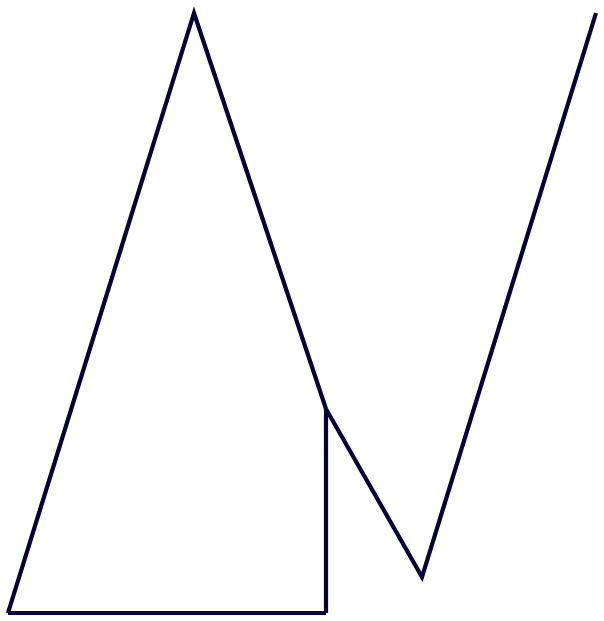
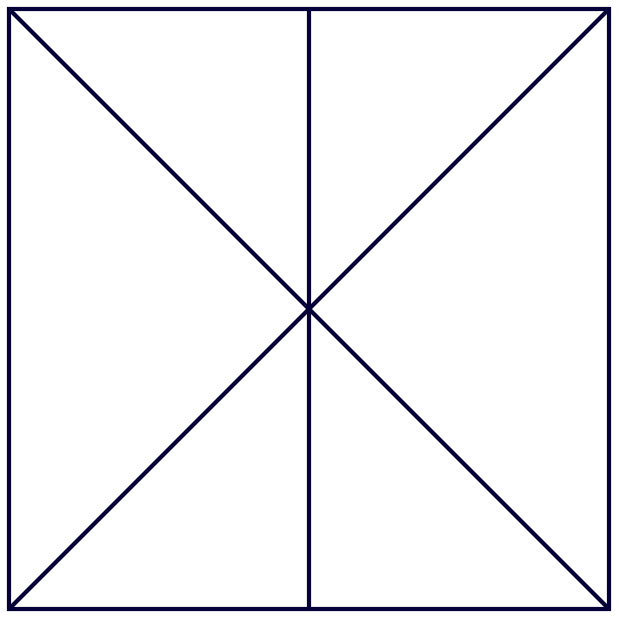
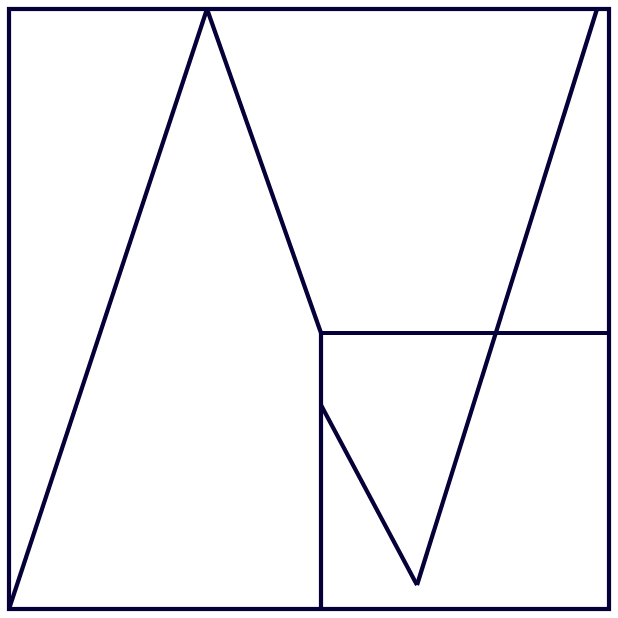
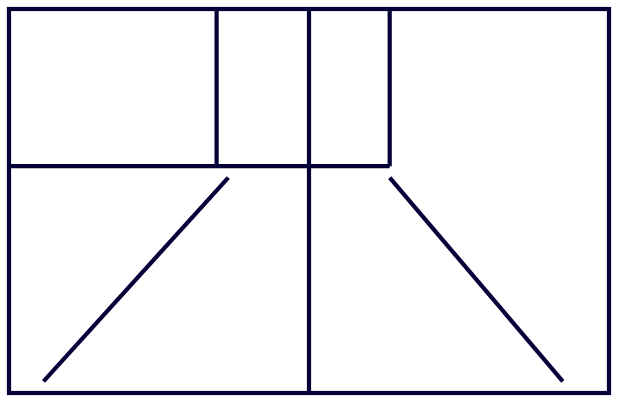
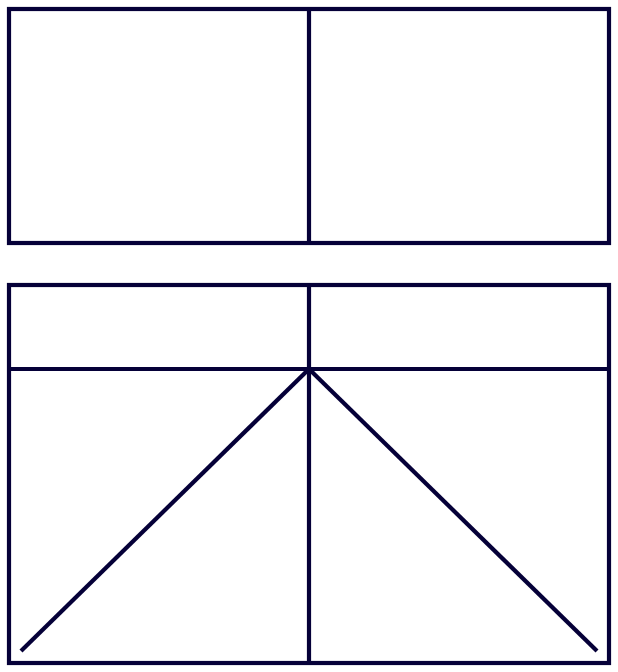
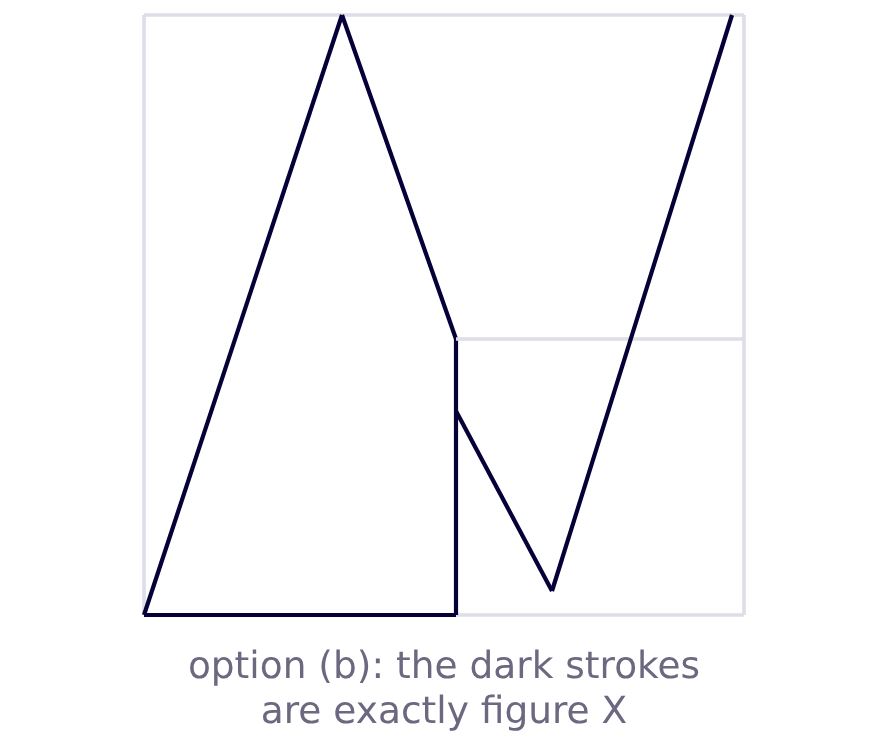 In option (b) the left stroke starts exactly at the bottom-left corner and rises to a peak on the top edge; the descending stroke drops to a point from which a vertical reaches the bottom edge, and the short base is part of the square's own bottom edge.
From that same point the stroke goes down to the low point and then straight up to the top-right corner - the second peak of X.
The other options have no such pair of peaks joined by a low point: (a) is only two diagonals and a centre line, (c) is a wide rectangle whose two slanting strokes spread apart, and (d) has its slanting strokes meeting at a top vertex, not at a bottom one.
So the figure is embedded in option (b).
In option (b) the left stroke starts exactly at the bottom-left corner and rises to a peak on the top edge; the descending stroke drops to a point from which a vertical reaches the bottom edge, and the short base is part of the square's own bottom edge.
From that same point the stroke goes down to the low point and then straight up to the top-right corner - the second peak of X.
The other options have no such pair of peaks joined by a low point: (a) is only two diagonals and a centre line, (c) is a wide rectangle whose two slanting strokes spread apart, and (d) has its slanting strokes meeting at a top vertex, not at a bottom one.
So the figure is embedded in option (b).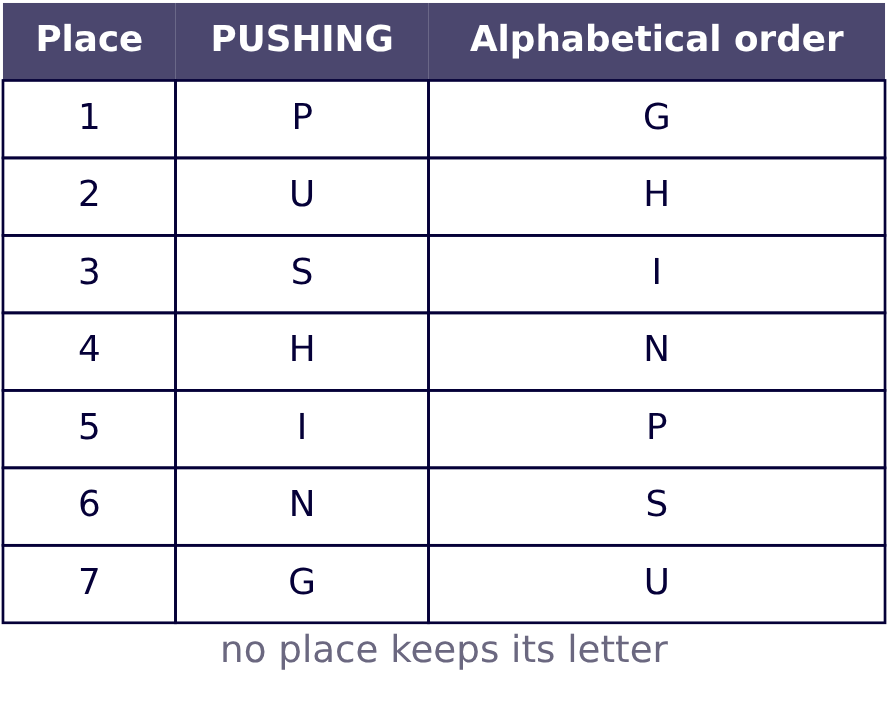 Compare the two rows place by place: P-G, U-H, S-I, H-N, I-P, N-S, G-U.
No place holds the same letter in both rows, so the count is zero, i.e. option (a).
Compare the two rows place by place: P-G, U-H, S-I, H-N, I-P, N-S, G-U.
No place holds the same letter in both rows, so the count is zero, i.e. option (a).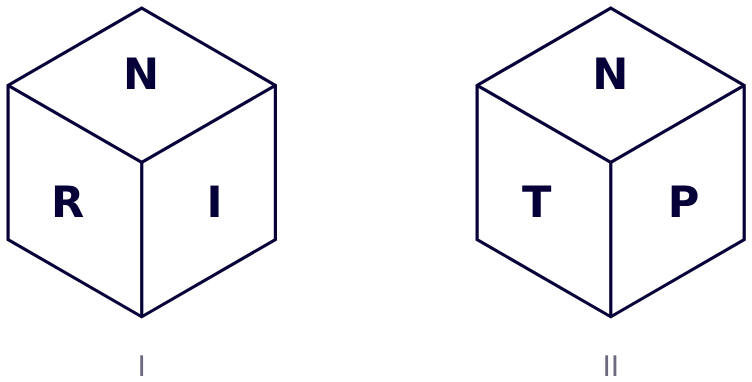
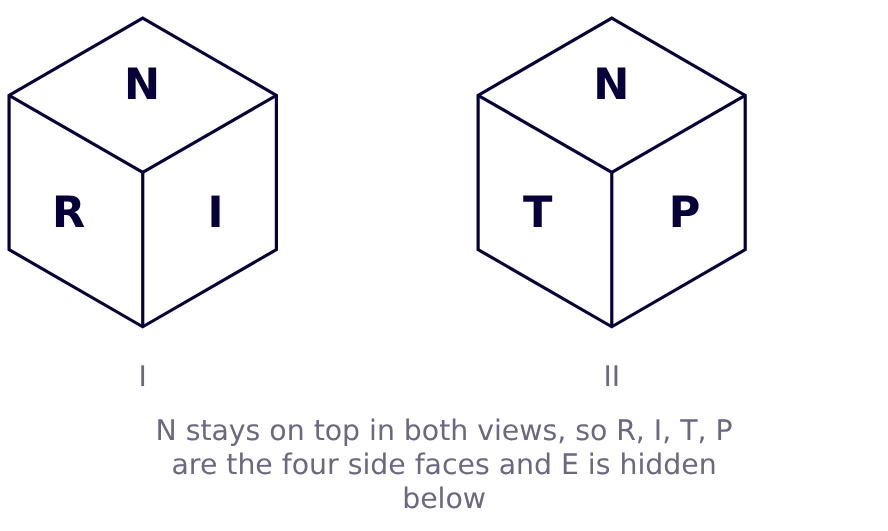 Spinning about that axis never moves the top face or the bottom face, so the four faces that go round the sides stay the same four in both views.
Those side faces are R and I (first view) and T and P (second view) - four different letters.
The six letters are N, R, P, I, T and E, so the only letter left for the hidden bottom face is E.
The bottom face is opposite the top face, so E is opposite N; therefore N is opposite E, i.e. option (a).
Spinning about that axis never moves the top face or the bottom face, so the four faces that go round the sides stay the same four in both views.
Those side faces are R and I (first view) and T and P (second view) - four different letters.
The six letters are N, R, P, I, T and E, so the only letter left for the hidden bottom face is E.
The bottom face is opposite the top face, so E is opposite N; therefore N is opposite E, i.e. option (a).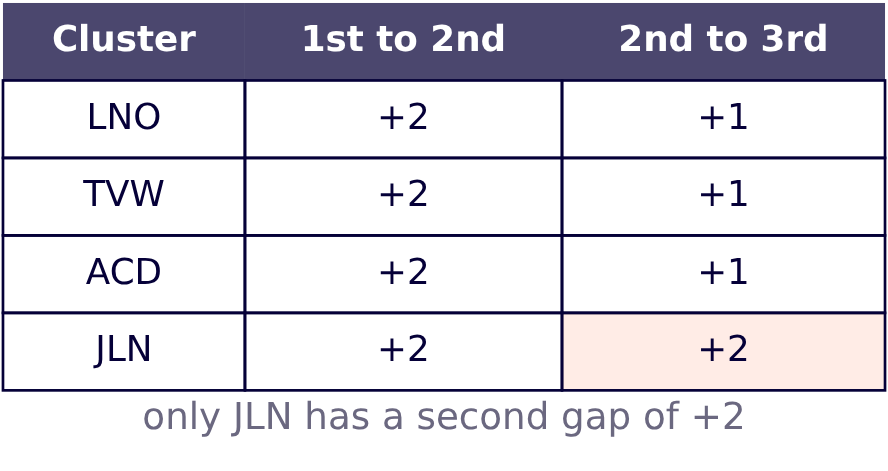 JLN: J to L is +2 but L to N is +2 as well, not +1.
So JLN breaks the pattern and is the odd cluster, i.e. option (d).
JLN: J to L is +2 but L to N is +2 as well, not +1.
So JLN breaks the pattern and is the odd cluster, i.e. option (d).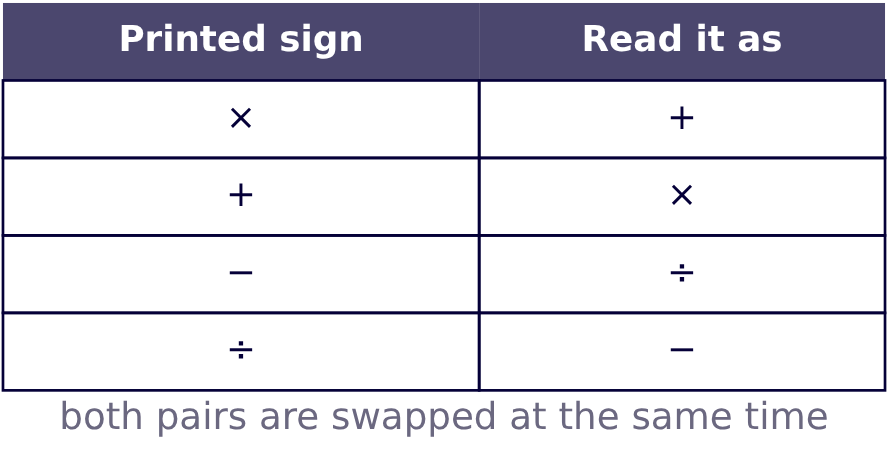 Rewrite with the new meanings: .
Now use BODMAS. Division first: .
Then multiplication: .
Finally left to right: 44-9=35 and 35+16=51.
So the question mark stands for 51, i.e. option (d).
Rewrite with the new meanings: .
Now use BODMAS. Division first: .
Then multiplication: .
Finally left to right: 44-9=35 and 35+16=51.
So the question mark stands for 51, i.e. option (d).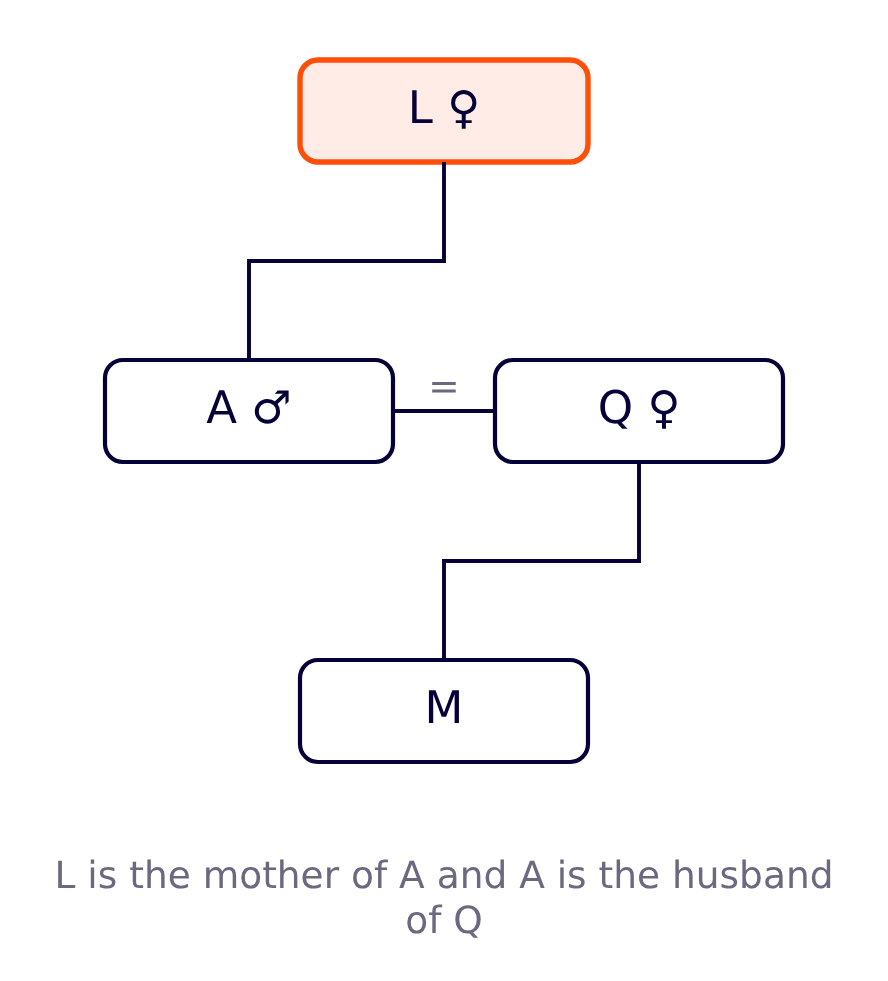 Q's husband is A, and the mother of A is L.
So L is the mother of Q's husband, i.e. Q's husband's mother, option (c).
It cannot be (a): that would need L to be the mother of Q's own mother, which the chain never says.
Q's husband is A, and the mother of A is L.
So L is the mother of Q's husband, i.e. Q's husband's mother, option (c).
It cannot be (a): that would need L to be the mother of Q's own mother, which the chain never says.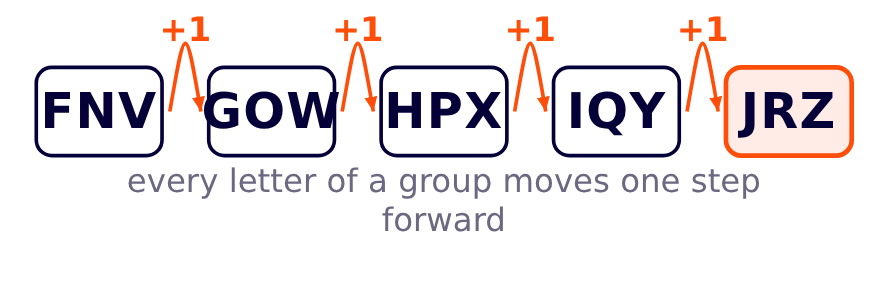 The missing group is JRZ, i.e. option (d).
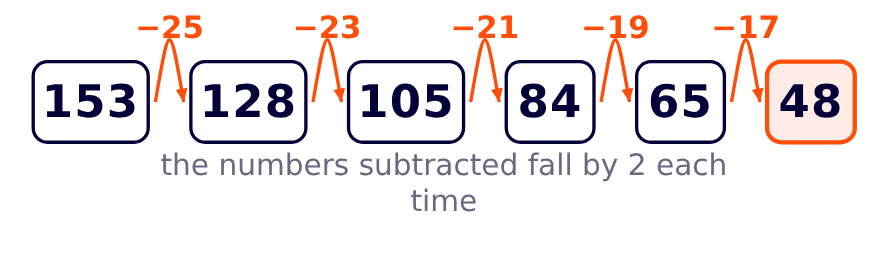 65-17=48.
So the missing term is 48, i.e. option (d).
65-17=48.
So the missing term is 48, i.e. option (d).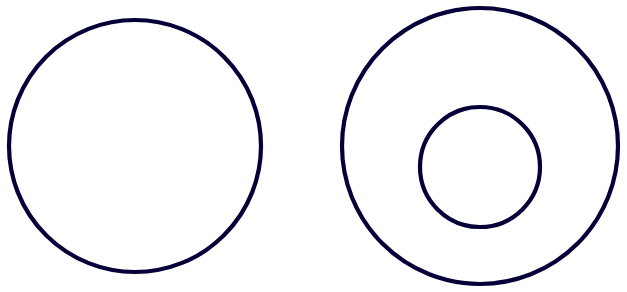
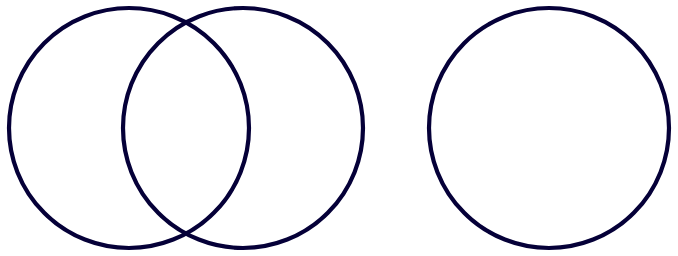
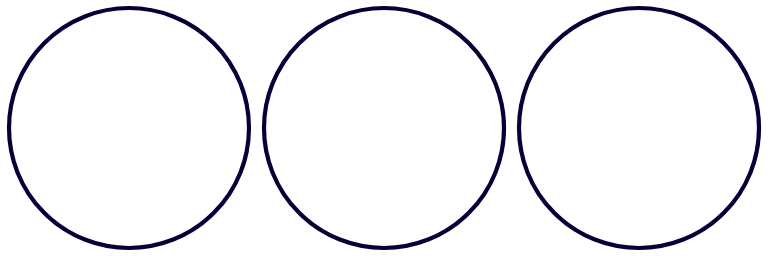
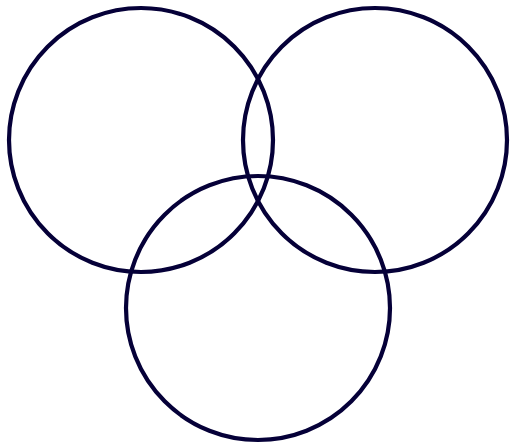
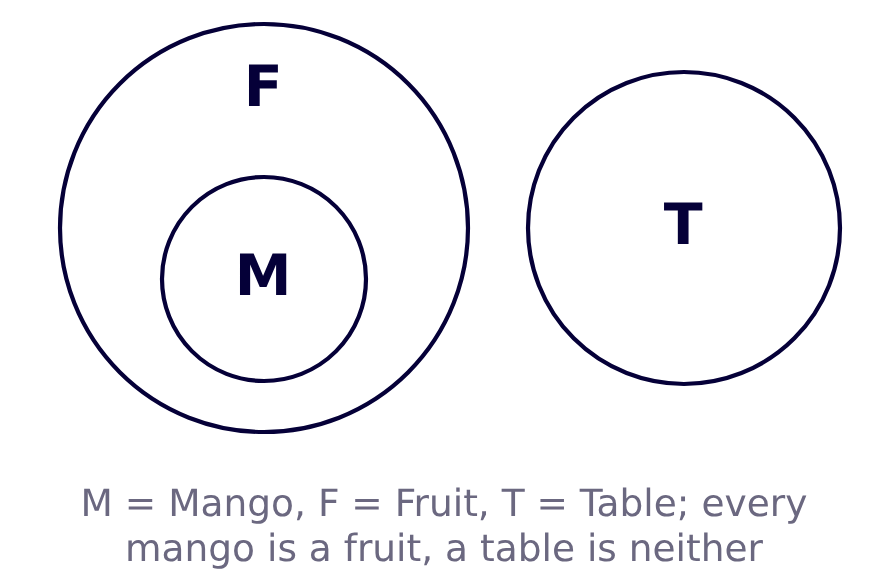 The picture needed is therefore a small circle inside a bigger circle, with a third circle drawn quite separately.
That is option (a); (b) makes mango and fruit merely overlap, (c) keeps all three apart, and (d) makes even table overlap the other two.
The picture needed is therefore a small circle inside a bigger circle, with a third circle drawn quite separately.
That is option (a); (b) makes mango and fruit merely overlap, (c) keeps all three apart, and (d) makes even table overlap the other two.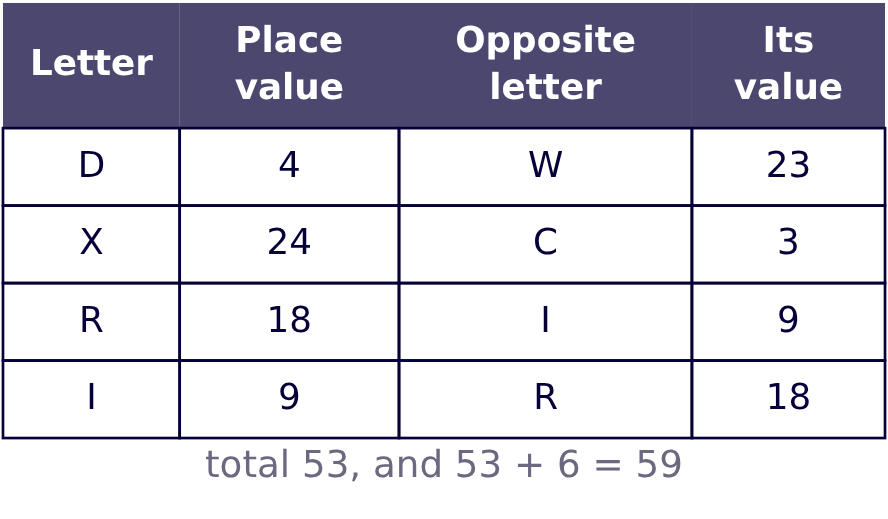 For DXRI the opposites are W, C, I, R with values 23, 3, 9, 18.
23+3+9+18=53, and 53+6=59.
So DXRI is coded as 59, i.e. option (d).
For DXRI the opposites are W, C, I, R with values 23, 3, 9, 18.
23+3+9+18=53, and 53+6=59.
So DXRI is coded as 59, i.e. option (d).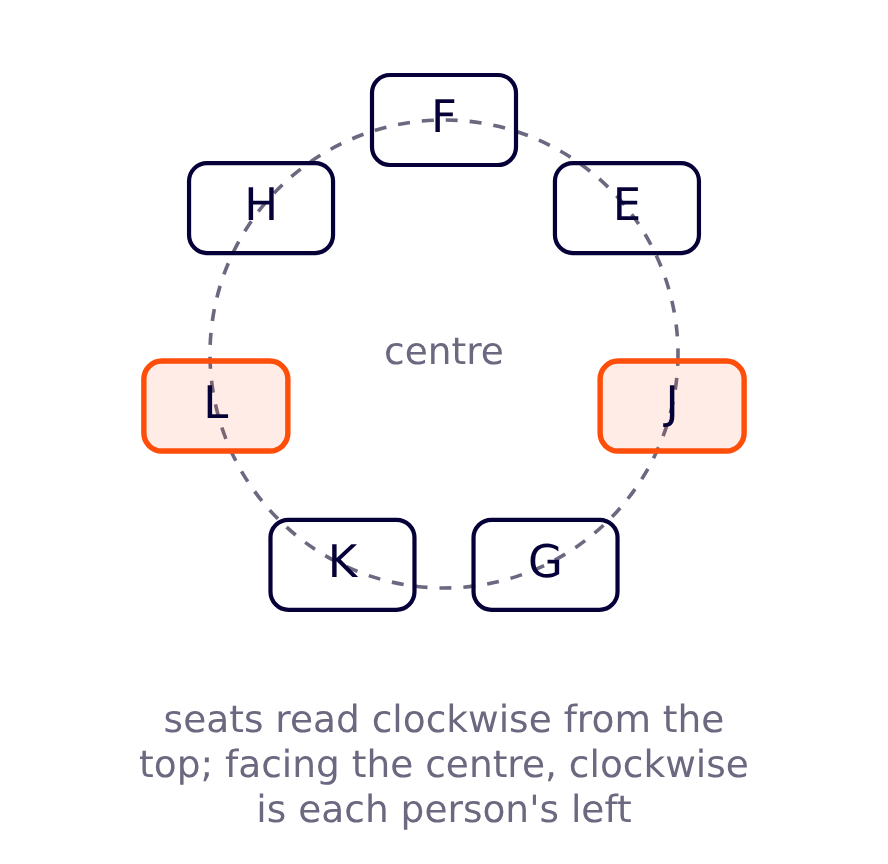 Counting three seats clockwise from J: G, then K, then L.
So L sits third to the left of J, i.e. option (c).
Counting three seats clockwise from J: G, then K, then L.
So L sits third to the left of J, i.e. option (c).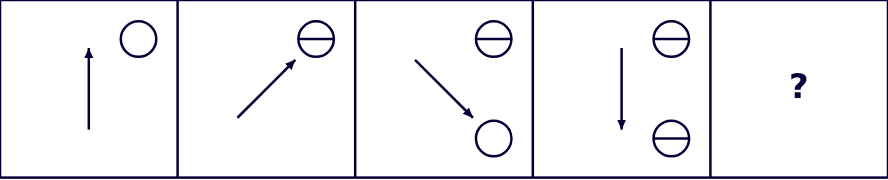
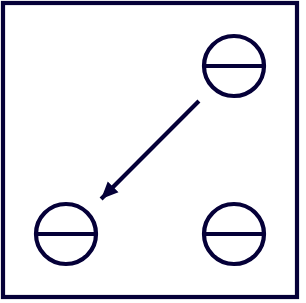
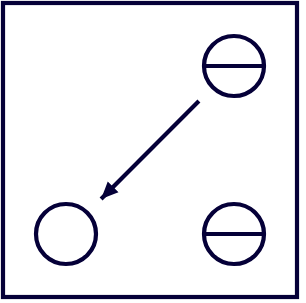
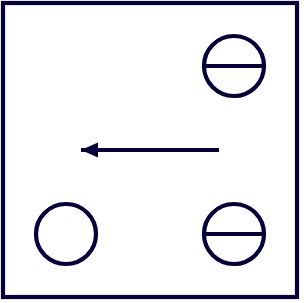
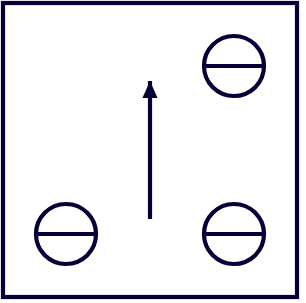
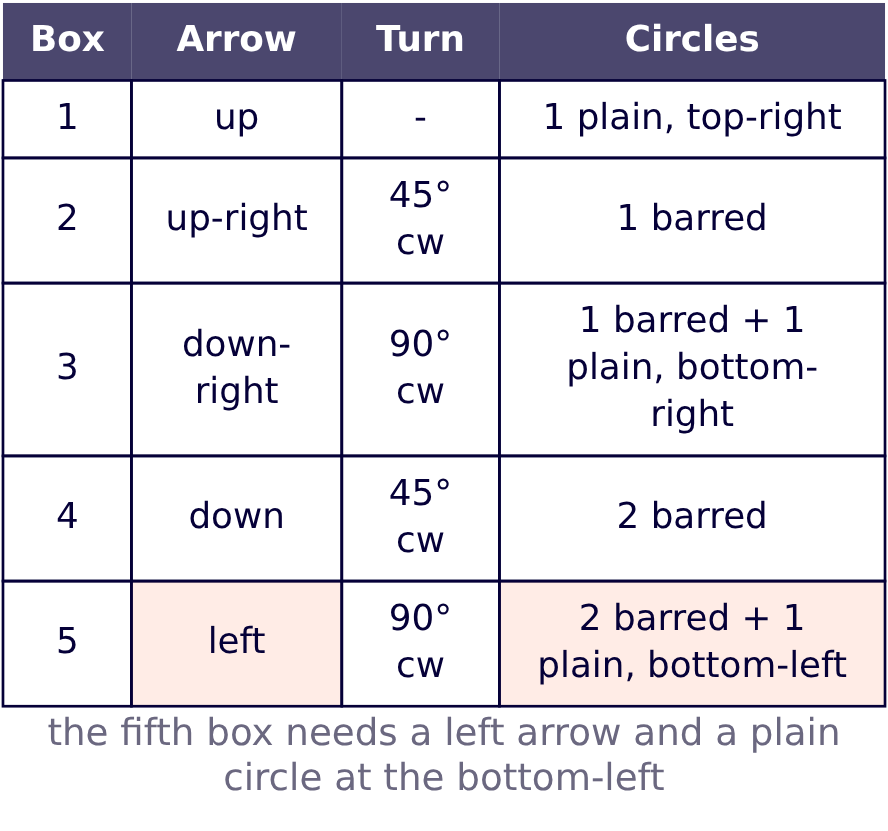 Options (a) and (d) fail on the arrow - down-left is a turn of only and up is a turn of .
Option (b) has exactly the right circles but its arrow also points down-left, so it too breaks the turning rule.
Only option (c) has both a left-pointing arrow and an unbarred circle at the bottom-left, so the answer is (c).
Options (a) and (d) fail on the arrow - down-left is a turn of only and up is a turn of .
Option (b) has exactly the right circles but its arrow also points down-left, so it too breaks the turning rule.
Only option (c) has both a left-pointing arrow and an unbarred circle at the bottom-left, so the answer is (c).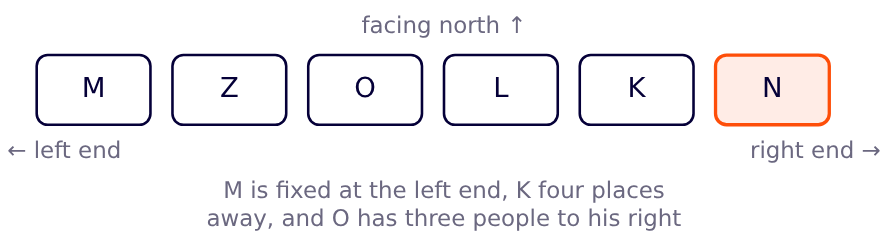 Seat 6 is the rightmost end, so N sits there, i.e. option (c).
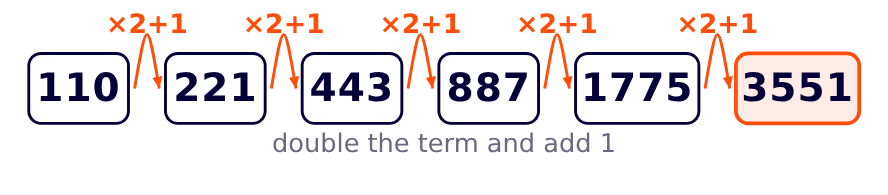 Therefore the next term is .
So the answer is 3551, i.e. option (c).
Therefore the next term is .
So the answer is 3551, i.e. option (c).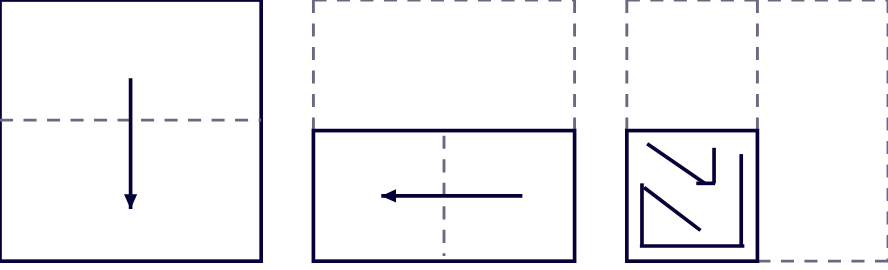
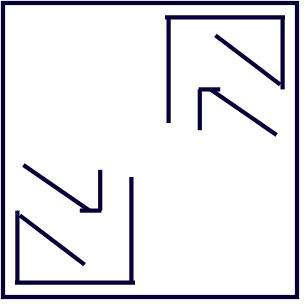
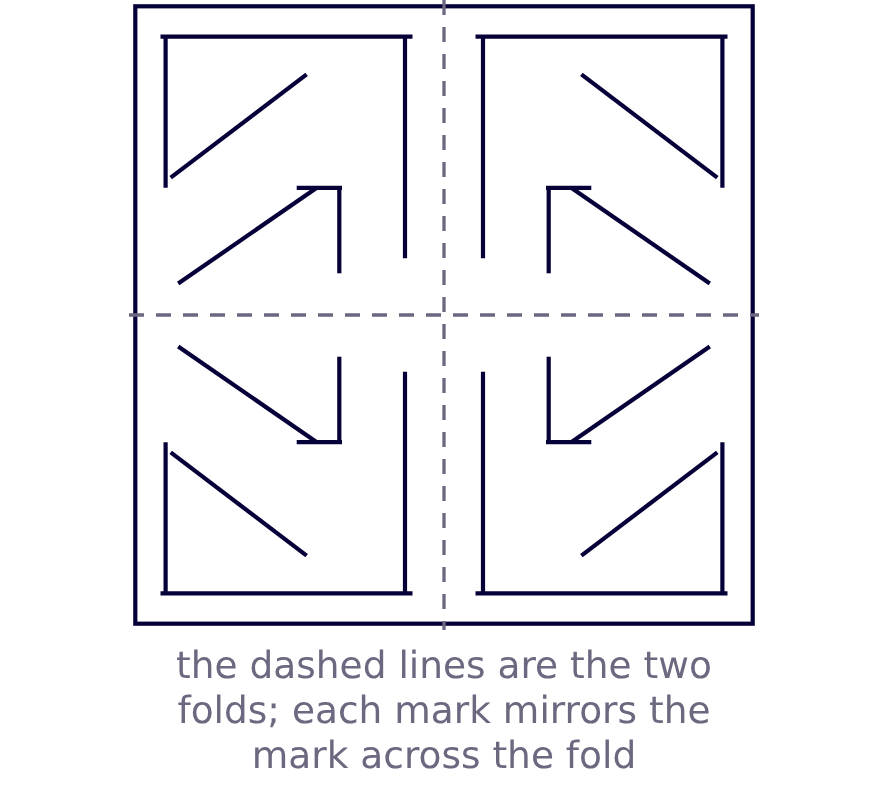 The opened sheet therefore carries four marks, one per quarter, and each is a mirror image of its neighbour across the fold line - never a plain repeat.
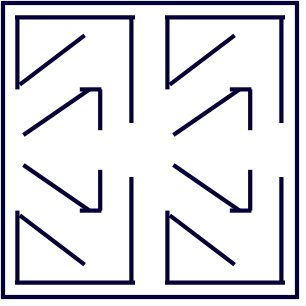
Option (a) shows only two marks, so two thicknesses were missed.
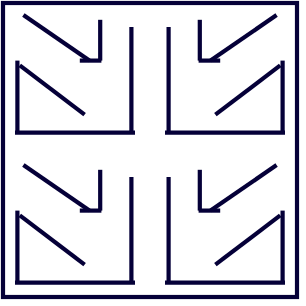
Option (b) repeats the left-hand mark on the right instead of mirroring it, and option (c) repeats the bottom row at the top instead of mirroring it.
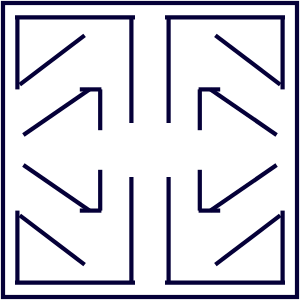
Only option (d) mirrors across both fold lines, so the answer is (d).
The opened sheet therefore carries four marks, one per quarter, and each is a mirror image of its neighbour across the fold line - never a plain repeat.
Option (a) shows only two marks, so two thicknesses were missed.
Option (b) repeats the left-hand mark on the right instead of mirroring it, and option (c) repeats the bottom row at the top instead of mirroring it.
Only option (d) mirrors across both fold lines, so the answer is (d).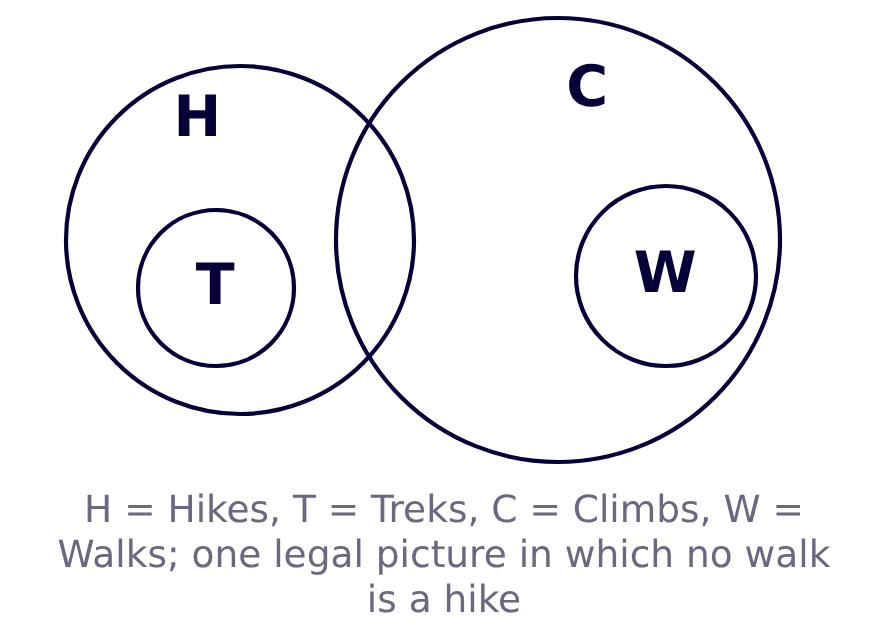 Walks is inside Climbs, but nothing forces it into the small part where Climbs meets Hikes; it can be drawn in the far side of Climbs, clear of Hikes.
In that legal picture no walk is a hike, so conclusion (II) is only possible, not certain.
Every trek is inside Hikes, so a walk could be a trek only by being a hike first; since that is not certain, conclusion (I) is not certain either.
Neither conclusion follows, i.e. option (b).
Walks is inside Climbs, but nothing forces it into the small part where Climbs meets Hikes; it can be drawn in the far side of Climbs, clear of Hikes.
In that legal picture no walk is a hike, so conclusion (II) is only possible, not certain.
Every trek is inside Hikes, so a walk could be a trek only by being a hike first; since that is not certain, conclusion (I) is not certain either.
Neither conclusion follows, i.e. option (b).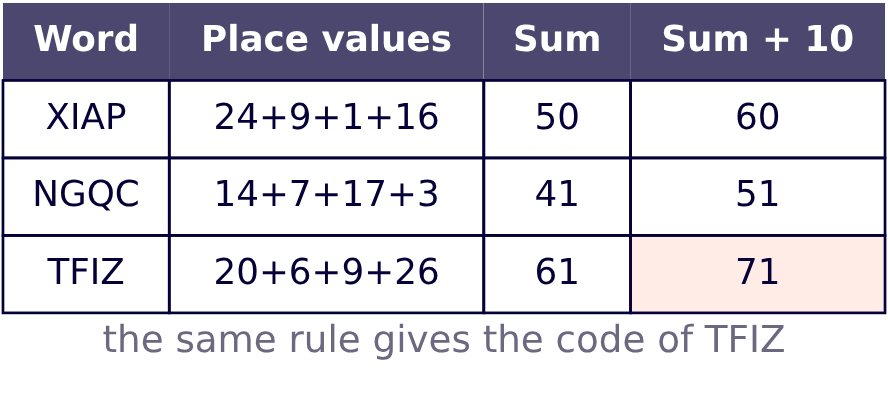 TFIZ: 20+6+9+26=61, so the code is 61+10=71.
So the answer is 71, i.e. option (c).
TFIZ: 20+6+9+26=61, so the code is 61+10=71.
So the answer is 71, i.e. option (c).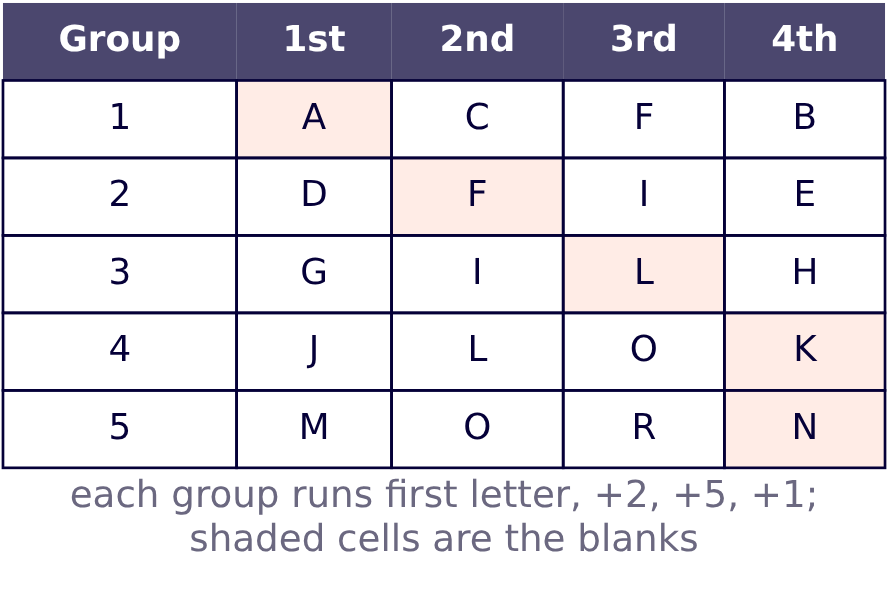 D_IE: the second letter is 4+2=6, which is F, the second blank.
JLO_: the fourth letter is 10+1=11, which is K, the fourth blank.
MOR_: the fourth letter is 13+1=14, which is N, the fifth blank.
Reading the blanks in order gives A, F, L, K, N, i.e. option (a).
D_IE: the second letter is 4+2=6, which is F, the second blank.
JLO_: the fourth letter is 10+1=11, which is K, the fourth blank.
MOR_: the fourth letter is 13+1=14, which is N, the fifth blank.
Reading the blanks in order gives A, F, L, K, N, i.e. option (a).