
1
Select the combination of letters that when filled in the blanks in the same sequence will make the series logically complete.
_BFKG_HMIF_OKHL_MJN_
- A.EFJRS
- B.CDKQT
- C.EDJQS
- D.CFKRT
Solution
Letter series with blanks
The completed string has 20 letters, so break it into five groups of four.
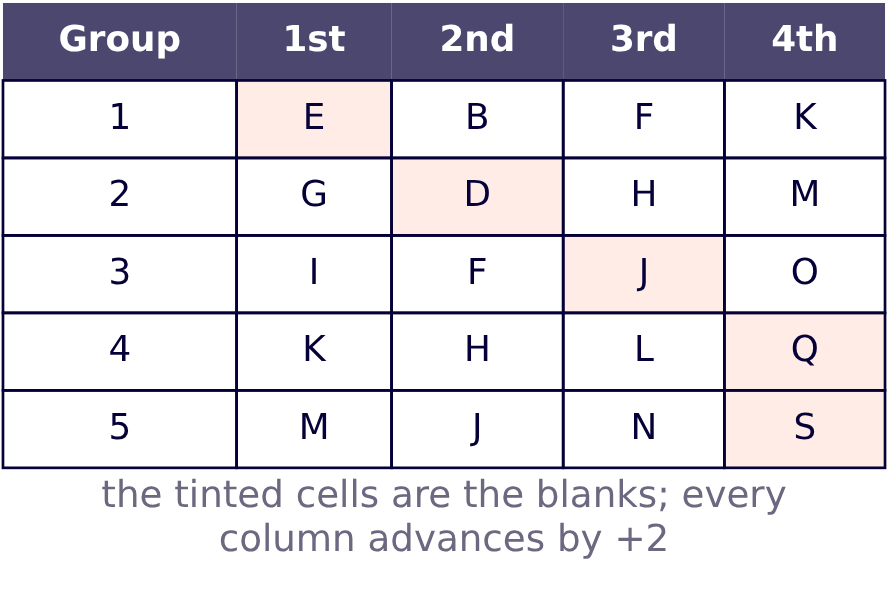 Read the groups down each column: E, G, I, K, M and B, D, F, H, J and F, H, J, L, N and K, M, O, Q, S - every column moves +2.
The blanks are the 1st letter of group 1, the 2nd of group 2, the 3rd of group 3 and the 4th of groups 4 and 5.
Filling them in order gives E, D, J, Q, S.
Hence the correct option is (c).
Read the groups down each column: E, G, I, K, M and B, D, F, H, J and F, H, J, L, N and K, M, O, Q, S - every column moves +2.
The blanks are the 1st letter of group 1, the 2nd of group 2, the 3rd of group 3 and the 4th of groups 4 and 5.
Filling them in order gives E, D, J, Q, S.
Hence the correct option is (c).
Read the groups down each column: E, G, I, K, M and B, D, F, H, J and F, H, J, L, N and K, M, O, Q, S - every column moves +2.
The blanks are the 1st letter of group 1, the 2nd of group 2, the 3rd of group 3 and the 4th of groups 4 and 5.
Filling them in order gives E, D, J, Q, S.
Hence the correct option is (c).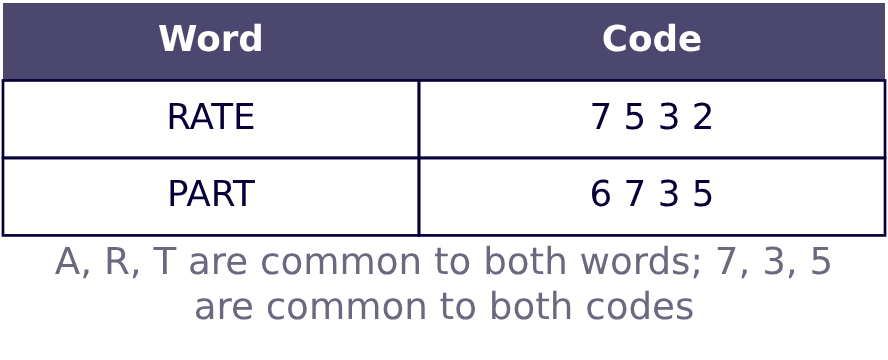 A, R and T occur in both words, and the digits 7, 3 and 5 occur in both codes, so those three digits stand for A, R and T in some order.
In 'RATE' the extra letter is E and the extra digit is 2, so E = 2.
In 'PART' the extra letter is P and the extra digit is 6, so P = 6.
Hence the correct option is (b).
A, R and T occur in both words, and the digits 7, 3 and 5 occur in both codes, so those three digits stand for A, R and T in some order.
In 'RATE' the extra letter is E and the extra digit is 2, so E = 2.
In 'PART' the extra letter is P and the extra digit is 6, so P = 6.
Hence the correct option is (b).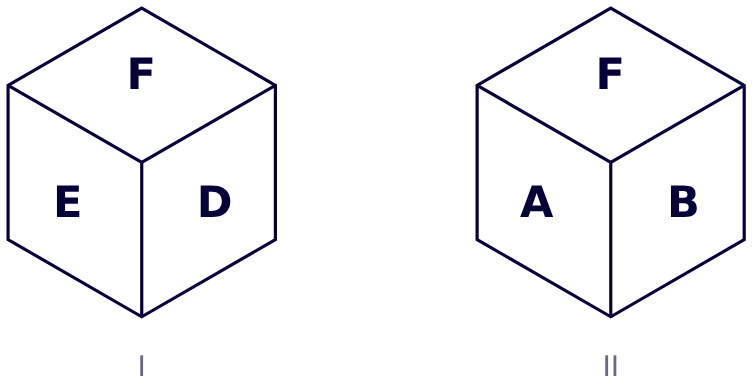
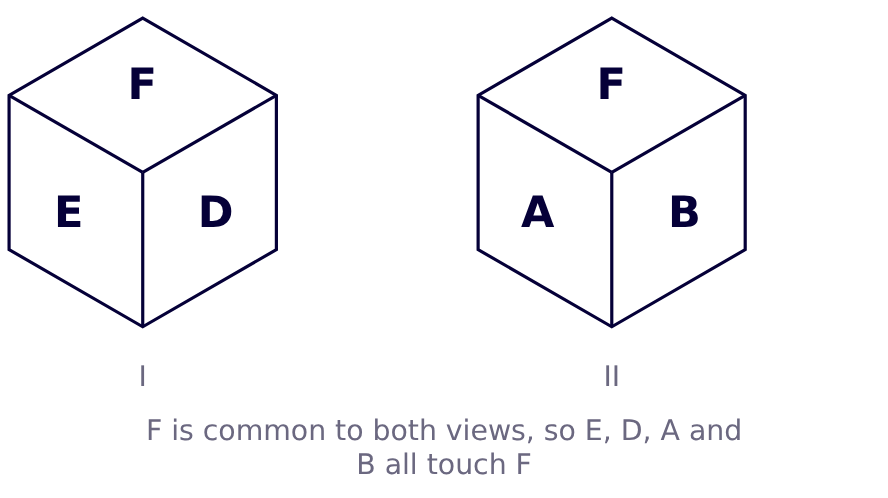 The faces standing beside F are E and D in the first view and A and B in the second - four different letters, all adjacent to F.
A cube has only six faces, so the one letter left over, C, cannot touch F: C must lie opposite F.
Hence the face opposite C carries F.
Hence the correct option is (c).
The faces standing beside F are E and D in the first view and A and B in the second - four different letters, all adjacent to F.
A cube has only six faces, so the one letter left over, C, cannot touch F: C must lie opposite F.
Hence the face opposite C carries F.
Hence the correct option is (c). The differences are +9, +10, +11, +12, +13 - each one bigger than the last by 1.
So the missing term =470+11=481.
Hence the correct option is (a).
The differences are +9, +10, +11, +12, +13 - each one bigger than the last by 1.
So the missing term =470+11=481.
Hence the correct option is (a).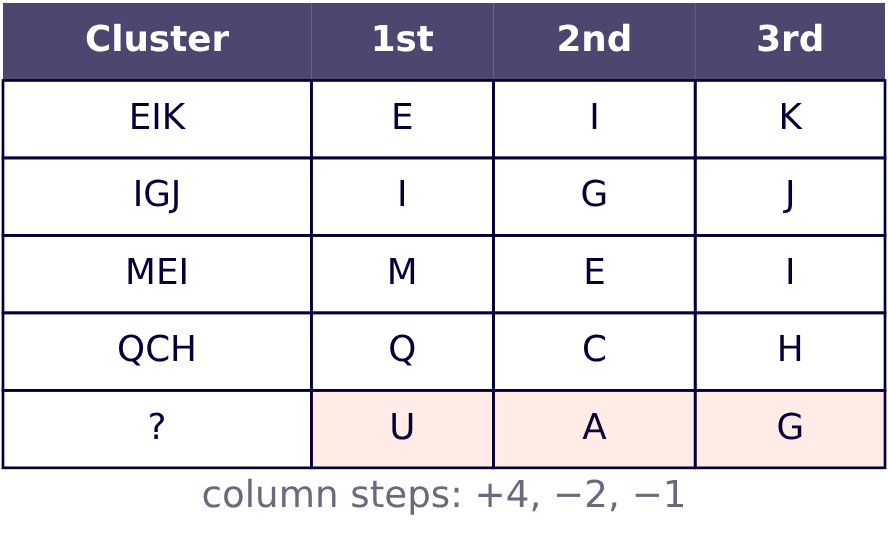 1st letters E, I, M, Q rise by +4, so the next is U.
2nd letters I, G, E, C fall by −2, so the next is A.
3rd letters K, J, I, H fall by −1, so the next is G.
The missing cluster is UAG.
Hence the correct option is (d).
1st letters E, I, M, Q rise by +4, so the next is U.
2nd letters I, G, E, C fall by −2, so the next is A.
3rd letters K, J, I, H fall by −1, so the next is G.
The missing cluster is UAG.
Hence the correct option is (d).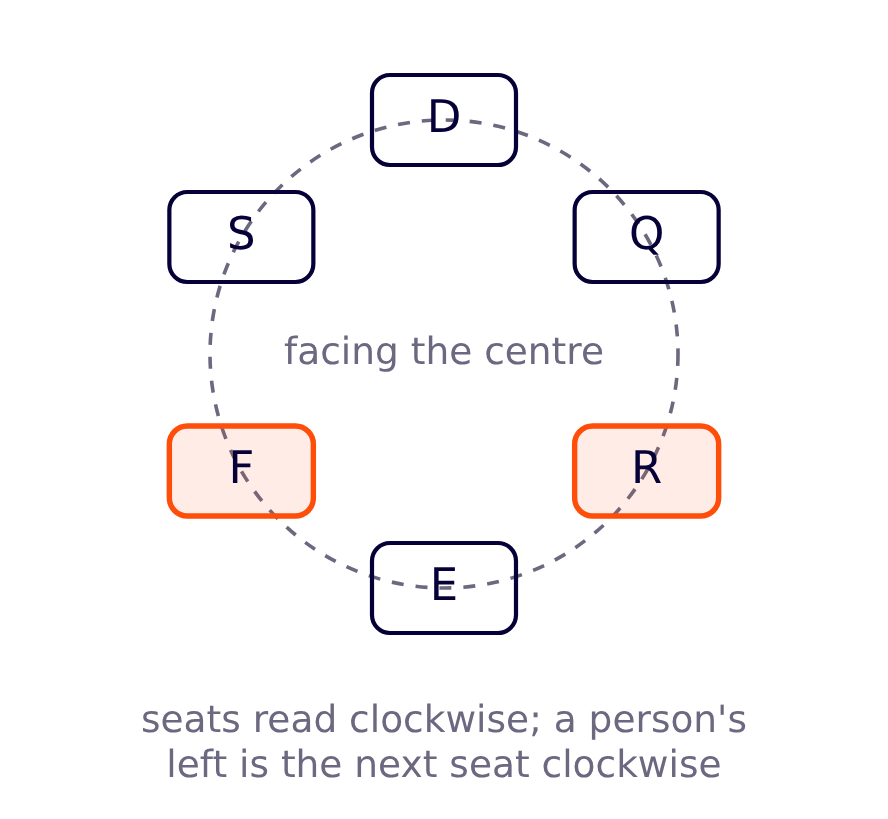 Counting from F towards its left we pass S, then D, then Q before reaching R.
So three people sit between R and F.
Hence the correct option is (a).
Counting from F towards its left we pass S, then D, then Q before reaching R.
So three people sit between R and F.
Hence the correct option is (a).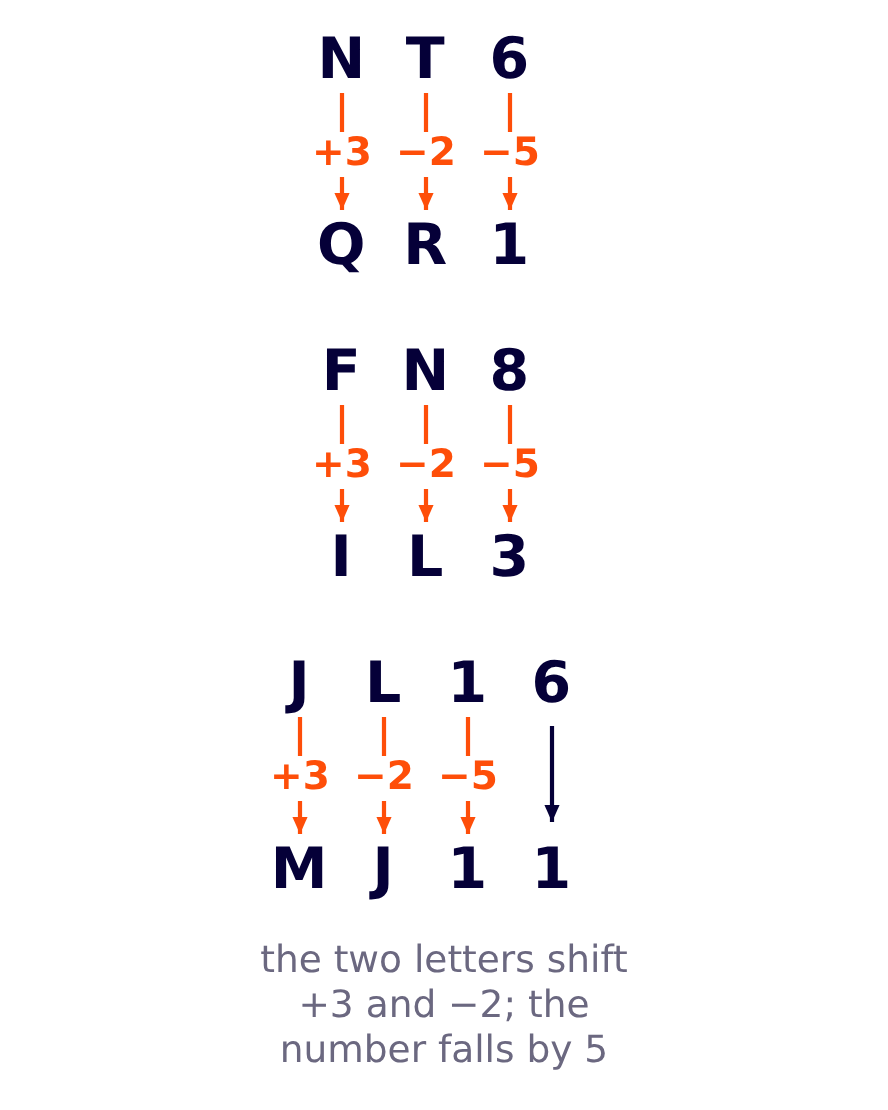 The second pair obeys the same rule: F+3=I, N-2=L, 8-5=3.
Apply it to JL 16: J+3=M, L-2=J and 16-5=11.
So JL 16 is related to MJ 11.
Hence the correct option is (d).
The second pair obeys the same rule: F+3=I, N-2=L, 8-5=3.
Apply it to JL 16: J+3=M, L-2=J and 16-5=11.
So JL 16 is related to MJ 11.
Hence the correct option is (d).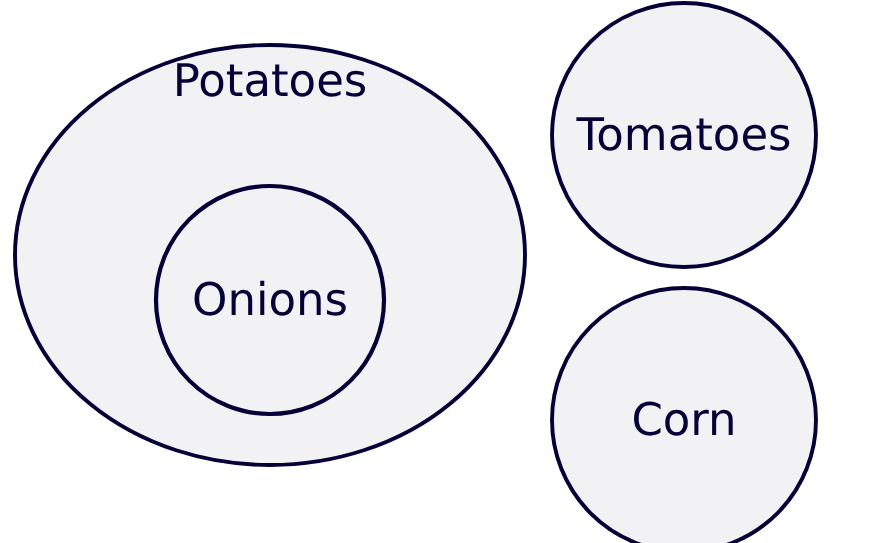 Conclusion (I): the onions lie inside potatoes and potatoes never meet tomatoes, so no onion can be a tomato - it follows.
Conclusion (II): tomatoes and corn are only known to be outside potatoes; nothing forces them to meet, so this is a possibility, not a certainty - it does not follow.
Hence the correct option is (c).
Conclusion (I): the onions lie inside potatoes and potatoes never meet tomatoes, so no onion can be a tomato - it follows.
Conclusion (II): tomatoes and corn are only known to be outside potatoes; nothing forces them to meet, so this is a possibility, not a certainty - it does not follow.
Hence the correct option is (c).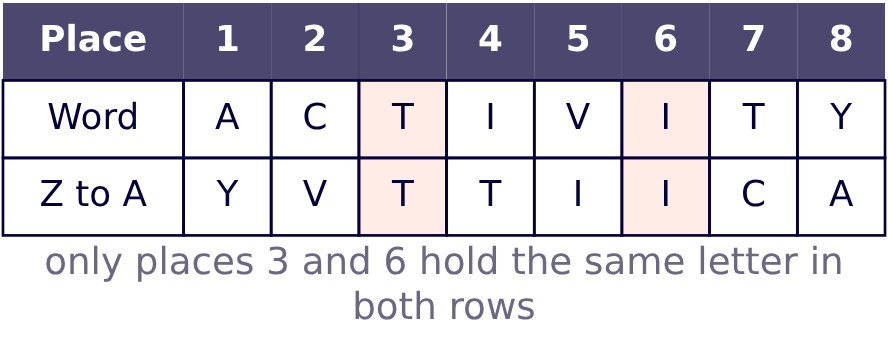 Comparing the two rows place by place, only the 3rd letter (T) and the 6th letter (I) stand where they stood before.
So two positions remain unchanged.
Hence the correct option is (d).
Comparing the two rows place by place, only the 3rd letter (T) and the 6th letter (I) stand where they stood before.
So two positions remain unchanged.
Hence the correct option is (d). The differences are the odd numbers +3, +5, +7, +9, so the next difference is +11.
Missing term =591+11=602.
Hence the correct option is (d).
The differences are the odd numbers +3, +5, +7, +9, so the next difference is +11.
Missing term =591+11=602.
Hence the correct option is (d).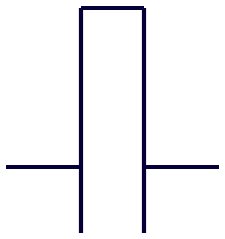 (X)
(X)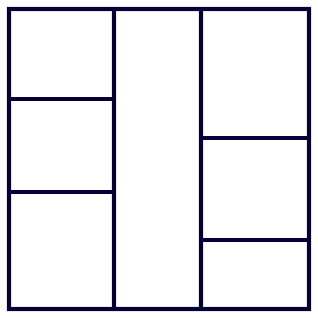
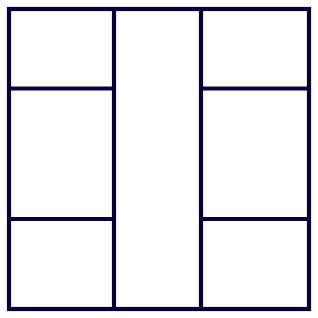
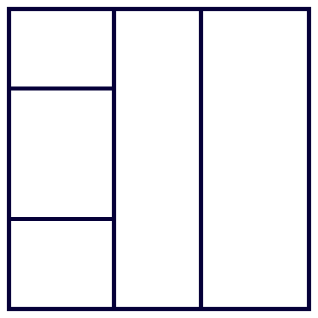
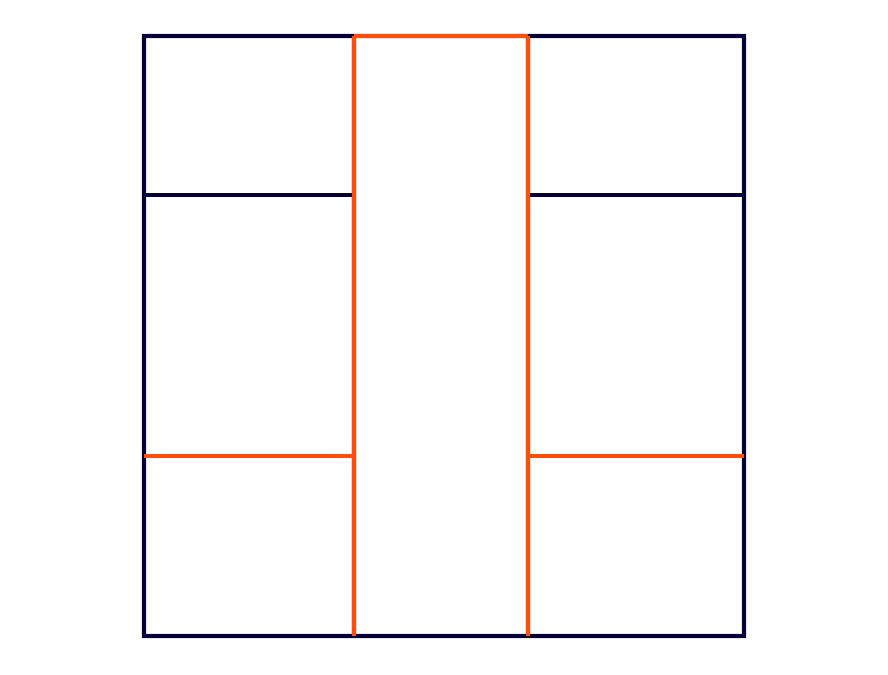 In option (c) the middle column supplies the two verticals, the top edge of the square joins them, and the lower horizontal line of the left column and the lower horizontal line of the right column lie at exactly the same height, so together they make the crossing line with an arm on each side.
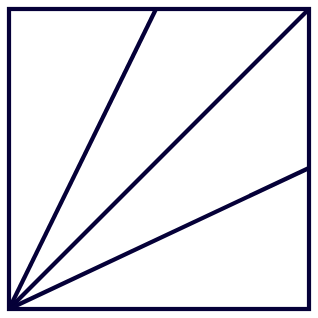
That single detail - one straight cut at the SAME height on both sides of the middle strip - is what the other options lack: in (a) the two sides are cut at different heights, in (d) only the left side is cut, and (b) has no strip at all.
Hence the correct option is (c).
In option (c) the middle column supplies the two verticals, the top edge of the square joins them, and the lower horizontal line of the left column and the lower horizontal line of the right column lie at exactly the same height, so together they make the crossing line with an arm on each side.
That single detail - one straight cut at the SAME height on both sides of the middle strip - is what the other options lack: in (a) the two sides are cut at different heights, in (d) only the left side is cut, and (b) has no strip at all.
Hence the correct option is (c).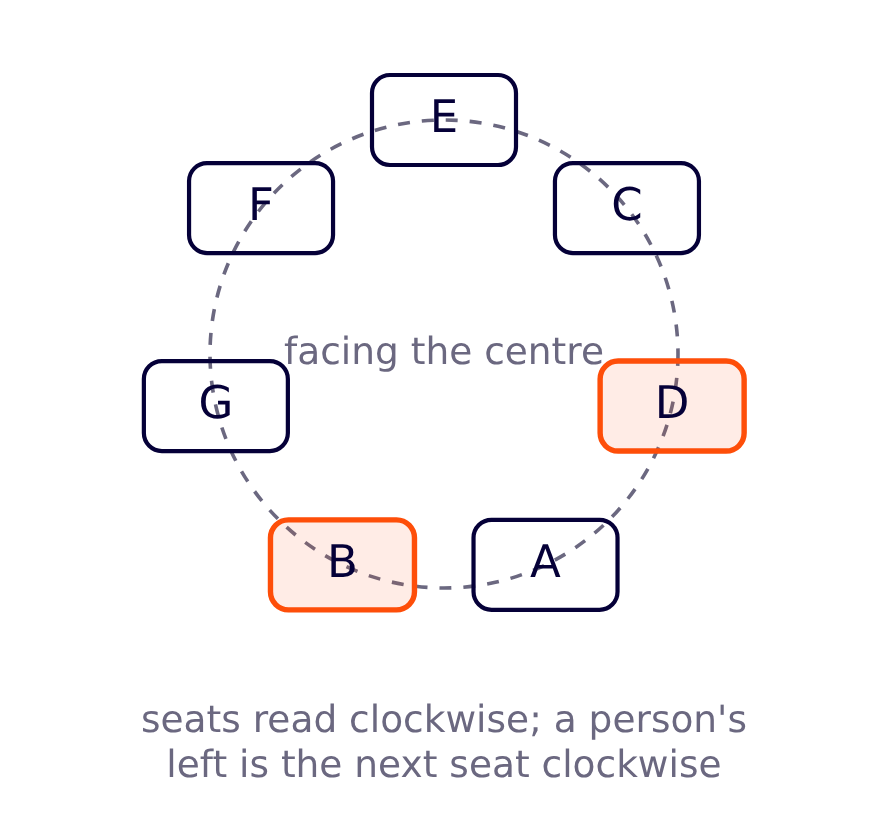 Counting from D towards its left we meet A and then B.
So only one person sits between D and B.
Hence the correct option is (d).
Counting from D towards its left we meet A and then B.
So only one person sits between D and B.
Hence the correct option is (d).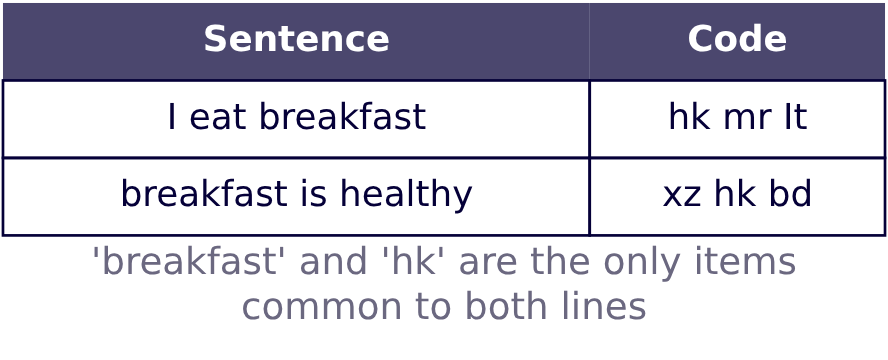 'breakfast' is the only word that appears in both sentences, and 'hk' is the only code that appears in both code strings.
So 'hk' must stand for 'breakfast'.
Hence the correct option is (b).
'breakfast' is the only word that appears in both sentences, and 'hk' is the only code that appears in both code strings.
So 'hk' must stand for 'breakfast'.
Hence the correct option is (b).
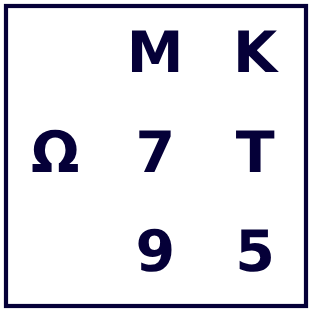
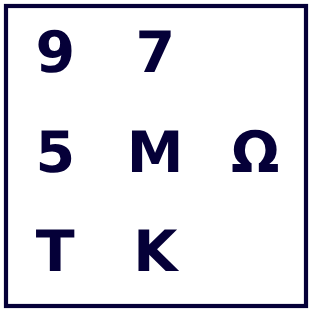
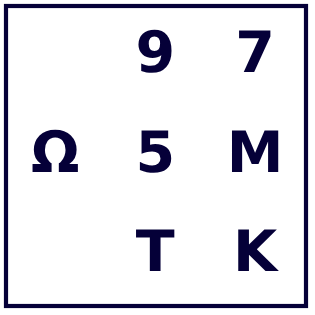
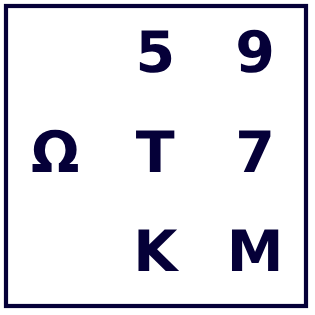
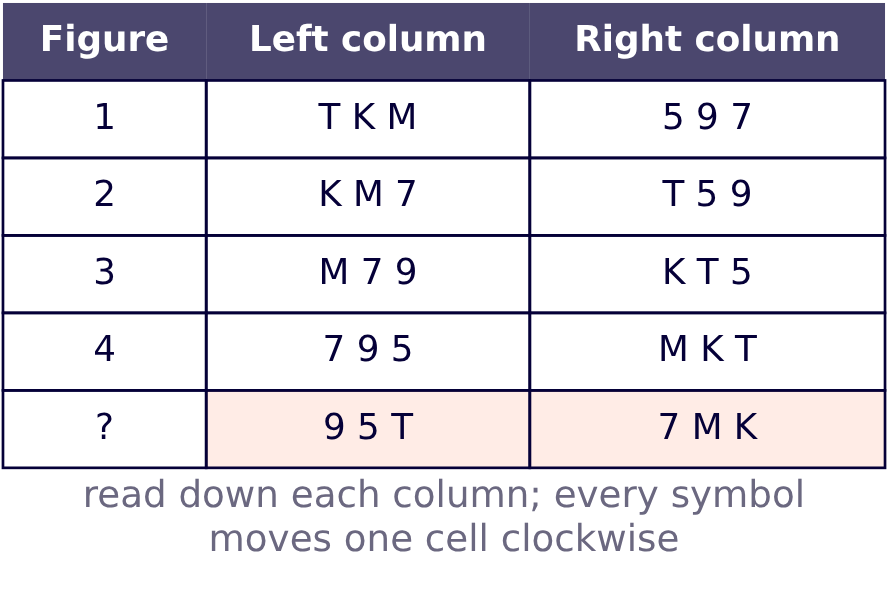 From one box to the next every symbol takes one step clockwise round the six cells: up the left column, across the top into the right column, down the right column and back along the bottom.
Figure 4 has 7, 9, 5 on the left and M, K, T on the right, so one more step gives 9, 5, T on the left and 7, M, K on the right.
The block also swings back to the right-hand side of the box, with the Ω on the left, exactly as in figures 1 and 2.
Only option (c) shows both of these - the right symbols and the block on the right of the box.
Hence the correct option is (c).
From one box to the next every symbol takes one step clockwise round the six cells: up the left column, across the top into the right column, down the right column and back along the bottom.
Figure 4 has 7, 9, 5 on the left and M, K, T on the right, so one more step gives 9, 5, T on the left and 7, M, K on the right.
The block also swings back to the right-hand side of the box, with the Ω on the left, exactly as in figures 1 and 2.
Only option (c) shows both of these - the right symbols and the block on the right of the box.
Hence the correct option is (c).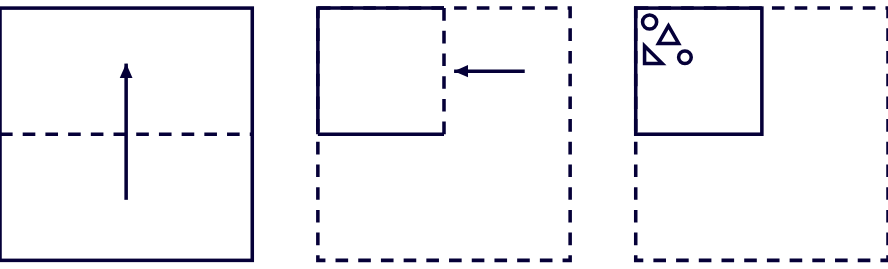
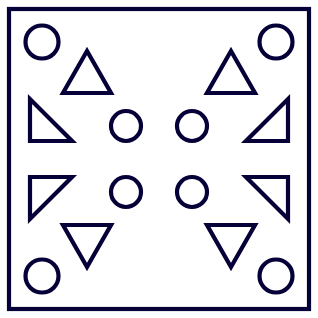
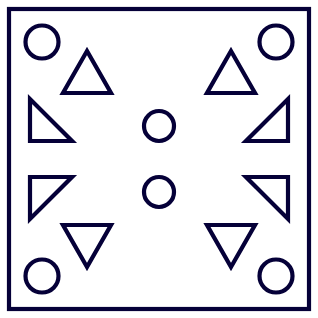
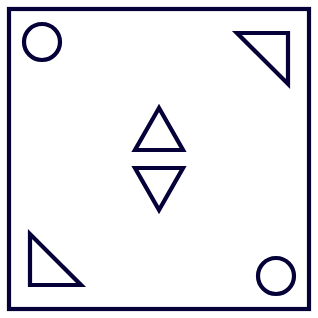
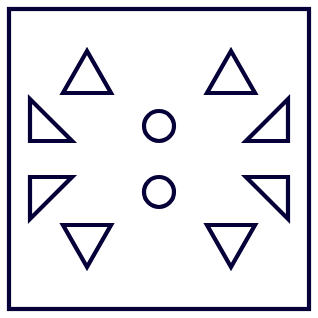
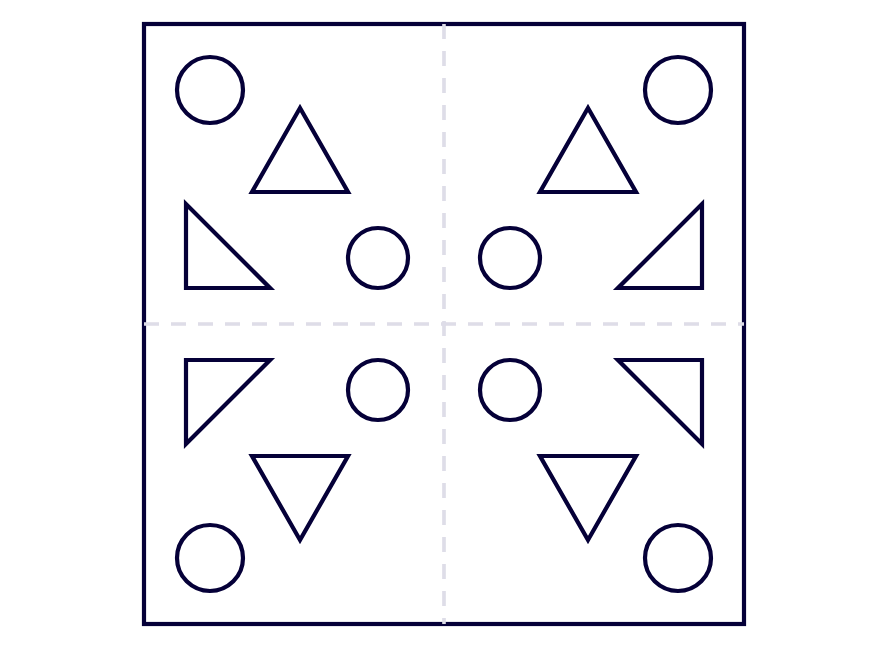 The circle at the folded corner reappears at all four corners, and the circle near the open corner of the quarter reappears as four circles clustered round the centre; the triangle and the right-angled triangle likewise appear four times each.
So the answer must show four corner circles AND four circles round the centre - only option (a) has both.
(b) keeps the corner circles but leaves only two circles at the centre, (d) has two central circles and no corner circles at all, and (c) repeats nothing.
Hence the correct option is (a).
The circle at the folded corner reappears at all four corners, and the circle near the open corner of the quarter reappears as four circles clustered round the centre; the triangle and the right-angled triangle likewise appear four times each.
So the answer must show four corner circles AND four circles round the centre - only option (a) has both.
(b) keeps the corner circles but leaves only two circles at the centre, (d) has two central circles and no corner circles at all, and (c) repeats nothing.
Hence the correct option is (a).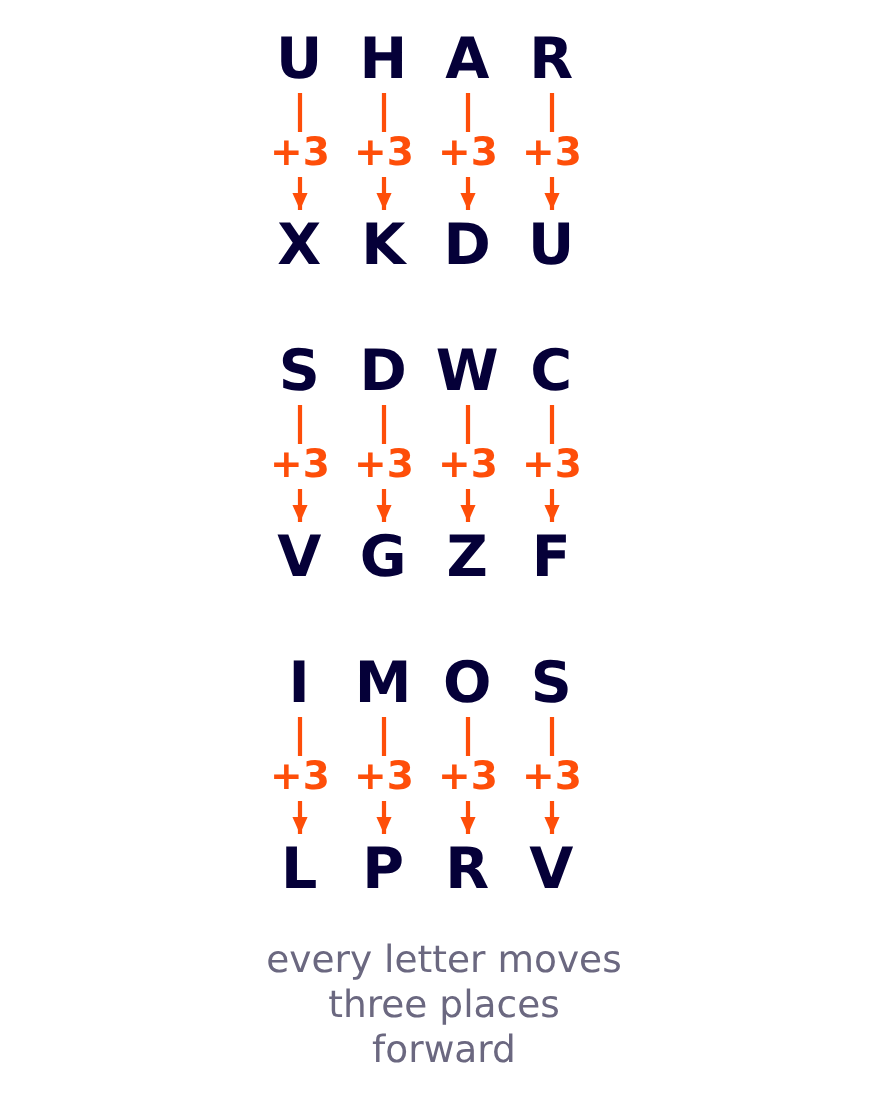 Every letter moves three places forward, and the second pair does the same: S+3=V, D+3=G, W+3=Z, C+3=F.
Applying +3 to IMOS gives I+3=L, M+3=P, O+3=R, S+3=V, that is LPRV.
Hence the correct option is (c).
Every letter moves three places forward, and the second pair does the same: S+3=V, D+3=G, W+3=Z, C+3=F.
Applying +3 to IMOS gives I+3=L, M+3=P, O+3=R, S+3=V, that is LPRV.
Hence the correct option is (c).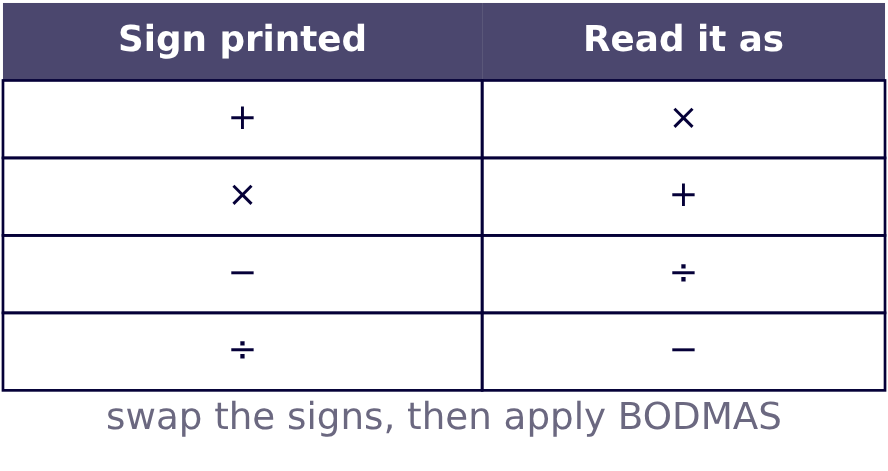 So is read as .
By BODMAS do and first: and .
Now 51-54+21=18.
Hence the correct option is (c).
So is read as .
By BODMAS do and first: and .
Now 51-54+21=18.
Hence the correct option is (c).
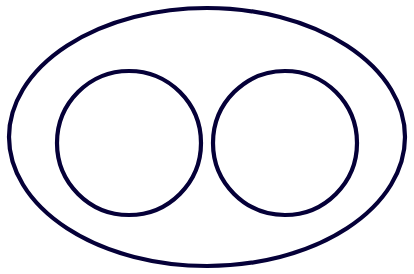
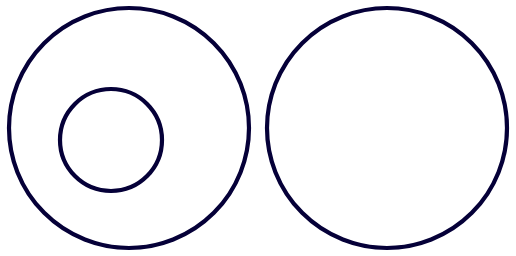
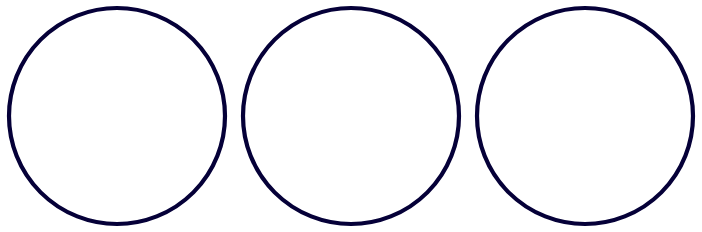
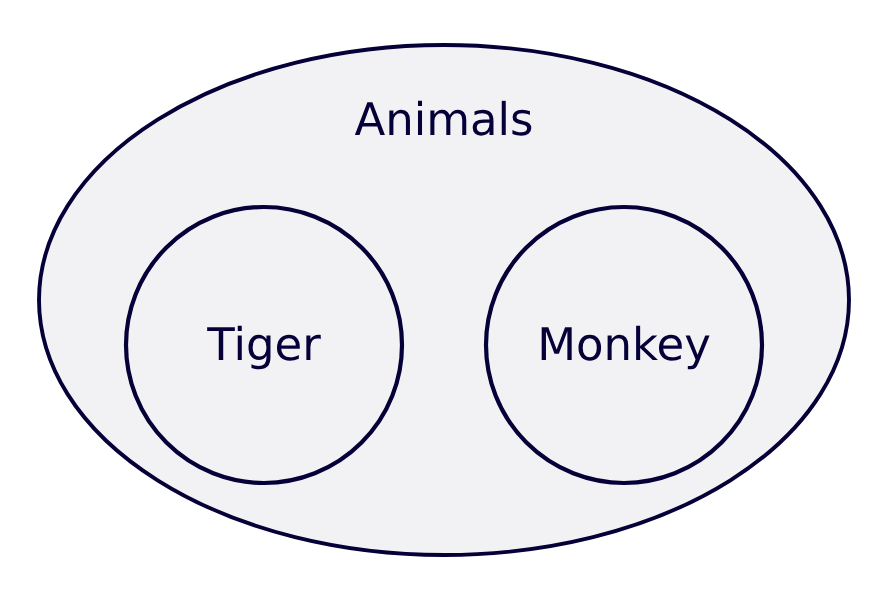 Option (b) shows exactly this: two separate circles, both inside one larger figure.
In (a) only two classes are drawn and they overlap, in (c) just one class sits inside the third, and in (d) all three classes are drawn apart, leaving tigers and monkeys outside the animals.
Hence the correct option is (b).
Option (b) shows exactly this: two separate circles, both inside one larger figure.
In (a) only two classes are drawn and they overlap, in (c) just one class sits inside the third, and in (d) all three classes are drawn apart, leaving tigers and monkeys outside the animals.
Hence the correct option is (b).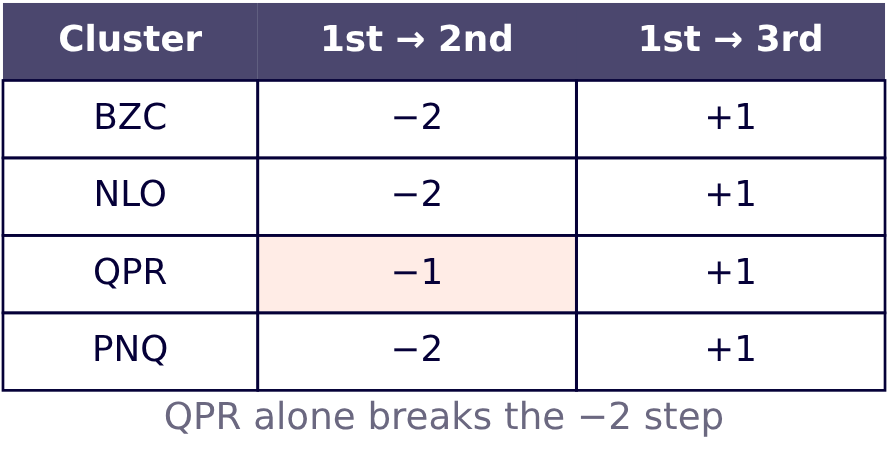 BZC: B-2=Z (counting back from B wraps round to Z) and B+1=C. NLO: N-2=L, N+1=O. PNQ: P-2=N, P+1=Q.
QPR gives Q-1=P, not Q-2, so it is the only cluster whose second letter is one step away instead of two.
Hence the correct option is (c).
BZC: B-2=Z (counting back from B wraps round to Z) and B+1=C. NLO: N-2=L, N+1=O. PNQ: P-2=N, P+1=Q.
QPR gives Q-1=P, not Q-2, so it is the only cluster whose second letter is one step away instead of two.
Hence the correct option is (c).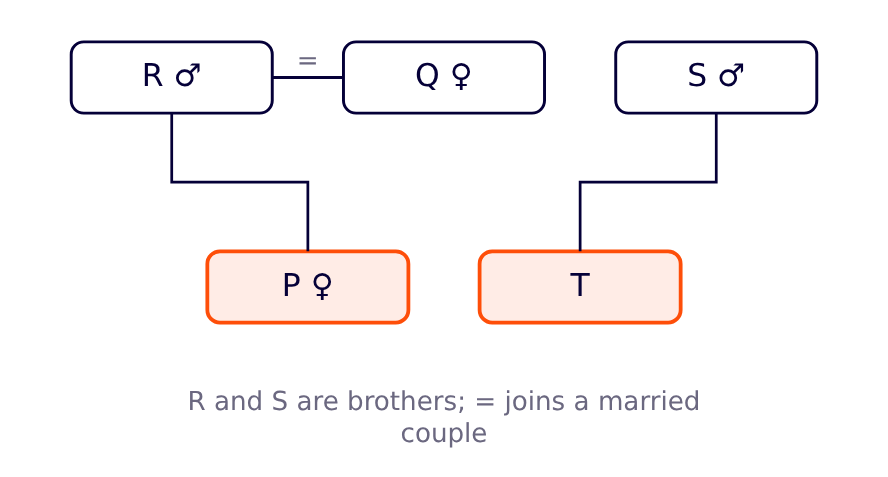 T's father is S, and S's brother is R, so R is T's father's brother.
P is R's daughter, so P is T's father's brother's daughter.
Hence the correct option is (c).
T's father is S, and S's brother is R, so R is T's father's brother.
P is R's daughter, so P is T's father's brother's daughter.
Hence the correct option is (c).