
1
Read the given statements and conclusions carefully. Assuming that the information given in the statements is true, even if it appears to be at variance with commonly known facts, decide which of the given conclusions logically follow(s) from the statements.
Statements: All breads are croissants.
All breads are muffins.
All breads are pastries.
Conclusions:
(I): All croissants are pastries.
(II): Some pastries are muffins.
- A.Neither conclusion (I) nor (II) follows.
- B.Both conclusions (I) and (II) follow.
- C.Only conclusion (I) follows.
- D.Only conclusion (II) follows.
Solution
Syllogism
All three statements start from breads: breads lie inside croissants, inside muffins and inside pastries. Nothing at all is said about croissants that are not breads.
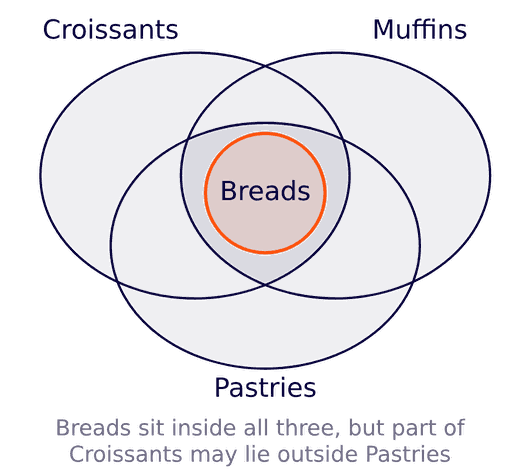 Conclusion (I): the croissant set only has to hold the breads; the rest of it may lie entirely outside pastries, so "All croissants are pastries" does not follow.
Conclusion (II): every bread is a pastry and the same bread is also a muffin, so at least those breads are pastries that are muffins - "Some pastries are muffins" does follow.
Only conclusion (II) follows, so the correct option is (d).
Conclusion (I): the croissant set only has to hold the breads; the rest of it may lie entirely outside pastries, so "All croissants are pastries" does not follow.
Conclusion (II): every bread is a pastry and the same bread is also a muffin, so at least those breads are pastries that are muffins - "Some pastries are muffins" does follow.
Only conclusion (II) follows, so the correct option is (d).
Conclusion (I): the croissant set only has to hold the breads; the rest of it may lie entirely outside pastries, so "All croissants are pastries" does not follow.
Conclusion (II): every bread is a pastry and the same bread is also a muffin, so at least those breads are pastries that are muffins - "Some pastries are muffins" does follow.
Only conclusion (II) follows, so the correct option is (d).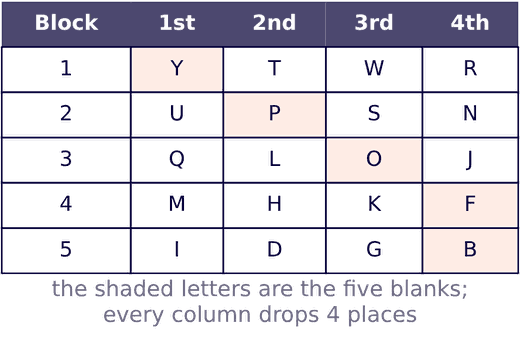 That fills the blanks as Y (block 1), P (block 2), O (block 3), F (block 4) and B (block 5).
A check inside any block confirms it: Y T is -5, T W is +3, W R is -5, and I D G B follows the same -5, +3, -5.
So the combination is YPOFB and the correct option is (d).
That fills the blanks as Y (block 1), P (block 2), O (block 3), F (block 4) and B (block 5).
A check inside any block confirms it: Y T is -5, T W is +3, W R is -5, and I D G B follows the same -5, +3, -5.
So the combination is YPOFB and the correct option is (d).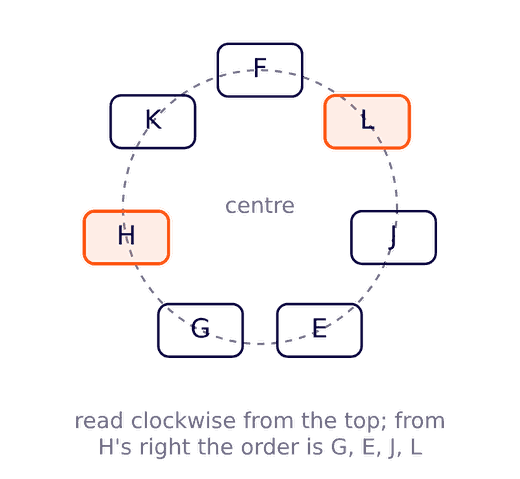 Now count from H towards H's right (anticlockwise): G, E, J and then L - so three people sit between H and L.
Hence the correct option is (a).
Now count from H towards H's right (anticlockwise): G, E, J and then L - so three people sit between H and L.
Hence the correct option is (a). (X)
(X)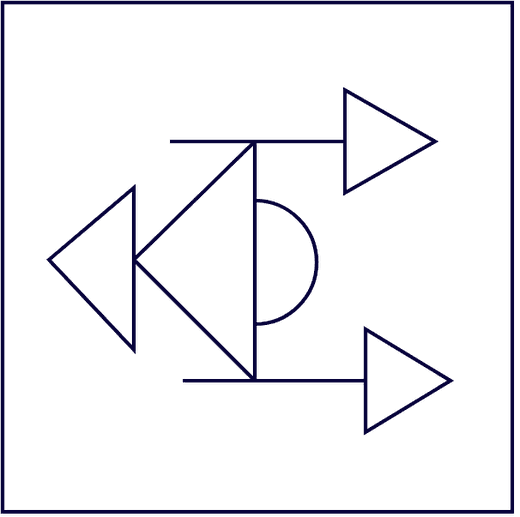
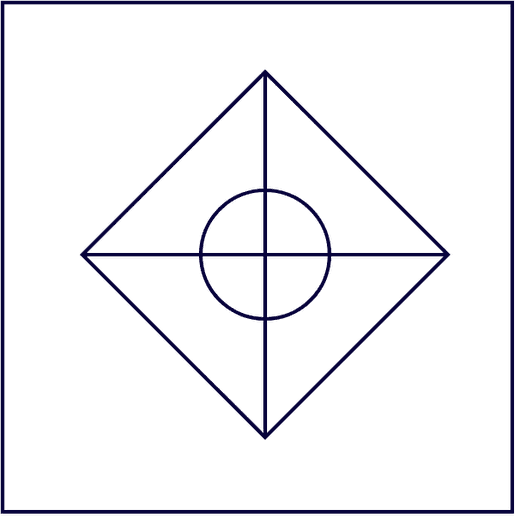
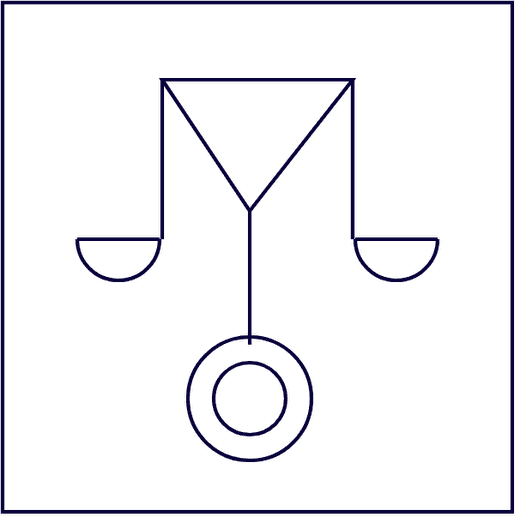
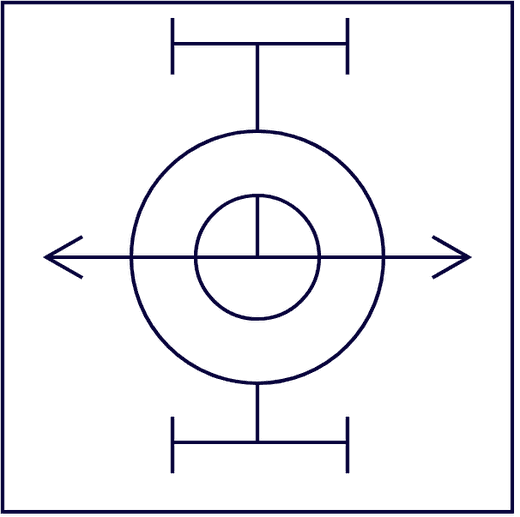
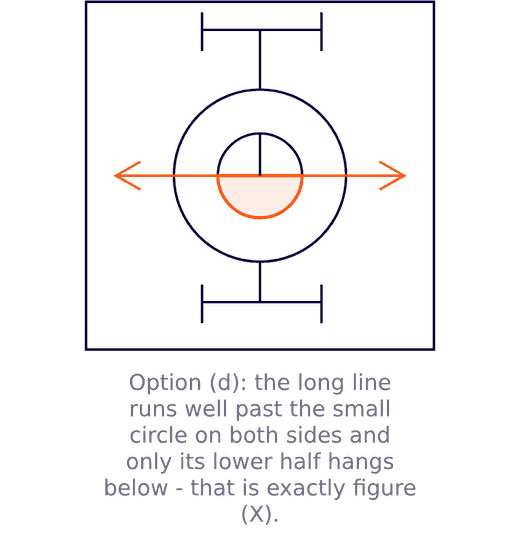 In option (d) the horizontal double arrow cuts straight through the small inner circle: the part of that circle lying below the arrow is the semicircle, and the arrow carries on far past it on either side - the whole of (X) is present, unrotated.
Option (c) also shows half-discs, but there each straight edge is exactly as wide as its own half-disc and stops where the curve stops, so the long overhang that (X) needs is missing.
Option (a) has an arc that bulges sideways off a vertical line, and option (b) has only a complete circle, so neither contains a semicircle hanging under a horizontal line.
Hence the correct option is (d).
In option (d) the horizontal double arrow cuts straight through the small inner circle: the part of that circle lying below the arrow is the semicircle, and the arrow carries on far past it on either side - the whole of (X) is present, unrotated.
Option (c) also shows half-discs, but there each straight edge is exactly as wide as its own half-disc and stops where the curve stops, so the long overhang that (X) needs is missing.
Option (a) has an arc that bulges sideways off a vertical line, and option (b) has only a complete circle, so neither contains a semicircle hanging under a horizontal line.
Hence the correct option is (d).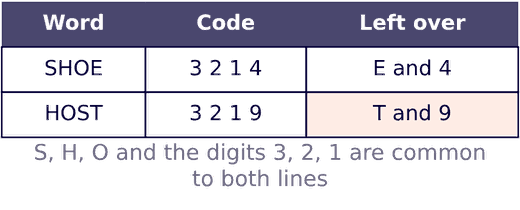 So S, H, O use up 3, 2, 1 between them in some order, and the letter each word has to itself must take the digit that code has to itself.
SHOE keeps E and the digit 4, so E is 4; HOST keeps T and the digit 9, so T is 9.
Hence T is coded as 9 and the correct option is (a).
So S, H, O use up 3, 2, 1 between them in some order, and the letter each word has to itself must take the digit that code has to itself.
SHOE keeps E and the digit 4, so E is 4; HOST keeps T and the digit 9, so T is 9.
Hence T is coded as 9 and the correct option is (a).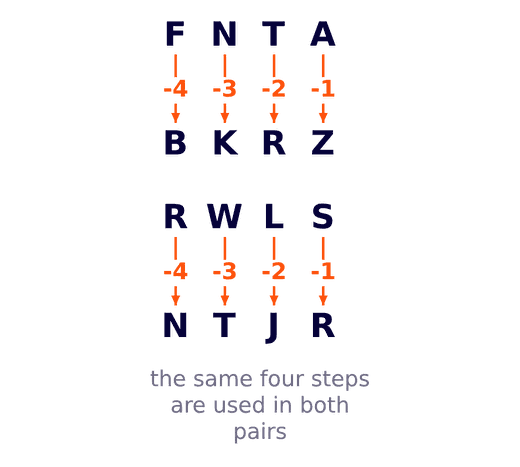 Apply the same steps to RWLS: R-4 = N, W-3 = T, L-2 = J, S-1 = R.
So RWLS is related to NTJR and the correct option is (b).
Apply the same steps to RWLS: R-4 = N, W-3 = T, L-2 = J, S-1 = R.
So RWLS is related to NTJR and the correct option is (b).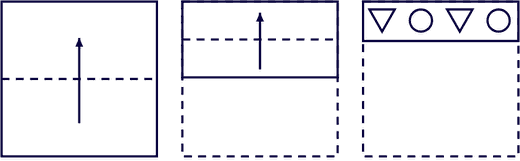
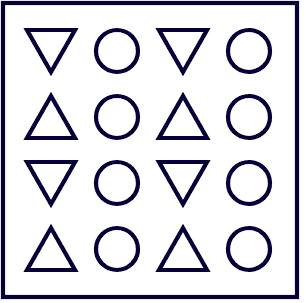
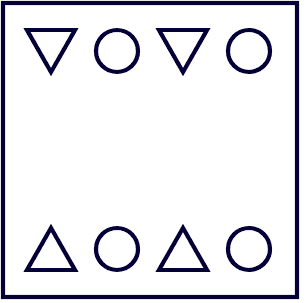
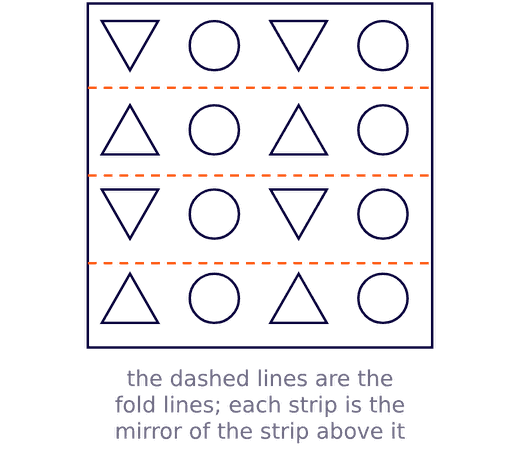 So from top to bottom the sheet shows down / up / down / up rows of triangles with circles in between - four full strips.
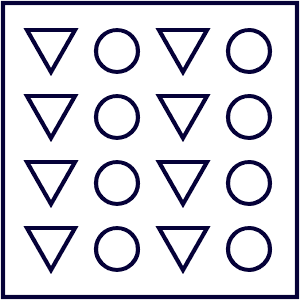
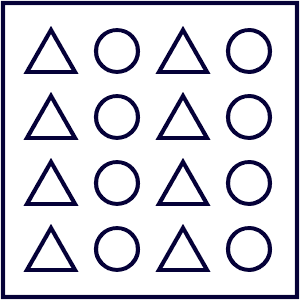
Option (c) keeps every triangle pointing down and option (d) keeps every one pointing up, which no mirroring can produce, and option (b) leaves the two middle strips blank although all four layers were cut.
Hence the correct option is (a).
So from top to bottom the sheet shows down / up / down / up rows of triangles with circles in between - four full strips.
Option (c) keeps every triangle pointing down and option (d) keeps every one pointing up, which no mirroring can produce, and option (b) leaves the two middle strips blank although all four layers were cut.
Hence the correct option is (a).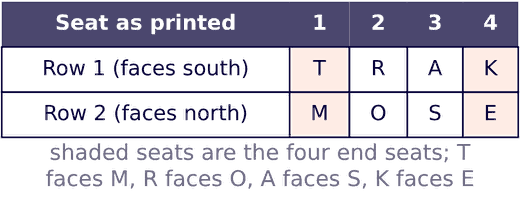 The end seats are therefore T and K in row 1 and M and E in row 2.
Of the four choices only "M and K" names two people who both occupy an end seat - A sits inside row 1, and E is paired with A or R in the other options.
Hence the correct option is (b).
The end seats are therefore T and K in row 1 and M and E in row 2.
Of the four choices only "M and K" names two people who both occupy an end seat - A sits inside row 1, and E is paired with A or R in the other options.
Hence the correct option is (b).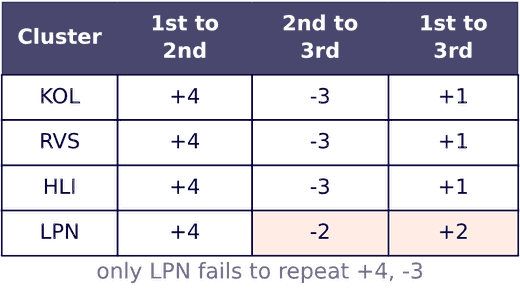 LPN starts correctly with L P = +4, but P N is only -2, and N is two places after L instead of one.
LPN therefore breaks the pattern, so the correct option is (d).
LPN starts correctly with L P = +4, but P N is only -2, and N is two places after L instead of one.
LPN therefore breaks the pattern, so the correct option is (d).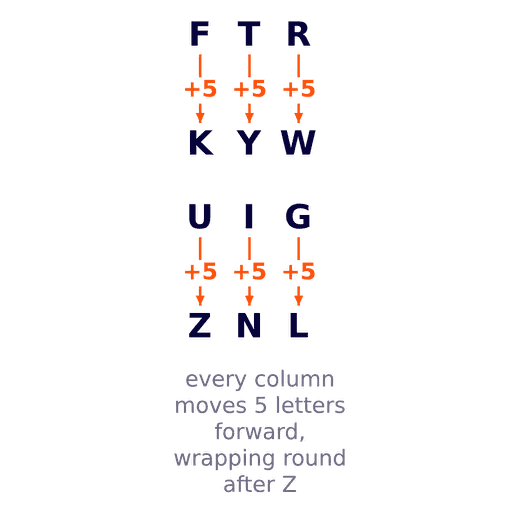 So the next cluster is U+5 = Z, I+5 = N and G+5 = L.
The missing term is ZNL, so the correct option is (c).
So the next cluster is U+5 = Z, I+5 = N and G+5 = L.
The missing term is ZNL, so the correct option is (c).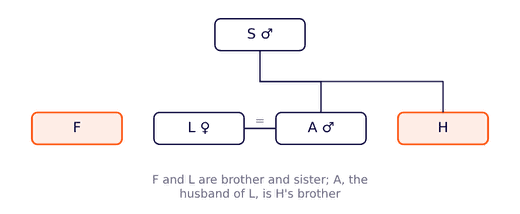 S is the father of both A and H, so A and H are siblings, and A is male - A is H's brother.
L is that brother's wife, and F is L's brother.
So F is H's brother's wife's brother, and the correct option is (b).
S is the father of both A and H, so A and H are siblings, and A is male - A is H's brother.
L is that brother's wife, and F is L's brother.
So F is H's brother's wife's brother, and the correct option is (b).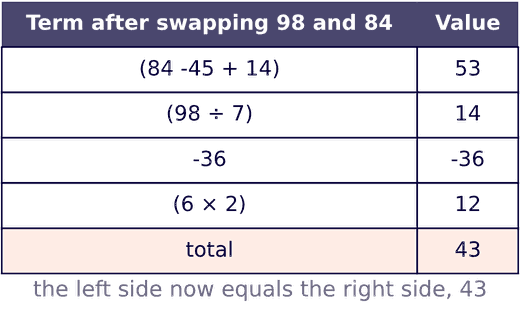 Now the left side is 53+14-36+12=43, which equals the right side.
Hence the numbers to interchange are 98 and 84 and the correct option is (a).
Now the left side is 53+14-36+12=43, which equals the right side.
Hence the numbers to interchange are 98 and 84 and the correct option is (a).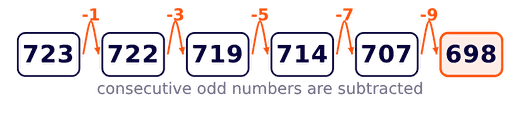 Therefore the missing term is 707-9=698.
Hence the correct option is (d).
Therefore the missing term is 707-9=698.
Hence the correct option is (d).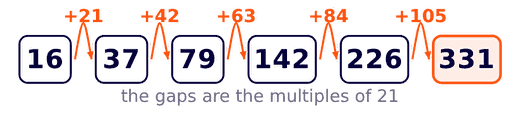 Therefore the missing term is 226+105=331.
Hence the correct option is (d).
Therefore the missing term is 226+105=331.
Hence the correct option is (d).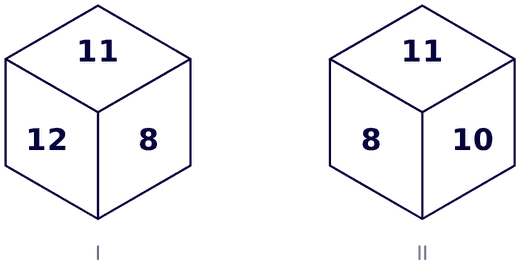
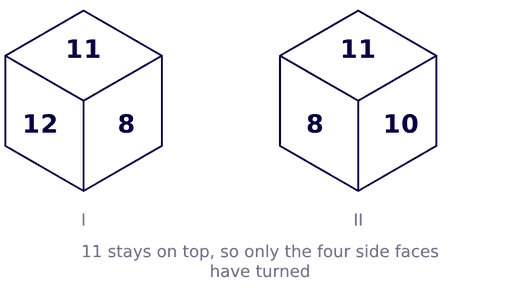 That leaves 12, 8, 10 and one unseen face going round the die as its four side faces.
8 is on the right in view I and on the left in view II, so the die has turned by exactly one quarter turn; the same turn moves 12 out of sight on the left and brings 10 in on the right.
Reading the side faces in that turning order gives 12, 8, 10, unseen - and in a ring of four side faces the first and the third are opposite each other.
That leaves 12, 8, 10 and one unseen face going round the die as its four side faces.
8 is on the right in view I and on the left in view II, so the die has turned by exactly one quarter turn; the same turn moves 12 out of sight on the left and brings 10 in on the right.
Reading the side faces in that turning order gives 12, 8, 10, unseen - and in a ring of four side faces the first and the third are opposite each other.
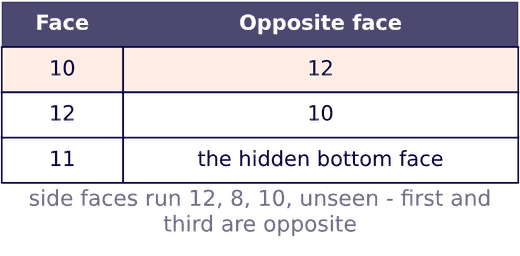 So 12 lies opposite 10, and the correct option is (c).
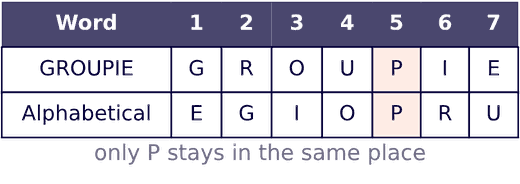 Now compare place by place: G with E, R with G, O with I, U with O, P with P, I with R, E with U.
Only the fifth place matches - P is the fifth letter of GROUPIE and also the fifth letter of EGIOPRU.
Exactly one letter keeps its position, so the correct option is (a).
Now compare place by place: G with E, R with G, O with I, U with O, P with P, I with R, E with U.
Only the fifth place matches - P is the fifth letter of GROUPIE and also the fifth letter of EGIOPRU.
Exactly one letter keeps its position, so the correct option is (a).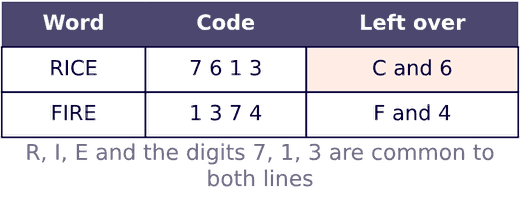 So R, I, E account for 7, 1, 3 between them, and the letter each word has to itself takes the digit that code has to itself.
RICE keeps C and the digit 6, so C is 6; FIRE keeps F and the digit 4, so F is 4.
Hence C is coded as 6 and the correct option is (c).
So R, I, E account for 7, 1, 3 between them, and the letter each word has to itself takes the digit that code has to itself.
RICE keeps C and the digit 6, so C is 6; FIRE keeps F and the digit 4, so F is 4.
Hence C is coded as 6 and the correct option is (c).
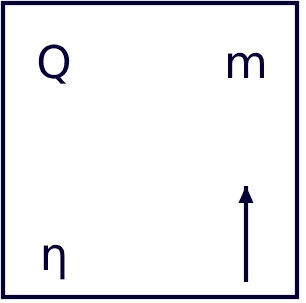
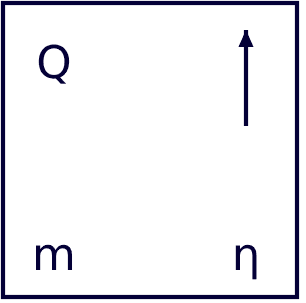
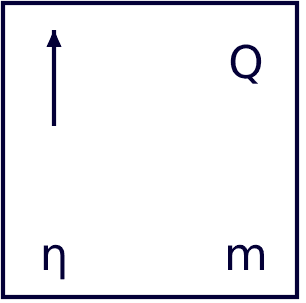
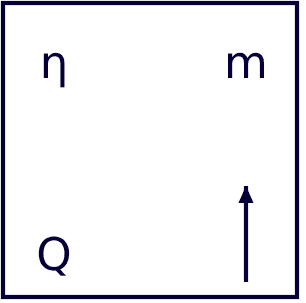
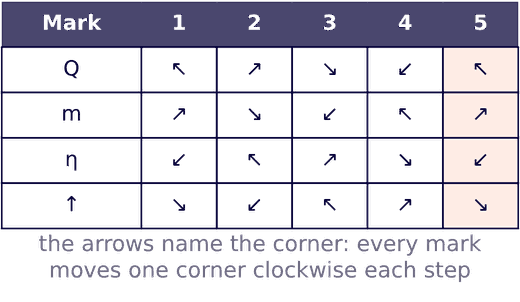 Four steps make a complete turn, so the fifth box must repeat the first one.
That means Q at the top-left, m at the top-right, η at the bottom-left and the arrow at the bottom-right.
Only option (a) has that arrangement, so the correct option is (a).
Four steps make a complete turn, so the fifth box must repeat the first one.
That means Q at the top-left, m at the top-right, η at the bottom-left and the arrow at the bottom-right.
Only option (a) has that arrangement, so the correct option is (a).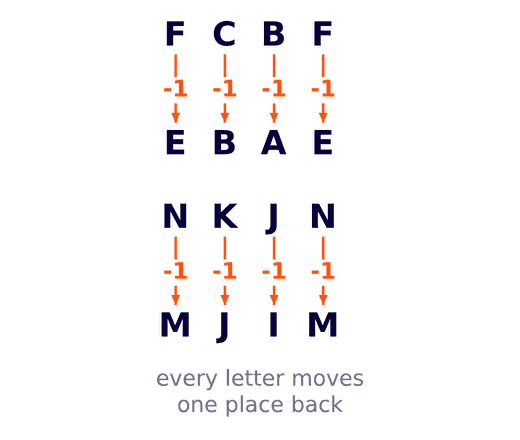 Apply it to NKJN: N-1 = M, K-1 = J, J-1 = I, N-1 = M.
Note that the first and last letters are equal in each cluster, so the answer must also end in the letter it starts with - that rules out MKHQ at once.
The result is MJIM, so the correct option is (a).
Apply it to NKJN: N-1 = M, K-1 = J, J-1 = I, N-1 = M.
Note that the first and last letters are equal in each cluster, so the answer must also end in the letter it starts with - that rules out MKHQ at once.
The result is MJIM, so the correct option is (a).

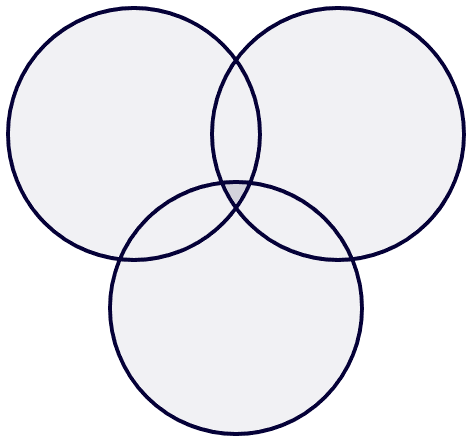

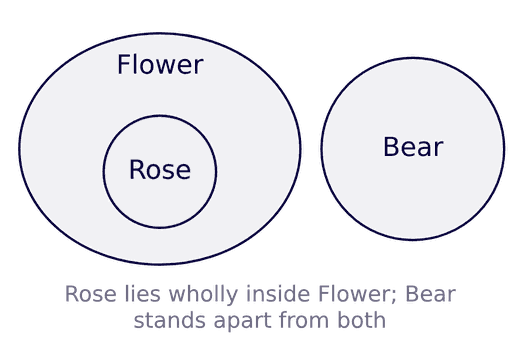 Option (a) keeps all three apart, which loses the fact that a rose is a flower; option (c) makes all three overlap, which wrongly allows a bear to be a flower; option (d) only lets rose and flower overlap partly instead of one lying inside the other.
Only option (b) shows a small circle wholly inside a larger one with a third circle separate from them, so the correct option is (b).
Option (a) keeps all three apart, which loses the fact that a rose is a flower; option (c) makes all three overlap, which wrongly allows a bear to be a flower; option (d) only lets rose and flower overlap partly instead of one lying inside the other.
Only option (b) shows a small circle wholly inside a larger one with a third circle separate from them, so the correct option is (b).