
1
In a certain code language, 'A + B' means 'A is the son of B', 'A − B' means 'A is the wife of B', 'A × B' means 'A is the brother of B' and 'A ÷ B' means 'A is the sister of B'. How is I related to F if 'F ÷ G + H − I × J'?
- A.Brother's wife
- B.Wife's brother
- C.Son's wife
- D.Father
Solution
Coded blood relation
Break the chain at every symbol and read each pair on its own.
: F is the sister of G. G+H: G is the son of H. H-I: H is the wife of I. : I is the brother of J.
H is the wife of I, so I is the husband of H; G is H's son, hence I's son too.
F is G's sister, so F is a daughter of the same couple H and I.
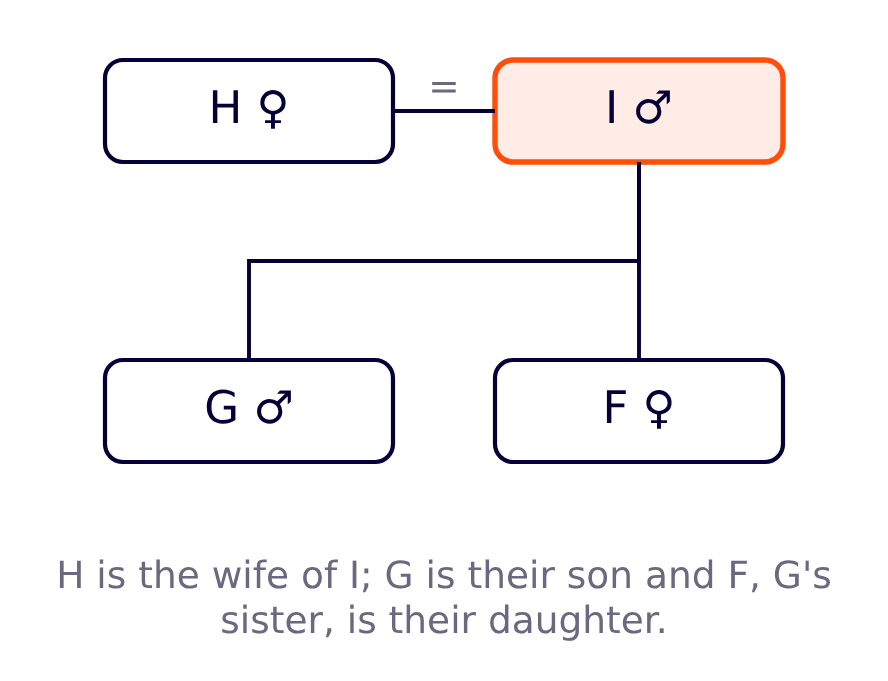 I is therefore the father of F, and option (d) is correct.
I is therefore the father of F, and option (d) is correct.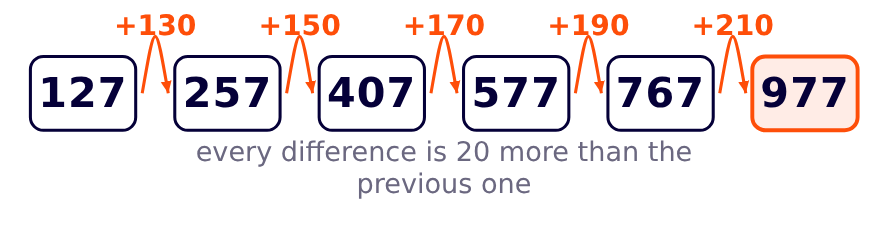 Required term =767+210=977, which is option (a).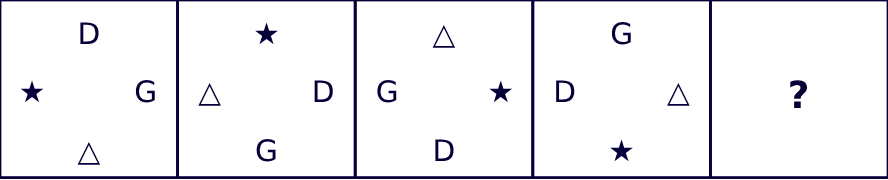
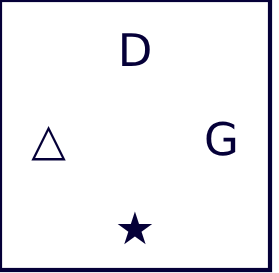
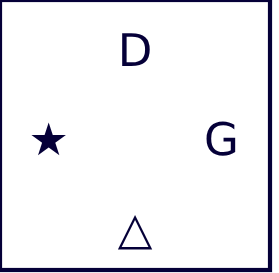
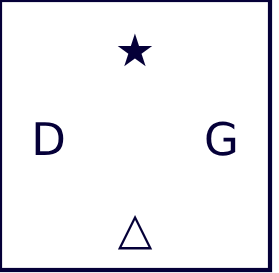
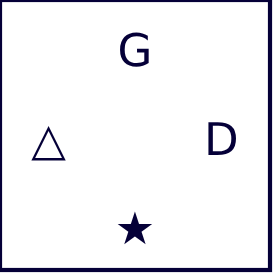
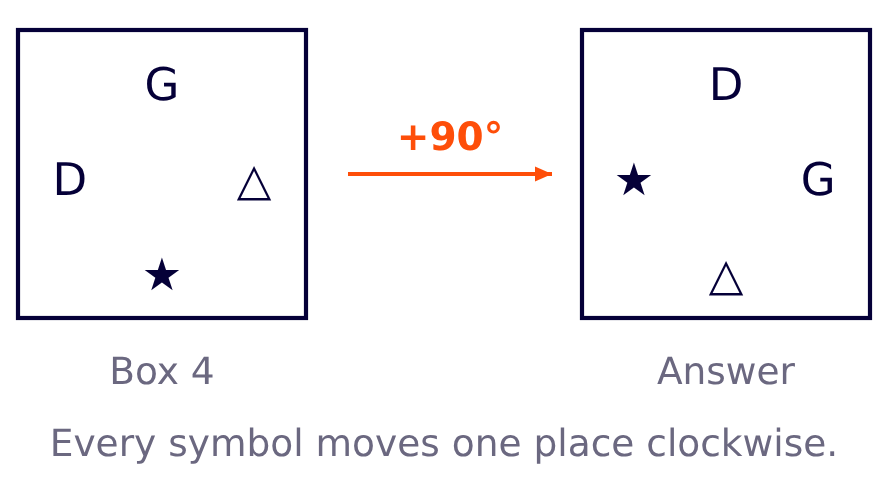 The missing box therefore has D on top, the star on the LEFT, G on the right and the triangle at the BOTTOM - only option (b) does this; option (a) keeps D and G in place but interchanges the star and the triangle.
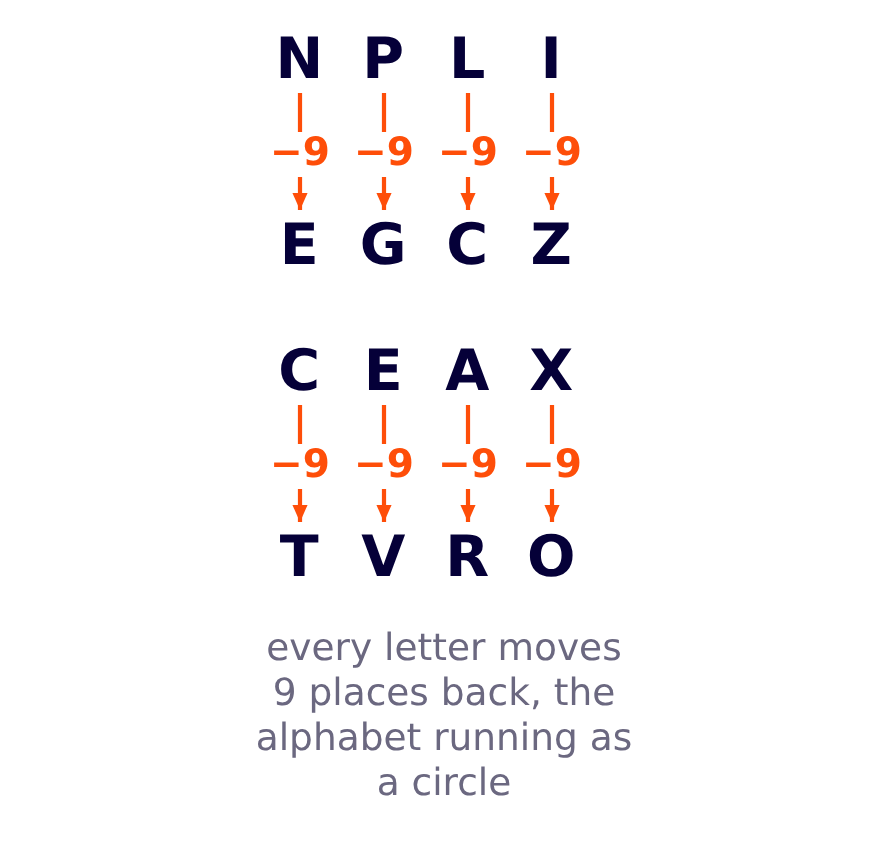 Apply -9 to CEAX: , , , .
CEAX is related to TVRO, so option (d) is correct.
Apply -9 to CEAX: , , , .
CEAX is related to TVRO, so option (d) is correct.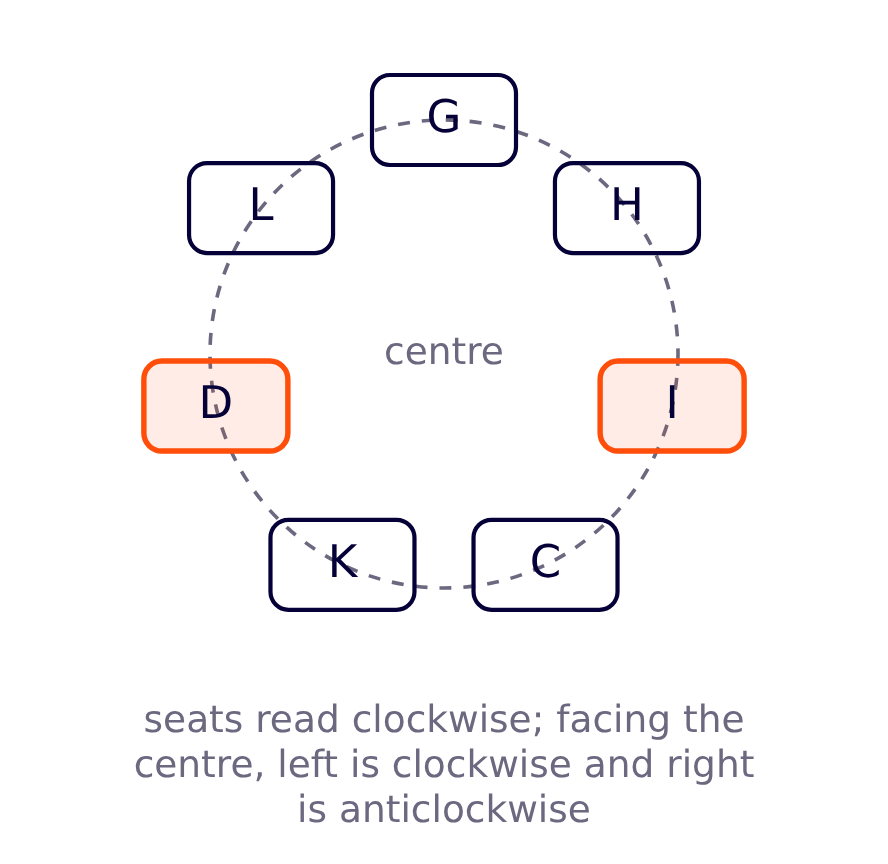 Counting to D's right (anticlockwise) we meet K, then C, then I - so I sits third to the right of D, option (b).
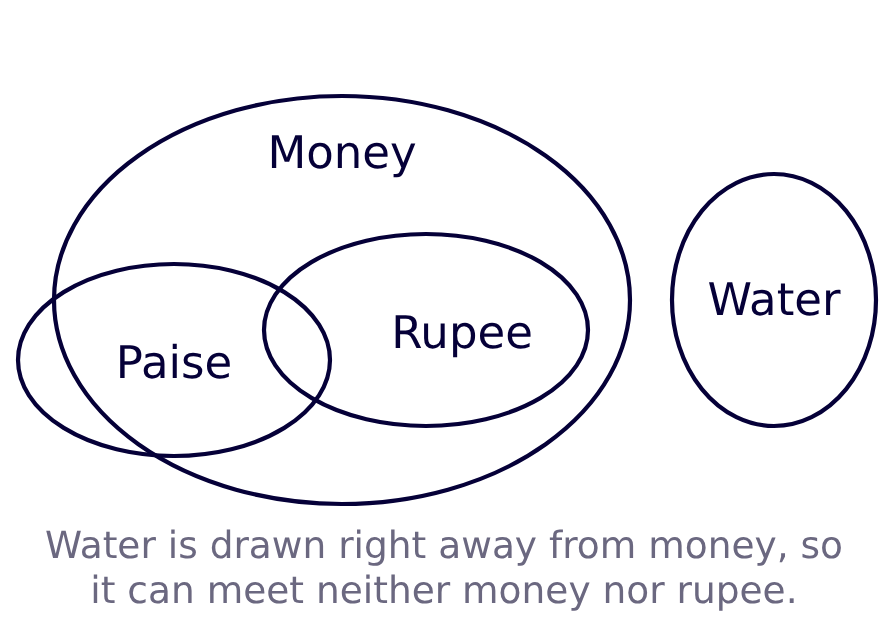 Conclusion (II) 'Some money is water' contradicts the third statement outright - 'No money is water' leaves money and water with nothing in common, so (II) does not follow.
Conclusion (I) 'Some rupee is water' is no better: every rupee is money, and no money touches water, so no rupee can be water either.
A universal negative can never produce a positive conclusion, so neither follows and option (c) is correct.
Conclusion (II) 'Some money is water' contradicts the third statement outright - 'No money is water' leaves money and water with nothing in common, so (II) does not follow.
Conclusion (I) 'Some rupee is water' is no better: every rupee is money, and no money touches water, so no rupee can be water either.
A universal negative can never produce a positive conclusion, so neither follows and option (c) is correct.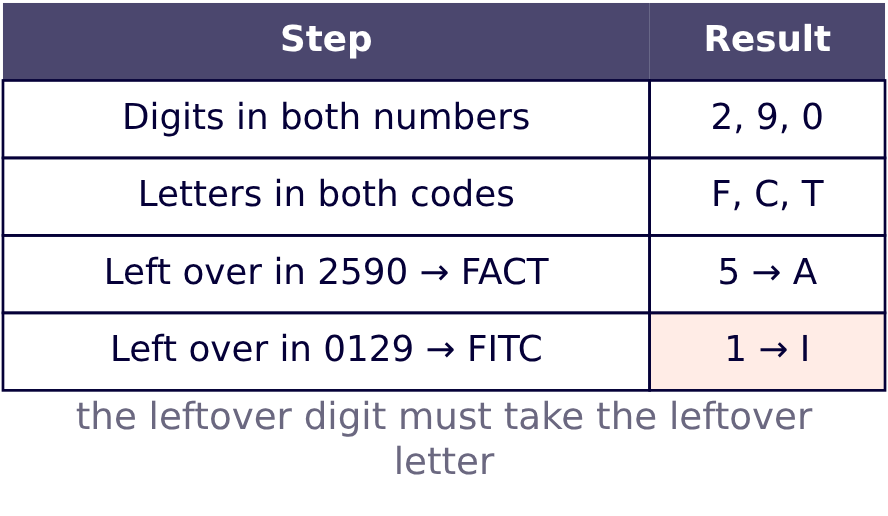 In '2590' the odd digit is 5 and the odd letter is A, so ; in '0129' the odd digit is 1 and the odd letter is I.
Hence 1 is coded as I, and option (b) is correct.
In '2590' the odd digit is 5 and the odd letter is A, so ; in '0129' the odd digit is 1 and the odd letter is I.
Hence 1 is coded as I, and option (b) is correct.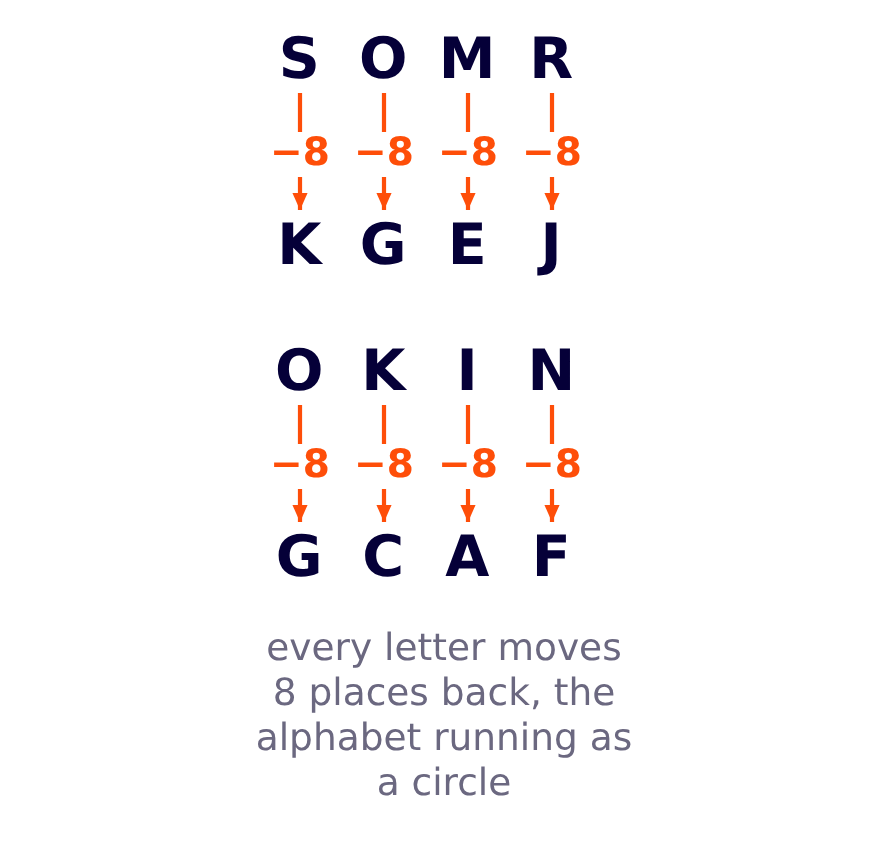 Now shift OKIN back by 8: , , , .
The result is GCAF, so option (d) is correct; option (a) GCFA has the last two letters interchanged.
Now shift OKIN back by 8: , , , .
The result is GCAF, so option (d) is correct; option (a) GCFA has the last two letters interchanged.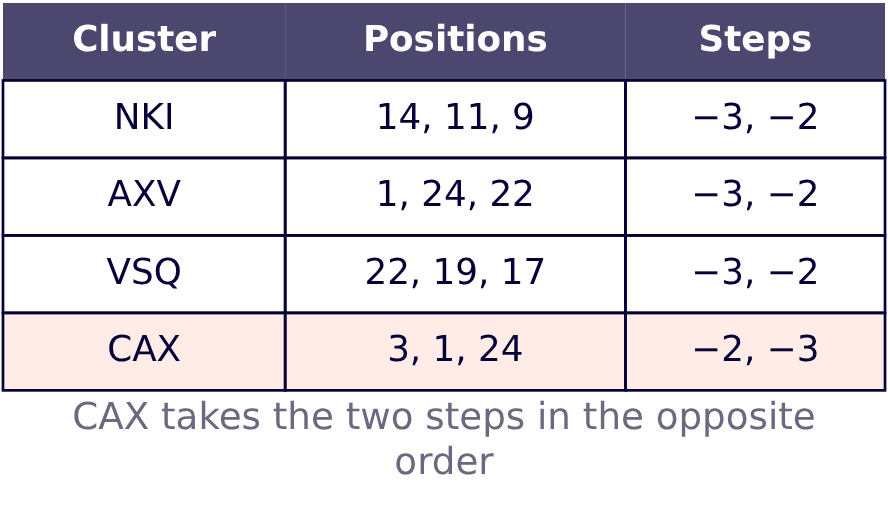 CAX: 3, 1, 24 gives -2 then -3 - the same two steps, but taken in the reverse order.
So CAX is the odd one out and option (d) is correct.
CAX: 3, 1, 24 gives -2 then -3 - the same two steps, but taken in the reverse order.
So CAX is the odd one out and option (d) is correct.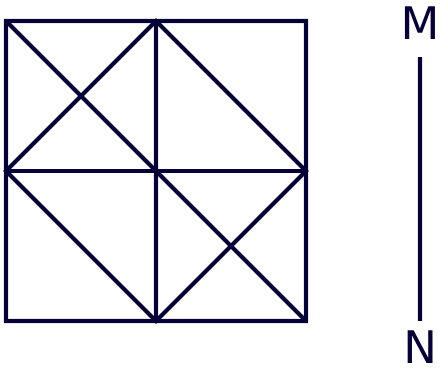
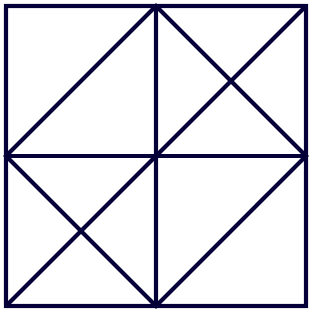
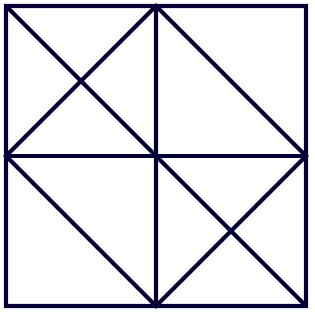
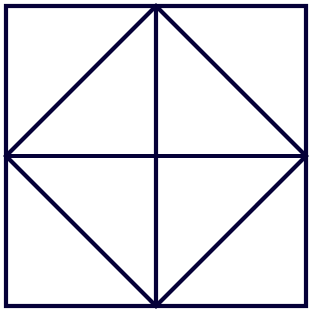
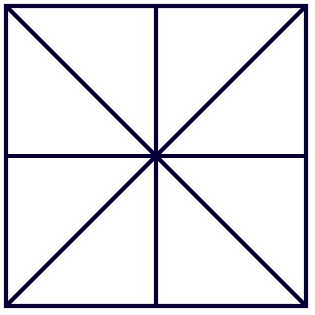
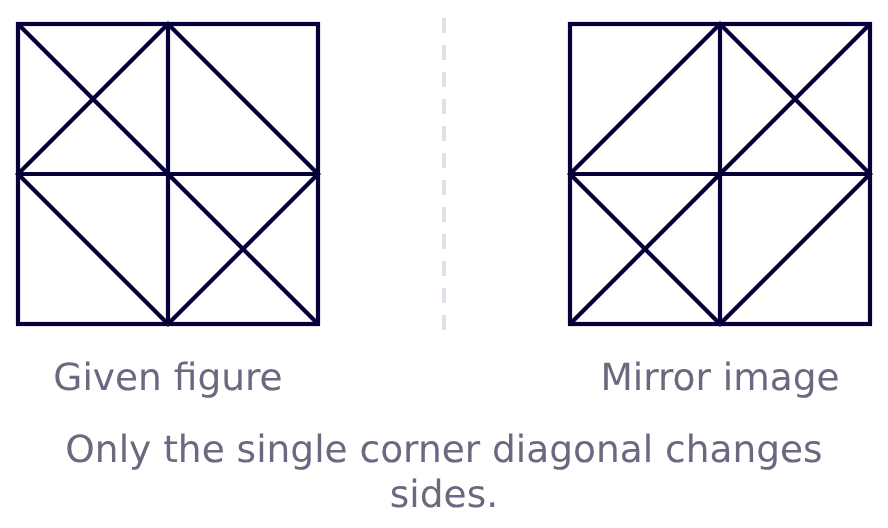 Option (a) is the only figure whose lone diagonal runs top-right to bottom-left; (b) leaves it top-left to bottom-right (an unflipped copy), (c) has no corner diagonal at all and (d) draws both diagonals but drops the diamond.
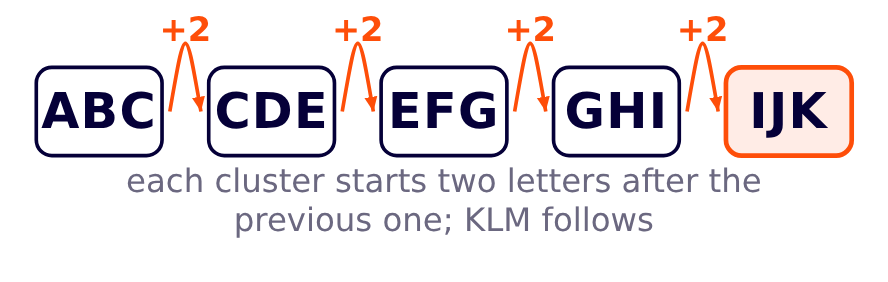 The missing term is therefore IJK, and it is indeed followed by KLM, so option (a) is correct.
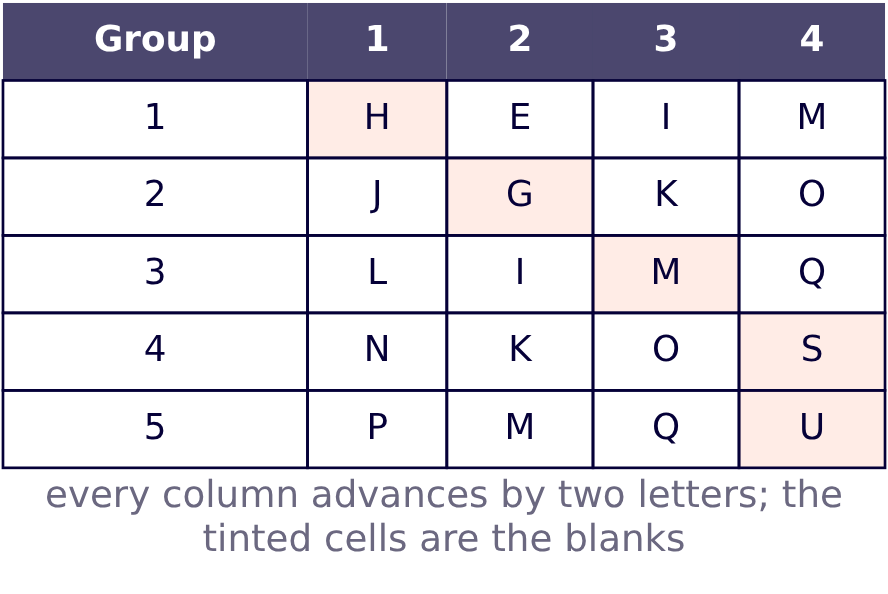 Filling every column at the rate of +2 gives HEIM, JGKO, LIMQ, NKOS, PMQU.
Reading the blanks in order gives H, G, M, S, U, so option (c) is correct.
Filling every column at the rate of +2 gives HEIM, JGKO, LIMQ, NKOS, PMQU.
Reading the blanks in order gives H, G, M, S, U, so option (c) is correct.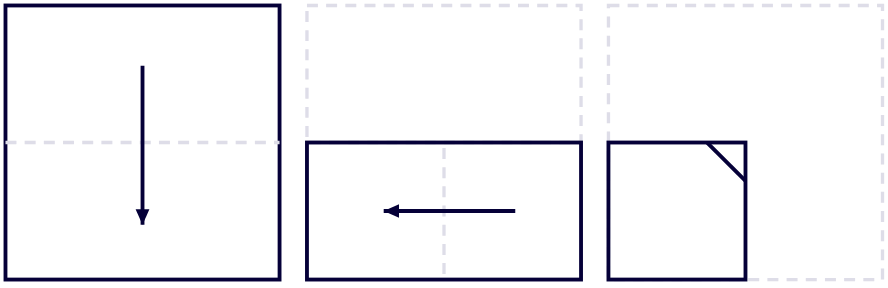
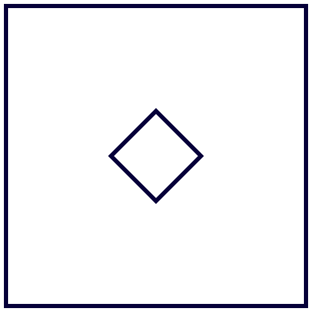
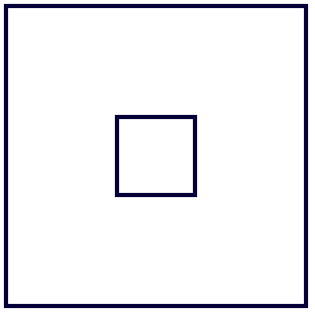
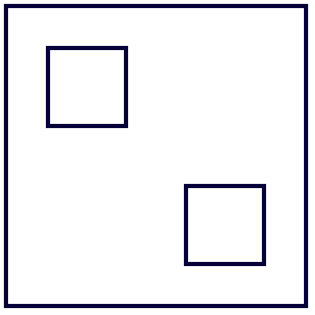
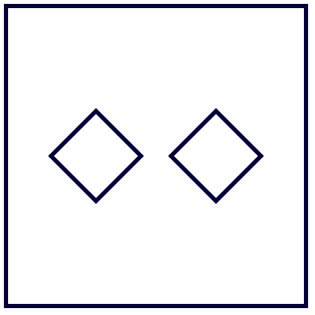
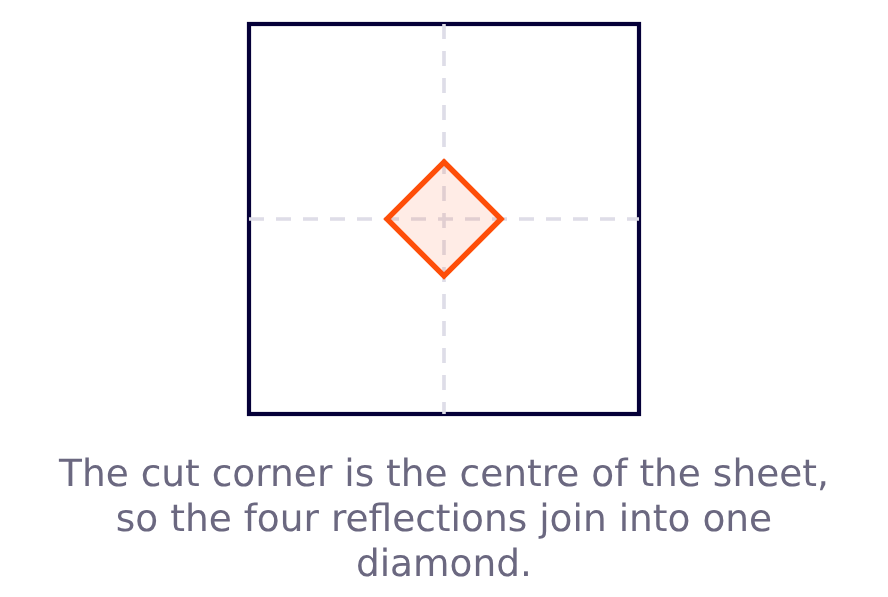 The four triangles all meet at the centre and join into a single diamond-shaped hole there, which is option (a); (b) shows an upright square, (c) puts two holes in opposite corners and (d) shows two diamonds away from the centre.
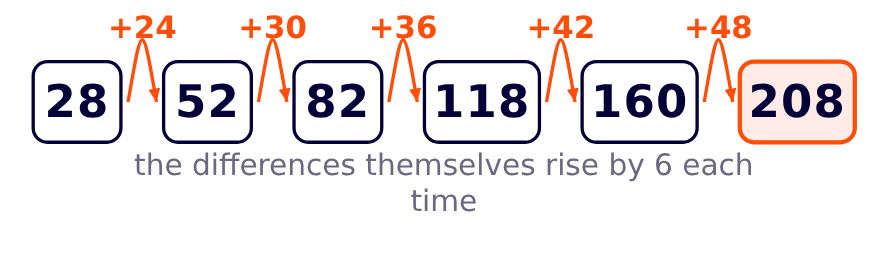 Required term =160+48=208, which is option (c).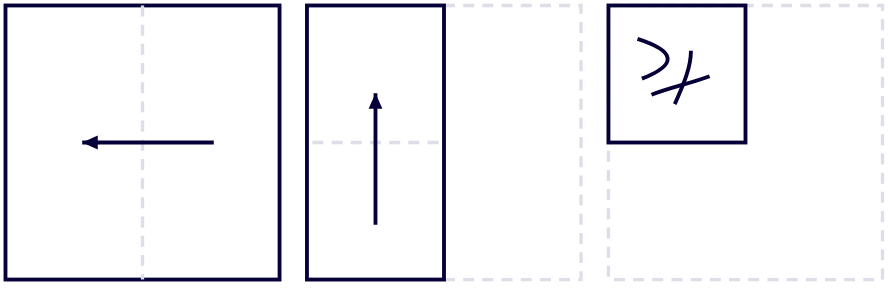
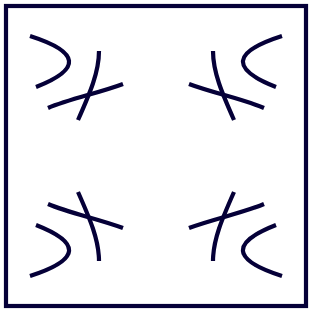
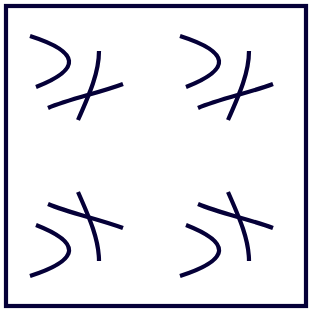
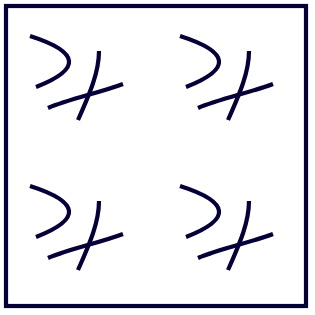
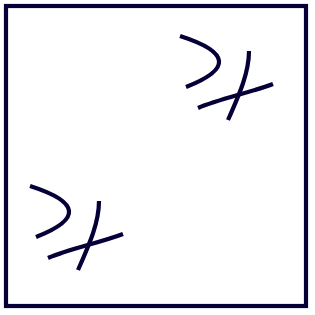
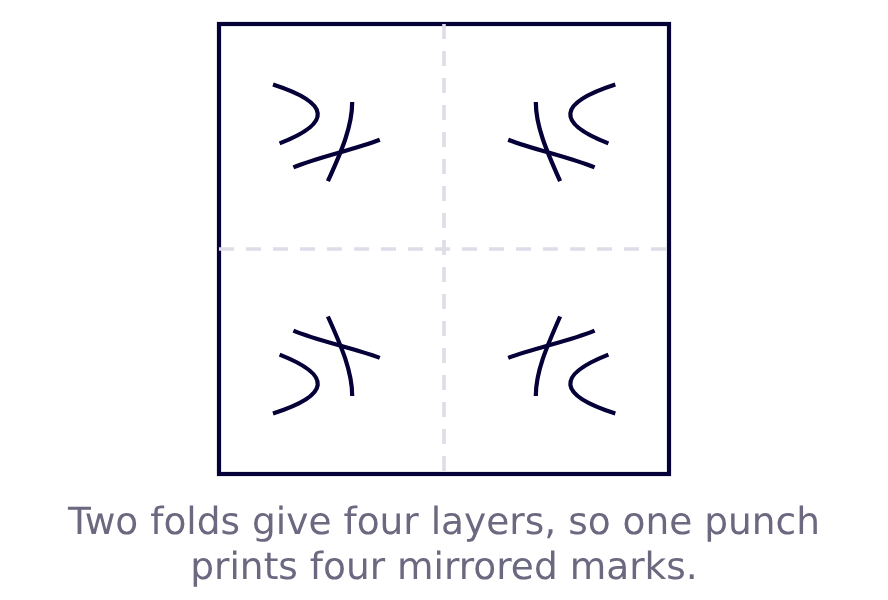 Only option (a) shows both mirrorings - the open side of the curve faces inward on each side; (b) repeats the same mark left and right without flipping it, and (c) repeats it unchanged in all four quarters.
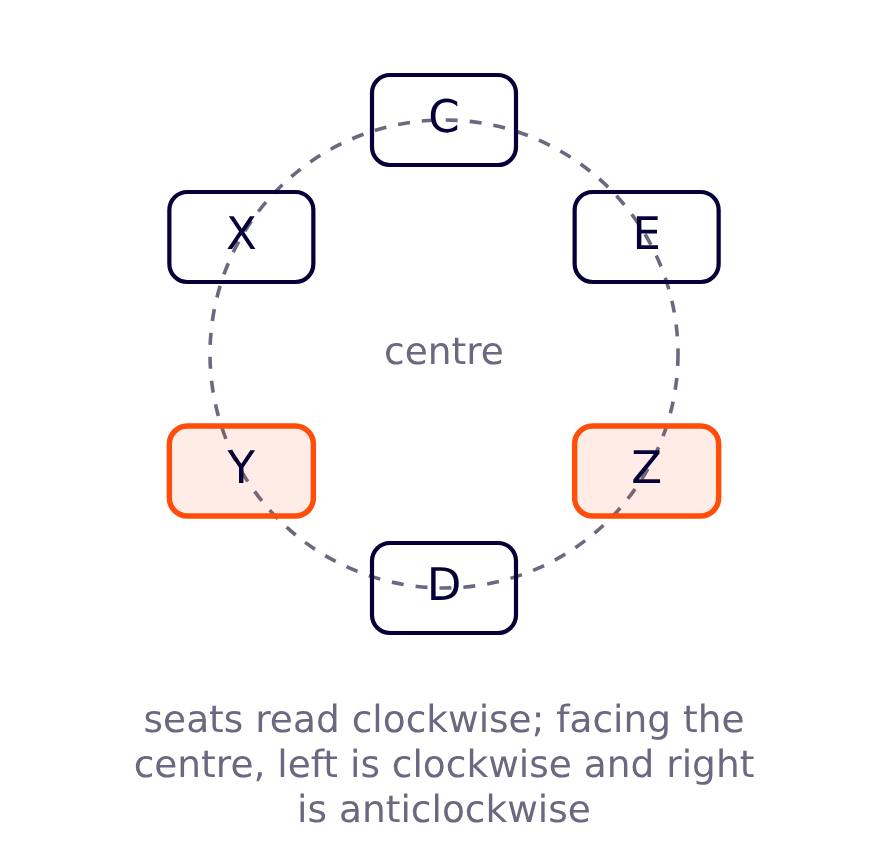 Counting to Y's right, that is anticlockwise, we pass D and reach Z - exactly one person sits between them, so option (b) is correct.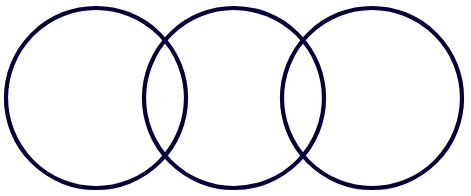
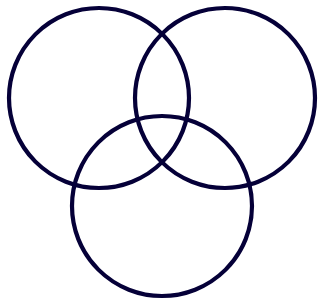
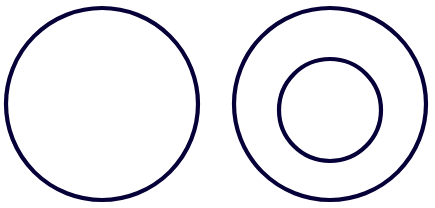

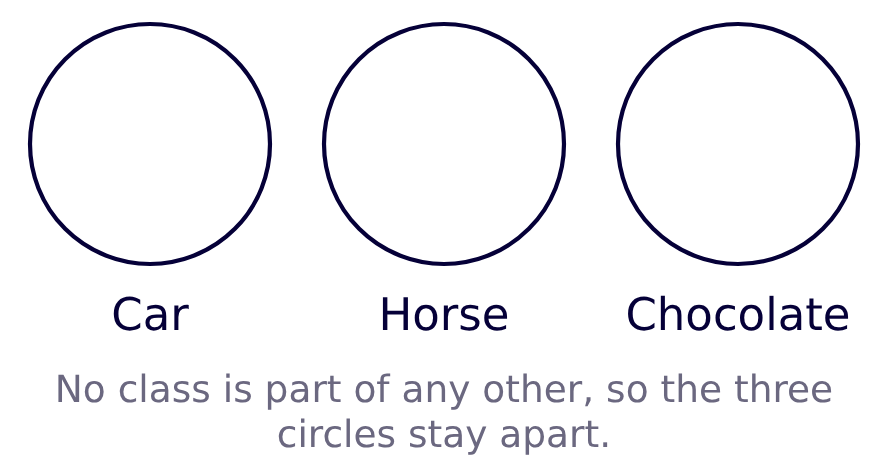 The three classes must therefore be drawn as three circles that neither touch nor overlap - option (d).
Options (a) and (b) make the classes share members, and (c) puts one class wholly inside another.
The three classes must therefore be drawn as three circles that neither touch nor overlap - option (d).
Options (a) and (b) make the classes share members, and (c) puts one class wholly inside another.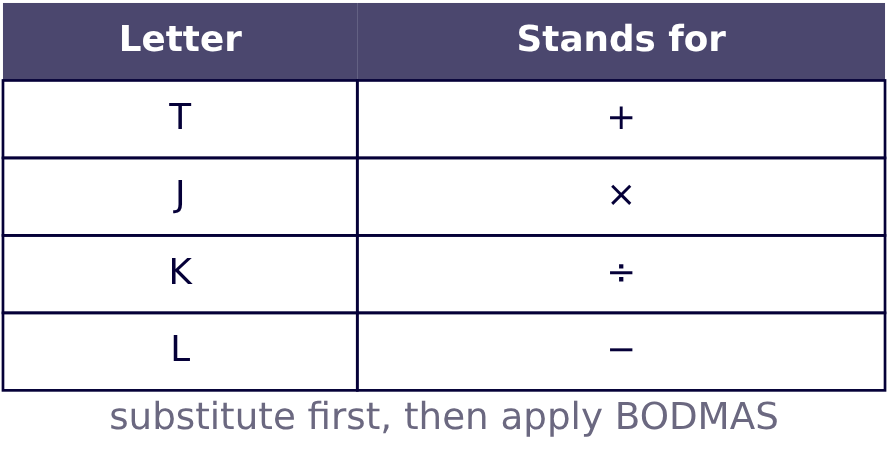 The equation becomes .
Brackets first: 59-38=21 and 12+8=20, giving .
Then multiplication and division: and , giving 84+10+42-26.
Finally addition and subtraction: 84+10=94, 94+42=136, 136-26=110.
So the question mark stands for 110, option (c).
The equation becomes .
Brackets first: 59-38=21 and 12+8=20, giving .
Then multiplication and division: and , giving 84+10+42-26.
Finally addition and subtraction: 84+10=94, 94+42=136, 136-26=110.
So the question mark stands for 110, option (c).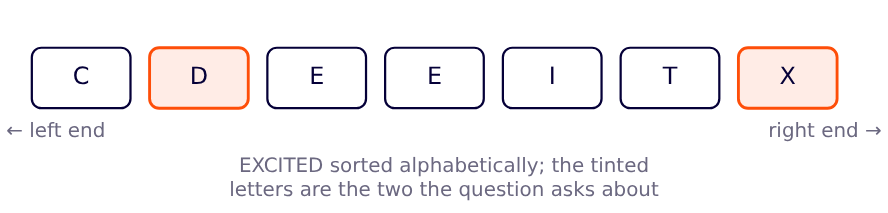 The second letter from the left end is D and the first letter from the right end is X.
D is the 4th letter of the alphabet and X the 24th, so the count strictly between them is 24-4-1=19.
The answer is 19, option (d).
The second letter from the left end is D and the first letter from the right end is X.
D is the 4th letter of the alphabet and X the 24th, so the count strictly between them is 24-4-1=19.
The answer is 19, option (d).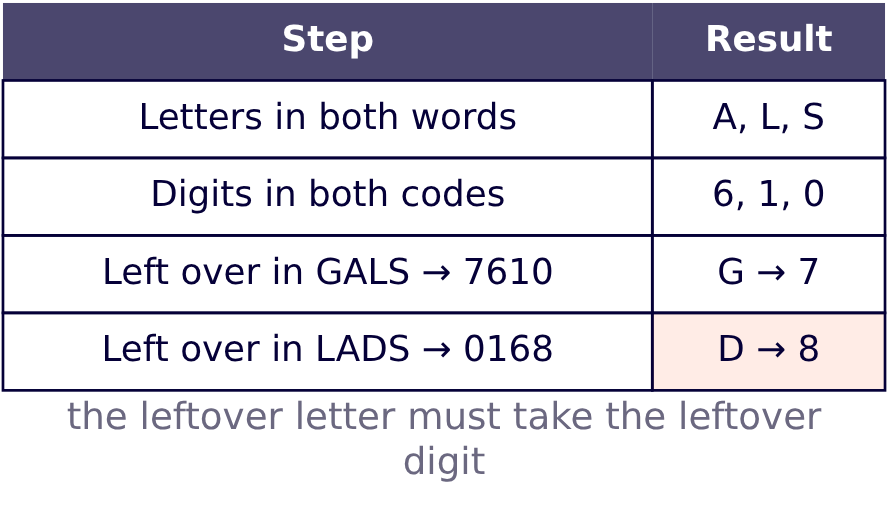 In GALS the odd letter is G and the odd digit is 7, so ; in LADS the odd letter is D and the odd digit is 8.
Hence D is coded as 8, option (b).
In GALS the odd letter is G and the odd digit is 7, so ; in LADS the odd letter is D and the odd digit is 8.
Hence D is coded as 8, option (b).