
26
Each item describes a situation and is followed by four possible responses. Indicate the response you find most appropriate. Choose only one response for each item. The responses will be evaluated based on the level of appropriateness for the given situation. Rohit runs a small manufacturing business that is struggling due to rising costs. A large company offers to partner with him but wants decision-making power in key areas. Rohit values independence but wants the business to survive. What is the most appropriate decision?
- A.Reject the offer and continue alone despite losses
- B.Accept all terms without discussion
- C.Negotiate terms to share control while protecting core interests
- D.Shut down the business immediately
Solution
Situational judgement
Two needs pull against each other here: the business must survive, and Rohit does not want to lose his independence.
The appropriate response is the one that serves both — take the partnership, but settle the terms before agreeing.
Negotiating lets him share control in the areas the partner really needs while keeping his core interests protected.
(a) and (d) sacrifice the business, and (b) sacrifices exactly the independence he values.
Hence option (c) is correct.
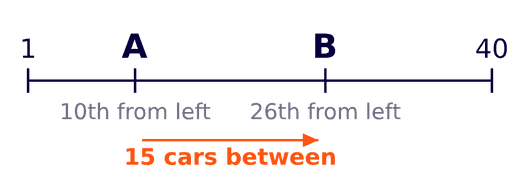 Hence there are 15 cars between A and B, and option (b) is correct.
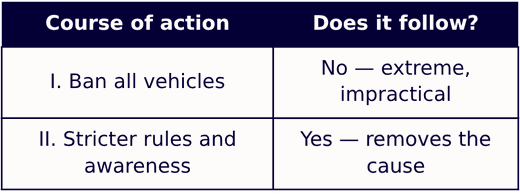 Hence only II follows and option (b) is correct.
 The next position is 15+3=18, and the 18th letter of the alphabet is R.
Hence option (d) is correct.
The next position is 15+3=18, and the 18th letter of the alphabet is R.
Hence option (d) is correct.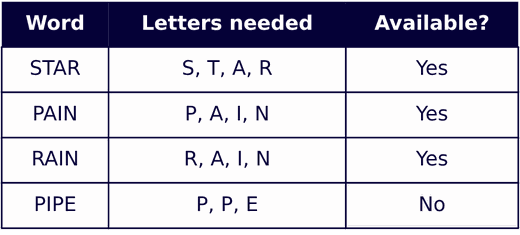 Hence PIPE cannot be formed and option (d) is correct.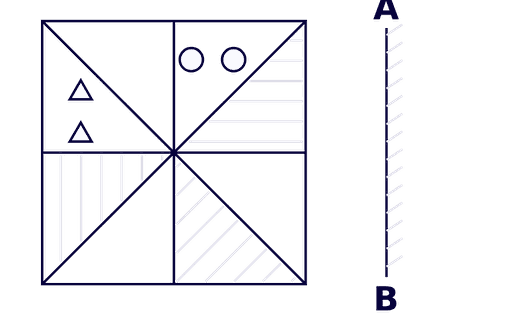
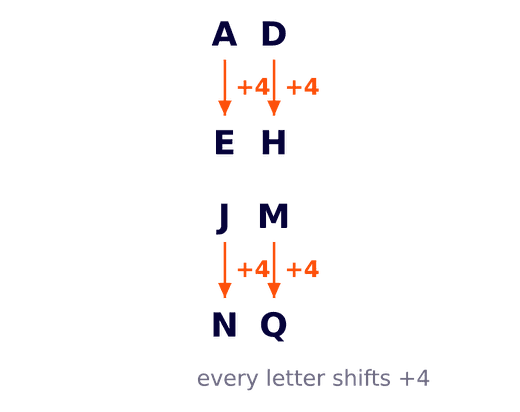 Apply the same shift to JM: J=10, so 10+4=14 gives N; M=13, so 13+4=17 gives Q.
Hence the missing pair is NQ and option (b) is correct.
Apply the same shift to JM: J=10, so 10+4=14 gives N; M=13, so 13+4=17 gives Q.
Hence the missing pair is NQ and option (b) is correct. Required term =1619+469=2088.
Hence option (d) is correct.
Required term =1619+469=2088.
Hence option (d) is correct.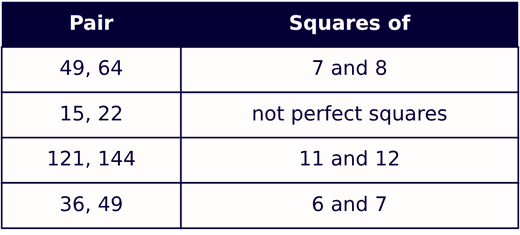 Hence 15, 22 is the odd pair and option (b) is correct.
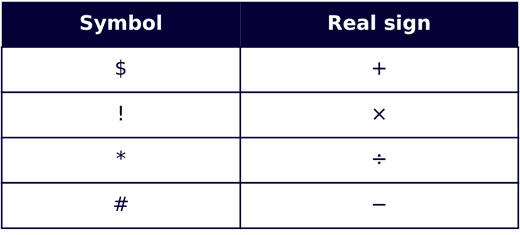 Putting the real signs in place of the symbols, the expression becomes .
By BODMAS the division is done first: .
Now .
.
Hence option (b) is correct.
Putting the real signs in place of the symbols, the expression becomes .
By BODMAS the division is done first: .
Now .
.
Hence option (b) is correct.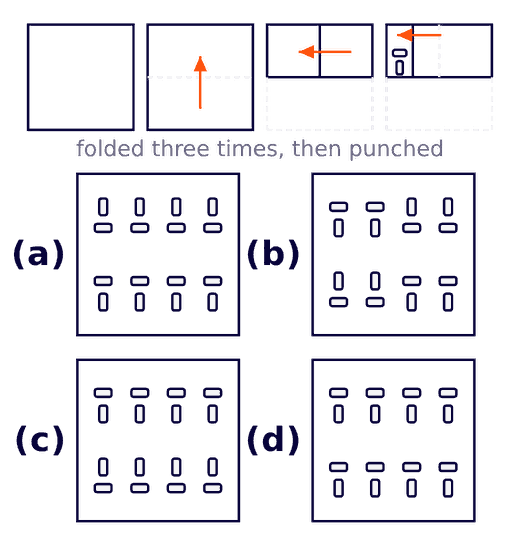
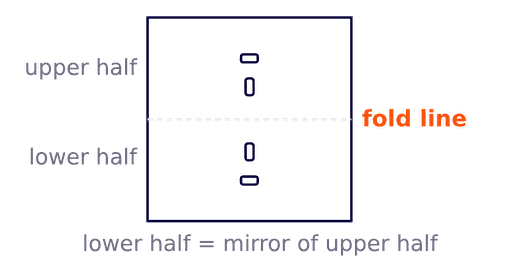 Undoing the horizontal fold copies the upper half into the lower half as a mirror image, so there the tall mark comes above the wide mark.
Only option (c) shows four columns of that pattern in both halves, so option (c) is correct.
Undoing the horizontal fold copies the upper half into the lower half as a mirror image, so there the tall mark comes above the wide mark.
Only option (c) shows four columns of that pattern in both halves, so option (c) is correct.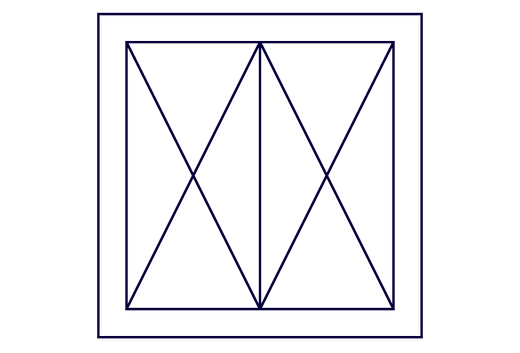
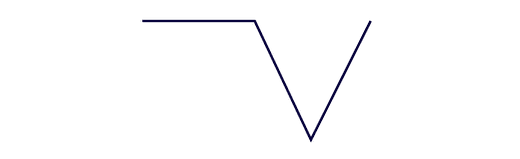
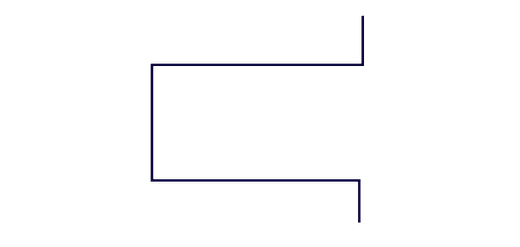
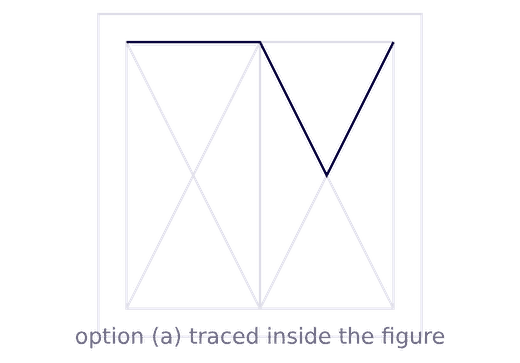 The top edge of the left half, then the diagonal running from the top-middle corner down to the centre of the right half, and then the part of the other diagonal rising to the top-right corner trace option (a) exactly.
In (b) and (c) the strokes meet at right angles and in (d) the slant is , and the figure has no such lines, so option (a) is correct.
The top edge of the left half, then the diagonal running from the top-middle corner down to the centre of the right half, and then the part of the other diagonal rising to the top-right corner trace option (a) exactly.
In (b) and (c) the strokes meet at right angles and in (d) the slant is , and the figure has no such lines, so option (a) is correct.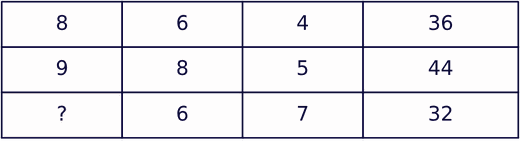
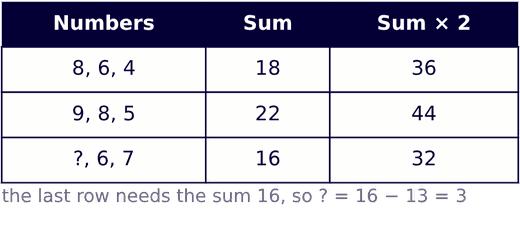 Row 3: , so ?+13=16.
Hence ?=3, so option (b) is correct.
Row 3: , so ?+13=16.
Hence ?=3, so option (b) is correct.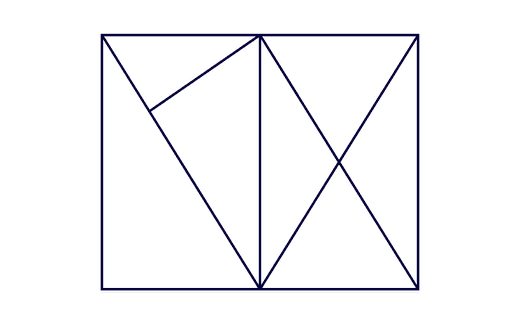
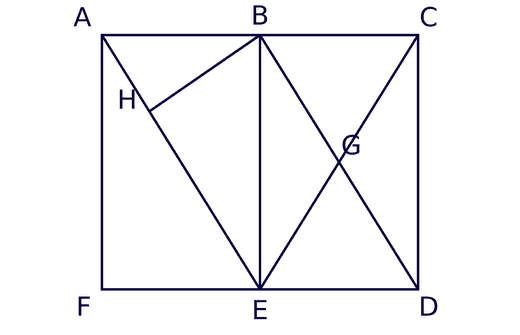 Seven small triangles have no line inside them: ABH, HBE, AFE, BCG, BGE, GED and CGD.
Five more are made of two of these: ABE, BCE, BCD, BDE and CDE.
One more is made of four of them: ACE.
Total =7+5+1=13, so option (a) is correct.
Seven small triangles have no line inside them: ABH, HBE, AFE, BCG, BGE, GED and CGD.
Five more are made of two of these: ABE, BCE, BCD, BDE and CDE.
One more is made of four of them: ACE.
Total =7+5+1=13, so option (a) is correct.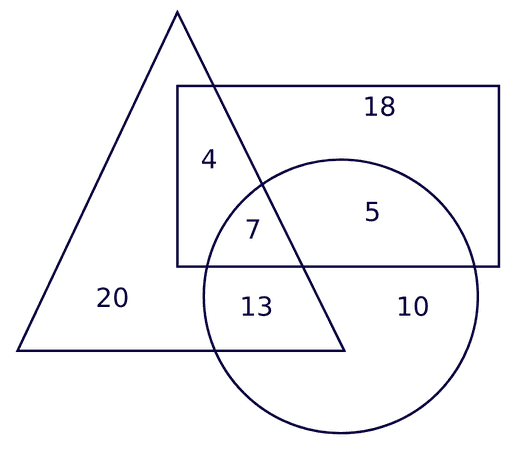 How many caps are socks ?
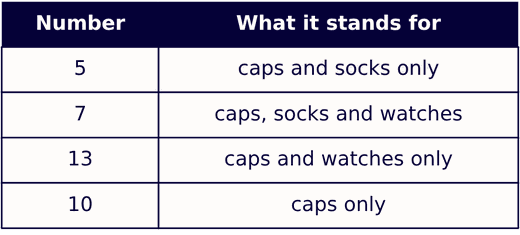 The part that lies inside the circle and the rectangle but outside the triangle carries the number 5.
The 7 beside it lies inside the triangle as well, so those items are caps, socks and watches together.
Hence the number of caps that are socks is 5, so option (b) is correct.
The part that lies inside the circle and the rectangle but outside the triangle carries the number 5.
The 7 beside it lies inside the triangle as well, so those items are caps, socks and watches together.
Hence the number of caps that are socks is 5, so option (b) is correct.
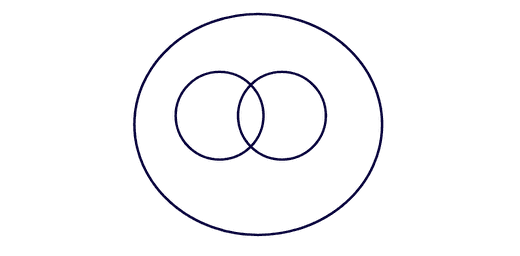

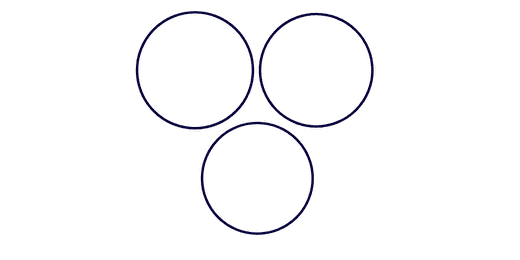
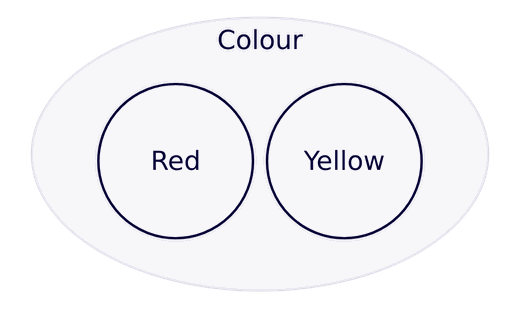 The diagram therefore needs one big circle holding two separate circles inside it.
Option (b) makes the two overlap, (a) leaves one of them outside and (d) keeps all three apart, so option (c) is correct.
The diagram therefore needs one big circle holding two separate circles inside it.
Option (b) makes the two overlap, (a) leaves one of them outside and (d) keeps all three apart, so option (c) is correct.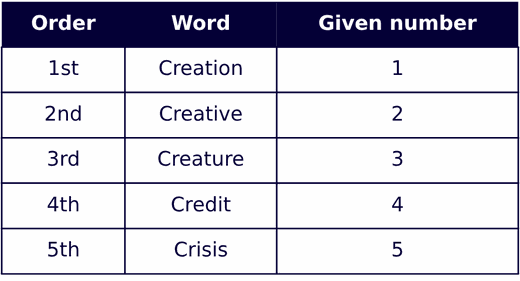 Credit has d as its fourth letter, which follows the a of Creat-, and Crisis has i as its third letter, which follows the e of Cre-.
The dictionary order is Creation, Creative, Creature, Credit, Crisis, that is 1, 2, 3, 4, 5, so option (a) is correct.
Credit has d as its fourth letter, which follows the a of Creat-, and Crisis has i as its third letter, which follows the e of Cre-.
The dictionary order is Creation, Creative, Creature, Credit, Crisis, that is 1, 2, 3, 4, 5, so option (a) is correct.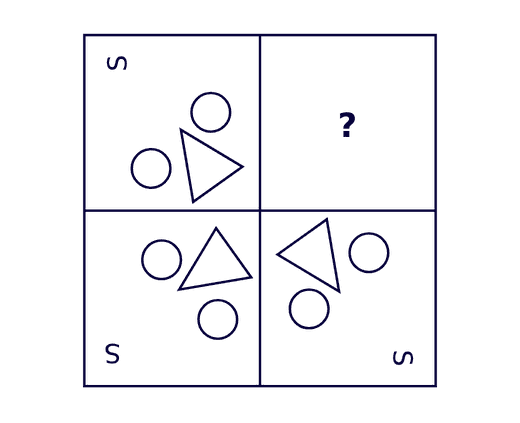
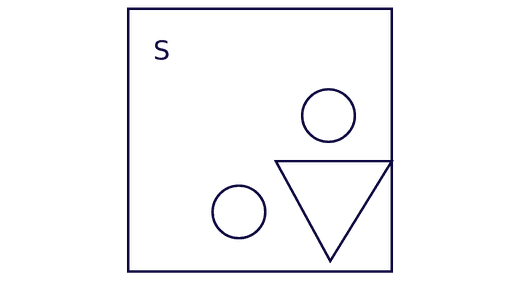
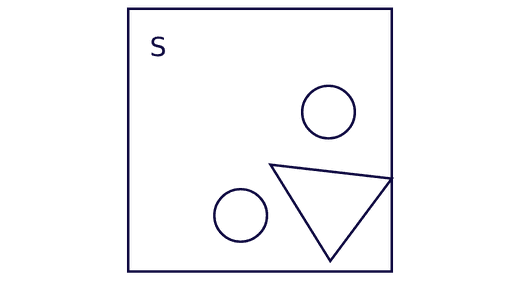
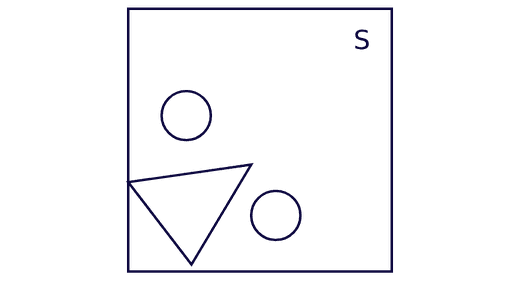
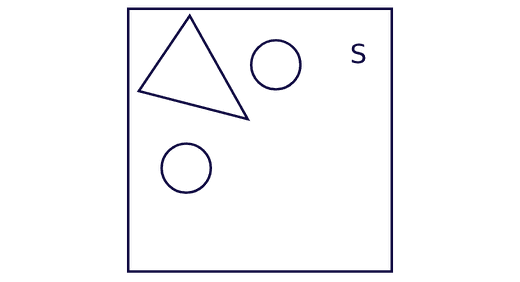
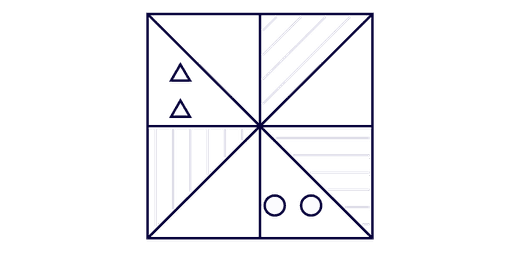
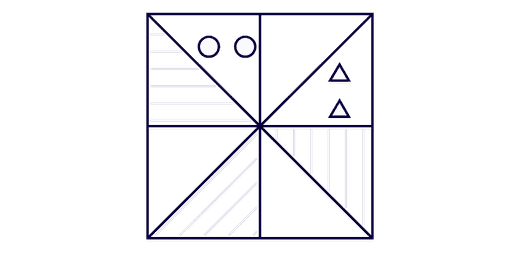
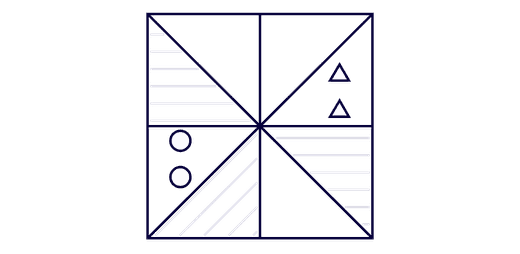
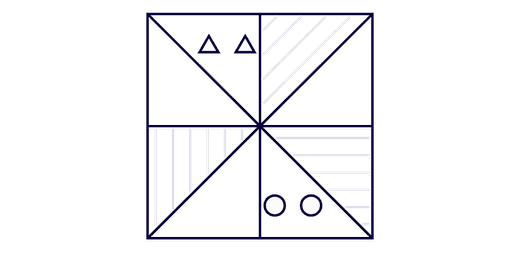
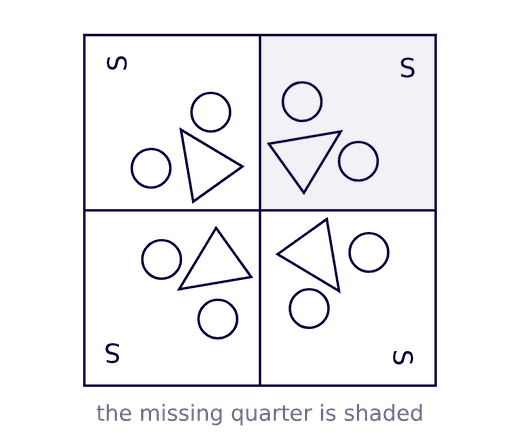 Only option (c) has S at the top right with the triangle in the bottom-left corner and the two circles on the other diagonal, so option (c) is correct.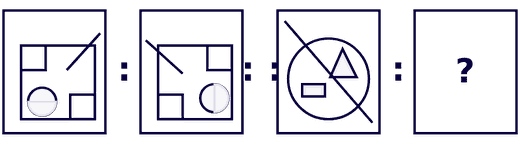
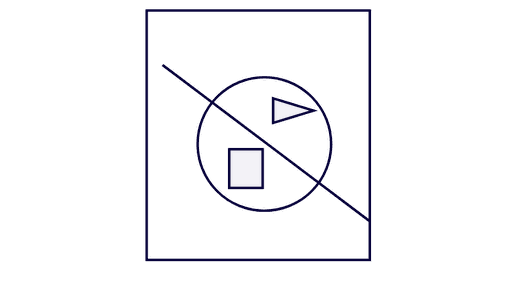
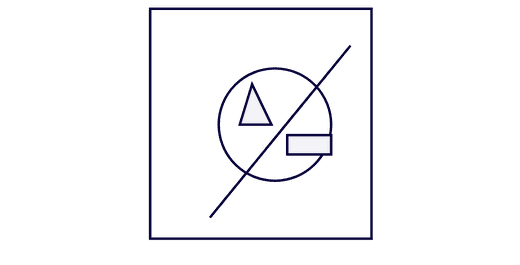
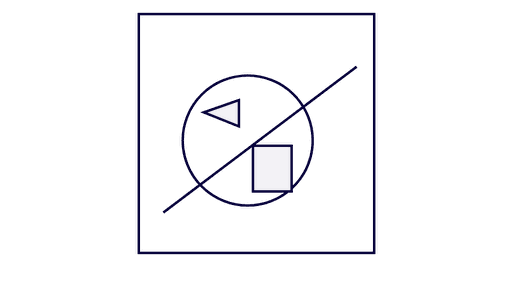
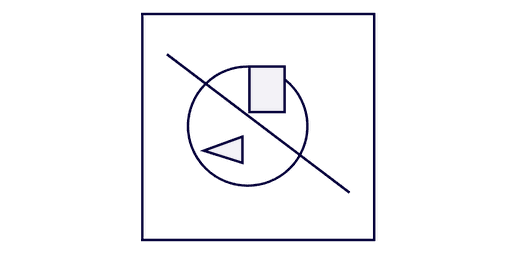
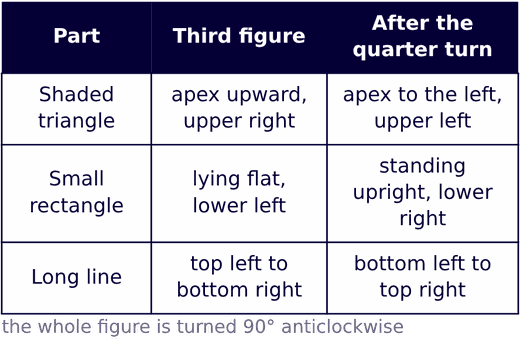 Turning the third figure the same way carries the triangle from the upper right to the upper left with its apex now pointing left, stands the small flat rectangle upright at the lower right, and swings the long line from the top-left–bottom-right direction to the bottom-left–top-right direction.
Option (c) shows exactly this figure, so option (c) is correct.
Turning the third figure the same way carries the triangle from the upper right to the upper left with its apex now pointing left, stands the small flat rectangle upright at the lower right, and swings the long line from the top-left–bottom-right direction to the bottom-left–top-right direction.
Option (c) shows exactly this figure, so option (c) is correct.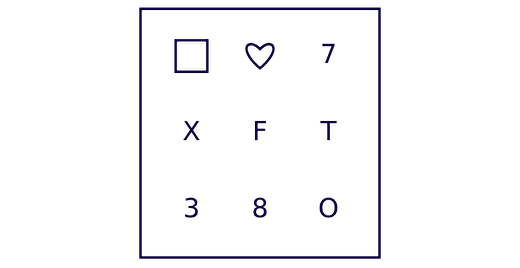
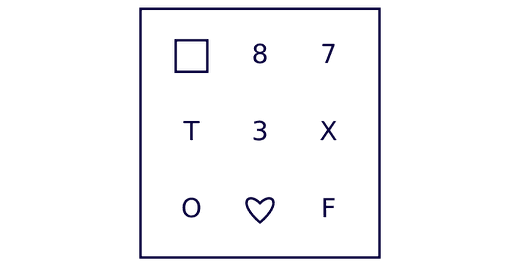
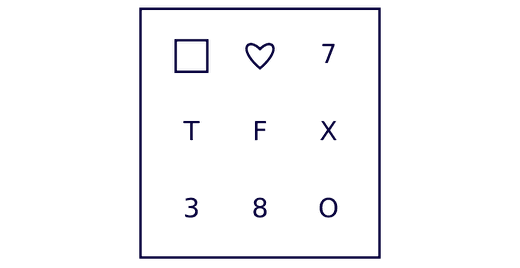
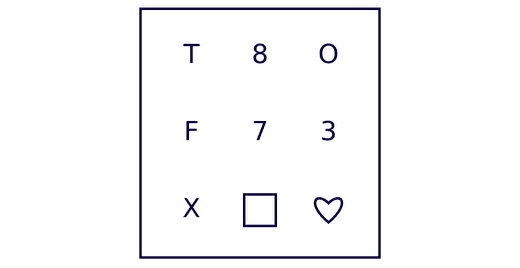
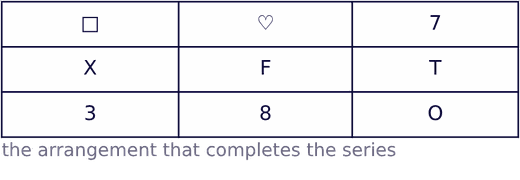 This is exactly the grid of option (a), so option (a) is correct.
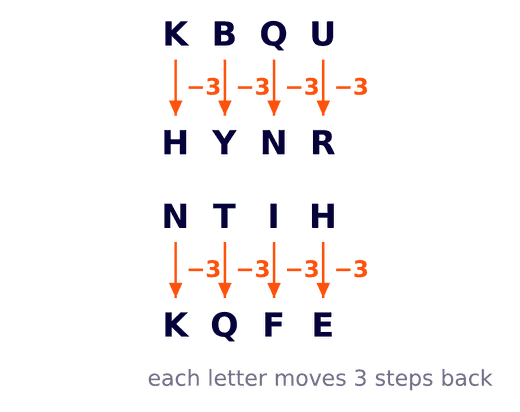 In KBQU → HYNR every letter moves three steps back: K-3=H, B-3=Y, Q-3=N, U-3=R, and RPFY → OMCV obeys the same rule.
Applying it to NTIH: N-3=K, T-3=Q, I-3=F, H-3=E.
So NTIH is coded as KQFE, and option (d) is correct.
In KBQU → HYNR every letter moves three steps back: K-3=H, B-3=Y, Q-3=N, U-3=R, and RPFY → OMCV obeys the same rule.
Applying it to NTIH: N-3=K, T-3=Q, I-3=F, H-3=E.
So NTIH is coded as KQFE, and option (d) is correct.