
26
The ratio of the present ages of Anuj and Brijesh is 6 : 7. Six years from now, the ratio of their ages will be . What is the present age of Brijesh ?
- A.40 years
- B.42 years
- C.45 years
- D.48 years
Solution
Ratio and ages
Let the present ages of Anuj and Brijesh be 6x and 7x years.
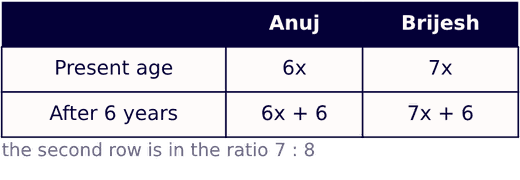 Six years later the ratio is given, so
Cross-multiplying: 8(6x+6)=7(7x+6)
48x+48=49x+42
x=6
Present age of Brijesh years, so option (b) is correct.
Six years later the ratio is given, so
Cross-multiplying: 8(6x+6)=7(7x+6)
48x+48=49x+42
x=6
Present age of Brijesh years, so option (b) is correct.
Six years later the ratio is given, so
Cross-multiplying: 8(6x+6)=7(7x+6)
48x+48=49x+42
x=6
Present age of Brijesh years, so option (b) is correct.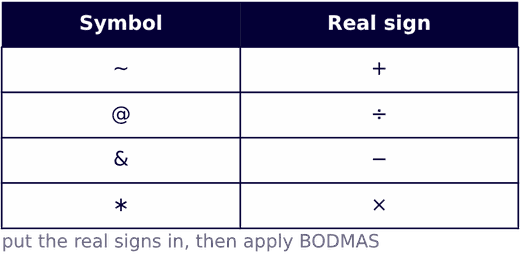 Replacing the symbols in the given expression gives
By BODMAS the multiplication is done first:
So the value is 7-72-6
=-65-6=-71
Hence option (b) is correct.
Replacing the symbols in the given expression gives
By BODMAS the multiplication is done first:
So the value is 7-72-6
=-65-6=-71
Hence option (b) is correct.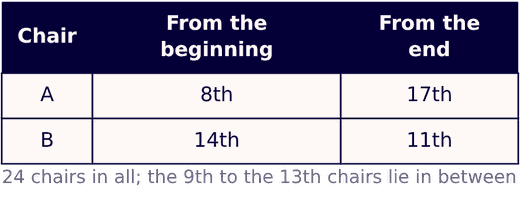 A is the 8th chair, so the chairs lying strictly between them are the 9th to the 13th.
Chairs in between =14-8-1=5
Hence option (b) is correct.
A is the 8th chair, so the chairs lying strictly between them are the 9th to the 13th.
Chairs in between =14-8-1=5
Hence option (b) is correct.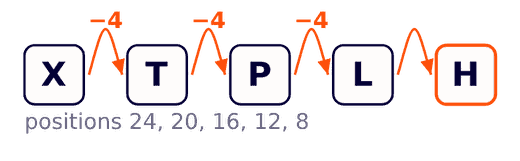 Every letter is 4 places behind the one before it, so the next position is 12-4=8.
The 8th letter of the alphabet is H.
Hence option (c) is correct.
Every letter is 4 places behind the one before it, so the next position is 12-4=8.
The 8th letter of the alphabet is H.
Hence option (c) is correct.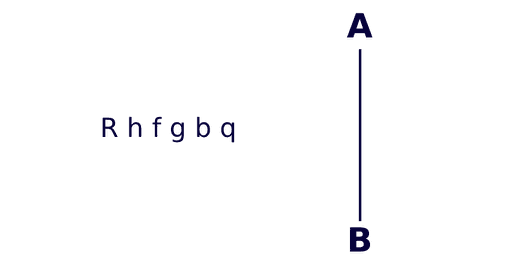
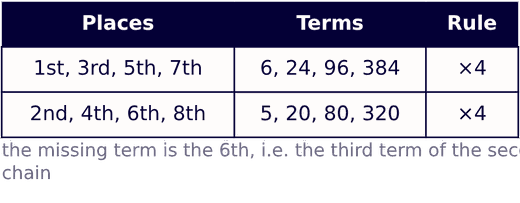 Odd places: 6, 24, 96, 384 — each term is 4 times the previous one.
Even places: 5, 20, ?, 320 — the same rule applies, so the missing term is .
The check works: , which is the next even-place term.
Hence option (b) is correct.
Odd places: 6, 24, 96, 384 — each term is 4 times the previous one.
Even places: 5, 20, ?, 320 — the same rule applies, so the missing term is .
The check works: , which is the next even-place term.
Hence option (b) is correct.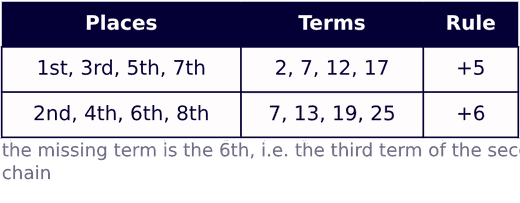 Odd places: 2, 7, 12, 17 — the difference is +5 each time.
Even places: 7, 13, ?, 25 — the difference is +6, so the missing term is 13+6=19.
The check works: 19+6=25, which is the last term.
Hence option (b) is correct.
Odd places: 2, 7, 12, 17 — the difference is +5 each time.
Even places: 7, 13, ?, 25 — the difference is +6, so the missing term is 13+6=19.
The check works: 19+6=25, which is the last term.
Hence option (b) is correct.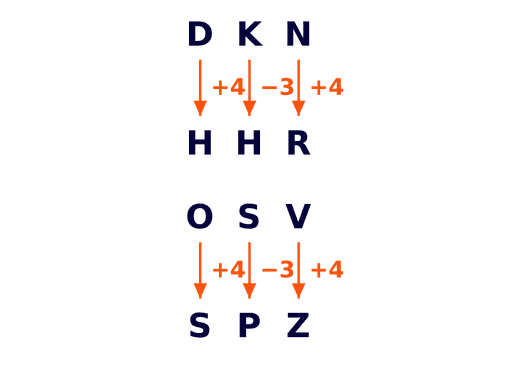 D(4) H(8) is +4, K(11) H(8) is -3, N(14) R(18) is +4.
Apply the same three shifts to OSV: O(15)+4= S(19), S(19)-3= P(16), V(22)+4= Z(26).
So OSV becomes SPZ.
Hence option (d) is correct.
D(4) H(8) is +4, K(11) H(8) is -3, N(14) R(18) is +4.
Apply the same three shifts to OSV: O(15)+4= S(19), S(19)-3= P(16), V(22)+4= Z(26).
So OSV becomes SPZ.
Hence option (d) is correct.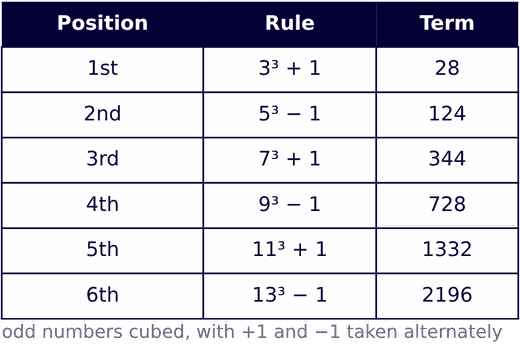 The +1 and -1 alternate, so the fourth term must be .
, hence the missing term is 729-1=728.
The rule holds afterwards as well: and .
Hence option (c) is correct.
The +1 and -1 alternate, so the fourth term must be .
, hence the missing term is 729-1=728.
The rule holds afterwards as well: and .
Hence option (c) is correct.


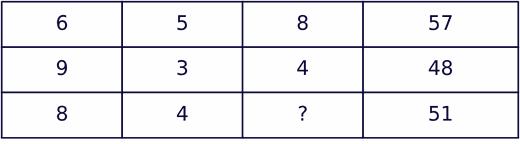
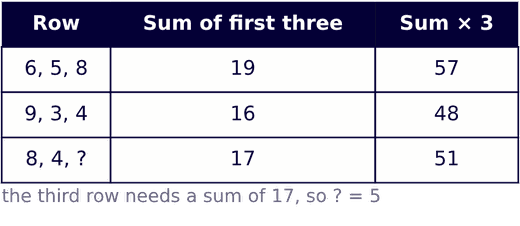 So the last column is always three times the sum of the first three numbers.
Row 3: , so 8+4+?=17, giving ?=17-12=5.
Hence option (c) is correct.
So the last column is always three times the sum of the first three numbers.
Row 3: , so 8+4+?=17, giving ?=17-12=5.
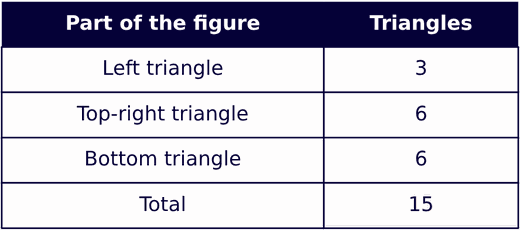
Hence option (c) is correct.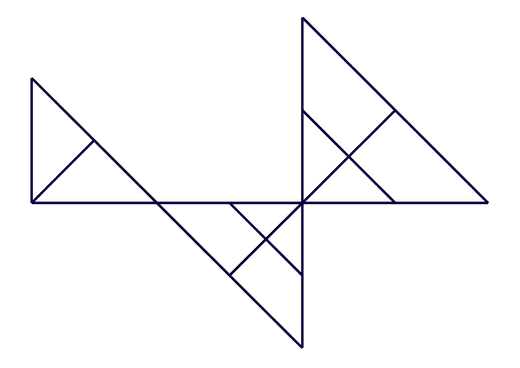
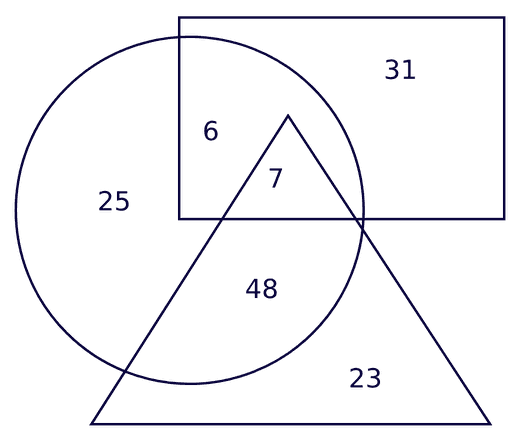 How many baskets are keys?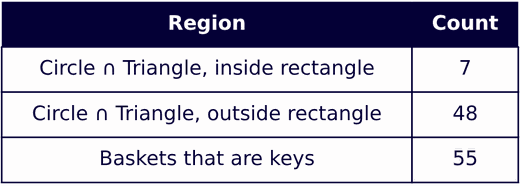


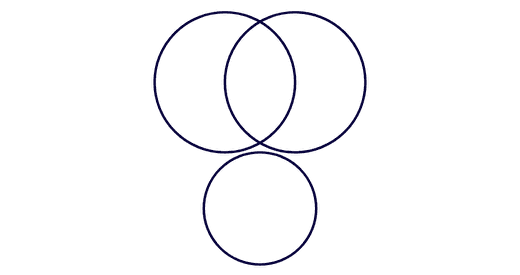

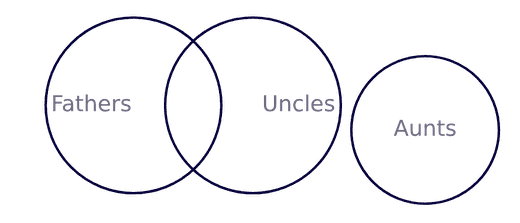 The diagram needed is therefore two intersecting circles plus a third circle kept separate, which is option (c).
Option (a) wrongly makes aunts overlap the other two, (b) separates fathers from uncles, and (d) puts one class completely inside another.
The diagram needed is therefore two intersecting circles plus a third circle kept separate, which is option (c).
Option (a) wrongly makes aunts overlap the other two, (b) separates fathers from uncles, and (d) puts one class completely inside another.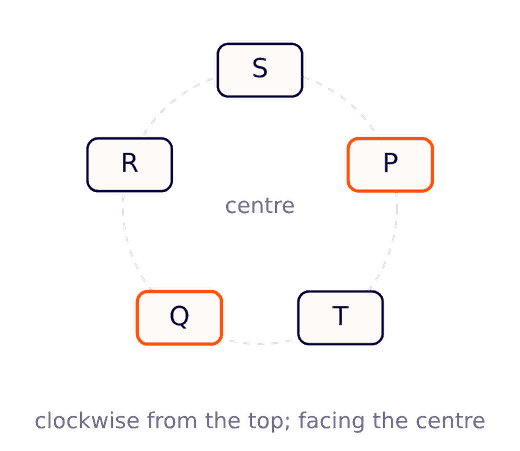 Now move two seats to P’s left, i.e. two seats clockwise from P; that lands on Q.
Hence the person second to the left of P is Q, option (b).
Now move two seats to P’s left, i.e. two seats clockwise from P; that lands on Q.
Hence the person second to the left of P is Q, option (b).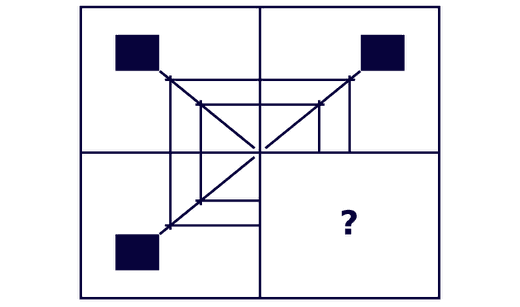
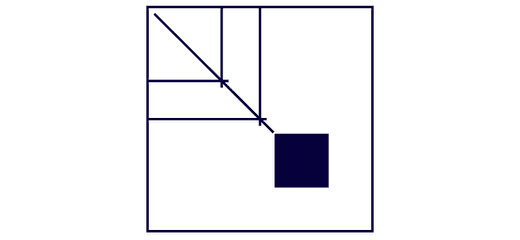
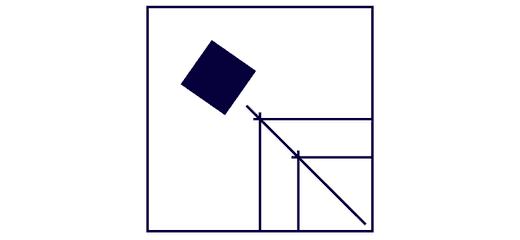
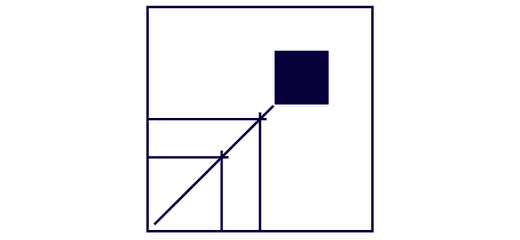
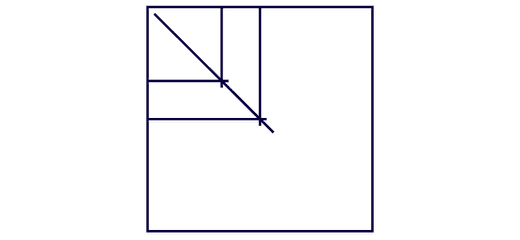
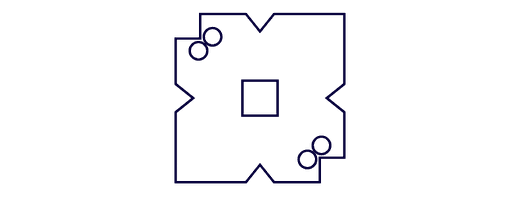
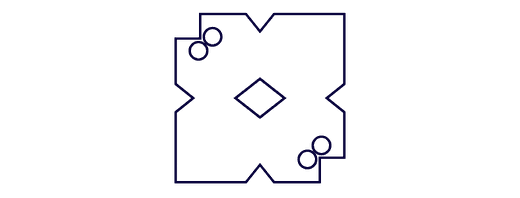
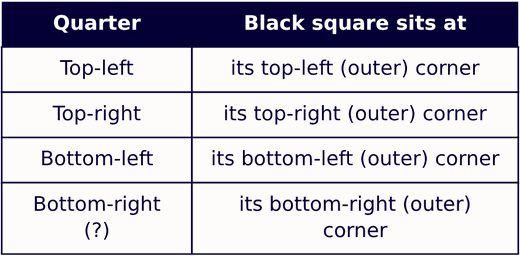 The blank quarter is the bottom-right one, so its slanting line must begin at its top-left corner (the centre of the figure) and run down to a black square near the bottom-right, with the step lines coming from the top edge and the left edge.
Option (a) is exactly that piece. Option (c) is its mirror image and fits the top-right quarter, (d) has lost the black square and (b) has a tilted square; since rotation is not allowed, (a) is the answer.
The blank quarter is the bottom-right one, so its slanting line must begin at its top-left corner (the centre of the figure) and run down to a black square near the bottom-right, with the step lines coming from the top edge and the left edge.
Option (a) is exactly that piece. Option (c) is its mirror image and fits the top-right quarter, (d) has lost the black square and (b) has a tilted square; since rotation is not allowed, (a) is the answer.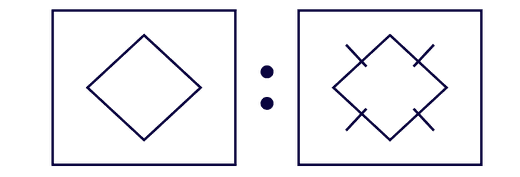
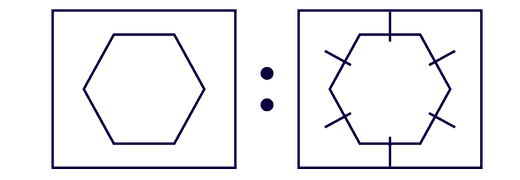
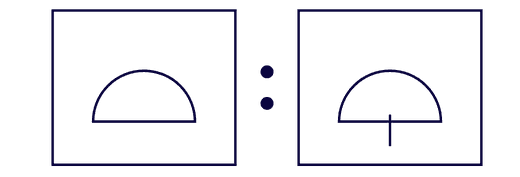

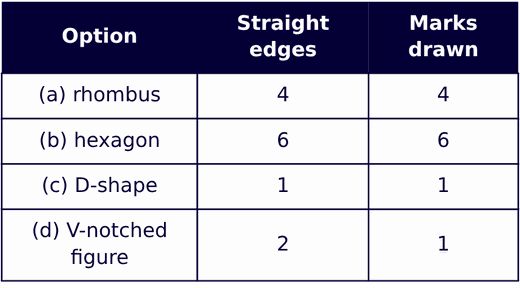 The figure in (d) has 2 straight edges — the two arms of the V — yet only one mark is drawn, and that mark lies inside the figure instead of outside.
So the pair that does not follow the rule is (d).
The figure in (d) has 2 straight edges — the two arms of the V — yet only one mark is drawn, and that mark lies inside the figure instead of outside.
So the pair that does not follow the rule is (d).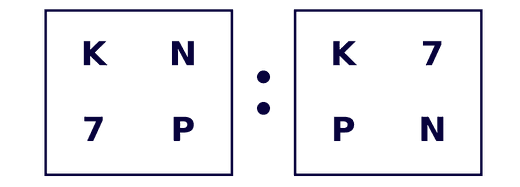
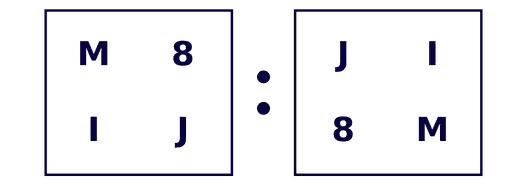
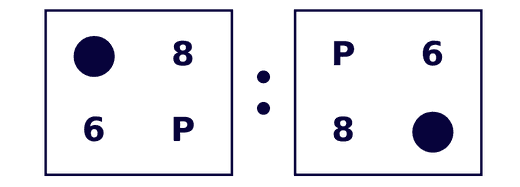
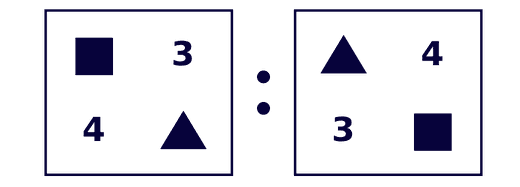
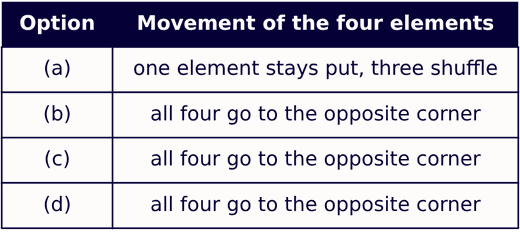 For example in (d) the black square goes from the top-left to the bottom-right, the triangle comes from the bottom-right to the top-left, and 3 and 4 change places in the same way.
In (a) the letter K is still sitting in the top-left corner of the second box, so one element has not moved at all while the other three merely shuffle round.
That breaks the rule the other three pairs obey, so the odd figure pair is (a).
For example in (d) the black square goes from the top-left to the bottom-right, the triangle comes from the bottom-right to the top-left, and 3 and 4 change places in the same way.
In (a) the letter K is still sitting in the top-left corner of the second box, so one element has not moved at all while the other three merely shuffle round.
That breaks the rule the other three pairs obey, so the odd figure pair is (a).




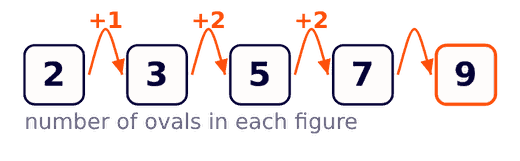 The shading follows its own rule: the first oval is dark and after that dark and light ovals alternate, so a row of 9 both begins and ends with a dark oval.
A row of 9 ovals shaded dark, light, dark, light, dark, light, dark, light, dark is exactly option (b).
Option (a) has 8 ovals and two dark ones together at the end, (c) has 8 ovals and ends with a light one, and (d) breaks the alternation near its end.
The shading follows its own rule: the first oval is dark and after that dark and light ovals alternate, so a row of 9 both begins and ends with a dark oval.
A row of 9 ovals shaded dark, light, dark, light, dark, light, dark, light, dark is exactly option (b).
Option (a) has 8 ovals and two dark ones together at the end, (c) has 8 ovals and ends with a light one, and (d) breaks the alternation near its end.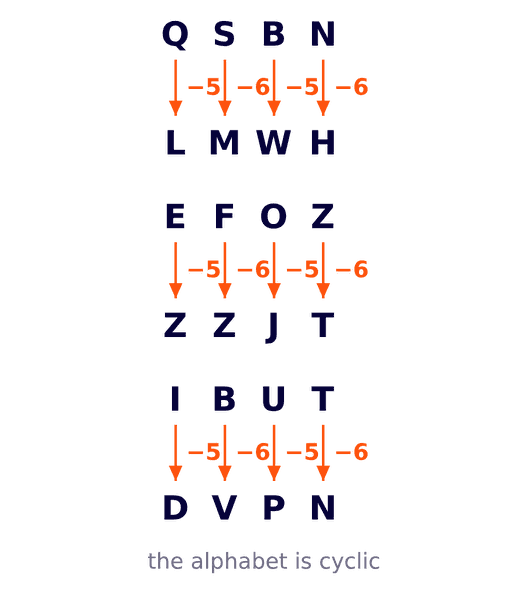 The 1st and 3rd letters move 5 places back, while the 2nd and 4th letters move 6 places back.
The second pair confirms it: E-5=Z, F-6=Z, O-5=J, Z-6=T, giving ZZJT.
Apply the same shifts to IBUT: I-5=D, B-6=V, U-5=P, T-6=N.
So IBUT is coded as DVPN.
The 1st and 3rd letters move 5 places back, while the 2nd and 4th letters move 6 places back.
The second pair confirms it: E-5=Z, F-6=Z, O-5=J, Z-6=T, giving ZZJT.
Apply the same shifts to IBUT: I-5=D, B-6=V, U-5=P, T-6=N.
So IBUT is coded as DVPN.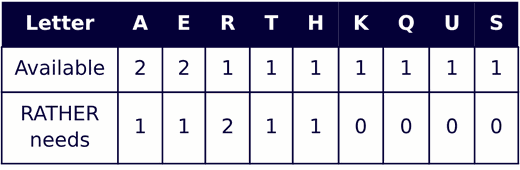 EARTH uses E, A, R, T, H once each — available; HEAR likewise.
SEEK needs two E’s and one each of S and K, and both E’s are in stock — available.
RATHER needs two R’s, but only one R is present, so this word cannot be formed.
EARTH uses E, A, R, T, H once each — available; HEAR likewise.
SEEK needs two E’s and one each of S and K, and both E’s are in stock — available.
RATHER needs two R’s, but only one R is present, so this word cannot be formed.