SSC CHSL 22 November 2025 · Shift 3 · General Intelligence — questions with answers · ShikshaSphere
Chapter 113 of 200
22 November 2025 · Shift 3
General Intelligence
25 questions ~25 min readFree
25 questions
A
26
A bus covers a certain distance at and returns at . If the total time is 8 hours, what is the distance of the one-way trip ?
A.300 km
B.240 km
C.350 km
D.180 km
Solution
Speed, time and distance
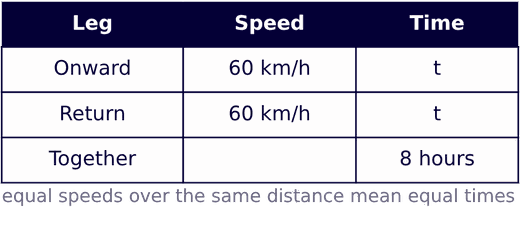
The bus goes and comes back at the same speed, so the two legs of the journey take the same time.
Total time = 8 hours, so each leg takes hours.
Formula: distance = speed time
One-way distance km.
Hence the correct option is (b).
27
In this type of questions, question is provided with substitutes for various mathematical symbols, followed by a question involving calculation of an expression or choosing the correct/incorrect equation. You have to put the real signs in the given equation and then solve the questions as required. If '%' stands for '×', '#' stands for '÷', ' ' stands for ' - ', '!' stands for '+', then find the value of:
?
A.21
B.15
C.29
D.27
Solution
Symbol substitution
Replace every symbol in the expression by the sign it really stands for.
Only two of the four symbols occur here: '!' becomes + and '∧' becomes -.
The expression therefore becomes 8 + 9 - 2 + 6.
Addition and subtraction rank equally under BODMAS, so work from left to right.
8 + 9 = 17
17 - 2 = 15
15 + 6 = 21
Hence the required value is 21, which is option (a).
28
In this type of questions, question is provided with substitutes for various mathematical symbols, followed by a question involving calculation of an expression or choosing the correct/incorrect equation. You have to put the real signs in the given equation and then solve the questions as required. If '@' stands for '+', '&' stands for '×', 'S' stands for ' - ', ' ' stands for ', then find the value of:
15 $8 $9 @ 17=?
A.14
B.16
C.15
D.10
Solution
Symbol substitution
Put the real sign in place of each symbol before doing any arithmetic.
In this expression only two symbols appear: 'S' stands for - and '@' stands for +.
So 15 S 8 S 9 @ 17 becomes 15 - 8 - 9 + 17.
Addition and subtraction are of equal rank, so solve from left to right.
15 - 8 = 7
7 - 9 = -2
-2 + 17 = 15
Hence the required value is 15, which is option (c).
29
A person walks 10 km south, then 7 km east, and finally 10 km north. In which direction is he from his starting point ?
A.North
B.South
C.East
D.West
Solution
Direction sense
Take north as the upward direction and plot the three legs one after another from the starting point.
First leg: 10 km south. Third leg: 10 km north.
These two legs are equal in length and exactly opposite, so together they bring him back to the same north–south level as the start.
The only movement left is the middle leg of 7 km towards the east.
Hence the finishing point is 7 km due east of the starting point, so he is in the east direction, which is option (c).
30
A person walks 15 km north, then 8 km west, and finally 15 km south. How far is he from his starting point?
A.7 km
B.8 km
C.10 km
D.12 km
Solution
Direction sense
Draw the walk step by step, taking north as the upward direction.
The 15 km walked north and the 15 km walked south are equal and opposite, so they cancel each other completely.
Only the 8 km walked west is left, so the finishing point lies due west of the starting point.
Distance from the starting point = 8 km, which is option (b).
31
In three of the following pairs are same by same pattern except one pair. Which pair does not follow this pattern?
A.
B.
C.1331 : 1333
D.1000 : 1001
Solution
Odd number pair
Look at the first number of each pair: , , and — every one of them is a perfect cube.
So the pattern is: second number = (perfect cube) .
216 + 1 = 217, 512 + 1 = 513 and 1000 + 1 = 1001 all obey this rule.
For 1331 the rule demands 1331 + 1 = 1332, but the pair given shows 1333.
Hence the pair that breaks the pattern is option (c).
32
Pick the correct options from the given alternatives 534 : 423 :: 723 : ?
A.620
B.612
C.721
D.821
Solution
Number analogy
Compare the two numbers of the first pair digit by digit.
5 - 1 = 4, 3 - 1 = 2 and 4 - 1 = 3, so every digit of 534 falls by 1 to give 423.
Apply the same rule to 723: 7 - 1 = 6, 2 - 1 = 1, 3 - 1 = 2.
This gives 612, which is option (b).
33
Pick the correct options from the given alternatives BIHAR : PATNA :: JHARKHAND : ?
A.RANCHI
B.DISPUR
C.RAIPUR
D.IMPHAL
Solution
State and capital
In the first pair the second word is the capital city of the state named first.
Patna is the capital of Bihar.
In the same way the capital of Jharkhand is Ranchi, so it completes the analogy.
Dispur is the capital of Assam, Raipur of Chhattisgarh and Imphal of Manipur.
Hence the correct option is (a).
34
Choose odd one out from given alternatives.
A.Kerala - Malayalam
B.Goa - Konkani
C.Karnataka - Kannada
D.Tamil Nadu - Hindi
Solution
State and language
In each pair the second name should be the official language of the state named first.
Malayalam is the official language of Kerala, Konkani of Goa and Kannada of Karnataka — three correctly matched pairs.
The official language of Tamil Nadu is Tamil, not Hindi, so this pair does not belong with the rest.
Hence the odd one out is option (d).
35
Select the related letter from the given alternatives.
TRIP : VUKR : : FAST : ?
A.HCUW
B.GBTU
C.HDUV
D.IDVX
Solution
Letter analogy
Compare TRIP with VUKR letter by letter, using the positions of the letters in the alphabet.
T V is +2, R U is +3, I K is +2 and P R is +2.
So the pattern of jumps is .
Applying the same jumps to FAST: F +2 = H, A +3 = D, S +2 = U, T +2 = V.
This gives HDUV, which is option (c).
36
Select the related letter from the given alternatives PLATFORM : MROFTALP :: COMPUTER : ?
A.OMPUTERC
B.RETUPMOC
C.OMPUTERC
D.COMPUERT
Solution
Letter reversal
Read the second group of the first pair from right to left and compare it with the first group.
MROFTALP read backwards is PLATFORM, so the rule is simply to write the letters in reverse order.
Reversing COMPUTER letter by letter gives R, E, T, U, P, M, O, C.
That is RETUPMOC, which is option (b).
37
Select the correct options from the given alternatives 300210305200310190315 ?
A.170
B.120
C.180
D.120
Solution
Alternating number series
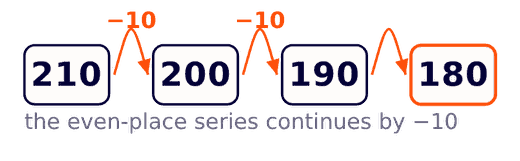
Break the long string into three-digit numbers: 300, 210, 305, 200, 310, 190, 315, ?
The terms standing at odd places and those standing at even places form two separate series.
Odd places: 300, 305, 310, 315 — each term is 5 more than the one before it.
Even places: 210, 200, 190, ? — each term is 10 less than the one before it, and the missing term belongs to this series.
So the missing term is 190 - 10 = 180, which is option (c).
38
Complete the following series from the given options.
A.c, b, a, d
B.a, b, c, d
C.c, b, d, a
D.d, c, b, a
Solution
Letter series completion
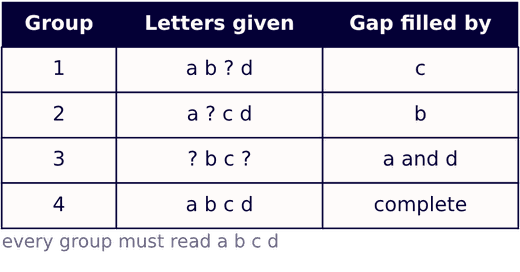
The series has sixteen places, so split it into four groups of four letters each.
Every complete group reads a, b, c, d in that order, and the fourth group confirms it.
Group 1 is a b ? d, so the first gap is c; group 2 is a ? c d, so the second gap is b.
Group 3 is ? b c ?, so the third gap is a and the fourth gap is d.
Reading the gaps in order gives c, b, a, d, which is option (a).
39
Which of the following options will replace the question mark (?) in the given series? xooxxx, xxooxx, xxxoox, xxxxoo, ?
A.oxxxxx
B.ooxxxx
C.xxxxoo
D.xxxxxx
Solution
Symbol series
Each term is six places long and carries exactly two o's, the other four places being x.
The pair of o's stands at places 2 and 3, then at 3 and 4, then at 4 and 5, then at 5 and 6.
So the pair of o's slides one place to the right at every step.
After places 5 and 6 the pair has reached the right end, so it re-enters from the left and takes places 1 and 2.
That term is ooxxxx, which is option (b).
40
Carefully examine the Reference Statement. Then, identify the single option among the four alternatives (a, b, c, d) that is an EXACT AND COMPLETE REPLICATION of the Reference Statement. Pay exceptionally close attention to every character, number, symbol, space, and punctuation mark.
Reference: Mumbai: 2025-01-23, Thursday.
A.Mumbai: 2025-01-24, Thursday.
B.Mumbai: 2024-01-23, Thursday.
C.Mumbai: 2025-01-23, Thursday.
D.Mumbai: 2025-02-23, Thursday.
Solution
Exact match
Compare each option with the reference one field at a time — city, year, month, day and weekday.
Option (a) shows the day as 24 instead of 23, option (b) shows the year as 2024 instead of 2025, and option (d) shows the month as 02 instead of 01.
Option (c) agrees with the reference in every single character, including the colon, the two hyphens, the comma and the full stop.
Hence the correct option is (c).
41
For the question below, carefully examine the Reference Statement. Then, identify the single option among the four alternatives (a, b, c, d) that is an EXACT AND COMPLETE REPLICATION of the Reference Statement. Pay exceptionally close attention to every character, number, symbol, space, and punctuation mark.
Reference: Paris, France. July 14th, 1789.
A.Paris, France. July 15th, 1789.
B.Paris, France. July 14th, 1789.
C.Paris, France. July 14th, 1779.
D.Paris, France. July 14th, 1689.
Solution
Exact statement matching
Do not read the option as a whole; compare it with the reference field by field - city, country, month, day, year.
Option (a) changes the day: it reads 'July 15th' in place of 'July 14th'.
Option (c) changes the year to 1779 and option (d) changes it to 1689.
Only option (b) reproduces 'Paris, France. July 14th, 1789.' with every letter, digit, comma and full stop in its place.
Hence, option (b) is the correct answer.
42
In the following question, select the number which can be placed at the sign of question mark (?) from the given alternatives.
A.160
B.159
C.161
D.164
Solution
Number pattern
Each group of the figure carries three small numbers and one big number formed from them.
Rule: multiply the three numbers of a group and then add 1.
First group: and 60+1=61.
Second group: and 120+1=121.
Third group: , so ?=160+1=161.
Hence, option (c) is the correct answer.
43
In the following question, select the number which can be placed at the sign of question mark (?) from the given alternatives.
A.10
B.12
C.7
D.14
Solution
Number grid pattern
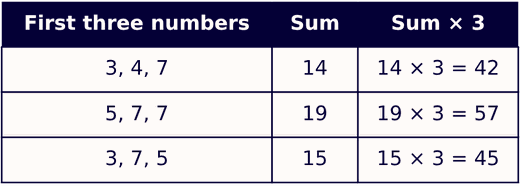
In every row the last number is built out of the first three numbers of that row.
First row: 3+4+7=14 and .
Third row: 3+7+5=15 and .
So the rule is (sum of the first three numbers) = last number.
Second row: , so 5+7+?=19, which gives ?=19-12=7.
Hence, option (c) is the correct answer.
44
How many triangles are there in the given figure?
A.19
B.20
C.15
D.17
Solution
Counting triangles
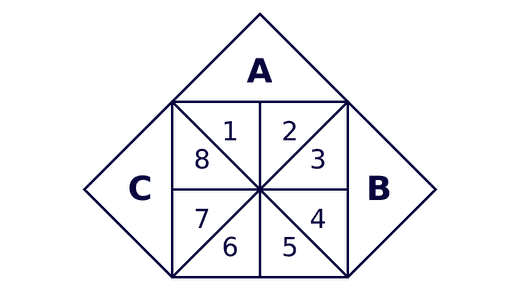
The figure is a square cut by both diagonals and both mid-lines, with three triangles A, B and C standing outside it.
Number the eight smallest triangles of the square 1 to 8, as shown.
Smallest triangles: 1, 2, 3, 4, 5, 6, 7, 8 inside the square and A, B, C outside it - that is 8+3=11 triangles.
Made of two small ones: (1+2), (3+4), (5+6) and (7+8) - each is a corner-to-corner triangle standing on one side of the square - 4 triangles.
Made of four small ones: (1+2+3+4), (5+6+7+8), (1+2+7+8) and (3+4+5+6) - each is half of the square cut off by one diagonal - 4 triangles.
No larger triangle is possible, because A, B and C join the square only along its sides.
Total number of triangles =11+4+4=19.
Hence, option (a) is the correct answer.
45
Identify the diagram that best represents the relationship among the given classes.
Cars, auto-rickshaws and diesel vehicles?
A.
B.
C.
D.
Solution
Class relationship diagram
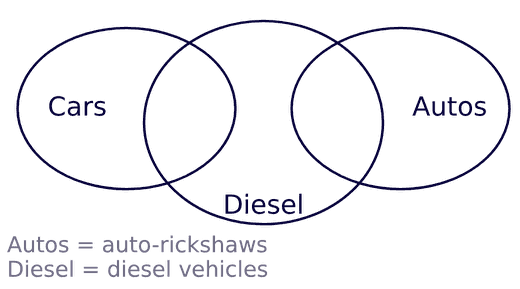
A car is never an auto-rickshaw and an auto-rickshaw is never a car, so these two classes have nothing in common.
Diesel vehicles, however, include some cars and some auto-rickshaws, while many cars and auto-rickshaws run on petrol or CNG.
So the diagram must show two figures that stay apart from each other, with a third figure cutting across both of them.
Option (b) shows exactly this - the middle circle overlaps the left circle and the right circle, and those two do not touch each other.
Options (a) and (d) place one class wholly inside another, and option (c) makes even cars and auto-rickshaws overlap, so all three are wrong.
Hence, option (b) is the correct answer.
46
In the following figure series, select the figure which can be placed at the sign of question mark (?) from the given alternatives.
A.
B.
C.
D.
Solution
Figure series
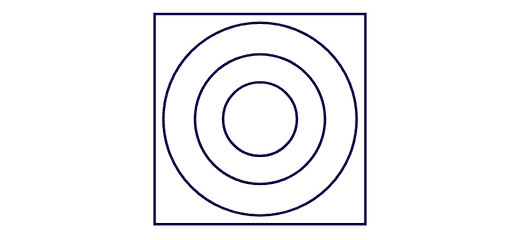
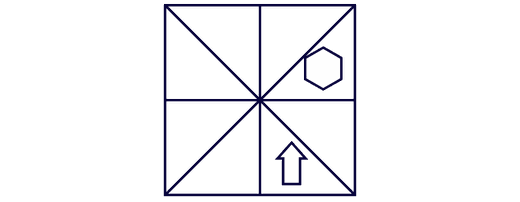
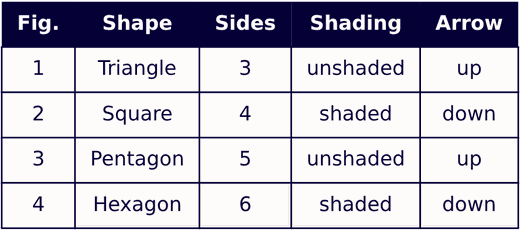
Every square of the series is divided into eight sectors and carries two elements - a plain shape and a block arrow.
The plain shape gains one side at each step: triangle (3 sides), square (4 sides), pentagon (5 sides), so the fourth figure must carry a hexagon (6 sides).
Its shading alternates: the triangle is unshaded, the square is shaded, the pentagon is unshaded, so the hexagon must be shaded.
The arrow turns over at every step - up, down, up - so in the fourth figure it points downwards, and it stays unshaded throughout the series.
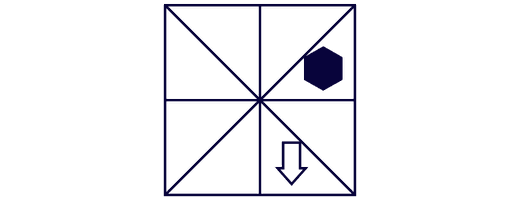
Only option (a) carries a shaded hexagon together with an unshaded downward arrow.
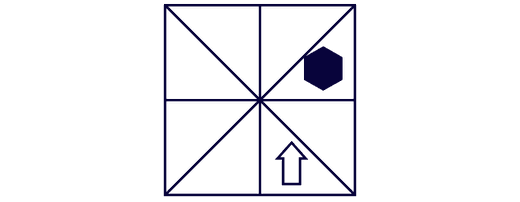
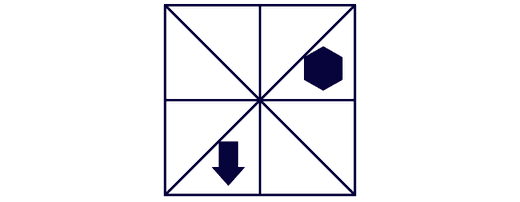
Options (b) and (d) point the arrow upwards, (d) also leaves the hexagon unshaded, and (c) shades the arrow and shifts it to another sector.
Hence, option (a) is the correct answer.
47
In a certain coded language 'BRES' is coded as 'GWJX' and 'INOP' is coded as 'NSTU'. How will 'RDGV' be coded in the same language?
A.WIAL
B.WILA
C.WLIA
D.WALI
Solution
Letter coding
Place the word above its code and compare the two letter by letter.
In 'BRES' every letter moves 5 steps forward: B(2)+5=G(7), R(18)+5=W(23), E(5)+5=J(10), S(19)+5=X(24).
'INOP' follows the very same rule: I+5=N, N+5=S, O+5=T, P+5=U; the order of the letters is not disturbed.
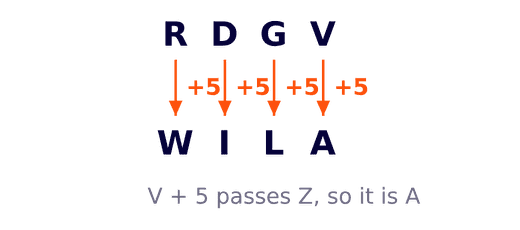
Apply +5 to 'RDGV': R(18)+5=W(23), D(4)+5=I(9), G(7)+5=L(12) and V(22)+5=27, which after subtracting 26 becomes 1=A.
So 'RDGV' is coded as 'WILA'.
Hence, option (b) is the correct answer.
48
In a certain coded language 'SAIL' is coded as 'WEMP' and 'BHEL' is coded as 'FLIP'. How will 'MAIL' be coded in the same code language?
A.QEPM
B.QEMP
C.QMEP
D.QPME
Solution
Letter coding
Write each word above its code and check the gap between the matching letters.
'SAIL' to 'WEMP': S(19)+4=W(23), A(1)+4=E(5), I(9)+4=M(13), L(12)+4=P(16).
'BHEL' to 'FLIP' obeys the same rule: B+4=F, H+4=L, E+4=I, L+4=P.
So every letter simply moves 4 places forward and stays in its own position.
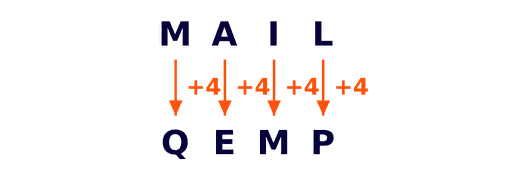
For 'MAIL': M(13)+4=Q(17), A(1)+4=E(5), I(9)+4=M(13), L(12)+4=P(16).
So 'MAIL' is coded as 'QEMP'.
Hence, option (b) is the correct answer.
49
In a certain coded language 'DANGER ' is coded as 'RENGAD' and 'MASTER' is coded as 'RESTAM'. How will 'PUZZLE' be coded in the same coded language?
A.ELZZPU
B.ELZZUP
C.ELZUZP
D.EZLZUP
Solution
Word coding by pairs
No letter is changed here, only their places are; so break each six-letter word into three pairs and watch where the pairs travel.
'DANGER' gives the pairs DA, NG, ER. The last pair comes to the front reversed as 'RE', the middle pair 'NG' stays where it is, and the first pair goes to the end reversed as 'AD' - giving 'RENGAD'.
'MASTER' behaves in exactly the same way: ER becomes RE at the front, ST stays in the middle, and MA becomes AM at the end - giving 'RESTAM'.
'PUZZLE' gives the pairs PU, ZZ, LE.
LE becomes 'EL' at the front, ZZ stays in the middle and PU becomes 'UP' at the end.
So 'PUZZLE' is coded as 'ELZZUP'.
Hence, option (b) is the correct answer.
50
A word has been given in the question. This word CANNOT be formed by using the letters of the word given in one of the alternatives only. Select that alternative.
POCKET
A.TOPKEC
B.ECTOPK
C.KECOTP
D.POCKETS
Solution
Word formation
The word to be formed is POCKET, made of the six different letters P, O, C, K, E and T.
An option can produce POCKET only if it is built from exactly these six letters.
Arrange the letters of each option alphabetically: TOPKEC, ECTOPK and KECOTP each give C, E, K, O, P, T - the very letters of POCKET, so all three can form the word.
POCKETS gives C, E, K, O, P, S, T - seven letters, with an extra S that POCKET does not contain, so it is not an arrangement of the letters of POCKET.
Therefore POCKET cannot be formed from the letters of POCKETS alone.
Hence, option (d) is the correct answer.
Finished reading? Now test yourself.
The same 25 questions, but with a timer and the answers hidden — 15 minutes.

 Total time = 8 hours, so each leg takes hours.
Formula: distance = speed time
One-way distance km.
Hence the correct option is (b).
Total time = 8 hours, so each leg takes hours.
Formula: distance = speed time
One-way distance km.
Hence the correct option is (b).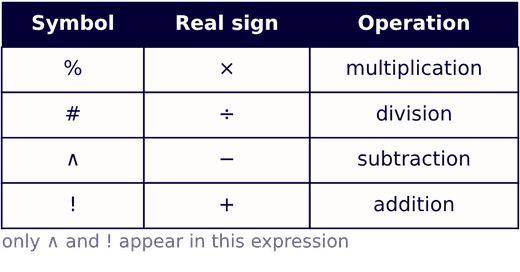 Only two of the four symbols occur here: '!' becomes + and '∧' becomes -.
The expression therefore becomes 8 + 9 - 2 + 6.
Addition and subtraction rank equally under BODMAS, so work from left to right.
8 + 9 = 17
17 - 2 = 15
15 + 6 = 21
Hence the required value is 21, which is option (a).
Only two of the four symbols occur here: '!' becomes + and '∧' becomes -.
The expression therefore becomes 8 + 9 - 2 + 6.
Addition and subtraction rank equally under BODMAS, so work from left to right.
8 + 9 = 17
17 - 2 = 15
15 + 6 = 21
Hence the required value is 21, which is option (a).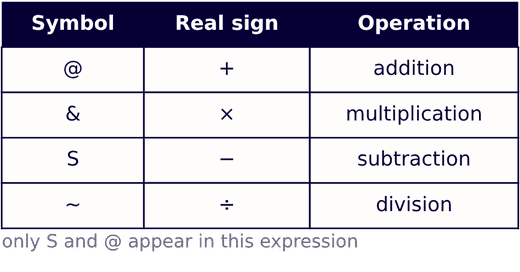 In this expression only two symbols appear: 'S' stands for - and '@' stands for +.
So 15 S 8 S 9 @ 17 becomes 15 - 8 - 9 + 17.
Addition and subtraction are of equal rank, so solve from left to right.
15 - 8 = 7
7 - 9 = -2
-2 + 17 = 15
Hence the required value is 15, which is option (c).
In this expression only two symbols appear: 'S' stands for - and '@' stands for +.
So 15 S 8 S 9 @ 17 becomes 15 - 8 - 9 + 17.
Addition and subtraction are of equal rank, so solve from left to right.
15 - 8 = 7
7 - 9 = -2
-2 + 17 = 15
Hence the required value is 15, which is option (c).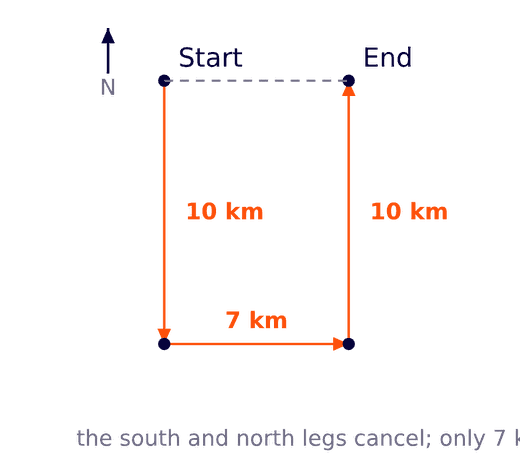 First leg: 10 km south. Third leg: 10 km north.
These two legs are equal in length and exactly opposite, so together they bring him back to the same north–south level as the start.
The only movement left is the middle leg of 7 km towards the east.
Hence the finishing point is 7 km due east of the starting point, so he is in the east direction, which is option (c).
First leg: 10 km south. Third leg: 10 km north.
These two legs are equal in length and exactly opposite, so together they bring him back to the same north–south level as the start.
The only movement left is the middle leg of 7 km towards the east.
Hence the finishing point is 7 km due east of the starting point, so he is in the east direction, which is option (c).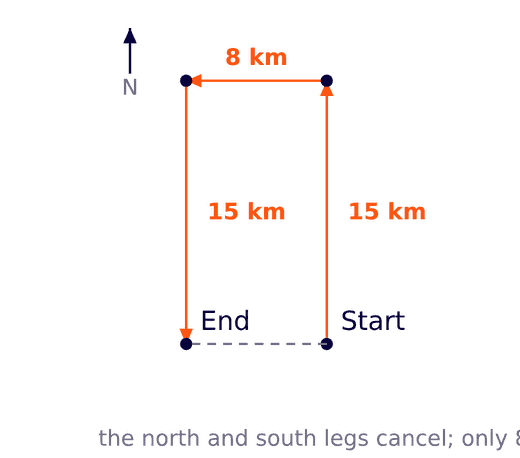 The 15 km walked north and the 15 km walked south are equal and opposite, so they cancel each other completely.
Only the 8 km walked west is left, so the finishing point lies due west of the starting point.
Distance from the starting point = 8 km, which is option (b).
The 15 km walked north and the 15 km walked south are equal and opposite, so they cancel each other completely.
Only the 8 km walked west is left, so the finishing point lies due west of the starting point.
Distance from the starting point = 8 km, which is option (b).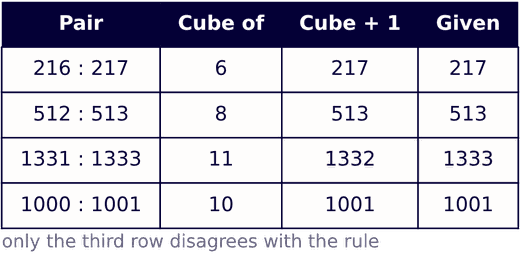 216 + 1 = 217, 512 + 1 = 513 and 1000 + 1 = 1001 all obey this rule.
For 1331 the rule demands 1331 + 1 = 1332, but the pair given shows 1333.
Hence the pair that breaks the pattern is option (c).
216 + 1 = 217, 512 + 1 = 513 and 1000 + 1 = 1001 all obey this rule.
For 1331 the rule demands 1331 + 1 = 1332, but the pair given shows 1333.
Hence the pair that breaks the pattern is option (c).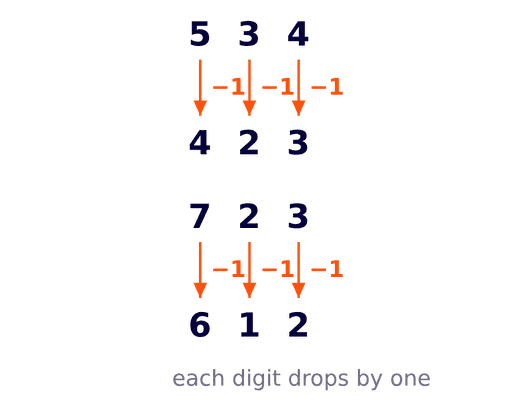 5 - 1 = 4, 3 - 1 = 2 and 4 - 1 = 3, so every digit of 534 falls by 1 to give 423.
Apply the same rule to 723: 7 - 1 = 6, 2 - 1 = 1, 3 - 1 = 2.
This gives 612, which is option (b).
5 - 1 = 4, 3 - 1 = 2 and 4 - 1 = 3, so every digit of 534 falls by 1 to give 423.
Apply the same rule to 723: 7 - 1 = 6, 2 - 1 = 1, 3 - 1 = 2.
This gives 612, which is option (b).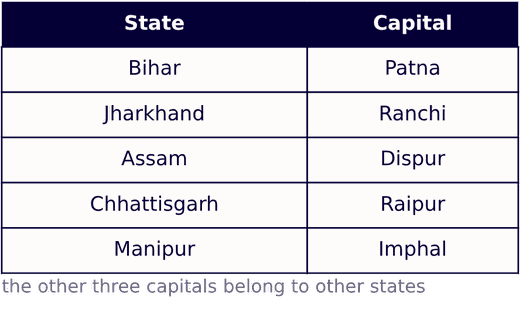 In the same way the capital of Jharkhand is Ranchi, so it completes the analogy.
Dispur is the capital of Assam, Raipur of Chhattisgarh and Imphal of Manipur.
Hence the correct option is (a).
In the same way the capital of Jharkhand is Ranchi, so it completes the analogy.
Dispur is the capital of Assam, Raipur of Chhattisgarh and Imphal of Manipur.
Hence the correct option is (a).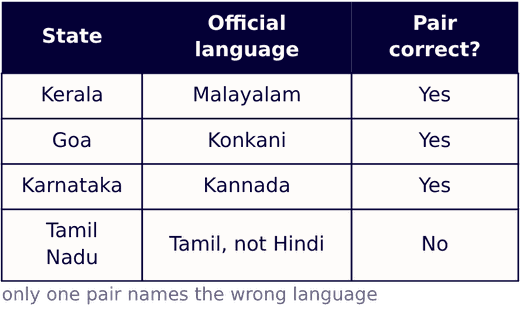 Malayalam is the official language of Kerala, Konkani of Goa and Kannada of Karnataka — three correctly matched pairs.
The official language of Tamil Nadu is Tamil, not Hindi, so this pair does not belong with the rest.
Hence the odd one out is option (d).
Malayalam is the official language of Kerala, Konkani of Goa and Kannada of Karnataka — three correctly matched pairs.
The official language of Tamil Nadu is Tamil, not Hindi, so this pair does not belong with the rest.
Hence the odd one out is option (d).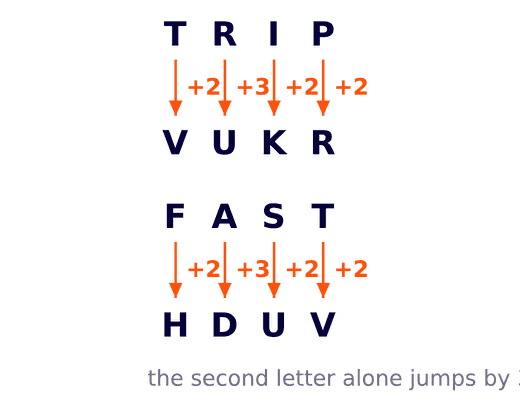 T V is +2, R U is +3, I K is +2 and P R is +2.
So the pattern of jumps is .
Applying the same jumps to FAST: F +2 = H, A +3 = D, S +2 = U, T +2 = V.
This gives HDUV, which is option (c).
T V is +2, R U is +3, I K is +2 and P R is +2.
So the pattern of jumps is .
Applying the same jumps to FAST: F +2 = H, A +3 = D, S +2 = U, T +2 = V.
This gives HDUV, which is option (c).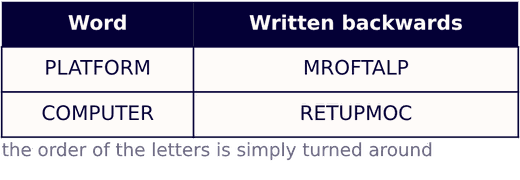 Reversing COMPUTER letter by letter gives R, E, T, U, P, M, O, C.
That is RETUPMOC, which is option (b).
Reversing COMPUTER letter by letter gives R, E, T, U, P, M, O, C.
That is RETUPMOC, which is option (b).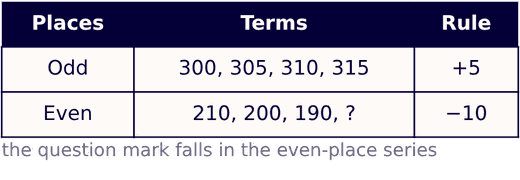 Odd places: 300, 305, 310, 315 — each term is 5 more than the one before it.
Even places: 210, 200, 190, ? — each term is 10 less than the one before it, and the missing term belongs to this series.
Odd places: 300, 305, 310, 315 — each term is 5 more than the one before it.
Even places: 210, 200, 190, ? — each term is 10 less than the one before it, and the missing term belongs to this series.
 So the missing term is 190 - 10 = 180, which is option (c).
 Every complete group reads a, b, c, d in that order, and the fourth group confirms it.
Group 1 is a b ? d, so the first gap is c; group 2 is a ? c d, so the second gap is b.
Group 3 is ? b c ?, so the third gap is a and the fourth gap is d.
Reading the gaps in order gives c, b, a, d, which is option (a).
Every complete group reads a, b, c, d in that order, and the fourth group confirms it.
Group 1 is a b ? d, so the first gap is c; group 2 is a ? c d, so the second gap is b.
Group 3 is ? b c ?, so the third gap is a and the fourth gap is d.
Reading the gaps in order gives c, b, a, d, which is option (a).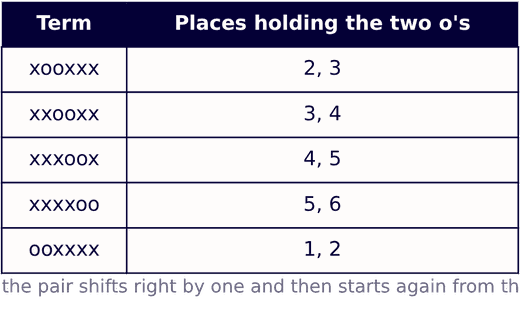 The pair of o's stands at places 2 and 3, then at 3 and 4, then at 4 and 5, then at 5 and 6.
So the pair of o's slides one place to the right at every step.
After places 5 and 6 the pair has reached the right end, so it re-enters from the left and takes places 1 and 2.
That term is ooxxxx, which is option (b).
The pair of o's stands at places 2 and 3, then at 3 and 4, then at 4 and 5, then at 5 and 6.
So the pair of o's slides one place to the right at every step.
After places 5 and 6 the pair has reached the right end, so it re-enters from the left and takes places 1 and 2.
That term is ooxxxx, which is option (b).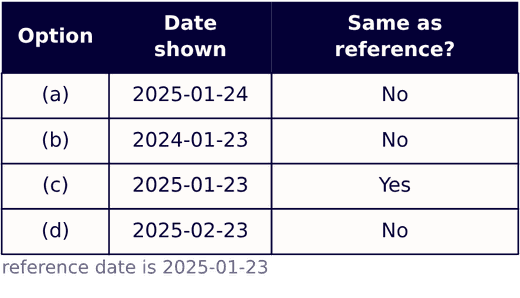 Option (a) shows the day as 24 instead of 23, option (b) shows the year as 2024 instead of 2025, and option (d) shows the month as 02 instead of 01.
Option (c) agrees with the reference in every single character, including the colon, the two hyphens, the comma and the full stop.
Hence the correct option is (c).
Option (a) shows the day as 24 instead of 23, option (b) shows the year as 2024 instead of 2025, and option (d) shows the month as 02 instead of 01.
Option (c) agrees with the reference in every single character, including the colon, the two hyphens, the comma and the full stop.
Hence the correct option is (c).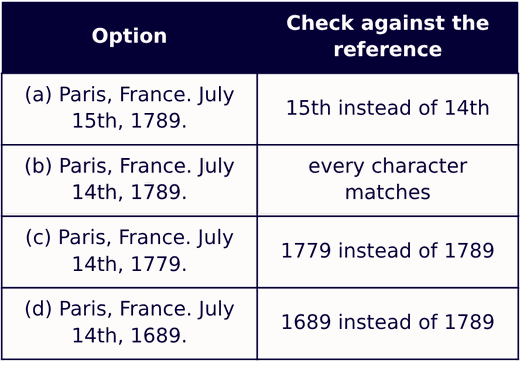 Option (a) changes the day: it reads 'July 15th' in place of 'July 14th'.
Option (c) changes the year to 1779 and option (d) changes it to 1689.
Only option (b) reproduces 'Paris, France. July 14th, 1789.' with every letter, digit, comma and full stop in its place.
Hence, option (b) is the correct answer.
Option (a) changes the day: it reads 'July 15th' in place of 'July 14th'.
Option (c) changes the year to 1779 and option (d) changes it to 1689.
Only option (b) reproduces 'Paris, France. July 14th, 1789.' with every letter, digit, comma and full stop in its place.
Hence, option (b) is the correct answer.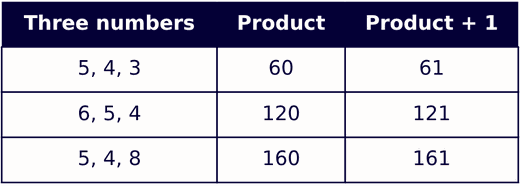 Rule: multiply the three numbers of a group and then add 1.
First group: and 60+1=61.
Second group: and 120+1=121.
Third group: , so ?=160+1=161.
Hence, option (c) is the correct answer.
Rule: multiply the three numbers of a group and then add 1.
First group: and 60+1=61.
Second group: and 120+1=121.
Third group: , so ?=160+1=161.
Hence, option (c) is the correct answer.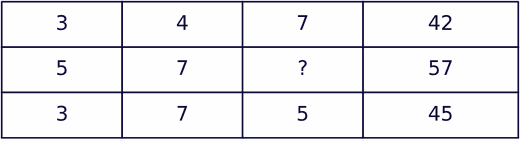
 First row: 3+4+7=14 and .
Third row: 3+7+5=15 and .
So the rule is (sum of the first three numbers) = last number.
Second row: , so 5+7+?=19, which gives ?=19-12=7.
Hence, option (c) is the correct answer.
First row: 3+4+7=14 and .
Third row: 3+7+5=15 and .
So the rule is (sum of the first three numbers) = last number.
Second row: , so 5+7+?=19, which gives ?=19-12=7.
Hence, option (c) is the correct answer.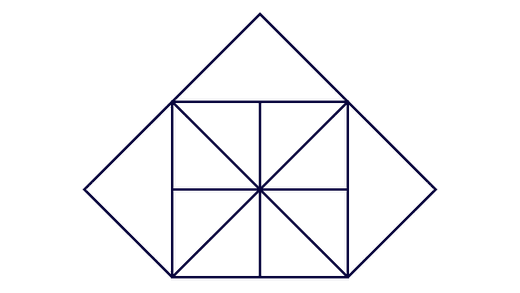
 Smallest triangles: 1, 2, 3, 4, 5, 6, 7, 8 inside the square and A, B, C outside it - that is 8+3=11 triangles.
Made of two small ones: (1+2), (3+4), (5+6) and (7+8) - each is a corner-to-corner triangle standing on one side of the square - 4 triangles.
Made of four small ones: (1+2+3+4), (5+6+7+8), (1+2+7+8) and (3+4+5+6) - each is half of the square cut off by one diagonal - 4 triangles.
No larger triangle is possible, because A, B and C join the square only along its sides.
Total number of triangles =11+4+4=19.
Hence, option (a) is the correct answer.
Smallest triangles: 1, 2, 3, 4, 5, 6, 7, 8 inside the square and A, B, C outside it - that is 8+3=11 triangles.
Made of two small ones: (1+2), (3+4), (5+6) and (7+8) - each is a corner-to-corner triangle standing on one side of the square - 4 triangles.
Made of four small ones: (1+2+3+4), (5+6+7+8), (1+2+7+8) and (3+4+5+6) - each is half of the square cut off by one diagonal - 4 triangles.
No larger triangle is possible, because A, B and C join the square only along its sides.
Total number of triangles =11+4+4=19.
Hence, option (a) is the correct answer.


 So the diagram must show two figures that stay apart from each other, with a third figure cutting across both of them.
Option (b) shows exactly this - the middle circle overlaps the left circle and the right circle, and those two do not touch each other.
Options (a) and (d) place one class wholly inside another, and option (c) makes even cars and auto-rickshaws overlap, so all three are wrong.
Hence, option (b) is the correct answer.
So the diagram must show two figures that stay apart from each other, with a third figure cutting across both of them.
Option (b) shows exactly this - the middle circle overlaps the left circle and the right circle, and those two do not touch each other.
Options (a) and (d) place one class wholly inside another, and option (c) makes even cars and auto-rickshaws overlap, so all three are wrong.
Hence, option (b) is the correct answer.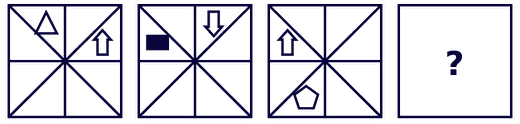
 Only option (a) carries a shaded hexagon together with an unshaded downward arrow.
Options (b) and (d) point the arrow upwards, (d) also leaves the hexagon unshaded, and (c) shades the arrow and shifts it to another sector.
Hence, option (a) is the correct answer.
Only option (a) carries a shaded hexagon together with an unshaded downward arrow.
Options (b) and (d) point the arrow upwards, (d) also leaves the hexagon unshaded, and (c) shades the arrow and shifts it to another sector.
Hence, option (a) is the correct answer.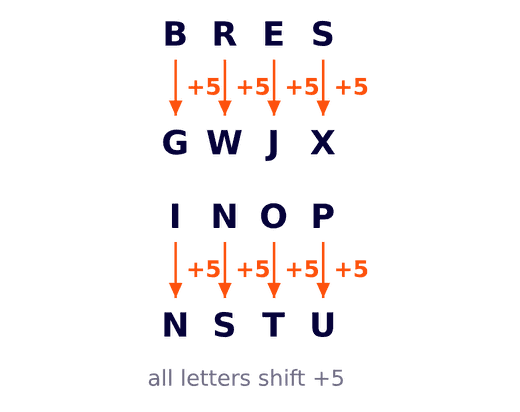 In 'BRES' every letter moves 5 steps forward: B(2)+5=G(7), R(18)+5=W(23), E(5)+5=J(10), S(19)+5=X(24).
'INOP' follows the very same rule: I+5=N, N+5=S, O+5=T, P+5=U; the order of the letters is not disturbed.
Apply +5 to 'RDGV': R(18)+5=W(23), D(4)+5=I(9), G(7)+5=L(12) and V(22)+5=27, which after subtracting 26 becomes 1=A.
In 'BRES' every letter moves 5 steps forward: B(2)+5=G(7), R(18)+5=W(23), E(5)+5=J(10), S(19)+5=X(24).
'INOP' follows the very same rule: I+5=N, N+5=S, O+5=T, P+5=U; the order of the letters is not disturbed.
Apply +5 to 'RDGV': R(18)+5=W(23), D(4)+5=I(9), G(7)+5=L(12) and V(22)+5=27, which after subtracting 26 becomes 1=A.
 So 'RDGV' is coded as 'WILA'.
Hence, option (b) is the correct answer.
So 'RDGV' is coded as 'WILA'.
Hence, option (b) is the correct answer.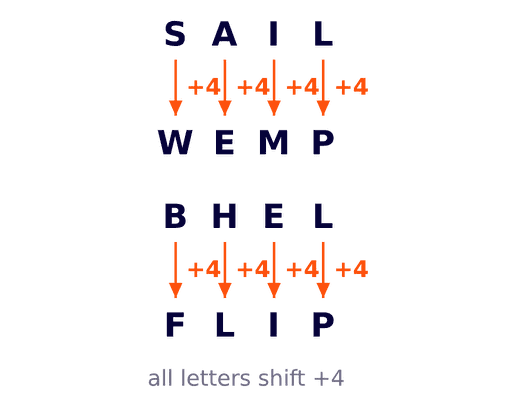 'SAIL' to 'WEMP': S(19)+4=W(23), A(1)+4=E(5), I(9)+4=M(13), L(12)+4=P(16).
'BHEL' to 'FLIP' obeys the same rule: B+4=F, H+4=L, E+4=I, L+4=P.
So every letter simply moves 4 places forward and stays in its own position.
For 'MAIL': M(13)+4=Q(17), A(1)+4=E(5), I(9)+4=M(13), L(12)+4=P(16).
'SAIL' to 'WEMP': S(19)+4=W(23), A(1)+4=E(5), I(9)+4=M(13), L(12)+4=P(16).
'BHEL' to 'FLIP' obeys the same rule: B+4=F, H+4=L, E+4=I, L+4=P.
So every letter simply moves 4 places forward and stays in its own position.
For 'MAIL': M(13)+4=Q(17), A(1)+4=E(5), I(9)+4=M(13), L(12)+4=P(16).
 So 'MAIL' is coded as 'QEMP'.
Hence, option (b) is the correct answer.
So 'MAIL' is coded as 'QEMP'.
Hence, option (b) is the correct answer.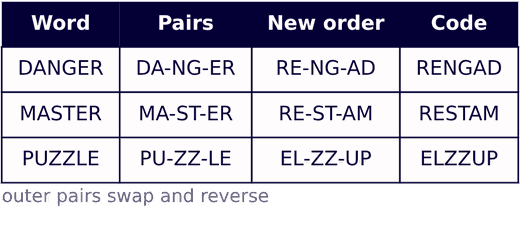 'DANGER' gives the pairs DA, NG, ER. The last pair comes to the front reversed as 'RE', the middle pair 'NG' stays where it is, and the first pair goes to the end reversed as 'AD' - giving 'RENGAD'.
'MASTER' behaves in exactly the same way: ER becomes RE at the front, ST stays in the middle, and MA becomes AM at the end - giving 'RESTAM'.
'PUZZLE' gives the pairs PU, ZZ, LE.
LE becomes 'EL' at the front, ZZ stays in the middle and PU becomes 'UP' at the end.
So 'PUZZLE' is coded as 'ELZZUP'.
Hence, option (b) is the correct answer.
'DANGER' gives the pairs DA, NG, ER. The last pair comes to the front reversed as 'RE', the middle pair 'NG' stays where it is, and the first pair goes to the end reversed as 'AD' - giving 'RENGAD'.
'MASTER' behaves in exactly the same way: ER becomes RE at the front, ST stays in the middle, and MA becomes AM at the end - giving 'RESTAM'.
'PUZZLE' gives the pairs PU, ZZ, LE.
LE becomes 'EL' at the front, ZZ stays in the middle and PU becomes 'UP' at the end.
So 'PUZZLE' is coded as 'ELZZUP'.
Hence, option (b) is the correct answer.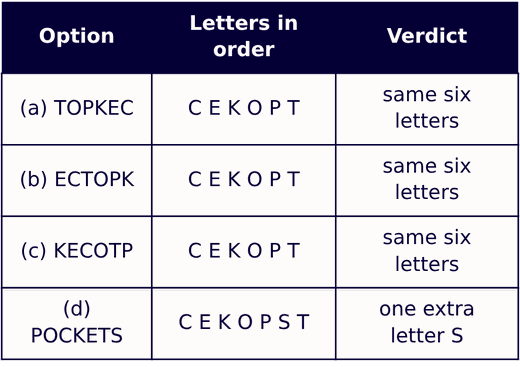 Arrange the letters of each option alphabetically: TOPKEC, ECTOPK and KECOTP each give C, E, K, O, P, T - the very letters of POCKET, so all three can form the word.
POCKETS gives C, E, K, O, P, S, T - seven letters, with an extra S that POCKET does not contain, so it is not an arrangement of the letters of POCKET.
Therefore POCKET cannot be formed from the letters of POCKETS alone.
Hence, option (d) is the correct answer.
Arrange the letters of each option alphabetically: TOPKEC, ECTOPK and KECOTP each give C, E, K, O, P, T - the very letters of POCKET, so all three can form the word.
POCKETS gives C, E, K, O, P, S, T - seven letters, with an extra S that POCKET does not contain, so it is not an arrangement of the letters of POCKET.
Therefore POCKET cannot be formed from the letters of POCKETS alone.
Hence, option (d) is the correct answer.