SSC CHSL 26 November 2025 · Shift 3 · General Intelligence — questions with answers · ShikshaSphere
Chapter 149 of 200
26 November 2025 · Shift 3
General Intelligence
25 questions ~25 min readFree
25 questions
A
26
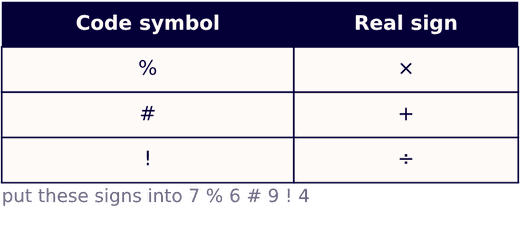
In this type of questions, questions are provided with substitutes for various mathematical symbols, followed by a question involving calculation of an expression or choosing the correct/incorrect equation. You have to put the real signs in the given equation and then solve the questions as required. If '#' stands for '+', '"' stands for '+', '%' stands for ' ', ' ' stands for ', then find the value of: ?
A.
B.
C.
D.
Solution
Symbol substitution
First put the real sign in place of every code symbol.
The expression therefore becomes .
By BODMAS, division and multiplication are carried out before addition: and .
Now add the two parts: .
So the required value is , and option (d) is correct.
27
In a line of 72 people, Ravi is 27th from the front and Amit is 19th from the back. How many people are standing between Ravi and Amit?
A.24
B.26
C.25
D.27
Solution
Position in a row
Both positions must first be counted from the same end.
Amit is 19th from the back, so from the front his place is 72-19+1=54.
Ravi stands at the 27th place from the front and Amit at the 54th place from the front.
The people standing strictly between them =54-27-1=26.
Hence option (b) is correct.
28
A tree is 9th from the left end of a road. If there are 35 trees total, what is its position from the right end?
A.26th
B.27th
C.28th
D.29th
Solution
Position in a row
When one object is counted from both ends it gets counted twice, so 1 must be subtracted from the sum of the two positions.
Formula: position from the right = total - position from the left .
Position from the right =35-9+1=27.
So the tree is 27th from the right end, and option (b) is correct.
29
A series is given with one term missing. Select the correct alternative from the given ones that will complete the series.
-701, -715, -729, -743, -757, -771, -785, ?
A.-801
B.-799
C.-795
D.-803
Solution
Number series
Take the difference between consecutive terms: -715-(-701)=-14 and -729-(-715)=-14.
The same difference -14 repeats right through the series, so 14 is subtracted at every step.
Required term =-785-14=-799.
Hence option (b) is correct.
30
A series is given with one term missing. Select the correct alternative from the given ones that will complete the series.
35, 74, 151, 306, 615, 1234, 2471, ?
A.4948
B.5944
C.4942
D.4946
Solution
Number series
Each term is a little more than double the term before it, so test 'double and add'.
and .
and .
and .
So and are used alternately, and the step after is .
Required term .
Hence option (d) is correct.
31
If and , then what is the value of 317 $ 65!13?
A.320
B.322
C.327
D.325
Solution
Symbol substitution
Read the two given equations and find which real signs make them true.
Take '' as+and '!' as\div$, the division being done first.
First equation: , which is the value given.
Second equation: , which is also the value given, so the rule is confirmed.
Applying the same rule: .
Hence option (b) is correct.
32
A mirror is placed on the line . Out of the option figures which figure will be the right image of the question figure?
A.PS d 7
B.P c ૭ d F
C.PC૭Eb7
D.P c d 7
Solution
Mirror image
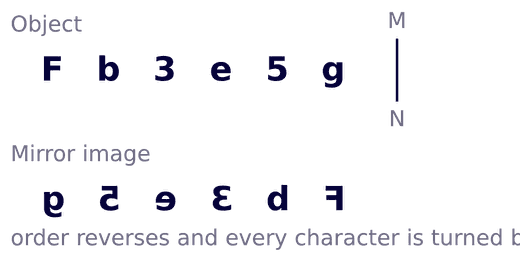
The mirror stands along a vertical line, so the reflection is a lateral inversion: the whole row is read back to front and each character is itself flipped left-to-right.
The character nearest the mirror becomes the first character of the image and the one farthest from it becomes the last.
So the order F, b, 3, e, 5, g becomes g, 5, e, 3, b, F.
Each of these is then turned round, so 'b' shows up as 'd', '3' shows up as a shape like 'E' and 'F' faces the other way.
Only option (d) has both changes together; the others keep 'b' or 'F' standing the wrong way round.
Hence option (d) is correct.
33
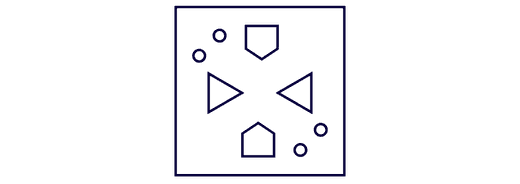
A piece of paper is folded and punched as shown below in the question figures. From the given option figures, indicate how it will appear when opened.
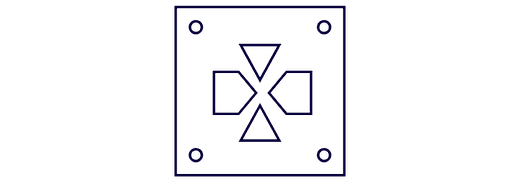
A.
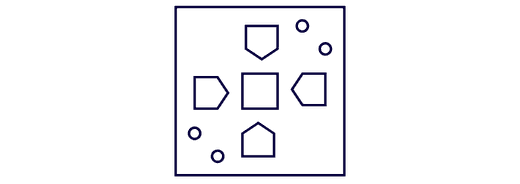
B.
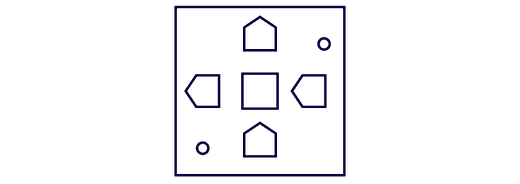
C.
D.
Solution
Paper folding and punching
The sheet is folded twice, so the paper is four layers thick and every punch will show four times when it is opened.
The first crease is the diagonal running from the bottom-left corner to the top-right corner; the second crease joins the centre of the sheet to the bottom-right corner.
Undo the second fold first - each punch is reflected in that crease - and then undo the first fold, which reflects everything in the diagonal.
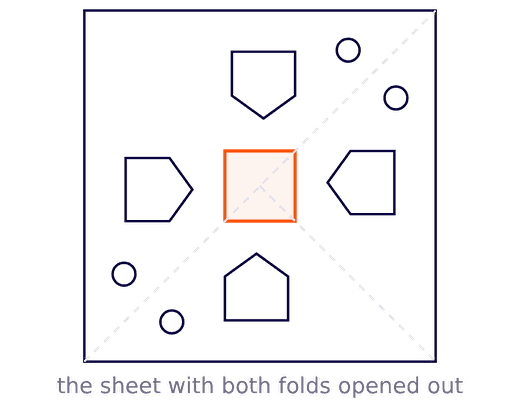
The triangular cut touches the centre of the sheet, so its four copies meet there and together make one complete square hole in the middle.
The house-shaped cut gives four copies, one on each side of that square, and each of them points inward towards the centre.
The round punch gives two holes close together near the bottom-left corner and two near the top-right corner.
Only option (b) shows the central square, the four house shapes turned inward and the circles in exactly those two corners.
Hence option (b) is correct.
34
A piece of paper is folded and punched as shown below in the question figures. From the given option figures, indicate how it will appear when opened.
Solution
Paper folding and punching
The left half is folded onto the right half along the vertical centre line, and then the top-right quarter is folded down along the horizontal centre line.
The punching is done on the bottom-right quarter, which is now four layers thick, so each punch will appear four times: holes in all.
Three square punches and one round punch are made, so the opened sheet must carry squares and circles.
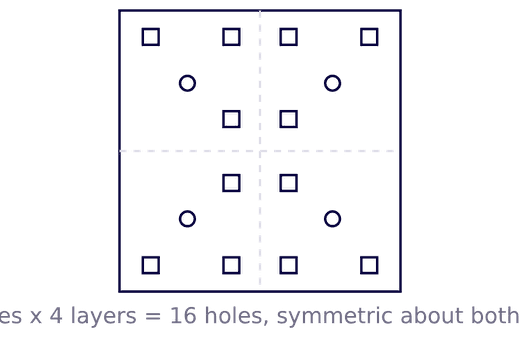
Opening the horizontal fold mirrors the four holes upward about the horizontal centre line; opening the vertical fold then mirrors all eight to the left about the vertical centre line.
The finished pattern is therefore symmetric about both centre lines: four squares along the top edge, four along the bottom edge, two squares in each of the two middle rows, and the four circles set inside them.
Option (a) has fourteen squares and options (b) and (c) are not symmetric about the two creases, so they cannot be right.
Hence option (d) is correct.
35
Five friends Riya, Nikhil, Sameer, Tanu and Vaibhav were born in different consecutive years starting from 2010. Tanu was neither born in 2011 nor in 2014. Riya is the oldest of all. Nikhil is younger than Vaibhav. Sameer was born in a leap year. Who was born in 2012?
A.Vaibhav
B.Nikhil
C.Tanu
D.Sameer
Solution
Order and ranking
Five different consecutive years starting from 2010 means the years are 2010, 2011, 2012, 2013 and 2014.
Riya is the oldest, so Riya must have the earliest year, 2010.
Of the five years only 2012 is divisible by 4, so 2012 is the only leap year and Sameer was born in 2012.
Tanu was born neither in 2011 nor in 2014, and 2010 and 2012 are already taken, so Tanu was born in 2013.
Only 2011 and 2014 are left for Vaibhav and Nikhil; Nikhil is the younger, so Nikhil takes the later year 2014 and Vaibhav 2011.
The friend born in 2012 is Sameer, so option (d) is correct.
36
Which of the following is the odd one out in the given series? P40, Q50, R35, S45, U25
A.Q50
B.R35
C.S45
D.U25
Solution
Odd one out
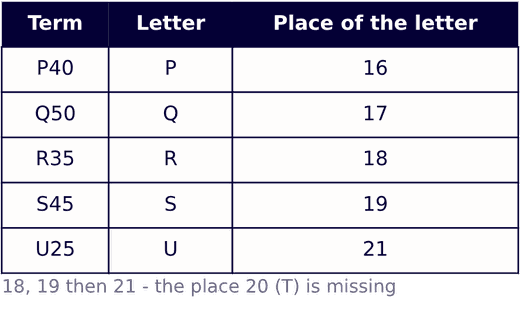
Look at the letters first: P, Q, R, S are four consecutive letters, but the fifth is U, so the letter T has been skipped.
The numbers tell the same story: taking alternate terms, P40 and R35 fall by 5, and Q50 and S45 also fall by 5.
Carrying the first chain forward, the term after R35 should be T30 - the letter T and the number 30.
U25 breaks the letter chain as well as the number chain, so it is the term that does not belong.
Hence option (d) is correct.
37
Find the next number in the sequence.
3, 7, 13, 21, 31, 43, ?
A.55
B.59
C.56
D.57
Solution
Number series
Write the differences between consecutive terms: 7-3=4, 13-7=6, 21-13=8, 31-21=10, 43-31=12.
These differences 4, 6, 8, 10, 12 themselves rise by 2 each time, so the next difference is 12+2=14.
Required number =43+14=57.
Hence option (d) is correct.
38
In the following question, select the number which can be placed at the sign of question mark (?) from the given alternatives.
A.8
B.3
C.4
D.5
Solution
Number analogy
The numbers stand in three rows of four; in each row the fourth number is built from the first three.
Row 1: and , which is the fourth number.
Row 2: and , so the rule (product of the first three) holds again.
Row 3: , that is .
So .
Hence option (c) is correct.
39
How many triangles are there in the given figure?
A.21
B.22
C.20
D.19
Solution
Counting figures
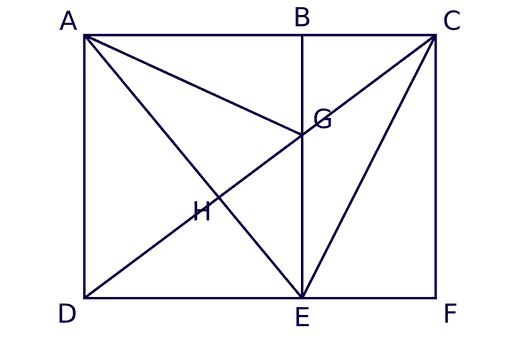
Name the eight meeting points: A, B, C along the top edge, D, E, F along the bottom edge, G where the vertical BE cuts the diagonal DC, and H where AE cuts DC.
Eight of the triangles are the smallest pieces, with no line running across them: ABG, AGH, ADH, DEH, EGH, BCG, CEG and CEF.
Putting two or more of these pieces together gives thirteen larger triangles: ABE, ACD, ACE, ACG, ACH, ADE, ADG, AEG, BCE, CDE, CDF, CEH and DEG.
Total number of triangles =8+13=21.
Hence option (a) is correct.
40
How many triangles are there in the given figure?
A.11
B.9
C.10
D.12
Solution
Counting figures
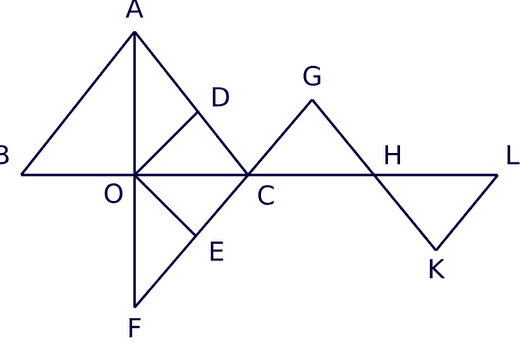
Name the meeting points: A is the tall apex, B and L are the two ends of the long horizontal line, O is the foot of the vertical, C, H are the other points on the horizontal line, D and E are the top and bottom corners of the small square, F is the lower end of the vertical, G is the second apex and K is the lowest point on the right.
Work from left to right so that nothing is counted twice.
Inside the big triangle ABC the vertical AO and the line OD give ABO, AOC, ABC, AOD and OCD - that is 5.
The small square OCED and the lines through it give OCE, OEF, OCF and ACF - that is 4 more, making 9.
On the right the two small triangles CGH and HKL add 2.
Total number of triangles =5+4+2=11.
Hence option (a) is correct.
41
In the figure given below the circle represents books, the rectangle represents magazines and the triangle represents newspapers. The number in each area represents the number of items in that area.
How many books are newspapers?
A.11
B.6
C.7
D.8
Solution
Venn diagram counting
The circle stands for books and the triangle for newspapers, so 'books that are newspapers' means the items lying inside the circle and inside the triangle at the same time.
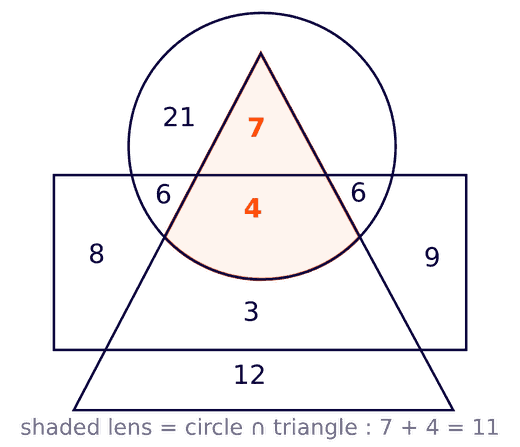
Two areas satisfy this: the part of the circle inside the triangle but above the rectangle, which holds 7, and the part common to all three figures, which holds 4.
The numbers 21, 6 and 6 lie inside the circle but outside the triangle, so they are not counted.
Required number =7+4=11.
Hence option (a) is correct.
42
5 persons G, H, I, J and K are sitting around a circular table facing towards the centre. (not necessarily in the same order). Only one person is sitting between I and J, considering towards right of J. H is sitting second to the left of J. G is sitting second to the right of I. Who is sitting second to the right of G ?
A.J
B.।
C.K
D.H
Solution
Circular seating
All five face the centre, so for each of them the clockwise side is the left and the anticlockwise side is the right.
Fix J's seat. Moving to J's right (anticlockwise), the first seat is skipped and the second one holds I, because exactly one person sits between them on that side.
H is second to the left of J, that is two seats clockwise from J.
G is second to the right of I; two seats anticlockwise from I is the seat lying immediately clockwise of J, so G sits between J and H.
The only seat still empty, the one between J and I, goes to K.
Now count two seats anticlockwise from G: the first is J and the second is K.
Hence option (c) is correct.
43
6 persons P, Q, R, S, T and U are sitting in a row facing north (not necessarily in the same order). is to the immediate left of is the immediate neighbour of P and T . Some persons are to the right of U.S is not at any of the end of the row. Who are sitting at the extreme ends of the row?
A.P and R
B.R and T
C.U and T
D.U and Q
Solution
Linear seating
R is the immediate neighbour of both P and T, and T sits immediately to the left of Q, so these four form one fixed block: P R T Q.
If the block took seats 1 to 4, the last two seats would go to S and U; S may not sit at an end, so S would be at seat 5 and U at seat 6 — but then nobody is to the right of U.
If the block took seats 2 to 5, only the two ends would be left and S cannot sit at an end.
So the block occupies seats 3 to 6, and seats 1 and 2 are left for U and S; since S is not at an end, S takes seat 2 and U seat 1.
The final row is U, S, P, R, T, Q, so the two extreme ends are held by U and Q.
Hence option (d) is correct.
44
8 boys M, N, O, P, Q, R, S and T are sitting in a row facing south (not necessarily in the same order). M and T are at extreme ends of the row. Q and R are immediate neighbours of N. O is fourth to the left of N. R is to the immediate left of M. P is not the immediate neighbour of O . Who is sitting third to the right of Q ?
A.N
B.0
C.M
D.T
Solution
Linear seating
R sits immediately to the left of M and M is at an extreme end, so M must be at the boys' right end with R next to him.
Number the seats 1 to 8 from the boys' own left to their own right: M is at seat 8, R at seat 7 and the other end, seat 1, is T's.
N has both Q and R as immediate neighbours; the only seat free beside R is 6, so N sits at seat 6 and Q at seat 5.
O is fourth to the left of N, that is at seat 6-4=2.
P is not a neighbour of O, so P cannot take seat 3; therefore P sits at seat 4 and S at seat 3.
Counting three seats to the right of Q (seat 5) gives seats 6, 7 and 8 — N, R and M — so M is third to the right of Q.
Hence option (c) is correct.
45
If ' ' means ' ', ' ' means ' ', ' ' means '+' and 'S' means '-', then 24 Q 10 P5R6S8=?
A.46
B.50
C.44
D.40
Solution
Symbol substitution
Replace every letter by the sign it stands for: P by , Q by , R by + and S by -.
The expression becomes .
By BODMAS, division and multiplication are done first: .
Now 48 + 6 - 8 = 46.
Hence option (a) is correct.
46
Select the correct combination of mathematical signs to replace (*) signs sequentially and to balance the given equation.
A.
B.
C.
D.
Solution
Balancing an equation
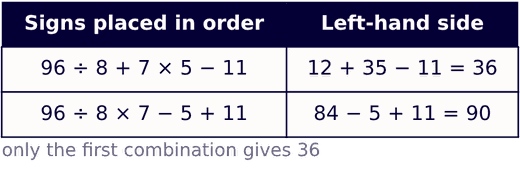
Put the signs of option (a) — , +, , - — into the four stars in that order.
The equation becomes .
By BODMAS, and .
So LHS =12+35-11=36, which is exactly the RHS.
Option (b) would give , which is not 36.
Hence option (a) is correct.
47
In the following question, four letter-number pairs are given. The letter-number on the left side of (-) is related to the letter-number on the right side of (-) with some Logic/Rule/Relation. Three pairs are similar on the basis of same Logic/Rule/Relation. Select the odd one out from the given alternatives.
(NOTE: Operations should be performed on the whole numbers, without breaking down the number into its constituent digits. E.g. 13 Operations on 13 such as adding /subtracting /multiplying etc, to 13 can be performed. Breaking down 13 into 1 and 3 and then performing mathematical operations on 1 and 3 is not allowed)
A.BW78 - CZ156
B.UD94 - VG198
C.ME108 - NH216
D.NJ136 - OM272
Solution
Odd letter-number pair
In each pair the first letter moves one step forward, the second letter three steps forward, and the number is doubled.
BW78 → CZ156: B+1=C, W+3=Z and .
ME108 → NH216: M+1=N, E+3=H and .
NJ136 → OM272: N+1=O, J+3=M and .
UD94 → VG198: the letters obey the rule, but and not 198.
Hence option (b) is correct.
48
In a certain coded language 'TABLE' is coded as 'ZGWWP' and 'CHAIR' is coded as 'MDVDY'. How will 'PIANO' be coded in the same code language?
A.KHUFM
B.JIVEL
C.IJUDK
D.JIWEM
Solution
Letter coding
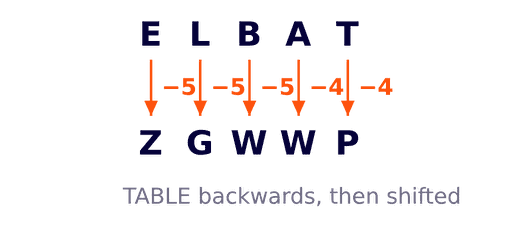
Write the word backwards first and then shift its letters.
TABLE written backwards is ELBAT; its first three letters move 5 steps back and the last two move 4 steps back: E-5=Z, L-5=G, B-5=W, A-4=W, T-4=P, giving ZGWWP (counting back from A continues at Z).
The same rule fits the second word: CHAIR backwards is RIAHC, and R-5=M, I-5=D, A-5=V, H-4=D, C-4=Y give MDVDY.
PIANO backwards is ONAIP, so O-5=J, N-5=I, A-5=V, I-4=E, P-4=L.
The code is JIVEL, so option (b) is correct.
49
In a certain coded language 'FRIEND' is coded as 'AKBFOC' and 'GLOBAL' is coded as 'IXYLID'. How will 'MODERN' be coded in the same code language?
A.LPCMKI
B.KOBALJ
C.JNAZKI
D.KOBCMK
Solution
Letter coding
Reverse the word first and then move every letter 3 steps back in the alphabet.
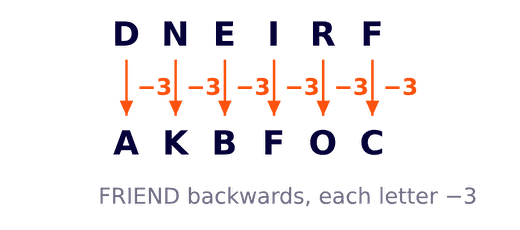
FRIEND reversed is DNEIRF; D-3=A, N-3=K, E-3=B, I-3=F, R-3=O, F-3=C, which gives AKBFOC.
The rule also fits GLOBAL: reversed it is LABOLG, and L-3=I, A-3=X, B-3=Y, O-3=L, L-3=I, G-3=D give IXYLID (counting back from A continues at Z).
MODERN reversed is NREDOM, so N-3=K, R-3=O, E-3=B, D-3=A, O-3=L, M-3=J.
The code is KOBALJ, so option (b) is correct.
50
A series is given with one term missing. Select the correct alternative from the given ones that will complete the series.
MV186, NX206, OZ226, ?, QD266
A.PB246
B.PA236
C.PF246
D.PF256
Solution
Alphanumeric series
Split every term into its first letter, its second letter and its number.
First letters M, N, O, ?, Q move one step forward each time, so the missing letter is P.
Second letters V, X, Z, ?, D move two steps forward each time, so after Z comes B.
The numbers 186, 206, 226, ?, 266 rise by 20 each time, so the missing number is 226+20=246.
The missing term is PB246, so option (a) is correct.
Finished reading? Now test yourself.
The same 25 questions, but with a timer and the answers hidden — 15 minutes.

 The expression therefore becomes .
By BODMAS, division and multiplication are carried out before addition: and .
Now add the two parts: .
So the required value is , and option (d) is correct.
The expression therefore becomes .
By BODMAS, division and multiplication are carried out before addition: and .
Now add the two parts: .
So the required value is , and option (d) is correct.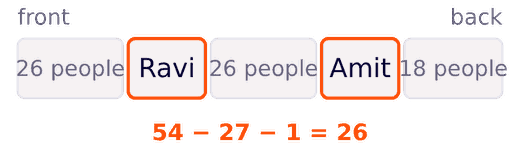 The people standing strictly between them =54-27-1=26.
Hence option (b) is correct.
The people standing strictly between them =54-27-1=26.
Hence option (b) is correct.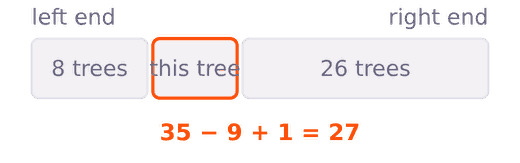 Position from the right =35-9+1=27.
So the tree is 27th from the right end, and option (b) is correct.
Position from the right =35-9+1=27.
So the tree is 27th from the right end, and option (b) is correct.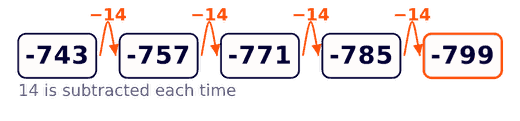 Required term =-785-14=-799.
Hence option (b) is correct.
Required term =-785-14=-799.
Hence option (b) is correct.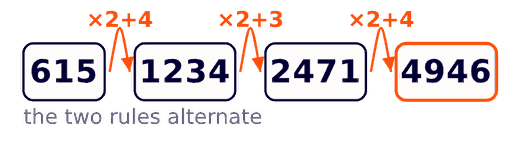 So and are used alternately, and the step after is .
Required term .
Hence option (d) is correct.
So and are used alternately, and the step after is .
Required term .
Hence option (d) is correct.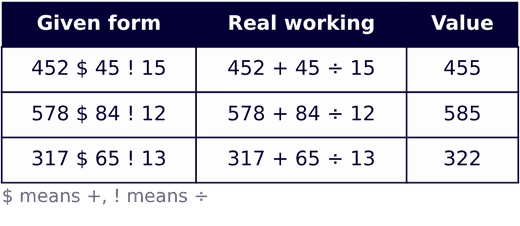 Applying the same rule: .
Hence option (b) is correct.
Applying the same rule: .
Hence option (b) is correct.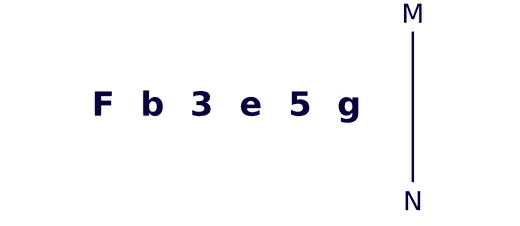
 So the order F, b, 3, e, 5, g becomes g, 5, e, 3, b, F.
Each of these is then turned round, so 'b' shows up as 'd', '3' shows up as a shape like 'E' and 'F' faces the other way.
Only option (d) has both changes together; the others keep 'b' or 'F' standing the wrong way round.
Hence option (d) is correct.
So the order F, b, 3, e, 5, g becomes g, 5, e, 3, b, F.
Each of these is then turned round, so 'b' shows up as 'd', '3' shows up as a shape like 'E' and 'F' faces the other way.
Only option (d) has both changes together; the others keep 'b' or 'F' standing the wrong way round.
Hence option (d) is correct.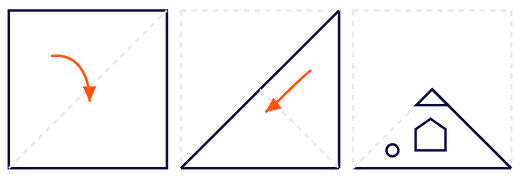
 The triangular cut touches the centre of the sheet, so its four copies meet there and together make one complete square hole in the middle.
The house-shaped cut gives four copies, one on each side of that square, and each of them points inward towards the centre.
The round punch gives two holes close together near the bottom-left corner and two near the top-right corner.
Only option (b) shows the central square, the four house shapes turned inward and the circles in exactly those two corners.
Hence option (b) is correct.
The triangular cut touches the centre of the sheet, so its four copies meet there and together make one complete square hole in the middle.
The house-shaped cut gives four copies, one on each side of that square, and each of them points inward towards the centre.
The round punch gives two holes close together near the bottom-left corner and two near the top-right corner.
Only option (b) shows the central square, the four house shapes turned inward and the circles in exactly those two corners.
Hence option (b) is correct.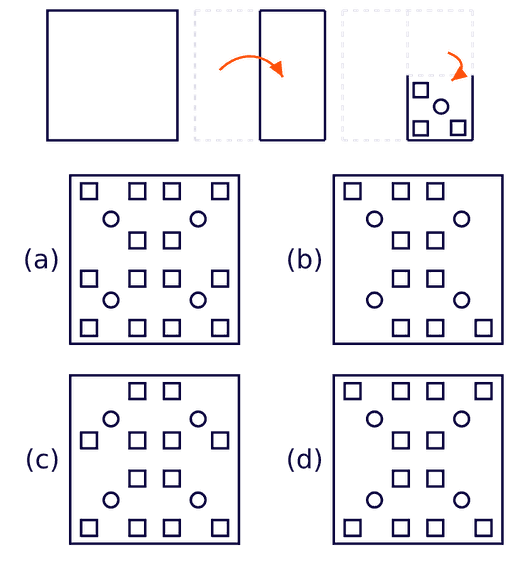
 The finished pattern is therefore symmetric about both centre lines: four squares along the top edge, four along the bottom edge, two squares in each of the two middle rows, and the four circles set inside them.
Option (a) has fourteen squares and options (b) and (c) are not symmetric about the two creases, so they cannot be right.
Hence option (d) is correct.
The finished pattern is therefore symmetric about both centre lines: four squares along the top edge, four along the bottom edge, two squares in each of the two middle rows, and the four circles set inside them.
Option (a) has fourteen squares and options (b) and (c) are not symmetric about the two creases, so they cannot be right.
Hence option (d) is correct.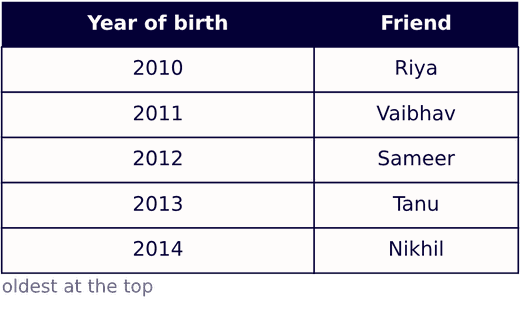 The friend born in 2012 is Sameer, so option (d) is correct.
 The numbers tell the same story: taking alternate terms, P40 and R35 fall by 5, and Q50 and S45 also fall by 5.
Carrying the first chain forward, the term after R35 should be T30 - the letter T and the number 30.
U25 breaks the letter chain as well as the number chain, so it is the term that does not belong.
Hence option (d) is correct.
The numbers tell the same story: taking alternate terms, P40 and R35 fall by 5, and Q50 and S45 also fall by 5.
Carrying the first chain forward, the term after R35 should be T30 - the letter T and the number 30.
U25 breaks the letter chain as well as the number chain, so it is the term that does not belong.
Hence option (d) is correct.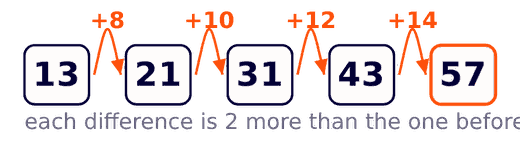 Required number =43+14=57.
Hence option (d) is correct.
Required number =43+14=57.
Hence option (d) is correct.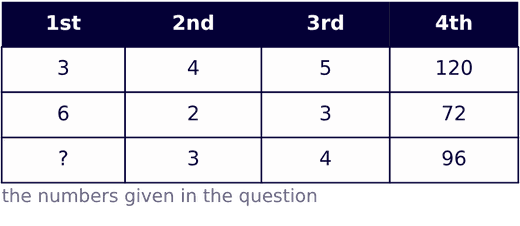 Row 1: and , which is the fourth number.
Row 2: and , so the rule (product of the first three) holds again.
Row 3: , that is .
So .
Hence option (c) is correct.
Row 1: and , which is the fourth number.
Row 2: and , so the rule (product of the first three) holds again.
Row 3: , that is .
So .
Hence option (c) is correct.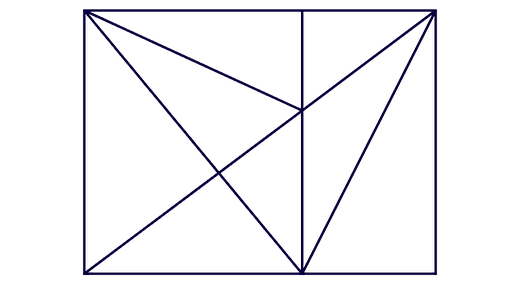
 Eight of the triangles are the smallest pieces, with no line running across them: ABG, AGH, ADH, DEH, EGH, BCG, CEG and CEF.
Putting two or more of these pieces together gives thirteen larger triangles: ABE, ACD, ACE, ACG, ACH, ADE, ADG, AEG, BCE, CDE, CDF, CEH and DEG.
Total number of triangles =8+13=21.
Hence option (a) is correct.
Eight of the triangles are the smallest pieces, with no line running across them: ABG, AGH, ADH, DEH, EGH, BCG, CEG and CEF.
Putting two or more of these pieces together gives thirteen larger triangles: ABE, ACD, ACE, ACG, ACH, ADE, ADG, AEG, BCE, CDE, CDF, CEH and DEG.
Total number of triangles =8+13=21.
Hence option (a) is correct.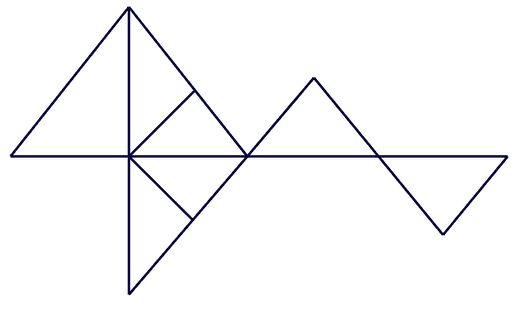
 Work from left to right so that nothing is counted twice.
Inside the big triangle ABC the vertical AO and the line OD give ABO, AOC, ABC, AOD and OCD - that is 5.
The small square OCED and the lines through it give OCE, OEF, OCF and ACF - that is 4 more, making 9.
On the right the two small triangles CGH and HKL add 2.
Total number of triangles =5+4+2=11.
Hence option (a) is correct.
Work from left to right so that nothing is counted twice.
Inside the big triangle ABC the vertical AO and the line OD give ABO, AOC, ABC, AOD and OCD - that is 5.
The small square OCED and the lines through it give OCE, OEF, OCF and ACF - that is 4 more, making 9.
On the right the two small triangles CGH and HKL add 2.
Total number of triangles =5+4+2=11.
Hence option (a) is correct.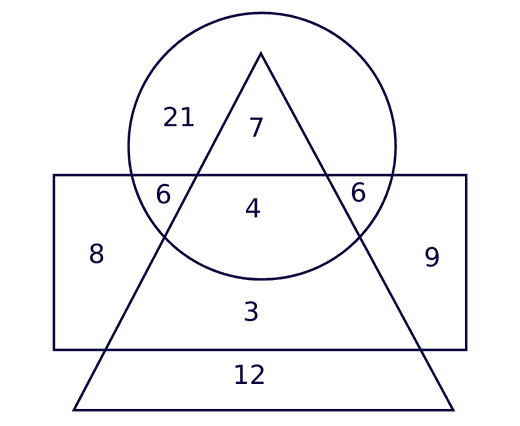 How many books are newspapers?
 Two areas satisfy this: the part of the circle inside the triangle but above the rectangle, which holds 7, and the part common to all three figures, which holds 4.
The numbers 21, 6 and 6 lie inside the circle but outside the triangle, so they are not counted.
Required number =7+4=11.
Hence option (a) is correct.
Two areas satisfy this: the part of the circle inside the triangle but above the rectangle, which holds 7, and the part common to all three figures, which holds 4.
The numbers 21, 6 and 6 lie inside the circle but outside the triangle, so they are not counted.
Required number =7+4=11.
Hence option (a) is correct.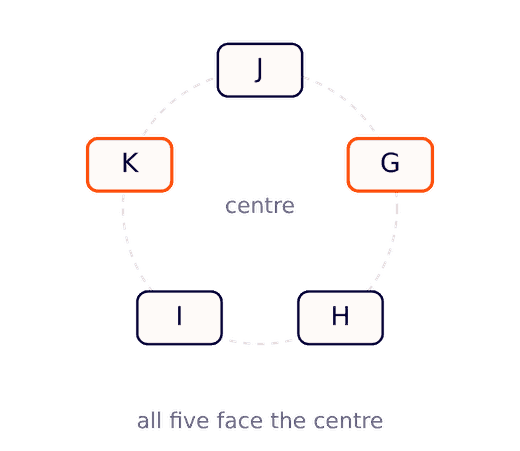 Now count two seats anticlockwise from G: the first is J and the second is K.
Hence option (c) is correct.
Now count two seats anticlockwise from G: the first is J and the second is K.
Hence option (c) is correct.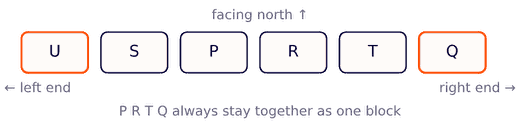 The final row is U, S, P, R, T, Q, so the two extreme ends are held by U and Q.
Hence option (d) is correct.
The final row is U, S, P, R, T, Q, so the two extreme ends are held by U and Q.
Hence option (d) is correct. Counting three seats to the right of Q (seat 5) gives seats 6, 7 and 8 — N, R and M — so M is third to the right of Q.
Hence option (c) is correct.
Counting three seats to the right of Q (seat 5) gives seats 6, 7 and 8 — N, R and M — so M is third to the right of Q.
Hence option (c) is correct.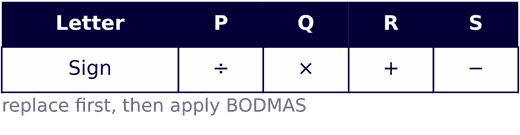 Hence option (a) is correct.
 Option (b) would give , which is not 36.
Hence option (a) is correct.
Option (b) would give , which is not 36.
Hence option (a) is correct.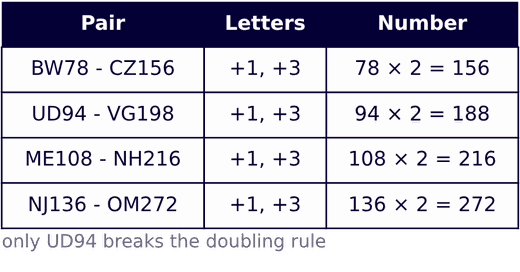 Hence option (b) is correct.
 The same rule fits the second word: CHAIR backwards is RIAHC, and R-5=M, I-5=D, A-5=V, H-4=D, C-4=Y give MDVDY.
PIANO backwards is ONAIP, so O-5=J, N-5=I, A-5=V, I-4=E, P-4=L.
The same rule fits the second word: CHAIR backwards is RIAHC, and R-5=M, I-5=D, A-5=V, H-4=D, C-4=Y give MDVDY.
PIANO backwards is ONAIP, so O-5=J, N-5=I, A-5=V, I-4=E, P-4=L.
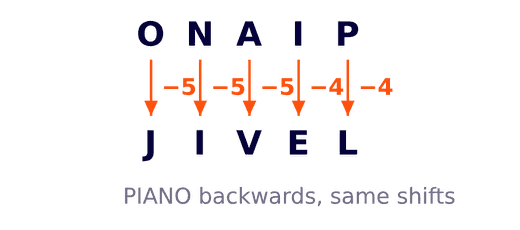 The code is JIVEL, so option (b) is correct.
 The rule also fits GLOBAL: reversed it is LABOLG, and L-3=I, A-3=X, B-3=Y, O-3=L, L-3=I, G-3=D give IXYLID (counting back from A continues at Z).
MODERN reversed is NREDOM, so N-3=K, R-3=O, E-3=B, D-3=A, O-3=L, M-3=J.
The rule also fits GLOBAL: reversed it is LABOLG, and L-3=I, A-3=X, B-3=Y, O-3=L, L-3=I, G-3=D give IXYLID (counting back from A continues at Z).
MODERN reversed is NREDOM, so N-3=K, R-3=O, E-3=B, D-3=A, O-3=L, M-3=J.
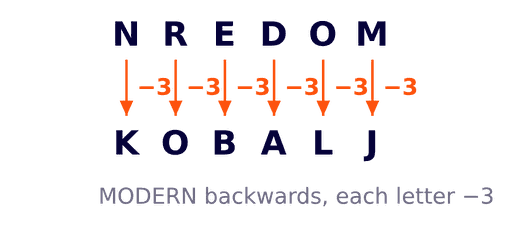 The code is KOBALJ, so option (b) is correct.
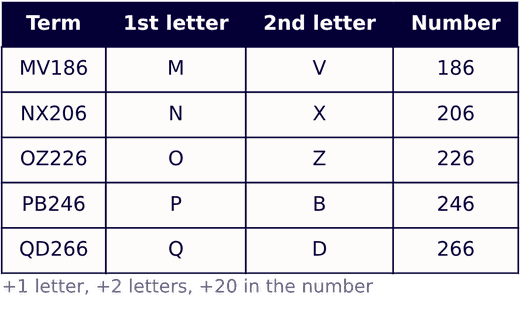 The missing term is PB246, so option (a) is correct.