
1
Read the given statements and conclusions carefully. Assuming that the information given in the statements is true, even if it appears to be at variance with commonly known facts, decide which of the given conclusions logically follow(s) from the statements.
Statements:
All lyricists are singers.
Some singers are writers.
No writer is a musician.
Conclusions:
(I): No lyricist is a musician.
(II): Some writers are lyricists
- A.Only conclusion (II) follows .
- B.Only conclusion (I) follows .
- C.Neither conclusion (I) nor (II) follows.
- D.Both conclusion (I) and (II) follows.
Solution
Syllogism
Draw the three statements together: every lyricist lies inside the singers, the writers cut the singers only partly, and the writers stay completely away from the musicians.
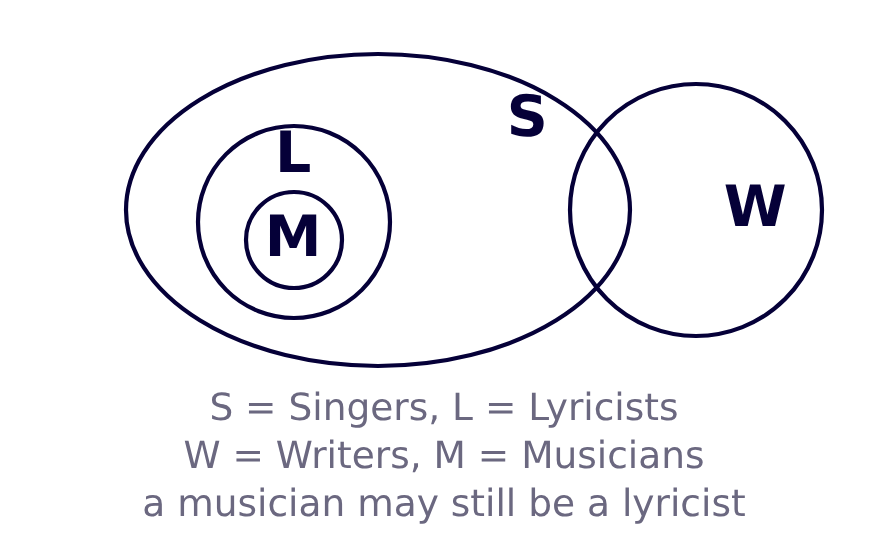 Conclusion (I): nothing in the statements keeps the musicians away from the singers, so a musician is free to be a lyricist as well; (I) is only possible, not certain.
Conclusion (II): the singers who are writers need not be the singers who are lyricists, so writers and lyricists may have nobody in common; (II) is also only possible.
Since neither conclusion is forced by the statements, the answer is option (c).
Conclusion (I): nothing in the statements keeps the musicians away from the singers, so a musician is free to be a lyricist as well; (I) is only possible, not certain.
Conclusion (II): the singers who are writers need not be the singers who are lyricists, so writers and lyricists may have nobody in common; (II) is also only possible.
Since neither conclusion is forced by the statements, the answer is option (c).
Conclusion (I): nothing in the statements keeps the musicians away from the singers, so a musician is free to be a lyricist as well; (I) is only possible, not certain.
Conclusion (II): the singers who are writers need not be the singers who are lyricists, so writers and lyricists may have nobody in common; (II) is also only possible.
Since neither conclusion is forced by the statements, the answer is option (c).


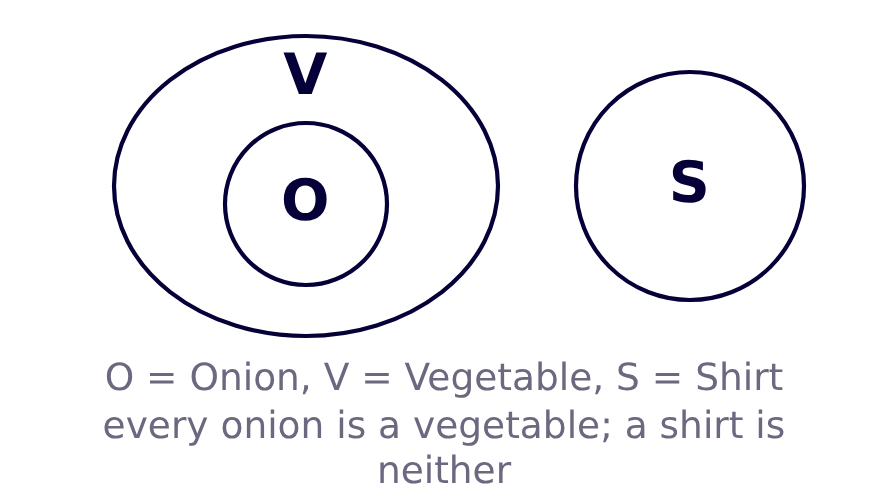 The required picture therefore shows one small circle drawn inside a larger circle, and one separate circle outside them.
That is option (a).
The required picture therefore shows one small circle drawn inside a larger circle, and one separate circle outside them.
That is option (a).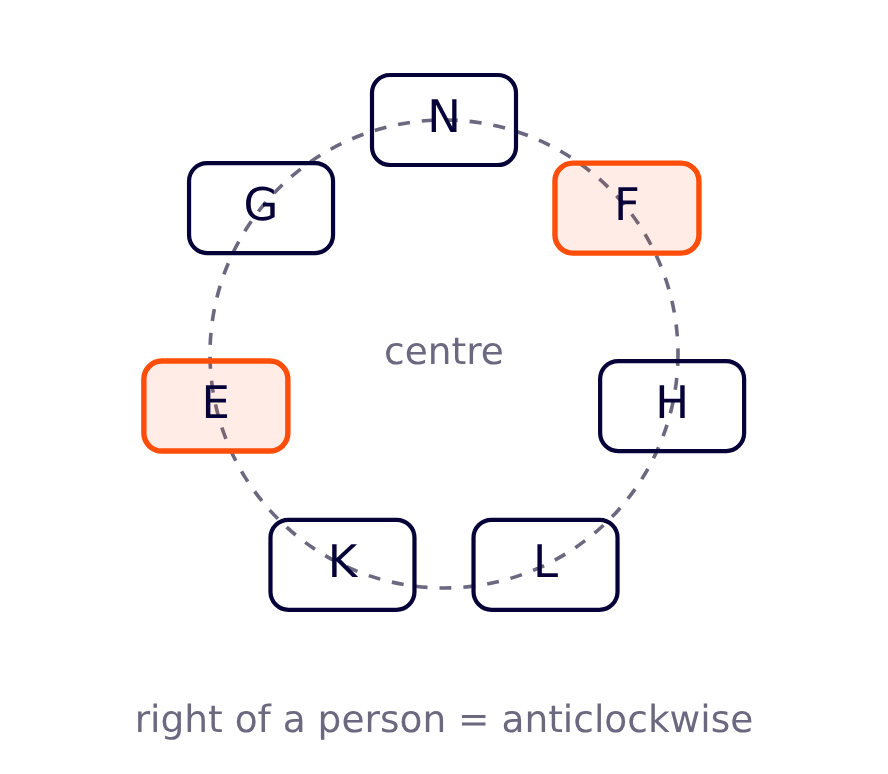 Now count from the left of F, i.e. clockwise: H, L, K and then E.
Three people sit between F and E, so the answer is option (c).
Now count from the left of F, i.e. clockwise: H, L, K and then E.
Three people sit between F and E, so the answer is option (c).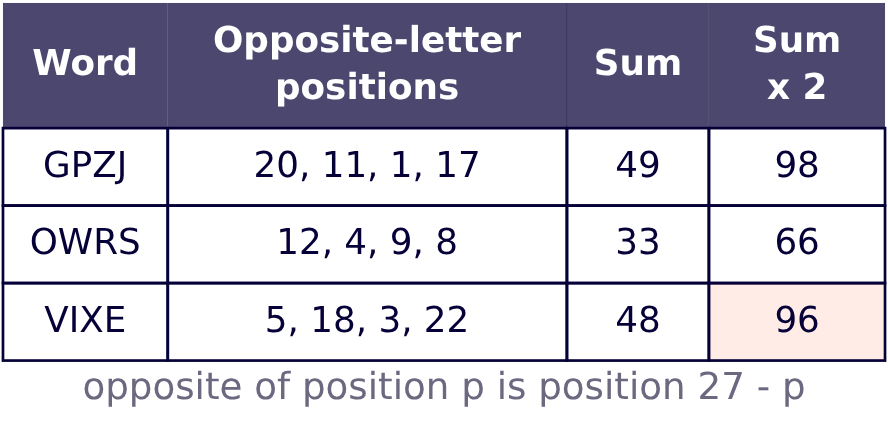 GPZJ: 27-7=20, 27-16=11, 27-26=1, 27-10=17, so the sum is 49 and .
OWRS: 27-15=12, 27-23=4, 27-18=9, 27-19=8, so the sum is 33 and .
VIXE: V, I, X, E stand at 22, 9, 24, 5, so their opposites stand at 5, 18, 3, 22.
The sum is 5+18+3+22=48, and .
Hence VIXE is coded as 96, so the answer is option (c).
GPZJ: 27-7=20, 27-16=11, 27-26=1, 27-10=17, so the sum is 49 and .
OWRS: 27-15=12, 27-23=4, 27-18=9, 27-19=8, so the sum is 33 and .
VIXE: V, I, X, E stand at 22, 9, 24, 5, so their opposites stand at 5, 18, 3, 22.
The sum is 5+18+3+22=48, and .
Hence VIXE is coded as 96, so the answer is option (c).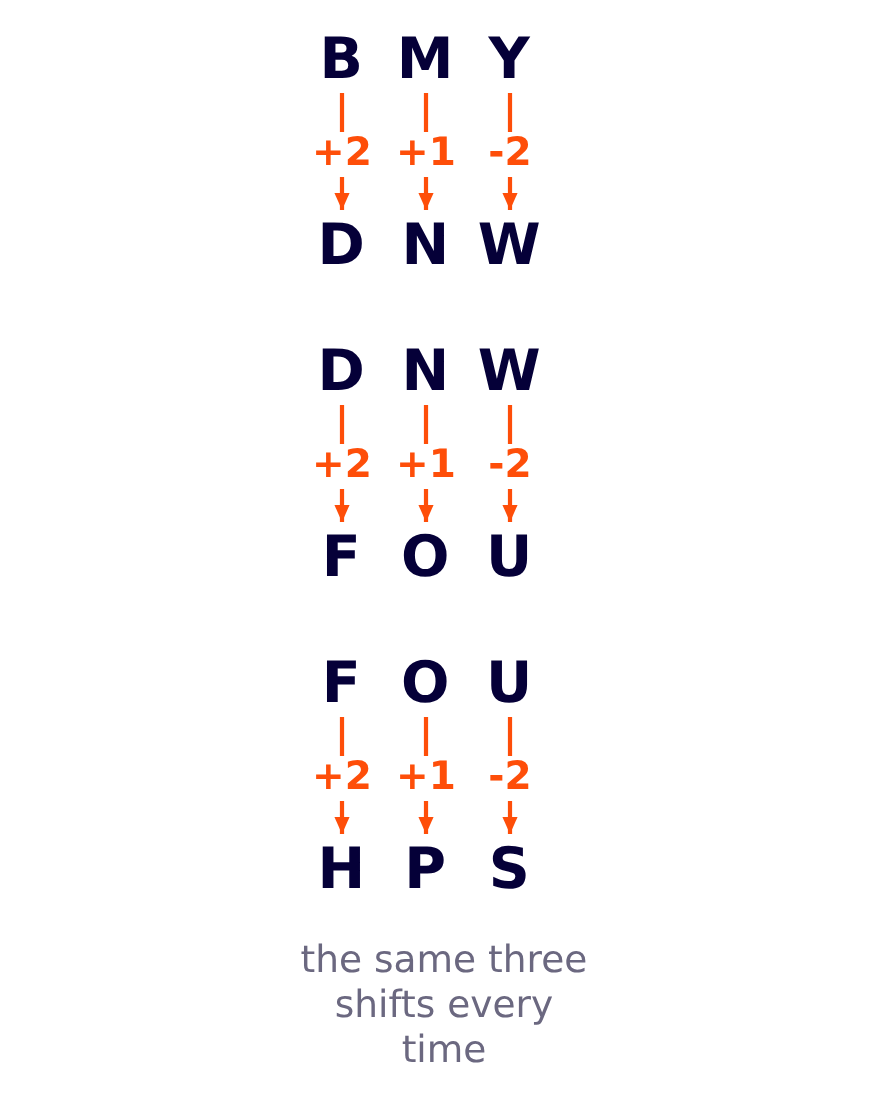 First letters B, D, ?, H move +2 each step, so the missing first letter is F.
Second letters M, N, ?, P move +1 each step, so the missing second letter is O.
Third letters Y, W, ?, S move -2 each step, so the missing third letter is U.
The missing cluster is FOU, so the answer is option (d).
First letters B, D, ?, H move +2 each step, so the missing first letter is F.
Second letters M, N, ?, P move +1 each step, so the missing second letter is O.
Third letters Y, W, ?, S move -2 each step, so the missing third letter is U.
The missing cluster is FOU, so the answer is option (d).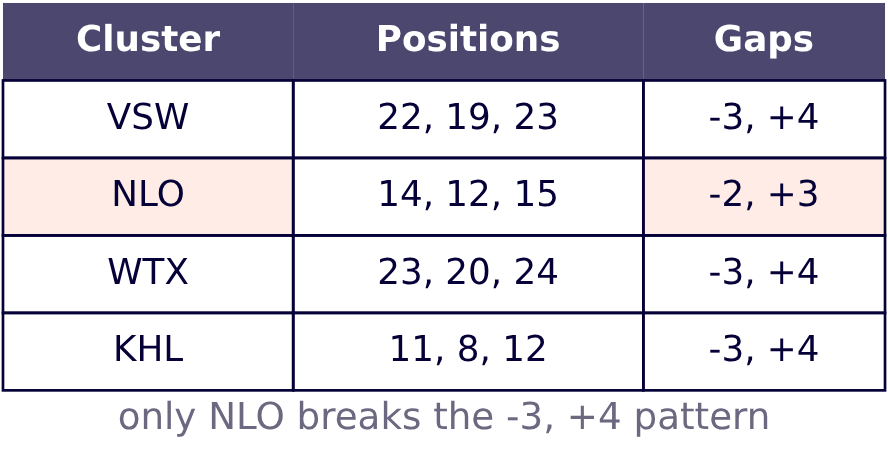 VSW gives 22, 19, 23, that is -3 and then +4.
WTX gives 23, 20, 24 and KHL gives 11, 8, 12, again -3 and then +4.
NLO gives 14, 12, 15, that is -2 and then +3, which is a different pair of gaps.
So NLO does not belong to the group, and the answer is option (b).
VSW gives 22, 19, 23, that is -3 and then +4.
WTX gives 23, 20, 24 and KHL gives 11, 8, 12, again -3 and then +4.
NLO gives 14, 12, 15, that is -2 and then +3, which is a different pair of gaps.
So NLO does not belong to the group, and the answer is option (b).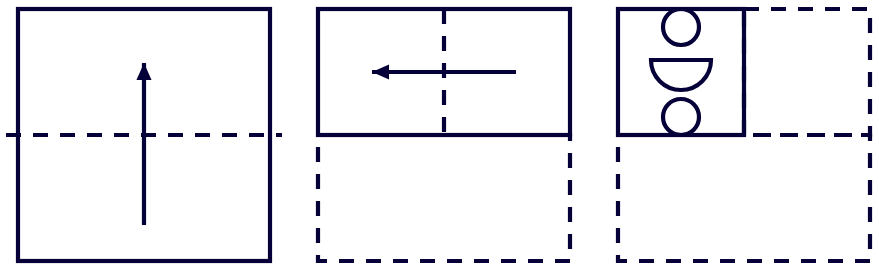
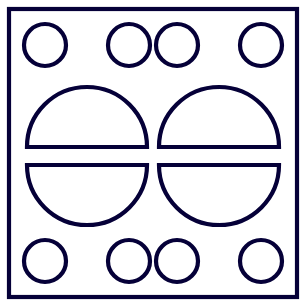
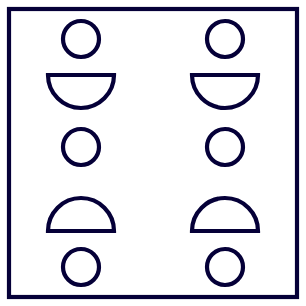
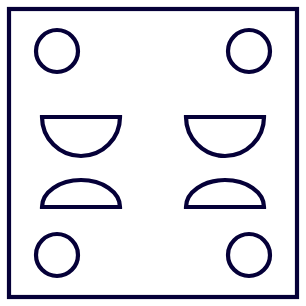
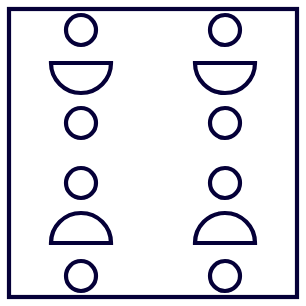
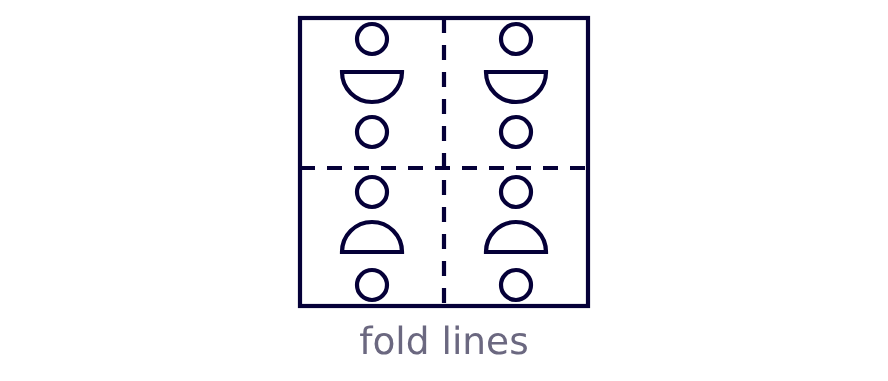 Each column now reads circle, bowl, circle, circle, dome, circle from top to bottom, and the two columns are mirror images about the vertical line.
This is exactly option (d).
Each column now reads circle, bowl, circle, circle, dome, circle from top to bottom, and the two columns are mirror images about the vertical line.
This is exactly option (d).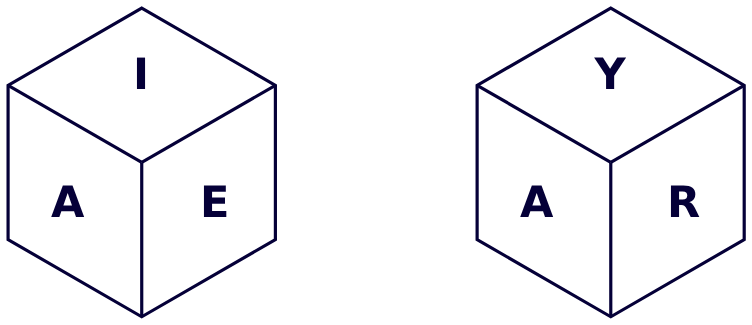
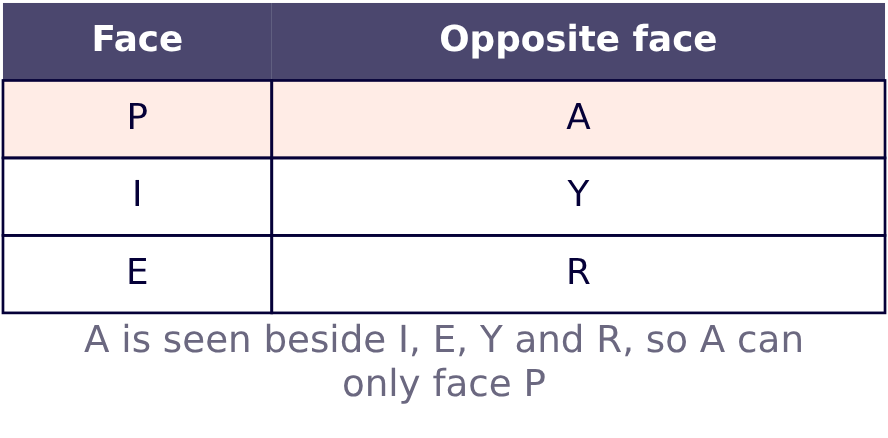 The face opposite P is A, so the answer is option (b).
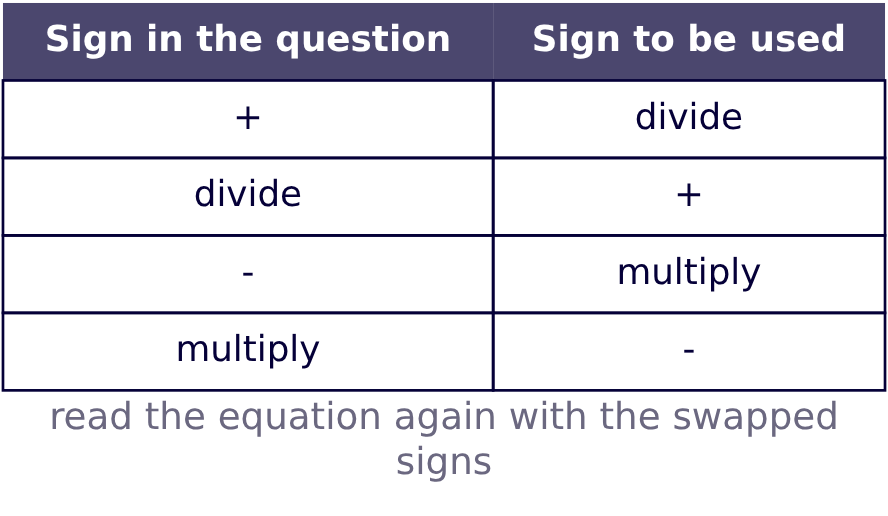 So turns into .
By BODMAS do the division and the multiplication first: and .
The expression becomes 32-26+20.
32-26=6 and 6+20=26.
Hence the question mark stands for 26, so the answer is option (c).
So turns into .
By BODMAS do the division and the multiplication first: and .
The expression becomes 32-26+20.
32-26=6 and 6+20=26.
Hence the question mark stands for 26, so the answer is option (c).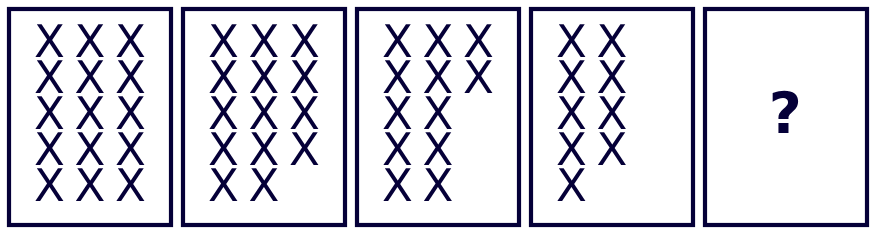
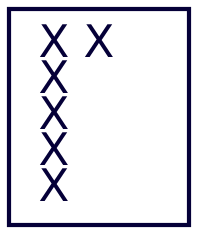
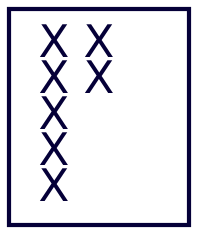
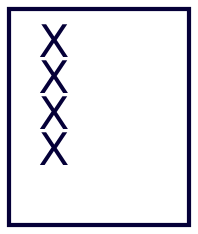
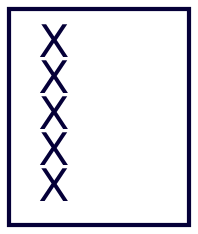
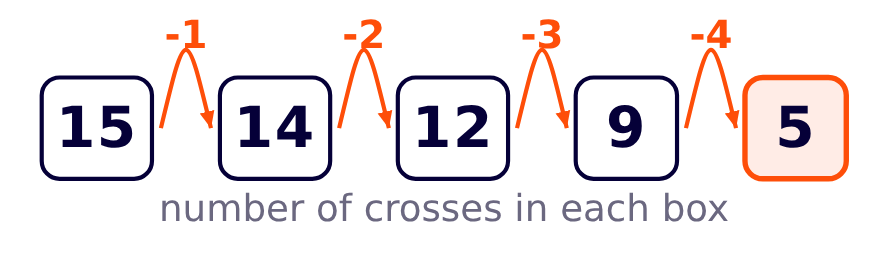 The four given boxes hold 15, 14, 12 and 9 crosses.
The falls are 1, then 2, then 3, so the next fall must be 4.
The fifth box therefore holds 9-4=5 crosses.
Option (a) has six, option (b) has seven and option (c) has four; only option (d) shows exactly five.
So the answer is option (d).
The four given boxes hold 15, 14, 12 and 9 crosses.
The falls are 1, then 2, then 3, so the next fall must be 4.
The fifth box therefore holds 9-4=5 crosses.
Option (a) has six, option (b) has seven and option (c) has four; only option (d) shows exactly five.
So the answer is option (d).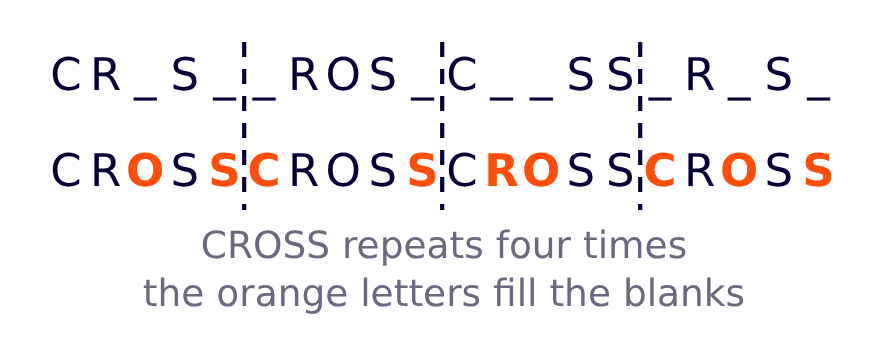 Writing CROSS four times under the series matches every letter that is already printed.
Reading only the blank positions from left to right gives O, S, C, S, R, O, C, O, S.
That is OSCSROCOS, so the answer is option (a).
Writing CROSS four times under the series matches every letter that is already printed.
Reading only the blank positions from left to right gives O, S, C, S, R, O, C, O, S.
That is OSCSROCOS, so the answer is option (a).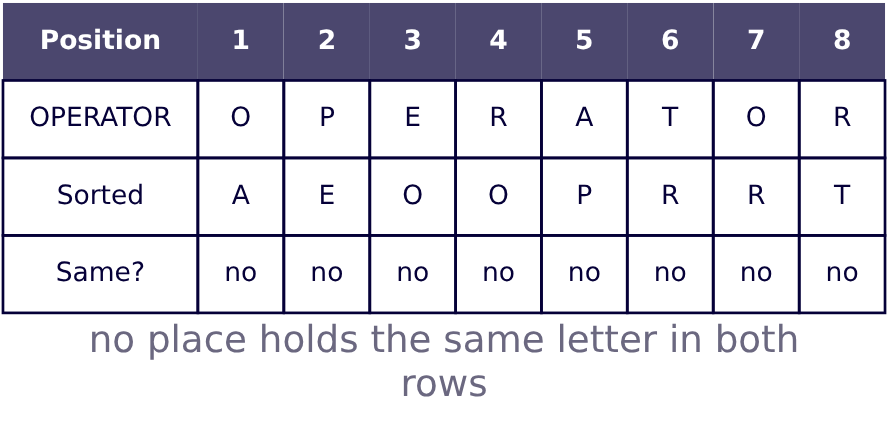 Now compare the two words place by place: O with A, P with E, E with O, R with O, A with P, T with R, O with R and R with T.
Not a single place carries the same letter in both words.
Hence zero letters keep their position, so the answer is option (a).
Now compare the two words place by place: O with A, P with E, E with O, R with O, A with P, T with R, O with R and R with T.
Not a single place carries the same letter in both words.
Hence zero letters keep their position, so the answer is option (a).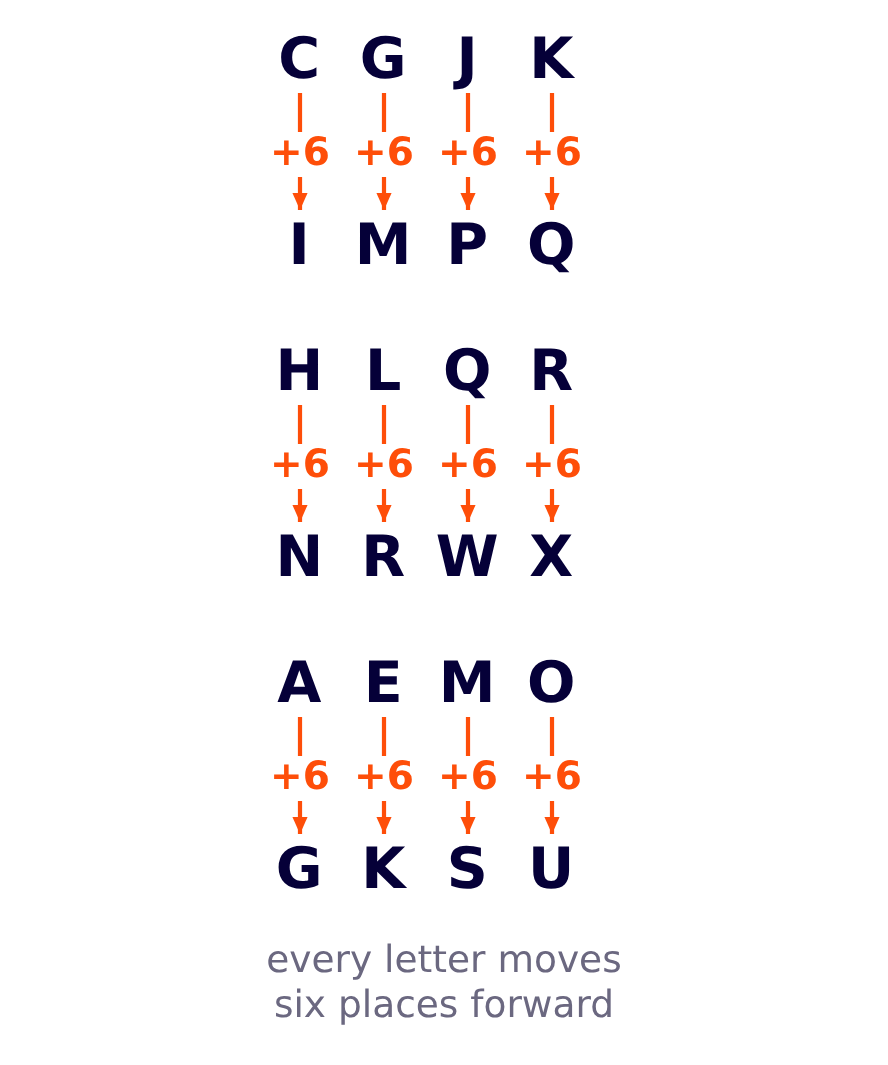 CGJK to IMPQ: C+6=I, G+6=M, J+6=P and K+6=Q.
HLQR to NRWX: H+6=N, L+6=R, Q+6=W and R+6=X, so the rule is +6 on every letter.
Applying +6 to AEMO: A+6=G, E+6=K, M+6=S and O+6=U.
So AEMO is related to GKSU, and the answer is option (c).
CGJK to IMPQ: C+6=I, G+6=M, J+6=P and K+6=Q.
HLQR to NRWX: H+6=N, L+6=R, Q+6=W and R+6=X, so the rule is +6 on every letter.
Applying +6 to AEMO: A+6=G, E+6=K, M+6=S and O+6=U.
So AEMO is related to GKSU, and the answer is option (c).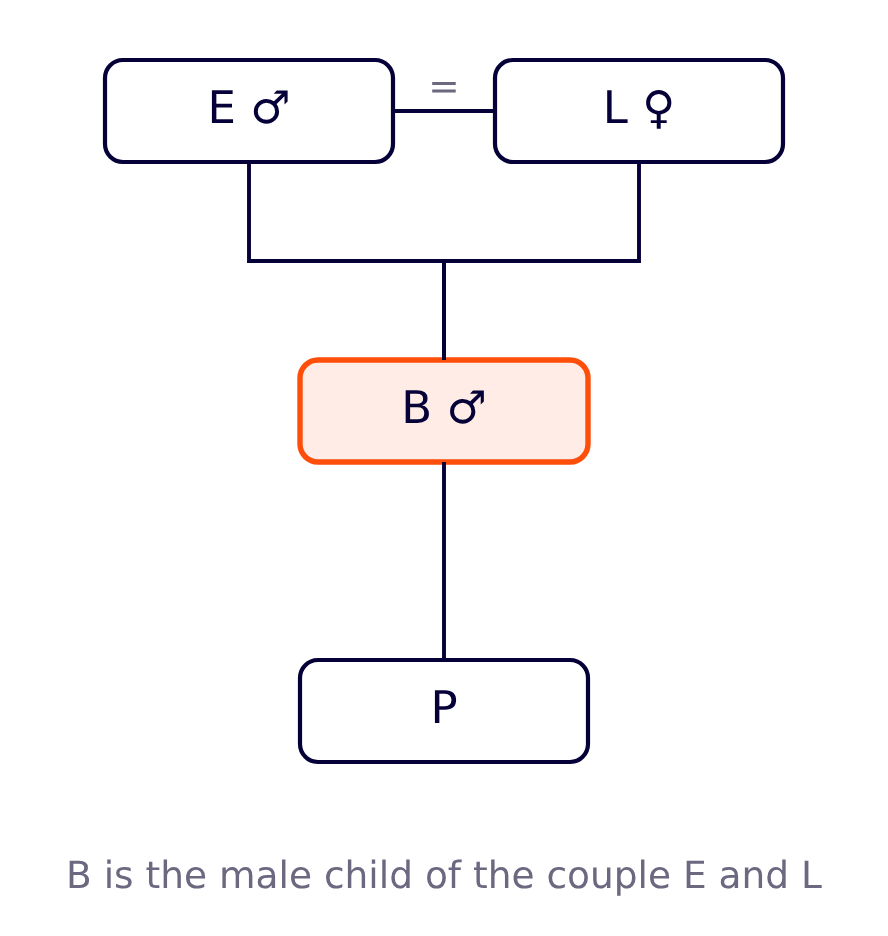 A male child of E is his son, so B is the son of E, and the answer is option (d).
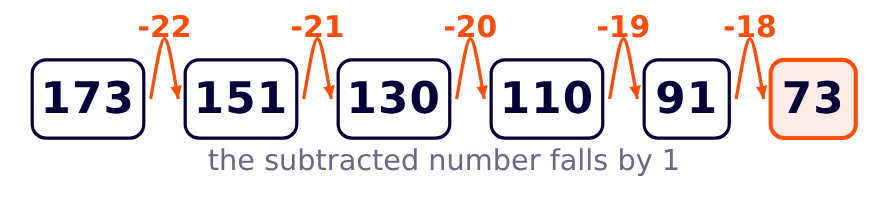 173-151=22, 151-130=21, 130-110=20 and 110-91=19.
The number that is subtracted drops by 1 each time, so the next one to subtract is 18.
Hence the missing term is 91-18=73, so the answer is option (c).
173-151=22, 151-130=21, 130-110=20 and 110-91=19.
The number that is subtracted drops by 1 each time, so the next one to subtract is 18.
Hence the missing term is 91-18=73, so the answer is option (c).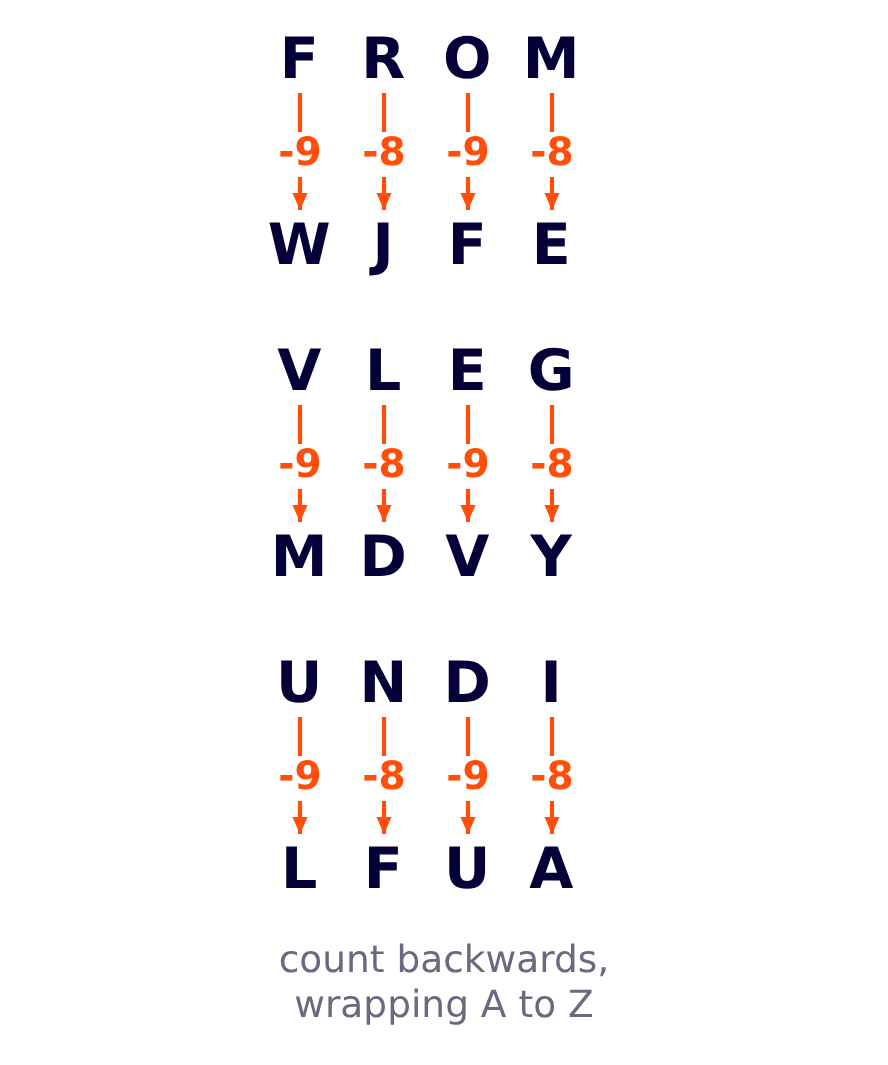 FROM to WJFE: F moves back 9 to W, R moves back 8 to J, O moves back 9 to F and M moves back 8 to E.
VLEG to MDVY: V back 9 is M, L back 8 is D, E back 9 is V and G back 8 is Y, the same -9, -8, -9, -8 rule.
Applying it to UNDI: U back 9 is L, N back 8 is F, D back 9 is U and I back 8 is A.
So UNDI is related to LFUA, and the answer is option (b).
FROM to WJFE: F moves back 9 to W, R moves back 8 to J, O moves back 9 to F and M moves back 8 to E.
VLEG to MDVY: V back 9 is M, L back 8 is D, E back 9 is V and G back 8 is Y, the same -9, -8, -9, -8 rule.
Applying it to UNDI: U back 9 is L, N back 8 is F, D back 9 is U and I back 8 is A.
So UNDI is related to LFUA, and the answer is option (b).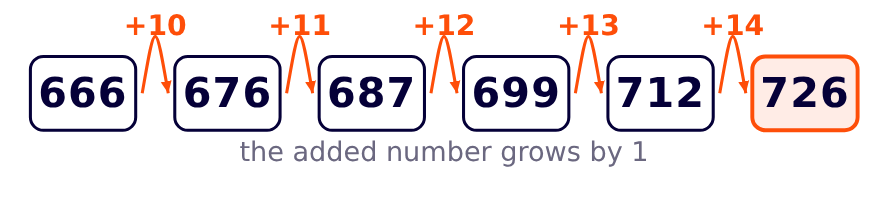 676-666=10, 687-676=11, 699-687=12 and 712-699=13.
The number that is added grows by 1 each time, so the next one to add is 14.
Hence the missing term is 712+14=726, so the answer is option (d).
676-666=10, 687-676=11, 699-687=12 and 712-699=13.
The number that is added grows by 1 each time, so the next one to add is 14.
Hence the missing term is 712+14=726, so the answer is option (d).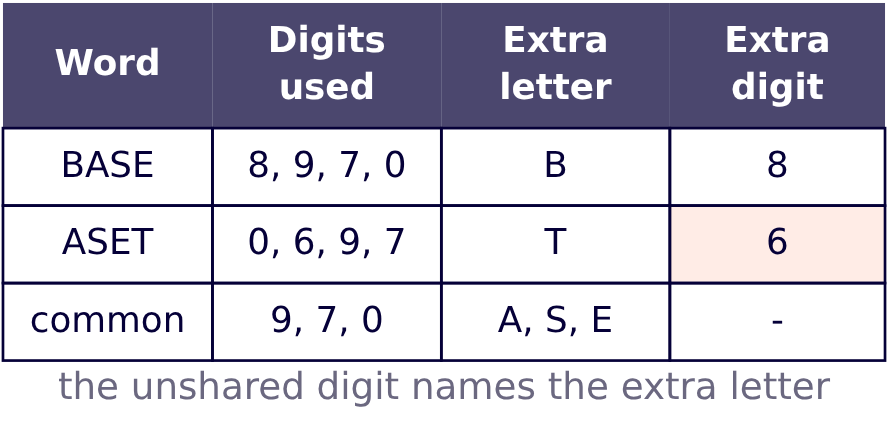 The letters A, S and E occur in both words, so the three digits common to both codes, namely 9, 7 and 0, must belong to A, S and E.
The digit left over in the code of BASE is 8, so 8 stands for B, the extra letter of BASE.
The digit left over in the code of ASET is 6, so 6 stands for T, the extra letter of ASET.
Hence the code for T is 6, so the answer is option (b).
The letters A, S and E occur in both words, so the three digits common to both codes, namely 9, 7 and 0, must belong to A, S and E.
The digit left over in the code of BASE is 8, so 8 stands for B, the extra letter of BASE.
The digit left over in the code of ASET is 6, so 6 stands for T, the extra letter of ASET.
Hence the code for T is 6, so the answer is option (b).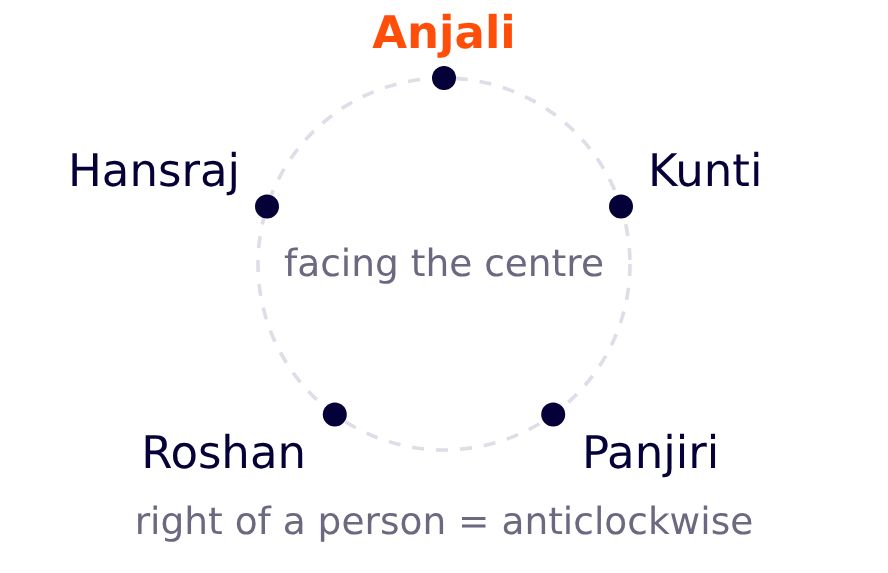 Kunti now sits between Panjiri and Anjali, so the neighbours of Anjali are Kunti and Hansraj.
Roshan sits between Hansraj and Panjiri, and Panjiri sits between Roshan and Kunti, so options (b), (c) and (d) are all false.
Only statement (a) fits the arrangement, so the answer is option (a).
Kunti now sits between Panjiri and Anjali, so the neighbours of Anjali are Kunti and Hansraj.
Roshan sits between Hansraj and Panjiri, and Panjiri sits between Roshan and Kunti, so options (b), (c) and (d) are all false.
Only statement (a) fits the arrangement, so the answer is option (a).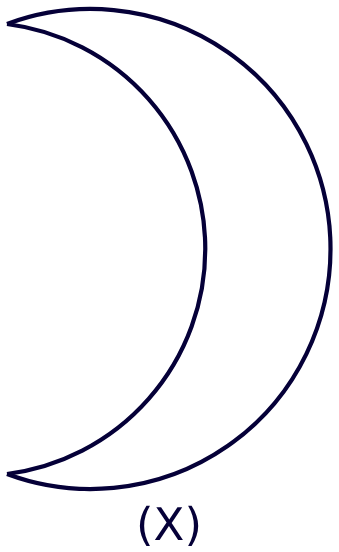
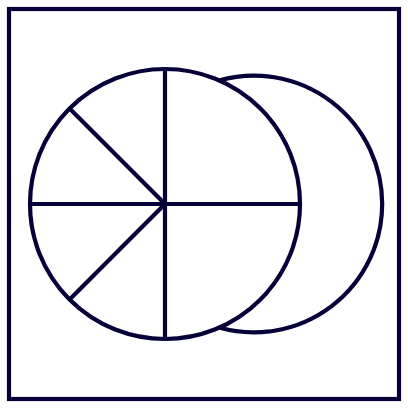
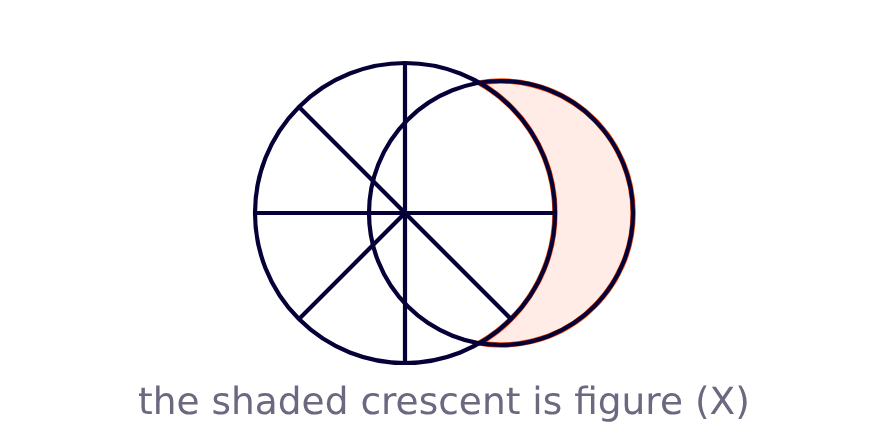 In option (a) the plain large circle is overlapped on its left by the spoked circle, and the part of the large circle left outside the spoked one is precisely the crescent (X), in the same position and without any rotation.
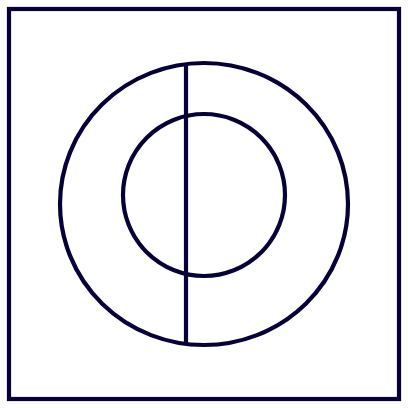
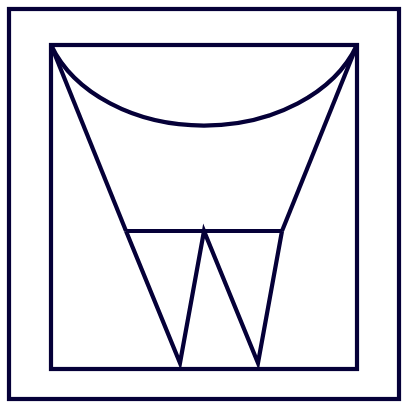
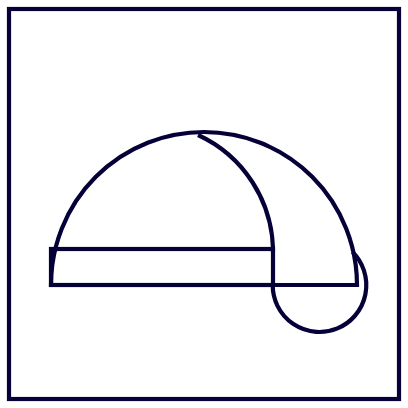
Option (b) gives a ring, option (c) gives a bowl with straight lines and option (d) gives a dome cut by a band, and none of them contains the crescent.
So the answer is option (a).
In option (a) the plain large circle is overlapped on its left by the spoked circle, and the part of the large circle left outside the spoked one is precisely the crescent (X), in the same position and without any rotation.
Option (b) gives a ring, option (c) gives a bowl with straight lines and option (d) gives a dome cut by a band, and none of them contains the crescent.
So the answer is option (a).