
1
A dice has its faces marked by letters A, B, C, D, E and F. Two different positions of the same dice are shown. Select the letter that will be on the face opposite to the one having ?
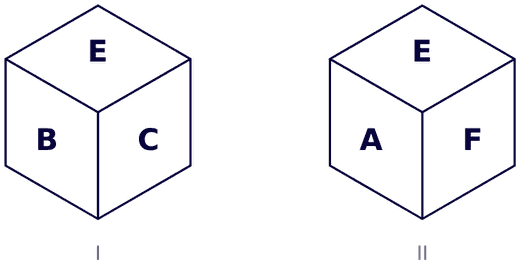
- A.F
- B.A
- C.B
- D.E
Solution
Dice - opposite faces
Both the pictures show E on the top face.
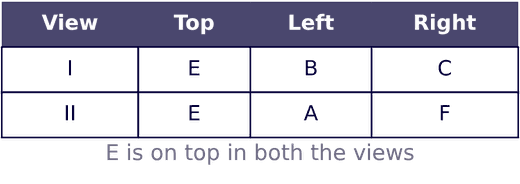 With E on top, the four side faces seen are B and C in view I, and A and F in view II.
Five of the six letters are now placed - E on top and B, C, A, F around it.
The letter left over, D, must be on the hidden bottom face, so D lies opposite E.
Hence the face opposite D carries E, and option (d) is correct.
With E on top, the four side faces seen are B and C in view I, and A and F in view II.
Five of the six letters are now placed - E on top and B, C, A, F around it.
The letter left over, D, must be on the hidden bottom face, so D lies opposite E.
Hence the face opposite D carries E, and option (d) is correct.
With E on top, the four side faces seen are B and C in view I, and A and F in view II.
Five of the six letters are now placed - E on top and B, C, A, F around it.
The letter left over, D, must be on the hidden bottom face, so D lies opposite E.
Hence the face opposite D carries E, and option (d) is correct.
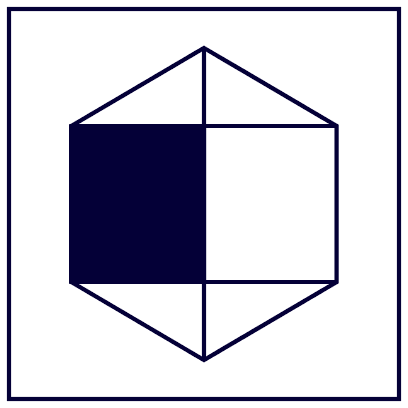
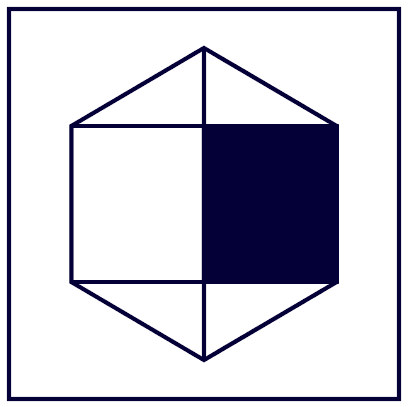
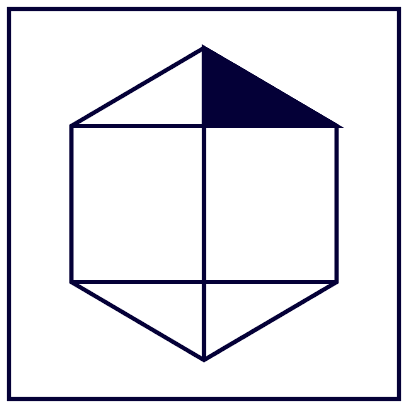
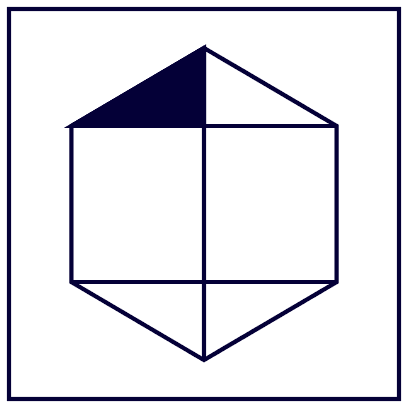
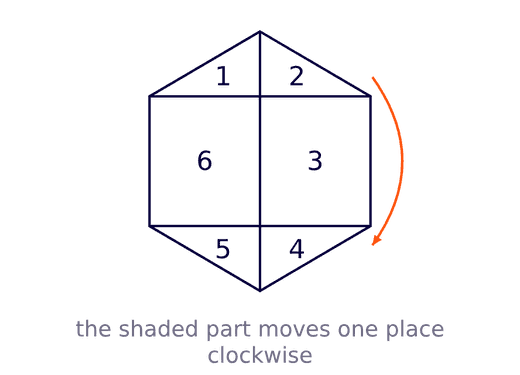 At each step the shaded part moves one place clockwise: top-right triangle, right rectangle, bottom-right triangle, bottom-left triangle.
One more step clockwise carries the shading to the left rectangle.
Only option (a) has the left rectangle shaded, so option (a) is correct.
At each step the shaded part moves one place clockwise: top-right triangle, right rectangle, bottom-right triangle, bottom-left triangle.
One more step clockwise carries the shading to the left rectangle.
Only option (a) has the left rectangle shaded, so option (a) is correct.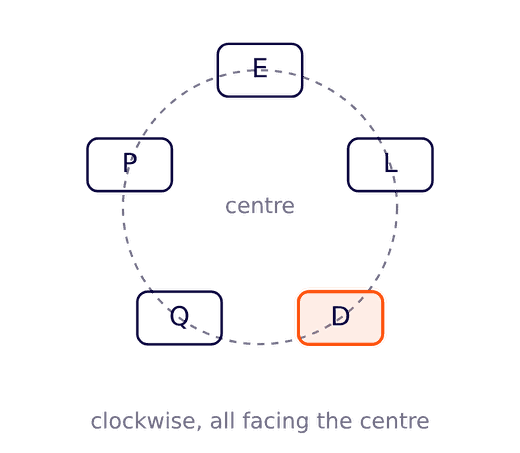 D now has Q on one side and L on the other, so option (c) is correct.
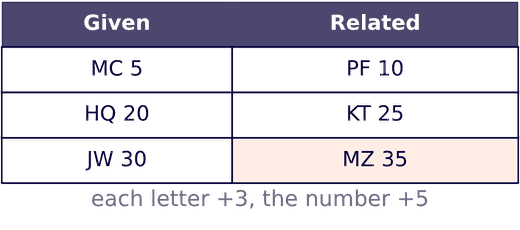 Apply it to JW 30: J + 3 = M, W + 3 = Z and 30 + 5 = 35.
So JW 30 is related to MZ 35, and option (b) is correct.
Apply it to JW 30: J + 3 = M, W + 3 = Z and 30 + 5 = 35.
So JW 30 is related to MZ 35, and option (b) is correct.


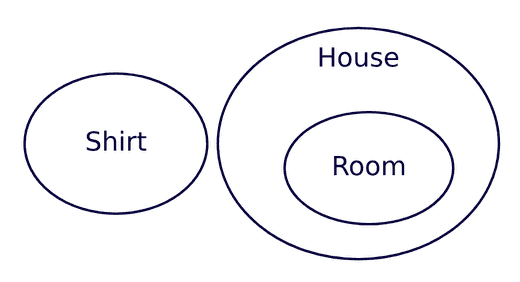 The picture needed is therefore a small circle (Room) drawn inside a large circle (House), with a separate circle for Shirt.
Option (b) is drawn exactly like this, so option (b) is correct.
The picture needed is therefore a small circle (Room) drawn inside a large circle (House), with a separate circle for Shirt.
Option (b) is drawn exactly like this, so option (b) is correct.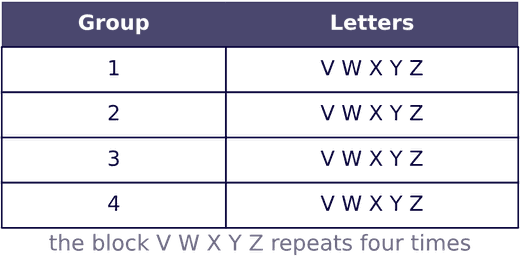 Group 1 is V _ _ Y Z, which needs W and X.
Group 2 is V W X _ _, which needs Y and Z.
Group 3 is _ _ X Y Z, which needs V and W.
Group 4 is V _ X _ Z, which needs W and Y.
Reading the blanks from left to right gives W X Y Z V W W Y, so option (a) is correct.
Group 1 is V _ _ Y Z, which needs W and X.
Group 2 is V W X _ _, which needs Y and Z.
Group 3 is _ _ X Y Z, which needs V and W.
Group 4 is V _ X _ Z, which needs W and Y.
Reading the blanks from left to right gives W X Y Z V W W Y, so option (a) is correct. (X)
(X)
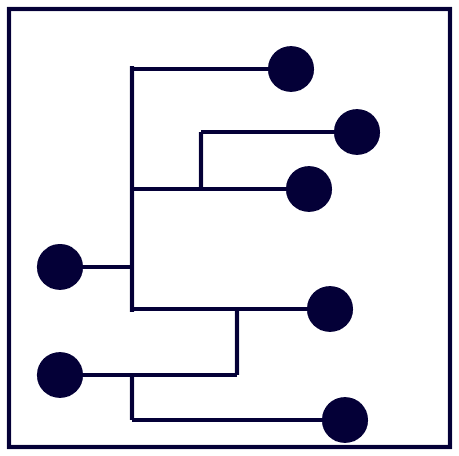
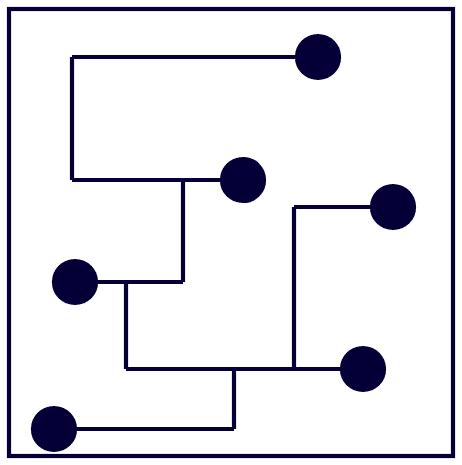
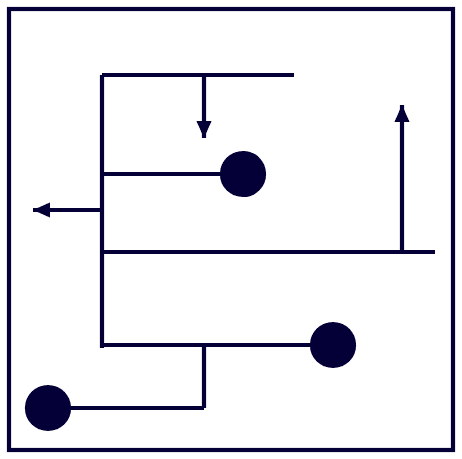
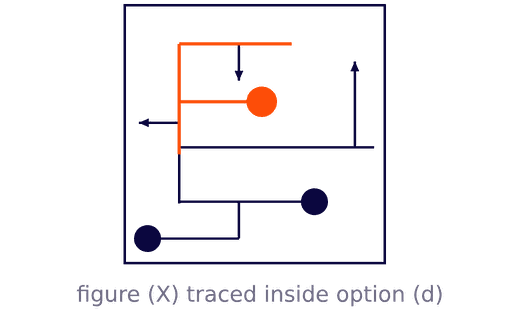 Option (d) carries exactly that: the top arm runs right and ends free, the lower arm ends in a solid dot, and the vertical line continues below it.
In option (b) the upper arm ends in a dot and is shorter than the lower arm, so the pair of arms is not the same.
In options (a) and (c) no vertical line carries such a pair of arms at all.
Hence option (d) is correct.
Option (d) carries exactly that: the top arm runs right and ends free, the lower arm ends in a solid dot, and the vertical line continues below it.
In option (b) the upper arm ends in a dot and is shorter than the lower arm, so the pair of arms is not the same.
In options (a) and (c) no vertical line carries such a pair of arms at all.
Hence option (d) is correct.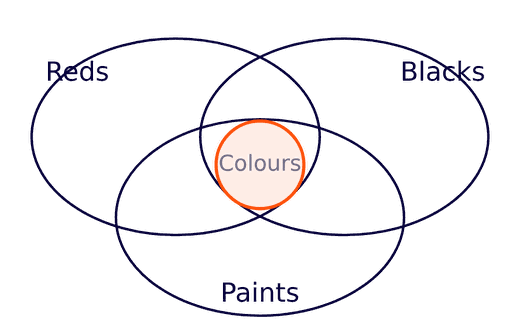 Conclusion (I) All reds are paints - the reds may spread well outside the paints, so it does not follow.
Conclusion (II) Some paints are blacks - every colour is a paint and also a black, so the two classes certainly share members; it follows.
Only conclusion (II) follows, so option (a) is correct.
Conclusion (I) All reds are paints - the reds may spread well outside the paints, so it does not follow.
Conclusion (II) Some paints are blacks - every colour is a paint and also a black, so the two classes certainly share members; it follows.
Only conclusion (II) follows, so option (a) is correct.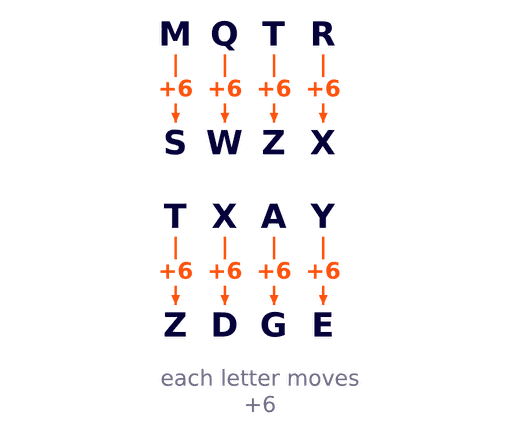 For TXAY: T + 6 = Z, X + 6 = D, A + 6 = G, Y + 6 = E.
So TXAY is related to ZDGE, and option (d) is correct.
For TXAY: T + 6 = Z, X + 6 = D, A + 6 = G, Y + 6 = E.
So TXAY is related to ZDGE, and option (d) is correct. The missing cluster is TWS, so option (b) is correct.
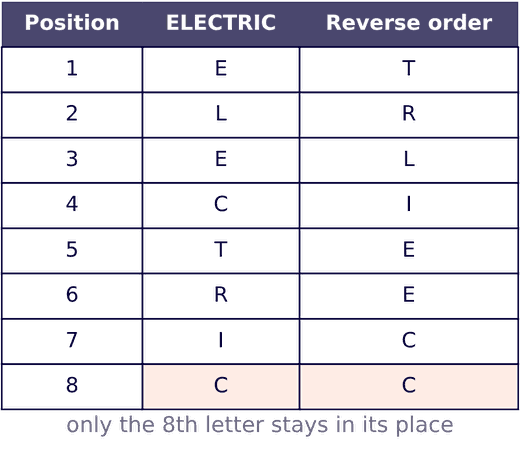 Comparing the two rows place by place, only the 8th letter C is the same in both.
So exactly one letter keeps its position, and option (d) is correct.
Comparing the two rows place by place, only the 8th letter C is the same in both.
So exactly one letter keeps its position, and option (d) is correct.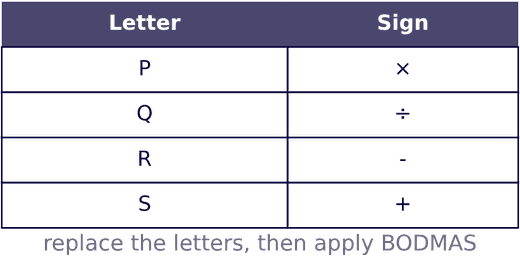 The expression becomes
Clear the brackets first:
Then divide: =14+43-45+90
Finally add and subtract: =102
Hence option (a) is correct.
The expression becomes
Clear the brackets first:
Then divide: =14+43-45+90
Finally add and subtract: =102
Hence option (a) is correct.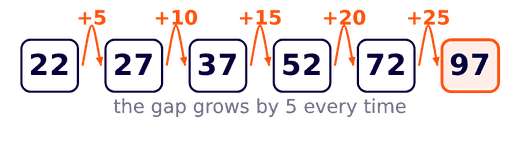 27-22=5, 37-27=10, 52-37=15 and 72-52=20.
The gaps themselves rise by 5 each time, so the next gap must be 25.
Therefore ?=72+25=97, and option (d) is correct.
27-22=5, 37-27=10, 52-37=15 and 72-52=20.
The gaps themselves rise by 5 each time, so the next gap must be 25.
Therefore ?=72+25=97, and option (d) is correct.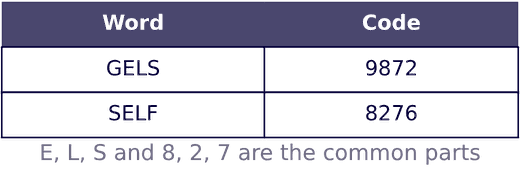 So E, L and S stand for 8, 2 and 7 in some order.
The letter left over in 'GELS' is G and the digit left over is 9, so G = 9.
The letter left over in 'SELF' is F and the digit left over is 6, so F = 6.
Hence option (d) is correct.
So E, L and S stand for 8, 2 and 7 in some order.
The letter left over in 'GELS' is G and the digit left over is 9, so G = 9.
The letter left over in 'SELF' is F and the digit left over is 6, so F = 6.
Hence option (d) is correct.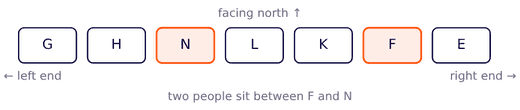 Between F (seat 6) and N (seat 3) sit L and K - two people, so option (c) is correct.
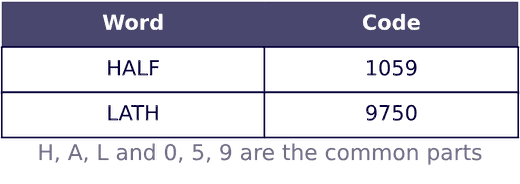 So H, A and L stand for 0, 5 and 9 in some order.
The letter left over in 'HALF' is F and the digit left over is 1, so F = 1.
The letter left over in 'LATH' is T and the digit left over is 7, so T = 7.
Hence option (b) is correct.
So H, A and L stand for 0, 5 and 9 in some order.
The letter left over in 'HALF' is F and the digit left over is 1, so F = 1.
The letter left over in 'LATH' is T and the digit left over is 7, so T = 7.
Hence option (b) is correct.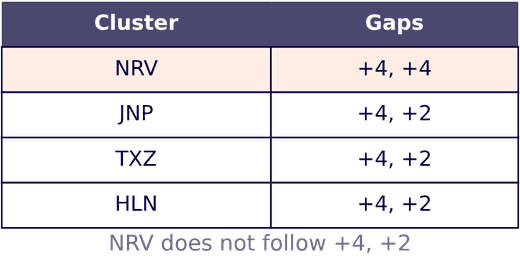 JNP is J +4 N +2 P, TXZ is T +4 X +2 Z and HLN is H +4 L +2 N - all three use the pattern +4, +2.
NRV is N +4 R +4 V, which uses +4, +4 instead.
NRV does not belong to the group, so option (a) is correct.
JNP is J +4 N +2 P, TXZ is T +4 X +2 Z and HLN is H +4 L +2 N - all three use the pattern +4, +2.
NRV is N +4 R +4 V, which uses +4, +4 instead.
NRV does not belong to the group, so option (a) is correct.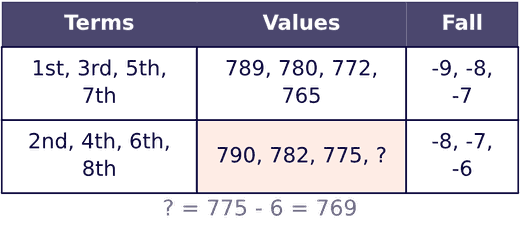 The 1st, 3rd, 5th and 7th terms are 789, 780, 772, 765, falling by 9, then 8, then 7.
The 2nd, 4th and 6th terms are 790, 782, 775, falling by 8 and then 7, so the next fall is 6.
Therefore ?=775-6=769, and option (c) is correct.
The 1st, 3rd, 5th and 7th terms are 789, 780, 772, 765, falling by 9, then 8, then 7.
The 2nd, 4th and 6th terms are 790, 782, 775, falling by 8 and then 7, so the next fall is 6.
Therefore ?=775-6=769, and option (c) is correct.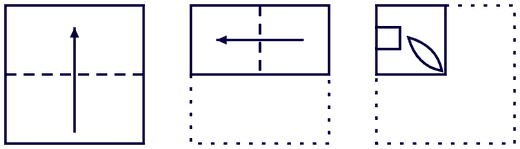
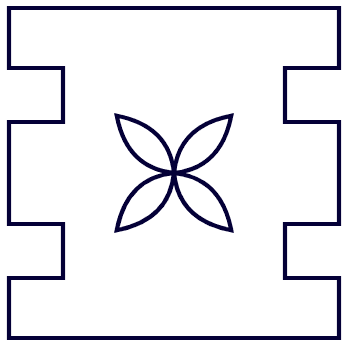
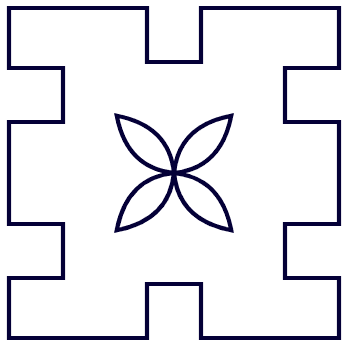
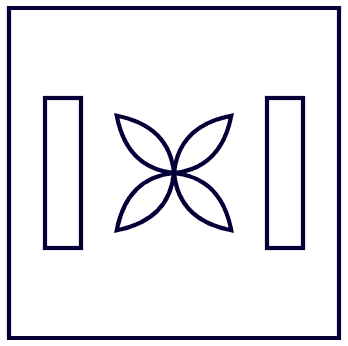
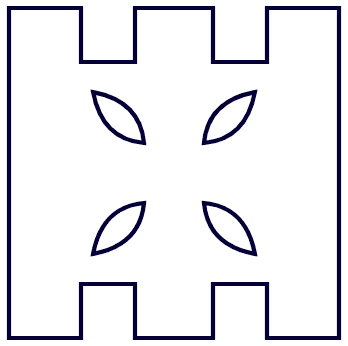
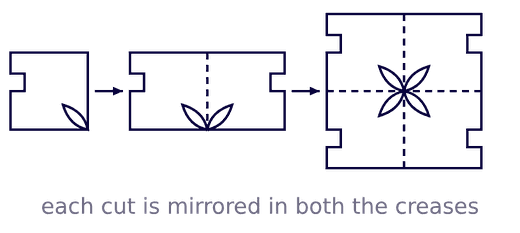 Opening the side fold mirrors both cuts about the vertical crease, and opening the top fold mirrors them again about the horizontal crease.
So the notch appears twice on the left edge and twice on the right edge, and the leaf becomes four leaves meeting at the centre.
Option (a) shows exactly this, so option (a) is correct.
Opening the side fold mirrors both cuts about the vertical crease, and opening the top fold mirrors them again about the horizontal crease.
So the notch appears twice on the left edge and twice on the right edge, and the leaf becomes four leaves meeting at the centre.
Option (a) shows exactly this, so option (a) is correct.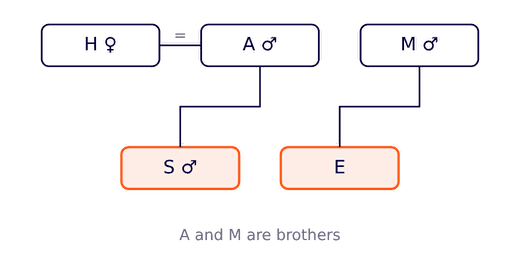 So E's father is M, M's brother is A, and A's son is S.
S is therefore E's father's brother's son, and option (d) is correct.
So E's father is M, M's brother is A, and A's son is S.
S is therefore E's father's brother's son, and option (d) is correct.