
1
ERHT is related to BLEN in a certain way based on the English alphabetical order. In the same way, XSNR is related to UMKL. To which of the given options is DIOQ related, following the same logic?
- A.VHMY
- B.GHPR
- C.HBGP
- D.ACLK
Solution
Letter-cluster analogy
Compare ERHT with BLEN letter by letter: E B is -3, R L is -6, H E is -3, T N is -6.
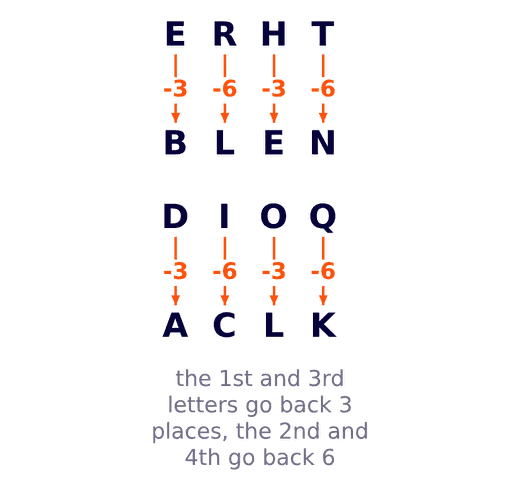 The same pattern works on the second pair: X -3= U, S -6= M, N -3= K, R -6= L, which is UMKL.
Apply it to DIOQ: D (4)-3=1= A, I (9)-6=3= C, O (15)-3=12= L, Q (17)-6=11= K.
So DIOQ is related to ACLK, i.e. option (d).
The same pattern works on the second pair: X -3= U, S -6= M, N -3= K, R -6= L, which is UMKL.
Apply it to DIOQ: D (4)-3=1= A, I (9)-6=3= C, O (15)-3=12= L, Q (17)-6=11= K.
So DIOQ is related to ACLK, i.e. option (d).
The same pattern works on the second pair: X -3= U, S -6= M, N -3= K, R -6= L, which is UMKL.
Apply it to DIOQ: D (4)-3=1= A, I (9)-6=3= C, O (15)-3=12= L, Q (17)-6=11= K.
So DIOQ is related to ACLK, i.e. option (d).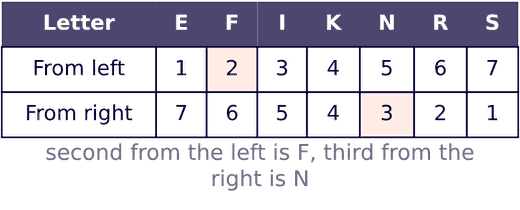 The second letter from the left end is F and the third letter from the right end is N.
F is the 6th letter of the alphabet and N is the 14th.
Letters lying strictly between them =14-6-1=7 (G, H, I, J, K, L, M).
Hence the correct option is (a).
The second letter from the left end is F and the third letter from the right end is N.
F is the 6th letter of the alphabet and N is the 14th.
Letters lying strictly between them =14-6-1=7 (G, H, I, J, K, L, M).
Hence the correct option is (a).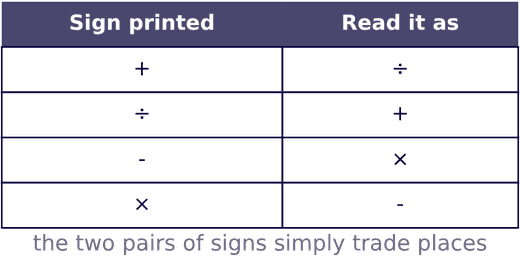 So is read as .
By BODMAS, divide first: .
Then multiply: .
Finally 36-29+22=7+22=29.
Hence the correct option is (a).
So is read as .
By BODMAS, divide first: .
Then multiply: .
Finally 36-29+22=7+22=29.
Hence the correct option is (a).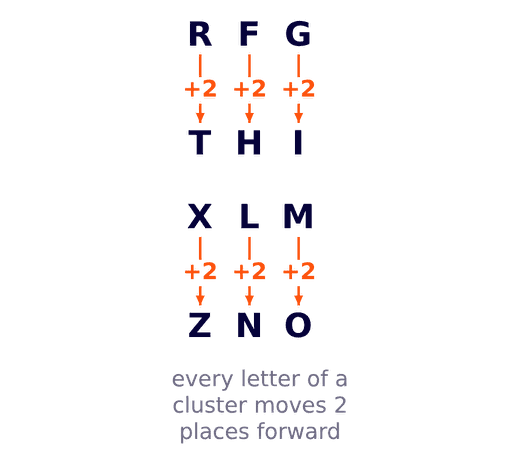 First letters R, T, V, X move +2 each time, so the next is X+2= Z.
Second letters F, H, J, L move +2 each time, so the next is L+2= N.
Third letters G, I, K, M move +2 each time, so the next is M+2= O.
The missing cluster is therefore ZNO, option (d).
First letters R, T, V, X move +2 each time, so the next is X+2= Z.
Second letters F, H, J, L move +2 each time, so the next is L+2= N.
Third letters G, I, K, M move +2 each time, so the next is M+2= O.
The missing cluster is therefore ZNO, option (d).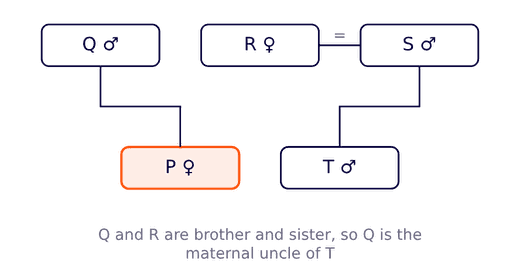 So P is the daughter of T's mother's brother, option (b).
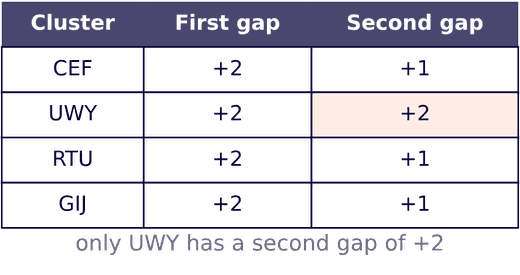 CEF: C E is +2 and E F is +1.
RTU and GIJ give the same pattern.
UWY: U W is +2 but W Y is +2, not +1.
So UWY does not belong to the group, option (b).
CEF: C E is +2 and E F is +1.
RTU and GIJ give the same pattern.
UWY: U W is +2 but W Y is +2, not +1.
So UWY does not belong to the group, option (b).
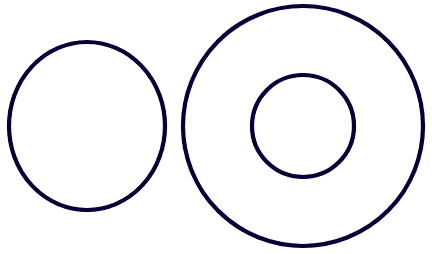
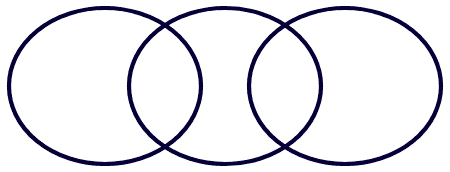
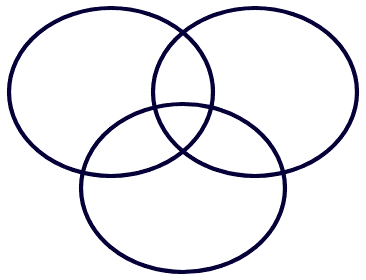
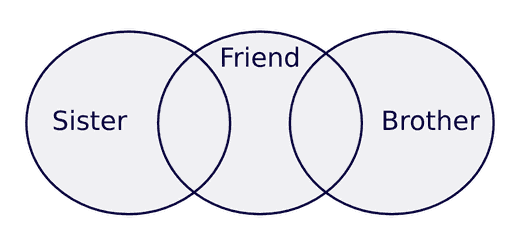 The only figure with a middle circle cutting both end circles while the end circles themselves stay separate is option (c).
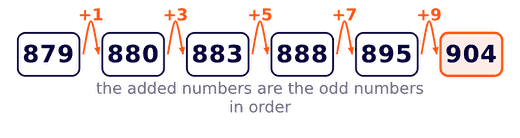 880-879=1, 883-880=3, 888-883=5, 895-888=7.
The differences are the consecutive odd numbers , so the next difference is 9.
Missing term =895+9=904.
Hence the correct option is (c).
880-879=1, 883-880=3, 888-883=5, 895-888=7.
The differences are the consecutive odd numbers , so the next difference is 9.
Missing term =895+9=904.
Hence the correct option is (c).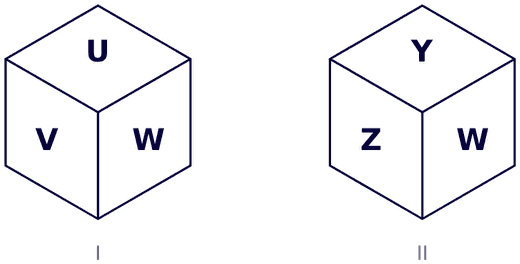
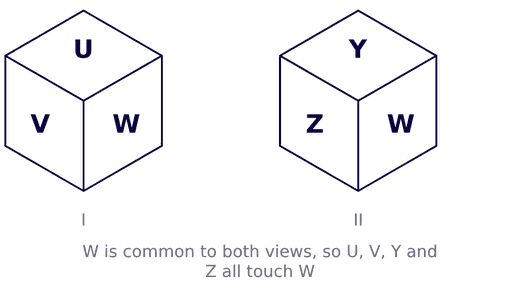 A cube face touches exactly four faces, and W already touches U, V, Y and Z.
The only letter left is X, so X and W lie on opposite faces.
The face opposite X therefore carries W, option (a).
A cube face touches exactly four faces, and W already touches U, V, Y and Z.
The only letter left is X, so X and W lie on opposite faces.
The face opposite X therefore carries W, option (a).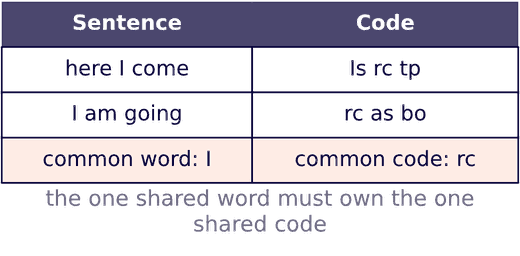 The sentences 'here I come' and 'I am going' have exactly one word in common - 'I'.
Their codes 'Is rc tp' and 'rc as bo' have exactly one code in common - 'rc'.
A code that appears in both lines must stand for the word that appears in both lines.
So 'I' is coded as 'rc', option (a).
The sentences 'here I come' and 'I am going' have exactly one word in common - 'I'.
Their codes 'Is rc tp' and 'rc as bo' have exactly one code in common - 'rc'.
A code that appears in both lines must stand for the word that appears in both lines.
So 'I' is coded as 'rc', option (a).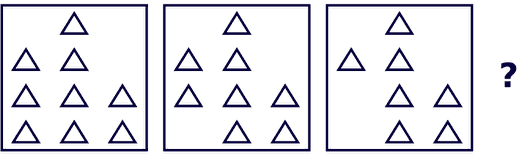
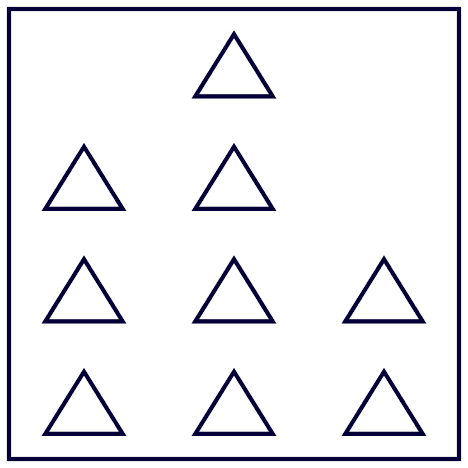
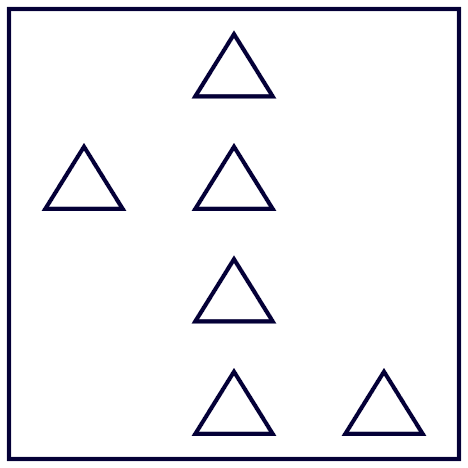
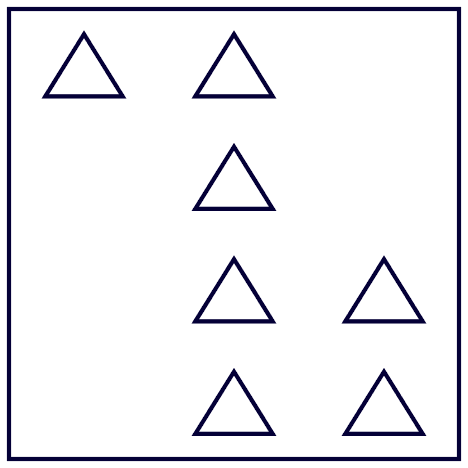
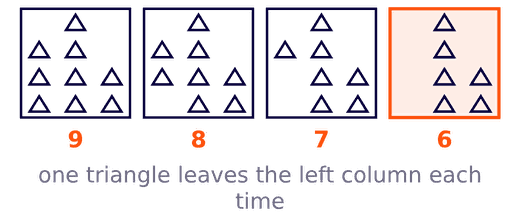 Look at where the loss happens: the middle column and the right column never change, and the triangle that disappears is always the lowest one still standing in the left column.
The left column starts with three triangles (rows 2, 3 and 4) and has already lost the row-4 one and then the row-3 one.
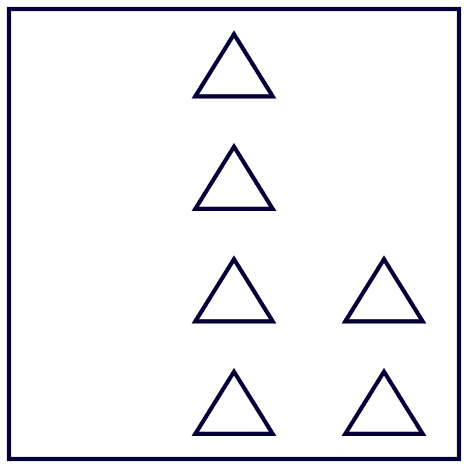
The fourth figure therefore loses the last left-column triangle and keeps 6: one in row 1, one in row 2 and two in each of rows 3 and 4.
That figure is option (a).
Look at where the loss happens: the middle column and the right column never change, and the triangle that disappears is always the lowest one still standing in the left column.
The left column starts with three triangles (rows 2, 3 and 4) and has already lost the row-4 one and then the row-3 one.
The fourth figure therefore loses the last left-column triangle and keeps 6: one in row 1, one in row 2 and two in each of rows 3 and 4.
That figure is option (a).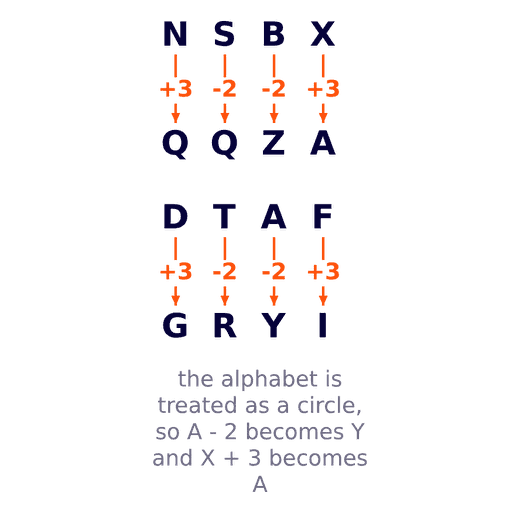 The second pair obeys the same rule: O +3= R, K -2= I, I -2= G, R +3= U, giving RIGU.
Apply to DTAF: D (4)+3=7= G, T (20)-2=18= R, A (1)-2=25= Y, F (6)+3=9= I.
So DTAF is related to GRYI, option (d).
The second pair obeys the same rule: O +3= R, K -2= I, I -2= G, R +3= U, giving RIGU.
Apply to DTAF: D (4)+3=7= G, T (20)-2=18= R, A (1)-2=25= Y, F (6)+3=9= I.
So DTAF is related to GRYI, option (d).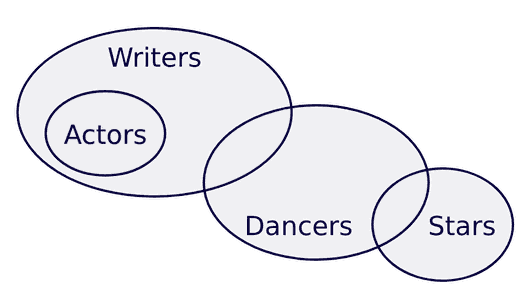 Conclusion (I): Stars meets only Dancers, and Dancers need not reach the Actor circle at all, so 'Some stars are actors' is not forced - it does not follow.
Conclusion (II): the part of Writers shared with Dancers can lie completely outside the Actor circle, so 'Some dancers are actors' is not forced either.
Neither conclusion follows, option (b).
Conclusion (I): Stars meets only Dancers, and Dancers need not reach the Actor circle at all, so 'Some stars are actors' is not forced - it does not follow.
Conclusion (II): the part of Writers shared with Dancers can lie completely outside the Actor circle, so 'Some dancers are actors' is not forced either.
Neither conclusion follows, option (b).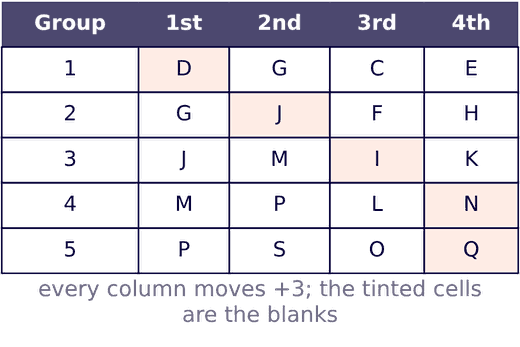 1st letters: D, G, J, M, P - each step is +3.
2nd letters: G, J, M, P, S - each step is +3.
3rd letters: C, F, I, L, O - each step is +3.
4th letters: E, H, K, N, Q - each step is +3.
The blanks come in the order 1st of group 1, 2nd of group 2, 3rd of group 3, 4th of group 4 and 4th of group 5, i.e. D, J, I, N, Q.
Hence the correct option is (c).
1st letters: D, G, J, M, P - each step is +3.
2nd letters: G, J, M, P, S - each step is +3.
3rd letters: C, F, I, L, O - each step is +3.
4th letters: E, H, K, N, Q - each step is +3.
The blanks come in the order 1st of group 1, 2nd of group 2, 3rd of group 3, 4th of group 4 and 4th of group 5, i.e. D, J, I, N, Q.
Hence the correct option is (c).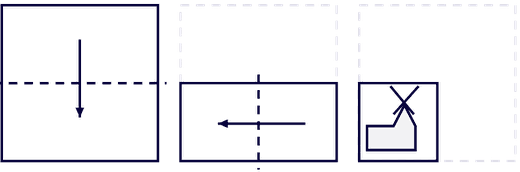
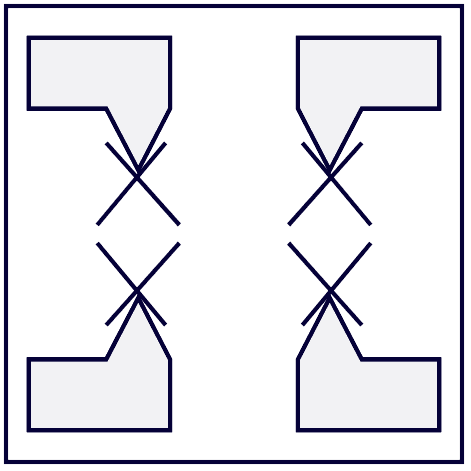
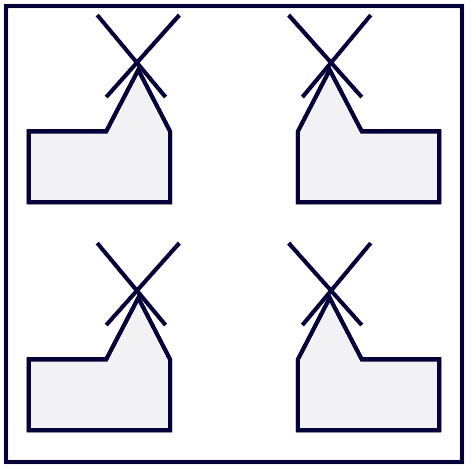
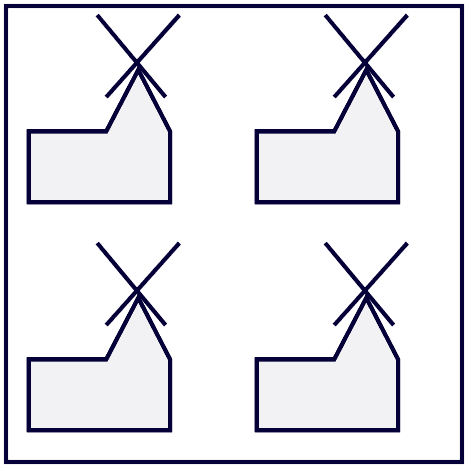
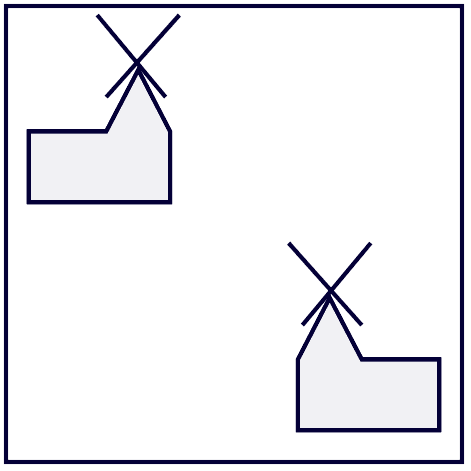
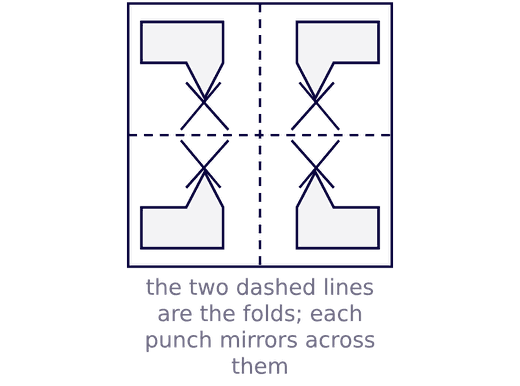 So the open sheet carries four punches, one per quarter, each one a mirror of its neighbours across the fold lines - the two top punches point downwards and the two bottom punches point upwards.
Only option (a) shows this, so it is the answer.
So the open sheet carries four punches, one per quarter, each one a mirror of its neighbours across the fold lines - the two top punches point downwards and the two bottom punches point upwards.
Only option (a) shows this, so it is the answer.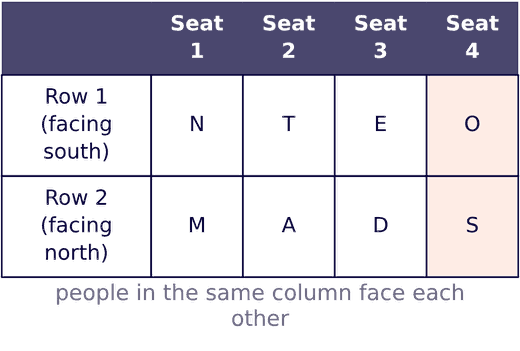 Seat 4 holds O in row 1 and S in row 2, so O and S face each other - option (d).
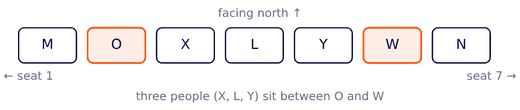 Between O (seat 2) and W (seat 6) sit X, L and Y.
That is three people, option (b).
Between O (seat 2) and W (seat 6) sit X, L and Y.
That is three people, option (b).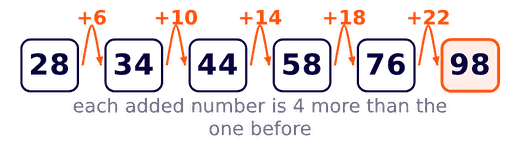 34-28=6, 44-34=10, 58-44=14, 76-58=18.
These differences themselves rise by 4 each time, so the next difference is 18+4=22.
Missing term =76+22=98.
Hence the correct option is (d).
34-28=6, 44-34=10, 58-44=14, 76-58=18.
These differences themselves rise by 4 each time, so the next difference is 18+4=22.
Missing term =76+22=98.
Hence the correct option is (d).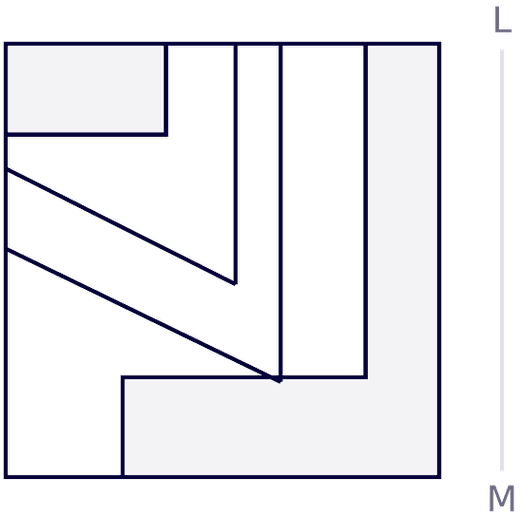
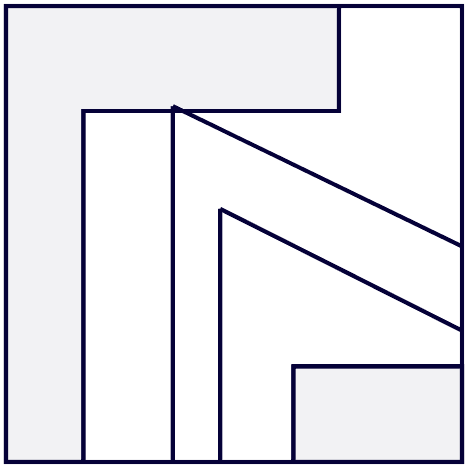
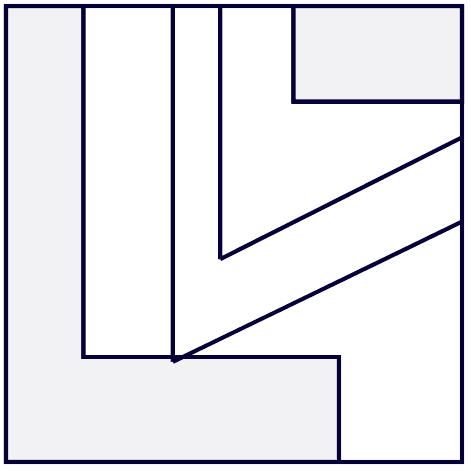
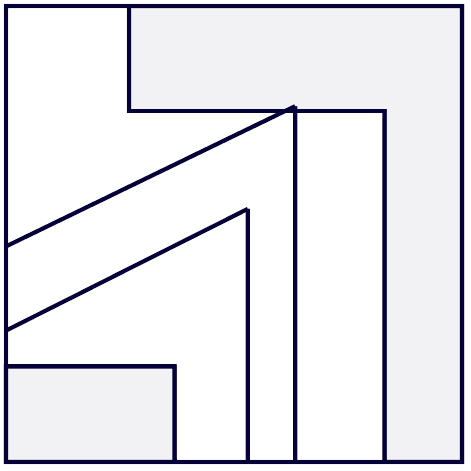
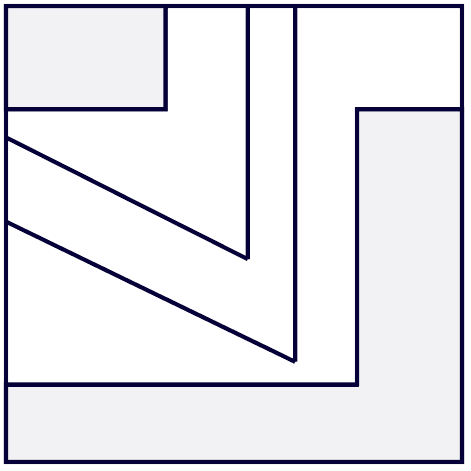
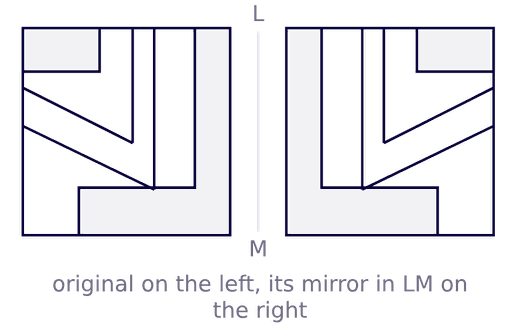 Option (a) turns the figure upside down, (c) flips it top-to-bottom and (d) leaves the black bands on their original sides.
Only option (b) satisfies every check, so it is the mirror image.
Option (a) turns the figure upside down, (c) flips it top-to-bottom and (d) leaves the black bands on their original sides.
Only option (b) satisfies every check, so it is the mirror image.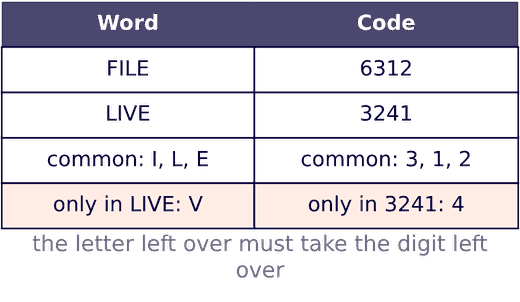 FILE and LIVE share the letters I, L and E; the codes 6312 and 3241 share the digits 3, 1 and 2.
So I, L, E use up the digits 3, 1, 2 in some order, and whatever is left in a word must match whatever is left in its code.
F is the only letter in FILE that LIVE does not have, and 6 is the only digit in 6312 that 3241 does not have, so F =6.
V is the only letter in LIVE that FILE does not have, and 4 is the only digit in 3241 that 6312 does not have, so V =4.
Hence the correct option is (a).
FILE and LIVE share the letters I, L and E; the codes 6312 and 3241 share the digits 3, 1 and 2.
So I, L, E use up the digits 3, 1, 2 in some order, and whatever is left in a word must match whatever is left in its code.
F is the only letter in FILE that LIVE does not have, and 6 is the only digit in 6312 that 3241 does not have, so F =6.
V is the only letter in LIVE that FILE does not have, and 4 is the only digit in 3241 that 6312 does not have, so V =4.
Hence the correct option is (a).