
21
In the context of Keynesian economics, what would be an ideal government response to an overheated economy ?
- A.Reduce taxes
- B.Implement contractionary fiscal policies
- C.Increase government spending
- D.Encourage consumer spending
Solution
Keynesian fiscal policy
Correct option: (b) Implement contractionary fiscal policies.
An economy is said to be 'overheated' when aggregate demand runs ahead of its capacity to produce, so prices rise sharply. Keynes treats this as a problem of excess demand, and fiscal policy is the tool used to pull that demand back.
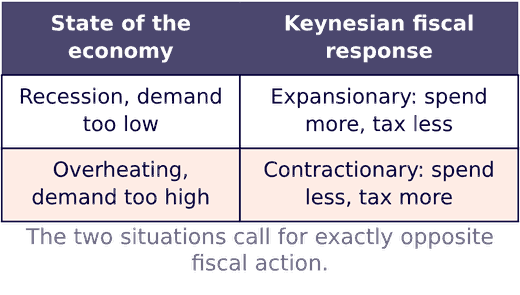 A contractionary fiscal policy works in two ways at once: the government cuts its own spending and raises taxes, which lowers disposable income and therefore consumption.
The other three options - cutting taxes, raising government spending and encouraging consumers to spend - are all expansionary. They are the Keynesian cure for a recession, and in an overheated economy they would only add to inflation.
A contractionary fiscal policy works in two ways at once: the government cuts its own spending and raises taxes, which lowers disposable income and therefore consumption.
The other three options - cutting taxes, raising government spending and encouraging consumers to spend - are all expansionary. They are the Keynesian cure for a recession, and in an overheated economy they would only add to inflation.
A contractionary fiscal policy works in two ways at once: the government cuts its own spending and raises taxes, which lowers disposable income and therefore consumption.
The other three options - cutting taxes, raising government spending and encouraging consumers to spend - are all expansionary. They are the Keynesian cure for a recession, and in an overheated economy they would only add to inflation.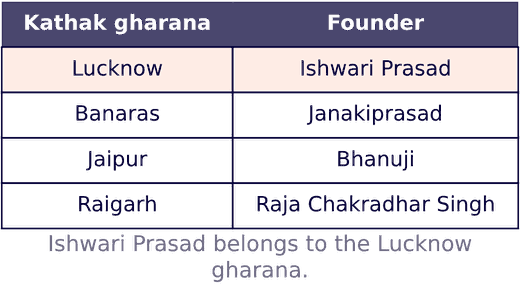 The Lucknow gharana is known for grace and for expressive abhinaya (bhava), while heavy, mathematical footwork is the mark of the Jaipur gharana.
Keep the founders separate: Banaras - Janakiprasad, Jaipur - Bhanuji, Raigarh - Raja Chakradhar Singh.
The Lucknow gharana is known for grace and for expressive abhinaya (bhava), while heavy, mathematical footwork is the mark of the Jaipur gharana.
Keep the founders separate: Banaras - Janakiprasad, Jaipur - Bhanuji, Raigarh - Raja Chakradhar Singh.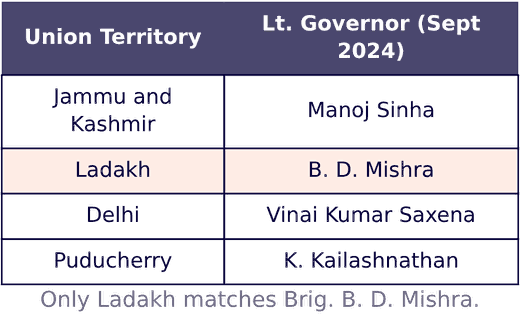 Ladakh was carved out as a union territory without a legislature on 31 October 2019, so it is administered directly by a Lieutenant Governor; Mishra was its second.
The other three union territories had different incumbents on that date, as the table shows, which is why each of them is ruled out.
Ladakh was carved out as a union territory without a legislature on 31 October 2019, so it is administered directly by a Lieutenant Governor; Mishra was its second.
The other three union territories had different incumbents on that date, as the table shows, which is why each of them is ruled out.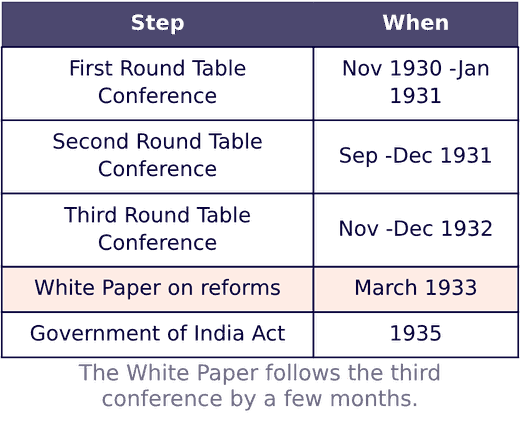 Its recommendations were published by the British government as a White Paper on constitutional reform in March 1933. A Joint Select Committee of Parliament then examined that paper, and its report became the Government of India Act, 1935.
The other years belong to different steps of the same story - 1931 and 1932 are conference years and 1934 is the year of the Joint Select Committee's scrutiny - so only 1933 fits the White Paper.
Its recommendations were published by the British government as a White Paper on constitutional reform in March 1933. A Joint Select Committee of Parliament then examined that paper, and its report became the Government of India Act, 1935.
The other years belong to different steps of the same story - 1931 and 1932 are conference years and 1934 is the year of the Joint Select Committee's scrutiny - so only 1933 fits the White Paper.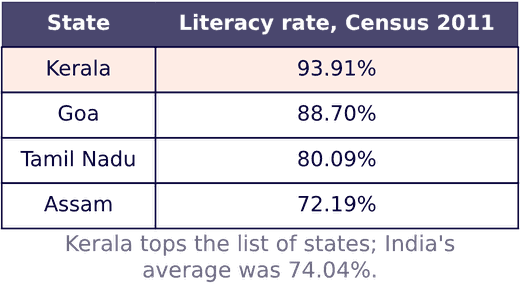 The other options stand well below Kerala: Goa 88.70%, Tamil Nadu 80.09% and Assam 72.19%, with Bihar the lowest state at 61.80%.
Among union territories Lakshadweep led with 91.85%, but that is a union territory, so Kerala remains the most literate state.
The other options stand well below Kerala: Goa 88.70%, Tamil Nadu 80.09% and Assam 72.19%, with Bihar the lowest state at 61.80%.
Among union territories Lakshadweep led with 91.85%, but that is a union territory, so Kerala remains the most literate state.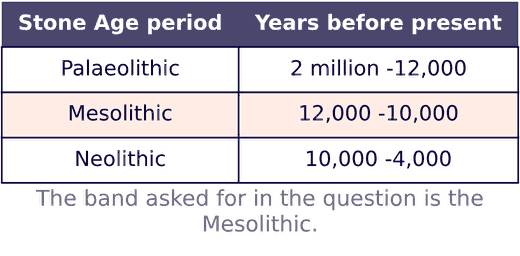 Its typical tools are microliths - tiny stone blades hafted into wood or bone - so 'microlith' names a tool, not a period, and option (b) is the wrong kind of thing altogether.
The Palaeolithic runs from about 2 million to 12,000 years ago and the Neolithic begins about 10,000 years ago with farming and herding. Bagor in Rajasthan and Adamgarh in Madhya Pradesh are well-known Mesolithic sites.
Its typical tools are microliths - tiny stone blades hafted into wood or bone - so 'microlith' names a tool, not a period, and option (b) is the wrong kind of thing altogether.
The Palaeolithic runs from about 2 million to 12,000 years ago and the Neolithic begins about 10,000 years ago with farming and herding. Bagor in Rajasthan and Adamgarh in Madhya Pradesh are well-known Mesolithic sites.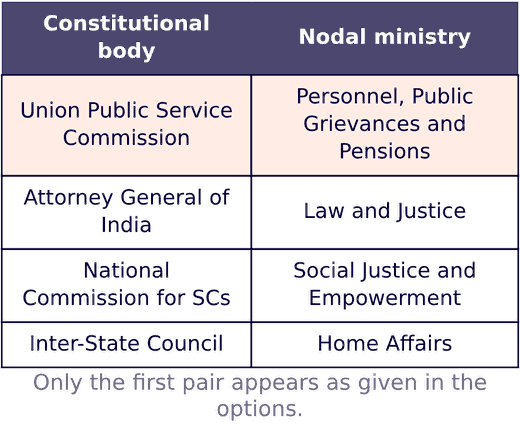 The Attorney General of India (Article 76) is the government's chief law officer and is serviced by the Ministry of Law and Justice, not the Ministry of Home Affairs.
The National Commission for Scheduled Castes (Article 338) works under the Ministry of Social Justice and Empowerment - the Ministry of Tribal Affairs is the nodal ministry for the National Commission for Scheduled Tribes (Article 338A) - and the Inter-State Council (Article 263) comes under the Ministry of Home Affairs, not Finance.
The Attorney General of India (Article 76) is the government's chief law officer and is serviced by the Ministry of Law and Justice, not the Ministry of Home Affairs.
The National Commission for Scheduled Castes (Article 338) works under the Ministry of Social Justice and Empowerment - the Ministry of Tribal Affairs is the nodal ministry for the National Commission for Scheduled Tribes (Article 338A) - and the Inter-State Council (Article 263) comes under the Ministry of Home Affairs, not Finance.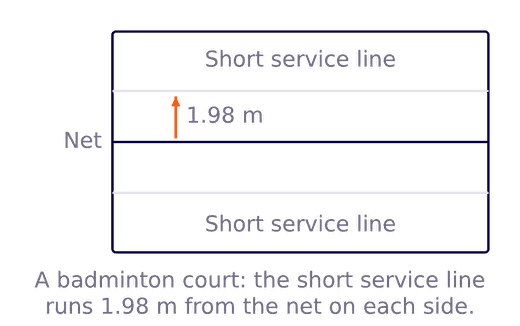 A badminton court is 13.4 m long and 6.1 m wide for doubles (5.18 m for singles), and the net is 1.55 m high at the posts and 1.524 m at the centre.
Tennis does have a service line, but it lies 6.4 m from the net and is not called 'short'; table tennis and squash have no line of this name at all.
A badminton court is 13.4 m long and 6.1 m wide for doubles (5.18 m for singles), and the net is 1.55 m high at the posts and 1.524 m at the centre.
Tennis does have a service line, but it lies 6.4 m from the net and is not called 'short'; table tennis and squash have no line of this name at all.