SSC GD Constable 11 February 2025 · Shift 2 · General Intelligence & Reasoning — questions with answers · ShikshaSphere
Chapter 81 of 210
11 February 2025 · Shift 2
General Intelligence & Reasoning
20 questions ~20 min readFree
20 questions
A
1
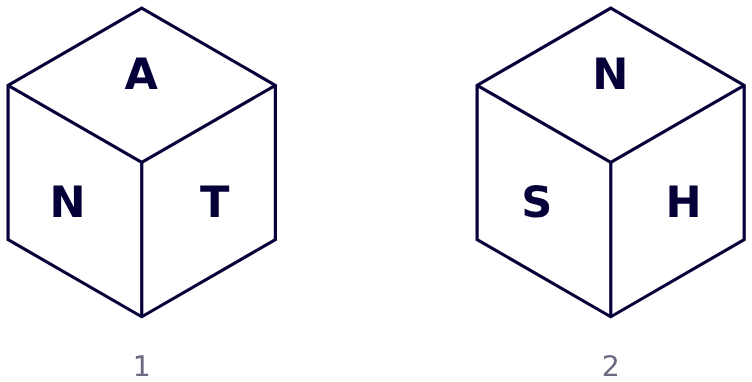
A dice has its faces marked by letters I, S, H, N, A and T. Two positions of the same dice are given below. Which face is opposite to face ' I '?
A.S
B.T
C.N
D.A
Solution
Dice - opposite faces
Both pictures show the same die, so every letter that shares a view with another letter must touch it - two faces that meet cannot be opposite.
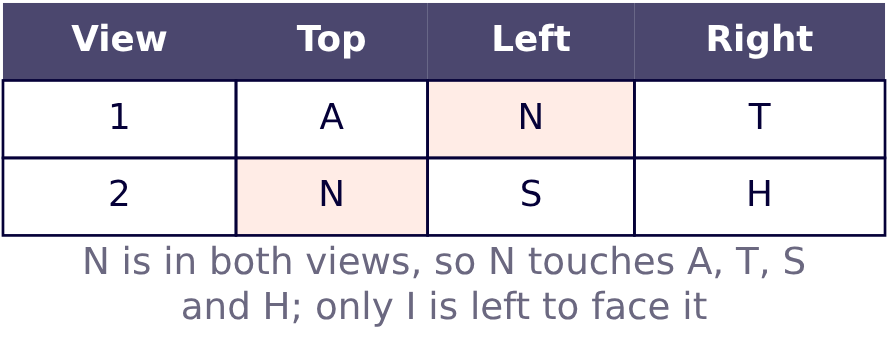
View 1 shows N together with A and T, so N touches A and T.
View 2 shows N together with S and H, so N also touches S and H.
N therefore touches four of the other five letters: A, T, S and H.
The only letter left for the face opposite N is I.
So the face opposite I is N, i.e. option (c).
2
What should come in place of the question mark (?) in the given series based on the English alphabetical order? ZXV, PNL, FDB, VTR, ?
A.RQP
B.LJH
C.JIG
D.XVW
Solution
Letter-cluster series
Look inside a cluster first: Z, X, V fall by 2 each time, and so do P, N, L and F, D, B.
Now look across the clusters, at their first letters only: Z =26, P =16, F =6, V =22.
Each first letter is 10 less than the one before it, counting back round the alphabet: 6-10=-4, which is 26-4=22, i.e. V.
So the next cluster starts at 22-10=12, i.e. L.
Falling by 2 twice from L gives L, J, H.
So the missing term is LJH, i.e. option (b).
3
In a certain code language, 'SOUL' is coded as '6415' and 'LOST' is coded as '6548'. How is 'U' coded in the given language?
A.5
B.1
C.4
D.8
Solution
Letter-digit coding
In this kind of code the digits are not in the order of the letters, so compare the two words as sets.
SOUL and LOST have the letters S, O and L in common; their codes 6415 and 6548 have the digits 6, 4 and 5 in common.
So those three letters use up exactly those three digits.
In SOUL the letter left over is U, and in 6415 the digit left over is 1.
So U is coded as 1, i.e. option (b).
4
What will come in the place of the question mark '(?)' in the following equation, if '×' and '+' are interchanged and '−' and '÷' are interchanged? 51 ÷ 30 × 36 − 6 + 6 = ?
A.55
B.57
C.56
D.58
Solution
Interchange of signs
Write down what each sign turns into before touching the numbers.
So becomes .
Now apply BODMAS. Division first: .
Then multiplication: .
Finally addition and subtraction from the left: 51-30=21 and 21+36=57.
So the question mark stands for 57, i.e. option (b).
5
Based on the English alphabetical order, three of the following four letter-clusters are alike in a certain way and thus form a group. Which letter-cluster DOES NOT belong to that group?
(Note: The odd one out is not based on the number of consonants/vowels or their position in the letter-cluster.)
A.JOD
B.RWD
C.FKR
D.DIP
Solution
Odd letter-cluster out
Measure the two gaps inside each cluster.
RWD: R W is +5, and W D is +7 (X, Y, Z, A, B, C, D).
FKR: F K is +5 and K R is +7; DIP: D I is +5 and I P is +7.
JOD: J O is +5, but O +7 gives V, not D.
So JOD is the cluster that breaks the +5, +7 rule, i.e. option (a).
6
Select the figure from among the given options that can replace the question mark (?) in the following series.
A.
B.
C.
D.
Solution
Figure series
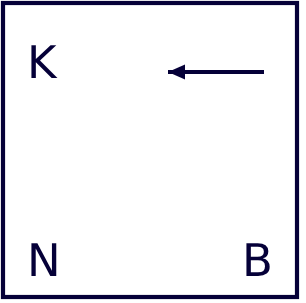
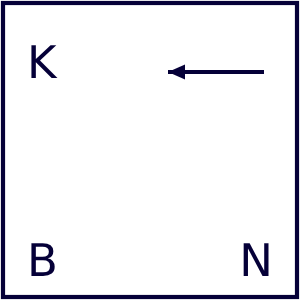
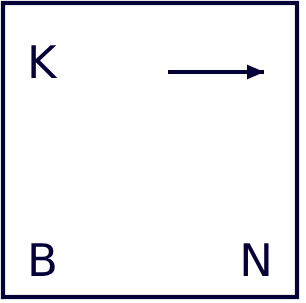
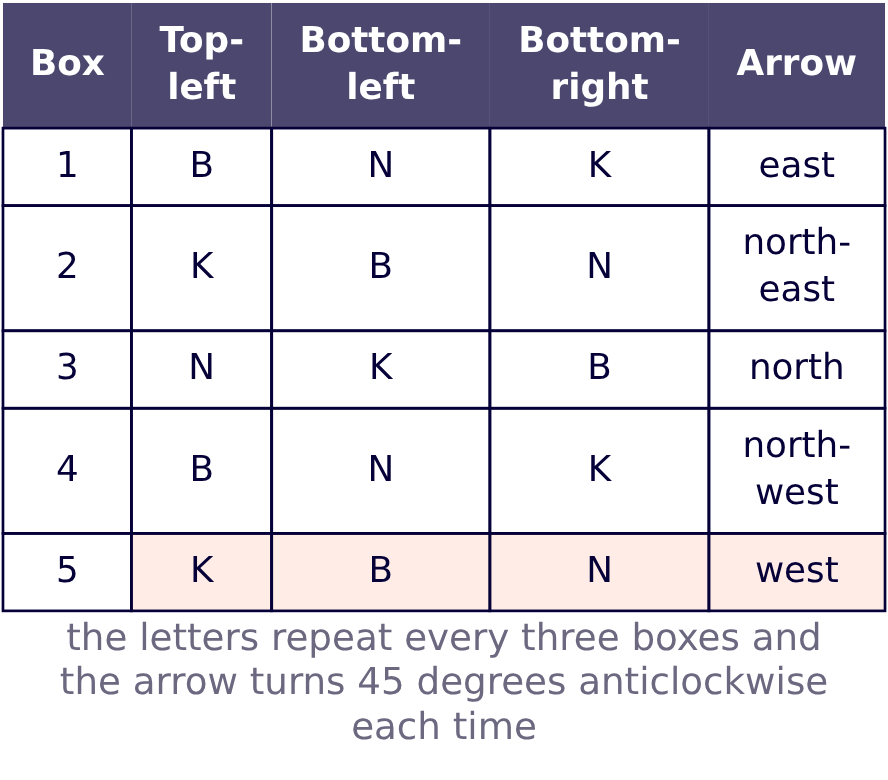
Two things change from box to box: the three corner letters and the arrow.
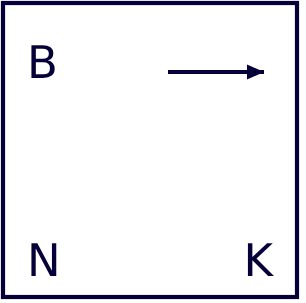
The letters read B, N, K then K, B, N then N, K, B then B, N, K - the same three letters keep sliding round, so the fifth box must read K, B, N (top-left, bottom-left, bottom-right).
The arrow turns anticlockwise each time: it points east, then north-east, then north, then north-west.
The next turn takes it to west, i.e. the arrow lies flat with its head on the left.
Only one option has K, B, N with a flat arrow pointing left.
So the missing figure is option (c).
7
Seven people, E, F, G, H, K, L and N, are sitting in a row facing north (but not necessarily in the same order). Only three people sit to the left of L. Only F sits to the right of G. Only three people sit between G and K. N sits at some place to the left of H but at some place to the right of E. How many people sit between E and N?
A.Three
B.One
C.Two
D.Four
Solution
Linear seating
All seven face north, so left and right are the same as on the page; number the seats 1 to 7 from the left.
Only three people sit to the left of L, so L takes seat 4.
Only F sits to the right of G, so G takes seat 6 and F seat 7.
Only three people sit between G and K, so K takes seat 2 - seats 3, 4 and 5 then lie between them.
E, H and N are left for seats 1, 3 and 5, and E is left of N which is left of H, so E =1, N =3, H =5.
Between E (seat 1) and N (seat 3) sits only K.
So one person sits between E and N, i.e. option (b).
8
What should come in place of the question mark (?) in the given series? 450, 460, 471, 483, 496, ?
A.504
B.508
C.510
D.500
Solution
Number series
Take the differences between consecutive terms.
460-450=10, 471-460=11, 483-471=12, 496-483=13.
The difference itself grows by 1 each step, so the next difference is 14.
Hence the missing term is 496+14=510.
So the answer is 510, i.e. option (c).
9
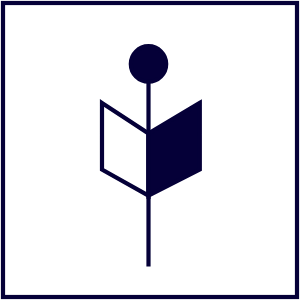
Select the correct mirror image of the given figure when the mirror is placed at MN as shown below.
A.
B.
C.
D.
Solution
Mirror image
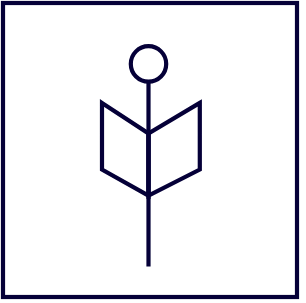
MN is a vertical line drawn to the right of the figure, so the mirror flips the figure from left to right; top and bottom stay exactly where they are.
In the given figure the ball is on top and the stem hangs below - both lie on the centre line, so neither of them changes.
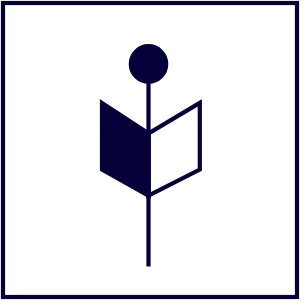
The only feature that is not symmetric is the pair of wings: the left wing is hollow and the right wing is solid.
A left-right flip must therefore put the solid wing on the left and the hollow wing on the right.
Option (b) keeps the solid wing on the right, so it is the figure itself, not its image; options (c) and (d) make both wings the same, which loses the difference altogether.
So the mirror image is option (a).
10
Read the given statements and conclusions carefully. Assuming that the information given in the statements is true, even if it appears to be at variance with commonly known facts, decide which of the given conclusions logically follow(s) from the statements.Statements:
All beats are music.
All music are rhythms.
No rhythm is a tune.
Conclusions:
(I): No beat is a tune.
(II): Some rhythms are beats.
A.Both conclusions (I) and (II) follow.
B.Neither conclusion (I) nor (II) follows.
C.Only conclusion (I) follows.
D.Only conclusion (II) follows.
Solution
Syllogism
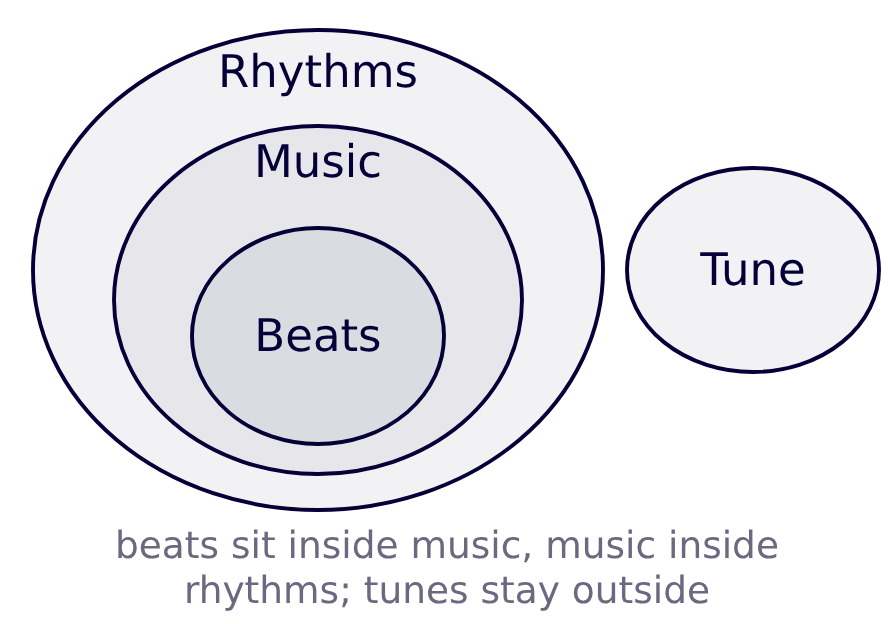
Draw the three statements on one picture: beats inside music, music inside rhythms, and the tune circle kept completely apart from rhythms.
Conclusion (I): every beat lies inside rhythms, and rhythms share nothing with tunes, so no beat can be a tune - (I) follows.
Conclusion (II): all beats are rhythms, and that at once gives rhythms which are beats - (II) follows.
So both conclusions follow, i.e. option (a).
11
Eight people are sitting in two parallel rows containing 4 people each in such a way that there is equal distance between adjacent persons. In row 1, L, M, N and O are seated and all of them are facing south. In row 2, P, Q, R and S are seated and all of them are facing north. Thus, each person faces another person from the other row. S sits third to the left of R. The one facing M is an immediate neighbour of R. O sits at some place to the right of M and is not facing P. L sits third to the right of N.
Who among the following faces Q?
A.M
B.N
C.O
D.L
Solution
Parallel-row seating
Number the four places 1 to 4 as printed, from the left of the page, for both rows.
Row 2 faces north, so for them left is the page's left; row 1 faces south, so for them left is the page's right.
S sits third to the left of R, so in row 2 S takes place 1 and R place 4.
R's only immediate neighbour is place 3, and that person faces M, so M takes place 3 of row 1.
L sits third to the right of N; for row 1 right means towards place 1, so N takes place 4 and L place 1.
That leaves place 2 of row 1 for O, which is indeed to the right of M as required.
O is not facing P, so P takes place 3 of row 2 and Q takes place 2.
Q is at place 2 of row 2 and O is at place 2 of row 1, so the two face each other.
So O faces Q, i.e. option (c).
12
UMCP is related to ZOEU in a certain way based on the English alphabetical order. In the same way,
QBXK is related to VDZP. To which of the given options is EJAH related, following the same logic ?
A.HMDN
B.INBK
C.JLCM
D.HNCL
Solution
Letter-cluster analogy
Compare the pair letter by letter: U Z is +5, M O is +2, C E is +2, P U is +5.
Check it on the second pair: Q V is +5, B D is +2, X Z is +2, K P is +5.
So the rule is +5, +2, +2, +5.
Apply it to EJAH: E +5= J, J +2= L, A +2= C, H +5= M.
So EJAH is related to JLCM, i.e. option (c).
13
BYVT is related to PMJH in a certain way based on the English alphabetical order. In the same way, QNKI is related to EBYW. To which of the given options is NKHF related, following the same logic ?
A.BXUT
B.BZUY
C.BYVT
D.BYUT
Solution
Letter-cluster analogy
Take the first pair: B =2 and P =16, a jump of +14; Y =25 and M =13, which is also +14 once you go past Z (25+14=39, and 39-26=13).
V J and T H are +14 as well, and the second pair QNKI EBYW obeys the same +14.
Apply +14 to NKHF: N =14 gives 28-26=2= B; K =11 gives 25= Y.
H =8 gives 22= V; F =6 gives 20= T.
So NKHF is related to BYVT, i.e. option (c).
14
In a certain code language, 'BASH' is coded as '5431' and 'HASE' is coded as '1234'. What is the code for ' E ' in the given code language ?
A.3
B.1
C.2
D.4
Solution
Letter-digit coding
The digits are jumbled, so compare the two words as sets of letters and sets of digits.
BASH and HASE share the letters A, S and H; the codes 5431 and 1234 share the digits 1, 3 and 4.
So those three letters take up exactly those three digits.
The letter left in HASE is E and the digit left in 1234 is 2.
So E is coded as 2, i.e. option (c).
15
Select the option that represents the letters that, when sequentially placed from left to right in the blanks below, will complete the letter series.
s t o l b _ _ _ _ o l b r i s t _ _ _ r i
A.tolrisb
B.ristolb
C.bristol
D.sirbtol
Solution
Letter series completion
Count the places first: there are 21 places in all, and 7 of them are blank.
The letters already printed - s t o l b, then o l b r i s t, then r i - all fit the block s-t-o-l-b-r-i written three times.
The first block is s t o l b r i, so the four blanks after stolb must be r, i, s, t.
The printed o l b r i s t then completes the second block and starts nothing new, so the three blanks that follow are the start of the third block: o, l, b.
Reading the blanks from left to right gives r i s t o l b.
So the answer is ristolb, i.e. option (b).
16
A dice has its faces marked by letters L, Z, I, D, N and A. Two positions of the same dice are given below. Which face is opposite to face N ?
A.L
B.Z
C.A
D.D
Solution
Dice - opposite faces
Two faces seen together in one view must touch each other, so they cannot be opposite.
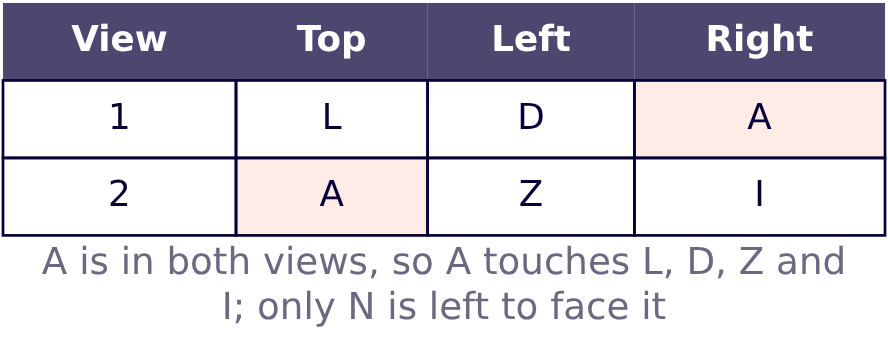
A appears in both views: with L and D in view 1, and with Z and I in view 2.
So A touches L, D, Z and I - four of the five other letters.
The only letter that can lie opposite A is the one never seen with it, namely N.
So the face opposite N is A, i.e. option (c).
17
What should come in place of the question mark (?) in the given series? 7, 17, 25, 53, 61, ?
A.152
B.148
C.184
D.125
Solution
Number series
Consecutive differences (10, 8, 28, 8) show no pattern, so compare every second term instead.
Terms in the odd places: 7, 25, 61. The gaps are 25-7=18 and 61-25=36, so the gap doubles.
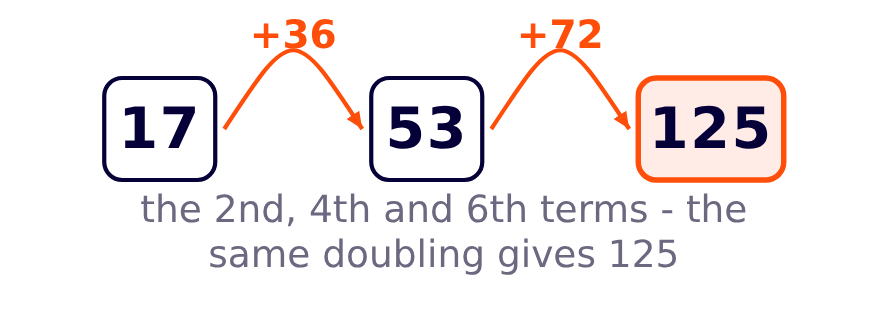
Terms in the even places: 17, 53 and then the missing one. The first gap is 53-17=36, so the next gap is .
Hence the missing term is 53+72=125.
So the answer is 125, i.e. option (d).
18
The position(s) of how many letters will remain unchanged if each of the letters in the word LIGHTER is arranged in the English alphabetical order ?
A.One
B.Zero
C.Two
D.Three
Solution
Alphabetical rearrangement
Write LIGHTER as it stands: L, I, G, H, T, E, R.
Sort the same seven letters alphabetically: E, G, H, I, L, R, T.
Now compare place by place: L-E, I-G, G-H, H-I, T-L, E-R, R-T.
Not a single place holds the same letter in both rows.
So the answer is zero, i.e. option (b).
19
In a certain code language, 'A + B' means 'A is the brother of B', 'A − B' means 'A is the sister of B', 'A × B' means 'A is the mother of B' and 'A ÷ B' means 'A is the father of B'. How is M related to P if 'M + N − O × P ÷ Q'?
A.Brother's daughter
B.Father's mother
C.Sister's daughter
D.Mother's brother
Solution
Coded blood relation
Break the expression at each sign and read it from the left.
M+N means M is the brother of N, so M is male.
N-O means N is the sister of O, so M, N and O are children of the same parents.
means O is the mother of P.
means P is the father of Q, which is not needed for this question.
P's mother is O, and M is a brother of O.
So M is P's mother's brother, i.e. option (d).
20
Select the Venn diagram that best illustrates the relationship between the following classes.
Female, Doctor, Sister
A.
B.
C.
D.
Solution
Venn diagram of classes
Take the three classes two at a time.
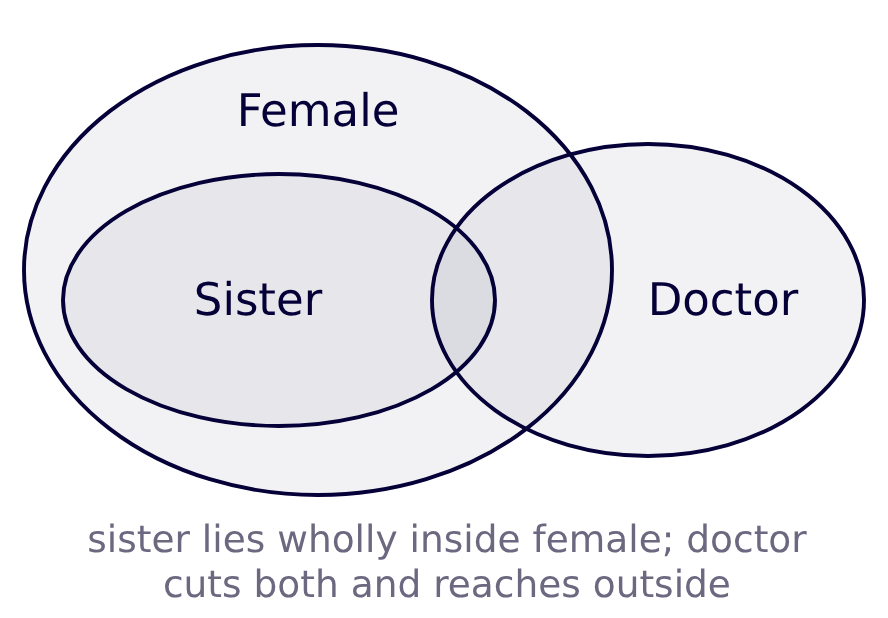
Every sister is a female, so the whole of sister lies inside female.
A doctor may be a man or a woman, so doctor only partly overlaps female - it can neither contain it nor sit inside it.
A sister can also be a doctor, so doctor must cut into the sister region too.
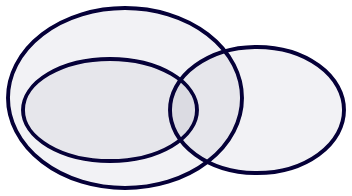
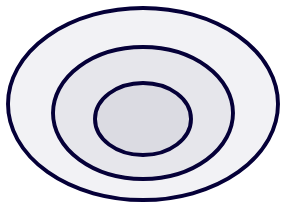
The diagram needed is therefore a small ellipse (sister) inside a large one (female), with a third ellipse (doctor) crossing both and still sticking out.
So the correct Venn diagram is option (c).
Finished reading? Now test yourself.
The same 20 questions, but with a timer and the answers hidden — 15 minutes.

 View 1 shows N together with A and T, so N touches A and T.
View 2 shows N together with S and H, so N also touches S and H.
N therefore touches four of the other five letters: A, T, S and H.
The only letter left for the face opposite N is I.
So the face opposite I is N, i.e. option (c).
View 1 shows N together with A and T, so N touches A and T.
View 2 shows N together with S and H, so N also touches S and H.
N therefore touches four of the other five letters: A, T, S and H.
The only letter left for the face opposite N is I.
So the face opposite I is N, i.e. option (c).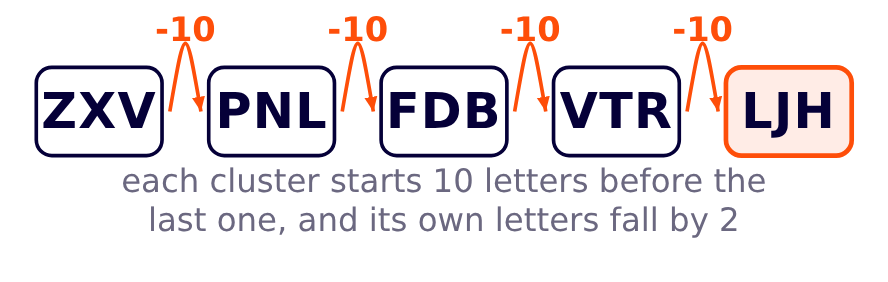 So the next cluster starts at 22-10=12, i.e. L.
Falling by 2 twice from L gives L, J, H.
So the missing term is LJH, i.e. option (b).
So the next cluster starts at 22-10=12, i.e. L.
Falling by 2 twice from L gives L, J, H.
So the missing term is LJH, i.e. option (b).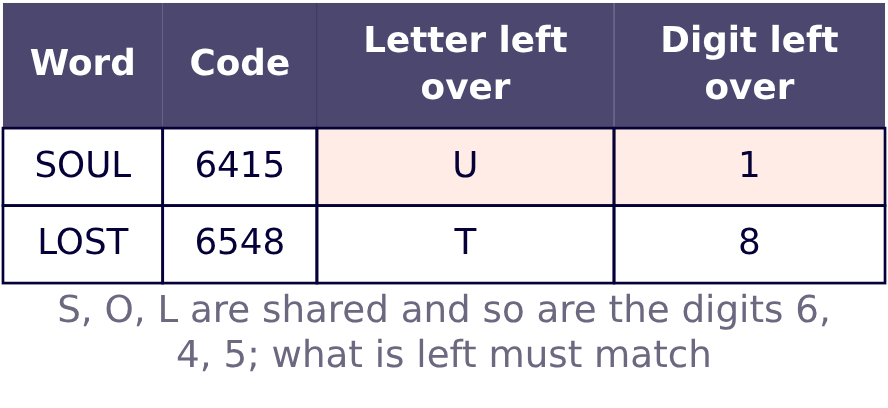 SOUL and LOST have the letters S, O and L in common; their codes 6415 and 6548 have the digits 6, 4 and 5 in common.
So those three letters use up exactly those three digits.
In SOUL the letter left over is U, and in 6415 the digit left over is 1.
So U is coded as 1, i.e. option (b).
SOUL and LOST have the letters S, O and L in common; their codes 6415 and 6548 have the digits 6, 4 and 5 in common.
So those three letters use up exactly those three digits.
In SOUL the letter left over is U, and in 6415 the digit left over is 1.
So U is coded as 1, i.e. option (b).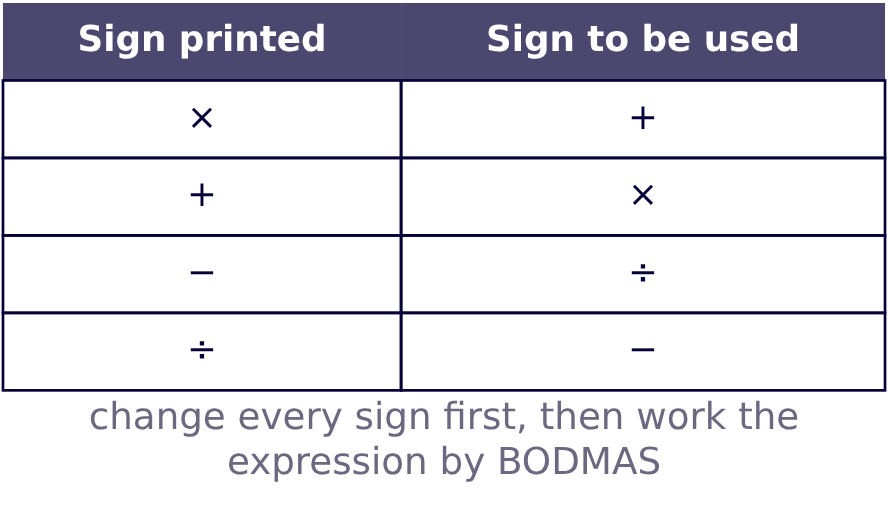 So becomes .
Now apply BODMAS. Division first: .
Then multiplication: .
Finally addition and subtraction from the left: 51-30=21 and 21+36=57.
So the question mark stands for 57, i.e. option (b).
So becomes .
Now apply BODMAS. Division first: .
Then multiplication: .
Finally addition and subtraction from the left: 51-30=21 and 21+36=57.
So the question mark stands for 57, i.e. option (b).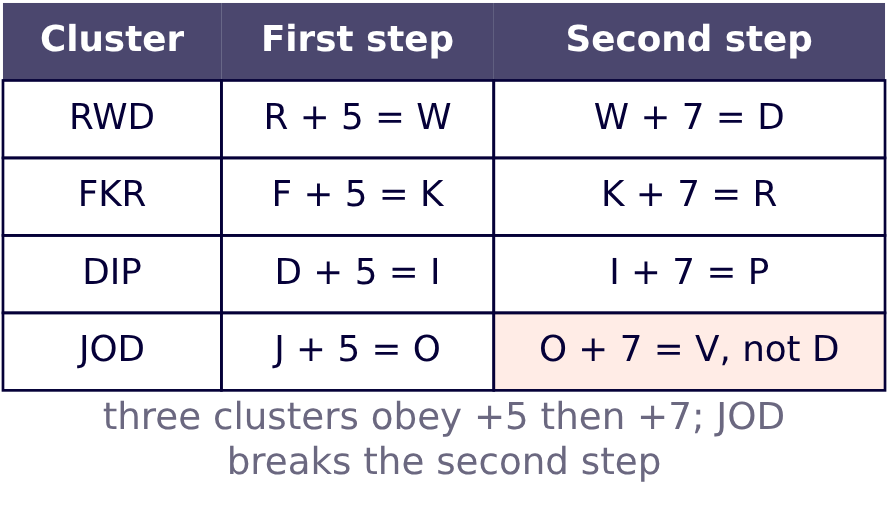 RWD: R W is +5, and W D is +7 (X, Y, Z, A, B, C, D).
FKR: F K is +5 and K R is +7; DIP: D I is +5 and I P is +7.
JOD: J O is +5, but O +7 gives V, not D.
So JOD is the cluster that breaks the +5, +7 rule, i.e. option (a).
RWD: R W is +5, and W D is +7 (X, Y, Z, A, B, C, D).
FKR: F K is +5 and K R is +7; DIP: D I is +5 and I P is +7.
JOD: J O is +5, but O +7 gives V, not D.
So JOD is the cluster that breaks the +5, +7 rule, i.e. option (a).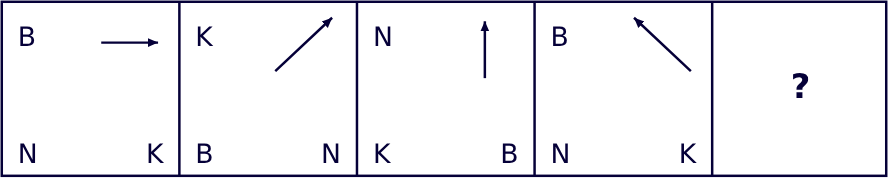
 The arrow turns anticlockwise each time: it points east, then north-east, then north, then north-west.
The next turn takes it to west, i.e. the arrow lies flat with its head on the left.
Only one option has K, B, N with a flat arrow pointing left.
So the missing figure is option (c).
The arrow turns anticlockwise each time: it points east, then north-east, then north, then north-west.
The next turn takes it to west, i.e. the arrow lies flat with its head on the left.
Only one option has K, B, N with a flat arrow pointing left.
So the missing figure is option (c).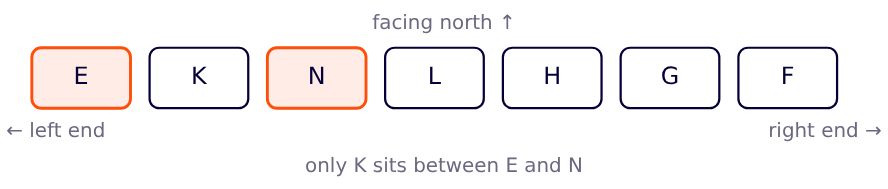 Between E (seat 1) and N (seat 3) sits only K.
So one person sits between E and N, i.e. option (b).
Between E (seat 1) and N (seat 3) sits only K.
So one person sits between E and N, i.e. option (b).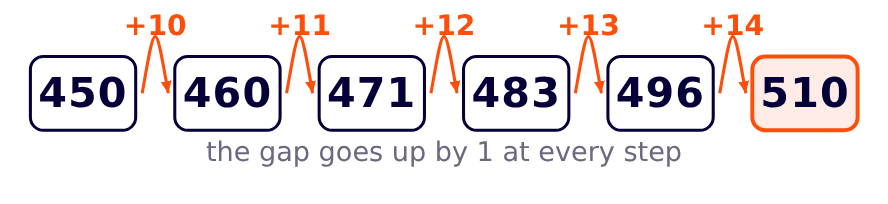 Hence the missing term is 496+14=510.
So the answer is 510, i.e. option (c).
Hence the missing term is 496+14=510.
So the answer is 510, i.e. option (c).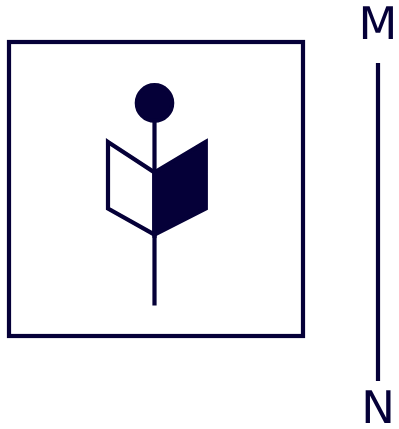

 Conclusion (I): every beat lies inside rhythms, and rhythms share nothing with tunes, so no beat can be a tune - (I) follows.
Conclusion (II): all beats are rhythms, and that at once gives rhythms which are beats - (II) follows.
So both conclusions follow, i.e. option (a).
Conclusion (I): every beat lies inside rhythms, and rhythms share nothing with tunes, so no beat can be a tune - (I) follows.
Conclusion (II): all beats are rhythms, and that at once gives rhythms which are beats - (II) follows.
So both conclusions follow, i.e. option (a).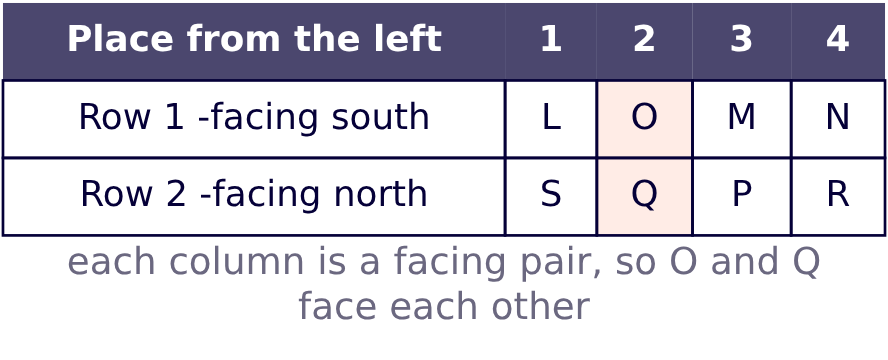 Q is at place 2 of row 2 and O is at place 2 of row 1, so the two face each other.
So O faces Q, i.e. option (c).
Q is at place 2 of row 2 and O is at place 2 of row 1, so the two face each other.
So O faces Q, i.e. option (c).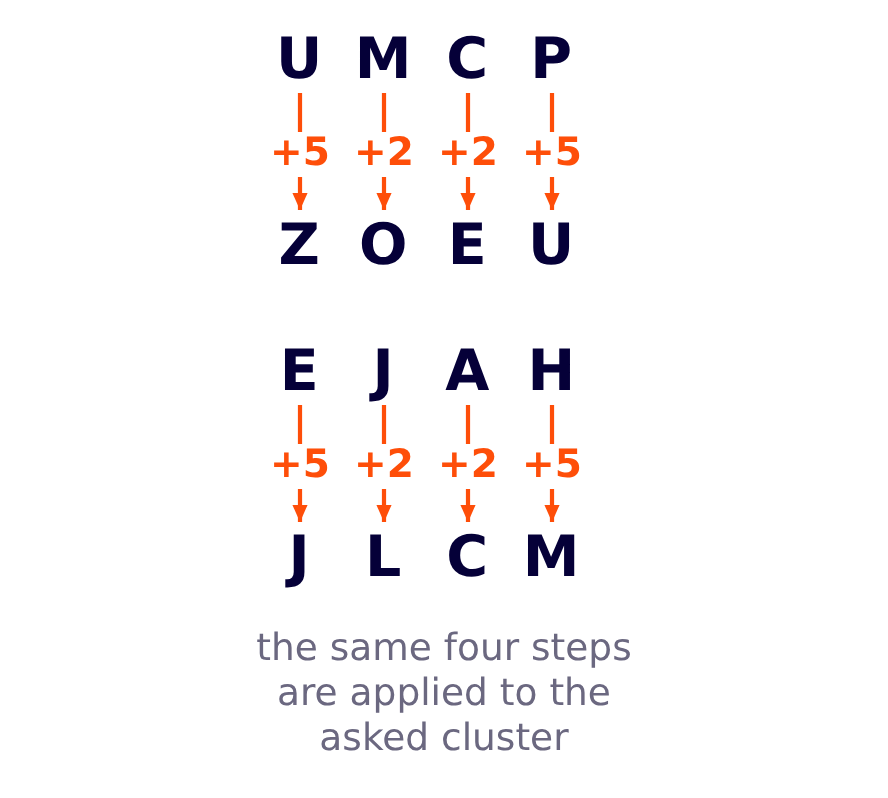 Apply it to EJAH: E +5= J, J +2= L, A +2= C, H +5= M.
So EJAH is related to JLCM, i.e. option (c).
Apply it to EJAH: E +5= J, J +2= L, A +2= C, H +5= M.
So EJAH is related to JLCM, i.e. option (c).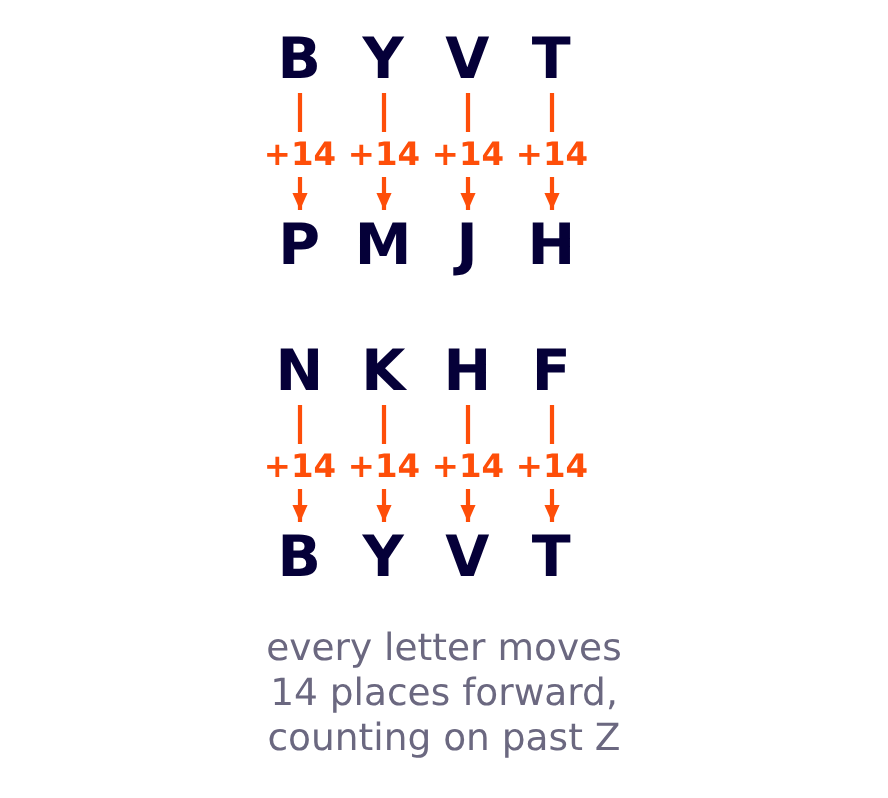 Apply +14 to NKHF: N =14 gives 28-26=2= B; K =11 gives 25= Y.
H =8 gives 22= V; F =6 gives 20= T.
So NKHF is related to BYVT, i.e. option (c).
Apply +14 to NKHF: N =14 gives 28-26=2= B; K =11 gives 25= Y.
H =8 gives 22= V; F =6 gives 20= T.
So NKHF is related to BYVT, i.e. option (c).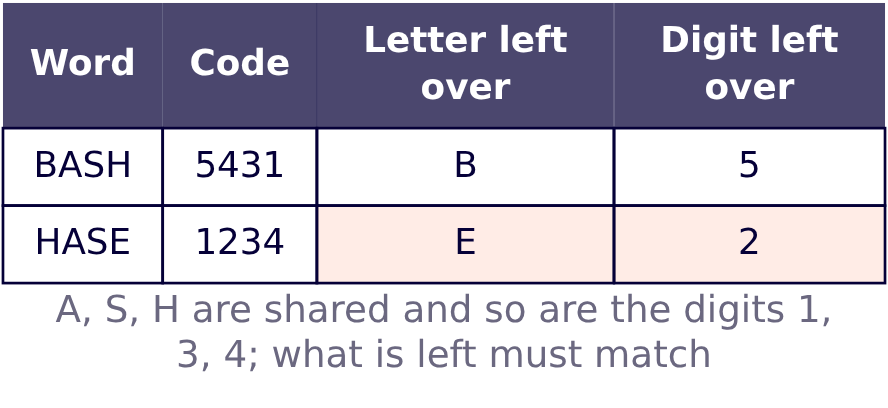 BASH and HASE share the letters A, S and H; the codes 5431 and 1234 share the digits 1, 3 and 4.
So those three letters take up exactly those three digits.
The letter left in HASE is E and the digit left in 1234 is 2.
So E is coded as 2, i.e. option (c).
BASH and HASE share the letters A, S and H; the codes 5431 and 1234 share the digits 1, 3 and 4.
So those three letters take up exactly those three digits.
The letter left in HASE is E and the digit left in 1234 is 2.
So E is coded as 2, i.e. option (c).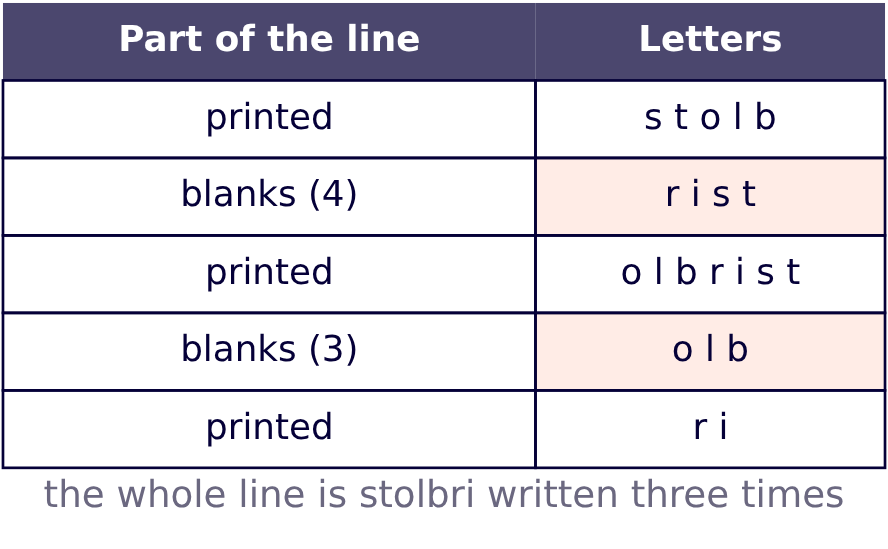 The first block is s t o l b r i, so the four blanks after stolb must be r, i, s, t.
The printed o l b r i s t then completes the second block and starts nothing new, so the three blanks that follow are the start of the third block: o, l, b.
Reading the blanks from left to right gives r i s t o l b.
So the answer is ristolb, i.e. option (b).
The first block is s t o l b r i, so the four blanks after stolb must be r, i, s, t.
The printed o l b r i s t then completes the second block and starts nothing new, so the three blanks that follow are the start of the third block: o, l, b.
Reading the blanks from left to right gives r i s t o l b.
So the answer is ristolb, i.e. option (b).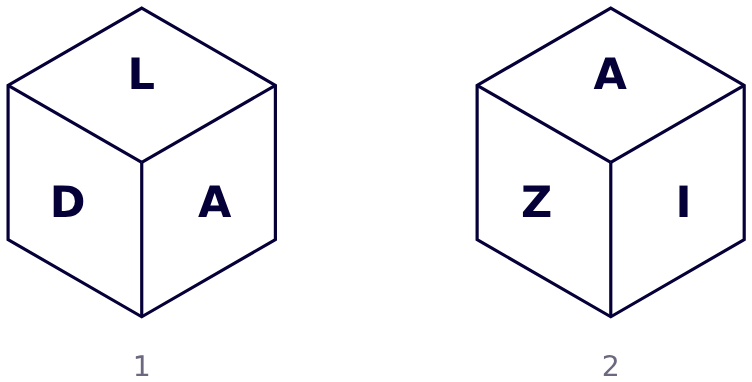
 A appears in both views: with L and D in view 1, and with Z and I in view 2.
So A touches L, D, Z and I - four of the five other letters.
The only letter that can lie opposite A is the one never seen with it, namely N.
So the face opposite N is A, i.e. option (c).
A appears in both views: with L and D in view 1, and with Z and I in view 2.
So A touches L, D, Z and I - four of the five other letters.
The only letter that can lie opposite A is the one never seen with it, namely N.
So the face opposite N is A, i.e. option (c).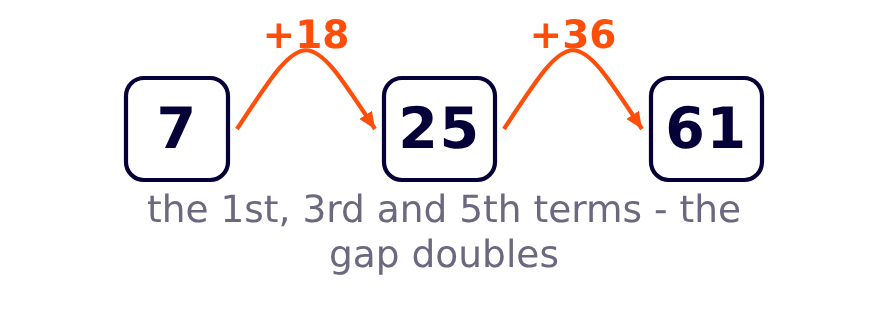 Terms in the even places: 17, 53 and then the missing one. The first gap is 53-17=36, so the next gap is .
 Hence the missing term is 53+72=125.
So the answer is 125, i.e. option (d).
Hence the missing term is 53+72=125.
So the answer is 125, i.e. option (d).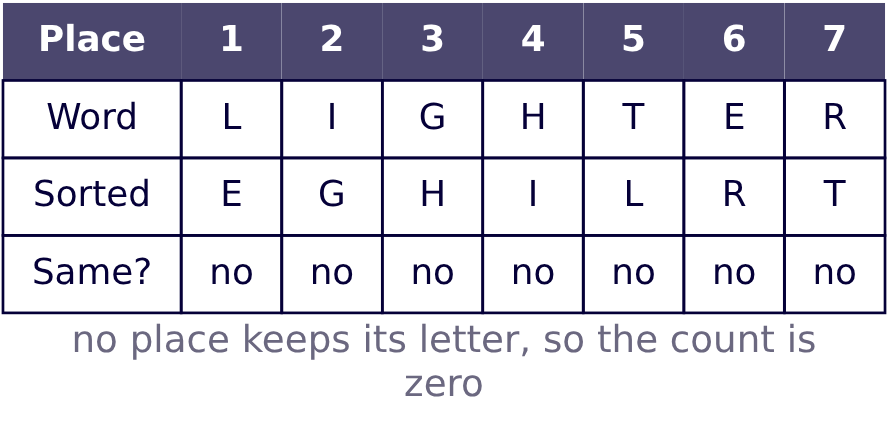 Now compare place by place: L-E, I-G, G-H, H-I, T-L, E-R, R-T.
Not a single place holds the same letter in both rows.
So the answer is zero, i.e. option (b).
Now compare place by place: L-E, I-G, G-H, H-I, T-L, E-R, R-T.
Not a single place holds the same letter in both rows.
So the answer is zero, i.e. option (b).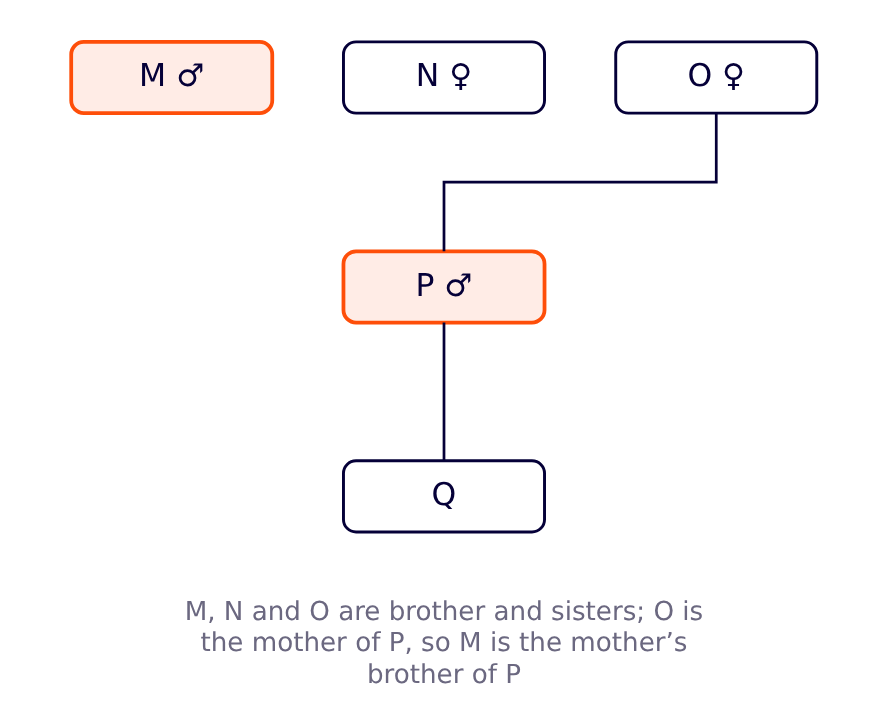 P's mother is O, and M is a brother of O.
So M is P's mother's brother, i.e. option (d).
P's mother is O, and M is a brother of O.
So M is P's mother's brother, i.e. option (d).

 The diagram needed is therefore a small ellipse (sister) inside a large one (female), with a third ellipse (doctor) crossing both and still sticking out.
So the correct Venn diagram is option (c).
The diagram needed is therefore a small ellipse (sister) inside a large one (female), with a third ellipse (doctor) crossing both and still sticking out.
So the correct Venn diagram is option (c).