SSC GD Constable 11 February 2025 · Shift 3 · General Intelligence & Reasoning — questions with answers · ShikshaSphere
Chapter 86 of 210
11 February 2025 · Shift 3
General Intelligence & Reasoning
20 questions ~20 min readFree
20 questions
A
1
In a certain code language, 'TDYI' is coded as '116' and 'NRDP' is coded as '104'. What is the code for 'LAWG' in the given language ?
A.77
B.82
C.86
D.72
Solution
Number coding
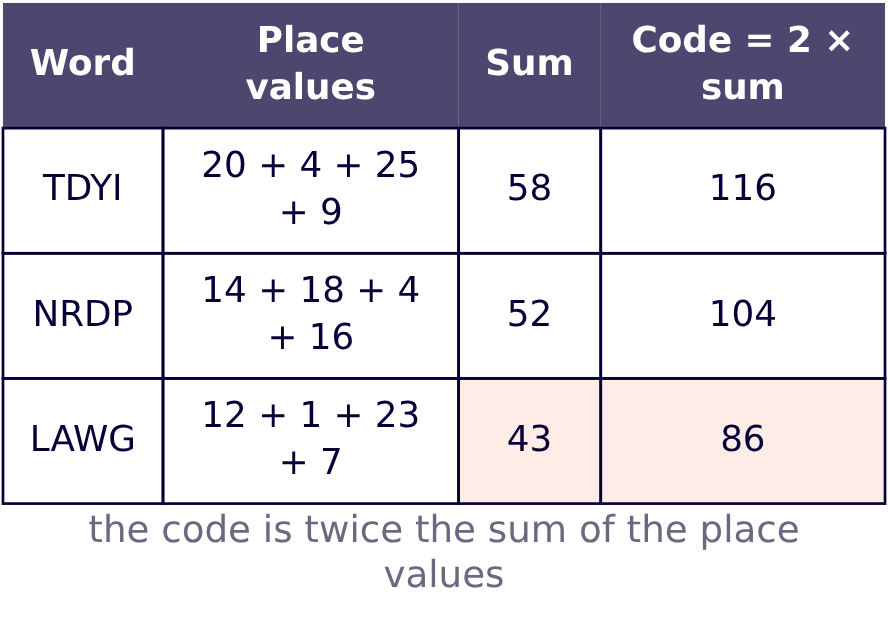
Give every letter its place value in the English alphabet and add the four values.
For TDYI: 20+4+25+9=58, and , which is the code given.
For NRDP: 14+18+4+16=52, and , again the code given.
So the rule is: code (sum of the place values).
For LAWG: 12+1+23+7=43, so its code is .
Hence the correct option is (c).
2
Select the Venn diagram that best illustrates the relationship among the following classes. Doctors, Surgeons, Men
A.
B.
C.
D.
Solution
Venn diagram of classes
Take the three classes two at a time.
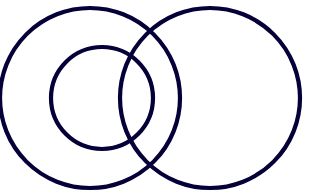
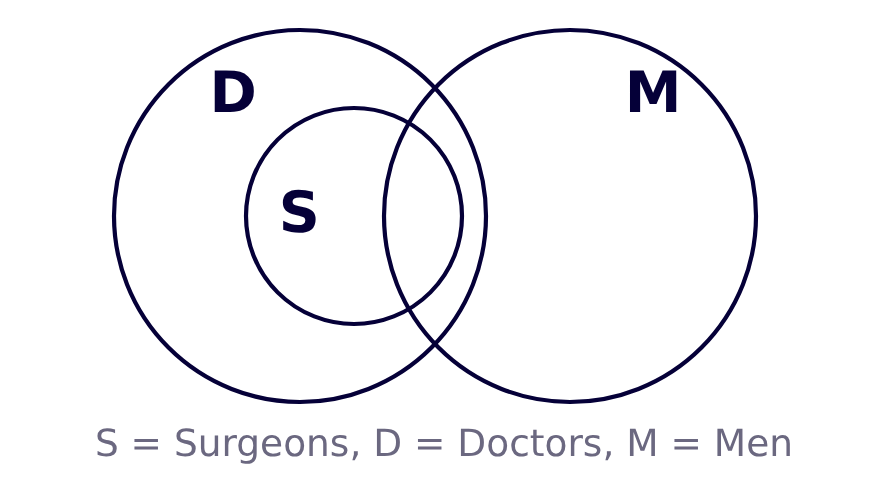
Every surgeon is a doctor, so the Surgeons circle lies completely inside the Doctors circle.
Some doctors are men and some are women, so Doctors and Men only partly overlap.
Some surgeons are men too, so the small Surgeons circle must reach into that overlap.
The picture needed is a small circle inside a large circle, with a third circle cutting across both.
That is option (b).
3
Select the combination of letters that when sequentially placed in the blanks of the given series, will logically complete the series.
_YUXT_SVRU_TPSO_NQM_
A.TXSUO
B.VWQRP
C.TWSRO
D.VXQUP
Solution
Letter series with blanks
There are five blanks, so cut the completed line into five groups of four letters.
With option (b) the line reads VYUX TWSV RUQT PSOR NQMP.
From one group to the next every letter moves 2 places back: V T, Y W, U S, X V.
The same -2 shift carries TWSV to RUQT, RUQT to PSOR and PSOR to NQMP.
So the letters that fill the blanks, in order, are V, W, Q, R and P.
Hence the correct option is (b).
4
In a certain code language,
'Y + F' means 'Y is the daughter of F',
'Y − F' means 'Y is the son of F',
'Y @ F' means 'Y is the sister of F' and
'Y # F' means 'Y is the father of F'.
Based on the above, how is S related to A if 'A + H @ S - C'?
A.Sister's daughter
B.Mother's sister
C.Sister
D.Mother's brother
Solution
Coded blood relations
Read the string 'A + H @ S - C' one symbol at a time.
'A + H' means A is the daughter of H, so H is a parent of A.
'H @ S' means H is the sister of S, so H is female and is therefore A's mother.
'S - C' means S is the son of C, so S is male.
S is thus the brother of A's mother, that is, A's mother's brother.
Hence the correct option is (d).
5
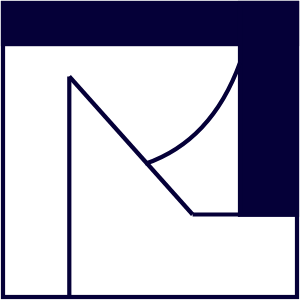
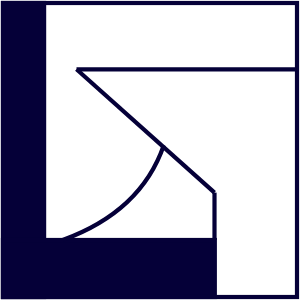
Select the correct mirror image of the given figure when the mirror is placed at LM as shown below.
A.
B.
C.
D.
Solution
Mirror image
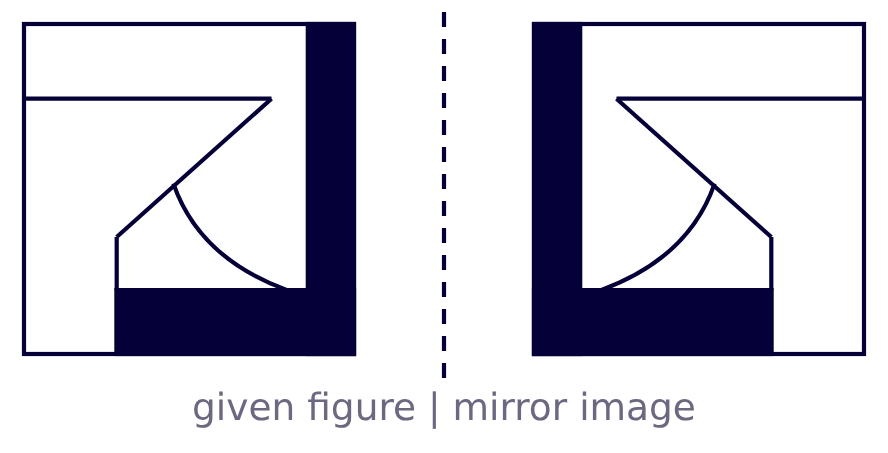
LM is a vertical mirror, so the image is the left-right (lateral) inversion of the figure.
Left and right change places; top and bottom stay exactly where they are.
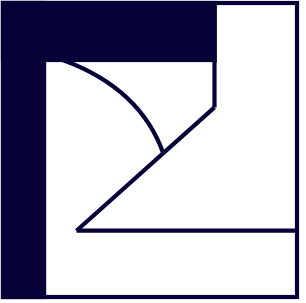
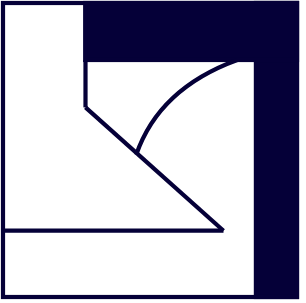
The thick black band runs down the right edge of the figure, so in the image it must run down the left edge.
The black band along the bottom covers the right part, so in the image it covers the left part.
The long line near the top starts at the left edge, so in the image it starts at the right edge and the diagonal below it slopes the other way.
Only one option shows all of this without turning the figure upside down.
Hence the correct option is (d).
6
What will come in the place of the question mark '(?)' in the following equation, if '÷' and '×' are interchanged and '+' and '−' are interchanged?
45 − 2 ÷ 8 + 2 × 2 = ?
A.61
B.60
C.62
D.59
Solution
Symbol interchange
First swap the signs wherever they occur: becomes , becomes , + becomes - and - becomes +.
So has to be read as .
By BODMAS, divide first: .
Then multiply: .
Finally 45+16-1=60.
Hence the correct option is (b).
7
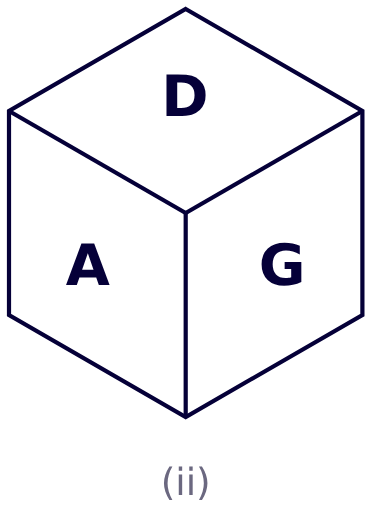
A dice has its faces marked by letters G, E, D, A, N and R. Two positions of the same dice are shown in the given figures. Which face is opposite to face E?
A.N
B.G
C.A
D.D
Solution
Dice - opposite faces
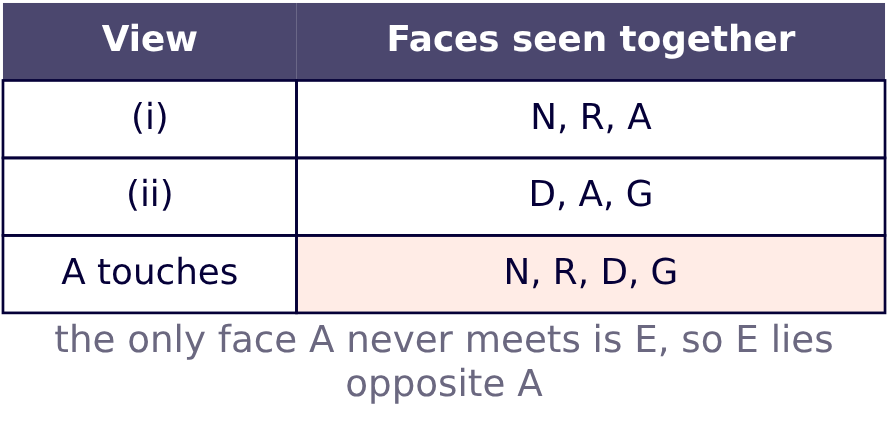
Rule: two faces that are seen together in one view can never be opposite each other.
In view (i) A is seen with N and R, so A is adjacent to N and to R.
In view (ii) A is seen with D and G, so A is adjacent to D and to G as well.
A is therefore adjacent to four faces - N, R, D and G - and the only face left over is E.
So E lies opposite A, that is, the face opposite E is A.
Hence the correct option is (c).
8
What should come in place of (?) in the given series based on the English alphabetical order ?
MTD, JRC, GPB, DNA, ?
A.CNY
B.CMX
C.BMX
D.ALZ
Solution
Letter-cluster series
Read the three positions of the clusters as three separate series.
First letters M, J, G, D fall by 3 each time, so the next is D-3= A.
Second letters T, R, P, N fall by 2 each time, so the next is N-2= L.
Third letters D, C, B, A fall by 1 each time; taking the alphabet as circular, the next is A-1= Z.
The missing cluster is therefore ALZ.
Hence the correct option is (d).
9
Seven people A, B, C, D, E, F and G are sitting in a straight line facing the north (but not necessarily in the same order). B is sitting to the immediate right of D and the immediate left of F. A is sitting to the immediate left of E and the immediate right of F. G is sitting to the immediate right of E and the immediate left of C. Who is sitting at the left end of the line?
A.F
B.G
C.E
D.D
Solution
Linear seating
All seven face north, so a person's right is our right and a person's left is our left.
'B is immediately right of D and immediately left of F' gives the block D, B, F.
'A is immediately right of F and immediately left of E' extends it to D, B, F, A, E.
'G is immediately right of E and immediately left of C' completes the row as D, B, F, A, E, G, C.
D is the first person in this row, so D sits at the left end.
Hence the correct option is (d).
10
NRNL is related to IMIG in a certain way based on the English alphabetical order. In the same way, PTPN is related to KOKI. To which of the given options is DHDB related, following the same logic?
A.YCYW
B.YBXW
C.YDXE
D.YCXW
Solution
Letter-cluster analogy
Compare NRNL with IMIG letter by letter: N I, R M, N I, L G - every letter moves back 5 places.
Check on the second pair: P -5= K, T -5= O, P -5= K, N -5= I, which is KOKI.
Apply the same shift to DHDB, taking the alphabet as circular: D -5= Y, H (8)-5=3= C, D -5= Y, B -5= W.
So DHDB is related to YCYW.
Hence the correct option is (a).
11
Read the given statements and conclusions carefully. Assuming that the information given in the statements is true, even if it appears to be at variance with commonly known facts, decide which of the given conclusion(s) logically follow(s) from the statements.Statements:
All sprouts are lentils.
Some lentils are ramens.
Some ramens are pastas.
Conclusions:
(I) Some pastas are sprouts.
(II) Some ramens are sprouts.
A.Only conclusion (II) follows.
B.Neither conclusion (I) nor (II) follows.
C.Only conclusion (I) follows.
D.Both conclusions (I) and (II) follow.
Solution
Syllogism
'All sprouts are lentils' puts the whole Sprouts circle inside the Lentils circle.
'Some lentils are ramens' only makes Lentils and Ramens overlap; that overlap need not touch Sprouts.
'Some ramens are pastas' likewise only makes Ramens and Pastas overlap.
A diagram can be drawn in which no sprout is a ramen, so conclusion (II) does not follow.
In the same diagram no sprout is a pasta either, so conclusion (I) does not follow.
Hence neither conclusion follows, which is option (b).
12
The position(s) of how many letters will remain unchanged if each letter in the word MIGHTY is arranged in the English alphabetical order ?
A.Two
B.None
C.One
D.Three
Solution
Alphabetical rearrangement
Write MIGHTY, and under it the same six letters in alphabetical order.
The alphabetical order of M, I, G, H, T, Y is G, H, I, M, T, Y.
Compare position by position: M/G, I/H, G/I and H/M all change.
The 5th letter is T in both rows and the 6th letter is Y in both rows.
So exactly two letters keep their position.
Hence the correct option is (a).
13
CJ 16 is related to DF 9 in a certain way. In the same way, FK 9 is related to GG 2. To which of the following is OO 2 related following the same logic?
A.PK −5
B.PR −2
C.SP −6
D.LP −4
Solution
Letter-number analogy
Compare CJ 16 with DF 9 part by part: C D is +1, J F is -4, and is -7.
Check it on the second pair: F +1= G, K -4= G and 9-7=2, which is GG 2.
Now apply the same rule to OO 2: O +1= P, O -4= K and 2-7=-5.
So OO 2 is related to PK -5.
Hence the correct option is (a).
14
Select the figure from among the given options that can replace the question mark (?) in the following series.
A.
B.
C.
D.
Solution
Figure series
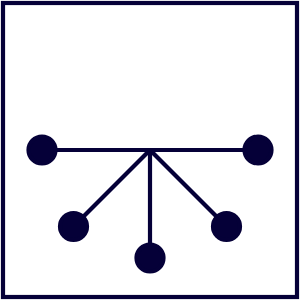
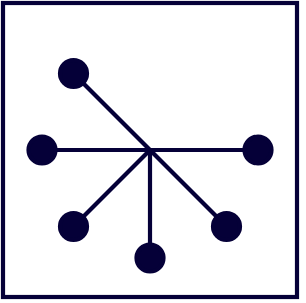
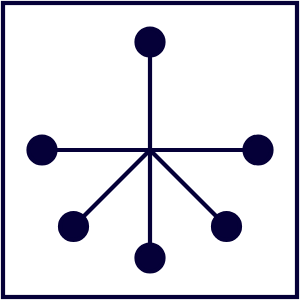
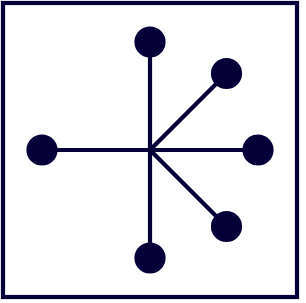
Count the rays - the segments that leave the centre and end in a solid dot.
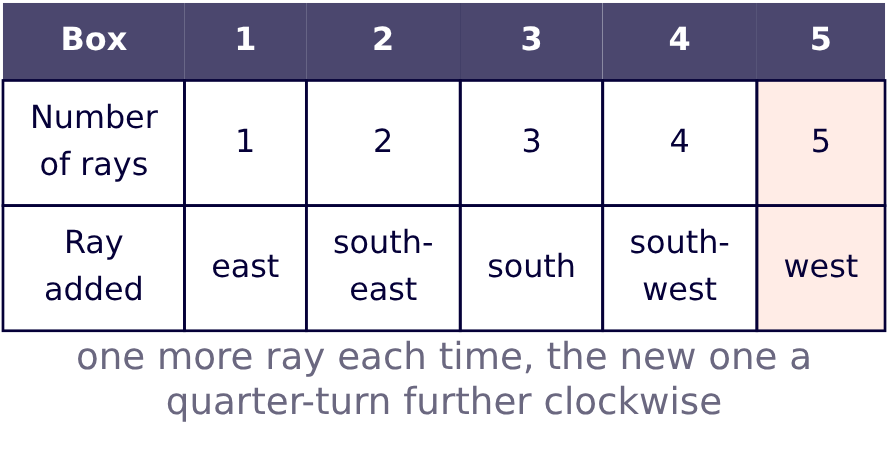
Box 1 has 1 ray, box 2 has 2, box 3 has 3 and box 4 has 4, so box 5 must have 5.
The rays are also added in a fixed order, each new one a quarter-turn further clockwise: east, then south-east, then south, then south-west.
The next ray in that turn is the one pointing west.
So the missing figure carries exactly five rays - east, south-east, south, south-west and west.
Only one option has five rays, and they are these five.
Hence the correct option is (a).
15
What should come in place of the question mark (?) in the given series ? 7, 10, 16, 25, ?, 52
A.36
B.35
C.37
D.38
Solution
Number series
Take the differences between consecutive terms.
10-7=3, 16-10=6 and 25-16=9.
The differences themselves rise by 3 each time: 3, 6, 9, 12, 15.
So the missing term is 25+12=37.
The check works: 37+15=52, the last term given.
Hence the correct option is (c).
16
Based on the English alphabetical order, three of the following four letter-clusters are alike in a certain way and thus form a group. Which letter-cluster DOES NOT belong to that group?
(Note: The odd man out is not based on the number of consonants/vowels or their position in the letter-cluster.)
A.BIO
B.UBI
C.SZG
D.KRY
Solution
Odd one out - letter clusters
Find the gap between the 1st and 2nd letters and between the 2nd and 3rd letters of each cluster.
UBI: U +7= B and B +7= I (the alphabet is taken as circular), so the gaps are +7,+7.
SZG: S +7= Z and Z +7= G, again +7,+7.
KRY: K +7= R and R +7= Y, again +7,+7.
BIO: B +7= I, but I +6= O, so its second gap is +6.
BIO is the only cluster that does not run on +7,+7.
Hence the correct option is (a).
17
A dice has its faces marked by letters T, F, H, A, R and E. Two positions of the same dice are shown in the given figures. Which face is opposite to face A?
A.E
B.H
C.F
D.R
Solution
Dice - opposite faces
Rule: two faces that appear together in one view can never be opposite each other.
In view (i) E is seen with H and R, so E is adjacent to H and to R.
In view (ii) E is seen with T and F, so E is adjacent to T and to F as well.
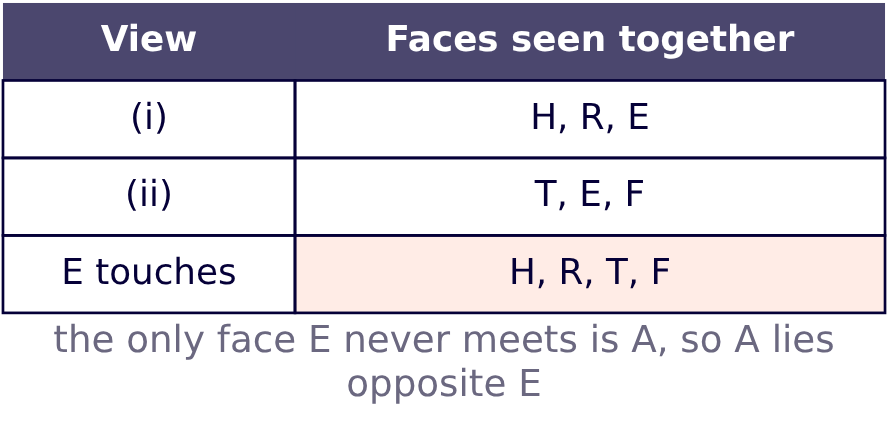
E is therefore adjacent to four faces - H, R, T and F.
The only face left over is A, so A lies opposite E.
Hence the face opposite A is E, option (a).
18
What should come in place of the question mark (?) in the given series?
670, 668, 671, 666, 673, 662, 676, ?
A.680
B.656
C.654
D.681
Solution
Alternating number series
The terms jump up and down, so split the line into two alternate series.
The terms in the odd places are 670, 671, 673, 676 - they rise by 1, then 2, then 3.
The terms in the even places are 668, 666, 662, ? - they fall by 2, then 4, then 6.
The question mark is the 8th term, so it belongs to the even-place series.
The next fall in that series is 6, giving 662-6=656.
Hence the correct option is (b).
19
In a certain code language, 'DAYS' is coded as '7812' and 'AIDS' is coded as '1237'. What is the code for ' I ' in the given code language ?
A.7
B.3
C.2
D.1
Solution
Letter-digit coding
DAYS 7812 and AIDS 1237.
The letters D, A and S occur in both words, and the digits 7, 1 and 2 occur in both codes.
So D, A and S take the digits 7, 1 and 2 in some order.
The letter left over in DAYS is Y, so Y =8; the letter left over in AIDS is I, so I =3.
Hence the code for I is 3, option (b).
20
G, H, I, J, K, L and M are sitting around a circular table, facing the centre of the table (but not necessarily in the same order).
K sits to the immediate right of L. Only three people sit between K and M when counted from the left of K. Only three people sit between L and H. J sits to the immediate right of I. How many people sit between L and I when counted from the left of I?
A.Four
B.Three
C.Two
D.One
Solution
Circular seating
All seven face the centre, so a person's left is the clockwise direction and a person's right is the anticlockwise direction.
'K is immediately right of L' therefore puts K one seat anticlockwise of L, i.e. in clockwise order K comes just before L.
Counting from the left of K means counting clockwise, so with three people in between M sits 4 seats clockwise from K.
Three people also sit between L and H, and since L is 1 seat clockwise from K, H sits 5 seats clockwise from K.
The seats 2, 3 and 6 clockwise from K are left for G, I and J, and 'J is immediately right of I' forces J into seat 2 and I into seat 3.
So the clockwise order is K, L, J, I, M, H, G.
Counting clockwise from I we meet M, H, G, K and then L, so four people sit between L and I.
Hence the correct option is (a).
Finished reading? Now test yourself.
The same 20 questions, but with a timer and the answers hidden — 15 minutes.

 For TDYI: 20+4+25+9=58, and , which is the code given.
For NRDP: 14+18+4+16=52, and , again the code given.
So the rule is: code (sum of the place values).
For LAWG: 12+1+23+7=43, so its code is .
Hence the correct option is (c).
For TDYI: 20+4+25+9=58, and , which is the code given.
For NRDP: 14+18+4+16=52, and , again the code given.
So the rule is: code (sum of the place values).
For LAWG: 12+1+23+7=43, so its code is .
Hence the correct option is (c).


 The picture needed is a small circle inside a large circle, with a third circle cutting across both.
That is option (b).
The picture needed is a small circle inside a large circle, with a third circle cutting across both.
That is option (b).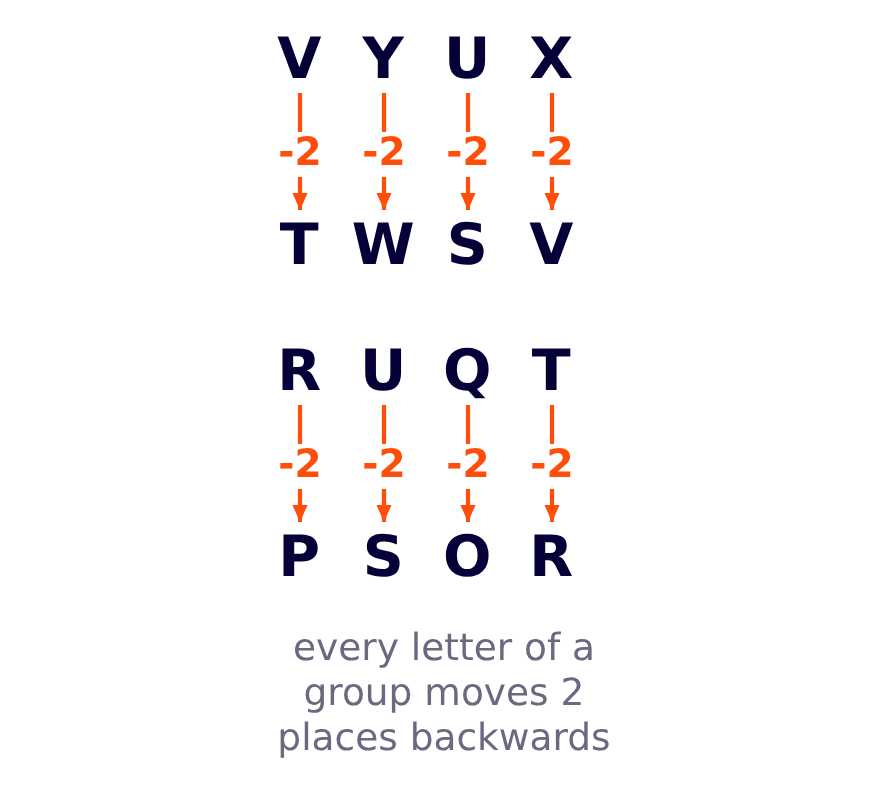 From one group to the next every letter moves 2 places back: V T, Y W, U S, X V.
The same -2 shift carries TWSV to RUQT, RUQT to PSOR and PSOR to NQMP.
So the letters that fill the blanks, in order, are V, W, Q, R and P.
Hence the correct option is (b).
From one group to the next every letter moves 2 places back: V T, Y W, U S, X V.
The same -2 shift carries TWSV to RUQT, RUQT to PSOR and PSOR to NQMP.
So the letters that fill the blanks, in order, are V, W, Q, R and P.
Hence the correct option is (b).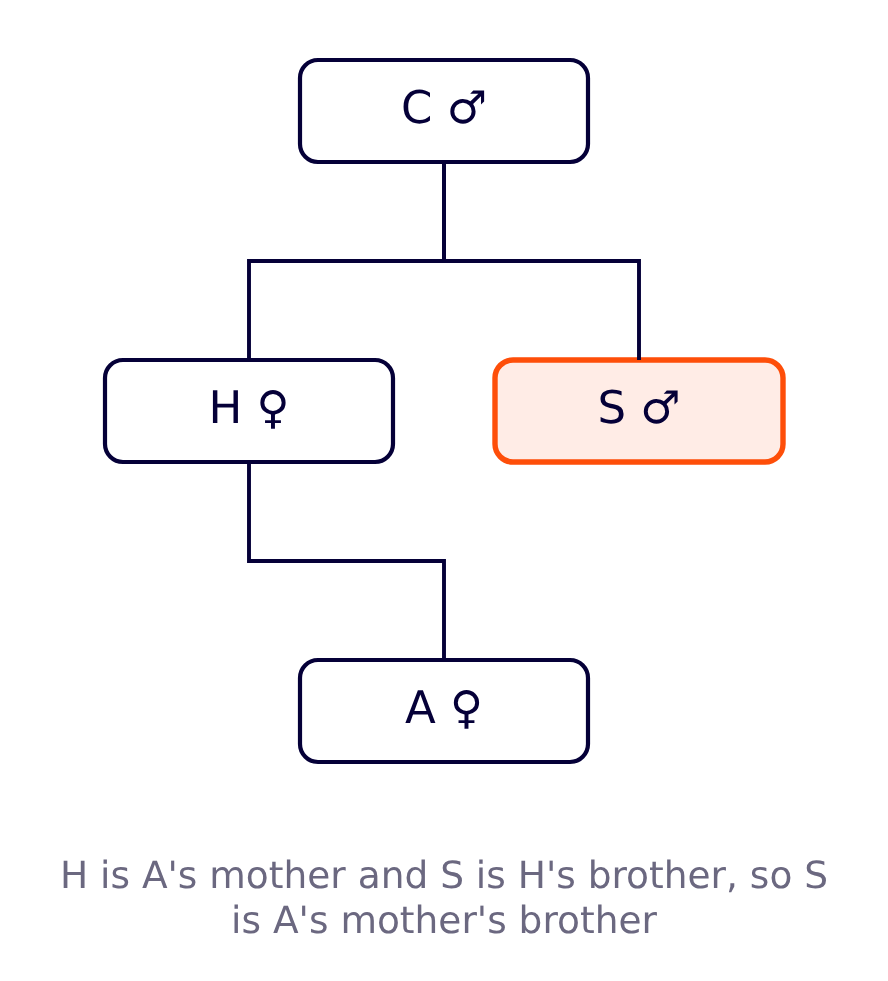 S is thus the brother of A's mother, that is, A's mother's brother.
Hence the correct option is (d).
S is thus the brother of A's mother, that is, A's mother's brother.
Hence the correct option is (d).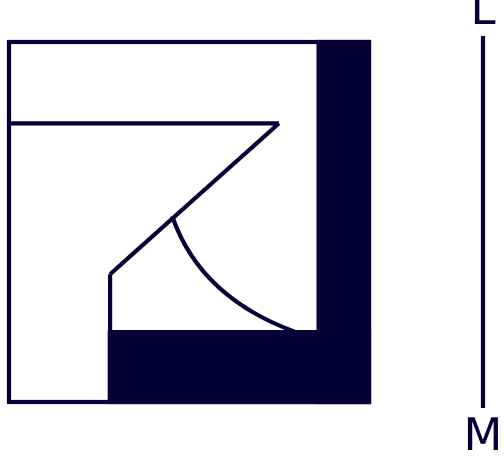
 The thick black band runs down the right edge of the figure, so in the image it must run down the left edge.
The black band along the bottom covers the right part, so in the image it covers the left part.
The long line near the top starts at the left edge, so in the image it starts at the right edge and the diagonal below it slopes the other way.
Only one option shows all of this without turning the figure upside down.
Hence the correct option is (d).
The thick black band runs down the right edge of the figure, so in the image it must run down the left edge.
The black band along the bottom covers the right part, so in the image it covers the left part.
The long line near the top starts at the left edge, so in the image it starts at the right edge and the diagonal below it slopes the other way.
Only one option shows all of this without turning the figure upside down.
Hence the correct option is (d).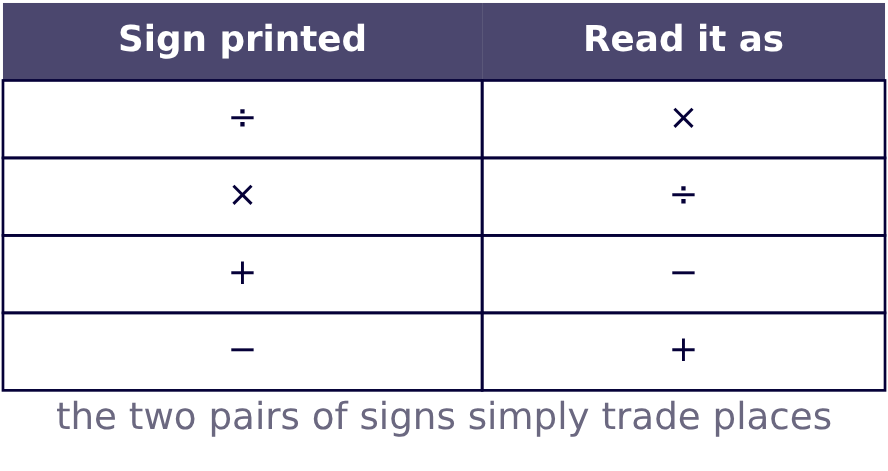 So has to be read as .
By BODMAS, divide first: .
Then multiply: .
Finally 45+16-1=60.
Hence the correct option is (b).
So has to be read as .
By BODMAS, divide first: .
Then multiply: .
Finally 45+16-1=60.
Hence the correct option is (b).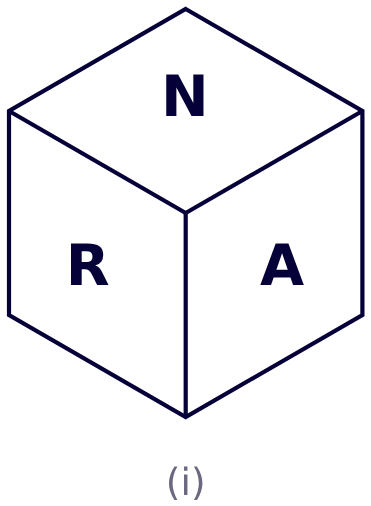
 So E lies opposite A, that is, the face opposite E is A.
Hence the correct option is (c).
So E lies opposite A, that is, the face opposite E is A.
Hence the correct option is (c).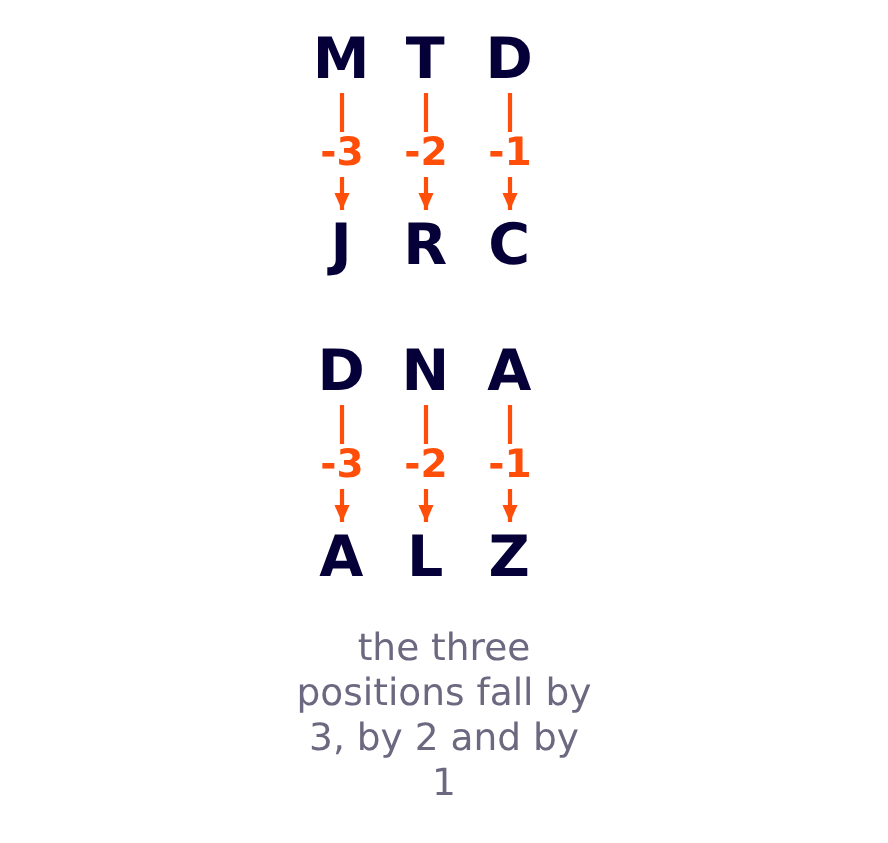 First letters M, J, G, D fall by 3 each time, so the next is D-3= A.
Second letters T, R, P, N fall by 2 each time, so the next is N-2= L.
Third letters D, C, B, A fall by 1 each time; taking the alphabet as circular, the next is A-1= Z.
The missing cluster is therefore ALZ.
Hence the correct option is (d).
First letters M, J, G, D fall by 3 each time, so the next is D-3= A.
Second letters T, R, P, N fall by 2 each time, so the next is N-2= L.
Third letters D, C, B, A fall by 1 each time; taking the alphabet as circular, the next is A-1= Z.
The missing cluster is therefore ALZ.
Hence the correct option is (d).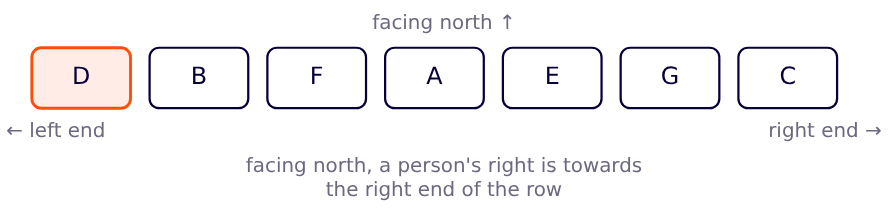 D is the first person in this row, so D sits at the left end.
Hence the correct option is (d).
D is the first person in this row, so D sits at the left end.
Hence the correct option is (d).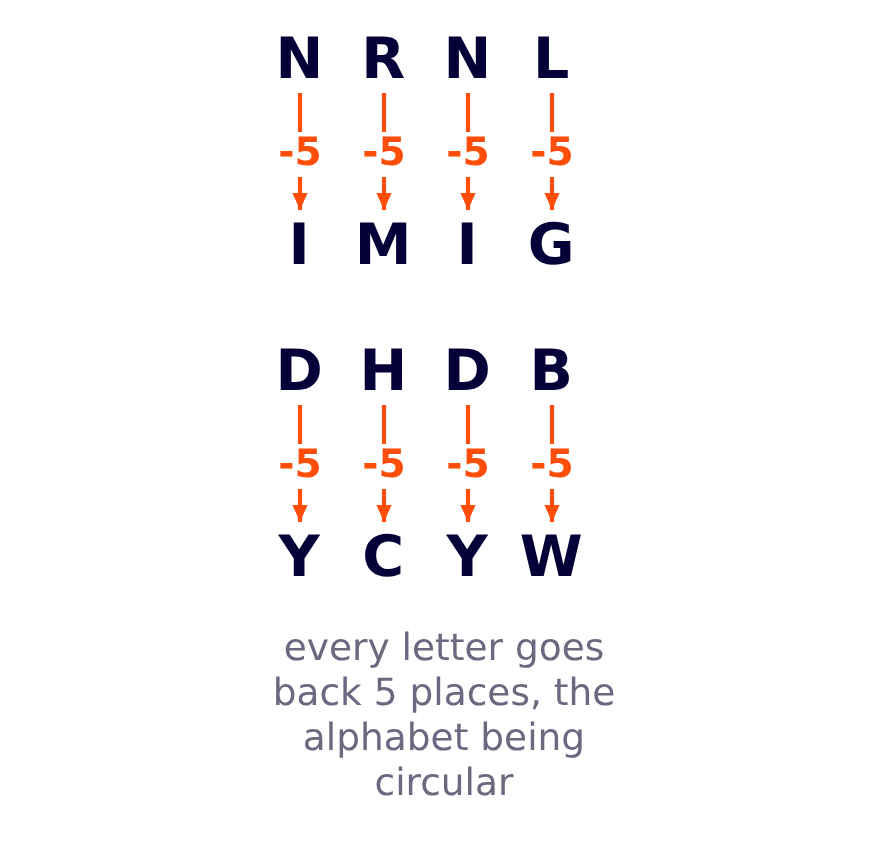 Check on the second pair: P -5= K, T -5= O, P -5= K, N -5= I, which is KOKI.
Apply the same shift to DHDB, taking the alphabet as circular: D -5= Y, H (8)-5=3= C, D -5= Y, B -5= W.
So DHDB is related to YCYW.
Hence the correct option is (a).
Check on the second pair: P -5= K, T -5= O, P -5= K, N -5= I, which is KOKI.
Apply the same shift to DHDB, taking the alphabet as circular: D -5= Y, H (8)-5=3= C, D -5= Y, B -5= W.
So DHDB is related to YCYW.
Hence the correct option is (a).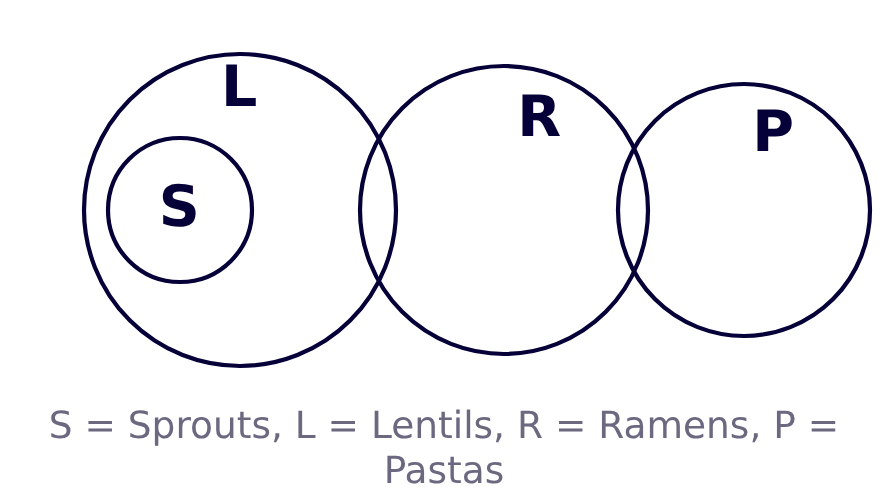 A diagram can be drawn in which no sprout is a ramen, so conclusion (II) does not follow.
In the same diagram no sprout is a pasta either, so conclusion (I) does not follow.
Hence neither conclusion follows, which is option (b).
A diagram can be drawn in which no sprout is a ramen, so conclusion (II) does not follow.
In the same diagram no sprout is a pasta either, so conclusion (I) does not follow.
Hence neither conclusion follows, which is option (b).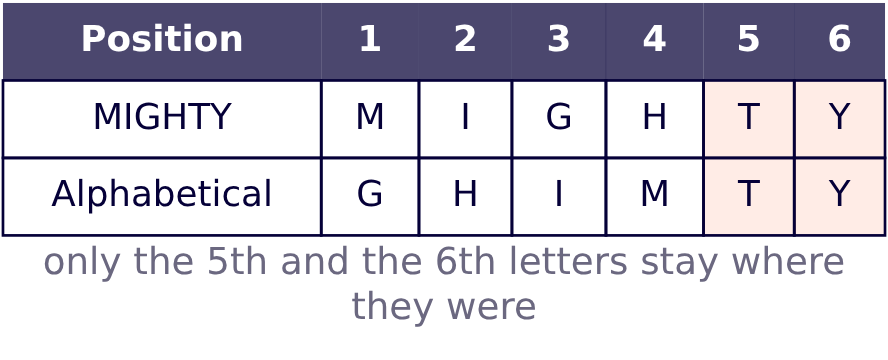 Compare position by position: M/G, I/H, G/I and H/M all change.
The 5th letter is T in both rows and the 6th letter is Y in both rows.
So exactly two letters keep their position.
Hence the correct option is (a).
Compare position by position: M/G, I/H, G/I and H/M all change.
The 5th letter is T in both rows and the 6th letter is Y in both rows.
So exactly two letters keep their position.
Hence the correct option is (a).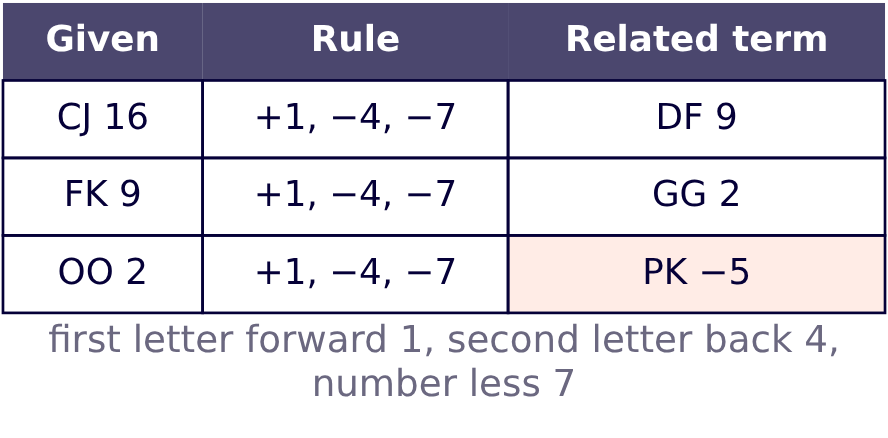 Check it on the second pair: F +1= G, K -4= G and 9-7=2, which is GG 2.
Now apply the same rule to OO 2: O +1= P, O -4= K and 2-7=-5.
So OO 2 is related to PK -5.
Hence the correct option is (a).
Check it on the second pair: F +1= G, K -4= G and 9-7=2, which is GG 2.
Now apply the same rule to OO 2: O +1= P, O -4= K and 2-7=-5.
So OO 2 is related to PK -5.
Hence the correct option is (a).
 The rays are also added in a fixed order, each new one a quarter-turn further clockwise: east, then south-east, then south, then south-west.
The next ray in that turn is the one pointing west.
So the missing figure carries exactly five rays - east, south-east, south, south-west and west.
Only one option has five rays, and they are these five.
Hence the correct option is (a).
The rays are also added in a fixed order, each new one a quarter-turn further clockwise: east, then south-east, then south, then south-west.
The next ray in that turn is the one pointing west.
So the missing figure carries exactly five rays - east, south-east, south, south-west and west.
Only one option has five rays, and they are these five.
Hence the correct option is (a).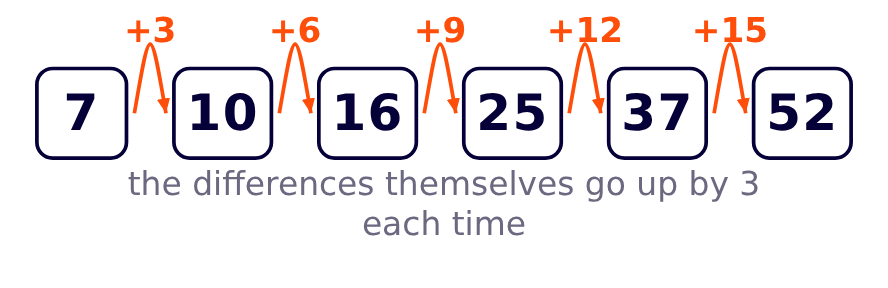 The differences themselves rise by 3 each time: 3, 6, 9, 12, 15.
So the missing term is 25+12=37.
The check works: 37+15=52, the last term given.
Hence the correct option is (c).
The differences themselves rise by 3 each time: 3, 6, 9, 12, 15.
So the missing term is 25+12=37.
The check works: 37+15=52, the last term given.
Hence the correct option is (c).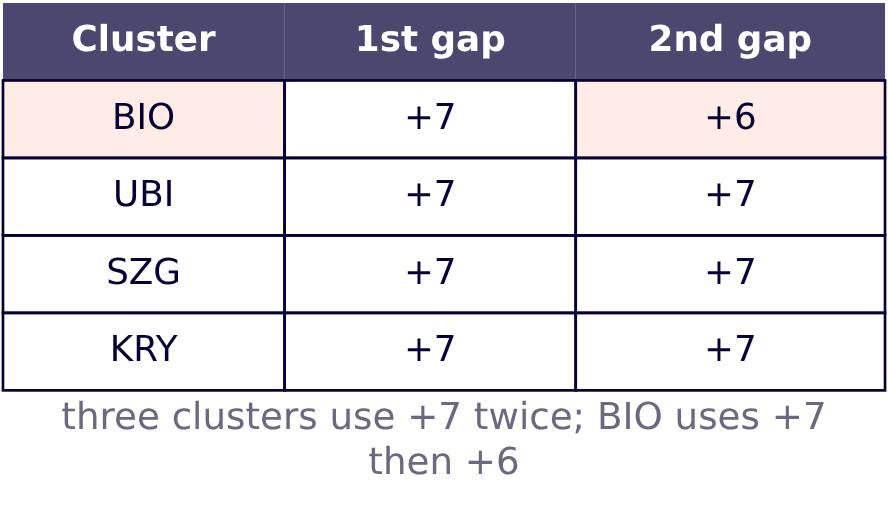 BIO is the only cluster that does not run on +7,+7.
Hence the correct option is (a).
BIO is the only cluster that does not run on +7,+7.
Hence the correct option is (a).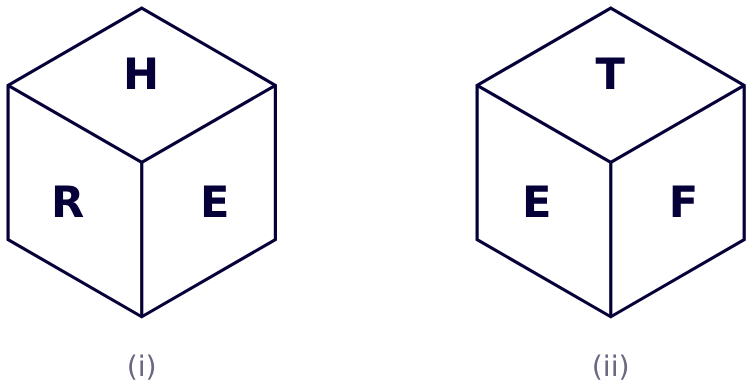
 The only face left over is A, so A lies opposite E.
Hence the face opposite A is E, option (a).
The only face left over is A, so A lies opposite E.
Hence the face opposite A is E, option (a).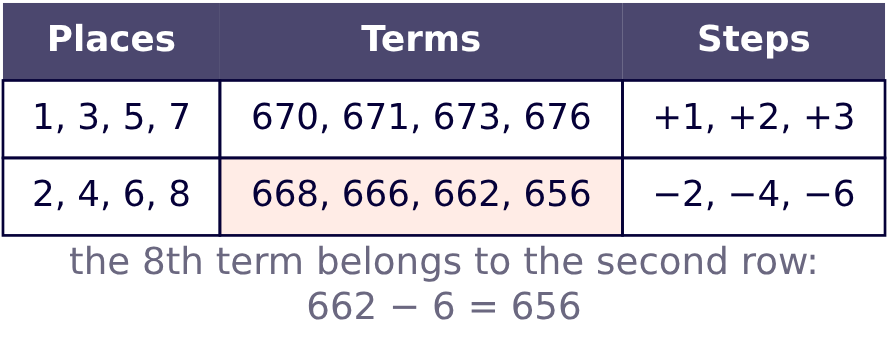 The question mark is the 8th term, so it belongs to the even-place series.
The next fall in that series is 6, giving 662-6=656.
Hence the correct option is (b).
The question mark is the 8th term, so it belongs to the even-place series.
The next fall in that series is 6, giving 662-6=656.
Hence the correct option is (b).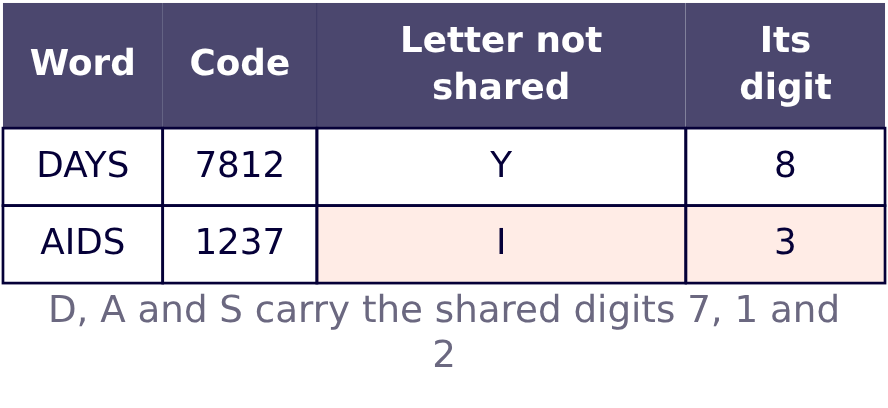 The letter left over in DAYS is Y, so Y =8; the letter left over in AIDS is I, so I =3.
Hence the code for I is 3, option (b).
The letter left over in DAYS is Y, so Y =8; the letter left over in AIDS is I, so I =3.
Hence the code for I is 3, option (b).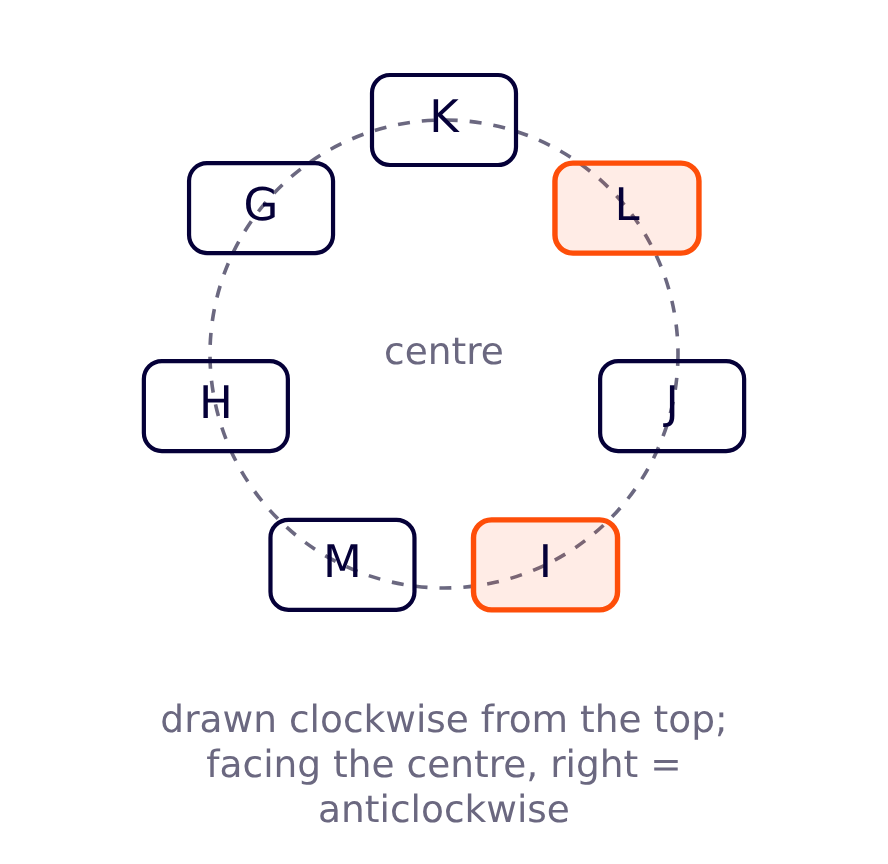 Counting clockwise from I we meet M, H, G, K and then L, so four people sit between L and I.
Hence the correct option is (a).
Counting clockwise from I we meet M, H, G, K and then L, so four people sit between L and I.
Hence the correct option is (a).